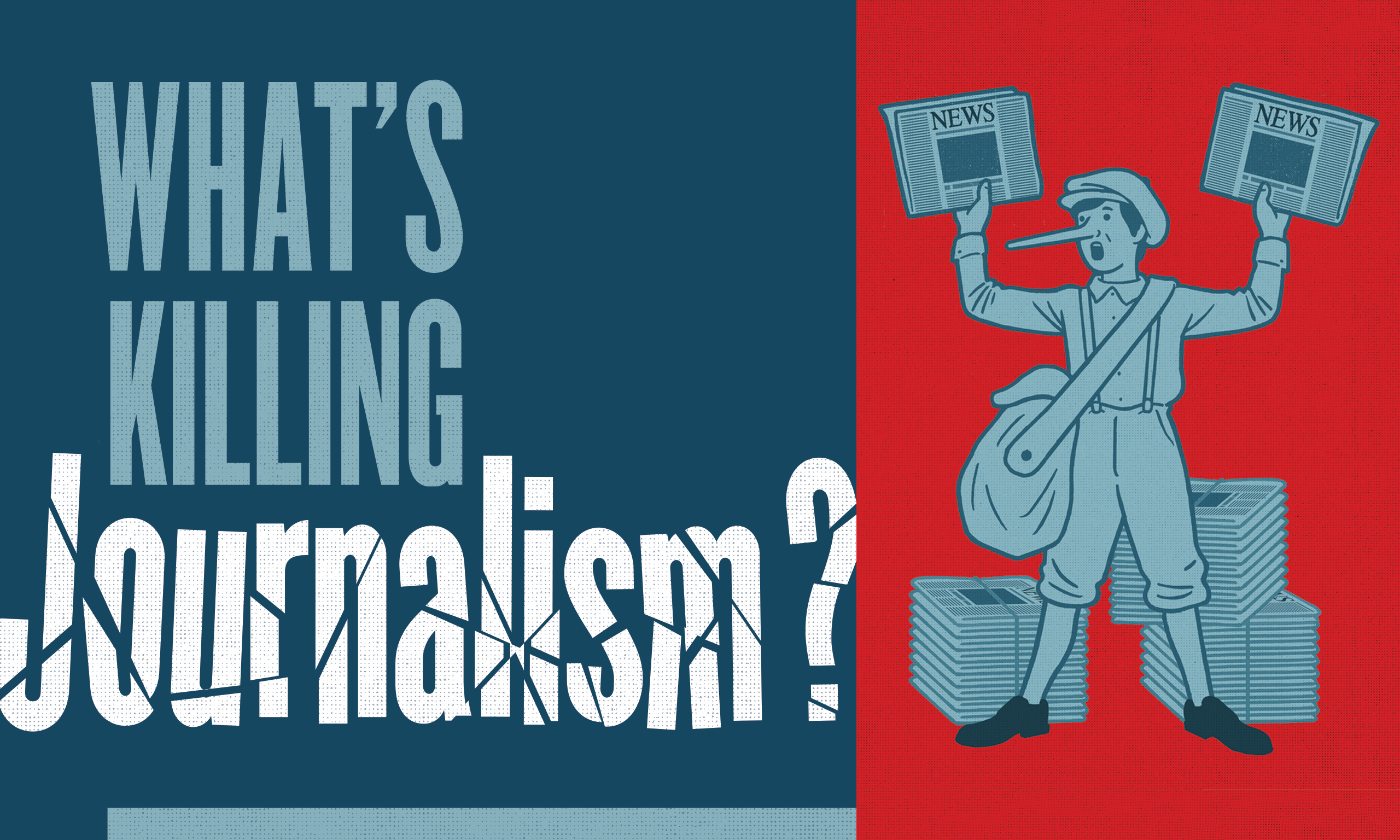
Journalism

Journalism is beyond sitting behind a microphone…

By Nasir Yusuf Jibril Kufa

It is a common misconception, especially among those with low literacy levels, that the difference between professional practitioners and assistants or technicians is not understood. Professional fields require specialised training and proper qualifications before a person can be recognised as a professional. Examples of such fields include Medicine, Law, Engineering, Journalism, etc.

However, many people often confuse professionals with assistants. For instance, in Law, some people believe that studying Law automatically makes someone a lawyer, without knowing that Law School is also required. In Medicine, many people believe that all healthcare workers are doctors, even though nurses, laboratory technicians, and pharmacists are distinct from physicians. 

The same misunderstanding also exists in Engineering, where people sometimes call anyone who repairs electrical appliances or vehicles an engineer. 

Sadly, this misunderstanding also affects Journalism, which is the main focus of my piece. 

Many people believe that journalism simply means sitting behind a microphone, reading the news, or talking on the radio. This misconception has made some assume that anyone who can speak confidently or operate studio equipment is automatically a journalist. In reality, journalism goes far beyond studio presentation. It is a professional field that requires training, ethical responsibility, critical thinking, and commitment.

 A professional, well-trained journalist is someone who has acquired formal education or structured training in journalism or mass communication. Such a journalist understands news values, reporting techniques, media ethics, and the laws guiding the profession. Their work begins long before they appear behind a microphone or camera. They research issues, verify facts, interview credible sources, cross-check information, and ensure balance and fairness in their reports. Because Journalism is about truth, accuracy, and accountability, not just voice delivery or public appearance.

Professional journalists are guided by ethical principles such as objectivity, accuracy, fairness, and responsibility. They know the consequences of misinformation, malinformation, and disinformation and are trained to avoid sensationalism, hate speech, and unverified reports. 

Their role is to inform, educate, and, at times, challenge society responsibly, and to hold power to account. This means protecting sources, respecting privacy, and understanding the social impact of every story they publish or broadcast.

What truly surprised and saddened me is that even someone I consider intelligent has this incorrect understanding. A friend of mine recently started anchoring a program on an online TV channel, and he now believes he is a professional journalist. Unfortunately, he failed to distinguish between a program presenter, a producer, and a journalist, which deeply concerned me. If educated individuals still fail to understand what journalism truly means, what should we expect from the general public? This shows how widespread this misunderstanding has become.

I wrote this piece not to criticise anyone, but to raise awareness and promote knowledge. Journalism is not just about speaking on camera or presenting a program;  it is a profession built on training, ethics, and responsibility. Understanding this will help society respect the profession and those who practice it properly.

Not everyone working in a radio station is a journalist. Radio stations employ technicians, presenters, producers, marketers, and program assistants. A presenter may have an attractive voice and strong communication skills, but may not be trained in news reporting, investigative journalism, or media ethics. Sitting behind a microphone or hosting a program does not automatically make one a journalist. 

Journalism is defined by the process of gathering, analysing, and presenting verified information in the public interest, not by physical presence in a studio. It is important to understand that journalism involves fieldwork, research, critical questioning, and responsibility to society. So,  journalism is far beyond sitting behind a microphone. It is a serious profession that demands training, discipline, ethical conduct, and a strong sense of responsibility.

I hope this message helps readers understand what a real journalist is and why journalistic professionalism should be respected.

Nasir Yusuf Jibril Kufa wrote via nasirjibril2018@gmail.com.

The frequency of my story: How BBC Hausa shaped my path to journalism

By Alhassan Hassan Salihu

How BBC Hausa shaped my journey into journalism, from childhood mornings filled with the voices of BBC Hausa to my first day inside a studio, radio has been more than just background noise; it has been my teacher, my guide, and my inspiration.

This is the story of how listening turned into learning, and how learning shaped my journey into journalism.

Becoming a journalist was a natural progression for me, sparked by a lifelong habit of listening, reading, and watching the news. For as long as I can remember, news has been a daily ritual to me, something that felt less like a choice and more like a tradition I inherited from my father.

Growing up, our mornings and evenings were defined by the voices on the radio. We would start the day by tuning in to Voice of America at 6:30 AM, then switch to the BBC Hausa Service at 7:00 AM, followed by DW Hausa at 7:30 AM, and return to the BBC Hausa Service at 8:30 AM. And at night, the whole family would gather again, this time before television, to watch NTA Network News at 9:00 PM sharp.

These routines were more than just ways of staying informed; they became a profound part of my upbringing. The sound of the BBC Hausa and Radio Nigeria Kaduna, in particular, was not just a broadcast; they were a culture. 

They shaped entire generations in northern Nigeria, creating shared experiences and anchoring people to both local and global realities. For many of us, storytelling comes naturally, but the absolute obsession with stories and even the dream of becoming journalists often started with our parents’ love for radio. 

Families gathered around to listen, not only to know what was happening in the world, but also to feel a sense of belonging to a broader conversation.

But here lies a challenge; unlike the generations before us, today’s families are not always gathering around radios or televisions at fixed hours. 

Instead, parents are glued to smartphones, and children often consume fragmented bits of information through digital media. 

This shift raises an important question: what will become of the younger ones if they grow up without the discipline, focus, and collective culture that radio once provided?

The beauty of the radio era was its structure. Programs are aired at specific times, forcing families to pause their lives and share a common moment of learning. 

I later realised how insightful and educational this exposure had been, especially when I began studying mass communication at the university. 

During my first and second years, I took courses like Media English I & II, which helped me connect the dots and apply what I had unconsciously been absorbing for years.

While many struggled with the art of broadcasting, I found it surprisingly simple. It felt effortless, like second nature, because I had been learning by listening to experts all along. News isn’t merely about headlines; it is about understanding context, undercurrents, and implications. 

Critical engagement with news empowers people to navigate the world’s complexities and contribute meaningfully to conversations that shape positive change.

In today’s fast-evolving environment, staying informed should not be seen as a casual habit but as a necessity for growth, development, and societal progress.

I still remember my first day in the studio. My coach, Hajarah Bala Sidi, was impressed by my performance and asked if I had previously worked at a radio station. In truth, I had done nothing more than to follow her simple guidance, yet I was able to compile and voice an excellent report. 

That moment confirmed what years of exposure had quietly built in me: a confidence with words, rhythm, and storytelling.

It was not just news, it was an education in patience, attention, and dialogue. Digital media, while faster and broader, often lacks this collective discipline. Stories are consumed in isolation, and context is sometimes lost in the flood of content.

Along the way, I also developed a deeper appreciation for language mastery, particularly in Hausa. Radio programs were filled with proverbs, metaphors, and eloquence that enriched my communication skills.

This influence even stretched back to my secondary school days; subjects like Government, History, Current Affairs, and English Literature became easier for me because the insights I picked from the radio gave me a head start.

This makes it even more important for parents, educators, and journalists to rethink how news is introduced to children today.  This background provided me with the basic tools to analyse and judge the world around me. Those early lessons still influence the way I view society today.

This background provided me with the basic tools to analyse and judge the world around me. Those early lessons still influence the way I view society today. 

Journalism, for me, isn’t just a profession; it reflects how I was raised: constantly aware, always questioning, and always learning.

News sharpens critical thinking and broadens worldview. It provides insights into emerging trends, global challenges, and innovative solutions.

If BBC Hausa and Radio Nigeria Kaduna once shaped generations through the power of sound, then perhaps the task now is to find new ways of shaping generations through the power of both sound and screen. 

Whether through radio, television, or digital platforms, one truth stands out: societies thrive when their citizens are informed. 

Staying informed is not passive consumption; it requires active engagement: reading thoroughly, listening carefully, and watching with intent. 

As a journalist, I hold to this principle: the newsrooms of my childhood might have changed, but the lesson remains the same.

The world may no longer gather around a radio at dawn or a television at night, but the responsibility to stay informed remains timeless, and if we can pass this culture on to our younger ones, they too will learn that news is not just about headlines; it is about understanding the world, questioning it, and striving to make it better.

Alhassan Hassan Salihu wrote via hassanalhassan8785@gmail.com.

AI and the uncertain tomorrow of journalism

By Rabi Ummi Umar

Technology has always been transformative, easing burdens, accelerating processes, and reducing the burden of human effort. The emergence of artificial intelligence (AI) is no exception. 

According to the International Data Corporation (IDC), AI is projected to add $19.9 trillion to the global economy by 2030, representing 3.5% of global GDP. Small wonder nations are scrambling to embrace its promise, racing to uncover new applications and transformative capabilities across industries.

AI has simplified nearly everything, from routine office work to academic research. Yet, it embodies the very phrase “double-edged sword”. Like every innovation before it, it carries both promise and peril. Social media once dazzled with its vast resources for learning, but soon revealed its darker influence, with studies linking its overuse to declining academic performance. 

Could AI be following the same path? The questions now hang heavy: What is the result of excessive reliance on AI in journalism and communication? What happens to our collective intellect when we let machines think for us? Will AI make man redundant, or will it sharpen our creativity?

Already, teachers in secondary schools and universities lament students’ overdependence on AI. Before this wave, young learners combed through pages of books and libraries, piecing together assignments and research with sweat and patience. 

That very process gave them a broader horizon of knowledge. Now, the temptation is to let AI provide shortcuts. Is it truly an aid or a crutch? For journalism, the stakes are even higher. AI now creates deepfakes, fabricates news, disseminates disinformation, and facilitates copyright theft at an alarming rate. 

Fake content often passes for truth, staining reputations and distracting journalists from developmental reporting as they are forced instead into endless fact-checking.

Yes, using AI to polish grammar, punctuation, and spelling is helpful. But handing over the soul of reporting—the storytelling itself—to machines erodes accuracy, credibility, and that irreplaceable human touch. Readers can sense when a piece lacks heartbeat. 

Journalism, at its core, thrives on ethics, context, and empathy. AI cannot carry those values. The danger is clear: unchecked dependence on AI undermines the profession of communication. Anyone can now generate a passable article and publish it online, blurring the line between trained journalists and casual content creators. 

The profession risks losing its gatekeeping role if carelessly diluted. So, what does the future hold? Are we surrendering decades of built expertise to algorithms? Will there be a conscious regulation of AI use? How far are we willing to go to defend the integrity of journalism?

What is certain is that AI brings challenges but also opportunities. With discipline, ethical restraint, and wisdom, journalists can harness AI for richer storytelling without compromising their responsibility to the truth. 

The future of journalism in the AI era depends not on machines, but on the choices of those who hold the pen.

Rabi Ummi Umar can be reached via rabiumar058@gmail.com.

Psychiatrist raises alarm over rising mental health crisis among journalists

By Uzair Adam

Stress and worsening mental health challenges have been identified as escalating threats to the journalism profession in Nigeria and beyond, a leading psychiatrist has warned.

A Consultant Psychiatrist at the Aminu Kano Teaching Hospital (AKTH), Dr Aminu Ibrahim Shehu, sounded the warning while presenting a paper titled “Pressure Amid Deadline: Psychiatric/Mental Health Precautions” during the 2025 Retreat of the Kano Correspondents’ Chapel of the Nigeria Union of Journalists (NUJ), held at Pyramid Hotel, Kaduna.

He explained that the fast-paced and pressure-filled nature of journalism has exposed many practitioners to chronic stress, trauma, depression and other psychological disorders.

“Journalists are stressed and always under pressure to meet deadlines and break the news. What can we do about it? Even though stress is always around us, the only place you stay without stress is the graveyard,” he stated.

Dr Shehu noted that journalists often witness tragic and disturbing events first-hand, which can gradually weaken their mental stability.

He observed that, like military personnel, reporters frequently find themselves at scenes of violence and tragedy, making them highly prone to trauma.

He warned that unless journalists begin to take mental health seriously, the profession may continue to lose members to depression, suicide and stress-related illnesses.

The psychiatrist advised journalists to seek medical and emotional support whenever they feel overwhelmed, develop healthier work routines, identify stress triggers early, and ensure adequate rest and sleep.

He also cited cases of journalists who died by suicide or from untreated depression, stressing that psychological wellbeing should be given the same level of attention as physical health.

Italian journalist dismissed after question on Israel at EU briefing

By Maryam Ahmad

Italian journalist Gabriele Nunziati, a Brussels-based correspondent for the Italian news agency Nova, has been dismissed after posing a question about Israel during a European Commission press briefing.

According to reports from La Stampa, Nunziati asked officials about Israel’s responsibility in the ongoing Middle East conflict — a question his employer later described as “inappropriate” and “embarrassing.” Shortly after the exchange, Nova informed him that his collaboration had been terminated.

The incident has sparked debate within journalistic circles about press freedom and the limits of editorial control. Colleagues in Brussels expressed concern that the dismissal reflects growing pressure on journalists covering sensitive international issues, particularly those related to Israel.

Neither Nova nor the European Commission has issued a detailed statement on the matter. Nunziati, for his part, has defended his question as a legitimate exercise of journalistic duty.

The powerless power of the Nigerian journalist

By Zekeri Idakwo Laruba 

‎In every thriving democracy, journalists are the soul of public accountability, the guardians of truth, and the voice of the voiceless. In Nigeria, the people won independence without a single bullet being fired. 

‎But decades later, the same pens have become symbols of struggle, silence, and survival. The Nigerian journalist today is overworked, underpaid, and largely forgotten.

‎From the courage of Dele Giwa to the frontline sacrifices made during military regimes, Nigerian journalists have risked, and even lost, their lives in service to the nation. But rather than being celebrated, many of them now live in poverty, working without insurance, health care, decent pay, or professional protection.

‎The profession that once produced national heroes is now filled with invisible men and women, reporters who go out daily with no transport allowance, editors who cannot afford basic medication, and photojournalists who cover events on empty stomachs. 

‎At some press events, journalists are reduced to scrambling for food or transport stipends. The humiliation is not just individual; it is institutional. In 2020, the nation witnessed the public verbal assault of Eyo Charles, a Daily Trust journalist, by a former minister, Femi Fani-Kayode. 

‎His only crime? Asking a legitimate question. That moment, broadcast across the country, exposed the vulnerability of journalists and how little value some political elites attach to press freedom. Many media professionals now survive on meagre and inconsistent pay. 

‎In some private media organisations, reporters work for months without a salary and still carry personal costs to cover assignments. Few private media organisations provide welfare and accommodation for their staff, despite struggling to maintain steady revenue streams. Government-owned outlets, while slightly better, still offer limited welfare support in the face of inflation and economic downturns.

‎The Nigeria Union of Journalists (NUJ), Nigerian Guild of Editors (NGE), and other professional bodies have become mainly toothless. While they occasionally issue press statements in moments of outrage, their long-term effectiveness remains questionable. 

‎Advocacy is weak, reforms are slow, and protection is minimal. Journalists are left to fend for themselves in a system that no longer honours them. What is even more tragic is that many journalists report every day on injustice and neglect, yet rarely report their own. 

‎The irony is cruel. And so is the silence. Yet, the survival of Nigeria’s democracy depends on the survival of journalism. If journalists are weak, the truth is endangered. If they are compromised, the nation drifts into ignorance. 

‎It is not enough to speak about press freedom; we must act to protect the people behind the stories. To restore dignity and professionalism in the Nigerian media space, urgent reforms must be pursued. First, the Federal Government, in collaboration with media owners and unions, must establish a National Media Welfare Fund. 

‎This fund should provide emergency support, health insurance, and affordable housing for journalists. It will serve as a safety net for media workers in distress. Second, there must be legislative protection through the passage of a Journalist Protection and Welfare Bill, which will address workplace rights, ethical standards, job security, and compensation for risks undertaken in the line of duty.

‎Third, an independent Press Freedom and Redress Commission should be established to investigate harassment, unlawful detention, and abuse of journalists. This commission will serve as a watchdog against both state and private offenders.

‎Fourth, support for independent media startups and community-based journalism should be expanded. Through grants, training, and infrastructure, we can nurture new media platforms that prioritise public interest over politics or profit.

‎Lastly, the NUJ and NGE must reform themselves. They must earn back the trust of their members by becoming more transparent, democratic, and responsive. The time for docile leadership in journalism is over.

‎Of course, journalists must also hold themselves accountable. Ethical journalism is not optional. They must resist the temptation of brown envelopes, fact-check relentlessly, and report with clarity, compassion, and courage. The profession must regain its honour by defending the truth, not selling it.

‎The pen that once won our independence still holds the power to shape our future. But only if it is wielded with integrity, and supported with justice. Until we build a media system where journalists can live with dignity, we remain a country that praises democracy while neglecting those who protect it. 

‎A free press without empowered journalists is an illusion. And Nigeria deserves better.

‎‎Zekeri Idakwo Laruba is the Assistant Editor of PRNigeria and Economic Confidential. He can be reached via idakwozekeri93@gmail.com.

A letter to Hauwa Halliru Gwangwazo

Dear Hauwa,

I am delighted to hear about your journey from intern to staff member at Radio France Internationale (RFI) Hausa.You’ve truly followed in your father’s footsteps, carrying on his legacy as a dedicated and passionate journalist. He was a veteran in the field, and it’s clear that you’ve inherited his gift for storytelling and commitment to excellence.

Your work shines brightly, just like your looks. Your talent, intelligence and work ethic have earned you recognition and praise, and rightly so. 

You have a gift, Hauwa, and it’s not just your beauty or talent – it’s your passion, drive, and commitment to making a difference.

As you continue to grow in your career, I want to remind you to stay focused on your goals. It’s easy to get caught up in praise and admiration, but don’t let that distract you from your vision. Don’t let it go to your head and make you feel like you’ve already arrived.

Look to your professional colleagues, such as Madina Maishanu, and trailblazers like Kadaria Ahmed, who have paved the way for Northern women in journalism with their dedication and resilience. Take inspiration from their journeys and continue to push boundaries, tell impactful stories, and inspire others.

I pray that you’ll continue to excel in your career, staying true to your values and passion. May your path be filled with opportunities, and may your heart remain full of joy and purpose. May you always find strength in your convictions and continue to shine brightly in all you do.

With love, admiration, and best wishes,

Ukasha Kofarnassarawa

Best regards, 

MIL Policy Integration: MAIN, in collaboration with UNESCO, trains media executives, senior editors, and content creators in Kano

By Nusaiba Ibrahim

Media Awareness and Information for All Network (MAIN) in collaboration with the United Nations Educational, Scientific and Cultural Organisation (UNESCO) has conducted training for media managers, senior editors and content creators from the Northwest region on the Integration of Media and Information Literacy (MIL). The two-day event took place in Kano State from May 19 to 20, 2025.

In his welcoming address, the Chairman of MAIN, Prof. Jide Jomoh, Lagos State University, appreciated all the participants and guests for sparing time out of their busy schedules to attend the session. He also appreciated the support of the Kano State government. Some of the objectives of the training, he said, included ensuring that editorial policies are reviewed in line with the rise of technology and the emergence of AI, as well as strengthening the capacity of journalists with the skills needed to combat information disorder.

To declare the event open, Hon. Commissioner for Information and Internal Affairs in Kano State, Alhaji Ibrahim Waiya, expressed his gratitude on behalf of the Kano State government to MAIN and UNESCO for organising the event. He said the training comes at a time when journalism is facing challenges on issues brought by information disorder. He noted that the training will surely equip the participants with the practical skills they need, especially for national development.

Also speaking during the occasion, Adamu Salisu, the State Coordinator of NBC, Kano State, who represented the Zonal Coordinator, said there are indeed blurred gaps between content creators and journalists, which make activities quite uneasy for media managers today. He added that “Integrating MIL is not merely a theoretical exercise but a practical necessity.”

Notable presentations on the first day of the event were made by Dr. Ruqayyah Yusuf Aliyu of Bayero University Kano, who spoke on MIL in Journalism – Challenges and Prospects, and Dr. Helen T. Olojede, the Head of the Department of Philosophy at the National Open University, who discussed Media and Information Literacy Responses to Generative AI. The sessions presented participants with the opportunity to discuss contemporary issues surrounding information disorder, combating misinformation, using AI and technology ethically, and how MIL can be integrated into media practice for the benefit of the public.

Also, during the session, Ms. Yachat Nuhu, from the Communication and Information sector, UNESCO Abuja, gave an overview of the organisation’s work on media and information literacy. Additionally, Dr. Oluseyi Soremekun, the National Officer of the United Nations Information Centre (UNIC), discussed extensively the issues and competencies of understanding Media and Information Literacy.

The second day of the training was focused more on discussions and active participation from the attendees. Prof. Jimoh led a discussion on MIL and national development, reviewing the editorial policies of selected media organisations. Participants were later divided into groups for in-depth discussions, and thereafter, representatives from the groups presented on the key competencies needed to support the implementation of policies and strategies on MIL in their respective media organisations.

In their various remarks, the participants stated that the program has achieved its objectives to the tune of 80 per cent. Media practitioners from The Daily Reality, the Nigerian Union of Journalists, Katsina State Television, Abubakar Rimi Television, Freedom Radio Kano, Daily Trust and the Vanguard Newspaper, as well as Hausa_Fulanii, a notable northern Nigerian blogger, among many others, participated in the session.

Finally, the session concluded with the formation of the Nigeria MIL Media Executive Network, which will be chaired by Mr. Abba Zayyan, a seasoned media professional in Nigeria. The training will also be replicated in the other zones of the country, as that of the North West was the first.

Nusaiba Ibrahim Na’abba is a freelance journalist and communication specialist from Kano, Nigeria. She can be reached via nusaibaibrahim66@gmail.com.

Al Jazeera journalist Hossam Shabat killed in Israeli airstrike in Gaza

By Muhammad Sulaiman

Al Jazeera journalist Hossam Shabat was killed in an Israeli airstrike in northern Gaza shortly after reporting on the death of his colleague, Mohammed Mansour.

Shabat’s car was bombed on Sunday, marking yet another fatal attack on media workers in the besieged Palestinian territory.

Shabat had just posted about Mansour’s killing when he himself became a victim of Israeli bombardment. His death adds to the growing toll on journalists in Gaza, where at least 208 media workers have been killed since Israel launched its military offensive on October 7, 2023.

The targeting of journalists has drawn widespread condemnation, with press freedom organizations calling for accountability and urgent protection for reporters covering the war.

Al Jazeera has repeatedly accused Israel of deliberately targeting its journalists, a charge Israel denies.

The ongoing war in Gaza has led to unprecedented casualties among civilians and media professionals, raising concerns over press freedom and the safety of journalists in conflict zones.

Media headlines: Giving oxygen to controversy

By Anas Abbas

The controversy involving Senator Natasha Akpoti and the Nigerian Senate President has sparked significant discussion in the media. While it is important to cover matters of public interest, the extensive media attention on this controversy raises questions about the “oxygen of publicity” and its possible consequences.

Some say the media provides the “oxygen of publicity” to individuals or groups, granting them attention and visibility. This can be a double-edged sword. On one hand, media attention can bring important issues to the forefront and hold those in power accountable. On the other hand, excessive coverage can perpetuate sensationalism, distort facts, and create a culture of exploitation.

In the case of the Akpoti controversy, the media’s extensive reporting may be inadvertently fueling the issue. By constantly covering the controversy, the media may be giving the parties involved a sense of validation and attention, which could encourage them to continue their actions.

Ralph Akinfeleye, a professor at the University of Lagos, argues that sensationalist reporting can weaken society and have widespread negative consequences. He suggests that the media should prioritize responsible reporting and steer clear of sensationalism.

Given this, it is crucial for media organizations to reevaluate their approach to covering controversies such as the Akpoti issue. Instead of continuing sensationalism, they should emphasize balanced, factual reporting that prioritizes the public interest.

Perhaps it’s time for media organizations to step back and reflect on the impact of their reporting. By doing this, they can contribute to a more responsible and informed media landscape and enhance their reporting.

Anas Abbas is a mass communication student at Bayero University in Kano and can be reached at anasabbas2099@gmail.com.