Israel Occupation

Christmas: Pope Leo urges Israel to honour ceasefire commitments

By Maryam Ahmad

In his Christmas address, Pope Leo appealed for an immediate end to violence and renewed efforts toward peace in the Gaza Strip. Speaking to worshippers during the traditional Christmas message, he expressed deep concern over the humanitarian suffering caused by the ongoing conflict.

The Pope called on world leaders and all parties involved to choose dialogue over confrontation, stressing the need to protect civilians, especially children and other vulnerable groups. He urged the international community to work tirelessly for a just and lasting peace in the Gaza Strip and across the broader Middle East.

He also lamented reports of continued killings of Palestinians in the Gaza Strip, noting that violence has persisted despite announcements of a ceasefire. The Pope described the situation as deeply troubling.

He called on Israel and all parties to respect international humanitarian law, honour ceasefire commitments, and take concrete steps to end the suffering of civilians caught in the conflict.

Concluding his message, Pope Leo emphasised that the spirit of Christmas is rooted in compassion, reconciliation, and hope, values he said must guide global responses to conflict and human suffering.

Over 100 killed in Israeli strikes on Gaza amid ceasefire dispute

By Maryam Ahmad

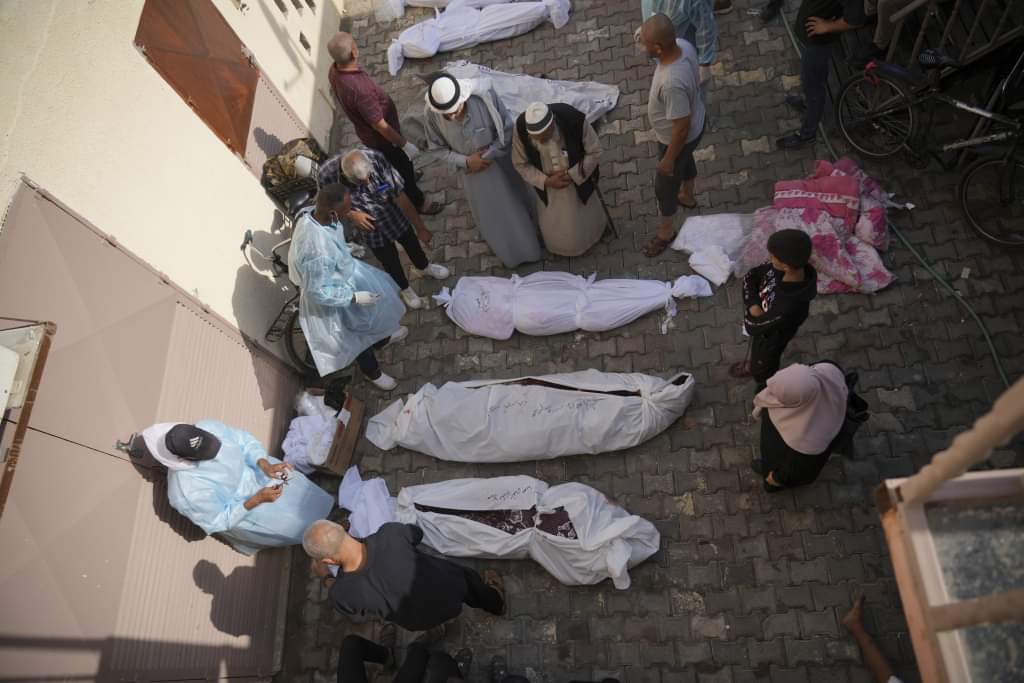
More than 100 people were killed in a series of Israeli airstrikes across Gaza on Tuesday, according to health officials in the enclave. The strikes came shortly after Israel accused Hamas of violating a fragile ceasefire agreement — an allegation Hamas has denied.

Palestinian health authorities said the attacks targeted several densely populated areas, leaving scores of civilians among the dead and many others injured. Rescue teams continued to search through the rubble for survivors late into the night.

In a statement, Hamas rejected Israel’s claims of ceasefire breaches and accused Israel of deliberately escalating the conflict. The group also said Israeli authorities had prevented the return of the bodies of Israeli hostages who were killed during earlier clashes.

The renewed violence has raised fears of a broader breakdown in the ceasefire, which had offered a brief respite after months of devastating fighting. International calls for restraint have grown as humanitarian conditions in Gaza continue to worsen.

Canada, Australia and UK formally recognise Palestinian state

By Muhammad Abubakar

In a historic diplomatic shift, the governments of Canada, Australia, and the United Kingdom have formally recognised the State of Palestine. The announcement, made in a joint statement on Sunday, marks a significant moment in international support for Palestinian statehood.

Leaders of the three countries said the recognition was aimed at advancing a just and lasting peace in the Middle East, reaffirming their commitment to a two-state solution. They urged both Israel and Palestine to return to negotiations and called for an immediate halt to violence in the region.

The move has been welcomed by Palestinian officials, who described it as a “courageous step towards justice and self-determination.” However, Israel has expressed strong opposition, warning that such recognition could undermine peace efforts.

The decision by three of the world’s most influential Western nations is expected to increase pressure on other countries to follow suit, potentially reshaping the dynamics of the Israeli-Palestinian conflict on the global stage.

The United Nations and eight decades of impotence

By Amir Abdulazeez

The United Nations is currently holding its 80th General Assembly sessions in New York. Some days earlier, the U.S. State Department, under the pretext of national security and anti-terrorism laws, revoked visas for dozens of Palestinian officials, including President Mahmoud Abbas slated to participate, at the General Assembly and a high-level two-state conference. This move drew criticism from the UN itself, EU and some human rights groups, with calls to relocate Palestinian-related meetings outside New York. This echoes historical precedents, notably the 1988 visa denial to Late Yasser Arafat, which forced the UN to shift one of its sessions to Geneva to allow him participate.

Although the 1947 ‘Headquarters Agreement’ obliges the United States to admit all UN participants, Washington occasionally and selectively invokes security and legal excuses to discriminate between entrants. Such practices explain how the UN’s operations remain vulnerable to U.S. control, thereby undermining its independence, authority and credibility. As the UN marks the 80th anniversary of the ratification of its charter on 24th October 2025, the organization which was founded on the ashes of World War II in 1945 faces an existential crisis of credibility and effectiveness.

While it has achieved notable successes in humanitarian aid, educational research and global environmental and health initiatives, its core mission of maintaining international peace and security has been repeatedly undermined by structural and diplomatic flaws. The organization’s inability to meaningfully respond to crises from Syria to Ukraine and most visibly in the Israeli-Palestinian conflict, has exposed fundamental weaknesses that warrant urgent reform. The UN’s record is one of profound paradox: a body designed for action but often defined by its inaction. Nowhere is this impotence more starkly illustrated than in its 70 years’ failure to resolve the Palestinian question or to hold Israel accountable for its international impunities.

From the outset of the Israeli-Palestinian conflict, the United Nations assumed a central role by proposing the 1947 Partition Plan, which sought to establish separate independent states for both parties. Although initially conceived as a potential path to peace, the plan was never enforced and the UN has since struggled to translate its own decisions into reality. Further failures are documented in a paper trail of unimplemented resolutions: Security Council Resolution 242 (1967) called for Israel’s withdrawal from territories occupied during the Six-Day War; Resolution 338 (1973) and countless subsequent resolutions reaffirmed this demand that was not only ignored but instead empowered Israel’s massive expansion of illegal settlements.

Beyond the unimplemented resolutions, a critical UN failure in this regard is that of narrative framing. It has been unable to consistently enforce a foundational principle: that the right to self-determination for one people (Israelis) cannot be predicated on the denial of that same right to another (Palestinians). The organization’s various bodies often treat the conflict as a symmetrical dispute between two equal parties, rather than an asymmetrical struggle between a nuclear-armed occupying power and a stateless, occupied population living under a brutal blockade.

The core of the UN’s ineffectiveness lies in the flawed decision-making structure of its Security Council, where the five permanent members (United States, Russia, China, France and United Kingdom) hold the autocratic privilege of veto power. This system of outdated World War II geopolitics has frequently paralyzed the organization in hours of need. Since 1946, the veto has been selfishly exercised about 300 times. Between 2011 and 2023, Russia and China blocked 16 resolutions on Syria, enabling the Assad regime’s brutal campaign against civilians. The United States, meanwhile, has used its veto more than 50 times to shield Israel from accountability, making Palestine the single most vetoed issue in UN history. Instead of serving as a platform for global security, the Council has become an arena for shameless and hypocritical power politics.

The General Assembly, despite representing all 193 member states equally, has been relegated to a largely ceremonial role in matters of international peace and security. While the Assembly can pass resolutions by majority vote, these carry no binding legal force and are routinely ignored by powerful nations. The 2012 resolution calling for an arms embargo on Syria passed with 133 votes but had no practical effect, as Russia continued supplying weapons to the Assad government. This has created a two-tiered system where the views of the international majority are systematically subordinated to the interests of Security Council Super Powers.

The selective enforcement of international law has become a defining hallmark of UN impotence. While the organization has at times demonstrated resolve such as coordinating global sanctions against apartheid South Africa in the 1980s or authorizing military intervention in Libya in 2011, its responses to other similar crises have been inconsistent and politically driven. Similarly, the International Criminal Court, often operating with UN support, swiftly indicted leaders of Liberia, Sudan and Libya, yet no Western or allied leaders like George W. Bush or Tony Blair have been held to account for baseless interventions in Iraq, Afghanistan or Yemen. These double standards have eroded the UN’s credibility and moral authority, particularly in the Global South, where it is increasingly viewed as an instrument of Western hegemony.

The UN’s peacekeeping apparatus, while successful in some contexts, has also demonstrated significant limitations when confronting determined state actors. The United Nations Disengagement Observer Force (UNDOF) on the Golan Heights and the United Nations Interim Force in Lebanon (UNIFIL) have maintained buffer zones during their operations, but have been powerless to prevent violations by all parties. During the 2006 Lebanon War and subsequent conflicts, these forces could only observe and report violations rather than enforce compliance.

Financial manipulation has emerged as another tool of selective pressure within the UN system. The United States, which contributes 22% of the UN’s regular budget, has repeatedly withheld or threatened to withhold funding to pressure the organization on specific issues. In 2018, the Trump administration cut $285 million from UN peacekeeping operations and reduced contributions to various UN agencies. The UN’s human rights mechanisms face similar challenges of selective application and political manipulation. The Human Rights Council, reformed in 2006 to address criticisms of its predecessor, continues to be influenced by bloc voting and political considerations rather than objective human rights assessments. Countries with questionable human rights records have served on the Council while using their positions to deflect criticism and protect allies.

Critics argue that the UN has become a stage for symbolic debates while real decisions and tangible actions are outsourced to global bullies like the US, less formal coalitions like the NATO and regional actors like the EU. For example, the U.S.-brokered Abraham Accords normalized relations between Israel and several Arab states without addressing core Palestinian concerns while side-lining the UN. Similarly, its response to Russia’s invasion of Ukraine in 2022 was limited to humanitarian aid and symbolic condemnation, as bodies like EU looked more relevant and assertive.

The rise of new global powers and changing geopolitical realities have rendered the UN’s 1945 structure increasingly obsolete. Reform proposals have circulated for decades but have consistently failed due to the resistance of existing power holders. Things have changed since World War II, nations have evolved, others have declined and hence the UN must be reformed to reflect current realities. The permanency of the Security council membership must be reviewed and the senseless veto authority must be abolished or modified along the lines of justice and accountability. As the United Nations approaches its 80th anniversary, the choice is clear: fundamental reform or continued irrelevance.

Maintaining the United Nations system costs about $50–55 billion per year, not counting military deployments and opportunity costs. Beyond money, states commit significant diplomatic, military, humanitarian and bureaucratic resources to maintain their participation. This makes the UN one of the most resource-intensive international organizations ever created. Without serious reforms to address structural inequalities, eliminate veto abuse and restore the primacy of international law over great power politics, the UN risks becoming a historical footnote rather than the cornerstone of the global governance its founders envisioned. The international community must decide whether it will tolerate continued dysfunction or demand the transformative changes necessary to address 21st century challenges.

Israel is committing genocide in Gaza, scholars say

By Muhammad Abubakar

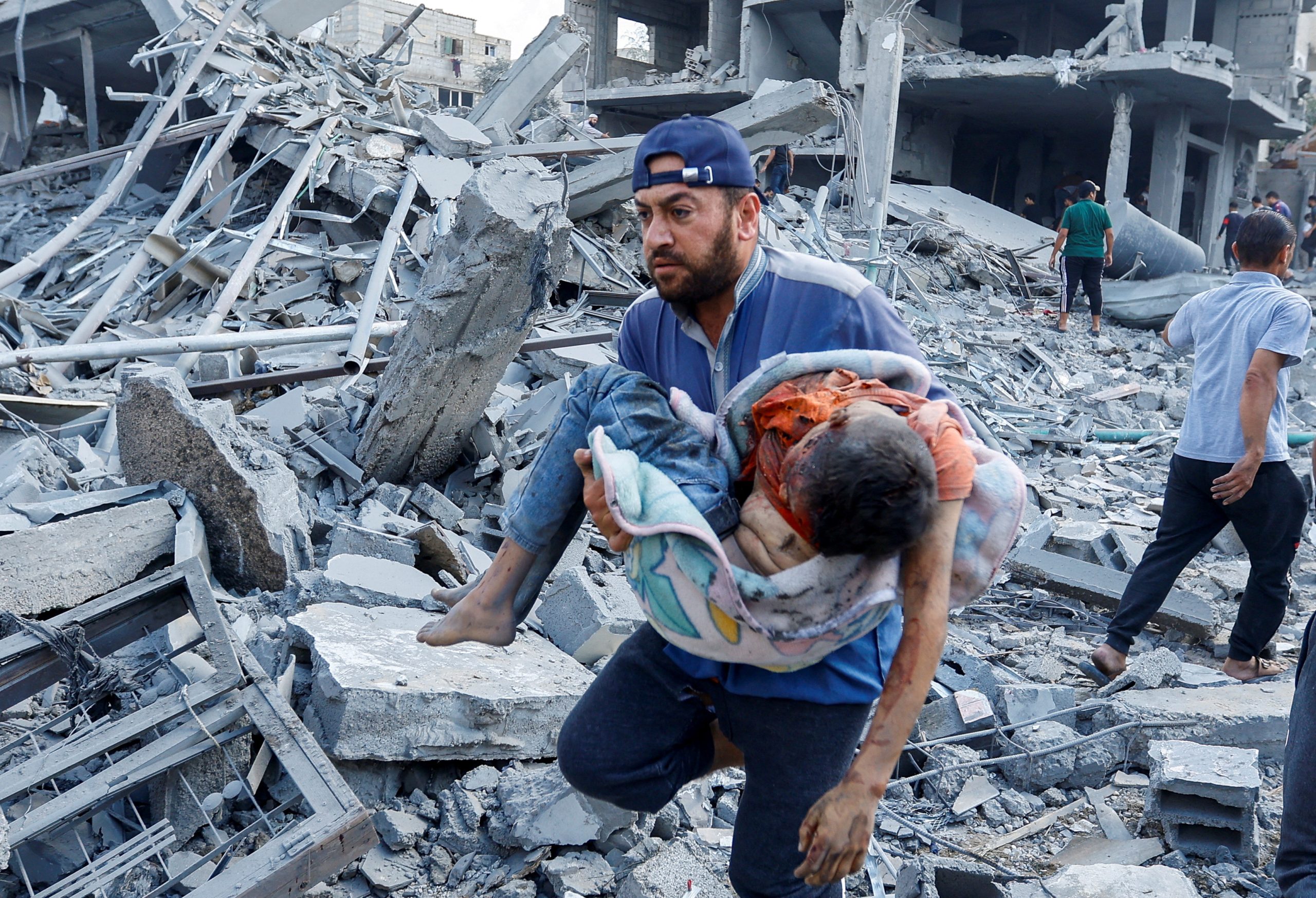
The world’s foremost body of genocide experts has declared that Israel’s military campaign in Gaza meets the legal definition of genocide.

In a resolution issued this week, the International Association of Genocide Scholars (IAGS) urged Israel to “immediately cease all acts that constitute genocide, war crimes and crimes against humanity against Palestinians in Gaza.”

The association cited starvation, the blocking of humanitarian aid, and forced displacement among the practices that, in its view, fulfill the criteria set out under international law.

The resolution adds to growing international pressure as civilian casualties and a deepening humanitarian crisis continue to draw condemnation from human rights groups and global leaders.

US Army colonel suspended after calling Israel “Our worst ally”

By Muhammad Sulaiman

The U.S. Army has suspended Colonel Nathan McCormack following controversial remarks in which he described Israel as “our worst ‘ally,’” igniting a firestorm of political and military reaction.

In a statement made during a closed-door security forum that was later leaked online, Col. McCormack reportedly said: “Israel is our worst ‘ally.’ We get literally nothing out of the ‘partnership’ other than the enmity of millions of people in the Middle East, Africa and Asia.”

The Pentagon confirmed McCormack’s suspension on Tuesday, stating that the remarks are under formal review for possible violations of the Uniform Code of Military Justice and Department of Defence policies on political expression.

“While service members are entitled to personal opinions, public statements by active-duty officers that could affect diplomatic relations are taken seriously,” a Defence Department official said on condition of anonymity.

Col. McCormack, a senior officer with experience in multiple overseas deployments, has not yet commented publicly, but sources close to him say he stands by his critique and views it as a matter of strategic honesty.

His suspension has drawn sharply divided reactions. Critics called his comments inflammatory and damaging to U.S.-Israel relations, while supporters praised his candour, arguing that Washington’s unconditional support for Israel has long gone unquestioned within military circles.

The incident adds to a broader debate in Washington over the costs and consequences of U.S. foreign policy in the Middle East, especially amid ongoing international criticism of Israel’s actions in Gaza and Iran.

Pep Guardiola delivers powerful speech on Gaza at honorary degree ceremony

By Muhammad Sulaiman

Pep Guardiola, the renowned Manchester City manager, delivered a moving and heartfelt speech on the humanitarian crisis in Gaza while receiving an honorary doctorate from the University of Manchester this week.

In an emotional address, Guardiola veered from the usual ceremonial tone to speak about the suffering in Gaza, calling for compassion and courage in the face of ongoing violence. 

“It is so painful what we see in Gaza, it hurts all my body,” he said, his voice weighted with emotion. “It is not about ideology but the love of life. It is about refusing to be silent or still when it matters the most.”

Guardiola, known as much for his principled stances as for his tactical brilliance on the pitch, received a standing ovation from many in the audience, including faculty, students, and dignitaries.

The University of Manchester awarded Guardiola the honorary degree in recognition of his contributions to sport and his influence as a global figure. Yet, it was his candid acknowledgement of human suffering and his call for empathy that left a lasting impression.

Social media erupted in praise following the speech, with many highlighting Guardiola’s words as a rare and courageous gesture from a figure in elite sport.

As tensions and humanitarian concerns continue to mount in Gaza, Guardiola’s remarks have added a prominent voice to the growing international calls for peace and justice.

Matthew Miller: Israel has ‘without doubt’ committed war crimes in Gaza

By Muhammad Abubakar

Matthew Miller, former spokesperson for the U.S. State Department under President Joe Biden, has said Israel has “without doubt” committed war crimes in Gaza.

In a recent interview, Miller pointed to the targeting of civilian infrastructure, the high civilian death toll, and the ongoing blockade as clear violations of international law. His remarks mark a significant departure from the official U.S. position, which has largely avoided directly accusing Israel of war crimes.

Miller’s comments come as independent investigations into alleged violations by Israeli forces continue. He also criticized the Biden administration’s support for Israel, warning it risks enabling serious breaches of humanitarian law.

Spain urges sanctions against Israel amid Gaza humanitarian crisis

By Muhammad Abubakar

Spain has called for international sanctions against Israel following its ongoing military campaign in Gaza, which has led to heavy civilian casualties and a worsening humanitarian situation.

At a high-level summit in Madrid, Spanish Foreign Minister José Manuel Albares proposed suspending the EU’s cooperation agreement with Israel, imposing an arms embargo, and targeting top Israeli officials with sanctions. 

Mr Albares also called on world powers to recognise the State of Palestine as a step toward peace.

Spain has joined South Africa’s case at the International Court of Justice, accusing Israel of genocide, further escalating diplomatic pressure. 

Meanwhile, public protests across major Spanish cities have amplified demands for an end to arms sales and more decisive action against Israel.

UK, France, and Canada condemn Israeli military escalation in Gaza, threaten sanctions

By Muhammad Abubakar

The leaders of the United Kingdom, France, and Canada issued a joint statement today strongly condemning the Israeli government’s continued military operations in Gaza and its denial of humanitarian aid to the besieged population.

In the statement, the three nations called the humanitarian situation in Gaza “intolerable” and labelled Israel’s limited allowance of food into the territory as grossly inadequate. They urged the Israeli government to halt its military offensive immediately and allow unimpeded delivery of humanitarian aid, in cooperation with the United Nations.

The leaders also called on Hamas to release the remaining hostages held since the October 7, 2023, attack on Israel, while affirming Israel’s right to self-defence. However, they described the ongoing Israeli response as “wholly disproportionate.”

The statement strongly criticised the Israeli government’s use of inflammatory rhetoric and warned that permanent forced displacement of Gaza’s population would constitute a breach of international humanitarian law.

The three countries also voiced strong opposition to the expansion of illegal Israeli settlements in the West Bank, stating such actions undermine prospects for a viable Palestinian state and threaten regional security. They pledged to take further actions, including potential targeted sanctions, if the situation does not improve.

The joint statement expressed support for current ceasefire efforts led by the United States, Qatar, and Egypt, and emphasised the need for a long-term political solution. The leaders stressed their commitment to a two-state solution. They highlighted the upcoming June 18 international conference in New York, co-chaired by Saudi Arabia and France, as a key moment for advancing peace.

“We are committed to recognising a Palestinian state as a contribution to achieving a two-state solution,” the statement concluded, reaffirming their readiness to work with international partners to bring stability to the region.