Iran

US strike on Iranian school: China donates $200,000 to families of slain students

By Hadiza Abdulkadir

China has announced a $200,000 humanitarian donation to support the families of students killed in a missile strike on a school in Iran earlier in the war, according to reports by Agence France-Presse (AFP).

In a statement on Friday, China’s foreign ministry said the Chinese Red Cross Society will channel the funds through the Iranian Red Crescent Society to assist the parents of the victims.

Beijing described the incident as an “indiscriminate” missile strike carried out by the United States that resulted in the deaths of several students. The donation, officials said, will serve as emergency humanitarian assistance intended for “condolences and compensations” to the bereaved families.

China also reiterated its call for the protection of civilians, particularly children, during armed conflicts.

US military refueling aircraft crashes in Western Iraq

By Sabiu Abdullahi

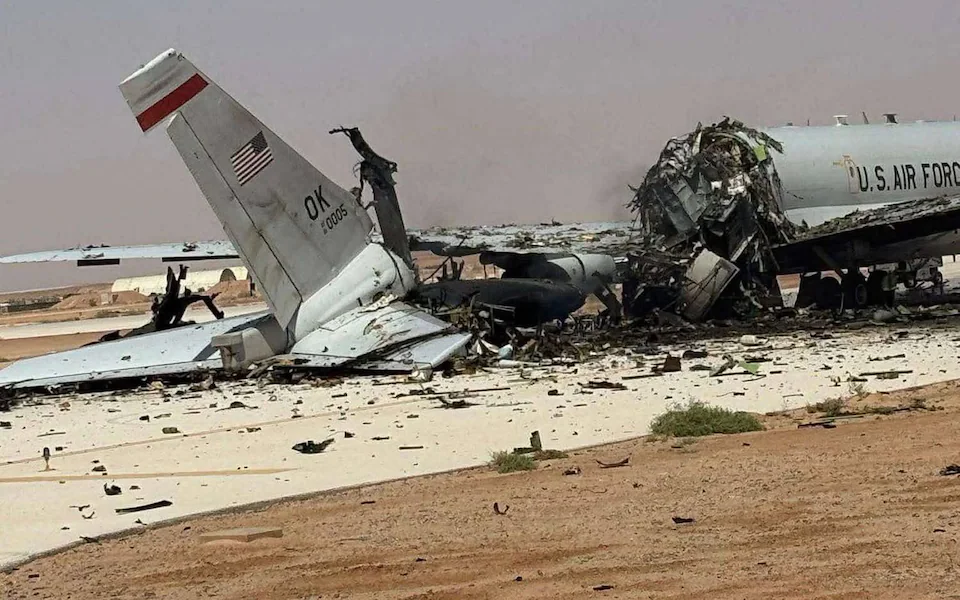
A United States military refueling aircraft has crashed in western Iraq, the US Central Command confirmed on Thursday, saying the incident involved another aircraft but was not caused by hostile or friendly fire.

In a statement, the command said rescue operations were underway after the KC-135 refueling aircraft went down during a mission. It added that the second aircraft involved in the incident landed safely.

“The incident occurred in friendly airspace during Operation Epic Fury,” the statement said, referring to the military operation name for the US campaign against Iran.

A US official who spoke on the condition of anonymity said the second aircraft was also a KC-135. The official added that up to six service members were on board the aircraft that crashed.

Meanwhile, the Islamic Resistance in Iraq, a coalition of Iran-backed armed groups, claimed responsibility for bringing down the aircraft.

In a statement, the group said it had shot down the KC-135 aircraft “in defense of our country’s sovereignty and airspace”.

The KC-135 tanker aircraft was produced by Boeing in the 1950s and early 1960s. It has remained a key part of the US military’s aerial refueling fleet. The aircraft allows combat planes to continue missions without the need to land for fuel.

The latest incident comes as fighting continues between the United States, Israel, and Iran. Since the US and Israel began strikes on Iran on February 28, seven American troops have been killed.

Reuters reported earlier this week that up to 150 US troops have been wounded in the conflict.

On the same day as the crash, two US sailors were also injured after a fire broke out aboard the USS Gerald Ford. Officials said the fire was not related to combat.

Overall, the war has claimed more than 2,000 lives so far, including nearly 700 people in Lebanon.

Ships declare China links to avoid attacks in Strait of Hormuz

By Sabiu Abdullahi

Some commercial ships travelling through the Strait of Hormuz and nearby Gulf waters have begun identifying themselves as linked to China in an apparent effort to avoid attacks since the start of the Iran war.

Marine traffic data shows that several vessels in the Gulf and the Gulf of Oman altered their destination signals to short messages such as “CHINA OWNER” or “CHINA OWNER&CREW”. The Associated Press reviewed the data from the ship-tracking platform MarineTraffic.

At least eight vessels adopted the practice. Some of them later continued their journey through the strait toward their destinations. Others remained within the surrounding waters.

Security analysts say the move appears intended to lower the chances of being targeted. Ana Subasic, a trade risk analyst at data and analytics firm Kpler, which owns MarineTraffic, explained the reason behind the signals.

“The main goal of vessels publicly identifying themselves as ‘Chinese’ while transiting the Gulf or the Strait of Hormuz is primarily to reduce the risk of being attacked rather than to facilitate passage through the strait itself,” she said.

According to analysts, Iran and groups allied with it have generally avoided striking vessels connected to China. Observers attribute this to Beijing’s relatively neutral position and its strong economic ties with Tehran.

Kun Cao, client director at consulting firm Reddal, said the message carried by such signals is clear. “The message is more like ‘do not mistake me for the kind of ship you said you would hit,’” he said.

Attacks on ships in the Gulf and surrounding waters have raised alarm among global shipping companies. Reports indicate that at least 19 commercial vessels in the region have sustained damage since the conflict began.

MarineTraffic data also shows that most of the ships using the China identification messages do not sail under the Chinese flag. Several of them are registered in countries such as Panama and the Marshall Islands.

Cao explained that the nationality of a ship’s flag often does not reflect the origin of its owner in international shipping.

Experts say the effectiveness of the tactic remains uncertain. Rico Luman, a senior economist at Dutch bank ING who specialises in transport and logistics, said many cargo ships have strong business links with China through ownership, operations or cargo.

Destination signals are short messages that ship crews manually enter into their vessel’s tracking system. The information is broadcast publicly and usually indicates the ship’s next port.

Subasic said the messages help improve navigation safety and allow ports to prepare for arriving vessels. However, the information is not always verified immediately.

Because of that, she said, “some vessels occasionally use it to display additional information or signals, such as references to ownership or nationality.”

A similar tactic appeared earlier during attacks by Yemen’s Iran-aligned Houthi group in the Red Sea. At that time, some ships also declared links to China in an attempt to reduce the risk of being targeted.

Iranian drone strike in Kuwait kiIIs six US troops, dozens injured

By Sabiu Abdullahi

An Iranian drone strike on a United States military facility in Kuwait during the early stage of the war between Washington and Tehran has killed six American service members and left dozens of others seriously injured.

The attack targeted a tactical operations centre at Shuaiba port near Kuwait City on March 1, according to multiple sources cited by CBS News.

The strike occurred in the early hours of the conflict. It triggered a difficult rescue operation after thick smoke filled the building and trapped several personnel inside.

Sources said the situation at the scene was severe. Rescuers struggled to reach the wounded soldiers due to heavy smoke and scattered debris.

More than 30 American military personnel remained hospitalised as of Tuesday night after the attack.

One injured service member is receiving treatment at Brooke Army Medical Centre in San Antonio. Twelve others are being treated at Walter Reed National Military Medical Centre near Washington, D.C. About 25 additional troops are undergoing treatment at Landstuhl Regional Medical Centre in Germany.

Sources said about 20 wounded soldiers were transported to Germany on Tuesday aboard a C-17 military aircraft after their conditions were classified as urgent. Many of them reportedly suffered traumatic brain injuries, memory loss and severe concussions.

Military authorities also deployed over 100 additional medical personnel to the Landstuhl facility to support treatment for the wounded.

Two service members who were initially listed as missing after the strike were later discovered trapped under rubble, according to the sources.

The Pentagon earlier played down the scale of the casualties. On March 1, it stated that five troops had suffered serious injuries while several others sustained minor wounds such as shrapnel injuries and concussions.

Under United States military classification, a serious injury refers to a condition that requires medical attention where doctors believe death is possible but unlikely within 72 hours.

US Defence Secretary Pete Hegseth acknowledged the strike last week while speaking at the Pentagon. He said American air defence systems intercepted most of the incoming projectiles, although one drone managed to penetrate the defences.

“You have air defences, and a lot’s coming in, and you hit most of it. Every once in a while, you might have one, unfortunately, we call it a squirter, that makes its way through. And in that particular case, it happened to hit a tactical operations center that was fortified, but these are powerful weapons,” he said.

Hegseth noted that the drone struck a fortified tactical operations centre and emphasised the destructive power of the weapons used in the attack.

The Kuwait incident formed part of several Iranian strikes on American positions across the region after hostilities began.

At least one US service member was also killed in a separate attack in Saudi Arabia on the same day, although officials have not confirmed how many others were injured in that incident.

On Tuesday, Pentagon spokesman Sean Parnell said around 140 American troops had sustained injuries since the start of the conflict. He did not specify the locations where the injuries occurred.

Parnell said most of the casualties were minor and confirmed that 108 service members had already returned to duty.

However, the Pentagon reported that eight troops remain severely injured and are currently receiving intensive medical care.

The United States military said its bases across the region are protected by extensive air defence systems designed to intercept Iranian missiles and drones. The March 1 attack, however, showed that some projectiles can still evade those defences and cause significant casualties.

Iran warns no oil will pass through Strait of Hormuz amid war

By Sabiu Abdullahi

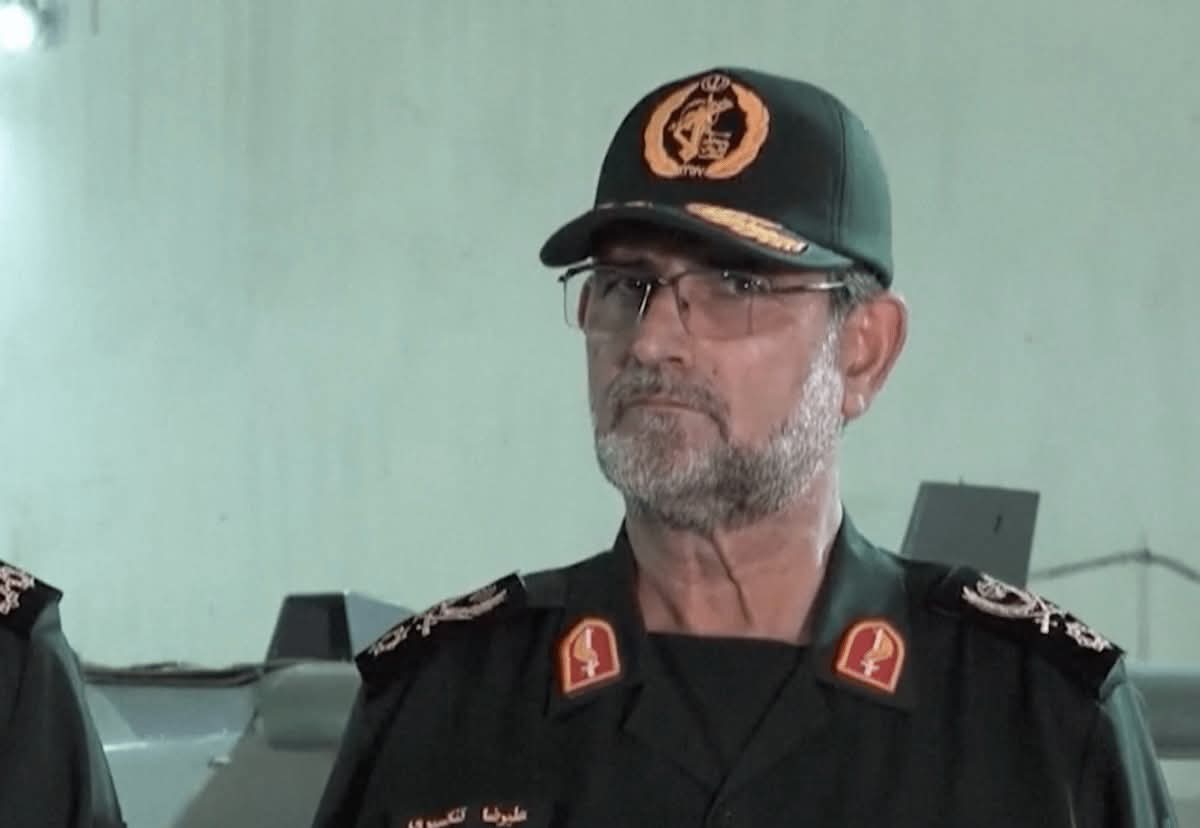
Iran’s Islamic Revolutionary Guard Corps (IRGC) has warned that no oil shipments will pass through the Strait of Hormuz as the conflict involving the United States and Israel continues to shake global energy markets.

A spokesperson for the IRGC’s Khatam al-Anbiya Headquarters said on Wednesday that the waterway would remain effectively closed. The official warned that vessels linked to the United States, Israel or their allies could face attack.

“You will not be able to artificially lower the price of oil. Expect oil at $200 per barrel,” the spokesperson said. “The price of oil depends on regional security, and you are the main source of insecurity in the region.”

The warning came as the war, which began on February 28, entered its second week with no sign of easing. The conflict has already caused major fluctuations in global oil prices.

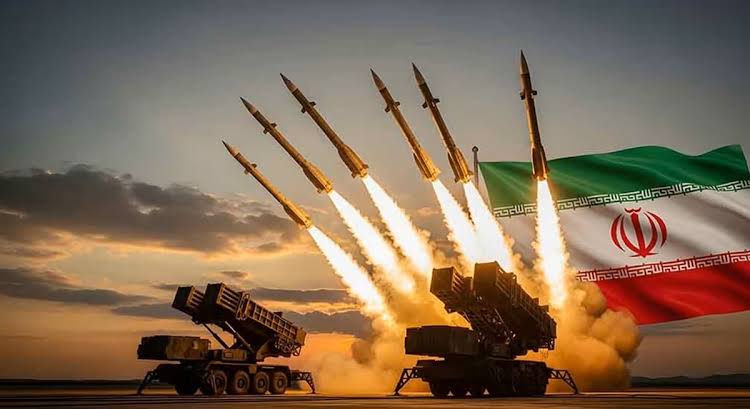
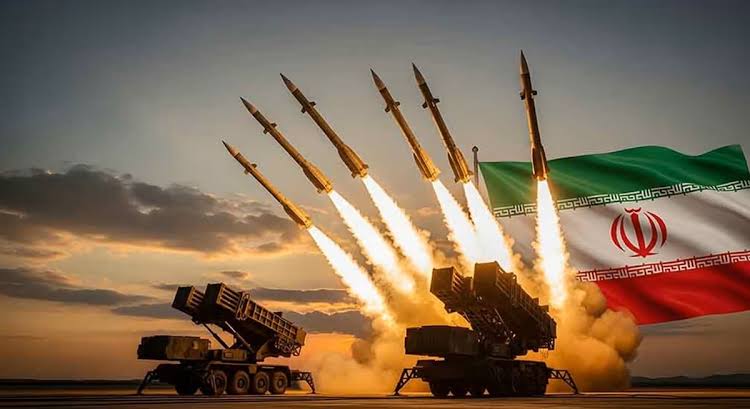
Iran has launched missiles and drones at targets across the Middle East in response to continued attacks by the United States and Israel. The situation has raised fears of deeper disruption to global energy supplies.

The Strait of Hormuz is a vital maritime route for global energy trade. About one-fifth of the world’s oil passes through the narrow waterway. The closure has already slowed oil shipments and affected production in some Gulf countries.

Maritime security firms also reported fresh attacks in the area on Wednesday. Three vessels were struck by projectiles in the Strait of Hormuz. One of them was a Thai-flagged cargo ship that came under attack about 11 nautical miles north of Oman.

Despite the security concerns, U.S. President Donald Trump encouraged commercial vessels to continue using the route.

“I think they should,” Trump said when asked whether ships should keep passing through the strait.

“I think you’re going to see great safety, and it’s going to be very, very quickly,” he added.

Meanwhile, the United Nations warned that the disruption is also affecting humanitarian operations. UN aid chief Tom Fletcher called for special arrangements to allow relief supplies to pass through the strait.

“We’re appealing to all the parties to try and secure those routes, including the Strait of Hormuz, for our humanitarian traffic … so we can reach anyone, anywhere, on the basis of greatest need,” Fletcher said.

“We’re living through a moment right now of grave peril,” he added.

The ongoing disruption has pushed world leaders to consider emergency measures. Members of the Group of Seven and the European Union are reviewing steps to reduce the economic impact of the war.

On Wednesday, the International Energy Agency (IEA) announced that its 32 member countries had agreed to release 400 million barrels of oil from emergency reserves to stabilise the market.

“This is a major action aiming to alleviate the immediate impacts of the disruption in markets,” IEA Executive Director Fatih Birol said.

“But to be clear, the most important thing for a return to stable flows of oil and gas is the resumption of transit through the Strait of Hormuz,” he added.

Energy analysts warn that if shipping through the strait does not resume soon, the global economy could face a serious supply crisis.

Christian Bueger, a professor of international relations at the University of Copenhagen, said the shipping sector is already struggling to operate in the area.

“For the shipping industry right now, it’s impossible to go through the Strait of Hormuz,” he said.

“And if there are not stronger signals in the near future that they can at least try to go through the strait, then we are looking at a major shipping crisis, which can last weeks if not months.”

Several countries have already begun preparing for the disruption. Japan announced plans to release about 80 million barrels of oil from its national and private reserves. Germany and Austria also signalled that they would make part of their emergency reserves available.

Japanese Prime Minister Sanae Takaichi said the country would begin releasing the oil from Monday, noting that about 70 percent of Japan’s oil imports pass through the Strait of Hormuz.

Italian PM Meloni criticises Trump, condemns Iran school strike as ‘massacre’

By Sabiu Abdullahi

Italian Prime Minister Giorgia Meloni has criticised the United States and Israel over their military campaign against Iran. She said their actions fall outside international law and insisted that Italy will not join the conflict.

Meloni made the remarks on Wednesday during an address to the Italian Senate. Her comments marked her strongest criticism of the war so far.

She said the military campaign launched by Washington and Israel violated international legal norms. The Italian leader also called for a full investigation into the missile strike on the Shajareh Tayyebeh girls’ school in Minab, southern Iran.

The attack occurred on February 28, the first day of the war. More than 160 people died in the strike. Most of the victims were children.

Meloni described the incident as a “massacre”. She told lawmakers that responsibility for the strike must be determined.

“Responsibility must be ascertained for the massacre of girls in southern Iran. The safety of civilians and children must be protected,” she said.

Her position could create tension with U.S. President Donald Trump. Both leaders have previously appeared to maintain a close relationship.

Despite the criticism, Meloni stressed that Italy has no intention of joining the war. She told the Senate that the conflict was “an intervention that Italy is not part of and does not intend to take part in”.

The prime minister also addressed speculation that the United States might seek access to Italian military facilities. She said Washington has not asked to use Italian air bases for military operations. However, she explained that any such request would require approval from the Italian parliament.

Meloni warned that the conflict reflects a deeper crisis in the global order.

She said the war must be viewed within the context of a “structural crisis in the international system”. According to her, threats around the world are becoming more dangerous. She also warned that unilateral military actions are increasing.

At the same time, Meloni emphasised that Iran must not develop nuclear weapons. She said such a development would pose a serious threat to Europe.

“We cannot afford a regime of ayatollahs in possession of nuclear weapons, combined with a missile capability that could soon be able to directly strike Italy and Europe,” she said.

Questions have also emerged over the missile strike on the school in Minab. President Trump said earlier that the incident was under investigation. He also suggested that Iran might have fired the missile.

However, analysis by several experts indicates the school may have been struck by a U.S. Tomahawk missile. Neither Iran nor Israel is known to possess such weapons.

Preliminary findings from a military inquiry suggest the strike may have resulted from outdated targeting information. Officials said the investigation remains at an early stage.

If U.S. forces are confirmed to be responsible, the attack could rank among the most serious incidents involving American troops killing civilians in the Middle East in recent decades.

Meloni said the United States must establish who carried out the strike.

Meanwhile, the Italian government has taken steps to protect its citizens in the Gulf region. Meloni told parliament that Italy is providing air defence assets to allied Gulf countries facing missile and drone attacks from Iran.

She explained that thousands of Italians live and work in the region. Italy also maintains a military presence there.

“This is not only because these ⁠are friendly ⁠nations and strategic partners of Italy, but also because there are tens of thousands of Italian citizens in that area whom we must protect, not to mention the fact that there are about 2,000 Italian soldiers stationed in the Gulf,” she said.

Meloni delivered her remarks as an Italian naval frigate arrived in Cyprus. The vessel, Federico Martinengo, joined German, French and Greek warships already deployed near the island.

European countries have increased their military presence in the area after an Iranian-made drone struck RAF Akrotiri, a British air base in Cyprus, last week.

Britain has also sent a warship to the eastern Mediterranean. HMS Dragon left Portsmouth on Tuesday, although British authorities have faced criticism over the time it took to deploy the vessel.

In a separate development, Spain has formally withdrawn its ambassador to Israel, Ana María Salomón Pérez. She had earlier been recalled from Tel Aviv by Spanish Prime Minister Pedro Sánchez.

Sánchez took the step after banning the United States from sending weapons to Israel. He said the move was intended to stop what he described as “genocide” in Gaza.

Israel accuses Iran of hacking security cameras amid Middle East war

By Sabiu Abdullahi

Israel’s cybersecurity directorate has reported “dozens of Iranian breaches into security cameras for espionage purposes” since the outbreak of war in the Middle East, urging the public to remain alert.

“The directorate is working to alert hundreds of camera owners and calls on the public to change their passwords and update their software to prevent any security risk, whether national or personal,” Cyber Israel wrote on X on Monday.

Cyberattacks have been a recurring feature of the tense relationship between Iran and Israel, with both sides engaging in a shadow war that escalated into open conflict last June and again on February 28.

In December 2025, former Israeli prime minister Naftali Bennett — who plans to challenge incumbent Benjamin Netanyahu in this year’s general election — reported a cyberattack on his Telegram account, claiming hackers had accessed his phone.

Private messages, videos, and photographs allegedly taken from Bennett’s phone were later posted on a hacker site named after “Handala,” a character symbolizing the Palestinian cause, and on a related X account.

AFP quoted a cybersecurity expert noting that Iran-linked hackers intensified their activities in the region following attacks on the country.

Israeli cybersecurity firm Check Point highlighted in a report that since the start of the US-Israeli offensive on February 28, hackers have frequently accessed surveillance cameras, which are widely deployed but often poorly secured.

The images were reportedly used to evaluate damage from attacks and to “gather the necessary information” on “the habits (of targeted individuals) or locations to hit,” Gil Messing, head of cyberintelligence at Check Point, told AFP.

Messing added that the hackers “are part of (Iran’s) army” and “are largely supported by the state,” particularly by the Revolutionary Guards and the ministry of intelligence and security.

Last week, the Financial Times reported that Israel had monitored nearly all of Tehran’s traffic cameras for years in preparation for the operation that killed Iran’s supreme leader, Ali Khamenei, on the first day of the offensive.

Pentagon chief Hegseth promises ‘most intense day’ of US strikes as Iran war escalates

United States Secretary of Defence Pete Hegseth has said American forces are preparing for what he described as the most intense round of strikes against Iran since the conflict began.

Hegseth made the remark during a briefing with reporters on Tuesday. He stated that the United States believes it is gaining the upper hand in the war. However, he declined to give a timeline for when the fighting might end. He said President Donald Trump will determine the pace of the campaign.

According to the Pentagon chief, Washington’s military operations are focused on weakening Iran’s missile capacity, destroying its naval forces and ensuring that Tehran can never obtain nuclear weapons.

“We will not relent until the enemy is totally and decisively defeated,” Hegseth said.

“We do so on our timeline and at our choosing. For example, today will be yet again, our most intense day of strikes inside Iran – the most fighters, the most bombers, the most strikes.”

Despite the claims from Washington, Iranian leaders have projected defiance. They have promised that the country will continue to resist the attacks.

“Those mightier than you have not been able to eliminate our nation. Those who have tried have become eradicated themselves,” Iranian official Ali Larijani wrote in a social media post on Tuesday.

Iran has repeatedly denied that it is pursuing nuclear weapons. Authorities in Tehran insist the country’s nuclear programme is peaceful. The denial comes despite earlier claims by President Trump that US strikes in June 2025 had “obliterated” Iran’s nuclear programme.

The conflict has already led to heavy casualties. US and Israeli strikes have killed Iran’s Supreme Leader Ali Khamenei along with more than 1,250 other people. Iran has responded with missile and drone attacks against Israel and other targets across the region.

Iranian forces have also targeted oil facilities in several Gulf countries. The military campaign has disrupted shipping through the Strait of Hormuz, which is one of the world’s most important energy routes. The disruption has pushed global fuel prices higher.

President Trump warned Iran on Monday that it would face “death, fire, and fury” if it continued to block oil shipments through the strategic waterway.

Larijani responded with a warning of his own. He said the strait “will either be a Strait of peace and prosperity for all or will be a Strait of defeat and suffering for warmongers”.

Top US General Dan Caine said American forces are still tracking and striking vessels suspected of laying naval mines in the Gulf. He noted that Washington has not yet decided whether the US Navy will escort oil tankers through the strait.

“If tasked to escort, we’ll look at the range of options to set the military conditions to be able to do that,” Caine said.

The war has also revealed differences in military priorities between the United States and Israel. Last week, Israeli forces struck oil depots in Tehran. The attack triggered large fires and thick smoke across the Iranian capital. The move attracted criticism from some supporters of the war.

Hegseth acknowledged that Israel has its own objectives in the conflict. He indicated that attacks on Iran’s energy infrastructure were not a primary US goal.

“Israel has been a really strong partner in this effort. Where they have different objectives, they pursued them. Ultimately, we’ve stayed focused on ours,” he said.

Questions remain about the long-term aim of the war. President Trump has offered different explanations in recent weeks. His statements have ranged from promoting “freedom” for Iranians to suggesting that a new Iranian leader from within the country’s political system could emerge and cooperate with US and Israeli demands.

When asked how long the conflict might last, Hegseth said the final decision rests with the president.

“The president has set a very specific mission to accomplish, and our job is to unrelentingly deliver that. Now, he gets to control the throttle. He’s the one deciding.”

Sirens heard in Jerusalem after Israel warns of Iranian missiles

By Sabiu Abdullahi

Air raid sirens sounded across Jerusalem and parts of central Israel on Tuesday after the Israeli military alerted residents about missiles launched from Iran. The development came on the 11th day of the ongoing conflict involving the United States, Israel, and the Islamic Republic.

The Israeli military confirmed that its air defence units had been activated in response to the incoming threat. In a statement, the military said, “Defensive systems are operating to intercept the threat.” Shortly after the warning, journalists from AFP reported hearing at least one explosion in Jerusalem.

Emergency service provider Magen David Adom said it had not recorded immediate casualties from the missile attack. However, the agency disclosed that some individuals were hurt while trying to reach shelters. It also stated that several others required medical attention due to shock. According to the service, its teams were attending to “a small number of people who were injured on their way to protected areas, as well as individuals suffering from anxiety.”

Officials said the latest missile strike followed a series of attacks that began after Iran responded to joint military actions carried out by the United States and Israel. First responders reported that at least 11 people have died in Israel since Iran started launching missiles in retaliation. Dozens of others have also sustained injuries.

On Monday, emergency workers reported that shrapnel killed one man and critically injured another in central Israel. Explosions were heard in the area after the Israeli military announced that missiles had been fired from Iran.

Meanwhile, Israeli Prime Minister Benjamin Netanyahu stated that the country’s military campaign against Iran would continue. In a statement issued on Tuesday, he said the operation was “not done yet.” His remarks came after US President Donald Trump suggested that the conflict could end “soon.”

Putin dares US, pledges “unwavering support” to Iran’s new Supreme Leader

By Sabiu Abdullahi

In what appears to be a daring move against the United States and its allies, Russian President Vladimir Putin has expressed support for Iran’s new Supreme Leader, Mojtaba Khamenei, after the cleric was appointed by the country’s Assembly of Experts.

Putin congratulated the 56-year-old on Monday. He said he believed the new leader would continue the legacy of his father, the late Ayatollah Ali Khamenei, who was killed in recent US-Israeli strikes.

The Russian leader said he was confident Mojtaba Khamenei would carry out his responsibilities “with honour” and unite the Iranian people “in the face of severe trials”.

Putin also reaffirmed Moscow’s position on Iran. He said Russia wished to confirm “unwavering support ‌for Tehran and solidarity with ⁠our Iranian ⁠friends”.

Iran and Russia have maintained close ties since the collapse of the Soviet Union in 1991. During the current conflict, reports have suggested Moscow may have supplied intelligence that helped Iranian forces target American positions. The White House has not denied those reports, although Russia has not formally entered the war on Iran’s side.

China has also reacted to the leadership change in Tehran. Beijing warned against any attempt by the United States or Israel to target Mojtaba Khamenei during their military campaign.

Meanwhile, the conflict in the Middle East has continued to intensify. Israel launched fresh air strikes on several Iranian locations, including Tehran, Isfahan and parts of southern Iran. Israeli officials said the attacks were directed at key infrastructure.

Thousands of Iranians gathered in major cities to show support for the new leader. Crowds assembled at Enghelab Square in Tehran and Naqsh-e Jahan Square in Isfahan. Many people carried Iranian flags and portraits of Mojtaba Khamenei while pledging loyalty to him.

In Washington, US President Donald Trump said any decision to end the war would involve both the United States and Israel.

“I think it’s mutual… a little bit. We’ve been talking. I’ll make a decision at the right time, but everything’s going to be taken into account,” Trump told The Times of Israel.

He also claimed the military action prevented a larger threat from Iran.

“Iran was going to destroy Israel and everything else around it… We’ve worked together. We’ve destroyed a country that wanted to destroy Israel,” he said.

Trump declined to comment directly on Mojtaba Khamenei’s appointment as Iran’s new supreme leader, saying only: “We’ll see what happens.”

Diplomatic efforts to calm the crisis are also under way. British Prime Minister Sir Keir Starmer said his government is working with partners to reduce tensions in the region.

French President Emmanuel Macron has travelled to Cyprus for talks with President Nikos Christodoulides on regional security. France has deployed naval forces to the Mediterranean and says it will help defend British bases on the island while Royal Navy ships are absent.