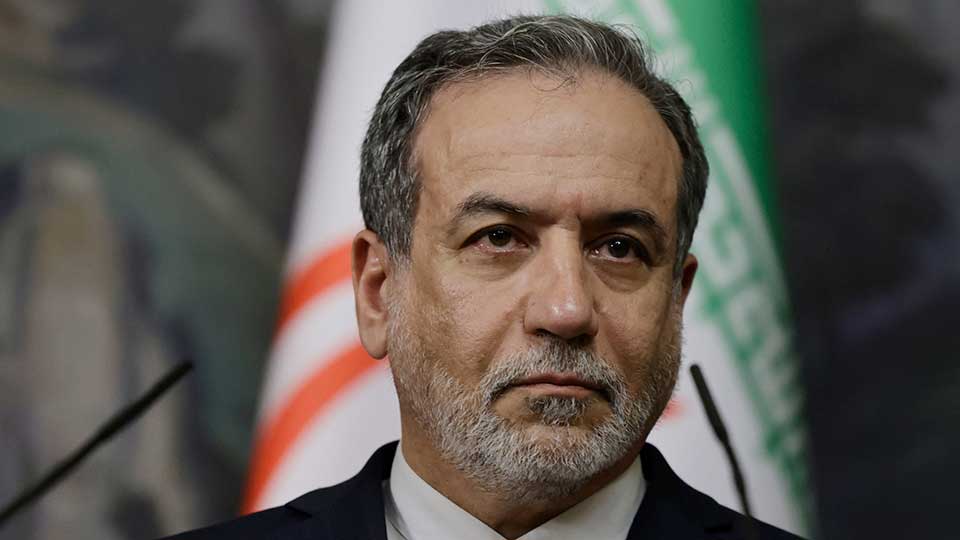
Iran

Iran launches strikes on Kurdish groups in Iraq over alleged collaboration with U.S., Israel

By Sabiu Abdullahi

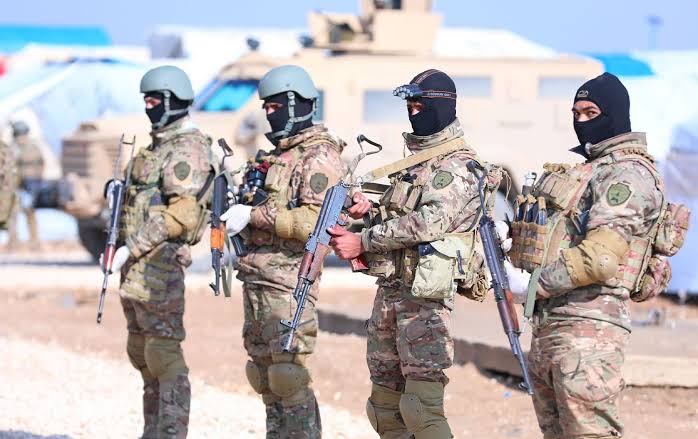
Iranian forces have carried out new military operations against Kurdish armed groups in northern Iraq as the conflict involving Iran, the United States and Israel continues to intensify across the Middle East.

The latest attacks come as Iran also launched another wave of missile and drone strikes targeting Israeli and American assets in the region.

Reports indicate that this marks the 19th round of Iranian strikes since the United States and Israel began coordinated military operations against Iran nearly a week ago. Iran’s semi-official Tasnim news agency said the conflict has already resulted in more than 1,045 deaths across the country.

Iran’s state media said early Thursday that its military struck what it described as “anti-Iran separatist forces” operating in the semi-autonomous Kurdish region of Iraq. Authorities did not immediately disclose the precise locations targeted.

Al Jazeera reported that Iran’s intelligence ministry later confirmed the operation. The ministry stated that Iranian forces attacked positions belonging to “separatist groups” that were allegedly preparing to infiltrate the country through its western border.

The ministry also claimed the armed groups suffered significant losses and accused them of working with the United States and Israel to carry out attacks on Iranian territory.

Officials further said Iranian forces were cooperating with what they called “noble Kurds” in the area to counter what they described as an “Israeli-American plan” to destabilise Iran.

Residents in Iraq’s northeastern province of Sulaimaniyah reported several explosions late Wednesday night. The province lies within Iraq’s autonomous Kurdish region.

Local media outlets said at least four explosions were heard near the areas of Arabat, Zarkuiz and Surdash. Sources in the region indicated that the strikes appeared to target the headquarters of the Kurdistan Toilers Association, widely known as Komala. The group is an Iranian Kurdish armed organisation based in northern Iraq.

Videos circulating on social media showed large fires and blasts lighting up the night sky.

The escalation followed reports that some Iranian Kurdish armed groups along the Iran-Iraq border recently held consultations with United States officials regarding possible coordinated operations against Iranian security forces.

Reuters reported that the Kurdish coalition had trained fighters for potential cross-border operations designed to weaken Iran’s military capacity. However, Tasnim news agency denied earlier claims that Kurdish fighters had already entered Iran from Iraqi territory.

At the same time, Iran’s Islamic Revolutionary Guard Corps announced a new round of missile and drone attacks targeting Israel and American military facilities across the region.

Israeli media reported that air defence systems intercepted two drones over the western Galilee region. Saudi Arabia also said its air defence units shot down at least three drones believed to be linked to the Iranian attack campaign.

In Qatar, authorities instructed residents living near the United States Embassy in Doha to evacuate the area amid fears that American diplomatic sites could become targets.

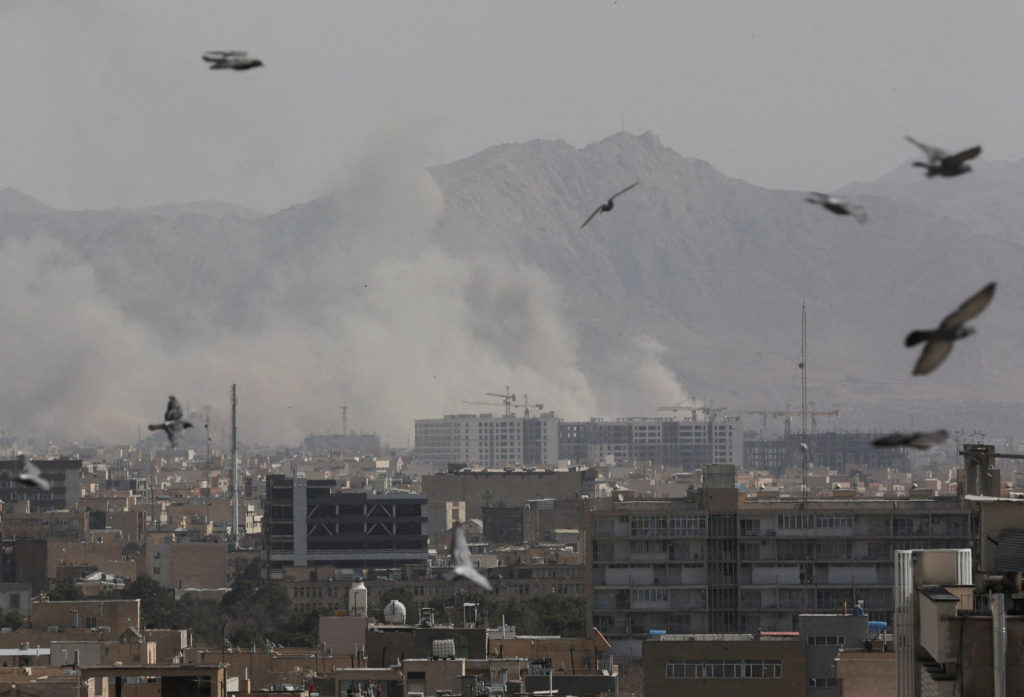
Meanwhile, the United States and Israel continued large-scale bombardments inside Iran. Explosions were reported in Tehran and in several Kurdish cities including Sanandaj, Saqqez and Bukan.

JUST IN: US Secretary of War says Iran ‘tried to assassinate Donald Trump’

By Sabiu Abdullahi

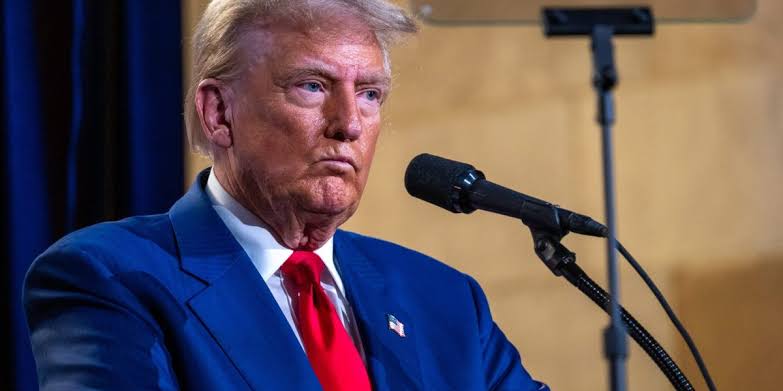
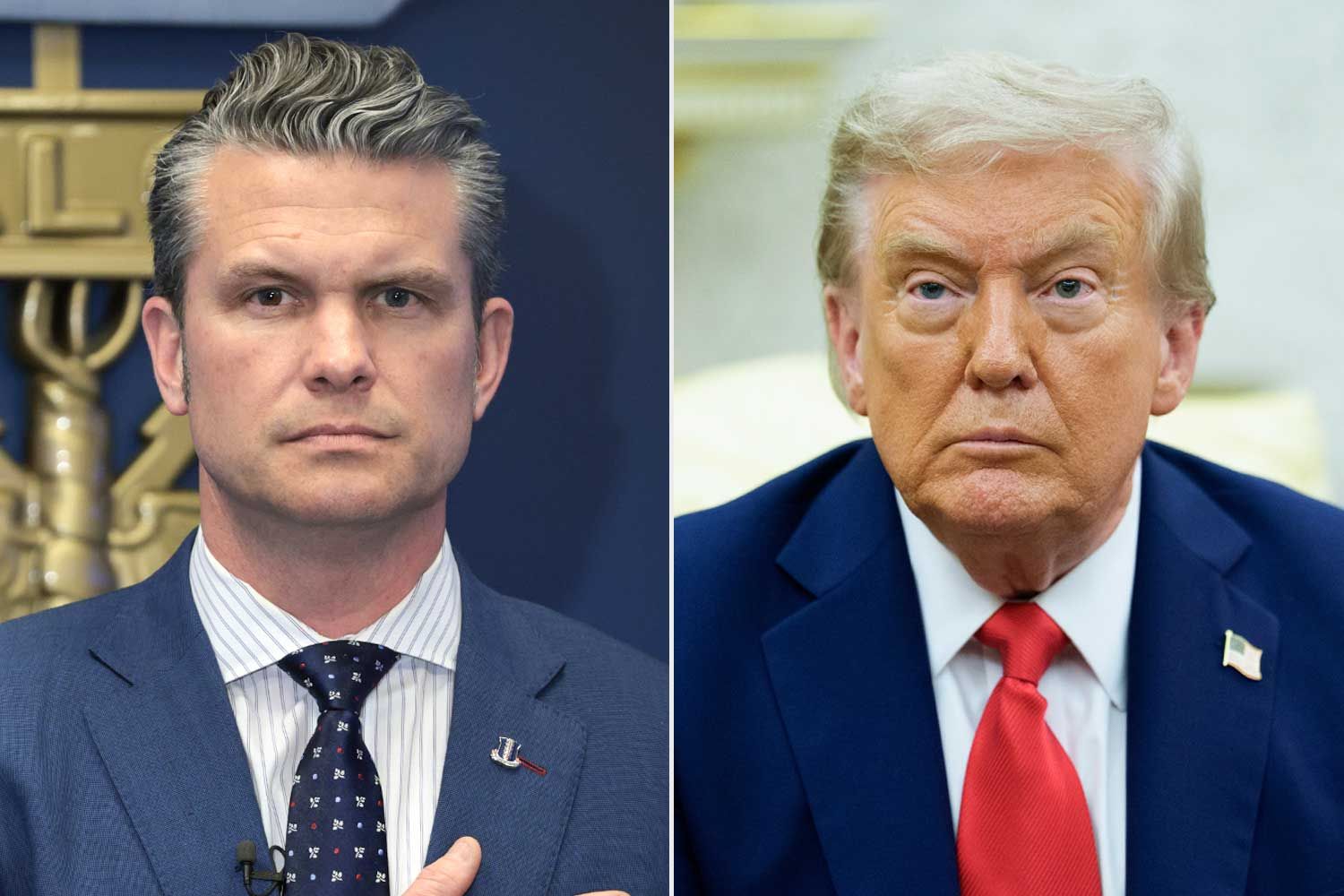
United States Secretary of War Pete Hegseth has alleged that Iran attempted to assassinate President Donald Trump, as he announced the killing of a senior figure linked to the plot.

Hegseth made the remarks during a press briefing at the Pentagon on Wednesday, where he provided updates on the ongoing conflict with Iran. He referred to recent interceptions of drones and rockets by American forces and praised the strength of the US military.

He said: ‘Yesterday, the leader of the unit who attempted to assassinate President Trump was hunted down and killed.

‘Iran tried to kill President Trump, and President Trump got the last laugh.’

The defence chief also vowed retaliation for American personnel killed in the fighting. He stated that the United States would ‘avenge’ the four servicemen and women who died in attacks involving Iranian drones and rockets.

Hegseth stressed that operations are still underway. He said the mission is not ‘accomplished’. He cited a recent naval action in which a US submarine sank an Iranian warship that, according to him, ‘thought it was safe in international waters’.

Hegseth added: ‘This was never meant to be a fair fight, and it’s not a fair fight… they’re going down.

‘More and larger waves are coming; we are just getting started.’

A Defence Department map displayed during the briefing outlined the first 100 hours of what has been named Operation EPIC FURY. The chart detailed a series of strikes across Iranian territory.

Meanwhile, Iranian authorities reported a rising death toll from the conflict. Iran’s Foundation of Martyrs and Veterans Affairs said at least 1,045 people have died so far. The agency explained that the figure reflects bodies identified and prepared for burial.

The fighting entered its fifth day with continued airstrikes by the United States and Israel on Tehran and other cities. Israeli forces targeted members of Iran’s leadership and security services. Iran responded with missile launches and drone attacks aimed at Israel and locations across the region.

Residents in Tehran reported explosions at dawn. State television broadcast images of damaged buildings in central areas of the capital. The city of Qom and several other locations also came under attack.

The Israeli military said one of its F-35 fighter jets shot down a piloted Iranian Air Force YAK-130 aircraft over Tehran on Wednesday.

The conflict has intensified tensions across the Middle East, with both sides signalling that further military action may follow.

Trump’s strikes on Iran could cost U.S. economy up to $210bn, report warns

By Sabiu Abdullahi

A new economic assessment has indicated that the United States’ military action against Iran could impose a heavy financial burden on the American economy, with potential losses reaching as high as $210 billion.

Kent Smetters, a fiscal analyst and director of the Penn Wharton Budget Model, said the conflict has already unsettled trade flows, global energy markets, and fuel prices. He explained in an interview with Fortune that estimating the exact cost of the war remains difficult due to uncertainty surrounding its duration and scope.

According to his projections, the economic loss could stand at about $115 billion under current conditions. However, he noted that the figure could be as low as $50 billion or rise to $210 billion, depending on how events unfold.

“One problem I have with cost of war calculations is that they really do ignore the counterfactual,” he told the outlet. “If Iran really did get a nuclear weapon, then we might have spent a lot more on military and even repair of cities later on.”

President Donald Trump has acknowledged the possible strain on the economy. He has proposed measures aimed at stabilizing energy supplies, including government-backed insurance and naval escorts for oil tankers passing through strategic routes in the Gulf.

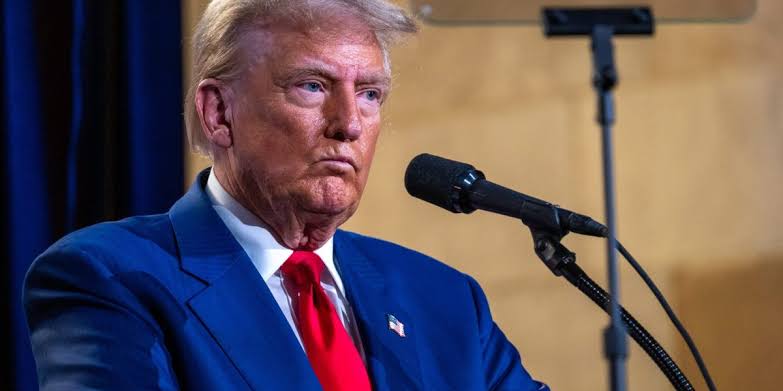
“If necessary, the United States Navy will begin escorting tankers through the Strait of Hormuz, as soon as possible,” President Donald Trump announced on Tuesday on Truth Social. “No matter what, the United States will ensure the FREE FLOW of ENERGY to the WORLD. The United States’ ECONOMIC and MILITARY MIGHT is the GREATEST ON EARTH.”

Speaking with reporters in Washington, the president admitted that oil prices could remain elevated “for a little while,” but expressed confidence that costs would eventually decline. He said once the conflict ends, “these prices are going to drop, I believe even lower than before.”

Energy markets have already reacted to the hostilities. By the end of trading on Tuesday, West Texas Intermediate crude rose by more than five percent. Data from the American Automobile Association also showed that the national average price for a gallon of gasoline increased by more than 10 cents.

Economic observers say the overall impact will depend largely on the length of the war and whether key shipping lanes remain secure.

“Markets are right now really under-pricing the tail risk of a sustained engagement and an operation that does not wrap up quickly, restore travel through the Strait of Hormuz and get everything back to de-escalation and normal in a timely manner,” former Biden economic adviser and chief of policy and advocacy at the Groundwork Collaborative, Alex Jacquez, told The Associated Press.

Beyond the broader economic effects, the military campaign itself may require substantial federal spending. Estimates suggest the operation could add about $65 billion in budgetary costs as U.S. air and naval forces mobilize across the region.

In a letter to Congress, President Trump stated that it is “not possible at this time to know” how long the mission, known as Operation Epic Fury, will continue.

“Although the United States desires a quick and enduring peace, it is not possible at this time to know the full scope and duration of military operations that may be necessary,” Trump wrote Monday.

He has earlier indicated that the bombing campaign could last “four to five weeks.”

US suffers nearly $2 Billion military losses in first four days of Iran war


By Sabiu Abdullahi


The United States has recorded an estimated loss of almost $2 billion in military assets within the first four days of its military campaign against Iran, according to figures compiled by Anadolu Agency.

The report shows that Iran has damaged military equipment valued at about $1.902 billion across several locations in the Middle East since hostilities began on Saturday.

The most costly single asset affected is the US AN/FPS-132 early warning radar system stationed at Al Udeid Air Base in Qatar. The radar, valued at $1.1 billion, was struck by an Iranian missile on Saturday. Qatari authorities later confirmed that the facility was hit and sustained damage.

On Sunday, three F-15E Strike Eagles were lost in what officials described as a friendly fire incident involving Kuwaiti air defence systems. Although all six crew members survived, the aircraft were destroyed. The estimated replacement cost for the three jets stands at $282 million.

During its initial retaliatory operation, Iran targeted the US Navy’s Fifth Fleet headquarters in Manama, Bahrain. The strike destroyed two satellite communication terminals and several large structures within the facility. Open-source intelligence assessments identified the damaged terminals as AN/GSC-52B systems. Each unit is estimated to cost around $20 million, including deployment and installation expenses.

Iran also announced that it had destroyed the AN/TPY-2 radar component of the THAAD Anti-Ballistic Missile system deployed in Al-Ruwais Industrial City in the United Arab Emirates. Satellite imagery reviewed through open-source intelligence indicated that the site was indeed hit. The radar component alone is valued at approximately $500 million.

When combined, the value of the damaged assets amounts to $1.902 billion.

Multiple US sites targeted

Iran has reportedly targeted at least seven US-linked military locations in the region since the conflict escalated. These include the Fifth Fleet headquarters in Bahrain, Camp Arifjan, Ali Al Salem Air Base and Camp Buehring in Kuwait, Erbil Base in Iraq, Jebel Ali Port in the UAE, and Al Udeid Air Base in Qatar.

In Kuwait, images taken after reported strikes showed collapsed rooftops at various sections of Ali Al Salem Air Base. Camp Arifjan recorded the deaths of six US service members. A widely shared video from Camp Buehring captured a drone flying over the base before exploding within its perimeter.

At Erbil International Airport in Iraq, where US forces are stationed, footage verified by The New York Times indicated repeated strikes over the weekend. Smoke and flames rose from the installation. Satellite images taken on Sunday morning revealed that four structures in one section of the base had either been damaged or destroyed. Fires continued into early Monday.

In Dubai, satellite imagery from Sunday showed smoke rising from a large building inside a fenced US Navy recreational zone at Jebel Ali Port. Although the site is not officially designated as a US base, it remains one of the navy’s most frequently used ports in the region.

Diplomatic missions also hit

In addition to military installations, several US diplomatic missions in Saudi Arabia, Kuwait and the UAE came under attack.

The US Embassy in Riyadh was struck by two drones. The Saudi Defence Ministry reported “limited fire and minor material damage” within the compound. The Washington Post later reported that the CIA station located inside the embassy complex was also hit.

The US Embassy in Kuwait City faced drone and missile strikes. Smoke was seen near the compound. Authorities have not released detailed information about the extent of the damage. The embassy announced it would remain closed “until further notice,” while non-essential staff and family members were evacuated.

In the UAE, a suspected Iranian drone struck a parking area near the US Consulate General in Dubai. The incident caused a fire, which local authorities quickly brought under control. The consulate compound experienced some impact, though no major structural damage was reported.

The escalation marks one of the most significant direct confrontations between the United States and Iran in recent years.

[OPINION]: Israel’s forever war

By Ahmed Musa Husaini

In June last year, during the 12-Day war, I described the situation as the end of peace in the middle-east, arguing that a broader conflict between Iran and its proxies on one hand, and US-Israel and their gulf lackeys on the other, is inevitable.

Israel exists on three myths: that it is the only democracy in the middle-east, that it is a strategic asset for the US and the Christian West’s bulwark against an irrational Islamic and Arab enemy, thus positioning itself as US guarantor of American energy security, protector of western maritime lines, and other US/western interests without the need for permanent American boots on ground.

These myths lack any basis in facts or rational geopolitics. Israel is an apartheid state, a security liability for the US, and the biggest source of instability in the region that continues to occupy territories of it’s neighbors and violates more international laws and UN conventions than any country on earth.

Since its founding in 1948, Israel has fought multiple wars with its Arab neighbors. In the early years post-1948, Egypt emerged as its most sophisticated threat due to its size as the most populous Arab nation and its border with Israel, making it impossible to be decisively defeated by Israel in any conventional way.

Aware of such threats, Israel, worked through the US, to sign a peace treaty with Egypt in 1979, in what Israeli leaders and analysts referred to as the “most important strategic shift in Israel’s history,” one that reshaped Israel’s strategic environment in profound ways. It effectively neutralized the most powerful Arab military power, decapitated the Egypt-led Arab military coalition which had crossed Suez Canal in 1973 and took Israel by surprise. With Egypt now removed from the strategic equation, Israel could focus its resources elsewhere.

That’s why Menachim Begin was able to make far-reaching concessions to the Egyptians in 1979: returning the Sinai peninsula along with dismantling over 170 military Israeli installations, as well as the handing over of the Alma oil fields which at the time supplied half of Israel’s energy needs with estimated $100 billion in untapped reserves. To this day, the US pays Egypt $1.3-1.5 billion annually to maintain that agreement.

With the removal of the Egyptian threat, the years from 1979 to the end of the cold war marked a period of Israeli undisputed military superiority. It was Israel’s golden age, a period of unparalleled conventional military dominance. Nowhere was that superiority displayed than in its invasion of Lebanon in 1982 (and its defeat of Syrian forces) in order to dislodge the Palestinian Liberation Organization (PLO).

Ironically, it was Israel’s invasion of Lebanon in 1982 and its prolonged occupation of southern Lebanon that gave birth to Hezbollah. Hurting from the suffering and humiliation of the Shiite constituents in Southern Lebanon, Hezbollah emerged (under IRGC’s tutelage) with the explicit goal of ending Israeli occupation of southern Lebanon, a feat it achieved in 2000 when Israel was finally chased out of Southern Lebanon.

In the same vein, the eruption of the First Intifada due to years of Israeli occupation and subjugation of Palestinian Arab people led to the birth of Hamas as a military threat. Prior to that, Hamas was a local charity organization with a vast network of schools, clinics, mosques, and youth clubs, providing crucial social services and embedding itself in the daily life of Palestinian communities. Immediately after the outbreak of the first intifada, Sheikh Ahmad Yassin and other leaders announced the formation of Harakatul Muqawama Al-Islamiya – the Islamic Resistance Movement, known by its acronym as Hamas.

With the end of cold war, Israeli focus shifted to Iraq. Israeli illusion of invincibility was shattered during the Gulf War, with Saddam’s Iraq firing 39 scud missiles at Israeli population centers. For the first time, the Israeli home front was attacked by a different type of weapon that renders its air superiority ineffective, an experience that gave birth to Israel’s famed missile defense technology.

With the elimination of Saddam in 2003 in another costly US war at the behest of Israel, Israel’s new focus shifted to Iran. Iran represented a different kind of threat. For a start, Iran is a non-Arab, Shiite power, with a nuclear and missile delivery technology, and a network of proxies in Gaza, Lebanon, Syria, Iraq and Yemen; posing a challenge to Israel’s military dominance in ways its strategists could not have imagined in the heady days after its peace treaty with Egypt in 1979 or the elimination of Saddam in 2003.

In the build up to the Israeli-instigated US invasion of Iraq, Netanyahu even told the US Congress that removing Saddam Hussein from power would usher in a period of peace and stability in the Middle-east. Immediately Saddam was removed, the incitement shifted to Iran, and if Iran were to be removed today, Israel would create a new enemy to continue justifying its belligerence.

The fact is, Israel is created from chaos, from tragedy: the dispossession of millions of indigenous Palestinian Arab populations. The existence and survival of Israel as an occupier, expansionist, racial and ethnic state is predicated on endless chaos and conflict. Even if Hezbollah, Hamas or Iran do not exist, Israel would create one.

The current war with Iran is nothing but a continuation of Israeli impunity under American patronage, in order to guarantee Israel’s qualitative military edge, preserve America’s diplomatic monopoly, and continue to create conditions for continuous US presence in the middle-east.

That’s why Trump’s own objectives for the war keep changing, from regime change and liberating Iranians, to destroying Iranian defense capabilities and industrial infrastructure. Just days ago, the Iranians have agreed to most of Trump’s demands about halting uranium enrichment and the commitment not to pursue nuclear weapons, but negotiations for the US and Israel were just a smokescreen to buy time and reposition forces in the region.

I am under no illusion about American military superiority. If Iran were to fall today, if the Iranian threat were to be eliminated today, Israel would create another threat. Already, Israeli leaders are talking about Muslim nuclear-armed Pakistan and Muslim NATO member Turkey. For Israel to exist, a new enemy must be created after the elimination of the last one, a forever war is needed.

This state of forever war is important for Israel’s domestic population. The Israelis disagree on everything except on the treatment and subjugation of their Arab neighbors. Creating an external enemy serves as a unifying force against an existential threat, thus suppressing internal political and ethnic divisions, distract from their leaders (Netanyahu’s) domestic and personal failures, and delegitimize political dissent as betrayal.

It also has an international dimension. First on the basis of strategic interests by projecting Israel as America’s strategic asset against a common Muslim Arab enemy while conveniently ignoring Palestinian Christian suffering. And most importantly, from an apocalyptic dispensationalist theological belief that the triumph of Israel and the ensuing conflict are prophesied conditions for the “End Times,” culminating in the Battle of Armageddon and guaranteeing the return of Christ. To these groups, which form a core part of the Republican Party’s base and hold immense political influence, unconditional support for Israel is a religious duty and the conflict must continue and even intensify to fulfil a biblical prophecy.

These three elements: the need for an enemy, the value as an American proxy, and the political weaponization of apocalyptic theology make Israel’s policy of forever war not just a failure of American policy in the middle-east, it is the American policy itself. Israel will be locked into a cycle of creating and perpetuating enemies even if all its neighbors surrender.

But nature abhors vacuum. The resistance dynamic will always run its course. Actions will generate reactions. Israeli occupation and subjugation will create collective suffering, and collective suffering creates anger, desperation and desire for revenge, leading to radicalization and the emergence of violent resistance groups whose promise of resistance and dignity will always find fertile ground for recruitment and popular support. And the cycle repeats.

This is exactly what is happening in the current war on Iran. Iran knows quite well it cannot stand the combined military might of the US and Israel, but it chose to fight with dignity rather than face humiliation and surrender. This heroic and noble stand alone, whose story will be told across generations, will galvanize resistance movement across every inch of the middle-east, whose seeds will germinate in the next 20-30 years to trigger seismic geopolitical events across the region as was seen in the Iranian Revolution of 1979 and recently the Arab Spring.

Victory for Iran is not in militarily defeating the US, it is in denying the US and Israel their objectives of regime change and submissive leadership. It is the same victory the Taliban recorded in Afghanistan and the resistance bloc recorded in Iraq after over 20 years of US aggression and occupation.

The solution to all these lies first in saving Israel from itself, from its perpetual sense of forever war and tendency to self-destruct. Israel must be forced to exist as a single biracial state with equal rights for Palestinians and Jews, just as was the case with Apartheid South Africa. And secondly, America’s diplomatic monopoly must end. Asking America to broker a peace involving Israel is akin to asking Iran to broker peace involving Hezbollah. It is against the basic law of natural justice and fairness to ask the state that sponsors, arms, shields, and protects one side to serve as impartial broker.

To Achieve that, the Arabs, Israel’s immediate environment and victims, must do their part. These countries, are run by regimes who continue to ignore the suffering of their people in order to appease their American patrons. The world (Russia or China or any rival power) will not do the job for them. Neither Israel nor their American patrons will change their behavior without incentives. More Abraham Accords can be signed, and more middle-eastern governments can be co-opted into the illusion of American patronage and Israeli security, but as long as the Arab street reeks of domestic discontents and regional outcry against Israeli aggression, as long as the Palestinian question remains unsolved and Israeli belligerence remains untamed, a forever war is in our hands.
Trump threatens to cut off all trade with Spain over refusal to approve using its military bases to strike Iran

By Sabiu Abdullahi

U.S. President Donald Trump has announced plans to halt all trade relations with Spain after Madrid declined to permit American forces to use its military bases for operations connected to strikes on Iran.

Trump made the remarks on Tuesday during a meeting at the White House with German Chancellor Friedrich Merz. He criticised Spain’s position and disclosed that he had directed Treasury Secretary Scott Bessent to take action.

“Spain ‌has been terrible,” Trump said. He added that he had instructed Bessent to “cut off all dealings” with Spain.

“We’re going to cut off all trade with Spain. We don’t want anything to do with Spain,” the president stated.

Following Spain’s refusal, the United States moved 15 aircraft, among them refuelling tankers, away from the Rota and Moron air bases in southern Spain. The Spanish Socialist-led government had declined permission for the facilities to support operations targeting Iran.

Trump also revisited his long-standing demand that NATO members allocate 5% of their gross domestic product to defence. Spain has resisted that target. The president argued that Washington holds broad authority over trade matters.

“Spain has absolutely nothing that we need,” he said.

“All business having to do with Spain, I have the right to stop it. Embargoes – do anything I want with it – and we may do that with Spain,” Trump added.

Bessent, who stood beside the president, confirmed that steps would be taken to examine possible penalties. He said the United States Trade Representative and the Commerce Department would begin inquiries into measures against Spain.

Although the U.S. Supreme Court recently limited Trump’s ability to impose sweeping global tariffs under the International Emergency Economic Powers Act (IEEPA), the president insisted the ruling strengthened his powers in other respects. He said the decision “totally reaffirmed” his authority to impose a comprehensive trade embargo under the same law.

IEEPA, enacted in 1977, has served as a legal basis for sanctions against countries such as Iran, Russia and North Korea. It has also enabled restrictions on exports of sensitive technologies.

Bessent backed Trump’s interpretation of the ruling. “The Supreme Court reaffirmed your ability to implement an embargo,” he told the president.

Spain Reacts

The Spanish government responded with a statement stressing that the United States must respect the independence of private enterprises, international legal frameworks and trade agreements between Washington and the European Union.

Madrid said it possesses the tools required to cushion any economic impact and assist industries that might suffer losses. Officials also affirmed their commitment to open markets and continued economic collaboration with partners.

Spain ranks as the world’s leading exporter of olive oil. It also supplies the United States with auto components, steel and chemicals. However, analysts note that Spain may be less exposed to American trade pressure than some other European economies.

Data from the U.S. Census Bureau show that the United States recorded a $4.8 billion trade surplus with Spain in 2025. American exports to Spain reached $26.1 billion, while imports stood at $21.3 billion. This marked the fourth consecutive year of surplus for Washington.

Chancellor Merz indicated that European partners are urging Spain to increase defence expenditure. “We are trying to ⁠convince Spain to catch up with the 3% or 3.5% which we agreed on in NATO,” he said.

“And as the president said, it’s correct: Spain is the only one who is not willing to accept that and we are trying to convince them that this is part of our common security that ⁠we all have to comply with these numbers,” Merz added.

Spain’s Prime Minister Pedro Sanchez has previously taken positions that have drawn criticism from Trump. Among them was a decision to deny docking access to vessels transporting weapons to Israel.

The latest dispute signals rising tension between Washington and Madrid. The situation may have wider implications for transatlantic trade and security cooperation if concrete measures follow the president’s warning.

Cristiano Ronaldo leaves Saudi Arabia for Spain amid rising tensions in Riyadh

By Sabiu Abdullahi

Portuguese football star Cristiano Ronaldo has reportedly departed Saudi Arabia for Madrid, Spain, as security concerns mount in the region following recent military action involving the United States and Israel.

Ronaldo, who serves as captain and forward for Al-Nassr FC, left Riyadh late at night aboard his £61million ($81million) Bombardier Global Express 6500 private jet. The UK Daily Mail disclosed the development on Tuesday.

His relocation followed coordinated strikes carried out by the United States and Israel in Iran on February 28, 2026. The operation reportedly led to the deaths of several senior Iranian figures. Iranian state media announced on March 1 that Supreme Leader Ali Khamenei had been killed. Authorities declared 40 days of mourning and introduced a seven-day public holiday.

The security situation in the Gulf region deteriorated after two drones hit the United States Embassy in Riyadh overnight.

The Saudi Ministry of Defence said, “A limited fire broke out at the United States Embassy in Riyadh after it was hit by two drones,” adding that the strike caused “minor material damage.”

According to the Daily Mail, “Riyadh, where Ronaldo lives with his partner Georgina Rodriguez and their five children, has been affected by attacks linked to the regional conflict.”

Flight tracking service Flightradar24 reported that the aircraft “departed Riyadh at 8:00 pm and arrived in Madrid at almost 1:00 am, flying a path over Egypt and the Mediterranean.”

Ronaldo’s exit occurred as Washington intensified security steps across the Middle East in response to the unfolding crisis. The U.S. Department of State announced temporary closures of embassies and the suspension of consular services in several countries due to heightened safety concerns tied to the expanding Iran conflict.

In Saudi Arabia, the U.S. Embassy in Riyadh halted both routine and emergency services across its missions in Riyadh, Jeddah and Dhahran.

In neighbouring Iraq, nonemergency American government personnel received orders to exit the country. U.S. staff also faced restrictions from using Baghdad’s international airport.

Kuwait recorded deadly incidents involving American forces. Six soldiers lost their lives, and three fighter jets crashed in what the U.S. military described as an “apparent friendly fire” episode.

The unfolding developments have heightened uncertainty across the region, with governments implementing precautionary measures as tensions persist.

No distress signal from Nigerians in Iran amid rising tensions—FG

By Uzair Adam

The Nigerians in Diaspora Commission (NiDCOM) has said it has not received any distress call from Nigerians residing in Iran despite the escalating hostilities involving Iran, the United States and Israel.

The clarification comes as the Federal Ministry of Foreign Affairs disclosed that it is closely monitoring developments in the Middle East.

NiDCOM’s Director of Media and Public Relations, Abdur-Rahman Balogun, speaking on Monday, explained that although Nigerians may be living in Iran, none has formally contacted the commission to request assistance.

“I’m not saying there are no Nigerians there, I’m only saying nobody has sent any distress call,” he said.

Balogun attributed the cancellation of flights to the region to the ongoing hostilities, noting that airlines would not operate in an active war zone.

He added that temporary ceasefires are sometimes arranged to allow stranded passengers to be evacuated, but such an arrangement has yet to take place.

On the possibility of an evacuation, he said the Federal Government would only activate a full-scale operation when specific conditions are met, including an official request for help from affected citizens.

“You cannot force them. People went there voluntarily. In Sudan and Ukraine, some initially said they were not leaving,” he explained.

He stressed that Nigerians who desire evacuation must clearly indicate their willingness to return home. “People must seek help and say, ‘Our lives are in danger, can you evacuate us?’” he said.

According to him, once a formal request is made and the situation permits safe movement, the government could initiate emergency steps such as chartering aircraft and setting up a rescue committee.

“All must be Nigerian and must be ready to come back home,” he stated.

Balogun reaffirmed that safeguarding Nigerians abroad remains a key responsibility of the Federal Government under its citizen diplomacy policy.

He assured that if any Nigerian’s life is threatened and a request for assistance is received, authorities would explore available options, including leasing aircraft if necessary.

However, he maintained that evacuation would be impracticable without a ceasefire and the reopening of airspace, stressing that international aviation protocols must also be respected.

“As far as I know, I’m not aware that anybody has sent a distress call,” he reiterated.

Time for negotiations is over, Iran’s new leader Arafa tells Trump

By Sabiu Abdullahi

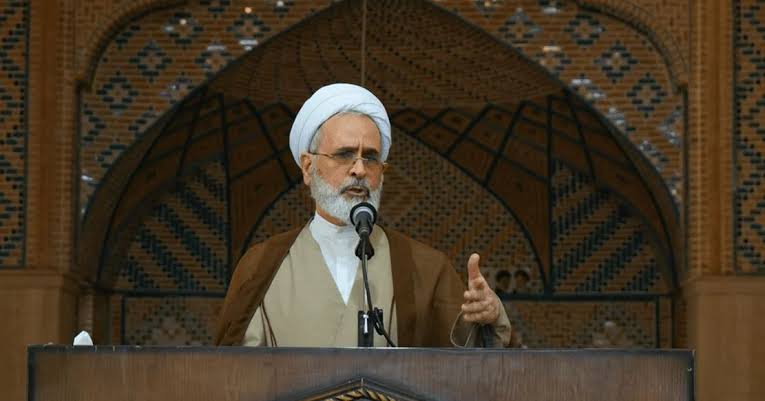
Iran’s newly declared Supreme Leader, Alireza Arafa, has threatened retaliation against the United States and Israel after Tehran accused both countries of carrying out military attacks on its territory.

In a statement released on Tuesday morning across several social media platforms, Arafa said diplomatic efforts had come to an end. He accused Washington of crossing a “red line.”

“The time for negotiations is over. The United States has chosen to cross the red line, the line of irreparable harm,” he said.

“By launching this war, they have signed their own death warrant: they don’t know when or how the axe will fall, but we hold the reins.”

His remarks followed reports of coordinated airstrikes by US and Israeli forces on Iranian military sites and key infrastructure. The operation marked a sharp deterioration in relations among Tehran, Washington and Tel Aviv.

Tensions between the countries have grown in recent months over Iran’s missile programme, its regional activities and allegations linked to nuclear development. The United States has repeatedly accused Iran of supporting armed groups in the Middle East and fuelling instability in the region. Iranian officials have denied those allegations.

Tehran described the recent strikes as “unprovoked.” Authorities insisted that Iran did not initiate hostilities.

Arafa rejected Western claims that the attacks were preventive steps against a nuclear threat.

“They brandish the nuclear specter like a scarecrow, blinded by their arrogance,” he said.

“They have no idea of the true extent of our power or what we are prepared to unleash.”

He directed some of his strongest remarks at Israel and warned of continued retaliation.

“As for Israel, its fate is sealed. Every strike, every crime, every act of suffering they have inflicted will come back to haunt them,” Arafa declared.

“They will remain in our sights, exposed, vulnerable, hunted.”

The exchange of threats has heightened concerns about a wider regional conflict. Armed groups aligned with Tehran in Lebanon, Syria, Iraq and Yemen could become involved if hostilities expand.

Security analysts say a prolonged confrontation could disrupt global energy supplies and deepen sectarian divisions across the Middle East.

In his concluding remarks, Arafa described the crisis as a defining struggle for Iran.

“We walk in the shadow of the Leader, and every step is a lightning bolt,” he said, before ending with the slogan: “Iran does not bend. Iran wins. Always.”

As tensions rise and military activities continue, international actors face growing calls to intervene and prevent a broader conflict that could reshape the region for years.

Iran clarifies it is at war ith US, Israel, not Gulf nations

By Sabiu Abdullahi

Iran has clarified that it is engaged in conflict with the United States and Israel, not with any countries in the Gulf region.

Speaking on Monday, Iranian Foreign Minister Seyed Abbas Araghchi said, “We’re not attacking our neighbours, we’re attacking US military bases. US soldiers fleeing to hotels will not prevent them from being targeted.” His remarks come amid ongoing US and Israeli strikes on Iranian positions, and retaliatory Iranian attacks on American and Israeli interests in the Middle East.

Al Jazeera reports that Iran accused the US of “betraying diplomacy” by launching attacks during ongoing negotiations. Araghchi also urged Gulf nations to pressure Washington to halt its military actions against Iran.

The Iranian minister emphasized that US military installations, including those located within Gulf countries, and facilities housing American troops, are considered legitimate targets.

For the third day in a row, loud explosions were reported in Dubai, UAE, and Qatar as Iran continues to respond to US and Israeli attacks. Bloomberg notes that both the UAE and Qatar have been quietly appealing to international allies to encourage President Trump to pursue a diplomatic solution instead of extending the conflict.

Qatar warned that ongoing disruptions to regional shipping could further drive up global natural gas prices. The country also announced that it intercepted two Iranian fighter planes, along with missiles and drones, which had entered its airspace. Gulf nations have pledged to continue defending their territories.

Meanwhile, the conflict between Israel and Hezbollah continues to escalate as both sides exchange attacks.