Iran

U.S. Intelligence: Iran not actively pursuing nuclear weapon, capability still years away

By Muhammad Sulaiman

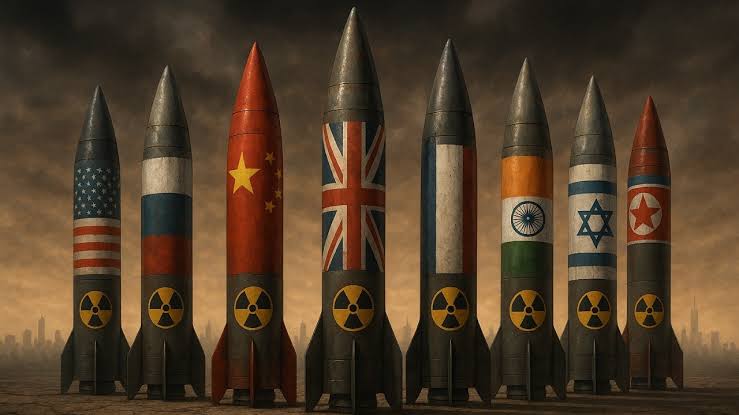
U.S. intelligence assessments have concluded that Iran is not currently pursuing a nuclear weapon, despite heightened regional tensions and fears of escalation. According to officials cited by CNN, Iran would still need up to three years to produce and deliver a nuclear warhead to a target of its choosing, should it decide to take that path.

These revelations come amid a dramatic military conflict between Israel and Iran that erupted earlier this month. On June 13, Israel launched a wide-ranging preemptive military campaign—codenamed Operation Rising Lion—against Iran, targeting over 100 sites including nuclear facilities in Natanz, Isfahan, and Tehran.

The Israeli strikes killed at least 224 people and injured more than a thousand, many of them civilians. Civilian infrastructure, including hospitals and power stations, was also severely damaged.

Iran retaliated with Operation True Promise 3, unleashing a massive barrage of over 150 ballistic missiles and more than 100 drones against Israeli military bases and infrastructure. Dozens of Israelis were injured, several seriously.

Despite the intensity of the conflict, U.S. intelligence officials maintain that Iran has not made the political decision to weaponize its nuclear program. While uranium enrichment activities continue, they have not reached a threshold indicating imminent nuclear arms development.

The ongoing war has raised concerns among international observers, with legal experts warning that elements of the Israeli offensive may violate international law. As both sides continue exchanging fire, diplomatic efforts face severe obstacles, and fears grow of further escalation in an already volatile region.

Donald Trump vows to broker peace between Iran, Israel

By Abdullahi Mukhtar Algasgaini

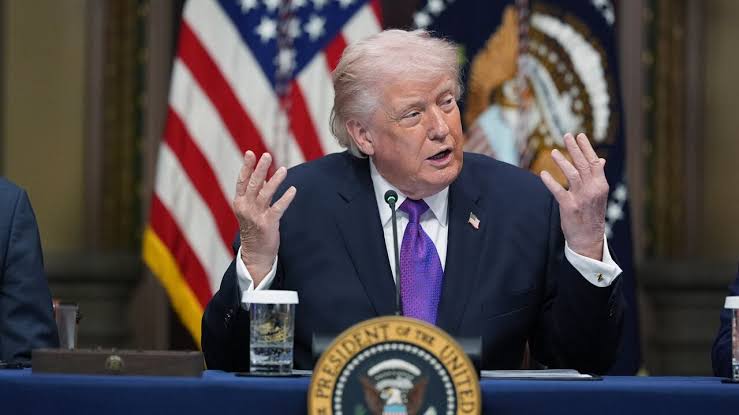
U.S. President Donald Trump has announced his intention to mediate peace between Iran and Israel, citing his past successes in conflict resolution.

Speaking via his social media platform, Trump stated that negotiations are currently underway and expressed confidence that a resolution could be reached.

He compared the situation to his previous efforts in brokering peace between India and Pakistan, as well as between Egypt and Ethiopia, and Serbia and Kosovo.

“This is nothing new for me,” Trump said. “I’ve done it before, and I can do it again.” He reiterated his commitment to ending the conflict, though he lamented that his efforts often go unrecognized.

“People see what I’m doing, even if they don’t always acknowledge it,” he added.

Trump’s statement comes as Israel has reportedly urged the U.S. to intervene in its escalating tensions with Iran.

However, the Trump administration has maintained that it will not engage militarily.

In another claim, Trump revealed that he and Russian President Vladimir Putin have discussed the matter and agreed on the need to de-escalate hostilities between Israel and Iran.

IRGC intelligence chief killed in Israeli airstrike, confirms Fars News Agency

By Muhammad Abubakar

Iran’s state-affiliated Fars News Agency has confirmed the deaths of top Islamic Revolutionary Guard Corps (IRGC) intelligence figures in an Israeli airstrike earlier today.

Among the dead is Brigadier General Mohammad Kazemi, the head of the IRGC’s Intelligence Organisation, a key figure in Iran’s security and military apparatus. His deputy, General Hassan Mohaqiq, was also killed in the strike, alongside senior intelligence official Mohsen Bagheri.

The strike reportedly targeted what is believed to be a sensitive IRGC facility, possibly the organisation’s headquarters. While Israeli officials have not yet publicly commented on the operation, the move is expected to escalate tensions between the two regional rivals.

Kazemi was appointed in 2022, succeeding Hossein Taeb, and was known for reshaping the IRGC’s intelligence posture during a turbulent period marked by domestic unrest and growing international scrutiny.

The Iranian government has not yet released an official statement on the incident, but security sources suggest a high-level investigation is underway.

This strike marks one of the most significant Israeli operations against Iranian military leadership in recent years.

Trump warns Iran of severe U.S. retaliation if it attacks America

By Abdullahi Mukhtar Algasgaini

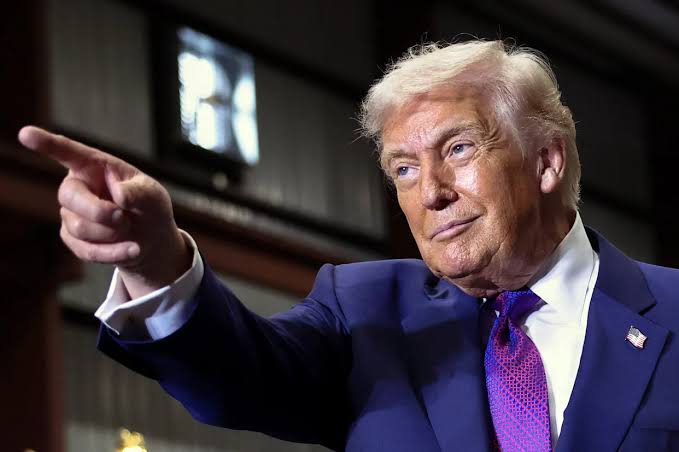
Former U.S. President Donald Trump issued a stern warning to Iran on Sunday, threatening that it would face the “full force” of the American military if it launches any attack against the U.S.

He emphasized that Washington had “nothing to do with” the recent Israeli strikes on Iran’s nuclear and military sites.

The Iranian government has accused Israel of carrying out a series of attacks on its nuclear and military facilities since early Friday, resulting in multiple casualties, including high-ranking military officers and nuclear scientists.

Israeli Prime Minister Benjamin Netanyahu vowed to strike “anywhere under the rule of the Ayatollah,” while Iran retaliated with a barrage of missile strikes.

Although Trump claimed he was aware of Israel’s planned attack before it happened, he reiterated on Truth Social that the U.S. had “no involvement in Friday night’s attack on Iran.”

“If you attack America in any way, shape, or form, Iran will suffer the full might and fury of the U.S. military like never before in history,” Trump warned in his post.

He added, “We can easily broker a deal between Iran and Israel to end this conflict!!!”

On Friday, the former president urged Tehran to either return to negotiations or face “even worse attacks” from Israel.

The escalating tensions follow a series of retaliatory strikes between Israel and Iran, raising fears of a broader regional conflict.

Israel threatens to reduce Tehran to rubble as missile clash with Iran deepens

By Sabiu Abdullahi

Israel has issued a stern new warning to Iran as tensions between the two rivals spiraled into open confrontation, with both sides launching deadly attacks in what appears to be one of the most dangerous escalations in recent years.

Reacting to continued Iranian missile attacks on Israeli cities, Defence Minister Israel Katz declared that Tehran had crossed a critical threshold.

“If Ayatollah Ali Khamenei continues to fire missiles at the Israeli home front, Tehran will burn,” Katz said in a strongly worded statement released on Saturday.

His comments came in the wake of sustained Iranian rocket fire, which Israel claims has hit civilian areas.

The barrage followed an Israeli air assault on Friday targeting Iran’s nuclear and military infrastructure.

Tehran says the Israeli strikes killed at least 78 people, including civilians and some of the country’s most senior military officials.

According to Iran’s envoy to the United Nations, among those killed were General Hossein Salami, commander of the Islamic Revolutionary Guard Corps (IRGC), and Major General Mohammad Hossein Bagheri, Chief of Staff of the Armed Forces.

Former top security official, Ali Shamkhani, was also reportedly among the casualties.

On the same day, Israeli Prime Minister Benjamin Netanyahu confirmed that his government had launched a large-scale military offensive known as Operation Rising Lion.

In a national broadcast, he said the operation had focused on Iran’s nuclear enrichment plant in Natanz, its missile facilities, and key scientists suspected of aiding Iran’s nuclear ambitions.

“Moments ago, Israel launched Operation Rising Lion, a targeted military operation to roll back the Iranian threat to Israel’s very survival,” Netanyahu said.

“This operation will continue for as many days as it takes to remove this threat.”

In response to the loss of senior commanders, Iran’s Supreme Leader Ayatollah Ali Khamenei announced new appointments within the nation’s military command structure.

The changes were made public through a statement posted on his official X (formerly Twitter) account.

“In view of Lt. Gen. Gholamali Rashid’s martyrdom at the hands of the vile Zionist regime… I appoint [Major General] as Commander of the Khatam al-Anbiya Central HQ,” the post read.

Similar announcements were made for the IRGC and the Armed Forces.Iran has since intensified its missile strikes and warned that foreign military bases helping Israel may be attacked.

“Israel’s allies must know that their bases in the region will not be spared if they assist in intercepting our missiles,” Iranian state media warned.

Despite not officially confirming responsibility for Friday’s strikes, Israeli officials have consistently reiterated the country’s readiness to act alone in neutralizing threats from Iran.With both nations refusing to back down and missiles still being exchanged, fears of a broader regional war continue to mount.

The conflict has now gone beyond verbal threats and proxy battles, with both Israel and Iran directly striking each other’s core assets.

Nigeria condemns Israeli strike on Iran, urges immediate ceasefire

By Hadiza Abdulkadir

The Federal Government of Nigeria has strongly condemned Israel’s recent unprovoked strikes on Iran, which have triggered a fresh wave of hostilities between the two Middle Eastern powers. In a statement issued on Friday, the Nigerian government described the escalating conflict as a grave threat to regional and global peace.

The Ministry of Foreign Affairs, through its spokesperson, Kimiebi Imomotimi Ebienfa, expressed deep concern over the sustained missile and aerial exchanges between the Islamic Republic of Iran and the State of Israel, calling for an “immediate cessation of hostilities” and restraint from both parties.

“The continued cycle of retaliation not only endangers civilian lives but threatens to plunge the broader Middle East into further instability, with implications for international security and economic development,” the statement read.

Nigeria, which has long championed non-aggression and multilateral diplomacy principles, urged Iran and Israel to return to dialogue and constructive engagement. The government also called on the United Nations Security Council and the broader international community to intensify de-escalation efforts and provide diplomatic platforms for resolution.

Reaffirming its stance against military confrontation, the statement noted that “military action is not a substitute for negotiation” and that lasting peace must be built on diplomacy, mutual respect, and adherence to international law.

“Nigeria stands ready to support all genuine efforts aimed at de-escalating tensions and promoting peace in the region,” the Ministry added.

The statement comes amid growing international alarm over the potential fallout of the conflict, which many fear could destabilise the already volatile Middle East and disrupt global economic and political systems.

Iranian missiles hit Israel’s ‘Pentagon’ in retaliatory strike

In a dramatic escalation of hostilities, Iranian missiles penetrated Israel’s air defense systems and struck the Kirya military headquarters in Tel Aviv, widely regarded as the country’s equivalent of the Pentagon.

The attack, part of Iran’s newly launched “True Promise 3” operation, reportedly caused substantial damage to the highly fortified complex.

Analysts say the consequences of this strike may severely impact Israel’s military coordination, intelligence functions, and high-level decision-making.

The offensive comes on the heels of an earlier Israeli operation, “Rising Lion,” which was carried out in the early hours of June 13.

Tehran has described the Israeli move as an unprovoked act of aggression, prompting its forceful response.

Military sources suggest the success of the Iranian missiles in bypassing Israeli interceptors raises questions about the effectiveness of the country’s air defense systems.

The Kirya compound serves as a nerve center for Israeli military planning, making it a highly symbolic and strategic target.

While Israeli officials have yet to provide full details on the extent of the damage, the attack marks one of the boldest direct strikes by Iran on Israeli territory to date.

Observers fear this development could lead to a broader regional confrontation if de-escalation efforts fail.

Sanders condemns Netanyahu’s attack on Iran, warns against U.S. involvement

By Muhammad Sulaiman

U.S. Senator Bernie Sanders (I-Vt.) issued a strongly worded statement condemning Israeli Prime Minister Benjamin Netanyahu’s unilateral military strike on Iran, calling it a reckless escalation that defies international law and endangers global stability.

Sanders accused Netanyahu of previously violating the Geneva Conventions through the starvation of children in Gaza and now pursuing an illegal attack on Iran, risking a full-scale regional war. He stated that the strikes ignored the diplomatic efforts of the United States to resolve tensions over Iran’s nuclear program and undermined planned negotiations.

“The world is more dangerous and unstable as a result of the extremist Netanyahu’s government ongoing defiance of international law,” Sanders said.

The senator urged the U.S. and international community to resist being drawn into another conflict, and instead push for de-escalation and renewed diplomacy.

“We should do everything possible to prevent an escalation of this conflict and bring the warring parties to the negotiating table,” he emphasized.

Israeli cyberattack crippled Iranian defenses during airstrike, sources say

By Muhammad Abubakar

In a stunning display of cyber warfare, Israeli forces reportedly rendered Iran’s military defenses inoperative during a recent strike, leaving the Islamic Republic’s army effectively “blind, deaf and dumb,” according to military analysts cited by the German outlet Bild.

The report suggests that a sophisticated and large-scale cyberattack paralyzed Iranian radar systems throughout the night, allowing Israeli aircraft to carry out their operations without detection. Only a single Iranian air defense base managed to register the strikes, underscoring the scale of the electronic disruption.”

Israeli forces appear to have disabled Iran’s radar infrastructure so thoroughly that Iranian fighter jets scrambled without ever spotting the incoming targets,” Bild reported, citing military observers.

The extent of the cyber intrusion also reportedly severed internal communications among Iran’s air defense units. Mobile networks, radios, pagers, and even encrypted messaging platforms such as WhatsApp were reportedly jammed or rendered inoperable during the attack. This effectively left military personnel and targeted sites unaware of the impending strike.

“Hundreds of Iranian officers and pilots did not even know that anything was happening,” the report stated. “This points to a massive cyberattack using advanced electronic warfare, likely initiated as Israeli aircraft began their mission.”

The Israeli Defense Forces (IDF) have not officially commented on the operation, but the reported scale and precision of the strike suggest a high level of coordination between Israel’s cyber, intelligence, and air units.

If confirmed, the incident would mark one of the most significant uses of cyberwarfare in a live military operation to date, raising serious questions about the resilience of critical defense infrastructure in the face of digital threats.

Iran launches drone barrage at Israel following Israeli airstrikes on Tehran

By Sabiu Abdullahi

Tensions between Iran and Israel escalated sharply on Friday after Iran launched around 100 drones toward Israeli territory.

The Iranian response came hours after Israel carried out widespread airstrikes targeting nuclear facilities and key military sites across Iran.

According to a spokesperson for the Israel Defense Forces (IDF), “all the defense systems are acting to intercept the threats,” as the military moved swiftly to neutralize the incoming drones.

The drone attack follows a pre-dawn offensive by Israel, which struck multiple targets in Iran, including nuclear installations and military compounds.

The assault reportedly resulted in the deaths of several high-ranking Iranian commanders and nuclear scientists.

Iran’s Supreme Leader, Ayatollah Ali Khamenei, issued a stern warning following the Israeli operation, stating that Israel would face “severe punishment” for the attack.

The situation has drawn international concern, with fears of a broader regional conflict if tensions continue to spiral.

Both nations remain on high alert as the world watches for what comes next.