Insecurity

Debunking the Claims: A closer look at governance and opposition in Katsina State

By Ahmed Abdulkadir

It was with a mix of curiosity and concern that I came across an article published by The Daily Reality on July 12, 2025, titled “How the Lack of Strong Opposition Masks the Government’s Failures in Katsina.” The write-up was emotionally charged, laced with sweeping generalisations and unverified claims against the administration of Governor Dikko Umar Radda. But beyond the passion and provocative headline lies the need for a more measured and fact-based perspective—one grounded in reality rather than rhetoric.

Let us take a closer look at the major allegations raised in the article and critically examine them with verifiable facts and thoughtful context.

The “Failure” of a PhD Holder? A Misplaced Premise

One of the more glaring assertions in the article is the idea that Governor Radda’s possession of a PhD was oversold during his campaign and that his government has since failed to meet expectations. But such a claim is not only simplistic—it is unfair.

Yes, Governor Radda holds a doctorate degree, a fact that underscores his academic pedigree. However, governance is not a matter of titles or certificates—it is about policies, programs, and political will. The proper question should be: What has he done since assuming office in May 2023?

So far, the Radda administration has rolled out programs in agriculture, healthcare, and security reform. For instance, his data-driven community development model now guides the distribution of fertiliser, agro-support, and loans, ensuring that those who truly need support get it. His collaboration with the Bank of Industry for interest-free loans to MSMEs is unprecedented in the state. His administration has also launched the Health Insurance Scheme for Retirees—the first of its kind in Katsina’s history.

If there are areas needing improvement, no doubt. But to write off the administration as a “failure” just two years into a four-year mandate without a balanced assessment is more political than logical.

Insecurity: Who Really Bears the Blame?

The article devotes significant attention to the security situation in Katsina State. It laments the rising tide of banditry and communal violence, laying the blame squarely on the state government’s shoulders.

There is no denying the pain and fear that many communities in Katsina face. Attacks in places like Yargoje and Faskari are fresh scars in our collective memory. But to understand the security challenge in Katsina, one must first recognise that it is a national crisis, not a localised failure.

Security in Nigeria is under the exclusive control of the Federal Government. The police, the military, and the intelligence agencies all answer to Abuja. Governors, including Dr. Radda, are often described as “chief security officers” in name only—they command no troops, control no weapons, and fund security operations from limited state budgets.

That said, the Radda administration has not folded its arms. It has recruited and trained community vigilantes, equipped local security outfits, and created a Directorate of Humanitarian and Social Support to cater to victims of banditry and displacement. These interventions may not be silver bullets, but they reflect proactive governance in a highly constrained security architecture.

Education: A Long Road, not a Quick Fix

Another issue raised in the article is the high number of out-of-school children in Katsina. On this point, the critics are absolutely right. Katsina ranks among the states with the highest rates of out-of-school children in Nigeria. But what they failed to mention is that this is not a new problem, nor one created by the Radda administration.

The roots of the educational crisis in Katsina go back decades. Years of underfunding, weak infrastructure, socio-cultural barriers, and insecurity have combined to undermine education in the state. What matters now is what the current government is doing to address it.

Governor Radda has begun the process of improving school enrollment, especially for girls. New schools are being built in underserved areas. He has introduced teacher recruitment and training initiatives. And there are plans underway to integrate Qur’anic education with formal curriculum to bridge the gap between Almajiri and Western education.

Is it enough? Not yet. But progress is being made—step by step.

Opposition Politics: Is There Really a Vacuum?

Perhaps the most politically charged claim in the article is that Katsina suffers from a lack of effective opposition, which allows the government to operate without scrutiny. This is an old and recurring lament in Nigerian politics, especially in states where the ruling party dominates.

Yes, the All Progressives Congress (APC) won the 2023 governorship with a comfortable margin. Yes, the party also secured all three Senate seats and most House of Assembly positions. But to interpret this dominance as the death of opposition politics is disingenuous.

The PDP remains active in Katsina. The SDP fields candidates. Civil society voices are alive and well. In fact, the very article in question—published without censorship—is evidence that dissenting voices are being heard.

If opposition parties are underperforming, the responsibility lies with them to reorganise, re-strategise, and connect meaningfully with the grassroots. Democracy is not sustained by the volume of complaints but by the quality of alternatives.

A Balanced View, not a Biased Verdict

In conclusion, while the concerns raised by Daily Reality are important and deserve public discourse, their presentation lacks balance and fails the test of objectivity. The article reads more like a political broadside than a serious critique of governance. It ignores nuance, omits progress, and assumes malice where complexity exists.

Katsina State, like much of Nigeria, is grappling with real challenges—security, education, healthcare, and youth unemployment. But it is also a place where honest efforts are being made to build a better future. The truth, as always, lies somewhere in the middle, not in the extremes of praise or condemnation.

Governor Radda may not have achieved everything yet, but his administration has not been idle, incompetent, or indifferent. Let us hold him accountable, yes—but let us also be fair, factual, and future-minded in our assessments.

Ahmed Abdulkadir is the Board Chairman of Katsina State Radio and Television Services.

The alarming rise of thug violence and phone snatching in Kano State 

By Alhassan Hassan Salihu

The shocking surge of thuggery and phone snatching in Kano State has evolved into a grave crisis. This escalating violence threatens the safety, security, and well-being of residents, particularly in the metropolitan areas.  

Despite the overwhelming fear gripping communities, remaining silent is not an option; silence could very well mean becoming the next victim of these ruthless gangs preying on innocent people.

Kano’s Youth Violence

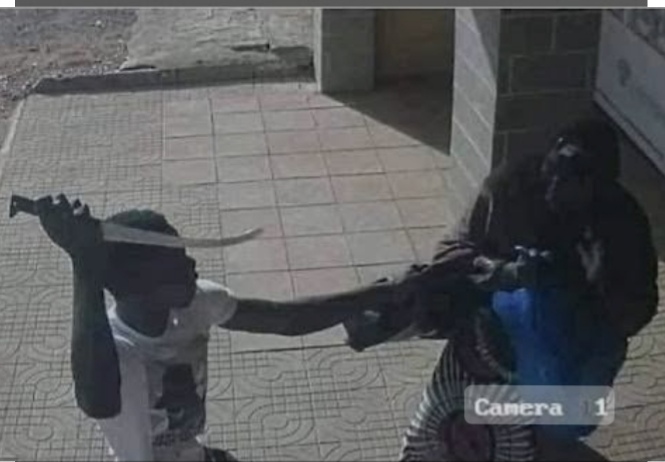
From the streets of Kurna to Dorayi, and Rijiyar Lemo to Gwagwarwa, chilling reports of violence have become commonplace. Street clashes, stabbings, daylight robberies, and innocent lives traumatised by gangs wielding machetes, stones, and knives have turned these areas into unsafe zones. 

The brutality of these gangs is more devastating. Social media platforms are inundated with graphic videos and images depicting these violent incidents. 

Terrified bystanders film young thugs attacking victims who resist having their phones snatched, with many victims bleeding from multiple stab wounds. 

These violent encounters are no longer isolated incidents but part of an alarming pattern that threatens the peace and stability of Kano.

A Personal Near-Miss in Dorayi

Just days ago, a student narrowly avoided becoming a victim during a routine trip from Zoo Road to Dorayi in a commercial tricycle (Keke Napep). 

Two young men suddenly jumped into the vehicle; one sat beside them, the other beside the rider. Despite explaining that it was a private drop-off, one of the youths became aggressive. 

Thankfully, the presence of a nearby police outpost likely deterred any violent intentions. They dropped off at a university gate without incident.

This encounter serves as a sobering reminder that violence can erupt anytime, anywhere. Such an incident was lucky, not guaranteed. For many others, it ends in tragedy.

Violence Spreads Beyond Kano

The wave of thuggery and phone snatching extends beyond Kano State. In neighbouring Kaduna, the tragic stabbing of a naval officer, Lieutenant Commander M. Buba, shocked the region. 

While changing a flat tyre in the Kawo area, he was attacked and stabbed in the chest after he refused to surrender his phone. Despite intervention by local vigilantes, he was pronounced dead on arrival at Manaal Hospital.

Authorities have since detained at least 13 suspects and initiated covert operations to dismantle gangs terrorising Kaduna’s streets. Yet the spread of this violence signals a regional issue that calls for coordinated responses beyond the borders of individual states.

 Tragic Loss of a Community Leader

Closer to home, Kano mourned the brutal murder of Alaramma Jabir Lawan Abdullahi, a respected Islamic teacher and tech expert. 

On the evening of May 17, 2025, near Gidan Sarki, he was attacked while travelling in a commercial tricycle amidst heavy traffic. When he resisted attempts to snatch his phone, he was stabbed multiple times by suspected thugs and left to die on the roadside.

This horrific act has ignited outrage across Kano. The fact that a well-known and respected educator could fall victim so brutally sends a clear message: no one is safe in the current climate of violence. 

Arrests Made, Yet Violence Continues

According to the Kano State Police Command, over 200 suspected thugs and phone snatchers have been arrested over the last six months. 

In March 2025 alone, the police paraded over 85 suspects from hotspots such as Kofar Ruwa, Dan’agundi, Zango, and Dorayi. Weapons, stolen phones, and illicit drugs were seized.

Despite these efforts, the menace persists, the gangs’ deep-rooted networks rapidly replenish lost members, highlighting the inadequacy of enforcement alone. 

Underlying socio-economic challenges, including high unemployment, widespread drug abuse, and poor educational opportunities, fuel the cycle of crime and violence.

Steps Taken, But More Must Be Done

The Kano State Government has made commendable strides in tackling this crisis. 

Rehabilitation centres in Kiru and Dorayi, alongside the National Drug Law Enforcement Agency’s (NDLEA) facility for addiction treatment, are important tools in combating the link between substance abuse and violent crime.

However, these centres require urgent expansion and increased funding to meet growing demand. With rising numbers of youths affected by drugs and crime, scaling rehabilitation services is essential, and more compulsory.

Need For Holistic Action

Security agencies cannot rely solely on arrests to solve such enduring crises, which require a community-based approach. 

Strengthening community policing, empowering neighbourhood vigilante groups, improving local surveillance, and fostering trust between residents and law enforcement are critical for restoring safety. Equally important is addressing the root causes of youth involvement in crime. 

The government must urgently invest in job creation schemes, vocational training centres, and youth empowerment initiatives such as sports and cultural programmes. 

Idle youth are more vulnerable to gang recruitment and drug addiction. Productive engagement is the key to prevention. Moreover, effective rehabilitation programmes and mental health support for addicted offenders must be prioritised. Without this, many youths will remain trapped in a vicious cycle of crime and incarceration.

Lastly, the justice system must be reformed to ensure quick and fair prosecution. Many arrested criminals return to the streets quickly due to weak legal follow-up, undermining deterrence and public confidence. Stronger, faster legal processes and appropriate sentencing are necessary to break the cycle, as it was previously demonstrated.

Conclusion

The menace of “fadan daba and phone snatching” in Kano has reached a tipping point. No one is immune, from students and traders to community leaders and law enforcement.

NLC threatens nationwide protests over poverty, insecurity

By Abdullahi Mukhtar Algasgaini

The Nigeria Labour Congress (NLC) has issued a stern warning of impending nationwide mass action, citing the crippling cost-of-living crisis, worsening insecurity, and systematic attacks on workers’ rights across the country.

Rising from its Central Working Committee (CWC) meeting held over the weekend in Abeokuta, Ogun State, the labour body declared that Nigerian workers can no longer remain passive as the nation’s economy falters and democratic foundations erode.

The NLC stated that the hardship endured by workers and the poor has reached “intolerable levels.”

It noted that immediate and decisive action is imperative to prevent a complete national breakdown, positioning the threatened protests as a necessary response to government inaction on these critical issues.

“Immediate action must be taken to avert a national breakdown,” the Congress asserted following the meeting at the June 12 Cultural Centre.

Feared bandit leader Yellow Danbokkolo dies from injuries after clash with security forces

By Muhammad Abubakar

Yellow Danbokkolo, the notorious bandit kingpin long feared across eastern Sokoto and parts of Zamfara State, has died from injuries sustained during a fierce confrontation with Nigerian security forces last week.

His death was confirmed by Abdulaziz Abdulaziz, Senior Special Assistant to President Bola Ahmed Tinubu on Print Media, via a post on his verified social media account. According to Abdulaziz, Danbokkolo succumbed to his wounds on Sunday.

Danbokkolo, widely considered even more dangerous than the infamous Bello Turji, was linked to numerous deadly attacks in the region. He was the mastermind of the gruesome December 2021 arson attack in Shinkafi, Zamfara State, where dozens of travellers were burned alive.

Security sources say the bandit leader’s reign of terror was sustained by a chronic addiction to pentazocine, a powerful opioid, which he reportedly abused in heavy doses.

Residents of the affected communities have expressed relief at the news, hoping it marks a turning point in the fight against rural banditry in Nigeria’s northwest.

The normalisation of atrocities on our roads: A call for accountability

By Kabiru Danladi Lawanti, PhD 

I cannot recall any incident where a vehicle or travellers were targeted simply because they were from Plateau State, in retaliation for the atrocities being committed by these savages.

Please, I challenge anyone to provide a single example—since 1914—where innocent travellers were attacked in Kebbi, Sokoto, Zamfara, Katsina, Niger, Kano, Jigawa, Bauchi, Gombe, Yobe, Adamawa, or Borno simply because they were seen as the “other.” 

Yet, we have countless documented cases from Tinno, Mambilla, Takum, etc., in Taraba; Riyom, Barikin Ladi, Jos, Mangu, etc., in Plateau; Agatu, Makurdi, etc., in Benue; and Gonin Gora, Koi, etc., in Kaduna, where innocent travellers were blocked, maimed, and killed—dismembered and buried or even burned alive—solely because of their identity as “others.”

These are normalised atrocities. The perpetrators are getting away with it because there have been no consequences. Only God knows how many lives have been lost in this manner between 2002 and 2025. 

Many of these crimes are well documented—some even recorded and posted by the criminals themselves, proudly sharing selfies while committing barbaric acts. Remember the Eid day massacre in Jos? Or the genocide in Mambilla? These incidents are documented by security agencies.

Tragically, these criminal gangs enjoy the backing of some politicians and community leaders. Take, for instance, the disturbing justification offered by the Chairman of Mangu Local Government Area regarding the killing of wedding-bound travellers from Zaria. Is that how a leader is supposed to speak?

Even more worrying is how these barbaric acts are celebrated on social media. Look at the screenshot of Kefas Gyang Pam that went viral yesterday, or the posts from a Facebook group in Bokkos openly celebrating the gruesome attack on the innocent Zaria travellers.

These individuals are not ghosts. They are known. And they can be easily traced.

Kabiru Danladi Lawanti, PhD, wrote from Ahmadu Bello University, Zaria.

Letter to President Tinubu on Yelwata and Jos massacres

Dear Mr President, 

1. I hope you had a safe return after the visit to Yelwata, Benue State, to assess the killing spree that occurred there last week. While people like Mr Peter Obi and Dele Farotimi criticised your trip as one lacking compassion, I believe your presence there meant something. It is better than not going there. It means you have first-hand knowledge of how defenceless Nigerians are killed, not just in Benue, but across Nigeria, especially in the North. 

2. I write to draw the urgent attention of Your Excellency to a fresh tragedy. This afternoon, several national newspapers reported the killing of 12 Muslim passengers travelling from Zaria to Qua’anpan Local Government Area of Plateau State. They were ambushed in the Manjul community, Mangu Local Government Area, Plateau State. These innocent Muslim travellers were killed, and subsequently burned in the bus conveying them. Nineteen others are now nursing various degrees of injuries.

3. A survivor among the victims of this dastardly act was interviewed, and he remarked that they lost direction. Upon stopping and asking for directions, the locals at Manjul remarked that these are Hausa people and that they should be killed. In their words, as reported, “These are Hausa people, let’s kill them!”. This chilling statement underscores where we are as a country. Anyway, they successfully killed 12 and injured 19. It is in today’s newspapers – Daily Nigerian, Daily Trust, The Daily Reality, Punch Newspapers. 

4. Mr. President, no citizen should be targeted for their ethnicity or religion. Whether in Yelwata or Yorro, Mangu or Malete, Nigerians must be free to travel safely. Nigeria has tolerated this barbarism for too long. If terrorists in the forests remain elusive, those living in communities and attacking travellers should not be. What excuse does the state have when killers who can be easily traced and apprehended go unpunished? This silence by the system sends one loud message: you can kill and walk away. 

5. This is not the first time such horror has unfolded in Plateau State. In 2021, 20 members of the Tijjaniyya sect were killed in Rukuba, Jos, on their way home from a religious event in Bauchi. It is now 4 years. No justice has been served yet. In 2018, General Idris Alkali (rtd), a senior military officer and Chief of Army Administration, was ambushed and killed. His body was thrown into a pond in Dura Du. Suspects were arrested, but 7 years later, justice is being delayed. 

6. These cases remain open wounds. Mr. President, your influence should not stop at sympathy and condolence visits. Nigerians will feel more confident if you direct a full, public, and timely investigation into these recent attacks in Yelwata and Mangu. The perpetrators should be found, prosecuted, and punished—not just for justice but as a deterrent. Otherwise, each incident becomes an invitation for the next mob to strike.

7. Your Excellency, the time to act is now. Nigerians are watching. We can, for once, surprise the world and Nigerians themselves to know that Nigeria is not a jungle where anyone kills at will and goes about their everyday business. Where is the sanctity of life in this country? If the government cannot break this wanton bloodshed, then who will? You can decide to break this bad culture of letting killers get away. You can choose to be different from your predecessors. You can decide to let Nigerians know that this can be curtailed. Let this be the turning point. We have to give justice some opportunity to speak louder than violence. At this time, let us give the killers an opportunity to know that Nigeria is not a lawless country. 

8. Thank you. 

Ibrahiym A. El-Caleel wrote from Zaria, Kaduna State.

Governors meet with NSA, defence minister over rising insecurity

By Uzair Adam 

Amid growing security concerns across the country, members of the Nigeria Governors’ Forum (NGF) on Wednesday held a closed-door meeting in Abuja with the National Security Adviser, Nuhu Ribadu, and Minister of Defence, Mohammed Abubakar.

The meeting, chaired by the NGF Chairman and Kwara State Governor AbdulRahman AbdulRazaq, took place at the NGF Secretariat. 

Among the governors in attendance were those of Anambra, Akwa Ibom, Oyo, Kwara, Osun, Plateau, Lagos, Nasarawa, Ekiti, Ebonyi, Kogi, Ondo, Imo, Cross River, Ogun, and Edo states.

Although the agenda was not officially disclosed, the gathering is believed to be connected to the escalating insecurity in parts of the country, particularly the recent deadly attack in Yelewata, Benue State.

Earlier in the day, President Bola Tinubu visited Benue and met with stakeholders at the Government House in Makurdi, where he condemned the killing of over 100 residents in Yelewata. 

He directed the Inspector General of Police, Kayode Egbetokun, and the Chief of Defence Staff, Christopher Musa, to apprehend those responsible.

Sources confirmed that the Abuja meeting involved briefings from the NSA and the Minister of Defence. 

The Secretary to the Government of the Federation, George Akume, traditional rulers, and former state governors were also present at the Makurdi meeting.

President Tinubu queried the lack of arrests and urged the heads of the Department of State Services (DSS) and the National Intelligence Agency (NIA) to ramp up intelligence efforts to bring the perpetrators to justice.

NFSS commends Bauchi operatives, urges integration for improved security

By Uzair Adam 

The Nigerian Forest Security Service (NFSS) has called on state governments to integrate its command structures into existing security frameworks to strengthen the fight against crime across the country.

The call was made as the Deputy Commander-General (Intelligence), Dr. John Metchie, praised NFSS operatives in Bauchi for their bravery and dedication in curbing criminal activities in the state. 

He also appealed to Nigerians to refrain from stereotyping the Fulani community as inherently violent, pointing out that many of the security challenges are caused by foreign herders entering through Nigeria’s porous borders.

Also speaking, the Assistant Commander-General (Operations), Umar Aliu, revealed that the government has remained supportive of the service by consistently paying salaries to over 800 personnel. 

He added that there is an insurance policy in place, providing N5 million to the families of operatives who lose their lives in the line of duty.

Aliu further disclosed that the state governor has approved the recruitment of 2,000 new operatives and provided vehicles, motorcycles, and allowances to bolster their operations.

Wave of carnage in Plateau leaves 41 dead, many homes destroyed

By Muhammad Abubakar

A wave of violent attacks across Plateau State over the past week has claimed the lives of at least 41 people, with dozens more reportedly wounded, local sources and security officials have confirmed.

In what residents describe as a series of coordinated assaults, a total of 96 homes were set ablaze in several communities, displacing scores of families and raising fresh concerns over the escalating insecurity in the region.

The attacks, which spanned multiple local government areas, are believed to be part of ongoing communal clashes and reprisal violence that have plagued the state for years. Eyewitnesses recount harrowing scenes of gunfire, arson, and panic as armed assailants descended on their villages under the cover of darkness.

Authorities say security operatives have been deployed to the affected areas, but locals continue to express frustration over what they perceive as a slow or inadequate response to the violence.

While the Plateau State Government has condemned the attacks and promised to bring the perpetrators to justice, humanitarian agencies are calling for urgent relief efforts to support the growing number of displaced persons.

As of the time of this report, no group has officially claimed responsibility for the attacks. Investigations are ongoing.

April Fools? Not for Nigerians—A stark glimpse into security and anti-graft realities

By Haroon Aremu Abiodun

April is traditionally a month of pranks and laughter. But in Nigeria, the joke was on no one except, perhaps, on a nation whose security architecture is under siege from terrorists, bandits, and kidnappers.

Far from fearing our security operatives, criminal elements across the country displayed shocking audacity, reminding us that the battle for Nigeria’s soul remains bloody and unresolved.

In a horrific display of lawlessness, notorious bandit leader Bello Turji celebrated Eid in Sokoto by executing kidnapped victims, recording and broadcasting the gruesome act without fear of consequences. Across parts of Katsina, Kaduna, and Zamfara, bandits not only continued their reign of terror but have begun levying taxes and operating parallel governments in areas still supposedly under state control.

Compounding public anxiety, National Security Adviser Nuhu Ribadu made headlines when he advised families of kidnapped victims to “stop paying ransom.” While theoretically sound, the reality is far more brutal. Without swift and credible government intervention, desperate families have no option but to finance their tragedies. Until state forces can decisively rescue captives, this vicious cycle will continue.

In just one month, attacks escalated across Plateau, Kwara, and Benue States, leaving communities in mourning. Boko Haram and ISWAP insurgents resurfaced with deadly ambushes, signalling their continued relevance in Nigeria’s security equation.

April’s bloodshed has revealed operational lapses and a deep strategic and moral crisis. The Office of the National Security Adviser (ONSA) must urgently intensify efforts, especially by working discreetly with rescued victims to extract intelligence, boost surveillance systems, and dismantle criminal networks worldwide.

While commendable successes by security operatives, such as rescuing hostages and recovering illegal arms, were recorded, they were dwarfed by the scale of atrocities witnessed within just 30 days.

The Department of State Services (DSS), often criticised and even facing calls for disbandment, must seize this moment to redeem itself. Encouragingly, recent commendations from the Plateau State Government and Governor Uba Sani of Kaduna for the DSS’s contributions to curbing insecurity suggest a glimmer of institutional reliability. Their successful arrests of gunrunners and dismantling of kidnapping syndicates are steps in the right direction.

Notably, the DSS also intercepted a British Army Major in Delta State attempting to smuggle 50 AK-47 rifles and ammunition—a major bust, and a signal that the service can perform under pressure. Their ability to withstand calls for the suspect’s release further strengthens public confidence.

Going forward, DSS and ONSA must strengthen collaboration through real-time joint operations, intelligence sharing, and visible outcomes. The Nigerian Intelligence Agency (NIA) also must integrate its overseas capabilities with ONSA’s domestic strategies. Today’s criminals are sophisticated—our response must be smarter.

Beyond the battlefield, Nigeria’s fight against corruption also demands attention. The Economic and Financial Crimes Commission (EFCC) must intensify efforts with ongoing arrests of internet fraudsters and by pursuing justice in high-profile cases involving figures like Betta Edu and Sadiya Umar Farouq.

Regarding Aisha Achimugu’s case, the EFCC must adhere to due process and uphold its promise to act with diligence and integrity. Recent arrests, including that of Bauchi State Accountant General Sirajo Muhammad Jaja, show the commission is active, but visibility and transparency are critical.

Despite receiving accolades, such as the Government Spokesperson Award and the Courage in Justice and Transparency Award from the Nigerian Human Rights Community, EFCC must do more to recover funds stolen through schemes like CBEX. Collaborating with Interpol to dismantle international fraud networks and prevent future scams using forged EFCC certificates will reinforce the commission’s credibility locally and abroad.

Transparency is the only antidote to growing public cynicism about the Commission’s integrity.

The Independent Corrupt Practices and Other Related Offences Commission (ICPC), though laudably organising programs like its stakeholders’ meeting on accountability in local government, must now transition from talk to action. Corruption within Ministries, Departments, and Agencies (MDAs) remains rampant. A recent ICPC report showed that over 60% of corruption cases involved diverting healthcare funds—a scandal demanding decisive intervention.

April has ended, but the wounds it inflicted are still fresh. If we’ve learned anything, it is that the fear of the Nigerian state must be restored—not with hollow rhetoric, but through coordinated, courageous, and relentless action.

The enemies of Nigeria no longer fear our uniforms, our institutions, or the name “government.”

The time to act was yesterday. Today is already a dangerous gamble. Tomorrow may be too late.

Haroon Aremu Abiodun is a PRNigeria Fellow and author. He can be reached via exponentumera@gmail.com.