Insecurity In Nigeria

DSS apprehends suspected arms dealer in Plateau State

By Hadiza Abdulkadir

The Department of State Services (DSS) has announced the arrest of Musa Abubakar, believed to be a major supplier of arms to criminal groups in Plateau State and northern Nigeria. The operation was based on intelligence reports leading to his detention on November 12, 2025.

A DSS source confirmed that Abubakar admitted to producing and distributing high-calibre weapons and ammunition used in violent attacks across Plateau and neighbouring regions.

The arrest followed a targeted raid on his weapons manufacturing facility in Mista Ali, Bassa Local Government Area, Plateau State. Authorities reportedly found Abubakar with IED components, chemicals, and manufacturing equipment, all seized by DSS operatives.

This development comes days after the recapture of Abdulazeez Obadaki, alias Bomboy, a prison escapee linked to the Owo and Deeper Life Church attacks. DSS headlined recent successes in counterterrorism efforts, including the detention of nine high-profile suspects involved in incidents in Plateau and Benue states.

Among those detained is Timna Manjol, 46, who pleaded guilty to firearms charges related to the attacks, according to court documents. Manjol is affiliated with First Baptist Church in Mangu, Plateau.

Security analysts view these arrests as part of the DSS’s ongoing crackdown on violent extremism in the region.

Group rejects US threats, urges national unity on security crisis

By Muhammad Sulaiman

A group of prominent Nigerian citizens has condemned recent threats by U.S. President Donald Trump to relist Nigeria as a “Country of Particular Concern (CPC)” and possibly take military action to protect Christians, describing the move as an affront to Nigeria’s sovereignty.

In a statement issued in Kaduna, the group — comprising Dr Bilkisu Oniyangi, Professor Usman Yusuf, Dr Ahmed Shehu, Dr Aliyu Tilde, Dr Hakeem Baba-Ahmed, and Barrister Kalli Ghazali — warned that such rhetoric from Washington could inflame religious tensions and “turn Nigeria into a pawn in global geopolitics.”

The signatories emphasised that while the concerns of friendly nations such as the U.S., China, the U.K., and Russia are welcome, threats and external pressure are counterproductive. “This is our problem as Nigerians, and it will be solved by us,” the statement read.

The group urged President Bola Tinubu to directly address Nigerians, prioritise national security, and suspend foreign travels until the crisis is resolved. They also called on the U.S. to withdraw its threats and instead assist Nigeria through strategic cooperation and capacity building against terrorism and banditry.

They further appealed for unity among Nigerians, noting that “every life taken, every kidnapping or assault anywhere in Nigeria matters equally.”

Reaffirming faith in Nigeria’s resilience, the statement concluded: “Our independence and unity have been tested many times, and this too shall pass — but only if we act together as one people.”

Mattress of terror: Can Nigeria ever be truly secure?

By Haroon Aremu Abiodun

“Any country where lawmaking is more lucrative than law enforcement, there must be insecurity.”

That was the piercing submission of veteran Nollywood actor Kanayo O. Kanayo in a podcast interview. This quote still lingers in my mind like a haunting prophecy. Sadly, Nigeria appears to be a textbook example of that paradox.

This raises a chilling question: can we ever be safe in a nation where those crafting the laws live like kings, while those enforcing them die like pawns?

The roads tremble with fear, and villages sleep with one eye open. From Abuja to Zamfara, from the creeks of the Delta to Anambra, to the rocky hills of Birnin Gwari, the word “insecurity” has become a national refrain. 

In whispered conversations and on trending hashtags, Nigerians continue to ask: Can banditry, kidnapping, and terrorism ever truly end in Nigeria?

While President Bola Ahmed Tinubu continues to pledge security reforms, and National Security Adviser Nuhu Ribadu issues strategic statements, the reality on the ground often contradicts this. The Chief of Defence Staff, General Christopher Musa, may be leading an army of patriots. Still, their valour is constantly undermined by systemic inequality, in which the pen is paid more than the gun.

I Witnessed the Truth

In early June, I attended a deeply insightful citizenship engagement forum hosted by Voice of Nigeria (VON). Dignitaries, including the Minister of Information, NSA Ribadu, the Chief of Defence Staff, and other notable figures,were present. But one story shared by the Chief of Defence Staff froze the air.

He recalled a young bandit who surrendered. The military, adopting a “soft approach,” chose not to brutalise him but instead treated him humanely. He was given food, a warm bath, and, for the first time in his life, a mattress.

This wasn’t just about physical comfort. It was symbolic. The boy, barely old enough to vote, said he had never lain on a mattress before. That was his first taste of civilisation, and it came not from a school or community, but from an army barracks. The boy had joined a group of killers not out of hatred, but out of hopelessness.

The Root of the Rot: 3Es

With what the Chief of Defence Staff said, I was able to conclude that part of the root of Nigeria’s security crisis lies in the absence of the “3Es”: Education, Exposure, and Enlightenment. These are not luxuries; they are necessities. And in the North, where banditry has gained a more frightening foothold, their absence is glaring.

It is time for Northern governors to rise beyond rhetoric. The federal government cannot win this war alone. State leaders must begin by reforming their education systems, investing in enlightenment campaigns, and introducing programs that truly expose their youth to life beyond the confines of their communities. Kano State has led the way in propagating and championing this initiative among the northern states, but efforts should be intensified.

Can we save Nigeria? Yes, but not with a centralised, top-down approach. What we need is collaborative security. Community policing must be revived with village chiefs and family heads forming the first line of surveillance.

Security consciousness must be made more crucial and integrated into school curricula and public messaging. Employment generation must become more than a campaign slogan. A graduate left idle is one WhatsApp message away from recruitment into darkness.

“If community policing is fully implemented, it will become far easier to identify and expose those secretly sponsoring or benefiting from terrorism right from the grassroots. Local vigilance, trust networks, and community-driven intelligence can expose hidden collaborators who often conceal their activities behind political or economic influence. Such a system not only strengthens national security but also empowers citizens to take active ownership of their safety and future.”

This is to say, the fight against terror will not be won by guns alone, but by communities standing as the first line of defence

The Role of Institutions

The Ministry of Education and the National Orientation Agency (NOA) must now take centre stage. It is no longer enough to teach arithmetic and grammar; we must now teach security literacy. The young must understand the real consequences of crime. They must be exposed to alternatives.

This encompasses school tours, street theatre, online campaigns, community mentorship, and genuine partnerships between public and private stakeholders.

There is hope. There are patriots in uniform. There are children yet untouched by corruption. There are teachers still driven by conscience. However, all their efforts will be for nothing if lawmakers continue to earn more than those who risk their lives.

The EFCC may chase funds across Iceland and Dubai. The DSS may foil plots in Lagos and Maiduguri. However, until we address the imbalance and make justice more rewarding than crime, we will remain trapped in this cycle.

Let us not wait until another child lies on a mattress in a military cell to realise what he has never had.

Let that mattress be our wake-up call.

So, to President Tinubu, to the NSA Ribadu, to the Defence Chief, and to every governor who still believes in this country: The war will not be won on the battlefield alone; it will be won in the classroom, in the family compound, in the village square, and in the heart of every Nigerian.

Before we talk about weapons, let’s talk about mattresses.

Haroon Aremu Abiodun, An Author, public Affairs Analyst, PRNigeria fellow and wrote in via exponentumera@gmail.com.

I have to create state police to tackle insecurity — Tinubu

By Uzair 

President Bola Tinubu has reiterated that the creation of state police is inevitable in addressing Nigeria’s worsening insecurity.

Speaking at the Presidential Villa in Abuja on Tuesday during a courtesy visit by prominent Katsina indigenes led by Governor Dikko Radda, Tinubu assured that his administration is determined to confront the menace of banditry and other security threats.

He directed security agencies to review their strategies in Katsina, which has recently witnessed a surge in banditry, and announced plans to deploy advanced military equipment and surveillance technology. 

The president also disclosed that newly recruited forest guards in the state would receive enhanced training and support.

Tinubu acknowledged Nigeria’s security challenges, including porous borders and long-standing weaknesses, but stressed that with determination and a strategic approach, they could be overcome.

“The security challenges we are facing are surmountable. Yes, we have porous borders. We inherited weaknesses that could have been addressed earlier. It is a challenge that we must fix, and we are facing it,” he said.

He revealed that the federal government had approved the acquisition of additional drones and instructed him to receive daily updates on security operations in Katsina.

“I am reviewing all aspects of security; I have to create a state police. We are looking at that holistically,” Tinubu added.

The president reassured Nigerians that insecurity would be defeated, emphasising the need to protect children, places of worship, and livelihoods from criminal intimidation.

He reminded the delegation that in February 2024, the federal government established a committee to develop a framework for state policing, which has since garnered widespread support. 

However, by March, 20 states were yet to submit their reports, according to Vice-President Kashim Shettima.

Tinubu also paid tribute to former President Muhammadu Buhari, praising him for leaving behind a legacy of success.

Governor Radda and other members of the delegation, including former Governor Aminu Masari and Ibrahim Ida, the Wazirin of Katsina, commended Tinubu for his commitment to security and infrastructural development in the state. 

Ida urged the federal government to prioritise upgrading the Umaru Musa Yar’Adua International Airport and bolstering security in southern Katsina.

Atiku slams Tinubu administration on insecurity

By Muhammad Abubakar

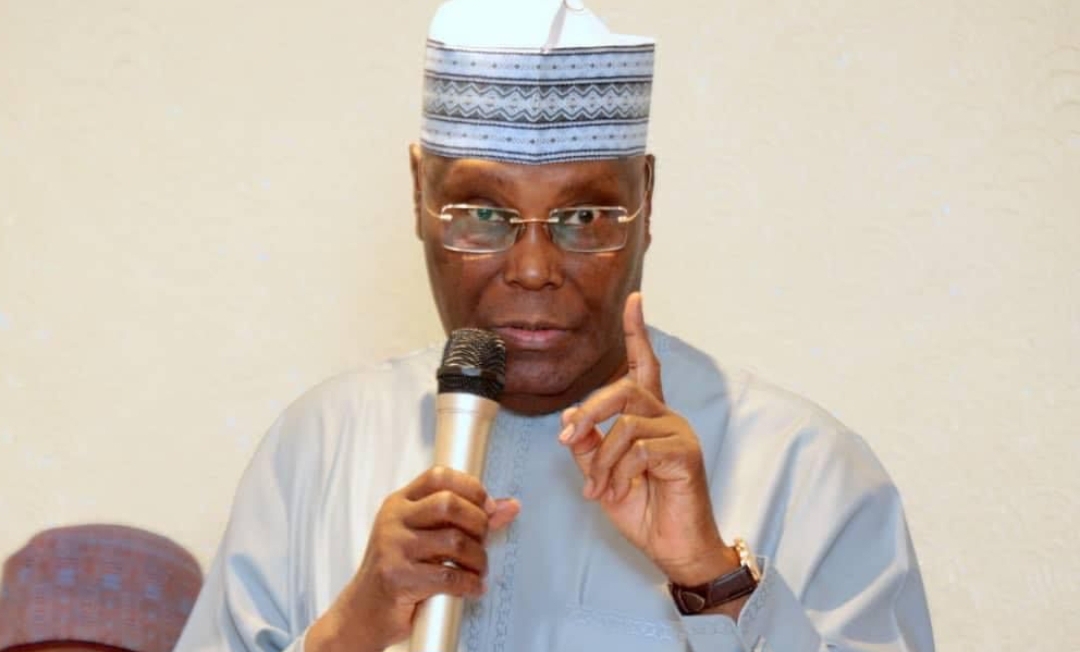
Former Vice President Atiku Abubakar has launched a sharp attack on President Bola Tinubu’s administration, accusing it of failing to secure the North-Central region of Nigeria. 

Abubakar’s statement claims that the government has abandoned the area, resulting in a “monumental failure” in protecting its citizens.

Abubakar highlighted a dramatic rise in violence, citing Kwara State’s new status as a hotspot for kidnappings and bandit attacks. He also noted continued bloodshed in Niger, Plateau, and Benue states, where thousands have been killed in just two years.

The former Vice President went on to accuse the ruling APC of using thugs to disrupt opposition meetings, with security forces allegedly failing to act.

He warned that violence “is a vicious circle” that will harm those who use it, and called on the Nigeria Police Force to remain neutral and fair, reminding them that taxpayers, not the APC, fund them.

Over 1,100 Nigerians killed, 276 abducted in June — Security Report

By Muhammad Abubakar

At least 1,111 Nigerians were killed and 276 abducted by gunmen and other non-state actors across the country in June 2025, according to a new report by Beacon Security and Intelligence Limited.

The chilling figures are contained in the company’s monthly security dossier, which tracks violence and criminal activity nationwide. Despite the high numbers, the report notes that June witnessed a “notable de-escalation” in security breaches compared to May, suggesting a slight dip in the frequency or intensity of attacks.

While the report did not provide a full regional breakdown, sources familiar with the data say many of the killings occurred in the North West and North Central zones, where banditry and communal violence remain rampant. Parts of the South East also continue to grapple with targeted killings and kidnappings by separatist-linked armed groups.

The 276 abductions show the persistent threat of kidnapping-for-ransom, which has plagued Nigeria for years, affecting schoolchildren, commuters, and rural dwellers alike.

Security analysts say the figures, though slightly improved from previous months, still reflect a deepening crisis. They have called for more coordinated action by federal and state authorities to strengthen local intelligence, improve response times, and hold perpetrators accountable.

The government has yet to respond to the latest statistics, but critics argue that repeated assurances of improved security have not translated into meaningful safety for the average Nigerian.

Debunking the Claims: A closer look at governance and opposition in Katsina State

By Ahmed Abdulkadir

It was with a mix of curiosity and concern that I came across an article published by The Daily Reality on July 12, 2025, titled “How the Lack of Strong Opposition Masks the Government’s Failures in Katsina.” The write-up was emotionally charged, laced with sweeping generalisations and unverified claims against the administration of Governor Dikko Umar Radda. But beyond the passion and provocative headline lies the need for a more measured and fact-based perspective—one grounded in reality rather than rhetoric.

Let us take a closer look at the major allegations raised in the article and critically examine them with verifiable facts and thoughtful context.

The “Failure” of a PhD Holder? A Misplaced Premise

One of the more glaring assertions in the article is the idea that Governor Radda’s possession of a PhD was oversold during his campaign and that his government has since failed to meet expectations. But such a claim is not only simplistic—it is unfair.

Yes, Governor Radda holds a doctorate degree, a fact that underscores his academic pedigree. However, governance is not a matter of titles or certificates—it is about policies, programs, and political will. The proper question should be: What has he done since assuming office in May 2023?

So far, the Radda administration has rolled out programs in agriculture, healthcare, and security reform. For instance, his data-driven community development model now guides the distribution of fertiliser, agro-support, and loans, ensuring that those who truly need support get it. His collaboration with the Bank of Industry for interest-free loans to MSMEs is unprecedented in the state. His administration has also launched the Health Insurance Scheme for Retirees—the first of its kind in Katsina’s history.

If there are areas needing improvement, no doubt. But to write off the administration as a “failure” just two years into a four-year mandate without a balanced assessment is more political than logical.

Insecurity: Who Really Bears the Blame?

The article devotes significant attention to the security situation in Katsina State. It laments the rising tide of banditry and communal violence, laying the blame squarely on the state government’s shoulders.

There is no denying the pain and fear that many communities in Katsina face. Attacks in places like Yargoje and Faskari are fresh scars in our collective memory. But to understand the security challenge in Katsina, one must first recognise that it is a national crisis, not a localised failure.

Security in Nigeria is under the exclusive control of the Federal Government. The police, the military, and the intelligence agencies all answer to Abuja. Governors, including Dr. Radda, are often described as “chief security officers” in name only—they command no troops, control no weapons, and fund security operations from limited state budgets.

That said, the Radda administration has not folded its arms. It has recruited and trained community vigilantes, equipped local security outfits, and created a Directorate of Humanitarian and Social Support to cater to victims of banditry and displacement. These interventions may not be silver bullets, but they reflect proactive governance in a highly constrained security architecture.

Education: A Long Road, not a Quick Fix

Another issue raised in the article is the high number of out-of-school children in Katsina. On this point, the critics are absolutely right. Katsina ranks among the states with the highest rates of out-of-school children in Nigeria. But what they failed to mention is that this is not a new problem, nor one created by the Radda administration.

The roots of the educational crisis in Katsina go back decades. Years of underfunding, weak infrastructure, socio-cultural barriers, and insecurity have combined to undermine education in the state. What matters now is what the current government is doing to address it.

Governor Radda has begun the process of improving school enrollment, especially for girls. New schools are being built in underserved areas. He has introduced teacher recruitment and training initiatives. And there are plans underway to integrate Qur’anic education with formal curriculum to bridge the gap between Almajiri and Western education.

Is it enough? Not yet. But progress is being made—step by step.

Opposition Politics: Is There Really a Vacuum?

Perhaps the most politically charged claim in the article is that Katsina suffers from a lack of effective opposition, which allows the government to operate without scrutiny. This is an old and recurring lament in Nigerian politics, especially in states where the ruling party dominates.

Yes, the All Progressives Congress (APC) won the 2023 governorship with a comfortable margin. Yes, the party also secured all three Senate seats and most House of Assembly positions. But to interpret this dominance as the death of opposition politics is disingenuous.

The PDP remains active in Katsina. The SDP fields candidates. Civil society voices are alive and well. In fact, the very article in question—published without censorship—is evidence that dissenting voices are being heard.

If opposition parties are underperforming, the responsibility lies with them to reorganise, re-strategise, and connect meaningfully with the grassroots. Democracy is not sustained by the volume of complaints but by the quality of alternatives.

A Balanced View, not a Biased Verdict

In conclusion, while the concerns raised by Daily Reality are important and deserve public discourse, their presentation lacks balance and fails the test of objectivity. The article reads more like a political broadside than a serious critique of governance. It ignores nuance, omits progress, and assumes malice where complexity exists.

Katsina State, like much of Nigeria, is grappling with real challenges—security, education, healthcare, and youth unemployment. But it is also a place where honest efforts are being made to build a better future. The truth, as always, lies somewhere in the middle, not in the extremes of praise or condemnation.

Governor Radda may not have achieved everything yet, but his administration has not been idle, incompetent, or indifferent. Let us hold him accountable, yes—but let us also be fair, factual, and future-minded in our assessments.

Ahmed Abdulkadir is the Board Chairman of Katsina State Radio and Television Services.

How the lack of strong opposition masks the government’s failures in Katsina 

By Muhammad Isyaku Malumfashi

One thing I despise about Katsina’s political realm is the absence of a strong and formidable opposition that will tackle the government’s dormancy and make them very focused and renaissance-like toward their responsibilities by using both envious and constructive criticism against those in power, so that at least the citizens may witness democratic dividends seen in some states.

But for the opposition to hold hands and keep mute without holding those in power accountable for any misfortune is unhealthy, and that’s the reason why we are here. Many citizens have questions about the power, but they are afraid to ask due to threats of arrest or intimidation by those close to the power. Perhaps some would disguise themselves in the name of advice to convince you not to oppose this failed government led by the so-called PhD, but they will not prove to you that what you said about the government is not true.

It’s a good thing to advise one to be cautious and watchful of his tongue, but it’s cowardice to intimidate him with arrest or cite the quibbles of his words without pointing out the error in them. The present Katsina government at all levels has become a failure despite the boasting made about the ‘educational qualification’ of the governor during the campaign and even after in his first year of office.

The governor made it clear that he would work with only ‘educated people’ because he is a PhD holder. His academic position was also used to deceive people into believing that Katsina would have a governor for the first time who had attained such a high level of education, unlike his predecessors, who were only master’s degree and diploma holders. People believed that the highest level of education equates to good governance until Governor Radda spent two years in office with nothing to show, or at least outshine or perform better than his predecessors.

That’s when we realised that a secondary school leaver may do better than a PhD in governance because it’s not about the qualification but fear of God, experience, integrity, and honesty. This administration of a PhD holder has not endangered any sector in Katsina. Take the security issue first, which is the most pressing issue in the state.

During the campaign, the governor made it clear that even if it’ll cost him not constructing a single gutter, he’ll eliminate insecurity in the state. We were happy to hear that and even began to see some desirable steps toward actualising that by distributing ammunition to citizens, launching the Katsina State Security Watch Corps, and arresting and killing many people found sabotaging the fight against insecurity. But what happened along the way?

The emphasis was later shifted to politics; the bold promise of no negotiation with bandits at the weak point was broken, and we saw negotiations made in some local governments when it was apparent that the bandits breached many trusts that had been placed in them by the previous government after the talks, and the insurgency escalated. It’s only during Radda that we’ve seen the worst of banditry, especially in my hometown of Malumfashi.

Initially, they only attacked villages, but later they expanded their attacks to cities. People are no longer safe. The son of our immediate local government chairman has been in bandits’ captivity for months now. My sibling, a sister of the same father and the same mother, was kidnapped in the same area where the ex-chairman lived while in office, and his child was abducted.

Many people inside Malumfashi were kidnapped; some were killed, and some had ransom paid to release them. Even today, I woke up seeing the sad news of the death of a PDP leader in Malumfashi from bandits. It’s under this government that dozens of villages in Malumfashi were evacuated due to banditry, and a whole brigadier general from Tsiga was kidnapped and spent more than 50 days in their hands before gaining freedom after millions were paid to them as ransom.

And a first-position winner from Katsina of the National Qur’anic Competition (Musabaqa) held in Kebbi was also kidnapped with his parents along their way back to Faskari from Katsina, where the governor gave him prizes and gifts, but was not able to ask security to escort him home despite the apparent danger of their town. And the governor made a blatant lie in a video, which I saved for my unborn children to remind them that ‘he’s the one feeding every family whose head is kidnapped in the state.’ This is not just a capital lie but a grievous one.

If you take education, you still have nothing to show. The previous government was paying WAEC and NECO for every student in government schools who passed the qualifying exams. Still, this government of ‘PhDs’ paid only NECO to every student, even if he or she passed both WAEC and NECO last year. Katsina’s NECO result was released late last year, after many schools had concluded their admission processes, and the pass rate was very low. Katsina was ranked among the three lowest-passing states in the NECO exam last year.

The governor employed thousands of teachers and a few from the health sector. I agreed, but he did not tell us how many thousands have retired in every sector every year and how far along the replacement process is. No school will go without seeing a shortage of teachers, and the same goes for clinics.

How long did it take him to implement the 70k minimum wage, and has it been implemented 100%? You’ll hardly see a civil servant who saw an increase of up to 50k in his salary, like in other states. What was the cause of his dispute with the university staff about the minimum wage implementation, and how many times did they reject his low implementation of minimum wage for them?

The tertiary school fees were raised when many students were dropping out due to the high cost of education, even though the governor is now earning more than his predecessor because of the removal of subsidies. His predecessor did not increase the school fees, but PhD did. In his just two years in office, he claims to have spent more on security than the previous government did in 8 years, yet there has been no clear difference between the two governments in their success against banditry in the state.

Only these two crucial areas are sufficient to condemn this Yan Boko government, but the lack of opposition in Katsina is giving the governor the confidence to speak badly about the coalition. 

Coalition/opposition has come to stay in Katsina, and no man born of a woman can stop it.

Benue: The noise, the blood, and the silence that matter

By Oladoja M.O

Benue bleeds again. A recent massacre in Yelewata village, where at least 100 to 150 lives were claimed, cast a shadow over headlines, but smothered the deeper truth of decades-long sorrow. As images flash across social media in real time, outrage erupts. But near-instant outrage often substitutes for understanding. And in Benue, where tragedy is almost normalised, such performative empathy does more harm than good.

A Land on Fire, not for the First Time. This is not a one-off disaster. The roots go deep:

The 2001 Zaki‑Biam, where Nigerian soldiers massacred hundreds of Tiv civilians, razing villages in a brutal military reprisal, the 2016 Agatu Massacre, where more than 300, possibly up to 500, villagers were slaughtered during herders‑farmers clashes, leaving thousands displaced, the Odugbeho 2021, where suspected Fulani herders killed at least 40 residents in Agatu LGA, part of a continued wave of violence. In April 2022, over 25 were murdered in coordinated herder attacks on farming communities in Goma, up till this latest carnage, where victims were shot and burned in their homes, echoing a tragic pattern.

Between 2015 and March 2023 alone, 5,138 lives were lost across Benue in herder‑farmer attacks. Under President Buhari’s term, Benue became a killing field; 6,000 killed, 2 million displaced. The Humanitarian Crisis has been ongoing under the surface of fleeting headline moments.

The tragedy is not fodder for political stunts. The moment a video goes online, hashtags spiral: blaming the President, vilifying the government, and stirring political gain. But very few pause to ask: who suffers most in these cycles of condemnation? The dead do not return. The displaced families do not reclaim their farms. The real loss is in our silence, our unwillingness to grasp the whole before pointing fingers. Yes, government leaders, state and federal, bear responsibility.

The 2017 anti‑open grazing law in Benue was well-meaning. However, it remains a paper tiger: characterised by uneven enforcement, a lack of ranches, and feeble federal support. President Tinubu’s speeches and increased defence budgets amount to little on the ground when arms still flow, and security forces remain under-resourced. And when political opponents oversimplify the conflict as mere religious persecution or ethnic cleansing, nuance is lost.

At the heart of all these disputes is a struggle over scarce resources, including land, water, and natural resources, as well as grazing routes, which is exacerbated by climate change. Historically, grazing corridors existed. However, escalating population growth, farmland encroachment, and desertification have reduced these spaces. Compounding this: centuries-old migration, religious and ethnic tensions, cattle rustling, and political exclusion of Fulani groups. Each side bears accumulated grievances; farmers over burnt crops, herders over stolen cattle.

This is fundamentally communal, not merely political. Solutions must be rooted in non‑kinetic, non‑violent engagement. Dialogue tables must sit Fulani herders alongside Tiv farmers and local officials. Traditional leaders, ranchers, security services, and federal authorities must all negotiate a win-win framework, including grazing reserves, clear land-use maps, property rights enforcement, and swift justice for perpetrators. Yes, bring the perpetrators to book. Those profiting from killing, whether herders or cartels supplying arms, must face speedy consequences. However, we cannot rely solely on force. We need intelligence systems, community policing, and legal reform. We need peaceful co-management of land and water.

It’s time for Nigerians to shift from hashtag empathy to hard-won solidarity. Unleashing threads of blame on social media while clicking “share” does little for grieving widows or orphaned children. 

Recording a burn-out home instead of rescuing a trapped neighbor is the hallmark of a self‑absorbed age. 

Public discourse must evolve from political opportunism to intellectual empathy. From performance to purpose. When presidents speak, let’s demand substance: “Where are the ranches? Where is land‑use reform? Who funds security at the village level?”

We demand action, but not at the cost of conscience. We must hold leaders accountable while still listening. Civil society must stop yelling into empty rooms, and start negotiating into full ones.

A practical roadmap might include;

Reviving grazing reserves with clear boundaries, monitored jointly by local farmers and herders, enforcement of anti-grazing laws, backed with ranching incentives and federal support, swift prosecution of killers, with community courts supported by federal justice, strengthening local security, with trained village vigilantes under lawful guidelines. Climate adaptation, planting trees, building dams, restoring soil to reduce migration pressure, and, more importantly, promoting inter‑communal peace‑building through youth exchanges, shared markets, and local councils.

If Nigeria continues to allow Benue’s blood to stain its conscience, we’ll face another generation hardened by loss, distrust, and rage. A country that waits for television headlines before honouring its fallen has already forgotten them. Benue’s suffering needs more than outrage; it needs us: grounded, knowledgeable, purposeful. We must reject hollow political theatre and demand real solutions. Because beneath the noise and the blood, lies an entire community crying for justice, and silence is not an option.

Oladoja M.O writes from Abuja and can be reached at: mayokunmark@gmail.com.

Feared bandit leader Yellow Danbokkolo dies from injuries after clash with security forces

By Muhammad Abubakar

Yellow Danbokkolo, the notorious bandit kingpin long feared across eastern Sokoto and parts of Zamfara State, has died from injuries sustained during a fierce confrontation with Nigerian security forces last week.

His death was confirmed by Abdulaziz Abdulaziz, Senior Special Assistant to President Bola Ahmed Tinubu on Print Media, via a post on his verified social media account. According to Abdulaziz, Danbokkolo succumbed to his wounds on Sunday.

Danbokkolo, widely considered even more dangerous than the infamous Bello Turji, was linked to numerous deadly attacks in the region. He was the mastermind of the gruesome December 2021 arson attack in Shinkafi, Zamfara State, where dozens of travellers were burned alive.

Security sources say the bandit leader’s reign of terror was sustained by a chronic addiction to pentazocine, a powerful opioid, which he reportedly abused in heavy doses.

Residents of the affected communities have expressed relief at the news, hoping it marks a turning point in the fight against rural banditry in Nigeria’s northwest.