Igbo

Hausa butchers attacked at Enugu market following price dispute

By Muhammad Sulaiman

Tensions erupted at the Bariki Market in Enugu State when a group of Igbo butchers reportedly confronted and attacked their Hausa counterparts over a disagreement tied to meat prices.

According to eyewitnesses, the incident began when Hausa butchers allegedly sold their meat at lower prices, a move that some Igbo traders viewed as undercutting the market. The disagreement escalated into a physical altercation, resulting in injuries and disruption of business activities in the area.

Observers have noted that Igbo traders operate freely across markets in Kano and other parts of northern Nigeria, with no reports of similar incidents. Some commentators expressed concern that the Enugu clash had not received widespread media attention, suggesting that the coverage might have been more prominent had the situation been reversed. However, a video clip of the clashes has been widely shared on social media in Northern Nigeria.

There are also concerns that, in other contexts, such disputes risk being misrepresented as ethnic or communal violence, further heightening tensions.

Market authorities and local security agencies are yet to issue an official statement on the incident.

Obi says Kanu’s conviction could deepen unrest, calls for political solution

By Hadiza Abdulkadir

Former Labour Party presidential candidate Peter Obi has warned that the conviction of IPOB leader Mazi Nnamdi Kanu could worsen insecurity in the country. Obi issued the warning in a statement posted on his social media accounts, saying the development comes at a time when Nigerians are already struggling with economic hardship and widespread violence.

Obi said Kanu’s arrest, detention, and now conviction represent “a failure of leadership,” arguing that the concerns raised by the IPOB leader could have been addressed through dialogue and inclusive governance rather than coercion.

He cautioned that the government’s approach risks aggravating tensions in the South-East and further stretching security agencies already battling multiple crises nationwide.

According to him, nations facing similar internal tensions often adopt political solutions and negotiated settlements when legal processes alone cannot guarantee stability.

Obi urged the Presidency, the Council of State, and respected national figures to intervene and pursue reconciliation, warning that only justice, fairness, and meaningful engagement can prevent the situation from escalating into a deeper security challenge.

Colonial minds in Nigeria: The case of Igbos and Christians

By Sa’adatu Aliyu

“I was Igbo before the white man came” is a saying by Chimamanda Adichie through her character Odenigbo in her infamous book Half of a Yellow Sun, reinforcing pride in her African heritage before the white man’s incursion, which destabilised the otherwise peaceful coexistence of African communal states.

However, it seems to me that she has been afflicted by the Igbo superiority complex over other tribes in Nigeria, especially the Hausa-Fulani in the North. This pride in being traditionally Igbo and human doesn’t extend to her acknowledgement of the Hausa-Fulani Muslim humanity and identity—held with equal pride—just as the Hausa-Fulani were before the Whiteman.

Ethnic Pride and Selective Humanity

Moreover, the likes of Adichie and her Igbo fanatics would rather make baseless and false claims about the Igbos being suppressed and ethnically cleansed in letters to Washington than sit to resolve their differences internally with their brothers in the North, solely because they are Muslims whom the Igbos do not perceive as human equals.

Generally speaking, the problem with the Igbos is that they believe all the lands in Nigeria belong to them. Their illusion of grandiosity makes them feel entitled to all locations in Nigeria beyond their region as places they have the right to live, seek better economic opportunities, and build a stable, secure life. In contrast, the same right is not extended to other tribes in Nigeria, especially the Hausa man, who, until today, faces all sorts of harassment whenever he is in the Southeast, sometimes stopped and asked by unscrupulous elements to pay “matching ground” money.

This is a form of tax collected from non-indigenous individuals seeking better economic opportunities over there—a thing that doesn’t occur in the North. Unlike the South, even though Muslims predominantly inhabit the North, it has a significant presence of churches, whereas the presence of mosques is not tolerated in the Southeast except in a few exceptional cases. Moreover, if the North was so brutal towards the Christians as they depict, why do Southerners/Eastern Nigerians seek greener pastures in the North more than the North moves towards their region? If it was so unfriendly to the Igbos and Christians, why not the Igbos remain in their regions, and the North remain in theirs?

Power, Entitlement, and the North–East Tension

While all Nigerian citizens have the right to live and build a life devoid of fear in any part of Nigeria, the Igbos particularly think they should be the ones solely steering the affairs of Nigeria and should be the sole tribe entitled to managing the juiciest positions in government, merely for being Igbo, not necessarily based on superior qualification.

Understanding the mentality of the Igbos has led to what I’d like to refer to as a “personality clash” with the Hausa-Fulanis. Despite being perceived as backwards in an educated population, they are like poor men who would never sacrifice their dignity for money, nor bow to any force that may seek to demean them based on possessing more Western education.

This has led to the long-standing tension between the two ethnic groups. The case of the North and the East is akin to a couple in their early years of marriage experiencing a clash of personality—not necessarily due to lack of love or to cause deliberate harm, but because one happens to blow issues out of proportion by arguing that the other insists on hurting them deliberately.

Instead of checking in with their ego, they engage in score keeping, accusing, and incessantly crying out for help, even if it means seeking a third party in the cloak of a certified therapist—who may hiddenly be a psychopath and has no genuine interest in the wellbeing of the couple, but instead has its greedy eyes on the money to be extorted from them, further destroying their home.

The West as “Therapist”: Foreign Meddling and Naivety

This is precisely what the Christians in Nigeria are doing by seeking the intervention of so-called America, peering underneath African countries’ beds looking for genocide, when the very foundation of the U.S. was built on the vile killings of Indigenous Native Americans.

This scenario has been fueling some of the false accusations circulating in the media about genocide against Christians in the North. It is no doubt Nigeria has been plagued by indiscriminate killings and kidnappings in the past few years, but this has involved the loss of lives and livelihoods of citizens across all ethno-religious groups—mainly by Boko Haram militias and banditry—and not killings affecting Christian communities alone, as the naive Christians of Nigeria, who still put the U.S. on a saintly pedestal, have been framing it.

This is mere fabrication born out of a myopic desire to destabilise the fragile peace still holding the nation together, forgetting that foreign powers have never and will never look out genuinely for the Black race, but have repeatedly set their eyes on how to invade and plunder the resources of our dear land.

Be it the U.S., Russia, China, or other subordinate world powers, they couldn’t care less if Africa burned. All they would do is not find a way of quenching the fire but find a means to steal our resources, all the while supplying the weapons we’ll use to maim our brothers with whom we share the same African Black DNA.

It is sad that, in the eyes of Nigerian Christians, America remains a demigod they rush to whenever facing a “problem.” in this manner. But this doesn’t paint the image of a race free from the shackles of colonialism—it looks to me like a remix of the same song to which we can’t dance, should any foreign power invade as is being threatened by the U.S currently. 

Nigerians should never forget Libya, Iraq, Afghanistan, Sudan, and every other country the U.S. has invaded. It was never for goodwill or for the sake of the masses to have a better life; it was never about democracy but about the kleptomaniac instinct of foreign powers to pillage, to use the stolen resources of Africa to build their countries.

Colonial Mind enslavement and the Illusion of Freedom

When Chimamanda Adichie said she’s Igbo before the invention of the white man, I presume she was refuting the attempt of the white colonialist to redefine her ancestral root. She was rejecting the image of the indigenous people of Africa that the white man struggled to create to wipe out her identity.

I also want to believe the white man here is seen as foreign, intrusive, with no right to rewrite the history of the African people, nor to decide our destiny. But how come the same Nigerians, especially Igbos who pride themselves on being a fraction of the Black race, are quick to call for the intervention of the same white man to salvage them—to resolve a conflict with their African brothers on religious division, (the religions) on the basis which they’re stirring foment being a product nothing but a product of colonialism?

Yet they pick up their pens and still write saintly yet furiously about pride in Africa, Pan-Africanism, Negritude, and pride in the Black race they claim to represent. And one wonders with the level of hate projected towards Northern Muslims, whether they are not part of the black Africans. To me, this is nothing short of colonial mind slavery that still bedevils even our so-called intellectuals, blinded by religious fundamentalism and succumbing to it so effortlessly. Hence, one begins to question their education.

As Chuba Okadigbo once said:

 “If you are emotionally attached to your tribe, religion or political leaning to the point that truth and justice become secondary considerations, your education is useless.

If you cannot reason beyond petty sentiments, you are a liability to mankind.”

Mirroring a similar view, if the educated one cannot look beyond ethno-religious sentiment and live objectively, he has no business being called educated. However, this is a hat donned by several of Nigeria’s think tanks, sadly.

Similarly, Nelson Mandela reminds us:

 “It is not our diversity which divides us; it is not our ethnicity, or religion or culture that divides us…”

Can the African mind ever be decolonised? I doubt so. It might all look like we are free, but there’s no freedom without the freedom of the mind.

So, the quest of Ngũgĩ wa Thiong’o for Africans to free themselves from mental colonial slavery—which led to his abandonment of the English language and adoption of Kikuyu—doesn’t extend to this area for many Christian fanatics who happen to be influential writers from the Eastern part of Nigeria. And this is utterly disheartening.

In Conclusion

In the wake of all this commotion, I perceive the naivety of those spreading these lies to draw foreign intervention in Nigeria as an act of somnambolic foolishness—for which I am sure they will regret when they come face to face with the hypocrisy that lies in the heart of world powers, should they get what they are calling for.

I pray for peace, unity, religious understanding, and togetherness in Nigeria and the world at large. Let us always remember: a shred of peace is better than no peace at all.

Saadatu Aliyu is a writer and poet based in Zaria. Email @: saadatualiyu36@gmail.com 

Tinubu risks 2027 defeat over hunger, insecurity, Ohanaeze warns

By Abdullahi Mukhtar Algasgaini

The apex Igbo socio-cultural organization, Ohanaeze Ndigbo, has warned President Bola Tinubu that failure to address Nigeria’s worsening hunger, poverty, and insecurity could cost him reelection in 2027.

In a statement by its factional Deputy President-General, Mazi Okechukwu Isiguzoro, the group said Nigerians are at a breaking point and may revolt against the administration through the ballot box if urgent measures are not taken.

Ohanaeze accused state governors of misleading Tinubu with false assurances of support, warning that Northern governors, in particular, may abandon him in 2027 due to public discontent.

The group also criticized governors for blocking financial relief meant for local governments despite Supreme Court rulings on autonomy.

The organization urged Tinubu to implement revolutionary policies, slash electricity tariffs, revamp his economic team, and invest heavily in agriculture to avert disaster.

It warned that without immediate action, the suffering masses could make his 2027 campaign impossible.

“Nigerians are enduring unbearable hardship, and if nothing changes, no governor can save Tinubu in the next election,” the statement read.

A letter to all Nigerians

Dear Nigerians,


May God have mercy on you! Your country’s name reminds me of abundance — the ceaseless and abundant flow of the River Niger. The great resource that is ever willing to serve Nigerians and non-Nigerians, like me, and countless others. It does not stop there; myriad resources – human, natural, and other— are scattered all over the “Niger-aria” that force the envy and admiration of many people who were not blessed with Nigerian citizenship.


Yet, here we are shedding tears in recognition of the waste it has suffered in the hands of those who have mismanaged it. The teardrops force their way out even more when we consider how ignorant the Nigerian youth is of the resources around him. Who are the successors to this great wealth called Nigeria?


The aspiration, needs, values and beliefs of the young ones are the key focus of every effective national curriculum. Youths should be more useful to their societies than mere patient seekers of white collar jobs. When values and character escape the curriculum, how will dignity and progress not escape the people? The hope of Nigeria is in its curriculum. If Nigeria is to present to the world those great nation-builders it once won the world’s attention with, it should be reflected in what is happening in the schools presently. The worst kind of slavery a country will ever suffer is to leave its abundant resources in the hands of ignorant successors.


What wrong could the people of Nigeria do to their blessed nation if they restrain themselves from those destructive desires that will ruin their owners and the country? Will Nigeria lose anything if it loses all its corrupt citizens? It is common knowledge to the corrupt and those who are not that nobody gains from harming fellow human beings. Surely, the criminals are running from the evil consequences of their crimes. What do we gain when all we have toiled and killed for is left in the hands of our enemies, and the only thing left with us is our graves? If we turn our backs on all opportunities for reform, what use will an enormous and deformed nation have in our modern world?


Despite the problems and conflicts Nigeria endures as a nation, no sane mind can deny that Nigeria holds great potential if its people cooperate in development and nation-building. When people become good neighbours to one another, they won’t suffer and perish in the midst of abundance.


I dream of a Nigeria that will no longer be Nigeria (in the sense that the word Nigeria is synonymous with crime and corruption) I dream of a Nigeria that will ever be Nigeria (in the sense of its blessings and beauty) When the people beautify their beliefs and character, they will achieve their aims, by God’s permission. Let the brave ones among the good-doers come forward wherever they are. Let the people’s hope reflect in the young ones’ willingness to embrace reform. There is great hope for Nigeria, and nobody should say there is no hope for Nigeria. Let it not be a cause of despondency to those sincere and diligent Nigerians that things are not going well in their beloved nation. Let them rejoice that nations with more problems than Nigeria have risen to great heights in the past. Let this awareness motivate them to start work at once. 

Weak minds say: “There is no hope”. The strong and wise minds reply, “We have been appointed to a new office, and there is a lot of work to do” Nigeria is the office of every Nigerian. Its progress should be the concern of every worker, and whoever has good intentions for Nigeria has already entered his office; instead, he has begun receiving his remuneration. Why should we shed tears when we have all the resources to avert the pain and frustration? Is it not this same Nigeria that has served as the nourishing mother of many great minds in diverse fields and life endeavours?


I have spent what I consider to be the best of my life on earth in Nigeria. During this period, I have seen many things that signify hope for the future of Nigeria. As a student, I have encountered many young, intelligent, and morally upright Nigerians. As a neighbour, I have never encountered a situation that makes me feel like returning home; rather, everyone around me has done their best to make Nigeria a home away from home for me. 

As a member of society, I have seen men with vision and energy to reform Nigeria. As a friend, I have met very kind and sincere Nigerians. As a teacher, I have seen students who have the potential of being nation builders, if provided with aconducive environment. In brief, there is a lot of good locked within the Nigerians we see around. All they need is somebody to awaken them and tell them, “Yes, you can”. Somebody to inspire and motivate. Are you the one?

If you are the one, then be patient about proving your worth. Do not let anger or frustration lead you to violence, lest you destroy the very lives you stood up to defend. Do not cry even when you feel powerless to reform society, and do good things for your people. Keep the good dream, and one day, you shall wipe away the tears of your people with your utility and services to them. Praise Him who made you a Nigerian, reform yourself, and be patient about bringing reform to society. Don’t let up, just go on! 

It may take a long time to see the desired change, but your efforts will never be wasted, even if all the circumstances point to that effect. If you can change a single Nigerian, then we can’t quantify the benefit you would have brought to the world through that change. If you can’t change anybody and find people who are obstinate in crime and corruption, never give up.


Your goodwill, endurance, kindness and sacrifices are inspiring to the very people that have caused you so much pain. Also, your efforts are a strong foundation for those who will tread the path of reform after you. No doubt! You did not lose anything. Instead, you gained a lot and left a lot for others to gain from. So don’t give up! Continue to educate your people on what they stand to lose by not being upright nation builders. The people are not as bad as you think; they are just ignorant of the consequences of their evil actions. So educate them.


Mass Quality Education/Awareness, not violence, indifference, or migration, is the answer. If the people are enlightened, they will learn lessons from all the war-torn countries around them. Look around Africa and see where violence has led nations. In the end, somebody like me, born and bred in Sierra Leone, a war-torn country, realised that war, in most cases, means wasting All Resources.


Also, you can’t run away from what you have. You run, run and run, yet one day you will realise the need to return home. Take note and ACT NOW.

Amara Sessay can be reached via femohsesay@googlemail.com.

Why our people attract less fortune in Nigeria: A personal experience

By Saifullahi Attahir Wurno

I had the privilege of working in a private firm during a long break from medical school. It’s like a dream, being versatile and getting the opportunity to work as a marketing officer instead of holding a scalpel and stethoscope. It would allow me to enhance my communication skills and human relations, increase my networking, and learn to be more responsible and accountable.  

Indeed, it’s teaching me how to be more assertive and aggressive, unlike my initial shy character. I had to learn to sell my product, pressure people to pay me back, and say no to fraudulent transactions. Indeed, I am learning that there is a larger world outside of the hospital.

I had a firsthand experience of the reason why the ‘major’ Northern Nigerian tribes lag in terms of competitiveness in business, science, athletics, and education compared to our Southern counterparts and even the ‘minority’ tribes from the North. This is a sad reality and a bitter truth. I stand humbly to be corrected if my statement is far from fact.

I began this work not more than three months ago, but their level of humility and respect toward the bosses was something I had never seen. These people always greet their boss with respect. They respect their colleagues at work irrespective of their level. They attend to customers with courtesy and gentility. 

They have this attitude of taking their job seriously no matter how meagre their pay is. I have never heard any of them complaining about their pay despite having heard of numerous complaints from ‘my people’. Although I tried to arrive at the office at least 3 minutes before 8 a.m., thanks to my medical professional training, those people always arrived 15-20 minutes earlier. I observed this from the attendance record in front of the Security man.

This story was about our security man from the South-East. I used to see him working in the hospital where I lived (since I reside in the medical students’ hostel). He used to work with a private security company in Dutse, Jigawa State, working a shift daily between 8 pm and 5 am. I have known about this man for the past year. 

Surprisingly, we met in this company, too, working between 8 a.m. and 5 p.m. daily. When I enquired more about him, I discovered he was even managing a small trader kiosk in front of his house with his wife. The most astonishing part was that this same person has a National Diploma (ND) in Public Administration and is currently doing his part-time HND at Jigawa Polytechnic during the weekend studying Criminology.

It’s hard to instil this attitude of resilience in our people, who have families to feed while juggling two lowly-paying jobs that take up most of their daily lives and are also studying for personal development.

There was this teenage girl who was also of the same South-eastern origin. She was just out of secondary school. She was the company cleaner and one of the lowly paid staff. But this Lady took her job with every seriousness, coming out daily earlier before all others arrived, sweeping and cleaning the environment neatly, and even using pleasant deodorants. She would not disappear after all this but remain in the office until 2 pm if something arises.

This young lady preferred to come out every morning and do a lowly paying, menial job of cleaning the toilet and mopping floors to be paid ₦30,000 monthly to help her parents financially and felt proud of her achievement instead of sitting down at her mother’s room all day, wasting time of social media.

The spirit of humility and looking after one another was mind-blowing and pathetic whenever I remember ‘my people’ who constantly brag about good culture and religion. There was a time when this young cleaner was sick, and all the staff arrived one morning ready for work. So, we realised she was ill and, thus, absent. We were in this dilemma of what to do; what I saw next was astonishing: there was a group of about five young and classic ladies, all of whom were graduates of the university and among those highly paid in the office. 

Without delay, these ladies volunteer to bring out all the cleaning equipment and do the job wonderfully. Without telling, this thing happened in front of about three of the same young ladies from ‘my people’ despite being Diploma holders and one with even a secondary school certificate.

During my stay, I observed that these people were not very involved in office politics, gossiping and abusing bosses. They were not in the habit of making silly excuses just to move around. I have never observed anyone attempting to involve himself in any fraudulent act to cheat a customer or act against the established rules of company ethics.

From this alone, I have come to draw the answers to why most of the reputable private investment in this country is dominated by ‘those’ people. I have discovered why they dominate our banks, the FinTech, and most prominent organisations. I have seen the reason why they dominate our science and technology establishments. I have seen why they even dominate our athletes and sports sector.

The answer is relatively straight. It is simply character and nothing else. It is about our character, perception of life, and attitudes. It is all about their attitude of resilience, respect, humility, gratitude, and discipline.  Let’s learn and not use excuses or blame games.

Saifullahi Attahir Wurno wrote via saifullahiattahir93@gmail.com

AFCON 2023: Who divides Nigeria?

By Sani Bello Hamza

When Ola Aina, the Super Eagles fullback, missed the penalty during the semi-final of AFCON 2023 against South Africa, someone close to me uttered an abusive word in the Hausa language. He said, “shege Bayarabe.” From the way he voiced it, you could tell it was not intentional. He was unconscious, as we all were, and it came out of his subconscious mind. That is a typical example of what Nigerians are and how we hate one another.

A South-easterner feels isolated and does not want to be associated with the North. A Northerner also feels the South-easterners are “arna” and sees no need to relate or intermingle with them. I once came across someone who is happy and thanking God for the blessing of not visiting a particular region. You will sometimes think hatred is naturally instilled in us.

Malam Nasir El-Rufai was once seen on air lamenting how Nigerians from various parts of the country react to his social media posts. Whenever he posts an update, no matter how small, the Northerners would be there to hail and applaud him. While his counterparts from the South would abuse and curse the former governor. Why is this the case? Is it because he is from the North?

Anyway, what made me happier after the penalty shootout was not only the fact that Nigeria advanced and made it to the final, but how I saw my fellow students, regardless of their gender, age, religion, social class, and political affiliation, celebrate the significant win for our dear country. It was one of the joyous moments of my life.

Not only at ABU, I came across videos of students from other universities and communities celebrating the great win. Others went ahead to celebrate with the family of our unbeatable keeper, Nwabali. They refused to let anyone stop them.

The same thing happened during the final when we all turned up at various locations to support and cheer the Super Eagles. Even though we did not clinch the title, the outcome of the final will be a topic for another day.

Okay, back to the subject matter.

After the jubilations were over, a question popped into my mind. I said to myself, “Who is dividing Nigeria and Nigerians? Who is spreading hatred among Nigerians? Who is fueling and igniting the fire of hatred among us?”

An Igbo man is always looking for an opportunity to curse a Hausa man, and a Hausa man is always scouting for an opportunity to unleash his abusive prowess on Igbos or Yorubas for the slightest reason.

How come do we sit under the same umbrella, supporting and praying for the Super Eagles to win? Who then is creating these divisions in our country?

To answer the question above, I believe that the root of our division in Nigeria lies in rumors and mere speculations. Most of the people fueling the fire of hatred are those who have either not traveled outside their jurisdiction or refuse to open their minds to accommodate people from other regions. They limit their thinking to their regions and consume whatever they find in the media.

The above answer may not be sufficient, but as people living in the same region, if we do not speak the same language or wear the same attire, we share the same history and are meant to be together—this is undeniable. The richness and strength in our diversity are stronger than the weaknesses. So why should we opt for the weaknesses? Come on, fellow compatriots, think!

We must learn from the lessons of the 2023 AFCON: to shun our peculiarities and differences if we must progress as a nation. Our diversity should be a source of pride, not the opposite.

Sani Bello Hamza is a Law student at Ahmadu Bello University Zaria. He writes from Zaria and can be reached via sanibellohamza@gmail.com.

My dream of a united and prosperous Nigeria

By Usman Muhammad Salihu

As a citizen of this great country, my dream of a united and prosperous Nigeria is not merely a wish but a vision that I believe is soon to become a reality. 

Nigeria’s diversity is one of its greatest strengths. With over 250 ethnic groups, various languages, and a vibrant tapestry of cultures, our nation possesses immense potential for creativity, innovation, and resilience. I firmly believe embracing and celebrating this diversity is vital to unity.

As a giant of Africa, Nigeria has abundant natural resources, including oil, minerals, and arable land. Our economy has the potential to thrive, create jobs, and improve the standard of living for all Nigerians. To realise this dream, we must invest in sustainable development, diversify our economy, and ensure that the wealth generated benefits all citizens.

Furthermore, A united and prosperous Nigeria must prioritise education and innovation. Our population is a valuable asset, and by providing quality education, vocational training, and support for research and development, we can unlock their potential and drive economic growth.

To achieve prosperity, we must demand transparency, accountability, and good governance from our leaders. A united Nigeria requires leaders who prioritise the welfare of the people, uphold the rule of law, and work tirelessly to eliminate corruption.

Security is a fundamental prerequisite for prosperity. We must address security challenges, promote peace, and foster an environment where businesses thrive, and citizens can live without fear. 

Investing in infrastructure, such as roads, healthcare facilities, and power generation, is essential for our nation’s progress. This improves the quality of life, attracts investments, and creates job opportunities.

Active participation of citizens in the democratic process is crucial. We must engage in dialogue, vote responsibly, and hold our leaders accountable for their actions to ensure that our collective dream is realised.

Together, we can build a Nigeria where every citizen enjoys the fruits of unity and prosperity and our nation stands as a beacon of hope and progress for all of Africa.

Usman Muhammad Salihu writes and can be reached via muhammadu5363@gmail.com.

Hausa: Hantsi leƙa gidan kowa

By Muhammad Muhammad Salisu

Meet Professor Rudolf Gaudio (he has adopted a Hausa name, Sani), a professor of anthropology at the State University of New York, who started learning Hausa in the US in 1986. He had never visited any African country, not to mention any Hausaland, when he started speaking Hausa. His first contact with the Hausa people was in 1991 in Sudan before coming to Nigeria. He started learning Hausa alongside Swahili.

This reminds me of an Igbo girl at Nigerian Law School, Yenagoa campus. She was awestruck when she saw me speaking Hausa with another Igbo girl. She retorted, “So you can speak that ‘thing’?” From her tune, I could see that she thought it an abomination for the person I was speaking to speak the ‘Aboki language’. The person I was talking to speaks the Hausa language fluently, though was born and raised in Bauchi.

Another incident was when I took a tricycle in Yenagoa. The driver told me the fare, which I bargained for. He told me, “Ka cika son banza.” I was surprised at how an Igbo man (he later told me he was Igbo) could speak Hausa, though with a heavy accent.

One day, I was at a restaurant alone at the Yenagoa campus. Another co-student was sitting by himself and three other female students from the northern part of Nigeria were at another corner gossiping. They, along the line, turned their gossip on the other lad. They were making jest of him, believing he couldn’t speak Hausa. When it was time for him to leave, he bade farewell to them in Hausa, saying, “Na gode [probably for making jest of him], sai an jima.” (Meaning, “Thank you, goodbye.”)

Muhammad Muhammad Salisu wrote via muhdibnmuhd@gmail.com.

Tribute to the Saint of films

By Sani Mu’azu

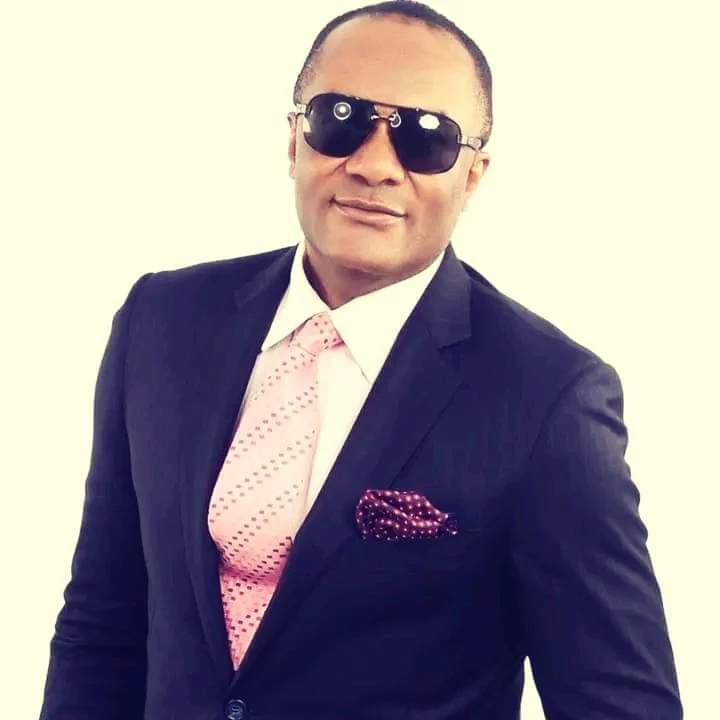
Just like me, Saint Obi’s formative years in creativity as an actor started from NTA Jos in the late 1980s. He was then working with NIPOST as a staff in Jos, Plateau State, but even then, he had studied theatre arts at the University of Jos and his heart was always on the silver screen. And he sees me as an elder brother and a friend.

After a few stints in Jos, Obinna took the plunge and moved to Lagos where, with the advent of the home video phenomenon, he snowballed into national recorning and became Saint Obi – ‘the Saint Obi’. Jos became proud of him and his achievements as an A-list actor as his filmography credits continued to grow.

We had discussed working with Saint Obi on a national unity project I conceived in which he was to play the role of an Igbo engineer that speaks Hausa fluently. It was also an action package and Saint Obi loved action. The idea of delivering lines in Hausa excited him saying the North would see him in a different light. But the project was not to be. It was that project that kept us talking for a very long time until he disappeared into oblivion.

Saint Obi was a Jos boy and I was not surprised when I heard that he passed on quitely here in Jos. It was heartbreaking though to realise that he came back home but never got in touch with us, his hommies.

Ashes to ashes, dust to dust. We are definitely going to miss Saint Obi from the stage. The industry is going to miss him when it takes a retrospective look at the various movies he led and the various roles this great thespian played as an actor.

My sincere condolences to the industry, our colleagues in Jos but more specifically, to his immediate family for such a huge loss.

Sleep well brother. Sleep well.