Hygiene

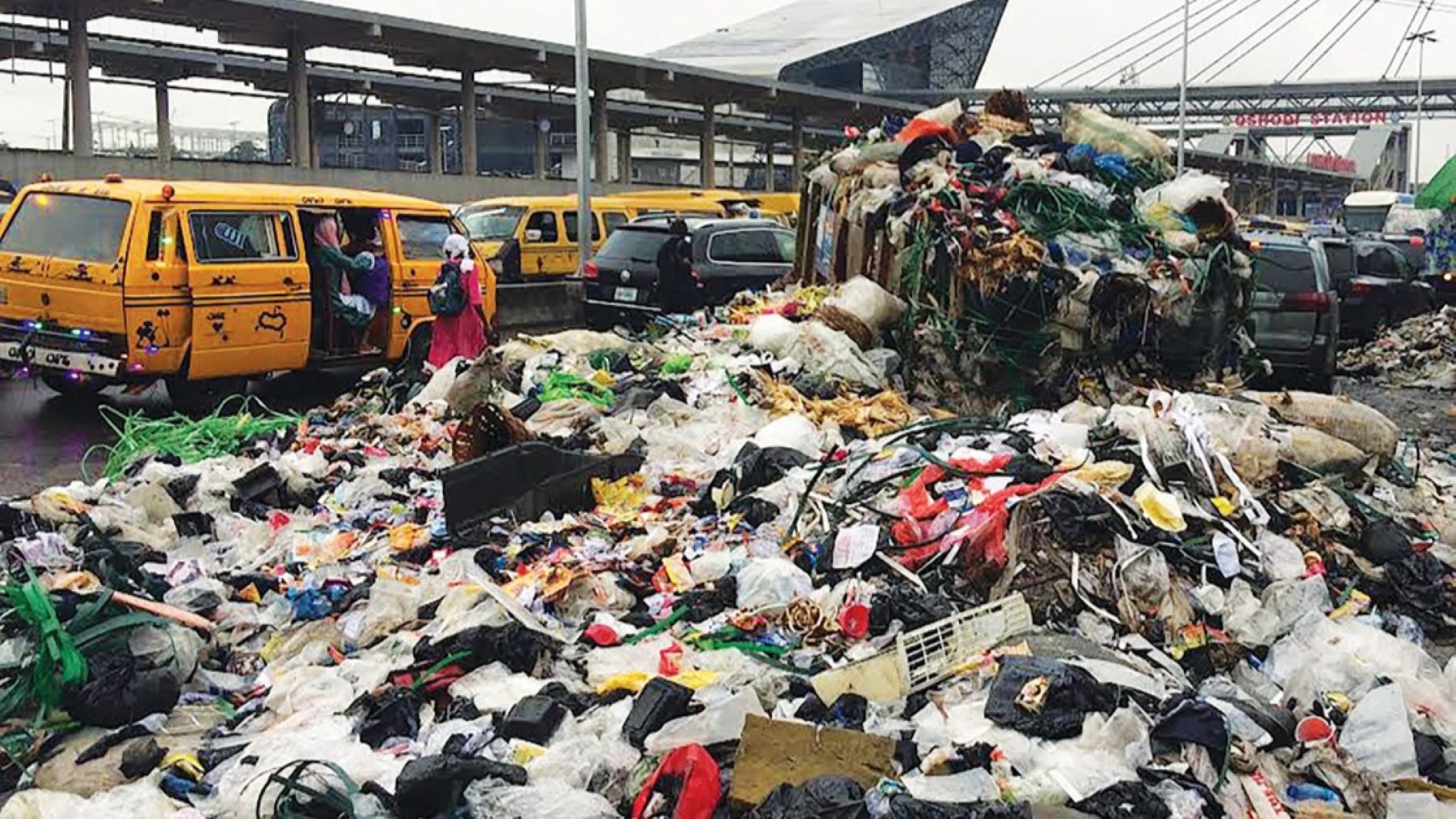
Lagos and the Danger of Normalising Waste

‎By Abashi Rahab

I recently read the report titled “Tackling Indiscriminate Dumping of Refuse in Lagos,”. The report highlighted Governor Babajide Sanwo-Olu’s directive to intensify refuse collection across the state and drew attention to the persistent heaps of waste lining major roads and public spaces despite government efforts.

‎While the report focused on the operational and environmental dimensions of the refuse crisis, one aspect stood out to me more than any other: the growing acceptance of unhealthy conditions by many residents and traders who have become accustomed to living and working around overflowing waste dumps.

‎That, in my view, is the deeper problem.

‎The report captured the experiences of individuals who have gradually adapted to circumstances that should never be considered normal. One trader explained that whenever the stench from nearby refuse heaps became unbearable, people simply covered their noses with handkerchiefs or pieces of cloth until they could no longer tolerate the inconvenience. Another admitted that the waste negatively affected the food sold to customers but lamented that economic realities left little choice. Such testimonies are both revealing and disturbing. No citizen should be forced to choose between earning a livelihood and safeguarding personal health.

‎The refuse challenge confronting Lagos is far more than an environmental concern; it is a public health issue with serious implications. Uncollected waste attracts flies, rodents, and mosquitoes that spread diseases such as cholera, typhoid fever, and malaria. During the rainy season, blocked drainage channels often result in flooding, while stagnant water creates breeding grounds for disease-carrying insects. In addition, the decomposition of waste releases pollutants that can exacerbate respiratory illnesses and degrade air quality. Over time, poor waste management also contaminates soil and groundwater, creating environmental hazards that may persist for generations.

‎What makes the situation particularly frustrating is that many residents who wish to dispose of waste responsibly are often constrained by weaknesses within the waste management system itself. According to the report, some waste collection operators spend several days—and in some cases up to a week—waiting to dispose of refuse because disposal facilities are overstretched or difficult to access. In certain communities, designated waste collection points have either been removed or become inadequate, leaving residents with limited options. Traders who contribute regularly to waste disposal services still find themselves surrounded by accumulating refuse.

‎These realities suggest that the challenge extends beyond individual behaviour. They point to the need for stronger infrastructure, more efficient service delivery, and improved environmental governance. The Lagos State Government deserves recognition for acknowledging the problem and directing intensified refuse evacuation efforts. However, lasting progress will require sustained investment in waste management infrastructure, additional compactors and evacuation vehicles, expanded disposal facilities, accessible collection points, and stronger monitoring mechanisms to ensure consistency in service delivery.

‎Environmental sanitation should not be treated as an occasional intervention triggered by public outcry. It should be regarded as an essential public service that directly affects public health, economic productivity, and the overall quality of urban life.

‎At the same time, government action alone cannot solve the problem.

‎Citizens also have an important role to play in protecting the environment. The indiscriminate dumping of refuse in gutters, waterways, roadsides, and open spaces continues to undermine efforts to maintain a cleaner city. Public infrastructure cannot function effectively when residents disregard basic environmental responsibilities. Keeping Lagos clean begins with individual actions—in homes, markets, offices, schools, and neighbourhoods. Every resident has a duty to dispose of waste properly and contribute to a culture of environmental responsibility.

‎For decades, Lagos has struggled with the perception that it is overwhelmed by waste and poor sanitation. Yet this image is not irreversible. A cleaner, healthier, and more sustainable city is achievable if government institutions, businesses, communities, and residents work together toward a common objective. What must be resisted is the dangerous tendency to normalise unhealthy conditions simply because they have persisted for a long time.

‎Covering one’s nose to endure the smell of refuse should never become a way of life. Living and working beside mountains of waste should never be accepted as normal. When citizens begin to adjust to environmental conditions that threaten their health and dignity, society risks losing the urgency needed to demand and sustain meaningful change.

‎A clean environment is not a luxury; it is a necessity. Every pile of uncollected refuse poses a potential health hazard, while every effort to manage waste responsibly contributes to a safer, more livable community. If Lagos is to become the cleaner and more resilient city its residents deserve, the solution must involve both stronger government action and greater public responsibility.

‎Only through such a shared commitment can the state effectively address its waste management challenges and ensure that future generations inherit a healthier environment.

Abashi Rahab is a Strategic Communication student at Yakubu Gowon University and an intern at Image Merchants Promotion Limited (IMPR). She can be reached at abashirahab@gmail.com.

Menace of Malaria: Kano residents cry out for gov’t intervention

By Anas Abbas

Residents of some areas in Kano State are sounding alarm over a severe mosquito infestation linked to rampant refuse accumulation.

The situation has raised public health concerns, particularly regarding the rising cases of malaria, a disease predominantly transmitted by mosquitoes.

Situation on ground

In several neighborhoods, stagnant water and heaps of garbage have created ideal breeding conditions for mosquitoes. Local residents report an alarming increase in mosquito populations, which they believe is directly contributing to a surge in malaria cases.

Residents’ Concerns

Local residents have voiced their frustrations regarding the government’s failure to address this growing health crisis. They highlight that the absence of mosquito control initiatives, such as spraying insecticides and promoting sanitation, has allowed mosquito populations to flourish.

“We see mosquitoes everywhere, and they are the main cause of malaria in our community,” lamented Khadija Umar. “The government needs to take action before more lives are lost.”

“We are overwhelmed by mosquitoes, and many of us are falling ill with malaria,” Amina Yusuf, a resident of Danrimi area. “We need immediate help from the government.”

The lack of effective waste management and sanitation services in these communities have exacerbated the problem. Many families are struggling to cope with the health implications, with some reporting multiple cases of malaria within their households. “It’s heartbreaking to see our loved ones suffer because of something that can be prevented,” lamented Saad musa.

The call for government action

Residents are calling on the Kano State government to take urgent action.

They are demanding the implementation of mosquito control initiatives, including regular insecticide spraying and improved waste management practices.

Additionally, public health campaigns aimed at educating the community about malaria prevention are seen as essential steps toward tackling this growing crisis.

Health expert warns that without immediate intervention, the situation could worsen, leading to further health complications for vulnerable populations.

Usman Sani Sa’id, a health practitioner, is urging the government to prioritize initiatives that educate communities on mosquito eradication and distribute mosquito nets.

“Malaria disproportionately affects developing countries, with poor hygiene being a significant contributor. However, when communities maintain cleanliness by sweeping homes and disposing of sewage, mosquitoes are less likely to thrive,” he emphasizes.

Sa’id, highlighted the necessity of community education, asserting, “It is imperative that we raise awareness about malaria prevention. The government must adopt measures such as spraying insecticides and implementing other preventive strategies to safeguard the health and lives of our residents.” His passionate plea underscores the urgent need for a collaborative effort in combating malaria and enhancing public health.

Dental floss: The secret to fresh breath and overall oral hygiene

By Aisha Musa Auyo

Do you know about dental floss? Please do not tell me that you don’t. I was shocked when I conducted an oral poll about dental floss and found out that only about 10 percent of people know about it, and only about 4 percent practice it. This could be part of the reason why dentists are making outrageous money. This could be part of the reason why people get irritated while listening to you. This could be part of the reason why your spouse doesn’t like kissing you.

According to the Cambridge Dictionary, flossing is the practice of cleaning between your teeth using dental floss. It also states that regular flossing is essential for healthy gums.

Flossing is an important oral hygiene habit. It is a habit that helps clean and dislodge food stuck between your teeth, which reduces the amount of bacteria and plaque in your mouth. Plaque is a sticky film (that looks like cream) that builds up on the teeth and causes gum disease, bad breath, and tooth decay if not managed properly.

Even though many people brush their teeth daily, some even do it twice daily, not everyone flosses their teeth. Flossing should be as regular as brushing. Brushing can never fulfill the function of flossing. Regardless of how expensive your toothpaste and toothbrush are, flossing is vital.

So now that you know, I need to tell you that it’s not about simply flossing. It is important to do it correctly, or else you will damage your teeth and gums. Brushing twice daily for at least two minutes each time is the first step in keeping your teeth and gums healthy. But even the best toothbrush can’t thoroughly cleanse the spaces between your teeth. That’s why the American Dental Association recommends that you floss once a day to remove food particles and plaque—the sticky film on your teeth that can lead to cavities and gum disease.

Plaque contains cavity-causing bacteria that feed on leftover food in your mouth. These bacteria thrive on sugary substances—and as they feast on them, they produce acids that can damage the shiny, protective surface of your teeth, setting the stage for tooth decay.

Plaque that isn’t removed by brushing or flossing can harden into a rough substance called tartar or calculus. Tartar builds up along the gum line, which can lead to gum disease.

Once tartar forms, only your dentist can remove it. However, flossing every day can help prevent plaque buildup. Some mouthwash can perform the function of flossing when gargled for over two minutes. However, excessive use of commercial mouthwash is not healthy or environmentally friendly.

Cloves soaked in water can also do it, but that should not stop you from mechanically flossing your teeth one by one.

How often should you floss?

The ADA recommends brushing your teeth for 2 minutes twice a day and flossing at least once a day. I floss after every meal or snack. I’m obsessed with it. I always carry my floss around with me, just like I do my phone.😀

I feel cleaner and more confident in my breath and teeth. I would advise you to do what works for you. It’s up to you whether you floss before brushing or afterward. It depends on your comfort and timing.

In conclusion, dental floss is readily available and affordable. It saves you the expense of visiting a dentist, spares you the embarrassment of bad breath and plaque-stained teeth, and improves both your confidence and oral health.

Let us take our oral hygiene very seriously. It reveals a great deal about our overall hygiene and self-care practices and strengthens our relationships with our spouses and others in general.