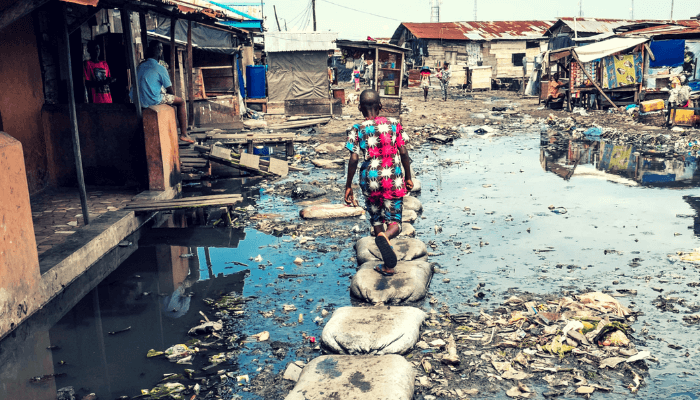
Hunger

From export hype to empty stomachs: A response to Mr Tanimu Yakubu, the DG of the Nigeria Budget Office

By Nazeer Baba

For context, Mr Tanimu, in defence of the economic freefall under the current administration, claimed that the naira has bounced back to dominance as a result of Nigeria’s non-oil commodity exports. In reality, however, non-oil exports accounted for only about 9% of Nigeria’s total exports between Q1 2024 and Q4 2024, while mineral fuels, mainly crude oil, maintained their traditional dominance with 91% of export volume. In other words, nothing has fundamentally changed in Nigeria’s dependence on a major oil-exporting economy.

Yes, non-oil exports indeed rose from $2.696 billion in H1 2024 to $3.225 billion in H1 2025—a 19.62% growth. Much of this was driven by the naira devaluation, which makes our commodity cheaper in the foreign market at the expense of Nigerians. Another reason is the climate challenges that disrupted cocoa production in major producers like the Ivory Coast and Ghana, temporarily creating space for Nigerian cocoa. But this is both an incidental and a policy blunder.  

The more urgent question is how this growth affects the key aspects of development. Poverty, unemployment, and inequality, especially for the 133 million Nigerians living in multidimensional poverty? As the economist Amartya Sen argued, real development should be gauged by what happens to these three dimensions. Unemployment

The official unemployment rate fell to 4.3% in Q2 2024, down from 5.3% in Q1. But this decline has little to do with any job boom under President Bola Tinubu. Instead, it is the product of a statistical adjustment. In the past, the NBS only counted those aged 15–64 who worked at least 20 hours per week as employed. Under the new guidelines, anyone 15 years or older who worked for pay—even for just a single hour in a week—is now considered employed. At best, this is a manipulation of numbers.

For young people, the reality is harsher. Unemployment among 15–24-year-olds was 6.5% in 2024 under the new formula, but under the previous methodology, it had peaked at 53.4%. The World Bank confirms this paradox: low official unemployment rates coexist with widespread poverty. Millions are “employed” but still trapped in poverty. Job quality, not misleading headline numbers, is what truly matters. Today, most Nigerians endure insecure, informal, and underpaid work.

Poverty

Nigeria has long been an economy under strain, but the shock of 2024–2025 has been unprecedented. Over 54% of Nigerians now live in extreme poverty, surviving on less than $2.15 per day. Rural poverty is staggering at 75.5%, while urban poverty stands at 41.3%. According to Reuters, by August 2025, an estimated 33 million Nigerians are facing acute food insecurity. Inflation, naira devaluation, fuel subsidy removal, recurrent floods, and internal displacement have left two-thirds of households unable to afford food.

Inequality

Nigeria’s inequality gap has never been wider, despite being Africa’s largest economy. With abundant human capital and vast resources, Nigeria has the economic potential to lift millions out of poverty. Yet the wealth distribution remains grotesquely skewed. According to Oxfam, the combined wealth of Nigeria’s five richest men $29.9 billion, could end extreme poverty nationwide. Meanwhile, over 5 million Nigerians are at risk of hunger and starvation. More than 112 million people live in poverty, yet the richest Nigerian man would need to spend \$1 million a day for 42 years to exhaust his wealth. His annual earnings alone could lift 2 million people out of poverty for a year. This is the textbook case of an economy trapped in extreme inequality.

Policy Recommendation

If Nigeria is serious about reversing this deterioration, the government must move beyond statistical gimmicks. A realistic policy response would be to mandate a Commission that directly links export earnings to job creation and poverty reduction. This means:

1-Mandating that a percentage of non-oil export revenues be reinvested into agro-industrial value chains to generate decent jobs.

2-Expanding targeted social protection programs funded from windfall oil revenues to cushion the poorest households against inflation and food insecurity through deliberate and direct cash transfers.

3- Enforcing progressive taxation on extreme wealth to finance healthcare, education, and rural infrastructure. Areas where inequality is most glaring.

Without policies that directly address poverty, unemployment, and inequality, Nigeria’s so-called “export-led rebound” will remain nothing more than a statistical illusion.

Nazeer Baba wrote from Abuja, Nigeria, via Babanazeer29@gmail.com.

Bukarti is clueless: Nigerians stand with the ADC coalition 

By Salisu Uba Kofar Wambai

Audu Bulama Bukarti is a noisemaker who understands nothing about politics. His recent comments on the newly formed opposition coalition are not only shallow but also dangerously misleading. While millions of Nigerians are applauding this coalition as a timely and necessary step to challenge the Bola Ahmed Tinubu administration and rescue the country from economic suffocation, Bukarti — a London-based lawyer — chose to mock the effort on social media.

Rather than supporting a credible and coordinated opposition, he is promoting a vague, unstructured “youth political party,” claiming that only the youth can bring about change. This may sound attractive on paper, but it shows just how politically naive he is. Politics isn’t wishful thinking — it’s a game of structure, influence, visibility, and strategic alliances.

Just like filmmaking, where unknown actors rarely carry a blockbuster, political success depends on familiar, trusted, and tested figures. The leaders in the ADC-led coalition may not be perfect, but they possess the political weight, experience, and resources to help Nigeria emerge from this crisis. They are not saints, but they know what the people are going through, and their unity reflects the seriousness of the moment.

We must not forget the damage the Tinubu-led APC government has caused: the reckless removal of fuel subsidy, the crippling naira devaluation, inflation that has turned food and transportation into luxury, and a general sense of hopelessness among ordinary citizens. Nigerians are hungry and angry — and they need relief, not political experiments.

Bukarti’s idea that youth alone can take over now is not only unrealistic, but also risky. It will divide the opposition, weaken the resistance, and give the APC a smooth ride into another term of hardship. The youth are important, yes. However, they must join hands with established political structures to make an impact, rather than isolating themselves in emotional idealism.

The ADC coalition brings together people who understand Nigerian politics, who have reach, recognition, and machinery. That’s what it takes to defeat a regime that has weaponised poverty and punished the poor. Unity is the only way forward. This is not a time to gamble or experiment — it is a time to act wisely and strategically.

Bukarti’s obsession with promoting his “youth party” at this critical point raises serious questions. Is it merely ignorance, or is he playing a hidden role to distract and sabotage the coalition’s genuine efforts? Either way, Nigerians must not be fooled. The real enemy is not the coalition, but the hunger, insecurity, and hopelessness forced on us by the Tinubu government.

This is not the time for ego or empty noise. What Nigerians need are leaders with courage, experience, and structure, not social media loudspeakers who offer nothing but confusion. Bukarti should either contribute meaningfully or step aside.

The ADC coalition may not be perfect, but it is Nigeria’s best shot at ending the nightmare. This moment demands unity, not division — strategy, not noise — and above all, action, not confusion.

Salisu Uba Kofar Wambai wrote from Kano. He can be reached via salisunews@gmail.com.

Strategies to prevent stampedes during palliative distributions

By Isyaka Laminu Badamasi 

The Inspector General of Police’s concerns and warning against the unorganised distribution of palliatives and relief items that led to confrontation and stampede come at the right time. His calls on groups, individuals, and NGOs planning to distribute alms to the needy to ensure proper planning to avoid stampedes and unnecessary confrontations among citizens seeking assistance are commendable.

During the two unfortunate events at Maitama, Abuja and Okija in Anambra state, several persons lost their lives. Many injured with different degrees of injuries receive treatment at other health facilities where the IGP reiterates the force’s commitment to supporting efforts to create a safer and more structured environment for aid distribution in our communities to prevent future tragedies and ensure such processes are seamless.

To achieve a tragedy-free engagement, philanthropists should collaborate with relevant stakeholders in organising such gatherings. These include security organisations, religious groups, community leaders, and civil society organisations.They should also leverage technology to achieve a hitch-free and transparent selection of beneficiaries and relief distribution. 

Crowd management experts and safeguard specialists are very key in the actualisation of a seamless approach; these could be found in many government and private organisations such as the Nigerian Police as highlighted above, NEMA/SEMA, International relief organisations working at different IDP camps, decades involved in this special tasks in the country.

According to online resources on crowd management and safety, emergency preparedness and management are key, access control, crowd density, and surveillance are paramount, barrier fencing, communications and risk assessment, as well as post-events analysis, knowing your crowd and their dynamics, and positioning security personnel in strategic locations are key to achieving a safer and more effective event organisation.

Organisers of such events should choose spacious, open areas with minimal obstacles and should be scheduled when the crowd is likely to be smaller; this is where the religious and community leaders will come in by submitting the lists of the vulnerable people who primarily benefited from such relief.

The order by the Inspector General of Police to investigate the circumstances that led to the two unfortunate tragedies is commendable. This highlighted the command’s commitment to ensuring safer and better ways to avoid the sad incident in the future, 

Leadership at all levels needs to see the importance and urgency of developing policies and programs to cushion Nigerians’ hunger and poverty levels; this can go a long way in reducing the number of people from trooping to alms distribution events. It will enable them to tread cautiously and prioritise their safety to avoid unforeseen calamities, as the IGP emphasises.

The National Orientation Agency, established to communicate government policies, stay abreast of public opinion, and promote patriotism and national unity, should, as a matter of public interest, develop a sensitisation program, specifically on the Nigerian government’s health and safety measures. This could be achieved through Drama, Skits,and Jingles, leveraging the FRCN radio stations and civil society organisations nationwide to achieve the desired objectives.

Our condolences go to the families and relatives of those who lost their loved ones during the unfortunate incident and to those injured, wishing them a quick recovery.

Isyaka Laminu Badamasi is the Bauchi State Coordinator for the Youths O’clock Nigeria.

Desperate Nigerians need solutions, not tragedies

By Hussein Adoto 

After the palliative distribution tragedy in Nasarawa, I published an article in a national newspaper where I noted that “distribution events, especially those intended to provide aid or relief, tend to draw large crowds, making effective crowd control essential.” 

However, the Nasarawa tragedy wasn’t the first. I wrote: “In February, the Nigerian Customs Service had to suspend its sale of seized bags of rice after seven people died at one of its centres in Yaba, Lagos. Some two years ago, 31 people died at a stampede at the King’s Assembly in Rivers State during the distribution of palliatives to church members; seven more were injured.” I wrote that in March this year.

We are now in December and have recorded at least three stampedes in one week. First is the one that consumed 35 kids in Ibadan. On Saturday, another stampede was recorded in Maitama, Abuja, where at least 10 people died trying to get food. In Okija, Anambra state, three people died due to another stampede. They all went for bags of food and returned home in body bags. Sad.

Sadly, worsening poverty has pushed people into desperately hustling for freebies, to the point of getting stampeded. One would expect that in a war zone like Gaza, where more than 100 people were killed and 700 more injured in a stampede in March this year. Yet here in Nigeria, a country not under siege, our outcomes mirror those of a war zone.

How did we get here? This is one of the most trying periods for Nigerians, and I say this as someone who witnessed the pangs of the COVID-19 pandemic and the recession before it. Although we are told this trying time is a phase that will soon pass, it is dragging on for too long, leaving a litany of crushed souls in its wake. The palliative measures, however meagre, are welcome and necessary to ease our sore bowels. 

Still, the repeated tragedies that trail these events highlight a deeper negligence that we have normalised. Crowd control has always been our problem in Nigeria, and it doesn’t matter whether the event is a palliative distribution, a political rally, or a concert. We tend to be unruly. 

Security officials sometimes shove and cane crowds at political gatherings to make way for VIPs. I saw a video a while ago where a former governor was shoved to make way for the new one. On campuses and in open-air university programmes, the situation is similar. Students shove, push, and tug to no end. It is worse on the days of GNS exams.

Is it not this week that a video of Nigerians crowding aircraft boarding stairs emerged? Even a conference of the Nigerian Bar Association in 2022 ended in chaos as “learned” lawyers scrambled for souvenirs. Now, if we are like that on an average day, how worse can we be when we are poor, hungry, and desperate?

I’m glad the Nigeria Police Force has warned against the unorganised distribution of palliatives. Hopefully, this will tame the gathering of rabid freebie seekers and distributors. It needs to. This cycle of desperation, chaos, and death must end. We can’t keep endangering people in the name of helping them. 

Charity organisations should estimate the number of people they can serve and focus only on those people. Budgeting for 500 people while targeting thousands with publicity campaigns is risky, if not criminally negligent. By focusing on a manageable number of beneficiaries, these organisations can distribute their palliatives without dealing with an overwhelming crowd.

Secondly, they should divide the distribution into chunks. They can do this by age, gender, or community. Instead of gathering everyone, young and old, male and female, into one combustible whole, they can divide them into crowds of tens and fifty instead of hundreds and thousands. That way, even if the crowd gets unruly, the outcome won’t be as tragic as it is. 

The venue itself must also reflect proper organisation. Hosting hundreds of desperate people in a small, gated space with one or two entry and exit points is a recipe for trouble. Crowds kept in areas without shade, water, and seating will likely devolve into chaos. Therefore, managing these factors will prevent an avoidable tragedy. 

Meanwhile, we can’t rely on quick, short-lived palliatives to quench the country’s raging thirst for sustenance. To give Nigerians a modicum of respite, the underlying factors of inflation and underemployment must be addressed immediately.

As desperate times in the country make Nigerians desperate for freebies, we must not allow them to become victims of their desperation. If they don’t see the danger of being unruly, palliative distributors should anticipate and prevent that danger. This starts with treating Nigerians with dignity instead of seeing them merely as a queue to be managed.

Hussein Adoto writes from Ilorin via bellohussein210@gmail.com.

10 dead, 8 injured in Maitama church stampede

By Uzair Adam 

The Federal Capital Territory (FCT) Police Command has confirmed the death of ten people, including four children, following a stampede during a food distribution event at the Holy Trinity Catholic Church in Maitama. 

The incident, which also left eight others injured, occurred early on Saturday, December 21, 2024.  

The distribution of food items was intended to assist vulnerable and elderly individuals but tragically resulted in a chaotic scene around 6:30 a.m. 

According to a statement signed by the FCT Police Public Relations Officer, SP Josephine Adeh, four of the injured have already been treated and discharged, while the remaining victims are still receiving medical attention.  

Expressing condolences to the families of the deceased, the Police Command called for increased caution in organizing such events to prevent future tragedies.  

“To prevent such unfortunate incidents, all organizations, religious bodies, and groups planning public gatherings in the FCT are directed to notify the Police Command in advance to ensure adequate security measures are in place,” the statement read.  

The Command warned that failure to comply with this directive would lead to holding organizers accountable for any loss of life or injuries caused by negligence.  

The Police also reiterated their commitment to protecting lives and property in the FCT and urged residents to report emergencies through the control room lines provided: 0803 200 3913 or 0806 032 1234.

Nigeria’s economic distress: A country battling overwhelming inflation

By Idris Mustapha

 The National Bureau of Statistics (NBS) revealed in a heart-wrenching report that Nigeria’s inflation rate climbed to an excruciating 33.88% in October 2024. The pain and suffering reflected in these official figures tell a story far more profound than mere economic indicators—they represent countless nights of parents going to bed hungry, having sacrificed their meals to feed their children.

The NBS’s latest report paints a devastating picture, showing a relentless climb from September’s already unbearable rate of 32.70%. “Looking at the movement,” the Bureau notes with clinical precision that contrasts sharply with the human suffering it represents, “the September 2024 headline inflation rate showed an increase of 0.55% compared to the August 2024 headline inflation rate.” Behind these sterile statistics lie the anguished faces of market women watching their businesses crumble.

The Bureau’s year-on-year analysis reveals an even more distressing reality, with October’s rate standing 6.55 percentage points higher than the 27.33% recorded in October 2023. The NBS report states, “This shows that the headline inflation rate (year-on-year basis) increased in September 2024 when compared to the same month in the preceding year.” Each percentage point represents another burden on the shoulders of ordinary Nigerians, many of whom are already stretched to their breaking point.

The official data traces a cruel journey through 2024, from January’s troubling 29.90% to the current devastating peak. The NBS’s monthly tracking shows how “the rate of increase in the average price level is more than the rate of increase in the average price level” each month. Behind these technical terms lies the reality of young graduates seeing their dreams fade and elderly citizens finding their pensions increasingly worthless.

Perhaps most heartbreaking is the Bureau’s documentation of the Premium Motor Spirit (PMS) price surge, which the NBS directly links to the inflation crisis. This price hike, implemented in early September and again in October, has dealt a cruel blow to our society’s most vulnerable members. Families are forced to make impossible choices: buying food or medicine, paying school fees, or keeping their small businesses alive.

The statistical evidence presented by the NBS serves as an official testament to the widespread suffering. Markets that once bustled with life now echo the whispered concerns of traders and customers alike, haggling not for profit but for survival. The weight of this economic burden is visible in the tired eyes of parents who must explain to their children why they can no longer afford their favorite meals or school supplies.

As we look to the future, the NBS’s continuous monitoring of this crisis is a stark reminder of the urgent need for intervention. While the Bureau diligently records these devastating figures, real families make painful sacrifices to survive another day. The official data serves as a clarion call for immediate action, as each statistical update pushes more Nigerians below the poverty line, leaving deep scars that may take generations to heal.

The National Bureau of Statistics meticulously documents this crisis, which demands policy changes and a fundamental recognition of the human suffering it represents. Behind every percentage point increase lies a story of resilience: families supporting each other through unimaginable hardship, communities coming together to share what little they have. Yet, without significant intervention, these stories of resilience documented in the national statistics may soon turn into tales of despair as more Nigerians find themselves unable to cope with the relentless rise in the prices of basic necessities.

Idris Mustapha wrote via idrismustapha25@gmail.com.

G20: President Tinubu endorses global coalition against hunger, poverty

By Abdullahi Mukhtar Algasgaini 

President Bola Tinubu has hailed the creation of the Global Alliance Against Hunger and Poverty, championed by President Luiz Inacio Lula da Silva of Brazil. 

Tinubu described the alliance as pivotal in the global fight against hunger and poverty. He made this statement on Monday at the 19th G20 Leaders Summit opening session in Rio de Janeiro, Brazil.  

He lauded the initiative and described it as the right step to address one of the world’s most significant challenges.  

“This bold and visionary step underscores Brazil’s leadership in addressing one of the most urgent and persistent challenges facing our world today.  

“The creation of this Alliance marks a significant milestone in our global efforts to eradicate hunger and poverty, and it also sends a powerful message of solidarity to vulnerable populations around the globe. 

“By fostering collaboration between governments, international organisations, and civil society, this initiative offers a comprehensive approach not only to addressing immediate needs but also tackling the structural causes of hunger and poverty,” he said. 

President Tinubu compared this global initiative to one of the eight priority areas he outlined at his inauguration 18 months ago, expressing Nigeria’s eagerness to adopt international best practices to advance its economic development. 

According to President Tinubu, Nigeria’s endorsement of the declaration of commitment to join the Global Alliance is a significant step in its efforts to address hunger and poverty by leveraging international cooperation and resources to bolster domestic strategies. 

He added that by supporting the initiative, Nigeria also demonstrates a solid commitment to realising the Sustainable Development Goals (SDGs), particularly SDG 1, which focuses on eradicating poverty, and SDG 2, which aims to achieve zero hunger. 

“These goals are at the core of Nigeria’s development agenda, and the Alliance offers a platform to accelerate progress towards them.  

“By collaborating with international partners, Nigeria aims to leverage best practices, innovative solutions, and financial support to enhance its efforts to combat poverty and hunger. The endorsement reinforces Nigeria’s role as a key player in global efforts to promote sustainable development and improve the quality of life for all its citizens,” President Tinubu said.

The detained starved kids: The injustice of the starvation of protesters didn’t start today

By Prof. Abdelghaffar Amoka

Protesters’ starvation, which the Muhammadu Buhari government institutionalised, is taking a new dimension and receiving attention with the detained starved kids. The country’s intellectuals were starved for 8 months in 2022 for protesting the degradation of the public universities, our own universities. 

Many of those talking now justified the starvation. You said the professors deserved it. You said what made the lecturers think they could fight the government. Many people on social media mocked the intellectuals.

They refused to give up despite the starvation. Many lost their lives, but they were willing to continue with starvation for the system to get the deserved attention. However, the government had to seek the help of the judiciary to force them to teach with hunger. The court did and justified the starvation with a policy called non-work, no pay.

Unfortunately, in its wisdom, the court could not help resolve the issues that led to the strike. Despite the noise from the Bola Ahmed Tinubu government that the Academic Staff Union of Universities (ASUU) won’t go on strike again, no effort has been made to resolve why ASUU is always going on strike. The issues still linger with the usual poverty of sincerity. 

Then, there was another form of protester. The bad governance protest on August 1st, 2024. Some of the protesters were arrested and charged with treason. They don’t have to stop their salaries because most are kids on the street without work. They can be detained and starved. They were arrested and starved for 93 days with a hard fight for them to be arraigned. They were eventually taken to the court yesterday with their bony body. Some could not stand on their feet. They were lying on the floor for prosecution.

A lawyer who could not stand the hunger bought the starved kids biscuits in the court. They rushed the biscuits like their life was hanging on them. Only God knows the last time they saw that to eat. The judge remanded the kids at Kuje pending when they can satisfy his bail condition of ₦10 million each of them. Where are the level 15 civil servants with ₦10 million that will bail these kids, who likely live on the street? Are we correcting or hardening these kids when they return to the street? 

If professors are starved for 8 months by the government, tell me who they can’t starve? An injustice to one is an injustice to all. But you supported Buhari for Institutionalizing the starvation of protesters when he started with the country’s intellectuals because a northerner was in charge. You were thinking it would end with the lecturers. Now, the starvation of protesters is taking a new dimension. The sight of the detained starved kids in Kuje prison made everyone cry. 

And we are Muslims and Christians that are very religious but heartless. So, how do we end this inhuman attitude to ourselves? 

Abdelghaffar Amoka Abdelmalik, PhD, wrote from Ahmadu Bello University, Zaria. He can be reached via aaabdelmalik@gmail.com.

64 years after Nigeria’s independence

By Rabi Ummi Umar

A few weeks ago, Nigeria marked its 64th independence anniversary, commemorating more than six decades since gaining freedom from British colonial rule on October 1, 1960. However, this year’s celebrations were unusually subdued, devoid of the usual fanfare, pomp, thrills and frills. 

The once-familiar scenes of face painting, jubilant crowds, and flags waving in patriotic pride were replaced by an eerie silence that echoed across the nation. Despite this significant milestone, many Nigerians found little reason to celebrate. The mood was sombre, reflecting a collective sentiment that these are not times for revelry.

Instead, citizens believe it is a time for reflection and a renewed commitment to steering the country back toward prosperity, as envisioned by the men and women who fought for the independence we now enjoy. In the eyes of most Nigerians, the celebration only serves as a distraction from the harsh realities of daily life.

The more one reflects on the state of the nation, the more troubling it becomes. What exactly are we celebrating? Is there anything genuinely worth commemorating at this point? After the fireworks, what awaits us—more suffering? The unspoken truth is that the situation has grown so dire that it is almost impossible to ignore the country’s challenges, no matter how much we might want to.

One of the major concerns plaguing citizens is the aftermath of the subsidy removal, which continues to wreak havoc on lives and livelihoods. While the minimum wage has been signed into law, its implementation remains uncertain, casting doubt on the government’s ability to deliver on promises and its tendency to prioritise talk over tangible action. 

These discrepancies raise questions about the effectiveness of policies aimed at alleviating the struggles of Nigerians. Our leaders have made numerous promises, but despite their assurances, little has been done to address the suffering of the people. Take the much-touted Compressed Natural Gas (CNG) buses, for example. Despite promises, these buses have failed to materialise in significant numbers. Even the few introduced fall short of addressing Nigeria’s transportation challenges. 

How much progress can we realistically expect from such initiatives? Unemployment remains a persistent issue, exacerbating the nation’s woes. Although the National Bureau of Statistics (NBS) reported an unemployment rate of 5.3%, many believe the actual figure is much higher, especially given Nigeria’s struggle with accurate population data.

Insecurity is another critical concern. Terrorism, banditry, and kidnapping for ransom plague every region, with countless lives lost, even after ransoms have been paid. Nigerians are grappling with hunger as the crisis reaches alarming proportions. Starvation, suffering, and even death from hunger have become stark realities.

According to the Food and Agriculture Organization (FAO), 80 to 82 million Nigerians are at risk of severe hunger if the current trajectory continues. Given our vast agricultural potential, how did we reach this point? Politics in Nigeria remains largely a curse, with politicians exploiting religion, region, and ethnicity to garner support. 

Instead of uniting to solve the nation’s problems, they engage in ridicule, even on pressing national issues, as seen in the aftermath of the President’s October 1 address. Poverty also remains a major concern. The NBS reports that 63% of the population—approximately 133 million people, or six out of every ten Nigerians—are trapped in multidimensional poverty. 

It is little wonder that Nigerians are not in a celebratory mood. So much has gone wrong recently that even wishing someone a “Happy Independence” feels offensive. What, after all, have we indeed achieved in these 64 years? Nigeria has the potential for greatness, and the government can and should do better. President Tinubu, please, we are begging—Nigeria deserves better.

Rabi Ummi Umar is an intern at PRNigeria and a student at Al-Hikmah University, Ilorin. She can be reached via rabiumar058@gmail.com.

Who enables hungry leaders to steal from the marginalised poor?

By Haroon Aremu

The world is reeling from a relentless storm of inflation that knows no borders. Post-pandemic recoveries have become nightmares for many, with economies struggling to keep pace with skyrocketing demands. Disrupted supply chains—fueled by the devastation of COVID-19 and further shattered by the Russia-Ukraine war—have left nations gasping for stability. Commodity prices for essentials like oil, gas, and food have surged, igniting a crisis felt most acutely by those already on the edge of survival.

Global inflation hit 8.8% in 2022, shrinking consumer spending and pushing 150 million people into extreme poverty. Economic slowdown and uncertainty have gripped every continent, turning hopeful recoveries into distant dreams. In one sentence, we can say, “The Global Economic Chaos: A World on Fire”. But if the global economy is trembling, Africa—already vulnerable—is teetering on the brink of collapse.

With inflation soaring to 12.3%, Africa is caught in a spiral of despair. Food inflation hit 15.6% in 2022, driven by droughts, conflict, and the uncontrollable price surge. Energy costs have become unmanageable, soaring by 20.5%, and with local currencies crumbling against the U.S. dollar, daily survival has become a question mark for millions.

The hope of a unified, self-reliant Africa through initiatives like the African Continental Free Trade Area (AfCFTA) seems increasingly remote as corrupt leadership and poor economic management derail potential progress. Sigh, Africa’s Plight: A Heavy Toll on the Weakest

Now to Nigeria’s Economic Downfall: A Land Bleeding Under the Weight of Inflation. Nigeria! Africa’s largest economy is sinking under the weight of its own ills. With inflation at a devastating 31.7% as of February 2024, Nigerians face a nightmare scenario where everyday life becomes a battle for survival. 

Food prices have skyrocketed due to domestic challenges like drought, conflict, and the fallout from removing fuel subsidies. Transportation costs have become unbearable, and with the Naira weakening against foreign currencies, the cost of imported goods has skyrocketed.

Yet, these economic problems are not only the result of natural or external factors. Nigeria’s reliance on oil exports has left its economy vulnerable to the volatility of global oil prices. Corruption and inefficient supply chains worsen the impact, while a broken infrastructure leaves the country incapable of delivering basic services.

As Nigeria’s economy crumbles, its leaders—those entrusted with the nation’s welfare—have instead chosen to enrich themselves. Public funds meant for development are looted, while ordinary citizens—whether struggling innocents or corrupt poor—are left in despair. Yahaya Bello and Rochas Okorocha have been accused of dipping their hands into funds meant to lift Nigeria out of the abyss. The worst part? The justice system, weak and compromised, seems incapable of holding them accountable.

Yahaya Bello, for instance, has mastered the art of playing “hide and seek” with the law, knowing that in a system as broken as Nigeria’s, his chances of facing real consequences are slim to none. Meanwhile, regular citizens, including “yahoo boys” and even innocent individuals, are being hunted and prosecuted with swift brutality. This stark contrast between how the law treats the powerful and the powerless is a cancer eating away at the soul of the nation. Who protects the people if the leaders steal from the innocent and the corrupt?

Should all this be blamed solely on President Bola Ahmed Tinubu? Or is there a broader problem that goes deeper into the fabric of Nigeria’s leadership and society?

The mismanagement of Nigeria’s resources is not only the fault of a select few in power. It is the collective failure of all those in leadership positions who have turned governance into a self-serving endeavour. Governors, senators, and other public officials have consistently failed to deliver on their promises, leaving citizens to bear the brunt of their incompetence.

But are the citizens themselves free of blame? The culture of apathy that pervades Nigerian society has allowed this systemic rot to fester. When people fail to hold their leaders accountable by demanding better governance or active civic participation, they become complicit in destroying their nation.

If Nigeria continues on this path of corruption, injustice, and economic decay, the consequences will be catastrophic. The poverty rate is already climbing at an alarming pace, with an estimated 87 million Nigerians living below the poverty line. This number will only increase as inflation pushes basic commodities out of reach for the average citizen.

Social unrest is bubbling beneath the surface, waiting for a spark. Frustration and desperation are building, and if left unchecked, they could lead to widespread violence and instability. As Nigeria’s institutions crumble, its brightest minds will continue to flee the country in search of greener pastures, further accelerating the brain drain that has left Nigeria without the intellectual capital it needs for progress.

Decisive action is required to prevent Nigeria from falling into the abyss. For the government, transparency and accountability must become non-negotiable. Strengthening institutions, particularly the justice system, is critical if corruption is to be rooted out. Public funds must be directed toward tangible development, focusing on infrastructure, education, and healthcare.

For citizens, the time for apathy is over. A collective awakening is needed, where people demand better governance at all local and federal levels. Nigerians must realise that their silence is contributing to the nation’s downfall. Only through collective effort—by both government and citizens—can the cycle of corruption and economic ruin be broken.

Haroon Aremu Abiodun is a mass communication graduate and an NYSC member of the PRNigeria Center in Abuja. He can be contacted via exponentumera@gmail.com.