By Uzair Adam Imam
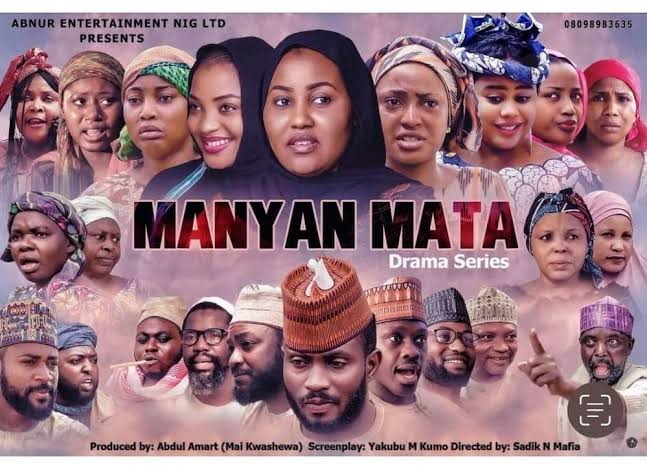
The Kannywood movies are widely loved by Hausa-speaking communities across Nigeria and beyond. They are known for depicting Hausa culture and life.
The plots of Kannywood movies often feature drama, romance, and comedy, which many viewers find an escape from the harsh reality of everyday life.
The songs and dances featured in the movies have become a signature of Kannywood cinema and are popular with audiences.
However, the songs and dances have ceased to be featured in the present Kannywood movies due to the new dimensions that the movies have taken.
In an interview with The Daily Reality, some Kannywood producers explained their reasons for taking the new direction.
Songs are incompatible with present movies – Lawan Ahmad
Lawan Ahmad, the producer of and a leading actor in the popular Hausa TV series Izzar So, said the songs have been removed to accommodate the kinds of films produced nowadays.
Ahmad said the songs still possess their enormously powerful impact in conveying messages but added that the nature of the movies nowadays does not accommodate songs.
He said, “The songs were removed to suit the kinds of most produced movies in the Kannywood industry today. However, they are still useful in those movies.
“The songs were not removed because they are insignificant – their immense impact is still relevant.”
Hausa movies re-create folktales, history
Another director and actor in the industry, Ali Rabi`u Ali, popularly known as Daddy, said Hausa films in those days were primarily traditional and required songs and dances.
He stated, “Most of the Hausa films in those days were a replica of tales (tatsuniyoyi) and history that needed to be accompanied with songs and dances of dandali (a stage).”
“These songs contribute(d) to the advertising and selling of the films. That is why the songs used to be released even before the production of the movies.
“This was to let people know about the film, just like the way Indian movies did,” Daddy explained.
He added that film series now do not require songs and dances because people are after the theme of the film, not songs.
“Besides, song and dance scenes are very costly and time-consuming, forcing us to cease using them in our films,” he stated.
Removal of songs: An opportunity for singers
Asked whether this was a threat to the Hausa singers, Ahmad said this was a wonderfully exciting opportunity for singers to be known for their intellectual production.
He stated, “This has helped the Hausa musicians to be known by the people for their talented works, as they make and act videos of their songs – and there is a lot of creativity in their businesses nowadays as singers resort to dramatic songs, with sole independent themes.
“Now, instead of saying Ali Nuhu or Adam A. Zango should be featured in the video of their songs, the singers have seized the opportunity to sell their faces while taking a new dimension,” he added.
He added that the dramatic songs have now taken a new dimension, a development which attracts many people in Hausa communities.
Songs, dances mere imitations of Bollywood – don
A Department of Mass Communication lecturer at Bayero University, Kano, Malama Ummi Hassan, opined that songs and dances in Hausa movies are simulacrums of Bollywood movies.
The lecturer, who has taught film over the years, stated that “Songs and dances in Kannywood movies are mere facsimiles of Bollywood movies. And now that Bollywood has stopped using them in their movies, particularly series, Kannywood also stops.
“Bollywood now uses only some musical interludes as background sounds in their series movies to establish settings or set moods, to mention a few. Sometimes, they use the songs of the already-produced films, say Kalhonaho.”
She added that a movie can achieve a desired theme without songs and dances.
She stated, “You must not show an actor or actress dancing before your film sells.”
Some songs out of context
The university lecturer argued that the songs and dances in most Kannywood movies are sometimes out of context but were used to meet the tradition of Kannywood movies.
She said, “It is like the Kannywood has made it a tradition to put songs in their movies. The songs, however, are sometimes out of context.”
Ummi, who sees films and songs as two different things, advocates that the duo remain independent, with each conveying different meanings.
She added that although songs and dances have ceased to be used, the Hausa movies have witnessed a steep increment in their viewership.
“I personally see this as a new development. Films and music are two different things. Songs can be used in the background to set the mood,” she added.
Our business at risk – singer
A singer, Hafeez Umar Maikano, who spoke to the Daily Reality, said their business is at risk following the removal of songs in the Kannywood movies.
According to Maikano, although songs have preceded films, singers now rely on filmmakers to survive.
He added, “I see this as challenging for the Hausa singers. The removal of songs from movies has discouraged not only professional but also upcoming singers.
“Before, filmmakers contracted singers to sing for a particular movie, giving them all the required information, including the theme of the movie.
“However, there is no denying that the removal has become a stepping stone to many of the singers,” Maikano added.