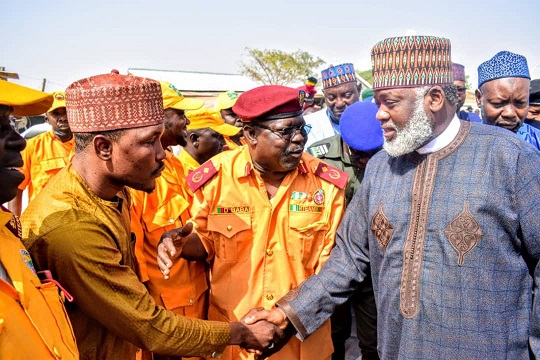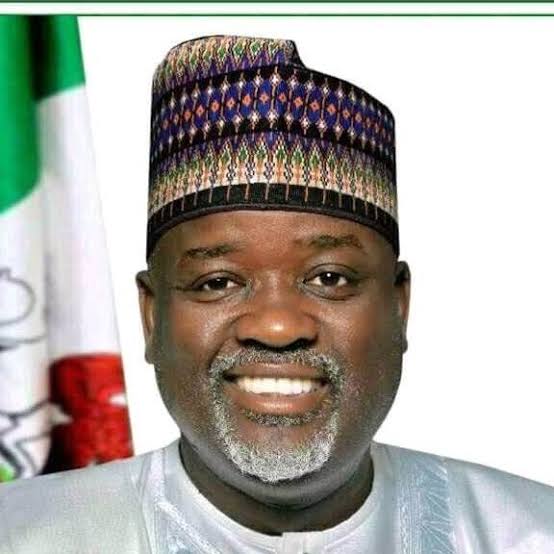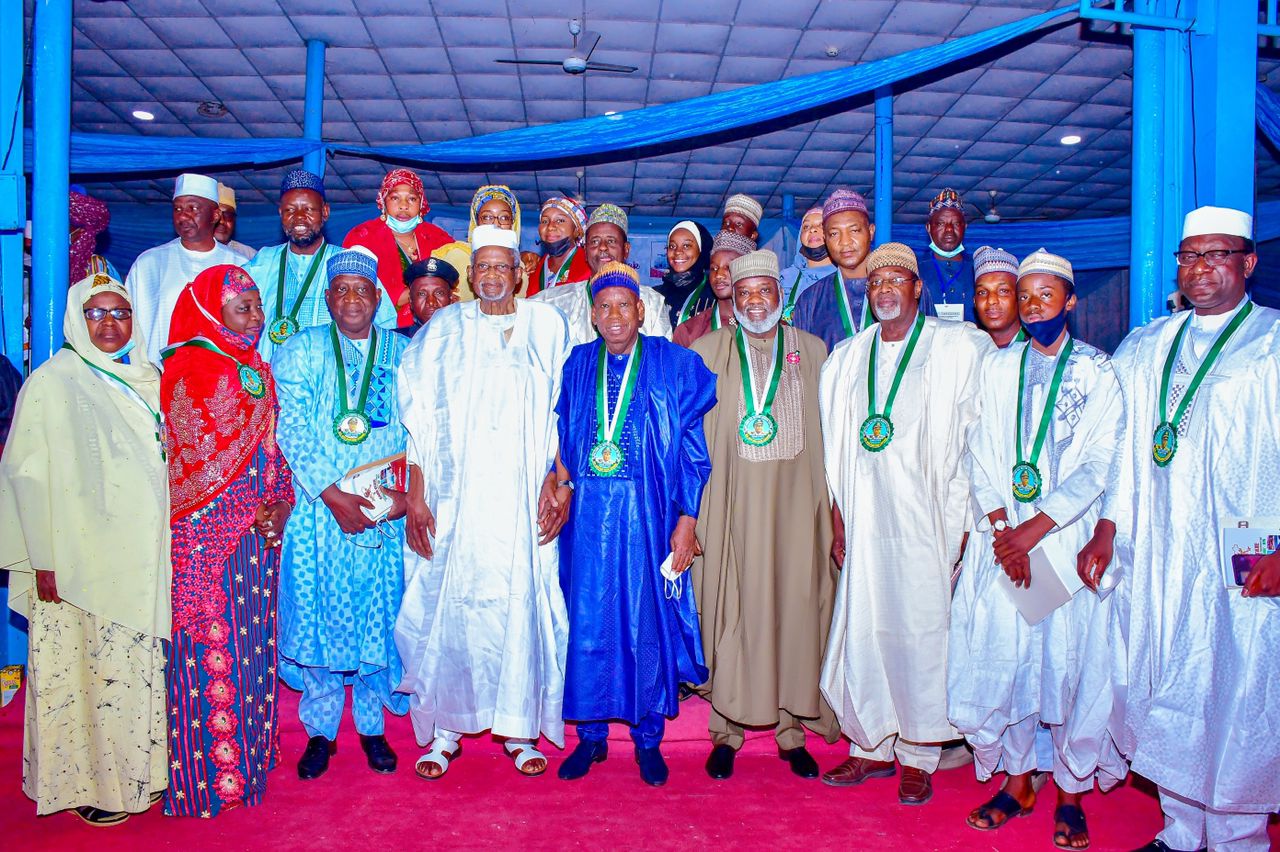
Governor Abdullahi Umar Ganduje

2023: Kano South Forum endorses Alhassan Rurum for governor

By Uzair Adam Imam

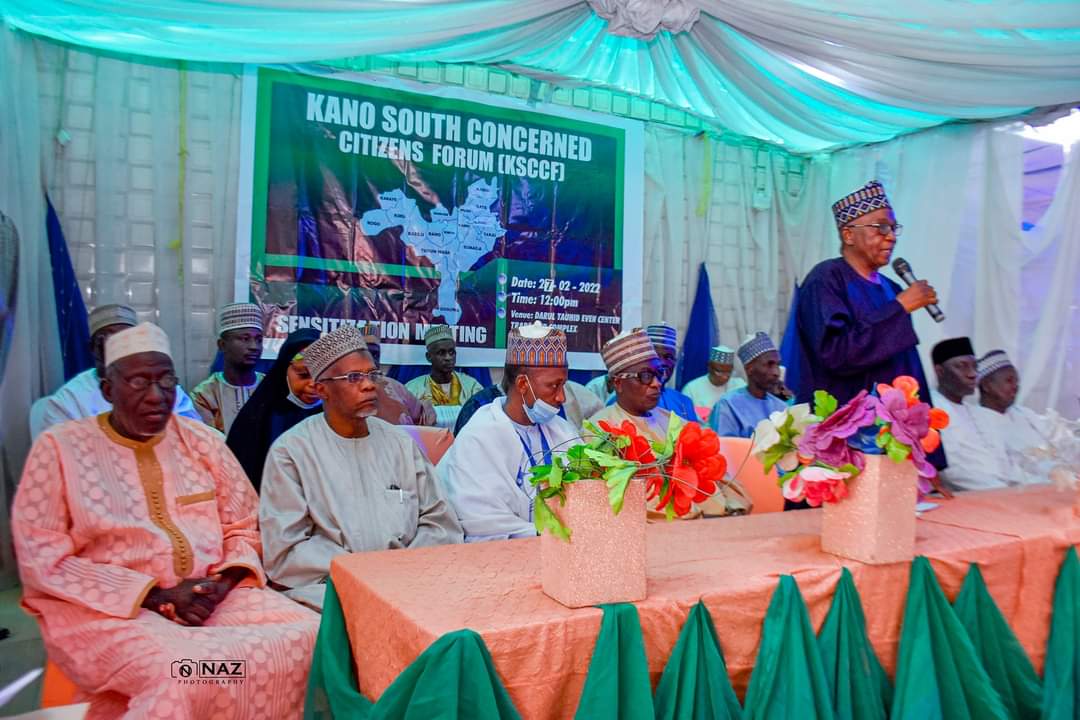
With the 2023 general election approaching, the Kano South Concern Citizens Forum (KSCCF) has called on Alhassan Rurum to succeed Governor Abdullahi Umar Ganduje in the state.

A communiqué issued to journalists on Sunday by the forum immediately after its sitting in Kano disclosed the endorsement.

The chairpersons of the forum, Sen Masud Eljibrin Doguwa, former Senator Kano South and Alhaji Musa Salihu, said Kano South deserves a fair share of the exalted political post.

They also stated that the Kano South has a vital role to play in building Kano State, saying the zone is ready to give its best for the purpose.

Rurum is a former speaker of the Kano State House of Assembly during Ganduje’s first tenure and is currently a member representing Rano, Kibiya and Bunkure Federal constituency and the Chairman House Committee on pension.

The forum had also endorsed Hon. Kawu Sumaila for Senator Kano South and Hon. Alhassan Ado Doguwa to be re-elected as the Member Tudun Wada/Doguwa so that he will have a chance to become the Speaker of the house.

Also lamenting, the from stated that Kano South has not had a chance to produce a governor for the state since 1992, saying, “Kano South has largest local government councils among others in Kano with 16.”

Alh. Musa Salihu said, “Kano north and Kano Central produced governors. In 2023 the governorship position should be zoned to Kano South for it to have a fair share of the exalted political post.

“We, therefore, endorse Alhassan Rurum for governor in 2023 to succeed Governor Abdullahi Umar Ganduje.

“And since we are basing our argument on competency, Hon. Kawu Sumaila should be elected Senator Kano South and Hon. Alhassan Ado Doguwa be re-elected as the Member Tudunwada Doguwa so that he will have a chance to become the Speaker of the house,” he added.

However, the sitting that hosted many important personalities said the forum would soon convene a meeting with the endorsees to tell them their position.

Kwankwaso’s knowledge economy model: A dream shortened by greed

By Tijjani Ahmad

As a state that accommodates one out of every ten people living in the country, Kano has many competitive advantages over other states regarding development at the sub-national level. Looking at how economies worldwide are competing to finance development, mainly using domestic resources mobilisation, the easiest for the state is to leverage on its abundance of human resources.

As a governor of the state for the second time from 2011 to 2015, Rabi’u Musa Kwankwaso wanted to make Kano a knowledge-based economy by providing necessary education and skills, thereby making a large portion of the state’s economic growth and employment from knowledge-intensive activities. The governor understood how knowledge spurs more rapid growth than any other resources; therefore, he projected the potential of the state to use its population of teeming youth as a comparative advantage.

His revolution started with efforts to bridge the workforce gap in tertiary institutions by sponsoring more than 2,500 postgraduates and undergraduates to study abroad. In addition, he sponsored hundreds of undergraduates in private universities across the country. These beneficiaries were expected to come back and support the education sector of the state and beyond. 

These people were selected based on merit, and most of them occupied positions at various tertiary institutions in Kano state and Northern Nigeria in general. Recently, two of the beneficiaries were listed among the most cited scientists in the world.

The governor further created 47 technical colleges to revive technical and vocational education. These colleges were strategically located across 44 local governments to provide secondary school students in rural and urban areas with skills in various trades. 

Looking at how Kano businesspeople import textile and garments materials, the governor also established skills acquisition centres in more than 20 local governments in the state to serve as incubation centres for modern garment production. However, these centres were about to be launched when the present government truncated the effort. Only God knows the reason. 

I heard the governor on air saying that when these centres are launched, they would compete favourably and capture a significant share of the undergarments market in Nigeria and across the sub-region. This is because the centres have been equipped with the most modern techniques and technology in garment making industry.

Kwankwaso didn’t stop there. He introduced over 20 specialised training institutions to provide in-demand skills in agriculture, ICT, sports, tourism and hospitality, among others. One of them is the poultry training institute located at Tukui village of Makoda local government in the northern part of the state.

The institute is designed to offer formal and informal training in poultry production and management. Immediately after its establishment in 2012, the institute trained 4,400 women in basic requirements for poultry production and management practice.

These centres were meant to bridge the skills gap, provide employment to our teeming youth and reduce insecurity and over-dependency on grants by improving internally generated revenue of the state. Had there been continuity in the models employed by the former governor, Kano would have been on its way to reclaiming the past glory it is known for in terms of knowledge and commerce.

The hope of everyone who wishes good for the state is to consolidate this model by whoever would emerge as the state’s number one citizen in 2023. But, of course, this can only be possible if his priority is development.

Tijjani Ahmad wrote from Kano via ahmatee123@gmail.com.

BREAKING: Ganduje defeats Shekarau faction in court of appeal

By Uzair Adam Imam

The Court of Appeal in Abuja has invalidated the ward and local government congress by the APC faction led by Senator Ibrahim Shekarau in Kano.

The court has rejected the judgment of an FCT High Court, which declared the Shekarau faction victorious.

The courts’ decisions were delivered on Thursday morning by Justices Haruna Tsammani, B. I. Gafai and J. Amadi.

APC crisis is one of the issues that has been raising dust between the factions long since Shekarau was declared to have defeated Ganduje.

The court has also described the crisis as an internal matter, not a pre-election matter.

Attorney General and Commissioner of Justice for Kano State, Barrister Lawan Musa, said that the judgment of the lower court had been set aside.

Barrister Lawan Musa, “The judgment of the lower court has been set aside for lack of territorial jurisdiction and also because it is an intraparty affair.

The third ground is that even the originating process used to file the case was wrongly done, as such, even the originating process was set aside. All the decisions are unanimous,” he added.

Ganduje lauds road transport association for creating job opportunities for youth

By Uzair Adam Imam 

Governor Abdullahi Umar Ganduje of Kano State has commended the Road Transport Employers Association Of Nigeria (RTEAN) for creating many job opportunities for the youth.

 Ganduje lauded the contribution of the association to the growth of the economy through the creation of job opportunities for the youth in the transportation sector.

The Chief Press Secretary to the Deputy Governor, Hassan Musa Fagge, disclosed this in a statement signed Tuesday. 

The Governor, represented by his Deputy Dr Nasiru Yusuf Gawuna, made the statement when he launched the RTEAN at Kwanar Dawaki Motor Park new office on Tuesday. 

Ganduje said, “we are really proud of you (RTEAN) having recognised your contribution to the improvement of the transport sector through engaging our youth to have jobs he said.”

He added that RTEAN was complementing the state government’s effort to ensure that the youth have jobs by employing thousands of workers in Kwanar Dawaki Moto Park.

However, the Governor also urged the leadership of RTEAN to continue to enlighten their members about traffic rules and proper maintenance of their vehicles.

Curbing Insecurity: Traditional institutions have role to play – Ganduje

By Uzair Adam Imam 

The governor of Kano State, Dr Abdullahi Umar Ganduje, has said that the traditional institutions have a role in tackling the insecurity bedevilling the country over time.

Ganduje said being the traditional institutions as the custodian of history, culture, values, morals and ethics, their role in fighting insecurity is tremendous.

He stated this Thursday at the coronation lecture held at the Kano University of Science and Technology, Wudil, as part of events for the coronation and presentation of Staff of Office to the Emir of Gaya, Alh. Aliyu Ibrahim Abdulkadir.

A statement signed by the Chief Press Secretary to the Deputy Governor of Kano State, Hassan Musa Fagge, disclosed this on Monday.

The statement added that Ganduje, who was represented at the occasion by his deputy, Dr Nasiru Yusuf Gawuna, the traditional rulers have been managing and leading people in their domain by ensuring peace and stability through conflict resolution, in fact, they are respected for the way they handle issues and resolve them amicably.

“Traditional Institutions are led by people who are knowledgeable and revered by their people.”

“The Traditional Rulers possess qualities such as experience and wisdom and give advice that prevents and solve conflicts,” he said.

However, Ganduje went on to say that knowing the role of the traditional institutions towards national development made his administration create additional emirates. 

He added that the aim is to harness their contributions and potentials with the aim of bringing more development to society.

KSADP achieved 123.43% of 2021 disbursement projection – Gawuna

By Uzair Adam Imam 


Kano State Deputy Governor, Dr Nasir Yusuf Gawuna, has revealed that the State Agro Pastoral Development Project (KSADP) in the year 2021 achieved 123.43% of its disbursement projection.

A release signed Monday by the Chief Press Secretary to the Deputy Governor of Kano State, Hassan Musa Fagge, disclosed.

The release added that the Deputy Governor who is also the Commissioner of Agriculture stated this on  Monday while chairing the State Steering Committee of the project meeting at the Government House, Kano.

He said: “There is no any agricultural project in the state that has attained this level. This feat of progress is the highest achieved by any Live and Livelihood Fund Project (LLF) funded by the Islamic Development Bank (ISDB) in Africa.

“In my recent discussion with the ISDB Vice President and report reaching me from LLF, KSADP is the fastest project in fact the progress made by it has gingered the Bank to support Kano State with various interventions such as Structure Agro Processing Zones, National Program for Food Security and Bilingual Project.

He further said:  “The project will be tasked in the year 2022 with the delivery of project outputs to the intended beneficiaries,” adding that 2021 did not call for many oversights supervisory visits by the steering committee being a year for planning, designs, capacity building and strengthening of stock route committee members.

“2022 is going to add value to what the project has started and will be full of physical activities as the previous year has been for planning and consultancies,” he said.

Hanifa: Tanko arraigned as Kano gov’t revokes private schools’ licenses

By Hussaina Sufyan Ahmed

The Kano State Government has revoked the license of all private schools in the state.

Kano state’s Commissioner for Education, Honorable Sanusi Kiru Sa’id, stated this at a press conference held on Monday, January 24, 2022.

This news came up as a follow-up after the brutal murder of a five-year-old school pupil, Hanifa Abubakar, by her teacher and school proprietor, Abdulmalik Tanko.

The state government also announced the arraignment of Mr Tanko before a magistrate court in the state. The accused and two others are remanded in the correctional facility pending the next hearing.

On the suspension of the operational permits for private schools, Hon. Kiru said the government would set up a designated team for guidance on the next line of action.

Shehu Sani advises Ganduje to immortalise Haneefa Abubakar


By Muhammad Abdurrahman


The former senator representing Kaduna Central Senatorial District and activist, Shehu Sani, advised Kano State Governor, Dr Abdullahi Umar Ganduje, to immortalise Haneefa Abubakar, the 5-year-old girl allegedly abducted and murdered by her schoolteacher in Kano.


He stated that in a Tweet, adding that Governor Ganduje should do that by “naming a major street or a public building or public school after her.”


Haneefa went missing while going to school in the Dakata area, Kano, in December 2021. Her abductors demanded and collected ransom from her parent.


However, fearing that she recognised one of them, he reportedly used rat poison to kill her. He mutated her body and dumped it at the school he taught in the neighbourhood.


The Kano State Police, in collaboration with the DSS, arrested the suspects yesterday, January 19, 2022. That led to the exhumation of Haneefa’s decaying remains. She has since been buried while the suspects remain in police custody.

Book Presentation: Audu Bako the best Kano State governor ever – Dantata

By Ibrahim Siraj Adhama

A prominent Kano elder statesman, business mogul and philanthropist, Alhaji Aminu Dantata, has described late Audu Bako as the best governor ever in the country. Dantata was speaking at a book presentation as one of the only two surviving members of Audu Bako’s cabinet, the other being Alhaji Tanko Yakasai, who was absent due to health challenges.
The book titled “Kano State Under the Administration of Audu Bako, 1967 – 1975” was written by Dr A’isha Ni’ima Shehu of the Department of History, Bayero University, Kano.
Alhaji Dantata, who served as Audu Bako’s Commissioner of Economic Planning, said Kano owed its development to the purposeful and visionary leadership of late Audu Bako, whom he described as honest, foresighted, God-fearing and prudent in the application of resources. He said if all leaders were like Audu Bako, Nigeria would have long passed its current level of economic development.
Blaming external influence for Nigeria’s slow development, the elder statesman stated that the country would have been better if it were to be allowed to develop at its natural pace. He added that Northern Nigeria is much more endowed with natural and mineral resources than the Southern part of the country. However, he bemoaned how those resources remained largely untapped.
The book reviewer, Dr Tijjani Naniya, commended the author for writing the book. He said it contains an assessment of Audu Bako’s laudable achievements in education, infrastructure, administration and economic development.
Extolling the man he dubbed as a lover of education and agriculture, Dr Naniya said Audu Bako’s projects are too numerous to mention. He identified Tiga and Bagauda dams, Gidan Murtala, Audu Bako Secretariat, Kano Zoological Garden, Bagauda Lake Hotel, Murtala Mohammed Way, Falgore Game Reserve, Daula Hotel as some of the projects done by Audu Bako.
He mentioned others include Kundila and Gwammaja Housing Estates, WRECA, and hundreds of primary and post-primary schools. He said when late Audu Bako established the College of Arts, Sciences and Remedial Sciences, alias CAS; many governors emulated him by establishing similar colleges in their states.
Earlier in his welcome address, the Vice-Chancellor, Bayero University, Kano, Professor Sagir Abbas, who hosted the event, said the University was always willing to be part of similar scholarly efforts aimed at preserving history for upcoming leaders.
Chairman of the occasion, Alhaji Isyaku Umar Tofa, who was also one of the youngest staff of Audu Bako, said the first military governor approached leadership with great determination and that no honour can compensate for what late Audu Bako did for Kano.
On his part, Kano state governor Dr Abdullahi Umar Ganduje announced a donation of ₦10m and pledged to support the reproduction of more book copies for use by schools and libraries in the state. He lauded the visionary leadership of the first-ever Kano state governor. He commended him for the numerous projects he undertook, many of which are not only still in use but have continued to serve as the foundation for many developmental projects up to this moment.
Other donors include Alhaji Aminu Dantata with ₦5m and another ₦15m to the family to do a project in Audu Bako’s memory.
The event attracted participants from among members of the academia, politicians, traditional rulers, business community, media, as well as members of late Audu Bako’s family.

Forensic Science: An imperative tool for fight against corruption, insecurity, other woes

By Mubarak Shu’aibu

The insecurity challenge in Nigeria has assumed a formidable dimension that requires a stakeholder’s approach as it is being touted in various quarters and, in all honesty, necessitates a call for creativity and long-term work. The alarming rate of insecurity is no less disturbing despite the reform undertaken and a substantial share of the national budgets allocated to the security sector.

The sensation of insecurity citizens of our societies experience is one of the main threats against the quality of life in a democracy. Thus, this has caused public opinion to cry in favour of searching for solutions to the woes.  There is an acceptance that a lot needs to be done to turn the current malaise around, and espousing Forensic Science as a tool should be considered on the list of priorities as it would make a profound impact and or even lay a groundwork for the fight against insecurity. Proof for sexual offences, drugging, cold blood murder, bank robbery, identification of victims and other menaces could be decisively dealt with by forensic techniques.

Forensic Science refers to the application of scientific methods in the recovery, analysis and interpretation of relevant materials and data in criminal investigations. It is both an intelligence and evidential tool to assist in the crime management and delivery of justice.

Scientific advances already play an essential role in solving crimes. According to the American National Institute of Justice, since 2009, the institute has funded forensic science projects worth more than $127 million, including approximately $116 million for 269 research awards and nearly $11 million for projects by federal partners. This funding has resulted in more than 900 reports, publications in scholarly journals and presentations. Therefore, it is a wise bit of business in a country like Nigeria, where the criminal activities are devoid of sophistication like that of America, to expend more resources in forensics.

Just as medical, agricultural and economic research are crucial for the advancement of a country, a sustained progression in the research underlying forensic sciences also is critical for advancing safety and the administration of justice. Unfortunately, Nigeria is hooked on instant highs and short-term fixes, which has ultimately and gruesomely halted our general progress as a country.

In retrospect, lack of intrinsic abilities on forensic had many arguing in favour of the Kano State Governor Abdullahi Umar Ganduje when his videos stacking dollars into his pocket were leaked. This event had the public stupefied, including President Muhammadu Buhari, who in the aftermath remarked that he didn’t know the extent of technology used to record the video, a matter that could quickly be settled within a fraction of seconds with good forensics in place.

In a similar terrain, a snake swallowed handsome money in the JAMB office, a fire outbreak in one of the finance offices in Abuja, the recent accident that occurred recording scores of deaths by one of the elite sons and many more stories whose verdicts to date remain surreptitious for Nigerians.

Bringing this to a close, I can say employing forensic science techniques in our fight against lingering insecurity and corruption should be considered inevitable and necessary. That will solve many other problematic issues such as sexual offences, drugging, cold murder, etcetera.

Mubarak Shu’aibu wrote from Bauchi State, Nigeria.