Gombe

Governor Inuwa preaches peace, unity in Eid-el-Maulud message to Muslim Ummah 

By Abdullahi Mukhtar Algasgaini  

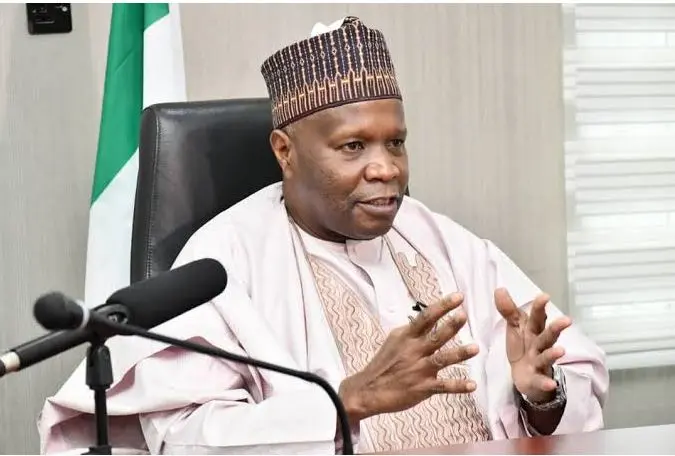
Gombe State Governor, Muhammadu Inuwa Yahaya, CON, has called on the Muslim Ummah to draw inspiration and lessons from the virtues of Prophet Muhammad (PBUH) as they celebrate this year’s Eid-el-Maulud today.  

The Governor, who is also the Chairman of the Northern States Governors’ Forum, encouraged Muslims to imbibe the Prophet’s qualities of tolerance, humility, modesty, and honesty in their daily lives. 

He stated the importance of reflecting on the teachings of the Prophet and integrating his legacy of unity, integrity, peaceful coexistence, and love for one’s neighbor into the fabric of society.  

He stated, “As we commemorate this great and epochal day, I enjoin us to continue to demonstrate in our lives what the noble messenger of Allah bequeathed to humanity in ethos, manners, and relationships for the good of the society.” 

He highlighted the need for Nigerians to uphold these teachings as a foundation for national unity and development, saying “the teachings of Prophet Muhammad (SAW) are indispensable in the quest for meaningful development and the good management of Nigeria’s diversity.” 

The NSGF Chairman urged that the celebration of the Prophet’s birth should serve as a moment for spiritual rejuvenation and as a reminder for Nigerians to come together in prayer for unity, stability, and progress, particularly during these challenging times.  

He noted that collective faith in God and sustained prayers for peace across the nation would help achieve the aspirations of Nigeria’s founding fathers. 

The Governor also called on citizens to continue being law-abiding and to protect the peace and tranquility that Gombe State currently enjoys, urging them to shun any actions that could threaten the state’s harmonious environment.

Water resources ministers visit Gombe

By Abdullahi Mukhtar Algasgaini

The Minister of Water Resources and Sanitation, Engr. Joseph T. Utsev, alongside his Minister of State, Bello Muhammad Goronyo, led a team from the ministry to conduct an inspection of the Dadin Kowa Dam in Gombe state where they confirmed that the dam is fully operational contrary to recent reports in some sections of the media suggesting that the facility had collapsed due to flooding.

During the visit on Wednesday, the Minister expressed disappointment at the misinformation being spread about the plant’s status, reassuring the public that the facility remains intact and continues to provide uninterrupted power as well as water for irrigation and other purposes.

“We are here today to assess the status of the dam, and I want to tell Nigerians that the dam is stable. Those who reported the collapse merely observed the water flowing from the spillway. We want to assure Nigerians that the dam’s reservoir is functioning normally.

“There is no cause for alarm. All measures are in place to ensure the continued safety and stability of this dam. It is in a normal state and will continue to generate power and provide water for irrigation as usual”, Minister Utsev stated.

The Minister noted the critical role of the media in shaping public opinion and urged journalists to exercise greater diligence in their reporting, stressing the importance of verifying all information before it is disseminated to the public.

The ministers and other members of the delegation were later led by the Gombe State Commissioner for Trade and Investment, Alh. Nasiru Mohammed, to the Muhammadu Buhari Industrial Park which is located a short distance to the Dadin Kowa Hydro Power Plant.

The park, which is set to become a major hub for manufacturing and industrial activities in the North-East, has seen significant progress, with several companies already beginning to establish their operations.

Impressed by the remarkable developments at the Industrial Park, the Ministers commended Governor Inuwa Yahaya for his visionary leadership and foresight in establishing this legacy project, recognizing its vast potential to attract multibillion-naira investments, generate substantial employment opportunities, and significantly boost the economic prosperity of the state.

The Ministers stated that such initiatives are crucial in driving sustainable development and positioning the state as a key hub for industrial growth especially in the North-east sub region.

The Commissioner of Environment, Water, and Forest Resources, Sa’idu Mohammed Fawu, who led the Federal Government’s team to the Dadin Kowa Dam, reaffirmed Gombe State’s commitment to collaborating closely with the Federal Ministry of Water Resources and Sanitation in ensuring the safety, stability, and functionality of all water infrastructure across the state.

Gombe governor applauds Tinubu on Bello’s appointment as NDPHC executive director

By Abdullahi Mukhtar Algasgaini

Gombe State Governor, Muhammadu Inuwa Yahaya, CON, has commended President Bola Ahmed Tinubu over the appointment of Engineer Bello Babayo Bello as Executive Director (Networks) at the Niger Delta Power Holding Company (NDPHC).

The Governor said President Tinubu has made an excellent choice in Engineer Bello, describing the new appointee as an illustrious son of Gombe and cerebral young man with extensive experience in power systems management and deep understanding of the complexities in the energy sector.

Governor Inuwa urged Engineer Bello to justify the confidence reposed in him by bringing to bear, his wealth of experience and expertise in driving forward President Tinubu’s energy initiatives and ensuring sustainable development.

“This appointment is not just an honour for you but also a source of pride for Gombe State. We are confident that you will excel in this new capacity and contribute to the advancement of the NDPHC”, the Governor remarked.

He encouraged Engineer Bello to remain steadfast in his commitment to excellence, urging him to face the challenges ahead with the same commitment and innovative thinking that have defined his career thus far.

Meanwhile, Engineer Bello had earlier today, paid a thank you visit to Governor Inuwa Yahaya at his residence in Abuja, where he appreciated the support, facilitation and encouragement of the governor as regards his new appointment.

Governor Inuwa Yahaya attends National Council of State meeting

By Abdullahi Mukhtar Algasgaini

Gombe State Governor, Muhammadu Inuwa Yahaya, CON, has attended the National Council of State meeting presided over by President Bola Ahmed Tinubu.

The meeting which held at the Council Chamber of the State House Abuja, had in attendance former Presidents Goodluck Jonathan and Muhammadu Buhari.

Former Heads of State, Generals Gowon Yakubu and Abdulsalami Abubakar joined virtually.Also present were; the Vice President, Kashim Shettima, the President of the Senate, Senator Godswill Akpabio, the Secretary to the Government of the Federation, Senator George Akume and the Chief of Staff to the President, Femi Gbajabiamila.

Apart from Inuwa Yahaya, other Governors were also either physically present at the meeting or joined virtually.

This is the first meeting of the National Council of State to be held since President Tinubu assumed office in May 2023.

The Council of State is an advisory body that comprises the President, Vice President, all former Presidents and Heads of State, the President of the Senate, the Speaker of the House of Representatives, all State Governors, and the Attorney-General of the Federation.

CAS applauds Governor Inuwa’s achievements in security, infrastructure, others

By Abdullahi Mukhtar Algasgaini 

Gombe State Governor, Muhammadu Inuwa Yahaya, CON has received the Chief of Air Staff ( CAS), Air Marshal Hassan Bala Abubakar, on a courtesy visit at the Government House, Gombe on Saturday.   

The visit was part of Air Marshal Abubakar’s one-day official engagement in Gombe in furtherance of the Nigerian Air Force’s commitment to enhancing security and strengthening the formidable collaboration with the Gombe state government. 

Receiving the CAS, Governor Inuwa Yahaya expressed appreciation to the Nigerian Air Force for its role in maintaining peace and security in Gombe State and the Northeast region, particularly on the sustained fight against insurgency, banditry and other criminal acts that threaten the peace and stability of Nigeria.  

The governor attributed the state’s relative peace and stability to the synergistic efforts of the military and other security agencies, assuring of his administration’s continued support to the NAF and other sister organisations.  

“Your visit today reaffirms the commitment of the Nigerian Air Force to the safety and security of our people. We are grateful for the continued support and partnership, which have been crucial in safeguarding Gombe State and by-large, the entire Northeast sub-region against security threats such as insurgency, banditry and other criminal acts”, Governor Inuwa Yahaya stated. 

He reiterared his government’s commitment to providing necessary logistics and infrastructure to aid the operations of the Air Force in Gombe State.  

“I assure you that we will continue to support the Nigerian Air Force and other security agencies operating in Gombe State. At the NAF base, we will assist in building additional structures to accommodate your personnel and the facilities you deploy”, the Governor added.  

Responding to the requests made by the Chief of Air Staff on the need to create a buffer zone of at least 1 kilometre at all sides of the NAF Combat Reconnaissance Base, and connecting the base to the Gombe regional water expansion system, the Governor instructed the Gombe Geographic Information System (GOGIS) and the Ministry of Water Resources to fast track the process of providing the requests made by the CAS. 

Protest: Governor Inuwa inspects damaged infrastructure, facilities in Gombe

By Abdullahi Mukhtar Algasgaini

Gombe State Governor, Muhammadu Inuwa Yahaya, CON, has on Friday, toured some damaged facilities to assess the level of destruction caused by the violent protest in Gombe metropolis.

During the visit, Governor Inuwa Yahaya expressed concern over the extensive damage inflicted on both public and private properties while assuring the people of the government’s commitment to maintaining peace and stability in the state.

“I have gone round to personally assess the extensive damage caused by the violent protest. From what I have seen, the destruction is enormous. Not just public facilities, businesses were also affected”, the Governor lamented.

He said it’s of utmost importance to preserve peace in Gombe, a state known for its stability.

“Gombe is known for its peace, and we must preserve it. We cannot allow actions that threaten our stability. We have no state other than Gombe. We understand that there are challenges and hardships in the land, but we must not resort to violence and destruction of our state to express our feelings or concerns”, the Governor said.

“Let me make it clear: we are not against peaceful protest. We know that democracy and our laws grant the right to express oneself, but yesterday’s event contradicted democratic principles and violated the law.

“We are ready to support any peaceful demonstration, and the police are ready to give protesters the maximum protection to exercise their constitutional rights once they follow the laid down rules. What we cannot allow, let me re-emphasize, is the breakdown of law and order”, the Governor added.

S’Court sets Friday deadline for verdict on Gombe governorship election appeal

By Uzair Adam Imam 

The Supreme Court is scheduled to deliver its judgement this Friday on an appeal seeking to nullify the election of Governor Inuwa Yahaya of Gombe State. 

The Peoples Democratic Party (PDP) and its candidate, Mohammed Barde, are urging the court to overturn the decisions of the Court of Appeal and the Gombe State Governorship Election Petition Tribunal, which had dismissed their case challenging Governor Yahaya’s victory in the March 18, 2023, gubernatorial poll. 

The five-member apex court panel, led by Justice Kudirat Kekere-Ekun, approved the case for judgment after all parties presented their briefs of argument. 

Additionally, the court dismissed an appeal against Governor Yahaya’s election by the African Democratic Congress (ADC) candidate, Nafiu Bala, who withdrew the case upon realising it contained pre-election issues. 

In a related matter, the court also deferred judgement on the Kaduna state governorship election dispute, where the PDP and its candidate, Mohammed Ashiru, seek the removal of Governor Uba Sani, an All Progressives Congress (APC) member.

First oil drill in Northern Nigeria: a blessing?

By Ibrahim Sambo

On Tuesday, President Muhammadu Buhari commissioned the drilling of two oil wells on Kolmani OPL 809 & 810 at the Kolmani field sites in the northeastern states of Bauchi and Gombe. The two sites have about 1 billion barrels of crude oil reserves based on initial figures by the NNPC, with the potential to produce N32 trillion over 10years (at crude price of $73 per barrel).

From many angles in the North, this sparked a euphoric roar. This euphoria is quite understandable. Who would not want to have, at their disposal, tremendous quantities of the most traded commodity in the world, the mighty magical black liquid?

And even with all the green-economy and climate-smart drive by the West, the exit of the fossil fuel era is some distant away. Some months ago, the most foremost and practical evangelist of renewable energy, Elon Musk, stated in a conference in Norway that “civilization will crumble” if the world stops the use of oil and natural gas and called for continued drilling and exploration of fossil fuel sources.

Further, the concerns that the two sites where the reserves are located (Gombe and Bauchi states) are far from port terminals (at-least 700km away), hence a potential difficulty in exporting the crude oil has been laid to rest by the NNPC as they announced the plan to refine the crude oil around the oil fields by building a 120,000 barrels per day refinery. This is in addition to gas processing facilities and a power plant that could generate at least 150 megawatts (MW) of electricity.

But even with all these, there is still a great deal of pessimism as to whether we can derive the juices from the oil revenues, or we will be struck with what economists called the “resource curse”, a situation where a region has valuable natural resources but are still steeped in poverty.

A question that will linger on the mind of every discerning and concerning northerner would be, what future does this hold for the states involved, or the region, or even the country in terms of economic prosperity. A superficial answer would be that the oil and its byproducts will drive more revenue to the government for social and infrastructural development, provide employments for the youths and improve standard of living. While this is true on paper, it would not necessarily be so in practice.

For one, the resource-curse phenomenon is real. When the first oil wells in Nigeria were discovered in Oloibiri in 1958, jubilations filled the air, and it was assumed that within few years, this precious commodity will pick Nigeria up from the gutters of poverty and put her on the elitist list of wealthy nations. But 65 years down the line, Nigeria is still stuck deep in that stinking gutter. Similar thing is happening with oil-rich countries like Columbia and Venezuela for instance where they produce humongous volumes of oil but are still poor.

The second frightening thing is environmental concerns. Uncontrolled oil spill is a major threat in oil-producing areas, and a perfect example of these devastating effects we have seen in Ogoniland, where some 2.1 million barrels of oil was spilled into the land, adversely affecting their water, farming and fishing activities. Here too, this environmental fear was allayed—at-least verbally—by Gombe state governor, when he remarked during the flag-off ceremony that the region “will avoid mistake of the Niger Delta.” “With regard to the issue of the environment,” the Governor remarked, “our ministry of environment is working hand in hand with the Federal Ministry of Environment and the Nigerian National Petroleum Corporation Limited (NNPCL) so that we will avoid all the mistakes and pitfalls that have been the big challenge of oil exploration and implementation in the southern part of the country.”

But as oil has been a curse to some, so has it been a blessing to others. Petrodollars has created immense wealth in the middle-eastern Gulf countries such as never seen in history. There is nothing that can stop northern Nigeria from doing exactly so. Oil can turn the North, and indeed Nigeria into an incredibly virile economic powerhouse.

The two northeastern states of Bauchi and Gombe will now, potentially, have a share of the 13% oil derivation fund pie. And this fund is quite huge. For starters, in just 11years, the 8 oil producing states pocketed a whopping N6trn from this fund. This share of the 13% oil derivation fund, a petroleum refinery and a gas plant, a powerplant, a fertilizer plant, all exude odor of economic merriment.

The question now is how do we make these seemingly tremendous economic potential translate into real time prosperity. The answer lies in adopting the classic model that has worked for the middle eastern countries which is great, visionary leadership.


Leadership—and not an abundance of resources, is the foundation upon which prosperity lies upon, as we have seen time and again. It is that simple. Without good leadership, a society has zero chance of prosperity even if bars of gold gushes down the gutters of its towns and cities.

When Sheikh Muhammed Al-Makhtoum put a tiny desert nation, the UAE, on to the world map, it was through sheer vision and strategic implementation. The North needs to have Al-Makhtoums who would properly manage the money gotten from this venture and channel into well-crafted visions of development; of erecting technology infrastructures for a digital economy, of building mega industries that provide jobs, of constructing roads and state-of-the-art health facilities, of building modern schools and laboratories, of building structures for hospitality and tourism, and all the things that make for a modern economy. The money will be there and in abundance.

As the first oil drill takes place in the Northern region, can we get into power the leaders who would properly use the money from this venture into longterm projects that will finally liberate the North from extreme poverty that has so much traumatize us, and turn it to a modern economy, full of wealth and possibilities and opportunities, or are we leaving the money to go down the wire, into the pocket of the privileged few elites, just like our southern brothers, and just be bragging that we are now oil producing entities, with nothing to show? It is now left to us. In the words of the Hausa man, dabara ya rage wa mai shiga rijiya.

Ibrahim Sambo writes from Lagos. He can be reached at ibrahymsambo4@gmail.com

Why Not Just Make a Waqf Now?

By Abdullahi Abubakar Lamido

I begin, after praising Allah and sending blessings to the beloved Prophet peace be upon him, with three stories from Nigeria. They are all real. The first is of a rich man who died and was survived by a wife and her two children. His estate included mansions in choice areas, high worth investments, company shares, farmlands, etc. This “beloved” wife was advised to make a waqf (perpetual charity) of just a mosque as a source of everlasting reward for the late husband from the hard-earned wealth he spent his life gathering. She was reminded that less than one per cent of his wealth could do it.  The wife answered in one word: “Impossible”! Rather, she offered to cook rice and beans every Friday and give to the begging Almajiris around as sadaqah. To be fair to her, she did so for some months until she met a new darling husband with whom she now enjoys her inherited, halal fortune! End of story!

The second story is that of a religious and highly influential personality who died and left behind several sons and daughters, all of whom had already grown wealthy and influential. The deceased’s bosom friend, who was the custodian of many of his possessions, approached the heirs. He pinpointed a plot of land in a choice area in one of the largest Nigerian cities and offered that if they would designate it as a perpetual charity, he would build an ultramodern Islamic centre there as a waqf for their late father. This, he said, was to create a ceaseless flow of rewards to their late father. Alas! To his face, they simply said no! And the rest is history.

The third is the story of a woman philanthropist who was the wife of an influential person. She was known for her dedication to building mosques, schools, among other charitable interventions. After her demise, the husband learned of several uncompleted mosques and schools that were part of her charitable initiatives. He called her children to a conference and suggested that from her inheritable wealth, they should dedicate what would be enough to complete such ongoing projects. And what a small portion of her wealth was that! They unanimously rejected his offer, departing in a “just give us our money” mood. It was the father who used his resources to finance the completion of the projects. I gather that he was lucky to have learned some lessons here and begin to emulate his late philanthropist wife. He actually increased his budget for Islamic philanthropy as he was already known for charity also. May Allah accept it for him, and for her.

I am sure by now you, my dear reader, have started to recollect several similar stories you have heard on several occasions or which might have even happened close to you. I also have many to share. But these ones suffice as examples. At least for now. What lesson, then, have you learned from this?

Now, remember the Prophetic hadith in which he explains that the moment a person dies, his reward fetching deeds terminate except three; waqf or perpetual charity being the first of them. The other two reward sources are the prayer of a pious child and beneficial knowledge. Interestingly, in the hadith is an equitable distribution of reward sources of some sort. The wealthy folks no doubt have access to the “lion share” in terms of perpetual charity. Beneficial knowledge is the share of the scholars essentially. For the non-rich, non-scholar believer, giving a good upbringing to his/her children guarantees them prayers from pious children and a continuous flow of reward.

Many owners of surplus resources miss the opportunity of making a waqf due to procrastination and other flimsy considerations. By doing so, they deny themselves the most important investment of their lifetime. How can Allah give you the opportunity of making an investment that may pass a millennium fetching you rewards only for you to refuse to do so? Daniel Crecelius explains to us that several waqfs, created for the provision of various social, religious, educational, economic and welfare services free of charge to the public, have survived for five centuries, and some for over a millennium. Now! Imagine yourself, in your grave, receiving “alerts” of rewards daily while charting with the Angels! Can you imagine the amount of reward you would earn by continuously creating benefits, solving problems, drawing happiness to thousands or millions of needy and poor lives for decades, centuries or even a millennium after your departure from this deceptive world? Consider the following stories.

You already know the third caliph of the Prophet, Uthman bin Affan (may Allah be pleased with him). After the migration to Medina, access to water became a great challenge for the believer. They had to buy from a Jew who owned a well called Ruma. The Jew was so wicked, charging exorbitant prices, and making life difficult for the believers. The solution was for the Muslim community to own it. The Prophet peace be upon him announced a guaranteed direct entry certificate to Jannah for whoever purchased it. Uthman did. He surrendered it as a waqf. People now could get water at zero cost. This charity became blessed and continued to expand. During the Umayyad period, it began to grow date palm trees in its surroundings. Many grew. The Ottoman Empire paid particular attention to developing the trees generating income from them. The returns would then be shared into two; a portion distributed as charity and the other saved. Later, the Saudi Arabian authorities opened a bank account in the name of Uthman Bin Affan. They save half of the returns and distribute half in charity. As the savings grew, a hotel was built in Medina, still in the name of Caliph Uthman. Half of the returns is reinvested while the other half, amounting to about 500 million Riyals annually (equivalent to about USD14 million) is distributed in charity. 1400 years of ceaseless reward, thanks to waqf!

Then the story of the great philanthropist, lady Zubaiyda, daughter of Ja’far al-Mansūr, granddaughter of the second Abbasid Caliph Abū Ja’far al-Mansūr; wife of the 5th Abbasid Caliph Hārūn al-Rashīd and mother to the 6th Abbasid Caliph, al-Amīn. Although she died in 216 AH (832 CE) in Baghdad, her source of reward is still yet to! In 186 AH (802 CE), she visited the Holy land as a pilgrim. She then noticed the serious difficulty people experienced in Mecca vis-à-vis accessing water. There were no reliable wells and springs from where to fetch portable water. The people rather relied on rainfall or poor wells that were irregular in providing water. She then ordered her treasurer to look for “world-class” engineers and professionals from different cities to embark on the work of constructing a befitting well. Having observed how difficult the project would be due to the nature of the soil which was rocky and hard, she declared her readiness to pay a dinar for every single digging, until they reached water level. Soon, highly professional engineers and experts flooded Mecca and started work, surveying between hard rocks until they were able to sink the well. In the end, they parted with the dinars and she parted with the never-ceasing reward! She dedicated the well as a waqf for the residents and visitors of Mecca. Water became abundantly available. Water scarcity became history.

But not only this. Zubayda also did a waqf for the waqf; waqf of rentable houses and landed properties for the maintenance of the water wells.  The ‘Ayn Zubaydah has been described as the largest waqf known in history in terms of the cost of its capital, the magnificence of its design, as well as its contributions to welfare in a sustainable manner. Importantly, the Well of Zubaydah, as it came to be known, has remained functional and productive to date. About 1200 years? It is being utilized by the people of the city as well as visiting pilgrims to the Holy land.

Dear reader! Make a waqf. Look around you. Investigate; what is the greatest problem of the poor around you? Food? Water? Lack of a clinic? Lack of a school for their children? Lack of capital for the poor widows who need money-generating ventures? Make a waqf to provide a sustainable solution for them. Build a plaza, a shopping complex, a rentable house, a garden or buy shares and dedicate as waqf for funding such charitable courses. Do not wait for your wife to make sadaqah of rice and beans for you on Fridays! If you want to enjoy your wealth perpetually, why not just make a waqf NOW?


Abdullahi Abubakar Lamido is the Chairman, Zakah & Waqf Foundation, Gombe, Nigeria. He can be contacted via lamidomabudi@gmail.com.