Girl-child

When being a girl becomes a risk in Nigeria

By Ummi Umar

I write with a broken heart. A heart so bruised it feels shattered. There is no day I open Instagram, X, or WhatsApp without stumbling on another story that tears at the soul, another reminder that insecurity, banditry, and sheer lawlessness have become a constant shadow over this country. It almost never gets better for us.

For weeks now, it has been one tragedy after another. One kidnapping case replaced by the next. Little girls are taken from their schools. Families plunged into fear. We have reached a point where people whisper painful prayers like “may Nigeria never happen to me”, because we have watched the nation turn against its own.

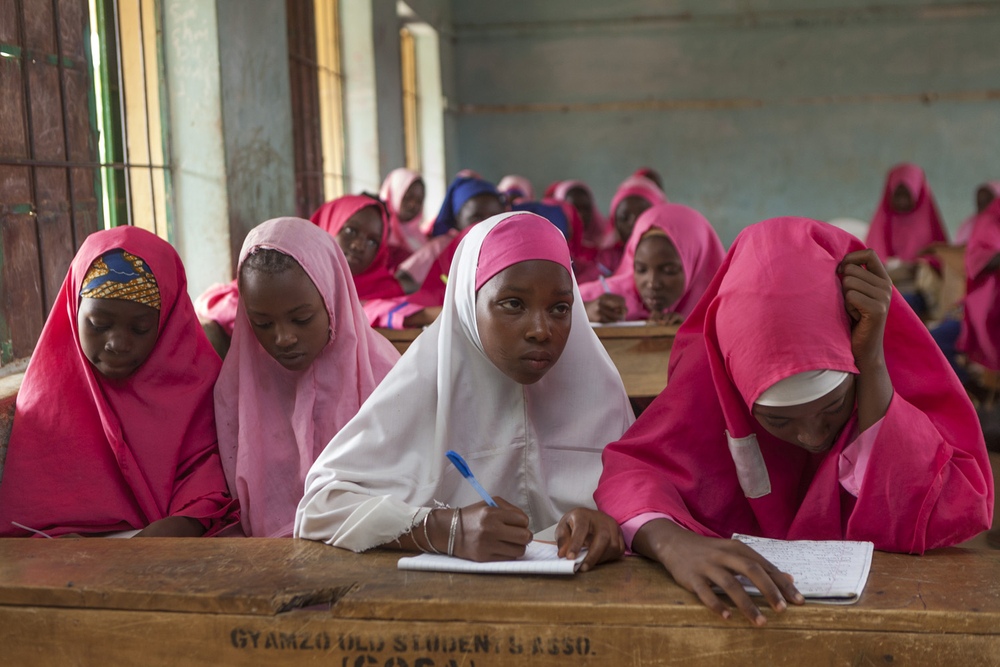
Only last week, schoolgirls in Kebbi were abducted. And even though news has just broken that they have been freed, the joy of their return cannot erase the trauma of their ordeal or the deeper truth it exposes about our country. In that same week, more than three hundred students were taken from a Catholic school. These were girls who simply wanted to learn, to grow, to dream, to build a life. Their only “fault” was the desire to be educated. And then Nigeria happened to them.

There is no way to describe the agony of sending your child to school and then seeing on the news that she has been taken by ruthless, faceless men. You do not know whether she has eaten, whether she is being harmed, what fears she is battling, or what pain she is enduring. Is it a crime to be a girl child in this country? Why must she carry so much suffering on her small shoulders?

The rate of insecurity in Nigeria today is beyond alarming. And our leaders, what exactly are they doing? Must it be your daughter, your niece, your cousin, your wife before you feel any urgency? Must tragedy knock at your own door before you remember the weight of responsibility?

Those who lead us, those who hold authority, are meant to use every tool within their reach to protect citizens of the Federal Republic of Nigeria. Yet what do we see? Are they asleep? Is ordering schools to vacate the answer? When there is even a whisper of protest, government mobilises soldiers with unbelievable speed. But when children are carried away by bandits, the same urgency disappears as though the nation cannot see what is happening.

If you want to understand misplaced priorities, look no further than Nigerian leadership.

Sending students home is not a solution. It strips these girls of their fundamental right to education. And then what happens when they resume? Will the cycle of fear, evacuation and abduction continue? What truly is the way forward?

Our leaders must seek real, practical solutions to these recurring horrors. They must rise to their duties and be held accountable. Our girls are suffering. They are far too young to bear this kind of trauma. No girl, no child, no human being deserves this. No parent deserves the torment of knowing that their daughter is in the hands of men who may do only God knows what to her.

Our love, our prayers and our support remain with these girls and with their families. We thank God for the safe return of the abducted Kebbi schoolgirls, but we refuse to let that relief distract us from the painful truth that no child should ever have been taken in the first place. 

We continue to pray for every child still in captivity, and for the strength of the families waiting for their return. May our leaders finally be held accountable. May our girls be protected, truly and consistently. And may Nigeria never happen to any of us.

Rabi Ummi Umar is an intern at IMPR and can be reached via: rabiumar058@gmail.com.

NYSC redeploys Corps member who threatened to sleep with students, deepens investigation

By Ishaka Mohammed

The National Youth Service Corps (NYSC) has withdrawn Oyaje Daniel from his Place of Primary Assignment (PPA) in Igabi Local Government Area of Kaduna State and redeployed him to the NYSC state headquarters for closer monitoring. This came after his threat on social media to sleep with his female secondary school students.

As part of the sanctions, Daniel has been denied access to the free accommodation at the headquarters despite being required to report there daily for the remainder of his service year.

The Daily Reality earlier reported that the affected Corps member serving at Judeen International School in Kaduna had threatened to sleep with his female secondary school students, whom he considered more voluptuous than undergraduates. 

According to John Adesogan, who appears to have been Daniel’s schoolmate, the Corps member was summoned by the NYSC Disciplinary Committee at the state headquarters after his comment attracted public outcry.

John Adesogan said, “The Alumni President of our college, Comr. Philip Ayuba Bobai and I went with Daniel to the NYSC Headquarters to further engage with the officials handling the matter.” 

He further revealed that the NYSC had constituted an investigation team to visit Daniel’s former PPA to determine whether any other form of misconduct had occurred. This is in addition to NYSC’s efforts to track other Corps members who made comments similar to Daniel’s on the same post.

Daniel has taken to social media to express remorse. Reacting to a comment from one Sabastine Ezekiel, who urged him to “be strong”, Daniel wrote, “Thank you, my leader. I’m sorry for disappointing your expectations. I was careless with my comment, thinking I was catching ‘cruise’. But I have learned my lesson. All I want is another chance to live up to my name and trust.”

Adesogan urged fellow Nigerians to use social media responsibly, maintain discipline, and create a safer, more decent online environment.

Breaking barriers: Why Arewa must invest in girls’ education

By Ibrahim Aisha 

Across much of Northern Nigeria, girls still face an invisible wall after secondary school. Parents’ fears, tight household budgets, and the pull of early marriage keep many daughters at home. Yet, data and role models reveal what is lost when the ambition of a female child is clipped.

For generations, education has been regarded as the key to progress and empowerment. Still, in conservative societies, the education of girls beyond the basics is often seen as unnecessary or even a threat to tradition despite government campaigns, NGO interventions, and success stories of women who have broken barriers.

The world has become a global village. Technology, digital communication, and international mobility have reshaped how we live and work. In this new reality, uneducated girls are left voiceless, powerless, and excluded from the spaces where contemporary women now thrive sitting in parliaments, leading global institutions, directing multinational companies, and innovating in science and technology.

Why, in 2025, do some communities still resist girls’ education?

The answer often lies in illiteracy. Parents who never had the privilege of education sometimes fail to see its value. Many fear what they do not understand. To them, sending a daughter to university feels like losing her to an unknown world.

Data from the National Bureau of Statistics as at 2017 defined literacy as the percentage of people aged 15 and above who can read, write, and understand simple expressions in any language. A Punch Editorial Board report from September 2023 highlighted Nigeria’s poor education outlook: although the government claimed a national literacy rate of 69%, this figure hides wide regional disparities. 

According to a UNICEF report on the state of Nigeria’s children, 10.2 million primary school-aged children and 8.1 million secondary school-aged children are out of school in the country.Reports indicate that between 2020 and 2025, Northern Nigeria consistently recorded between five and seven million out-of-school girls, with only minor fluctuations despite ongoing efforts.

Socio-Cultural Impediments 

Household-level constraints on access to education are not entirely economic. Studies and surveys identify several socio-cultural factors: erosion of extended family solidarity, weakening societal values, and gender-related issues such as teenage pregnancy, early marriage, and perceptions about the “proper role” of women.

Northern Nigeria is still shaped by cultural practices harmful to women’s emancipation, including early and forced marriage, wife-inheritance, widowhood practices, lack of access to education, low enrollment rates, poor funding, inadequate facilities for persons with disabilities, and frequent disruptions caused by conflict and seasonal migration.

Stories from the Ground

The experiences of girls and women across the North reveal both the struggles and the possibilities of education.

Rahama Dajuma, a graduate, said that education had done everything for her. She now works with an NGO and is about to get married. She relieved her father from the stress of buying furniture for her wedding, and her fiancé is allowing her to keep her job.

Zainab Abubakar, a student, mother and a resident of Sabuwar Gwammaja, argued that girls should be asked their opinions because “you can force a horse to the riverbank but you cannot force it to drink.” She added that many parents above 60 in her community do not want their sons to marry women educated beyond secondary school, fearing such women will not be submissive.

Zakiyyah Al-Hassan, a resident of Chiranchi, shared that she is not educated but wants her child to go beyond secondary school. According to her, the world is changing and women should not be stuck in the kitchen, as educated women contribute to the home even before bringing in their salaries.

Fatima Abubakar, a student of the School of Hygiene, explained that she is the only one schooling out of nine children. Her father could not afford fees for all, so her siblings sacrificed for her.

Iya Aminatu, a resident of Kurna Kwachiri, revealed that none of her seven daughters went beyond junior secondary school because her husband is completely against it, and she could not object to his decision.

Malam Rafa’i, a local Islamic teacher and resident of Tsakuwa, said during a telephone interview that it is a waste of time and resources to send a girl to school when she should stay home and learn how to cook so as to be a perfect wife to her husband.

Fatima Haruna, a secondary school graduate, recalled that her elder sister Khadijah finished with flying colours and was promised that she could continue schooling. After marriage, her husband refused, saying he had no intention of letting her further her education. He had only used that promise to lure her into marriage. Since then, their father insists that no daughter can further her education unless her husband agrees.

The Road Ahead

These stories show that the real question has shifted from “Should girls be educated?” to “How fast can Northern Nigeria catch up?” Education experts and stakeholders warn that if the situation does not improve, Northern Nigeria risks falling further behind, with dire consequences for national development. The region needs more investment in infrastructure, security, and teacher training. Cultural reorientation campaigns must also be intensified to promote the value of education, especially for girls.

The answer lies in stronger government commitment, sustained community awareness, and the courage to challenge harmful traditions. Education is no longer a privilege. It is a necessity for survival in the global age. 

Empowering the future: The critical importance of educating girls

By Khadijat Ogido 

Educating girls is one of the most powerful tools for creating a sustainable, equitable, and prosperous society. Girls are provided with diverse basic knowledge, skills, and training contributing to national development. An educated child can only grow through a literate woman who has a greater chance of breaking the cycle of social vices by passing good knowledge to her daughter.

There is an adage that says, “Educate a man, you educate an individual, but educate a woman, you educate a Nation.”This adage summarises the essence of education to the girl child.

Investing in girls’ education transforms communities, countries, and the world. Girls who receive an education are less likely to marry young and more likely to lead healthy, productive lives. They earn higher incomes, participate in the decisions that most affect them, and build better futures for themselves and their families.

Girls’ education strengthens economies and reduces inequality. It contributes to more stable, resilient societies that allow all individuals – including boys and men –to fulfil their potential.

However, education for girls is about more than having access to school. It’s also about girls feeling safe in classrooms and supported in the subjects and careers they pursue—including those in which they are often underrepresented.

A girl is described as a female child between infancy and early adulthood. During this period of the development of the girl child, she is under the custody and supervision of adults who may be her parents or guardians and siblings who are older and more mature than she is.

According to the United Nations International Children’s Fund (UNICEF), Research has shown that millions of girls do not have access to school despite concerted efforts to promote the cause. Okeke, Nzewi, and Njoku (2008) identified child labour, poverty and lack of sponsorship, the quest for wealth, bereavement, truancy, broken homes, and engagement of children as househelps as factors that clog the wheel of children’s access to education.

According to UNESCO estimates, 129 million girls worldwide are out of school, including 32 million of primary school age, 30 million of lower-secondary school age, and 67 million of upper-secondary school age. In countries affected by conflict, girls are more than twice as likely to be out of school as girls living in non-affected countries.

Most factors that militate against the girl-child access to education are socio-cultural. Many countries on the African continent rank among the poorest in the world. The ongoing HIV/AIDS epidemics, over-crowding in cities, tribal warfare and despotic governments have contributed to the degeneration of the beautiful African land into a human rights catastrophe. At the centre of the devastating situation is the girl-child. 

The girl-children appear to be the most vulnerable and most undervalued members of the society. In a region where many are struggling to get enough food and to stay alive, remain out of reach of the various violent rebel armies, and care for those stricken with various diseases, a basic education, especially for girl children, is low on the list of priorities. The right to education, which is a fundamental human right, is frequently denied to girls in some African countries.

The then United Nations Secretary-General, Kofi Annan, stated that in Africa when families have to choose between educating a girl and a boy due to limited resources, the boy is always selected to attend school. 

In Africa, many girls are prevented from getting the education they are entitled to because families often send their daughters to work at a young age to earn additional income beyond the subsistence level and finance the education of their sons.

 It has been reported in BBC News (2006) that the African patriarchal societal viewpoint favours boys over girls because boys maintain the family lineage. Additional reasons why girls do not have adequate access to education in Africa include the fact that many have to stay home to nurse relatives with HIV/AIDS. Their mothers were uneducated, which is another reason they feel their daughters do not need education. Furthermore, some families do not believe in the education of girls. 

Many women who made it in life today also contributed immensely to the country’s growth and served as role models to the girl-child. Women like Funmilayo Ransome Kuti, Margaret Ekpo, Grace Alele Williams, Ngozi Okonjo Iweala, Flora Nwanpa, Onyeka Onwenu, etc. These women couldn’t have achieved it without a good education and were given the opportunity because it’s their right.

Malala Yousafzai, a Pakistani activist, said, “Let us remember: one book, one pen, one child, and one teacher can change the world.”

Educating the girl child is not just about attending school to acquire knowledge. It also serves as a weapon and a guide on how to shape her life and to break the barrier of a girl child not having the right to education.

Michelle Obama said, “When women are educated, their countries become stronger and more prosperous. Investing in a girl child’s education is not just a moral imperative; it is an essential strategy for achieving sustainable development and a better world for everyone.

Khadijat Ogido wrote via ogidokhadijat82@gmail.com.

The relevance of girl child education in national development

By Hajara Abdullahi

Girl Child education is a major cornerstone for national development. In developing countries, Nigeria, inclusive of the girl child education, keeps experiencing setbacks due to certain constraints, which include poverty, cultural practices, insecurity, climate change, etc. In Northern Nigeria, where these challenges are more persistent, enrollment of the girl child has been minimal despite efforts by relevant stakeholders.

On October 11th, the International Day of the Girl Child was celebrated worldwide; several campaigns and gatherings were held in Nigeria to commemorate the event. The Vice President, Senator Kashim Shettima, while addressing a conference marking the event, described Nigeria’s 25.6% out-of-school as a threat to the country, and he reiterated the need to take a specific action plan to address the menace.

According to UNICEF, Nigeria has 18 million out-of-school children, and out of these 18 million out-of-school children,60% of them are girls. This implies that we must invest, harness, and champion enrollment in girls’ education.

Education is a fundamental human right and a cornerstone of national development. Investing in girls’ education empowers individuals, communities and the nation.

Education is not just a fundamental human right but a cornerstone of national development. When we invest in girls’ education, we invest in the future of our communities and nation. A girl with an education is not just an empowered individual but a catalyst for change. 

 Below are some of the essential aspects of girl-child education for national development.

Economic Growth: Educated girls significantly contribute to economic growth. Studies show that a girl’s future earnings increase substantially for every additional year of schooling. Educated women participate in the labour force, start businesses and drive economic development. In Northern Nigeria, where unemployment is rampant, empowering girls through education can break the poverty cycle and boost the economy.

Health and Well-being: Education profoundly impacts health outcomes. Educated girls make informed decisions about their health and well-being, marry later, and have healthier families. Educated girls prioritise their children’s education and health, creating a virtuous development cycle.

Social Change: Educated girls engage in civic activities, advocate for their rights and challenge societal norms. They become leaders, role models and change agents, contributing to gender equality and national progress. Inspirational figures like Dr. Ngozi Okonjo-Iweala, Amina J. Muhammad, Professor Ruqayatu Rufai and Maryam Aloma Mukhtar exemplify how investing in girls’ education fosters social change and national development.

Sustainable Development Goals: Girls’ education is crucial to achieving the United Nations Sustainable Development Goals, particularly Goal 4: inclusive and equitable quality education for all. Prioritising girls’ education helps eradicate poverty, promote gender equality and ensure sustainable development.

Therefore, we need to commit to actionable steps. We need increased investment in girls’ education, community awareness programs that challenge harmful cultural practices, and partnerships with local organisations to create safe and supportive learning environments. Every stakeholder, from government officials to community leaders, educators, and parents, has a role to play.

In conclusion, let us remember that the education of the girl child is not just a women’s issue; it is a national imperative. Together, we can build a future where every girl in Nigeria has the opportunity to learn, grow, and thrive.

Hajara Abdullahi wrote from the Department of Mass Communication, Bayero University, Kano. She can be contacted via phlosopherquin162@gmail.com.

Boko Haram: Inspiring stories of two resilient girls who became registered midwives

By Lawan Bukar Maigana

In the war-torn region of Gwoza, two remarkable girls, Mabruka Manu, and Maryam Abubakar Musa, emerged as beacons of hope and resilience. Despite the devastating impact of the Boko Haram insurgency on their lives and education, they defied the odds and became registered midwives. 

Their inspiring journeys from displacement and despair to fulfilling careers are a testament to their unwavering determination and the power of education.

Mabruka Manu was born and raised in Maiduguri, while Maryam was born in Katsina State but raised in Gwoza, Borno State. As with many thousands, both young ladies had their dreams of education shattered by the insurgency. However, an NGO called Girl Child Concerns, GCC, provided them with a lifeline, offering opportunities to realise their full potential. 

In 2018, GCC undertook a remarkable initiative in Borno State with support from MDS’s Merck for Mother selecting and training over 300 adolescent girls from various communities (primarily affected by the Boko Haram insurgency) to become Village Health Workers (VHW). The goal was to address the pressing maternal, newborn, and child health (MNCH) needs in these areas, where many health workers had left due to the Boko Haram insurgency, leaving women and children with limited access to healthcare. 

Among the trained VHWs were Maryam and Mubruka, whose dedication and resilience stood out. With support from Borno State Government, GCC further trained over 500 VHW and equipped them with essential skills, including training as Per Mother’s Support Groups for Infant and Young Children’s Feeding, serving as supportive supervisors, and encouraging them to pursue further studies, leading to their qualification for the Foundation Year Program (FYP) initiated by Women for Health. 

With the support of their loved ones and overcoming financial obstacles, Maryam and Mubruka’s journey eventually led them to gain admission to the prestigious College of Nursing and Midwifery in Maiduguri, where they began their inspiring path toward becoming Registered and Licensed Midwives.

In 2020, GCC continued its mission to empower women in rural communities by organising a training program for health workers, including Maryam and Mubruka, and nearly 100 others, to address the challenges rural women face in providing basic health screening, counselling, and managing common ailments.  

This training taught participants good infant and child feeding, promoted immunisation, and provided referral services. Maryam and Mubruka’s active involvement in this initiative showcased their commitment to their communities’ well-being as they diligently acquired the necessary skills to support and educate mothers on proper infant and child nutrition.

The stories of Maryam and Mubruka exemplify the transformative impact of GCC’s initiatives on the lives of young women and their communities in Borno State. Through their training as Village Health Workers and their subsequent journey to become Registered and Licensed Midwives, they have become invaluable assets to their communities, offering crucial healthcare services and expertise where it was previously lacking. 

Additionally, their involvement in the “Mother Support Group for Infant and Child Nutrition has furthered the cause of empowering rural women and enhancing the health and well-being of their children. 

GCC’s dedication to uplifting and supporting women in the healthcare sector continues to bring positive change to Borno State, fostering a brighter future for its women, children, and communities.

Maryam Abubakar Musa, who faced numerous challenges in her journey, including the horrors of the Boko Haram insurgency, displayed incredible determination and commitment to education. 

Despite setbacks and low exam scores, Maryam pursued her passion for healthcare, eventually graduating with a diploma in Chemistry Education. Her perseverance paid off, and she successfully graduated, landing a job in her chosen field.

These fantastic stories of Mabruka and Maryam are shining examples of resilience, determination, and the pursuit of education against all odds. Their unwavering spirit and commitment to their community exemplify the best of humanity. 

They highlight the importance of providing educational opportunities and support systems to individuals from marginalised areas affected by conflict, proving that resilience and dedication can overcome any obstacle to a brighter future.

The journey of Mabruka and Maryam is a source of inspiration for their community and countless others facing similar challenges. Their triumphs showcase the transformative power of education and the impact of collective efforts from NGOs like GCC and Women For Health. 

These stories remind us that even in the darkest times, hope can prevail, and with the proper support, individuals can overcome adversity and achieve their dreams. Recognition for their remarkable achievements arrived when Mabruka and Maryam were offered jobs at the Ultra Modern Police Hospital in Yobe State. 

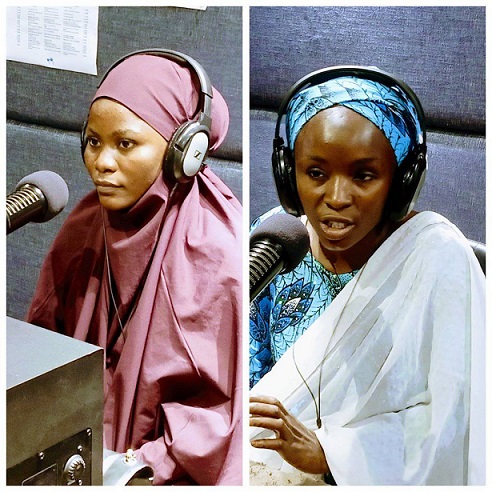
Their inspiring narratives, shared through a Girls for Girls phone-in radio program initiated by Girl Child Concern in Collaboration with Education Cannot Wait and UNICEF, caught the attention of a good Samaritan. Their employment solidifies their career paths and serves as a testament to the power of their resilience and the impact of their stories on others.

Mabruka Manu and Maryam Abubakar Musa’s journeys from displacement and adversity to becoming registered midwives are tales of unwavering determination, resilience, and the transformative power of education. Their stories underscore the importance of providing support and opportunities to individuals in conflict-affected regions.

Mabruka and Maryam’s achievements inspire hope, demonstrating that with perseverance and the right support, anyone can overcome obstacles and forge a path toward a brighter future.

Lawan Bukar Maigana is the Communication Officer for Girl Child Concerns, GCC, Borno State, and can be reached via email: lawanbukarmaigana@gmail.com.

Let’s talk about empowering Arewa women

By Aminu Mohammed      

It is no longer a secret that we have many single ladies and divorcees in search of elusive husbands to marry in the North. This has become worrisome not only to the women but their parents, who are tired of seeing them at home. The increasing incidence of poverty and idleness among our women may not be unconnected to a lack of skills and capital to embark on a meaningful trade or vocational training. Most women in the North are further impoverished following the death of a husband or incapacitation due to the loss of a job. In some instances, the family suffers if the breadwinner becomes sick over a long time.

Although appreciable progress has been made in increasing female enrollment in secondary schools and tertiary institutions across Northern states, even at that, the region is lagging in terms of education. We still have a highly marginalised segment of the society peopled by an armada of illiterate and disempowered women.

Have we bothered to question the rationale behind the increase in social vices, especially sexual immorality, in our society? Have we pondered the root cause of poverty and inequality in our midst? Do we still think that poverty is spiritual and caused by our actions and misdeeds? The fact is that we have marginalised our women and do not see the need for them to excel and go after their passion and dreams. Instead, we believe that women should just stay at home and take care of the kids while the man goes out to look for means of sustenance.

It is pertinent to note that parents spend a lot of money preparing for their daughters’ marriage ceremonies by buying all sorts of assorted kitchen wares and household items without prioritising the education and empowerment of their daughters. Many parents do not see the need for their daughters to have the requisite training or education to become self-reliant. That is why most women in the North become a burden to society in the case of divorce or the death of a spouse.

Have we asked ourselves why we have so many idle women living in squalor and deprivation due to divorce or the death of a spouse? What can we do to empower our women so that they can live meaningful lives and achieve their dreams? Most of these idle women have goals, dreams and innate talents that could be harnessed for societal progress. Of course, cynics and chauvinists may argue that women are fickle-minded and should not be allowed to chart the path to self-reliance. This is due to fear that they may not be submissive to their husbands. However, that is not always the case in concrete terms.

Of course, I believe in female empowerment for societal development, even though I am sceptical about the feminist utopia. However, I am indeed aware that an empowered girl-child through education and vocational training is a pride to her parents and the community. Thus, an empowered woman will ensure an excellent educational upbringing for her children.

I believe that parents should focus on allowing their female children to acquire vocational training and practical skills before marriage to support their families in one way or the other. The focus should not be only on marriage rites and traditional practices, to the detriment of her future wellbeing. The clothing materials, especially “lefe” and many boxes of clothing materials that we dissipate energy in gathering for the wedding activities, will never translate into wealth in concrete terms.

Parents should realise that marriage is not a poverty alleviation scheme and that giving away their daughter to a rich person does not guarantee her happiness. Some families even go to the extent of incurring colossal debt to procure the needed wedding materials to impress relatives, friends, and society, which leads to anguish and regret.

I must reiterate that disempowered women are a burden to society. Therefore, I believe that skill acquisition programmes should be inculcated in our women, especially those who are not fortunate to acquire tertiary education. Of course, those with tertiary education should also learn entrepreneurship to fend for themselves due to the limited job opportunities in the country.

Islam does not prohibit women from education, mercantilism and trade. Even the prophet’s wife, Khadija (RA), was an independent woman and a merchant. So, there is no basis for the argument that women should be locked at home without any meaningful enterprise only to serve as a tool for satisfying their husbands’ sexual needs.

It is not enough to marry off your daughter to a man without adequate skills for survival. Parents who do not see the need to educate their female children should make sure that they acquire a vocational skill or trade before marriage. This ensures their economic survival in case of a spouse’s death or loss of job. We cannot run a society where a large segment is marginalised and lack the wherewithal to participate in any meaningful economic activity. That will not augur well for the progress and development of the Northern region.

Aminu Mohammed is at the school of Sustainability, Christian- Albrechts- Universität zu Kiel, Schleswig Holstein, Germany. He can be reached via stu219013@mail.uni-kiel.de or gravity23n@gmail.com.

When a father dies!

By Kharajnah Muhammed

Imagine a big mango tree with many branches, leaves and sweet fruits feasted upon by her children while also enjoying her cool shade that comes with a soft breeze, covering their heads from the scorching sun.

All of a sudden, someone cuts her off from her root. She fells down weeping, wondering how her children would survive without her, while they drink their tears day and night, searching for food and shelter, with little or no one to help them.

This is what happens when a father dies, leaving behind his family. At first, so many people will come and commiserate with them, with sugar-coated promises. His family will have hope that at least someone will be there for them even when the head of the family is no more. But what happens afterwards?

The widow(s) and her/their children are left to wander in the streets, searching for food, shelter, job to sustain their lives. Only a few are lucky enough to find help from his relatives or friends in one way or the other. It’s scary how fathers keep dying daily, leaving their families behind. Most people nowadays only do things for someone alive, someone they know they can gain something from. As soon as he is no more, they forget everything about him or his family.

As parents, I want to advise us to build a future in our children because we don’t know what tomorrow holds. Help them discover their talents and work on building them. As a husband, invest in your wife or wives, for they will never abandon your children. And she might be the only person to take care of them when you are no more.

And now, Ramadan is just a few days away. Have you ever wondered what most orphans are going through? Most of them have little or nothing to put in their breadbaskets, but they can’t ask anyone for it because they were brought up so that they can keep their family’s secret so that people will not look down on them. So, even if they ask some people, they might not help them out and probably go about telling other people or using the children’s helplessness to their advantage, especially the girl child.

I want to urge us to please help the orphans with food, clothes, and other items we can give out this Ramadan in order to gain manifolds of reward from the Almighty. You don’t have to go far. Look around your neighbourhood and start from there. Some people would rather cook plenty of food and throw it away in the morning than give someone.

Though things are hard these days, there is no harm in giving out the little you can afford. You never know what it will mean to them.

May the Almighty ease things for us, amen.

Harajnah Umar Ragada can be reached via kharajnah@gmail.com.

Sexual harassment: Invading women

By Khairat Suleiman Jaruma

As she walked through the fabric market, a man touched her lower waist, slightly touching her bottom. He then said, “Sexy girl, come buy from me”. She turned back abruptly and hissed. “Fool”, she muttered under her breath. But, she didn’t stop; she kept walking, minding her business.

Those are the kinds of unwelcomed and irritating gestures most women experience every day in public places like schools, offices, markets, malls, etc. Unfortunately, no one frowns at these things. Instead, when a woman complains out loud about these things, she is seen as short-tempered or very intolerant, and more often than not, she gets victim-blamed.

According to a YouGov survey, 97 per cent of women aged 18 to 24 have experienced sexual harassment in public space, and more than 70 per cent of women of all ages have endured such behaviour.

While most people always make excuses for sexual harassment, such as mode of dressing or gestures, I think there’s no excuse for sexual harassment. For me, it’s just a very exasperating level of immorality, given that you can always ask for permission. Sexual harassment has terrible and long-lasting effects on women, including a decrease in women’s productivity, confidence, self-esteem, and overall participation in every aspect of life.

Sexual harassment isn’t limited to making inappropriate advances. It includes any unwelcome verbal or physical behaviour, sharing sexually indecent images or videos, such as pornography or salacious gifs, sending suggestive letters, notes, or emails, staring in a sexually suggestive or offensive manner or whistling, making sexual comments about appearance, clothing, or body parts, inappropriate touching, including pinching, patting, rubbing, or purposefully brushing up against another person.

Responsibility for the eradication of sexual harassment rests on everyone’s shoulders. Notably, we need to teach our brothers and male children that harassing women is NOT “cool”; what is “cool” is having respect for the opposite or same sex, obtaining appropriate consent of the person involved, and accepting “NO” as meaning “NO”.

Lastly, every survivor of sexual harassment must send a message across the world that there is no disgrace in being a survivor of sexual harassment. Instead, the shame is on the aggressor.

Khairat Suleiman Jaruma wrote from Kaduna via khairatsuleh@gmail.com

Sexual abuse and domestic violence in Olisakwe’s “Ogadinma”

By Zayd Ibn Isah 

One of the obstacles to recognizing chronic mistreatment in relationships is that most abusive men simply don’t seem like abusers. – Lundy Bancroft.

I have read many books this year, but none proved to be as poignant and challenging as Ukamaka Olisakwe’s Ogadinma. Ogadinma is loosely translated in Igbo as “Everything Will Be Alright.” The novel’s gripping story revolves around sexual molestation, domestic violence, unwanted pregnancy, torture, deprivation and emotional manipulation. It was set in the 80s during the military coups and dictatorial repression era. Against this significant backdrop of national history, Olisakwe deftly explores themes connected to the disintegration of familial bonds.

Ogadinma is a young and impressionable girl whose dream of acquiring a university degree is truncated by one Barrister Chima. Ogadinma’s father sends her to Barrister Chima’s office to help secure her admission into the University of Nigeria, Nsukka. However, the dishonourable lawyer takes advantage of the situation and has forceful sexual intercourse with the girl.

Consequently, Ogadinma gets pregnant. Fearful of her father’s reaction, she decides to terminate the pregnancy with contraceptives. When the father becomes apprehensive after his only daughter falls ill, he takes her to the hospital for treatment. However, he is pretty disappointed after the doctor carries out tests that reveal Ogadinma had done an abortion. The old man proceeds to punish Ogadinma severely before sending her packing from his home to Lagos.

In Lagos, Ogadinma has to live with her aunt and is then pressured into a marriage with Tobe. Tobe is a wealthy contractor, but his fortunes falter following his arrest by the new military government for contract fraud. As a result, Tobe has almost everything taken from him, and even his house has to be sold to facilitate his release from prison.

Out of prison, Tobe becomes a different man, a beastly drunkard. His once-loving wife becomes his favourite punch bag. Fed up with his abusive behaviour, Ogadinma runs away to her father’s place in Kano to take refuge. But the father, who is supposed to be her shield against sexual and domestic violence, sends her back to her husband. And just like that, the circle of abuse continues. Her good friend—Ejiro, warns her of the consequences of staying in an abusive marriage, especially after her sister, who tried to endure it, eventually paid with her life.

Whenever Ogadinma complains to her aunt about her husband’s abusive behaviour, she (the aunt) would always attribute it to the man’s travails and misfortunes. The aunt also advises Ogadinma to endure until the husband regains his fortunes. Ogadinma heeds this advice and takes everything in stride, patiently waiting for better times. But even when she gets pregnant, her husband continues to abuse her.

On the other hand, Tobe ventures into several businesses but fails in each turn without a significant change to his pathetic story. Things become considerably worse after a pastor accuses Ogadinma of orchestrating her husband’s misfortunes. Ogadinma is left at the mercy of this pastor for deliverance, only to still go through another round of sexual abuse.

At this point, Ogadinma musters the courage to run away from her husband’s house. She also leaves her baby in the care of Tobe and the house help. Unable to endure any form of abuse again, Ogadinma seeks solace at the house of a relative, her Aunty Okwy. Ogadinma refuses her aunt’s advice to return to her husband, even when she knows her father will not take her in. Finally, she goes back to her friend Ejiro’s house in Lagos. There, she is warmly welcomed and free to live the life she deserves afterwards.

Nowadays, we live in a society where men increasingly arrogantly take advantage of their status and privileges. Men like Barrister Chima are why young girls have become sexual prey in our tertiary institutions and workplaces. Parents who condone spousal abuse on their children also make the war against domestic violence difficult to win or even sustain. This is particularly prevalent among parents who depend upon their in-laws for sustenance. They allow their daughters to die slowly in abusive marriages because of money. It is hard to bite the hand that feeds you.

There are a plethora of cases where women receive the beating of their lives for even daring to confront their cheating husbands. We have come to lower the moral bar so that adultery is not considered taboo for men as it is for women. There is something fundamentally wrong with this. It is utterly wrong on so many levels, especially when the religiosity of our society should translate to a stronger collective sense of morality. Instead, our society and culture continue to thrive on entrenched abuse: leaders abuse their powers over the masses; men abuse the women they should love; women abuse domestic staff and children. We need to weaken this cycle of abuse. We need to stop it soon! We cannot just wait until things worsen or fall apart beyond redemption.

The first step towards tackling domestic violence is via urging victims to leave abusive marriages and seek redress in court. However, this can only work if there are heavy consequences in the form of legal punishments for the actions of abusive husbands. Parents should also stop forcing their daughters to stay with abusive husbands.

There should also be massive reforms in our criminal justice system to ensure the effectiveness of the law against domestic violence and sexual abuse. And lastly, we should always encourage victims, especially women, to speak up, to be bold enough to tell their stories with truth and without fear, just like Ogadinma.

Zayd Ibn Isah is an Officer, a law graduate and a creative writer. He is also the author of We Are All Guiltyhis first fictional work.  Email: lawcadet1@gmail.com.