Germany

Thomas Tuchel set to replace sacked Bayern Munich Manager

By Muhammadu Sabiu 

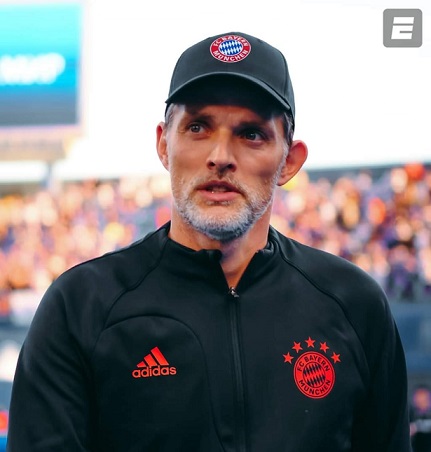
Thomas Tuchel, a former manager of Chelsea and PSG, is about to be named the new Bayern Munich head coach.

Football transfer guru Fabrizio Romano made this known on Thursday night.

He reports that a complete deal is in place and that Tuchel has already accepted the position.

Romano wrote in a tweet: “Exclusive news confirmed: Thomas Tuchel becomes new FC Bayern head coach, full agreement in place. He has already accepted the job.

“Contract agreed, documents are being prepared tonight.”

German man sued for having too many barbecues

By Abi Carter

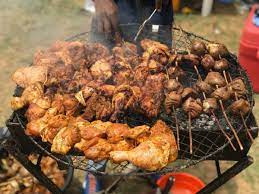
A 75-year-old man from the town of Bad Tölz in Bavaria has successfully sued his neighbour for causing a bit of a stink by lighting his barbecue with unusual irregularity. As RTL reports, the two men live in the same apartment building in the small town, and the one in the upstairs flat began to get frustrated with his neighbour, who apparently took to grilling food on an electric barbecue on his terrace almost every single day. 

The smoke and rising smell became “unbearable” for the upstairs pensioner, who was named by RTL as Heinz J. Together with his wife, he reported his neighbour to the local authorities, and the case ended up in court. 

While the first court threw out the complaint, the plaintiffs appealed and a second district court in Munich – after hearing testimony from around a dozen witnesses about the smell and smoke caused by the grill – eventually sided with the couple. 

The court has ruled that the downstairs neighbour is only allowed to light up his barbecue four times per month and added that he is not allowed to grill two days in a row on the weekend. If he does not comply, he risks being slapped with a 250.000-euro fine. 

Source: iamexpat

My Journey to Kassel (Documenta Fifteen): Lessons for Nigeria’s waste management

By Ibrahim Uba Yusuf

Since I arrived in Germany to complete the last lap of my PhD studies, I intended to start a travelogue on cultural shock. Unfortunately, my quest suffered a setback for two reasons. Firstly, I have a tight working schedule for writing my thesis on the Culture Industry (Hausa home videos) and their contribution to peacebuilding in northern Nigeria. Therefore, dealing with various raw data, literature, doctoral colloquium, and conferences was overwhelming. Secondly and sadly, I lost my stepmother Hajja Aishatu (may Allah have mercy on her soul), who has cared for us, including our aged father, since my mother died in 2002. Her death threw me into a state of confusion and thus compelled me to suspend it.

Now to the issue: the journey to Kassel. It was Eid-el Adha globally. Since it is not the first time I am experiencing Sallah outside Nigeria, I envisaged it would be dry. So, after observing the two voluntary Eid Prayers at about 6:10 am (German time), I proceeded to Hauptbahnhof (the central train station). The journey is about an hour on the ICE train (the fastest train in Germany) and about three hours on regional trains (which are slow but relatively cheaper) from Hildesheim. The journey to Kassel marks the end of a week-long UNESCO Symposium on Artistic Interventions in educational and social contexts organised by the UNESCO Chair, Professor Julius, who doubles as my German Supervisor.  

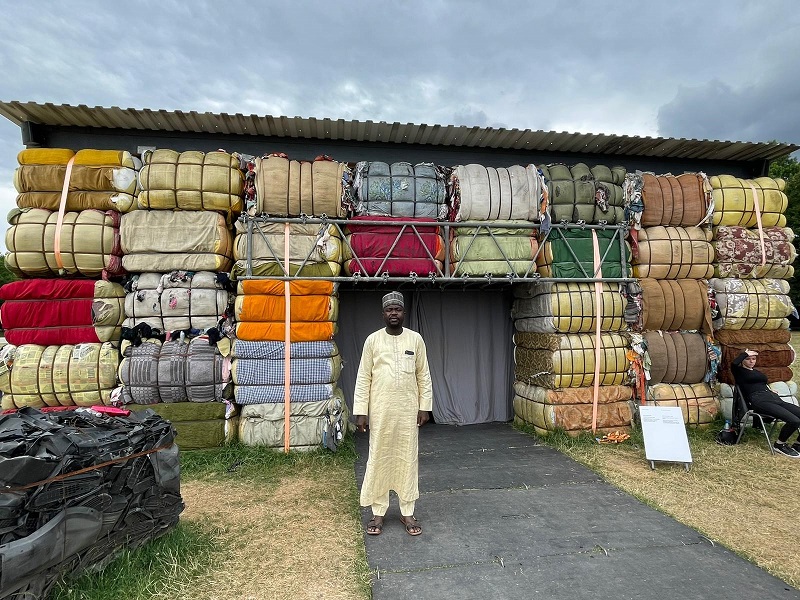
Documenta is one of the largest art exhibitions in Germany, which started in Kassel in 1955 with the sole aim of displaying a variety of contemporary artworks such as sculpture, film, photography and painting, among others. Held every five years, this is the fifteenth edition of the International engagement for arts. During the walk to various exhibition stands, I became interested in the open cinema in Karlswiese. This is due to my bias in broadcasting and film studies. The open cinema, a work by The Nest Collective, is tagged ‘Return to Sender—Delivery Details 2022’. It was locally constructed from dystopian waste to mimic the Global North. The dystopian waste was carefully packaged to serve as acoustic panels for the cinema walls to control external noise and echo.

In all honesty, this is my first time seeing such an amazing innovation. Scraps of electronic devices imported to the Global South were packaged and displayed for exhibition. The message embedded in this tag, ‘Return to Sender’, of course, suggests the frustration by the Global North and the radical position taken to mitigate not only importation but waste management. This dystopian waste introduces a new alternative to the existing acoustic panels in our television and radio studios, which is economical and easy to construct. In contrast to other acoustic panels, the installations offer a better aesthetic and sound control. I strongly recommend this innovation to our local cinemas (viewing centres), public and private broadcast stations, and Departments of Mass Communication and Performing Arts. I am not unmindful of the digitisation drive. While we continue the digitisation plan, I believe this can serve as an alternative that may be attuned to the sustainability discourse.

Unfortunately, Nigeria is among the countries with poor waste management. The Environment Performance Index (EPI) 2022 ranked Nigeria 168 out of 180 countries. Also, a United Nations Industrial Development Organization report shows that Nigeria produces 32 million tonnes of waste annually. With this record, Nigeria stands a chance of changing the negative discourse on environmental health, hygiene and sustainability.

Nigerians must change their nonchalant attitude toward indiscriminate waste disposal. As I write this article, one of my greatest challenges living in Germany is separating the waste into the appropriate trash cans. In Germany, paper, plastic and organic bio-waste are separated. Waste separation is comprehensive and taken seriously by both Germans and the government.

 While there is no Recycling Plant in the country, all those Baban Bola (scavengers) can be utilised and strengthened to ensure a clean environment. The services rendered by those people deserve special recognition. We must begin this campaign from our homes, schools, worship places, media and markets. Nigeria deserves to be clean.

Ibrahim Uba Yusuf wrote from Germany and can be reached at itsibrahimsite@gmail.com.

Why you should take advantage of free tuition to study in Germany

By Aminu Mohammed

I nurtured my desire to study abroad during my undergraduate days at the Department of Political Science and International Studies, Ahmadu Bello University, Zaria. It was the era when ABU was the hotbed of Marxism and radical thinking in the North, led by the late Marxist historian Dr Bala Usman and others like Dr Bako, Prof. Sadiq and Prof. Ayo Dunmoye. I was fascinated by the writings of Karl Marx and Max Weber, which prompted my desire to study in Germany.

Germany is the wealthiest country in Europe and a global leader in education and research. It is the land of scientists like Albert Einstein, Max Plank and philosophers such as Immanuel Kant, Arthur Schopenhauer, Georg Wilhelm Friedrich Hegel, Friedrich Nietzsche, Karl Marx, Max Weber, and Goethe, among others. The education in Germany is top-notch, especially in medical sciences, natural science and engineering. Studying in Germany is also cheaper and more cost-effective compared to other countries such as the United States, United Kingdom, Canada and Australia.

Many of you may wonder why I choose to write on this topic, considering the high cost of studying abroad. Many of you may still think that only the elite can afford to send their children to foreign universities and others from a humble background are not capable of doing so, probably due to their circumstances.

I want to tell you today that you should perish such thoughts that have limited our people, especially in the northern part of the country, making them doubt their abilities. I want to tell you that there are no limits to where you can go and what you can achieve if you believe in your dreams and work towards them. We live in an era of information technology where you can use your smartphone to search for information that will aid you in improving your life and career. There are many Nigerian students from the Southern part of the country; most do not have wealthy parents and are thriving in this environment.

Studying in German universities is tuition-free for both local and international students. There are two options: you can either study through scholarship or self-sponsorship by taking care of your living expenses on your own through a system called blocked account. The first option is highly competitive and more tedious than the second one. Therefore, I suggest that people without solid financial capacity focus on the first option by applying for a scholarship. You can check the universities’ websites offering your courses and see the requirements for obtaining the scholarship.

The German Academic Exchange Service (DAAD) currently offers scholarships to students from developing countries for the 2023 academic session. The scholarship covers everything, including a monthly stipend of 861 euros for master’s students and 1200 euros for doctorate students. So, you should apply as soon as possible before the deadline. It would help if you had an outstanding grade in your first degree, a minimum of two years of work experience, a good motivation letter, and volunteering experience, among others, to be accepted for the scholarship programme.

The second option, through a blocked account, requires a lot of money, which means that you are on self- sponsorship, hence will cater for your living expenses which include payment for accommodation, health insurance and other costs in Germany. This option is for those who can afford the blocked account stipulated by the German authorities, which is currently 10,332 euros approximately (N6.7 million). You must deposit this money in a German bank after getting admission before securing a study visa. Most students who arrived in Germany for studies used Fintiba bank, a financial institution based in Frankfurt, Germany.

Once you get admission, you can check the website of the German embassy in Abuja or Lagos, look for the requirements for the study visa, and then apply for a visa appointment. I will advise that after getting admission, you check the official website of the German embassy in Nigeria or visit the embassy in Abuja or Lagos to get information on how to deposit the money in Fintiba bank. Don’t give your money to anybody.

You can go to any Nigerian bank to do the international transfer to Fintiba bank once you get the details on how to go about it from the German embassy. The money belongs to you and is for your living expenses here. Once you arrive in Germany and go through a system referred to as legitimization at the bank, Fintiba bank will then transfer 848 Euro monthly to your account for 12 months. The money will not be transferred in bulk to your account but bit by bit.

.Of course, you can work here and earn money to support your living expenses. Students are entitled to 20 hours per week and can work more than 20 hours during holidays, especially when the university is on break. Most international students work here and earn good money. An hourly wage depends on cities, but it is mainly between 10.45 to 16 Euro per hour (N6, 500 to N10, 000) depending on the city and company you work for. Wages in bigger cities like Munich, Frankfurt, Berlin, Hamburg, Cologne and Dusseldorf are higher than in smaller cities like Kiel, Flensburg, Cottbus, Magdeburg, etc.

Public universities do not charge tuition fees in Germany. Depending on the University, you only pay a semester fee (alias social fee) ranging from 200 euros to 380 euros per semester. For instance, students in my university pay 264 Euros per semester. This covers dues for the student union and transportation. In other words, students do not pay whenever they board a bus or train, as the semester ticket covers the fare for buses and trains within the city of Kiel and up to Hamburg. So, our semester ticket covers movement throughout the state of Schleswig Holstein and Hamburg.

Most Nigerian and international students I have met here are on self-sponsorship. Theystudy and also work to take care of their living expenses. There is always a part-time job available for students, especially in big and smaller cities, and you can take advantage of that to earn money for your upkeep. Some students focus on studies only during the semester and only work during holidays, while some attend lectures on weekdays and only work part-time during the weekend. The choice is yours.

I must emphasize that studying in Germany is tough, and you must put much effort to succeed. People fail here quickly, especially students who focus on work without paying much attention to their studies. But the main thing is to strike a balance between your studies and part-time work, if you want to achieve your goals. Of course, many students have been able to secure jobs after their studies here. A lot of Nigerians that I know here work after completing their studies.

Moreover, for those apprehensive about their religion, there is a large population of Muslims in Germany, mainly from Turkey, Syria, and Egypt, among others. There are mosques everywhere. At least we have six mosques in my city, with even a mosque mainly for Africans to perform their prayer.

I still reiterate that you can do everything independently with your computer or laptop. You do not need the help of anybody or an agent to assist you in applying for admission, scholarship or the visa process. Don’t fall for any scammer. You can do this from beginning to end on your own until you find yourself in Germany. You don’t need to know anybody to be able to secure admission, scholarship or visa to Germany. I arrived in Germany in 2018 without knowing anybody or even a friend. My communication was with the University strictly. If I can do it, you too can do it. So, believe in your abilities and go after your goals. I wish you all the best in your endeavour.

Aminu Mohammed is at the School of Sustainability, Christian-Albrechts Universität zu Kiel, Schleswig Holstein, Germany. He can be reached at gravity23n@gmail.com or 219013@mail.uni-kiel.de.

Illegal Migration to Europe:  Think before you embark on a journey of no return

By Aminu Mohammed

This article was inspired by a post that I read on the Facebook page of Dr Muhsin Ibrahim, where he cautioned our youth against embarking on a perilous journey that may lead to their untimely death. However, while going through the comments, I was actually shocked by a statement made by someone who insisted on travelling to Europe through the Sahara Desert, despite warnings by the writer.

Of course, I know that life is tough in Nigeria, and many youths are jobless and hopeless. The high level of insecurity is worrisome in the North, as people are being hacked down to death daily without any concrete intervention from the security agencies. The deprivation is glaring on the streets all over the North, and people are looking for a way out. However, I will always advise people to travel legally anywhere or otherwise stay at home if they do not have the financial capacity to do so.

During my stint as a journalist in Sokoto a few years ago, I have written many articles about human trafficking and illegal migration. Unfortunately, this is a big business for many people in villages around the Illela local government area of Sokoto. Illela is a border town between Sokoto and Qoni in the Niger Republic. People are trafficked through these villages with the connivance of some youth in the villages. These nefarious people in the villages assist these illegal migrants by transporting them with motorcycles to the Niger Republic in order to evade immigration officers at the Illela border, who may likely prevent them from entering the Niger Republic en route to Libya and finally to Italy and other European countries.

Let me make it clear that life is not a bed of roses here, and the streets of Europe are not paved with gold. People don’t pick money on the streets. You have to work very hard to earn money. Although the government makes efforts to ensure a good life for the citizens, there are homeless people and beggars in Germany, the wealthiest European country. It is not a paradise as many of you may think or imagine in your dreams.

Life in Europe is akin to slavery for people without legal documents. First, life is tough here without legal documents. You cannot get accommodation, open a bank account, work, or visit the hospital without a resident permit. My first time at a clinic to see the doctor in my city, I was asked to present my residence permit and health insurance card; otherwise, I won’t be able to receive treatment. Thus, I presented my documents, which they quickly confirmed before treating me.

Many young men are being lured by the success stories of those who travelled illegally to Europe through the Sahara Desert in the past and believed they too could achieve success if they endure tribulation and go through pains. Although not all those who follow the pathway of illegal migration end up in agony, most live as enslaved people here.

Of course, I know and have met some of them who came to Europe through the Sahara Desert and Libya and are doing well here. For example, I know a Hausa guy from Kano State who lives in my city with his family and owns a clothing shop. He told me gory tales about his movement from Sokoto to Agadez in the Niger Republic and the perilous journey through the Sahara Desert to Libya, which lasted eight days. He spent about one year in Libya doing menial jobs before he summoned the courage to cross the Mediterranean with a boat carrying many people to the island of Lampedusa, Italy, 11 years ago.

According to this Kano guy, they took the boat early in the morning from Libya and were rescued at noon by coast guards who later ferried them in their boats to Lampedusa. He subsequently left Italy for Germany eight years ago and is now a legal resident here. He speaks fluent German and carries out his business diligently.

A few of them in my city came through that perilous route and are now established in Germany, doing meaningful jobs while contributing to the country’s economy. But their trajectory may not be the same as yours as everybody has his own destiny and luck. So many people have died in the Sahara Desert even before reaching Libya, while some have died trying to cross the Mediterranean Sea, yet our youth are still not deterred despite such deaths.

The fact of the matter is that many people who came through the illegal route are wallowing in misery and deprivation. Most of them are trapped in refugee camps scattered in most cities across Germany. I have been to the refugee camp in my city twice and witnessed how these people live. It is a kind of glorified prison, though they can still go out and even work illegally without the knowledge of the authorities. They do “black jobs”, which are very low-paid jobs that do not require documents and are usually paid directly after their labour but not through the banks.

I met a Ghanaian last year whose name is Idrissa. He left the refugee camp in Munich, the southern part of Germany and is now hiding in my city doing menial jobs. According to him, he feels terrified whenever he sees the police and usually gets scared of commuting by public bus or train for fear of being arrested. Unfortunately, this is the type of life those with illegal documents live here. In fact, at the peak of the Corona pandemic last year, this Ghanaian could not get vaccinated because no hospital would vaccinate him due to a lack of legal documents.

Some of these illegal immigrants, desperate to get legal documents for them to be able to work, get entangled with old German women that are old enough to be their grandparents under the guise of marriage and are treated as slaves. Of course, the German women are aware that they want them only because of their residence permit and make sure they go through excruciating pains.

I decided to write this article in order to alert our youths on the dangers of travelling to Europe through the Sahara Desert and the Mediterranean Sea. If your dream is to travel to Europe, then try to go through the legal way. You can go either through the study route, a scholarship or a job based on your skills. I know that many people get jobs with the skills they acquired in Nigeria, such as doctors, nurses, engineers, and those in data science and information technology, among others. Travelling legally is the only way to move freely without humiliation abroad due to a lack of legal documents. May Allah make things easy for all of us, amin.

Aminu Mohammed is at the School of Sustainability, Chrtistan Albrechts Universität zu Kiel, Schleswig Holstein, Germany. He can be reached via gravity23n@gmail.com or 219013@mail.uni-Kiel.de.

Germany: Ducks cause car accident

  • News Desk

A family of ducks caused a crash of three cars on the A7 autobahn near the city of Heidenheim an der Brenz, Baden Württemberg.

A man driving an Opel stopped his car when he noticed the ducks crossing the road. A Skoda driver did the same. However, a Volkswagen driver approached from behind and crashed onto the Opel.

Passengers were hospitalised and property damage of €70,000 is estimated.

Germany: Thief steals ex-Chancellor Angela Merkel’s purse in supermarket

Ex-Chancellor Angela Merkel’s purse was stolen while she was shopping in a supermarket in Berlin on 24 Feb.

According to reports, the wallet contained an ID card, EC card, driver’s license and cash.

Berlin police said that the theft took place in a delicatessen supermarket in Charlottenburg’s Morsestrasse.

Merkel is said to have filed a criminal complaint with a police section on Friedrichstrasse.

© Berliner Zeitung

Nigeria’s education system: An incubator of job seekers or providers?

By Salisu Uba Kofar-Wambai  

Functional education is the key to solving most of the joblessness and unemployment predicament Nigerians face today. Therefore, the philosophy of education matters a lot. Moreover, the kind of philosophy under which a particular curriculum operates determines the quality of graduates a particular system of education breeds.  

The idealism philosophy, which Nigeria’s education system subscribes to, contributes grossly to the condition of our graduates. They frequently end up chasing shadows, seeking jobs when in reality, there’s none. This is because the idealism philosophy emphasizes and dwells so much on book knowledge. The students are made to jampack and cram all the knowledge and ideas in their heads, but practising the knowledge is ultimately zero.

In other words, the idealism philosophy thrives in theoretical aspects. And this British model has since been abandoned by many countries of the world, as it has no successful ends and doesn’t suit 21st-century challenges.  

However, more innovative countries like China, Germany, and Japan that adopt a pragmatic philosophy of education in their curriculum are getting it right regarding employment issues. Most of their graduates are fully equipped with the specific skills required to handle jobs effectively and efficiently. Moreover, even before graduation, their students are already into temporary employment. 

The functional education practised in such countries has made their graduates vibrant job-providers instead of perpetual job-seekers we see here in Nigeria.  

It is a mammoth challenge for our education policy formulators to do the needful. They should help us migrate from idealism to pragmatism as a system. Students will then have practical skills or functional education that will enable them to establish their businesses based on their acquired skills, not just memorizing books and blowing grammar all over.

When a mechanical engineering professor could not repair a simple technical fault on his car until he refers it to a local technician, you know there’s a massive challenge with such a system of education.

I think these entrepreneurial studies and industrial training introduced by our institutions of learning are equally astute and sagacious towards achieving the desired goal. But they’re not close to where we’re aiming at. So, we must change the philosophy in its entirety first to have enough roadmap on the ground.   

The sooner we migrate, the better for us.

Salisu Kofar-Wambai wrote from Kano. He can be reached via salisunews@gmail.com.

Drop that certificate, go after your passion

By Aminu Mohammed

I must confess that I wrote this article due to a post made by a Facebook friend who just completed the NYSC scheme in Jigawa state. In the post made last week, he mentioned his readiness to fall back on his skill as an iron bender to fend for himself, pending when something better comes up.

I was impressed by his sense of reasoning and his zeal to drop his certificate and embrace a vocation to escape idleness and poverty. This has become apt given the current realities in Nigeria, where jobs are pretty limited and difficult to come by.

I know many people, especially recent graduates, will sneer at me for commending this young man for the courage to take responsibility for his own life. They may even wonder why I praised him for choosing to do a “menial job” below his status as a graduate.

But the reality today, coupled with the dwindling economy and limited opportunities for the teeming youths in the country, warranted me to write this article. The era of youths waiting for white-collar jobs is over. Many graduates are roaming the streets looking for elusive jobs. Typically, the few jobs available will be taken by the best candidates and those with a connection at the high places. Thus, most applicants are left with the option of either staying idle at home or embracing any vocation or skill to earn a living.

Let me clarify that I am not a motivational speaker, and neither do I claim to have a magic wand to turn silver to gold. But I believe in pragmatism, and the ability one has to achieve his goal if he has passion and works towards it. Passion is the only thing that can keep a man steadfast in his pursuit of success irrespective of the difficulties on his path. Your certificate will amount to nothing if you cannot shun pride and seek a means to earn a living.

I still recall my NYSC days nostalgically in the Numan, Adamawa state, 19 years ago. I did my primary assignment at Government Secondary School Pare, Numan, which gave me ample opportunity to engage in external activities. I kept myself busy outside school hours by selling clothes and shoes to augment the N7500 NYSC monthly allowance. I didn’t spend much out of my monthly stipend throughout the service year because my side business could cover my living expenses. I completed my NYSC in 2003 and engaged in various activities to earn a living for three years before I got my first job in August 2006.

During the service year in Adamawa state, I observed a stark difference in the mindset between some southern corps members that I interacted with and their northern counterparts. While some southern corps members engaged in all sorts of activities to earn income, some of their northern colleagues see those activities as demeaning to their status as graduates. Some of the southern corps members then decided to stay in Adamawa after the service year to continue their hustle, and many have prospered.

I still remember a friend we served in the same local government area, Mr Ifeanyi, a pharmacist from Anambra state. He did his primary assignment at the General Hospital, Numan and subsequently moved to Yola to set up a pharmacy after the service year. He was able to prosper a few years after the NYSC scheme due to his doggedness and zeal.

I decided to narrate this story to encourage our youth to shun pride and find a means or trade to improve their wellbeing. Acquiring education is just a means to enable you to unlock your potential. That you have a degree should not make you despise other vocations. Instead, find a work you are interested in and try to acquire the requisite skills to support yourself. Life after NYSC is tough, and the labour market is almost saturated due to many unemployed people seeking jobs.

I am not saying that our youth should focus only on entrepreneurship alone and abandon their certificate by not seeking jobs. Of course, not everybody has an inclination towards business and entrepreneurship. But for those that have no interest in entrepreneurship could learn other skills via the internet. Skills such as digital marketing, affiliate marketing, and web development are there for people interested in learning to earn an income.

In Germany, young people acquire skills in various fields through the vocational system popularly called “Ausbildung”. I admire the German Ausbildung system because a student attends school and works simultaneously. The student acquires theoretical and practical knowledge during the duration of the apprenticeship, which usually lasts three years. The training focuses on practical skills for actual work and includes several skills such as plumbing, software development, landscaping, mason, baking, painting, salesperson, nursing, care for the elderly, and electrician.

Those who completed the training earn very well just like their counterparts who obtained a degree in Germany. Ausbildung is highly valued in Germany, and the need for craftsmen is always on the rise here. German society has been structured so that virtually all jobs are accorded due respect. Nobody looks down on a painter, electrician, carpenter or mason in Germany, unlike what we do in Nigeria. Most of our youths, especially graduates from the North, shy away from doing those jobs as they see them as not befitting their status. Some prefer to remain idle at home while hoping to get a job. There is dignity in labour, and it is quite normal to see a female painter, mason or female plumber in cities across Germany.

Therefore, the onus is on the youth to follow their passion and strive to achieve their personal goals. Efforts should be placed on personal development through reading and skills acquisition. For instance, if you have an interest in baking, do not hesitate to go and learn it to support yourself, likewise any other skill. Life favours the meek and those who shun societal pressures and go after their passion and dream.

I will also urge our young men, especially new graduates, to leave their comfort zone. If you think that opportunities are very limited in your locality, there is no harm in moving to another city to take advantage of better opportunities there.

Do not hesitate to read good books, as it opens your mind to great possibilities. Scholarships are also available for those who are interested in studying abroad. You can use Google to search for scholarships in various universities across Europe, Asia, Canada and the United States. There are multiple scholarships worldwide for you to apply for, and there is no harm in trying. You could be lucky to get one if you meet the requirements and expectations even though it is highly competitive. Do not be discouraged if your application is rejected but continue to persevere and reapply to other scholarships. I also faced many rejections while seeking admission in Germany.

Take a look within your locality and find something to do. You can volunteer your time and energy to learn something new or even work on a farm. Don’t bother about what people will say; so far, you have a target and a dream of where you want to go. Try to get busy with something no matter how small it is, pending when you get the desired job. Remember that many big organisations and establishments that you see today started small several years ago. May Allah bless our hustle and efforts as we strive to achieve our goals this year.

Aminu Mohammed is at the school of Sustainability, Christian- Albrechts- Universität zu Kiel, Schleswig Holstein, Germany. He can be reached via gravity23n@gmail.com.

After 16 years, Germans vote for Merkel’s successor

By Muhsin Ibrahim

German Chancellor Angela Merkel doesn’t need any introduction. Divorced and with a doctorate in Physics, Merkel, 67, has been a leader of Germany for sixteen years. She is the first woman to lead Europe’s economic powerhouse and the beacon of democracy.


Chancellor Merkel wanted to leave in 2016. However, many people, including world leaders, encouraged her to stay. With Donald Trump coming to power in the US, Brexit knocking on the door of the European Union and the smoke of refugee crises still smouldering, almost everyone knew that Merkel was the best in that crucial position. Thus, she re-contested in 2017 and, expectedly, won.


But, whatever has a beginning has an end. Germans go to poll tomorrow, Sunday 26, 2021, to elect Merkel’s successor. The electorates are practically voting for parties, not a particular candidate for the chancellery. The parties would, of course, want to have the majority to form a government, but it does not happen. Often if not always, a party will have to negotiate with another party – or even other parties – to have enough votes to appoint a chancellor in the Bundestag. The negotiations can take months.


There are three chief contestants from three major political parties. They are 60-year-old Armin Laschet (CDU/CSU), 40-year-old Annalena Baerbock (Greens) and 62-year-old Olaf Scholz (SPD). The first, Mr Laschet, is the current Minister-President of North Rhine-Westphalia (where Cologne is) and leader of Merkel’s party, CDU.


Despite Merkel’s endorsement of Mr Laschet, he is unlikely to win. It may surprise you to know that what may cause him this defeat is mere laughter. Deadly flooding killed people in Germany and some neighbouring countries in July. The President of Germany visited a town destroyed by the catastrophic flood. While the President was delivering a sombre speech, a camera caught Mr Laschet laughing behind him. Since that faux pas, many people have lost confidence in him.


Ms Baerbock is young, energetic and confident and started her campaign with a lot of optimism. Nonetheless, her party does not have enough clout to win nationally. But, that is not the real issue for their candidate. You may also find it astonishing to hear what has befallen Baerbock’s candidacy and tarnished her reputation. It was possible plagiarism and padding of her CV.


Olaf Scholz is Vice-Chancellor and Minister of Finance. So far, opinion polls favour his chances of succeeding Merkel. Unlike the two other leading contestants, he has almost no major ‘sin’ affecting his campaign. Moreover, his party, SPD, was in power until Merkel’s outstanding victory in 2005. Thus, they are thirsty for a win and are therefore doing everything possible to come back.


Frau Merkel will be greatly missed. People around the world will never forget her extraordinary benevolence during the 2015 refugee crisis. As a German resident with no right to vote yet, I wish for the best outcome in the elections. May we continue to live in peace and prosperity, amin.

Muhsin Ibrahim is a Nigerian. He studies and works at the Institute of African Studies and Egyptology of the University of Cologne. He can be reached via muhsin2008@gmail.com.