Genocide

BREAKING: Israel launches new ground offensive in Gaza

By Hadiza Abdulkadir

Israel has launched a fresh ground offensive in Gaza, targeting key areas amid escalating violence. The Israeli military described the operation as a “limited ground offensive” aimed at securing strategic zones.

The assault follows intense airstrikes that have killed hundreds of Palestinians, including women and children, and damaged civilian infrastructure. The renewed fighting has shattered a fragile ceasefire, with Prime Minister Benjamin Netanyahu vowing to continue until Hamas is dismantled.

International leaders have expressed concern over the growing humanitarian crisis, urging restraint to prevent further civilian casualties and displacement.

Israeli authorities withholding over 665 Palestinian bodies, some for decades

By Maryam Ahmad

Israeli authorities are reportedly holding at least 665 Palestinian bodies, many of which have been buried or stored in refrigerators since the 1960s, according to the National Campaign for Retrieval of Bodies. 

The campaign reveals that the bodies include individuals who were killed in past decades, as well as those who lost their lives as recently as last week.

The practice of withholding bodies has sparked widespread condemnation from Palestinian families and human rights groups. 

Relatives demand the return of their loved ones for proper burial, while critics argue the act is a violation of fundamental humanitarian rights.

Israeli authorities have not publicly addressed the full scope of the issue. Still, it is believed the bodies are kept for security or political reasons, with some allegedly buried in unmarked graves or stored in cold storage.

Human rights organisations have called for the immediate return of the bodies and demanded accountability for what they describe as an ongoing violation of human dignity.

Israel-Hamas war: Has diplomacy failed?

By Hajara Abdullahi

The long reoccurring war between Israel and Palestine spans decades which can be traced to the Balfour Declaration of 1917  that led to the creation of a national home in Palestine for the Jewish people fleeing the Nazi Holocaust in Europe. After the creation of the zionist state in 1948, the Arab states went to war with Israel, which led to the first Nakba (Catastrophe) that led to the killing of hundreds of Palestinians and thousands of others fled their homes. Israel won the war, and the reality surfaced that the Zionist state had come to stay, especially with unwavering support from allies like the US, France, Germany and other European countries.

Since the creation of Israel, Palestinians have been subjected to the worst form of apartheid and dehumanisation, as well as the forceful annexation of their lands to establish Jewish settlements, which the U.N. have described as illegal under international law. Peace accords and diplomatic efforts have done little to address this decade-long conflict from Camp David to Oslo.

On October 7 2023, Hamas launched an unprecedented attack on Israel that led to the loss of about 1,139 lives, while about 250 were kidnapped, according to the BBC. This attack sparked rage worldwide, considering the strong support Israel enjoys from powerful allies like the U S and the U.K. This attack had led to the launch of a full-scale wall on the besieged Gaza Strip that has claimed the lives of at least 45,000 people, and almost 100,000 have been injured. It has also led to the displacement of nearly the entire population of 2.3 million, a hunger crisis and a genocide case at the World Court. Even the occupied West Bank is not spared, as IDF have carried out airstrikes and shellings that have killed civilians and displaced thousands. The U.N. has described 2024 as the deadliest year for Palestinians in Gaza, with the IDF offensive reducing the enclave to rubble.

Since the outbreak of the conflict, The U.N., E.U., U.S. and other world leaders have condemned the Hamas act and called for restraint to avoid escalation. Diplomatic efforts have been put in place after months of fighting with Iran-backed resistant groups Hezbollah and Houthi launching solidarity attacks against Israel. On October 18 2023, U.S. President Joe Biden visited Tel Aviv to make a peace deal between the warring parties. Similarly, the G7 leaders also met in Tokyo in June to push forward for a ceasefire to avoid a wider regional conflict.

On May 31, U.S. President Joe Biden announced a three-phase proposal to the U.N. Security Council to end the war in the Gaza Strip. He called, first, for a temporary ceasefire tied to partial withdrawals of Israeli forces, limited hostage exchanges, and an influx of aid. Negotiations would then begin and, if successful, lead to the second phase, involving a permanent cessation of hostilities tied to total withdrawals and complete hostage exchanges. The final phase would see reconstruction efforts being set up, but Israel’s refusal to accept the conditions witnessing the withdrawal of Israeli troops from Gaza a total setback amidst protests by families whose relatives are held as hostages in Gaza. However, the ceasefire plan was short-lived when Israel, with the assistance of intelligence support from the U.S., launched a deadly attack that led to the killing of at least 200 Palestinians while  4 Israeli captives held in Nuseirat camp in Central Gaza were rescued, according to the BBC.

Hopes were lit when U.S. Secretary of State Anthony Blinken, in his 11th trip to the Middle East on August 15 to avert a wider conflict after the killing of top Hamas leader by Israel, told a gathering of reporters while departing Tel Aviv that the ball is in the court of Hamas to accept the conditions as Israel has accepted the bridging proposal for the ceasefire to work. Unfortunately, Hamas said it won’t be part of a new proposal, saying it will only accept the initial proposal put forward by President Biden.

While Israeli Prime Minister Benjamin Netanyahu vehemently opposes the release of Palestinian prisoners held in Israel in exchange for captives held in Gaza, the withdrawal of IDF from Gaza while Hamas has not been dismantled, as well as leaving the strategic Philadelphi corridor  ditched the last hope of the ceasefire which two key mediators Egypt and Qatar have been working on.

Marwan Bishara, a senior political analyst with Aljazeera, said, “Both parties understand that they cannot achieve in diplomacy what they couldn’t achieve in war” This implies that the Israelis won’t get the captives back on a platter of gold, neither would Hamas get Gaza free of Israeli soldiers free of charge.

The  Wall Street Journal, in an exclusive article it published on September 20 2024, said it’s unlikely for a ceasefire to be reached in Gaza, citing top-level officials in the White House, State Department and Pentagon without naming them while explaining two obstacles will make it difficult: Israel’s demand to keep forces in the Philadelphi corridor between Gaza and Egypt and the specifics of an exchange of Israeli hostages for Palestinian prisoners held by Israel. In the recently concluded 79th session of the UNGA, world leaders called for restraint in Lebanon as tension heightened.

In the end, diplomatic efforts may produce little or no results because, as Tim Marshall explained in his book Prisoners of Geography, the map of the region is being redrawn in blood, and the current fault lines emerged from the artificial lines drawn by Europe. Therefore, the U.N., U.S, Arab League and other world leaders must work hand in hand for a two-state solution agreed upon in the Oslo Accord of 1993, as well as press Israel and Hamas to accept the conditions laid down for the ceasefire to work which will ensure a peaceful coexistence in the Middle East region as well as prevent a wider regional conflict the region risk facing with the recent clash between Hezbollah and Israel on the Lebanese southern border.

Hajara Abdullahi wrote from the Dept of Mass Communication, Bayero University Kano.
Rwanda reflects on 30 years since genocide

By Uzair Adam Imam

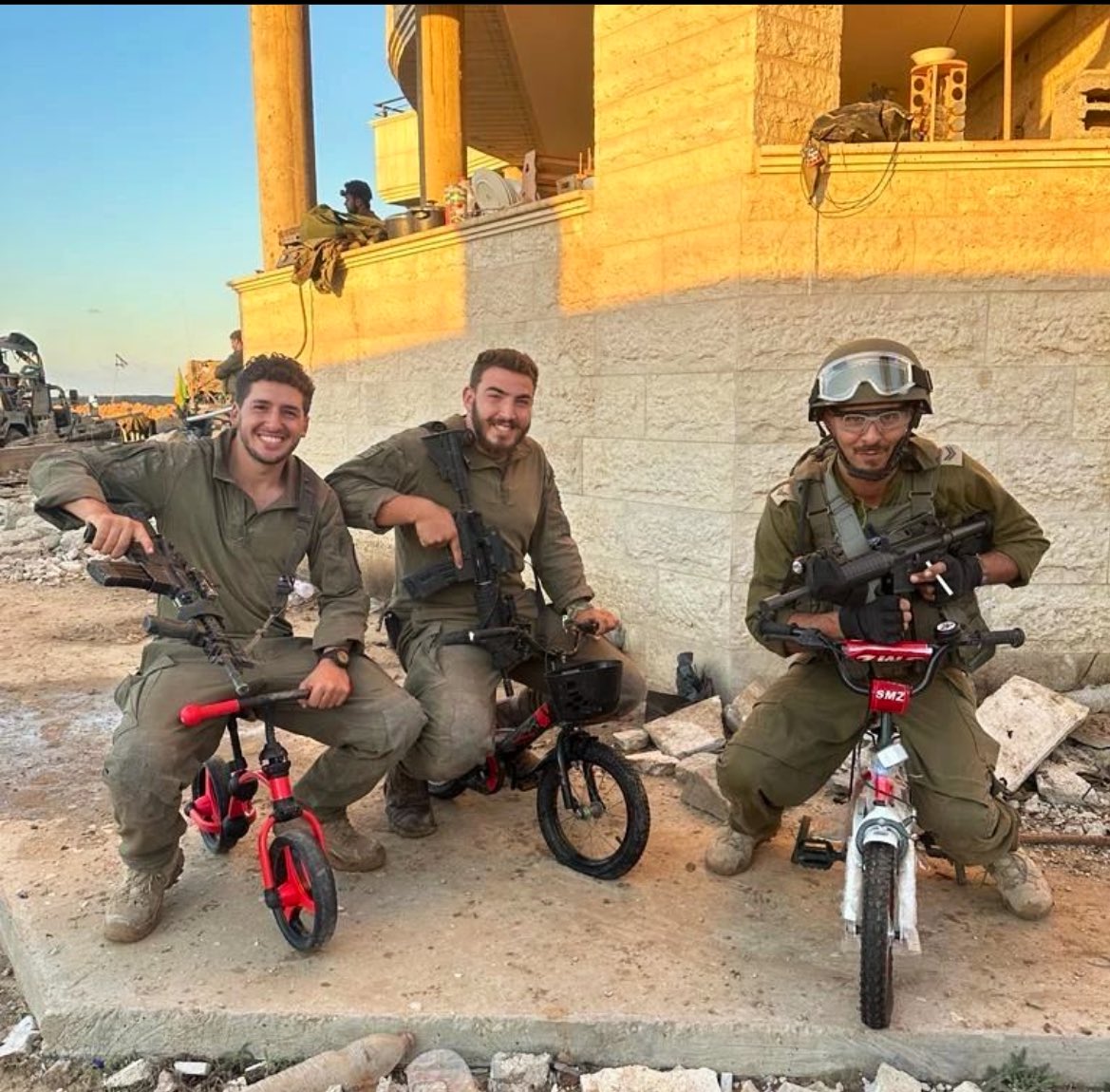
Rwanda paused on Sunday to honor the memory of genocide victims, marking three decades since a brutal campaign orchestrated by Hutu extremists tore through the nation, leaving deep wounds as communities turned against each other in one of the darkest chapters of the 20th century.

The relentless violence, spanning 100 days until the Rwandan Patriotic Front (RPF) rebel militia seized control of Kigali in July 1994, resulted in the deaths of 800,000 individuals, primarily Tutsis but also moderate Hutus.

Despite the immense tragedy, Rwanda has made strides toward stability under the firm leadership of President Paul Kagame, who helmed the RPF.

Nevertheless, the legacy of the atrocities persists, casting a shadow over Africa’s Great Lakes region.Following tradition, ceremonies held on April 7—the day when Hutu militias unleashed terror in 1994—commenced with Kagame lighting a remembrance flame at the Kigali Genocide Memorial, a solemn site believed to hold the remains of over 250,000 victims.

Accompanied by somber melodies played by an army band, Kagame laid wreaths at the mass graves, joined by foreign dignitaries, including several African heads of state and former US President Bill Clinton, who had acknowledged the genocide as a grave failure during his tenure.

The failure of the international community to intervene remains a point of regret, with French President Emmanuel Macron expected to express remorse for France’s and its allies’ inaction, acknowledging they could have halted the bloodshed but lacked the resolve to do so.

Kagame is scheduled to deliver an address at a 10,000-seat arena in the capital, where Rwandans will later gather for a candlelight vigil in remembrance of those lost to the slaughter.

The commemoration marks the beginning of a week-long period of national mourning, during which Rwanda will come to a standstill, with flags flown at half-mast. Public music, sports events, and non-remembrance-related television broadcasts are suspended.The United Nations and the African Union will also hold remembrance ceremonies to honor the victims.

Reflecting on the events, Karel Kovanda, a former Czech diplomat and the first UN ambassador to publicly denounce the 1994 massacres as genocide, emphasized the importance of ensuring that the genocide is never forgotten, asserting that the page cannot be turned on such atrocities.

The genocide, triggered by the assassination of Hutu President Juvenal Habyarimana on April 6, 1994, led to widespread atrocities fueled by virulent anti-Tutsi propaganda disseminated through various media outlets.

Countless individuals were brutally murdered, and tens of thousands of women were subjected to sexual violence.Rwanda has taken steps to address the legacy of the genocide, including establishing community tribunals for victims to confront their perpetrators. However, challenges persist, with hundreds of genocide suspects still at large, some reportedly seeking refuge in neighboring countries.

Despite the passage of time, Rwanda continues to grapple with the wounds inflicted by the genocide, endeavoring to ensure that the horrors of the past are never forgotten while striving to build a future rooted in peace and reconciliation.

Tragedy: Children starve to death in Gaza hospitals

By Uzair Adam Imam

According to reports from Turkish TRT World, a recent aid mission to two hospitals in northern Gaza by the World Health Organization (WHO) has uncovered horrifying scenes of children dying from starvation. 

Dire shortages of food, fuel, and medicines exacerbate the situation.

WHO Chief Tedros Adhanom Ghebreyesus described the findings as “grim,” particularly highlighting the dire conditions at Al Awda Hospital, where one of the buildings has been destroyed. 

The Kamal Adwan Hospital, the only paediatrics facility in northern Gaza, struggles to cope with the overwhelming number of patients. Tedros revealed that the lack of food has tragically led to the deaths of 10 children.

Meanwhile, the Geneva-based organization Euro-Med Human Rights Monitor has released a statement presenting disturbing evidence of Israeli tanks deliberately running over Palestinians. 

Describing these actions as part of Israel’s genocide against Palestinians in Gaza, Euro-Med reported several cases of Israeli forces intentionally running over Palestinian civilians, including incidents on February 29, January 23, December 2023, and February 20.

The organization has called for an independent international investigation committee to address Israel’s ongoing military actions in the Gaza Strip.

The deadly offensive initiated by Israel following a cross-border incursion by Hamas on October 7, 2023, has resulted in significant casualties. 

As the Israeli bombardment continues into its 150th day, TRT casualty counts estimate that at least 30,534 Palestinians, mostly children and women, have been killed, with 71,980 others wounded due to mass destruction and shortages of essentials.