FG

NLC, TUC Issue ultimatum to FG, threaten fresh nationwide strike

By Sabiu Abdullahi 

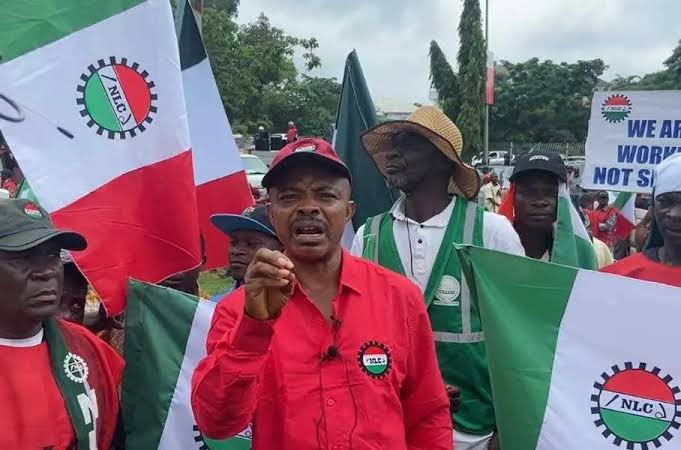
The Nigeria Labour Congress (NLC) and the Trade Union Congress of Nigeria (TUC) have jointly issued a stern ultimatum to the Federal Government.

The ultimatum comes as a response to the alleged failure of the government to fulfil a 16-point agreement reached with the unions on October 2, 2023. 

Expressing their dismay over the situation, leaders of the NLC and TUC affirmed their concern regarding the government’s apparent disregard for the welfare of citizens and workers.

Despite concerted efforts by organised labour to foster cooperation and address issues in the workplace, the unions claim that the government has remained indifferent to the widespread suffering and hardship experienced by Nigerians. 

In a joint statement, the NLC and TUC lamented the necessity of resorting to drastic measures, stating, “It is regrettable that we are compelled to resort to such measures, but the persistent neglect of the welfare of citizens and Nigerian workers and the massive hardship leave us with no choice.” 

The ultimatum issued by the unions gives the Federal Government a 14-day window, starting on February 9, 2024, to honour its commitments outlined in the agreement.

Failure to do so, as stated by the NLC and TUC, will result in the commencement of a nationwide strike. 

The looming threat of a nationwide strike raises concerns about its potential impact on various sectors of the economy and the well-being of the general populace.

It underscores the urgency for dialogue and resolution between the government and organised labour to avert the disruption and hardships that a strike could entail.

Atiku condemns unchecked reign of terror, calls for urgent address of security crisis

By Uzair Adam Imam 

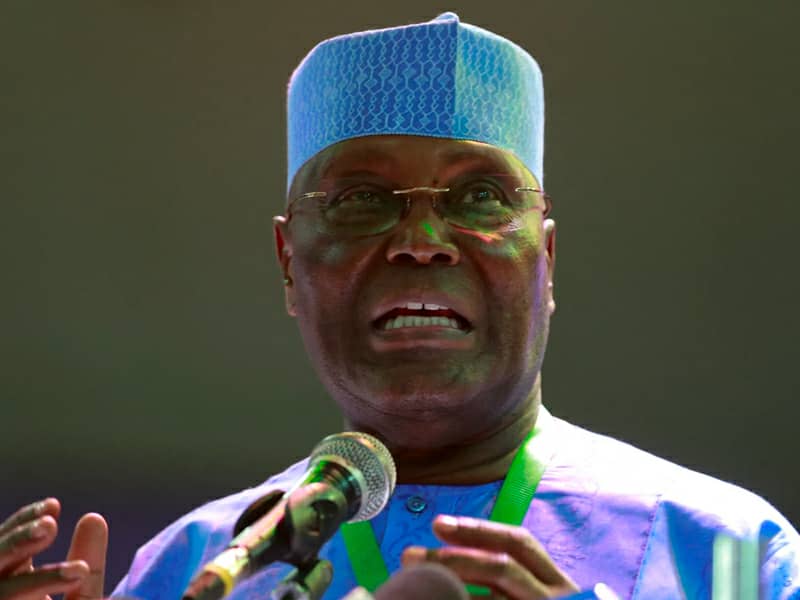
Former Vice President Atiku Abubakar attributed the surge in kidnappings and insecurity across the country to pervasive poverty and hunger.  

In a statement shared through his official handle on Tuesday, Atiku expressed concern over the distressing level of violence, particularly in Abuja, the nation’s capital. 

He highlighted the correlation between worsening poverty and the escalation of kidnapping and insecurity.  

Atiku criticised the government’s failure to fulfil its constitutional duty of safeguarding citizens’ lives and property, asserting that such negligence creates an open invitation for criminals to operate freely, leaving citizens vulnerable to abductions. 

Lamenting the unchecked reign of terror by kidnappers, Atiku urged authorities to urgently address the deteriorating security situation to rebuild the trust of the Nigerian people.  

He drew attention to recent tragic incidents, including the abduction and subsequent murder of Nabeeha and 13-year-old Folorunsho Ariyo in the Sagwari Estate Layout in Dutse, Bwari Area Council of the FCT. 

Expressing condolences to the families of the victims, Atiku called for immediate action to curb the rising violence and lawlessness.  

He affirmed the need for the government to fulfill its duty in protecting citizens, praying for comfort to the bereaved families and eternal peace for the departed.

FG unveils N150b economic relief package for businesses amid fuel subsidy removal aftermath

By Sabiu Abdullahi 

The federal government has introduced two disbursement programmes, the Presidential Conditional Grant and the Presidential Palliative Loan, to inject a total of N150 billion into the economy. 

According to a statement from the Minister for Industry, Trade and Investment, Dr. Doris Uzoka-Anite, the programmes are strategically designed to support businesses grappling with the aftermath of the fuel subsidy removal implemented on June 1. 

Under the Presidential Conditional Grant Programme, the government plans to disburse a grant sum of N50,000.00 to nanobusinesses across all 774 local government areas in the country.

Collaborating with various stakeholders, including state and local governments, federal legislators, federal ministers, banks, and others, the programme aims to provide relief to the most grassroots-level enterprises.

Eligible nanobusiness owners are required to furnish proof of residence or business address in their local government area, along with personal and bank account details, for identity verification. 

The government has also earmarked N75 billion for Micro, Small, and Medium-sized Enterprises (MSMEs) and an additional N75 billion specifically for manufacturers.

The loan facilities, offered at a single-digit interest rate of 9 percent per year, aim to stimulate growth and address financial challenges faced by businesses. 

MSMEs can access loans up to N1 million with a three-year repayment period, while manufacturers can secure up to N1 billion for working capital with repayment terms of one year for working capital or five years for machinery and equipment.

The application process for these loans involves submission through a dedicated portal, with access facilitated through participating banks.

Applicants are required to meet their respective banks’ risk assessment criteria. 

Noting its commitment to economic development and empowerment, the Federal Government believes these initiatives will foster entrepreneurship, spur job creation, and contribute to the overall economic recovery of the nation.

Interested parties can find more information and apply on the dedicated website for the programmes.

Nothern leaders caution FG, Zamfara gov’t against playing politics with security

By Uzair Adam Imam 

Northern leaders and stakeholders in the north have warned the Federal Government and Zamfara state government to stop playing politics with the lives of the people of the region concerning the alleged Federal Government’s secret negotiation with bandits. 

They expressed outrage that the Federal Government could be negotiating with bandits, which never worked in the past, and cautioned the government against such a move. 

They argued that by engaging in talks with bandits, the government was indirectly legitimising their criminal activities and creating a dangerous cycle of appeasement. 

They added that the move was sending a troubling message that crime and violence can be rewarded rather than punished. 

Recall that Governor Dauda Lawal of Zamfara has blamed the Federal Government for allegedly negotiating with bandits secretly without involving the state government. 

He also accused the Federal Government of sabotaging the ongoing fight against banditry in the state by negotiating with bandits behind the state government. 

His spokesman, Sulaiman Idris, in a statement he issued to journalists, said the governor said a delegation allegedly sent by some agencies of the Federal Government had been holding talks with bandit groups in Zamfara without the consent of the State Government. 

The governor said, “We have facts and evidence on what had transpired between these agents of the Federal Government and the bandits during the negotiations in several places across Zamfara.” 

Responding, the Minister of Information, in a statement by his spokesperson, Suleiman Haruna, on Tuesday night, however, denied negotiating with bandits. Also in the statement, the minister accused Governor Dauda Lawan of politicising security matters. 

In his reaction, one of the stakeholders and the spokesman of the Arewa Consultative Forum (ACF), Professor Tukur Muhammad-Baba argued that these negotiations are weakening the rule of law and establishing a dangerous precedent for other criminal elements in the country. 

Muhammad-Baba expressed fear that this approach might inspire other groups to take up arms and engage in similar acts.

Describing the move as ‘weak,’ he urged the Federal Government to reconsider its stance on negotiating with bandits. 

He said, “How will you begin a negotiation in Zamfara state without involving the Zamfara state government? You and I know this is a serious aberration and should not be taken lightly.

There is no way you can come into my house without my knowledge, even if we are of the same father, and start doing this kind of thing is not good. 

Expressing his disappointment, the Executive Director, Resource Centre for Human Rights and Civic Education (CHRICED), Dr. Ibrahim Zikirullahi, called on the current administration, led by President Asiwaju Bola Ahmed Tinubu, to restructure the military and ensure it regains its lost glory. 

According to him, “That singular act is a complete failure of the governance system in Nigeria because what it presents is that our security is no longer having the capability to deal with the insurgency and they are no longer trusted to do their work.  

“And it’s almost like Nigeria is going into the abyss.”
FG to procure 12 attack helicopters to enhance service of Nigerian Army

By Sabiu Abdullahi 

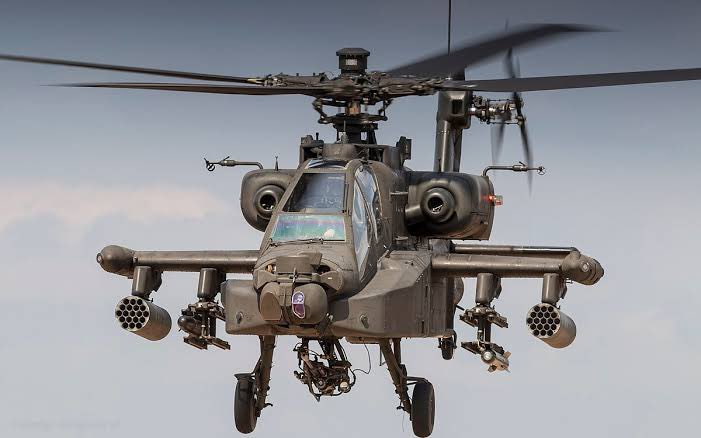
President Bola Tinubu has approved the procurement of 12 MD 530F Cayuse attack helicopters to enhance the service of the Nigerian Army. 

The announcement was made by the Chief of Army Staff, Lt.-Gen. Taoreed Lagbaja, during the inaugural Nigerian Army Aviation Seminar held on Tuesday in Abuja. 

The acquisition of these advanced attack helicopters marks a pivotal moment for the Nigerian military, as it heralds the operationalization of the Nigerian Army Aviation Unit. 

This specialised unit has been established with the primary goal of improving ground troops’ agility, responsiveness, and overall efficacy during various military operations. Lt.-Gen.

Lagbaja emphasised that the addition of these attack helicopters to the Nigerian Army’s arsenal would not only enhance its internal capabilities but also contribute significantly to the success of joint and coalition military operations.

He underlined the importance of this initiative in the broader context of military strategy. Explaining the role of the army aviation unit, Lt.-Gen.

Lagbaja noted that it is distinct from a nation’s dedicated air force but focuses primarily on helicopters and light-support fixed-wing aircraft.

This specialisation enables the unit to provide vital support to ground troops during tactical and operational engagements. 

Expressing his gratitude, Lt.-Gen. Lagbaja thanked President Tinubu for his unwavering support in realising the Nigerian Army’s aspiration to have a well-equipped aviation unit.

He drew attention to the experiences of other nations such as the United States, Pakistan, Colombia, Egypt, Kenya, Ethiopia, and Uganda, all of which have successfully employed similar aviation units to enhance their military capabilities. 

This strategic move signifies a significant step forward for the Nigerian military and underscores the government’s commitment to strengthening national defense.

The procurement of these attack helicopters will undoubtedly play a crucial role in ensuring the security and stability of the nation while also aligning with international best practices in military operations.

FG cracks down on COVID-19 relief funds defaulters, to recover loans through GIS

By Muhammadu Sabiu 

Individuals and small to medium-sized enterprises (SMEs) that have defaulted on the repayment of the N544.2 billion COVID-19 Targeted Credit Facility (TCF) are now under scrutiny as the Federal Government-owned NIRSAL Microfinance Bank (NIRSAL-MFB) takes proactive steps to recover the loans. 

NIRSAL-MFB has activated its Global Standing Instruction (GSI), which will be used to recover the loans, and enlisted defaulting beneficiaries in the Central Bank of Nigeria’s (CBN) Credit Risk Management System (CRMS), preventing them from accessing further credit opportunities. 

The N544.2 billion COVID-19 TCF was disbursed to aid small businesses and individuals during the pandemic. A breakdown of the funds reveals that N261.4 billion was distributed to 643,486 households, N112.5 billion to 114,476 SMEs, and N14.3 billion to 31,462 individuals through non-interest banks (NIB HH). 

In addition, N2.1 billion was extended as loans to 3,523 individuals through the NIB SM scheme, while 32,355 beneficiaries received N118.4 billion under the Agric, Small and Medium Enterprise Scheme (AGSMEIS). 

The Anchor Borrowers’ Programme (ABP) supported 107,035 individuals with N33.8 billion in loans, and the Nigeria Youth Involvement Fund (NYIF) assisted 5,539 recipients with N1.96 billion in funding. 

All beneficiaries of the TCF, during their application process, unwittingly authorized the CBN to institute the GSI on their bank accounts.

This strategic move enables NIRSAL-MFB to deduct outstanding loan payments directly from borrowers’ accounts. This development underscores the commitment of the Federal Government to ensure that the relief funds are repaid as originally intended, and it serves as a warning to those who have neglected their repayment obligations. 

Defaulting beneficiaries will now face stringent measures to recover the outstanding N544.2 billion, as NIRSAL-MFB employs the GSI and CRMS to track and prevent further access to credit. 

The move by NIRSAL-MFB has prompted discussions on the importance of responsible borrowing and timely repayment of loans, especially in the context of government-backed relief programs. 

It remains to be seen how this action will impact the financial standing of defaulters and whether it will serve as a deterrent to future borrowers who may consider defaulting on government-sponsored loans.

FG approves 35%, 23.5% salary increase for staff of tertiary institutions

By Muhammadu Sabiu 

The National Salaries, Incomes and Wages Commission (NSIWC) has approved a 35% and 23.5% salary increase for staff of tertiary institutions. 

This is contained in a letter from the NSIWC to the Federal Ministry of Education, dated September 14, 2023. 

The letter, signed by the NSIWC Chairman/CEO, Ekpo U.O. Nta, Esq., states that the salary increase is for both academic and non-academic staff of all federal universities, polytechnics, and colleges of education. 

The letter also states that the NSIWC has increased the 23.5% salary increase that was earlier approved for junior staff of tertiary institutions to 25%. 

The NSIWC said it was pleased with the success of the informal discussions between the Federal Government and the Academic Staff Union of Universities (ASUU), which led to the approval of the salary increase. 

The commission said it would continue to support the federal government’s efforts to reposition the education sector. 

The news of the salary increase has been welcomed by the staff of tertiary institutions, who have been demanding a better pay package for several years.

Tinubu appoints 18 aides to support “renewed hope” agenda in VP’s Office

By Muhammadu Sabiu

In a move aimed at driving the “Renewed Hope” agenda of the Tinubu administration, President Bola Tinubu has given his approval for the appointment of 18 Special Advisers and Senior Special Assistants to serve in the office of the Vice President. 

These appointments are expected to play a crucial role in advancing the Federal Government’s objectives across various sectors of the economy. 

The newly appointed team is composed of six Special Advisers and twelve Senior Special Assistants, each bringing a unique set of skills and expertise to their respective roles.

Their diverse portfolios cover critical areas such as economic matters, climate change, political affairs, investment, and more. 

Here is a breakdown of the appointments in the Vice President’s office: 

  1. Rukaiya El-Rufai – Special Adviser (SAD) to the President on NEC & Climate Change.
  2. Tope Kolade Fasua – Special Adviser (SAD) to the President on Economic Matters.
  3. Aliyu Modibbo Umar – Special Adviser (SAD) on General Duties.
  4. Hakeem Baba Ahmed – Special Adviser (SAD) on Political Matters.
  5. Jumoke Oduwole – Special Adviser (SAD) to the President on PEBEC & Investment.
  6. Sadiq Wanka – Special Adviser (SAD) to the President on Power Infrastructure.
  7. Usman Mohammed – Senior Special Assistant to the President on Administration & Office Coordination.
  8. Kingsley Stanley Nkwocha – Senior Special Assistant to the President on Media & Communications.
  9. Ishaq Ahmed Ningi – Senior Special Assistant to the President on Digital Media & Emergency Management.
  10. Peju Adebajo – Senior Special Assistant to the President, Investment & Privatisation.
  11. Mohammed Bulama – Senior Special Assistant to the President on Political/Special Duties.
  12. Kingsley Uzoma – Senior Special Assistant to the President, Agricbusiness & Productivity Enhancement.
  13. Gimba Kakanda – Senior Special Assistant to the President, Research & Analytics.
  14. Temitola Adekunle-Johnson – Senior Special Assistant to the President, Job Creation & MSMEs.
  15. Nasir Yammama – Senior Special Assistant to the President, Innovation.
  16. Zainab Yunusa – Senior Special Assistant to the President on NEC.
  17. Mariam Temitope – Senior Special Assistant to the President, Regional Development Programmes.
  18. Bashir Maidugu – Deputy State House Counsel (Senior Special Assistant to the President).

These appointments reflect a commitment to addressing various challenges and opportunities facing the nation, with a focus on economic development, climate change, political stability, and innovation.

As the team takes up their roles, they are expected to contribute significantly to the realisation of the “Renewed Hope” agenda set forth by the Tinubu administration.

FG ‘impressed’ with speed of $2 billion rail project from Kano to Niger Republic

By Uzair Adam Imam 

The Federal Government of Nigeria has commended the level of ongoing construction of the Kano-Maradi, Niger Republic, standard gauge rail project. 

The Minister of Transport, Sen. Ahmed Alkali, expressed this satisfaction shortly after inspecting the project on Friday. 

Alkali spoke to newsmen at Dadin Kowa in Kazaure Local Government Area of Jigawa, adding that he was satisfied with the level of work done so far. 

He said, “We are fully committed in ensuring timely completion of the ongoing Kano – Jigawa – Maradi rail line project, aimed at boosting the economy of the Nigeria and Niger republic. 

“We are working hard to fix this country; so in terms of reviewing the financial aspect we must make sacrifice, including the contractor,” he said. 

He also noted that with the speed at which the project is going, hopefully the contactors will meet the target of timely completion by 2025. 

“The $2 billion project awarded by former President Muhammadu Buhari is expected to be completed at the set agreed project target year of 2025. 

“The earth work of the project has reached 80 per cent stage, while real rail line work would soon commence after the earth works.

 “I am very impressed with what we have seen; we came all the way from Dawanau where the project started so that we have first hand information of the level of the execution of the project and the contractors are in compliance with the level of specifications of the job,” he stated.

Not funding universities is unconstitutional, ASUU president tells FG

By Muhammadu Sabiu 

The President of the Academic Staff Union of Universities (ASUU), Prof. Emmanuel Osodeke, has emphasised that the Federal Government of Nigeria is constitutionally mandated to fund universities in the country. 

This statement comes in response to recent remarks made by the Minister of Education, Prof. Tahir Mamman, regarding the autonomy of universities in seeking alternative funding sources. 

Prof. Osodeke highlighted that the provision for federal funding of universities is enshrined in the country’s Constitution. 

He specifically referenced Section 18 of the Constitution, which explicitly states that universities, along with primary and secondary education, are to be provided for free by the government. 

“There is no way the Federal Government of Nigeria would say they would not fund public universities because it is there in the law. It is there in the Constitution; look at Section 18 of the Constitution; it says ‘university, primary, and secondary are free,” asserted Prof.

Osodeke. However, he acknowledged that while the constitutional mandate exists, the issue lies in its enforceability.

The ASUU President noted that despite the legal obligation, the provision is not judicious, making it difficult to enforce. 

In response to recent discussions about the government’s granting universities more autonomy to explore alternative funding mechanisms, Prof. Osodeke expressed skepticism about the government’s intent.

He stated, “I don’t think this government, from what we have seen, is going to say we are going to hands-off from university.” 

He further emphasised the disparity between Nigeria’s education budget and its gross domestic product (GDP), describing it as one of the lowest in the world.

This financial imbalance highlights the crucial role of government funding in sustaining the quality and accessibility of higher education in the country. 

As the debate over university funding and autonomy continues, Prof. Osodeke’s remarks serve as a reminder of the constitutional duty of the Federal Government to provide financial support to universities and the importance of addressing the challenges facing the education sector in Nigeria.