Fake News

Fake News: Sheikh Daurawa did not resign from Kano Hisbah Command

By Aisar Fagge

Rumours circulating on social media platforms about the resignation of Sheikh Aminu Ibrahim Daurawa, the Commandant General of Kano State Hisbah Command, were found to be false.

Speaking to Dr. Mujahid Aminuddeen, Deputy Commander General of Kano Hisbah, he said, “All those stories were fake, and Sheikh Daurawa is already in his office attending to many people.”

The development of this fake news is not unconnected to the story of the release of Murja Kunya, the embattled TikToker who was arrested by Hisbah after receiving a series of complaints against her from the residents of the area where she lives.

After being taken to court, Kunya was facing multiple charges, denied bail, and the date for her trial was set. However, yesterday, February 18th, new information revealed that Kunya had been miraculously released.

The Daily Reality is working to find out why, how, and under what condition(s) she was released.

Bauchi husband killer, netizens and the other side of the story 

By Lawan Bukar Maigana 

Maimunatu Suleiman, 21, stabbed her husband, Aliyu Mohammed Gidado, to death on July 5th, 2023, in their residence at Kofar Dumi in Bauchi State, Nigeria. 

Since then, I have read different narratives about the tragic incident. Some said she killed him because it was a forced marriage, while others said she murdered him because of his willingness to remarry. 

As a trained journalist and fact-checker, I needed to investigate the narratives’ source, save the public from being misled by merchants of misinformation and fake news, and feed the crowd with authentic information.  

Using Facebook, I identified his neighbour and demanded that he send me his phone number so we could talk about the incident, and he did. He told me that Aliyu and his wife married in January 2020 and have one child—a boy. 

“Their marriage was out of love. Everybody knows them, and most people in their area have admired them because of their love for each other which culminated in their marriage. 

“And they never had any serious issues until recently when Aliyu realised that Maimuna had been going out without his permission as her husband.

“Aliyu returned home three days ago and expressed sadness about her deviant conduct, which later resulted in a serious misunderstanding between them that nearly broke their marriage, but his father and older brother intervened”, the neighbour explained.

On the day the incident happened, Gidado’s father saw Maimunatu’s friend coming out of their house after they spent hours in her room holding her plasma TV, but he didn’t talk to them. 

It is a tradition in their house that the last person who comes in after 10:00 pm ensures everyone is around before closing the gate. 

Wednesday night after 10 pm, his older brother called his name and asked if he was around so he would lock the gate, but Aliyu didn’t answer. His brother asked thrice but to no avail. 

Worriedly, his brother approached his room and observed that he was gasping for breath. He quickly got back to his room and took a touch and entered the room and saw his brother soaked in blood while his wife, the prime suspect, was facing him. 

That was when he quickly called their father to see what happened and subsequently sought help from their neighbours to rush their brother to the hospital. Unluckily, Gidado died before they got to the hospital. 

Out of patience, concern, and resilience, they rushed his wife to the hospital, thinking she was stabbed. The doctors informed them that she was safe and had only sustained bruises on her stomach. 

After she regained consciousness, Gidado’s father asked what had happened, and she told them that thieves had jumped over the fence and killed her husband when she went to the toilet to pour her child’s urine. 

She even told them that the thieves ran with her plasma TV, unknown to her that the bereaved old man saw her friends going with her plasma TV hours before the unfortunate incident but didn’t argue with her. 

Curiously, the victim’s father told her that there was no way thieves would jump over the fence without being seen by a tea seller beside their gate, whose place is always busy with people. 

After discovering that she was suspicious, they called police on her. 

The cops took her to the station, where she confessed that she stabbed him twice in his chest because of a misunderstanding in the evening. 

It was also reliably confirmed that she has a three-month pregnancy for Gidado. 

Therefore, those who said the murderer was forcefully married to him are just lying to the public. Their marriage was out of enormous love. 

Similarly, an Abuja-based lady Maryam Sanda mercilessly stabbed her husband to death on November 2017. 

Many media outlets, largely online alongside social media influencers, had disseminated unverified chronicle stories about the tragic incident without confirmation from the parties involved. 

Sharing unfiltered and fabricated information is seemingly becoming a norm in Nigeria among media outlets and internet users to manipulate people’s perceptions of facts. 

It is necessary to call on spreaders of information and netizens to please desist from sharing unverified information and cultivate the habit of digging into stories before publishing them. 

Please pray for the repose of Gidado and his mother. She died in early January 2023. 

Lawan Bukar Maigana writes from Borno and can be reached via email:lawanbukarmaigana@gmail.com.

BUK dismisses rumours of increased registration fees

By Uzair Adam Imam

The news making the round about the increment in school fees by the management of Bayero University, Kano (BUK), has dragged many students into a sheer panic while others fear the increment would be the end of their academic journey.

However, the school management debunked the circulated news on Wednesday and described it as fake news meant to startle students.

Malam Lamara Garba, the school Deputy Registrar, Public Affairs, told The Daily Reality that the story was baseless, urging the general public to reject it as “there is no official disclosure on that effect”.

The Daily Reality recalled that the news about the increment in the school fees to N170,000, initially said to be leaked information, has gone viral since the beginning of the last week.

The Students Union Government (SUG) claimed to have made several attempts to highlight the negative consequences the increment would have on students and subsequently held two meetings on the process with the school management.

Auwal Lawal Nadabo, the school acting SUG President, stated that all their efforts were in vain as the school management remained firmly on its stands after all the meetings.

Nadabo, who relayed this on a Facebook post, said, “The school management, after all consultations and finalizing the proposed fees, called for a second meeting where it was confirmed to the student leaders that the new range of school fees would be N97,000 to N170,000, as the case may be.

However, asked whether what the SUG President said was true, Garba denied knowledge of the meetings, saying, “I don’t even know when they had the said meeting with the management.”

2023 elections: CDD trains journalists, media influencers on combating fake news

By Aisar Fagge

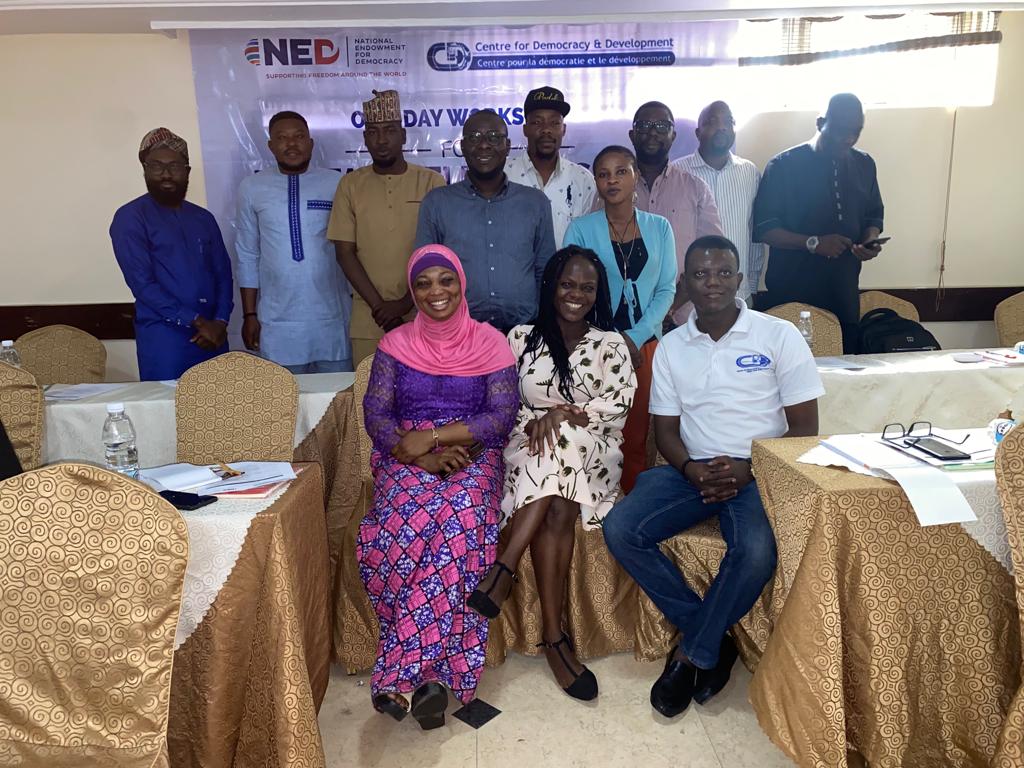
As part of the preventive measures, the Center for Democratic and Development (CDD) trained journalists and social media influencers on how to combat fake news ahead of the 2023 general elections.

The training Wednesday in Lagos was in collaboration with the National Endowment for Democracy (NED), a nonprofit organisation based in the United States of America.

Participants of the workshop, who are mostly journalists, influencers, media experts and members of Civil Society Organizations (CSOs), were drawn from different parts of the country in order to have a wider impact on the objective of the event.

The CDD Director, Idayat Hassan, stated that the participants were trained with vital skills on how to identify and prevent the propagation of fake, misleading and incendiary reports sent to them to share on their channels, handles and timelines.

The participants were also cautioned on the dangers of fake news and the implications of misinformation, and how the duo can terrorise the peace in Nigeria.

It was gathered that the training was given on how to use tools forensically, such as Geolocate, Google image search and Tineye, to detect fake videos, tweets, pictures and news.

Politicians use social media to spread fake news

The director also decried the way some politicians avoid media gatekeeping and use social media to spread fake narratives to the public, thus necessitating measures to address the issue.

She further said, “While the phenomenon of political players intentionally disseminating false information is well-known and discussed, the role of digital media influencers who are meant to be the bearers of truth and factual accuracy and in combating misinformation and disinformation has not received as much attention.”

There are many crises online

The CDD Communications Lead, Armsfree Ajanaku, said there are many crises online as people commit violence without consequence.

He stated, “Online gender-based violence exists within a context similar to what happens in real life, which is just as destructive as offline violence.

“We now live in a virtual society, where offline violence has extended to online, which makes it easier for people to commit violence without consequences.

“Women are the main targets of online violence, especially the ones with voices, like female politicians, service personnel, women’s rights activists, journalists, women leaders, etc. As it is globally, Nigeria faces a worse case due to our culturally sensitive environment,” he added.

In his presentation, Introduction to Fake News Ecosystems and Techniques of Spotting and Countering Fake News, CDD Project Manager, Abiodun Banjoko, noted that the 21st Century had seen the weaponisation of information on an unprecedented scale. According to him, disinformation, misinformation and malinformation are the greatest threats to the Information age, especially in a multi-ethnic and religious country like Nigeria. He, therefore, urged the participants to use the skills and knowledge they acquired in combating fake news in their endeavours.

Don advocates responsible journalism to combat fake news

By Uzairu Adam Imam

To combat fake news and safeguard society from its adverse effects, Nigerians have been advised to check for elements of credibility in reports and consult media platforms with proven integrity in sourcing for news and information.

A lecturer in the Department of Mass Communication, Kano State Polytechnic, Mallam Aisar Fagge, made the submission during a one-day workshop organized by the popular online newspaper The Daily Reality.

The lecture themed “Fake News on Nigerian Cyber Space: The Role of an Ideal Journalist” afforded young journalists the opportunity to understand the challenges of contemporary journalism practice.

Mallam Fagge said, “It is said ‘seeing is believing’ but not anymore. With Deepfake [and other apps], people can easily manipulate videos, pictures, etc. Thus, we need to dissect pieces of information before sharing them,” he stated.

He also called on the general public to examine stories critically before believing or sharing them with other people.

He further noted that fake news could be countered by applying the “technological, journalistic and pedagogical approaches among others.”

He noted that the nature of social media has made journalism more tasking and placed more responsibility on journalists, which behooves them to protect the image of journalism and not allow quacks to run them out of business.

Journalism educators, practitioners from conventional media and online newspapers as well as the students of Mass Communication from Kano State Polytechnic and Bayero University, Kano attended the event that took place on Sunday, 6th November, 2022 at the Centre for Research in Nigerian Languages, Translation and Folklore, BUK New Site.

Covid: CITAD awards another winners of Covid-19 vaccine campaign

By Aisar Fagge

The Centre for Information Technology and Development (CITAD) has awarded another set of Covid-19 vaccine champions on identifying, tracking and countering Covid-19 related false narratives, rumours, misconceptions and disinformation on social media platforms.

The program tittled “Public Education on COVID-19 Vaccine Project” was aimed at educating, informing and sensitizing people on the importance of Covid-19 vaccine with a view to counter false narratives about it.

Supported by MacArthur Foundation, the centre has been working with 18 partner organizations and social media influencers in six selected states from Northern Nigeria to enlighten the public about the vaccine through various activities and programmes.

Recalled that, Covid-19 is a communicable respiratory disease that terrorises the entire world, leading to the death of number of people and set the economies of hundreds of nations in limbo.

The details on the event was in a statement signed Wednesday, 14th September 2022, by the coordinator of the campaign, Mal. Hamza Ibrahim.

The statement reads in part: “CITAD received 93 applications from young people who want to be champions and 18 of them were selected from six northern states – Kano, Kaduna, Bauchi, Borno, Plateau and Kogi State and trained for two days.”

“After their training, they embarked on daily campaigns on tracking, countering and persuading people to take the vaccine. They submitted reports of their campaigns at the end of every month and the reports were shared with panel of judges who review, assess and subsequently selected the best three who are then regarded as the Covid-19 champions.”

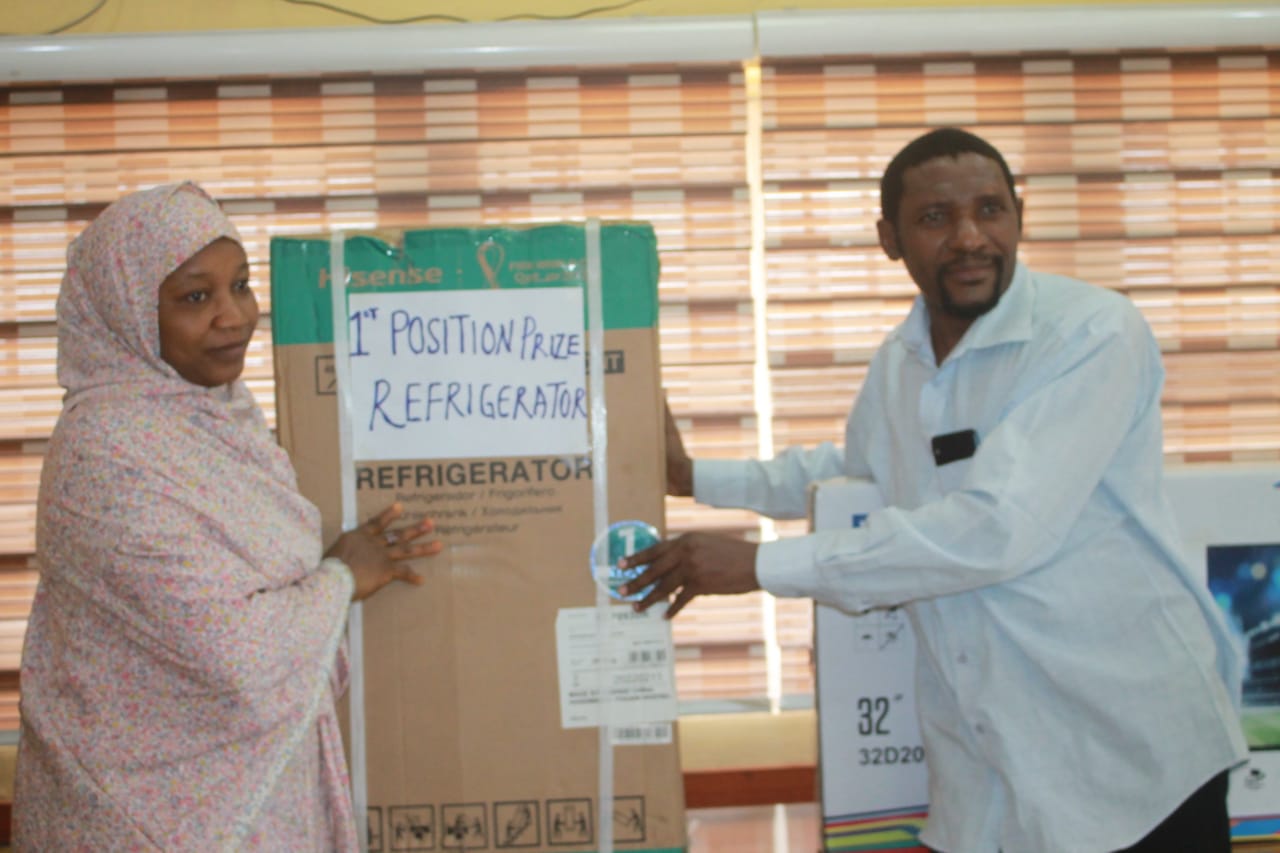
“In this fourth round of the competition, Sumayya Abdulaziz from Kaduna emerged in the 1st position with 97 points and got Hisense refrigerator. Mundi Ilyasu from Kogi State emerged 2nd with 75 points and was rewarded with Plasma TV. From Bauchi State, Abdullahi Barau emerged in 3rd position with 70 points and went home with a mini laptop.”

Opponents spread fake news, attribute them to me – Peter Obi

By Uzair Adam Imam

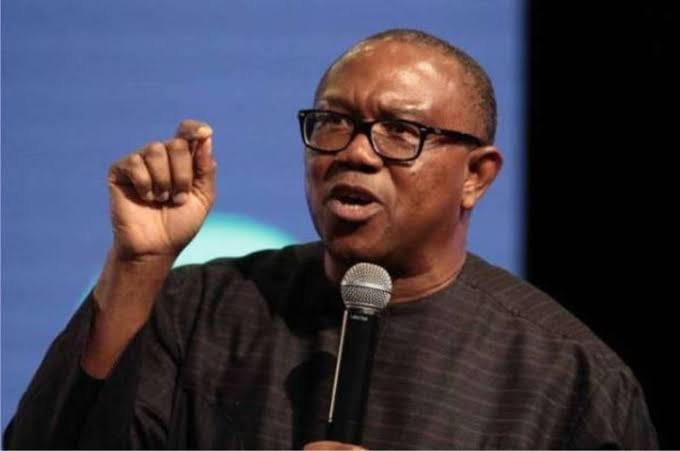
The Labour Party Presidential Candidate, Peter Obi, has accused the way his opponents adopted a negative strategy of trolling and insinuating fake news and misinformation against him and his party.

Obi said this Thursday in his verified Tweeter handle, adding that his opponents create misinformation on social media and deliberately attribute them to him and his party.

The Daily Reality recalls that Obi and the APC Presidential Candidate, Bola Ahmed Tinubu, were engaged in a serious war of words last week.

Obi tweeted, “As we approach the official kick off of the 2023 election campaign, it has become evident that the opposition have adopted a negative strategy of trolling and insinuating fake news and misinformation in the social media space and blaming the Labour Party, its presidential candidate and their supporters of same.

“We remain resolute in our commitment to an issue-based and clean campaign. We will also rebuff all such ploys of deceit and calumny meant to create disaffection among Nigeria’s voting population, who desire credible leadership change. – PO,” he said.

On his part, Tinubu also blamed Obi supporters for mudslinging and spreading fake news against him and other candidates ahead the 2023 general election.

31-year-old communication student develops new model to fight disinformation

By Aisar Fagge

Isah Nasidi, a young Nigerian PhD student of Mass Communication and a research fellow at the Premium Times Centre for Investigative Journalism, developed a new model called SAMCAV. First of its kind, the model aims to combat disinformation and discover the fourth typology of information disorder, which he called dil-information.

A statement sent to The Daily Reality reveals that Nasidi’s discovery was the outcome of the six-month research fellowship of the Kwame Kari-Kari Fact-checking and Research Fellowship, which selected 17 researchers from four West African countries to research information disorder.

The SAMCAV model links six elements of information disorder; Source, Agent, Message, Channel, Audience and Victim. These elements are involved in the production, distribution and consumption of information disorder.

According to the researcher, the model will help researchers and policymakers to know how disordered information flows and the effects it causes in society.

Moreover, the work discovers the concept of ‘dil-information’ as the fourth type of information disorder, which has never been considered as an independent typology separate from disinformation, misinformation, and malinformation.

Dil-information is defined as genuine information diluted with false information, misinterpreted or misrepresented with or without intent to harm. Terms like mostly true, half-true, mostly false and misleading are used to classify claims of this nature.

The research aims to set a research agenda for scholars working in this virgin area and help in policy making and developing mechanisms for solving the problem.

Isah Nasidi, an independent researcher and media consultant, is an indigene of Kano state. He bagged his first and second degrees in Mass Communication at Bayero University, Kano. He is currently a PhD student of Mass Communication, University of Nigeria, Nsukka (UNN), and the Secretary of Communication History Division of International Communication Association (USA).

Beyond true/false: Things to know about information consumption in the era of Infodemic (I)

By Isah Nasidi

A report has it that about three hundred and sixty-one million (361,000,000) videos were uploaded on YouTube in just 30 days, and about 19,200 articles have been published on Google Scholar in the year 2020. Similarly, around 550 million tweets, including terms like “coronavirus,” “COVID-19, or “pandemic”, were recorded in March 2020. These are just a few platforms where information is produced, distributed, and consumed. Imagine the gross total of all the information shared on the entire world of conventional media, new media, and media.

New information technologies fueled the overabundance of information known as the “infodemic,” which is now the new feature of the information flow. Due to technological affordances, a fair percentage of people have the technical know-how to produce authentic and unauthentic information and circulate it without any professional gatekeepers. This makes it difficult for people to differentiate between accurate and inaccurate information, which in the end may cause disinformophobia. However, it is not only about the accuracy but also the safety or health of the information.

For journalists, social media influencers, and the entire audience or users to produce, circulate and consume safe information and avoid information disorder syndrome, media literacy on the ecosystem of information disorder is a must.

Basically, fact-checking organisations use truth metres or scales to categorise information. Depending on the in-house style, information can be divided into four categories based on the dimension of true or false: purely true, largely/partly true, false, largely/partly false, unconfirmed.

True information is not always good. Information can be true yet harmful to society. Information that is true and harmful is labelled as “malinformation”. Such information can be hate-speech, leaks about personal privacy without any justification of public interest, stereotypes, prejudice, and embarrassment. For instance, it is a true representation of identity when you call a Hausa man Aboki or Malam, but the intent and the approach may be harmful.

The largely/partly true information is the most common strategy for information contamination and is very dangerous and challenging to deal with. Here, the root of the information is genuine but diluted with false information, misinterpreted or misrepresented. This is what I call diluted information (dil-information). The intent may be good or bad. For instance, the military has been accused of reducing the number of casualties from their side while increasing the number of casualties from the enemy side. Yes, the Nigerian Army indeed killed some scores of bandits, but the number is not correct.

The false information can be classified as “false,” “transformed false,” or “unknown false. False information happens when both the producer and the consumer know the false status of the information. The majority of the content shared for entertainment purposes is false, and it is treated as such. However, known false content may be shared with another community of consumers that do not know the origin of the information, thus considering it true, which is transformed into true. This is very common in this era of globalisation, where content can be shared easily across the globe.

The unknown false information can be from either the source or the consumer. For instance, a journalist may unknowingly receive false information and share it as true, or he may deliberately fabricate information and share it as true. The former is classified as misinformation while the latter is called disinformation. In both cases, the consumers of the information do not know the false status of the information.

We will continue.

Isah Nasidi is a media consultant and research fellow at PTCIJ.

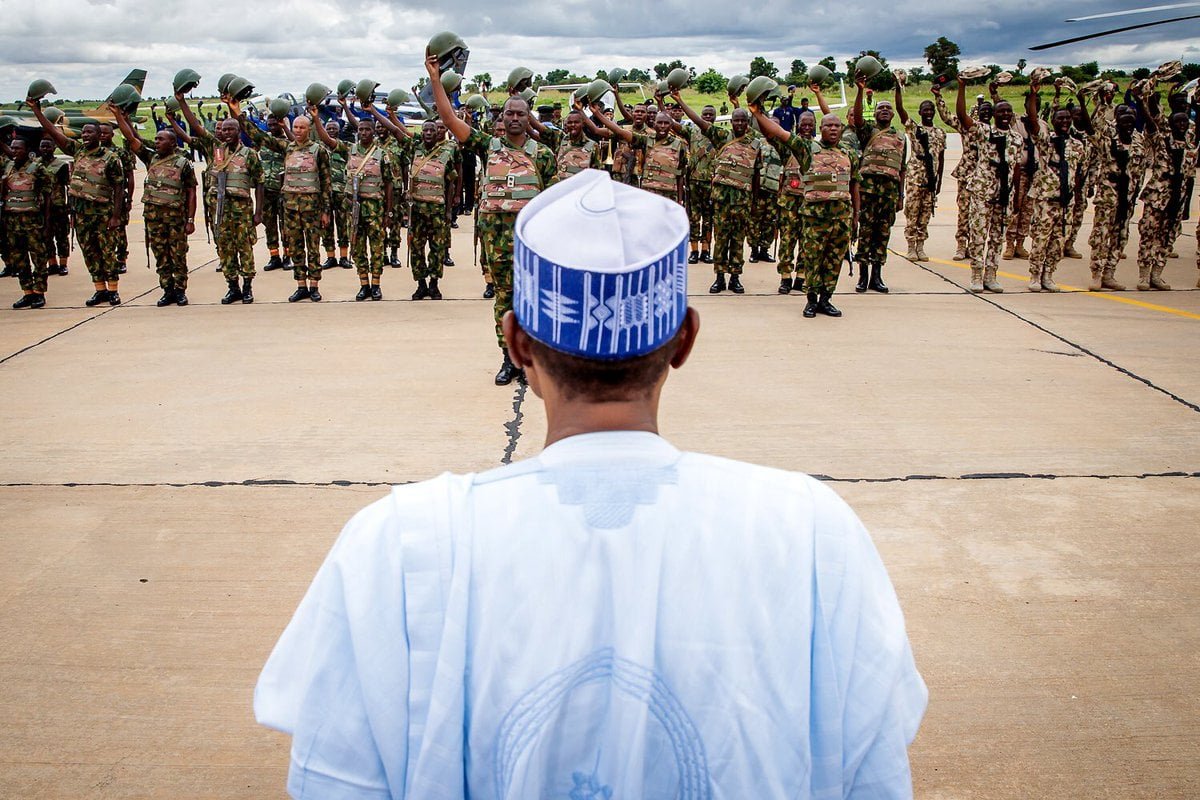
Nigerian Army clears air on “soldiers overthrowing Buhari’s regime” report

By Muhammad Sabiu

The Nigerian Army on Sunday has debunked some media reports making the rounds that it warned some of its personnel against overthrowing the Buhari-led government.

A statement released via Facebook by Army’s spokesperson, Onyema Nwachukwu, described the media reports as “outrageous lies and fabrications.”

“The Directorate of Army Public Relations has been notified of an online story making the rounds, with the caption, ‘Defence Headquarters wars soldiers against overthrowing Buhari’s regime” published on November 13, 2021, by a certain online news medium dubbed -Naija News House

“The said publication, which was riddled with outrageous lies and fabrications claimed that the Defence Headquarters has denounced a call for the military to take over the reins of power. The online outlet went further to attribute its falsehood to “Army Spokesman, Brig-Gen Onyema Nwachukwu”.

Clarifying the issue, the statement added that the Nigerian Army had never made any statement of such nature.

It said, “However, for the sake of clarity and to keep the records straight, we wish to state that at no time did the Director, Army Public Relations, Brig-Gen Onyema Nwachukwu issue any statement on the subject matter. It is, therefore, a figment of their imagination, which did not in any way emanate from Brig Gen Nwachukwu.”

With fabricated reports such as this and others, it’s obvious that Nigerian cyberspace has been littered with a lot of fake news, which has become a serious menace and has posed a serious threat to Nigeria’s peaceful coexistence.