Electricity

Tudun Jukun residents face unbearable KEDCO bills amid worsening economic hardship

By Maryam Shehu

Electricity remains one of the most essential public utilities in Nigeria–central to daily life, small-scale enterprises, and family survival. Yet for residents of Tudun Jukun, Madaci and other communities in Zaria, power has become a source of deepening hardship rather than progress.

For nearly three weeks, Tudun Jukun and several neighbouring communities have been plunged into a persistent blackout, with no meaningful announcement from the Kaduna Electricity Distribution Company (KEDCO) or any government authority. The outage comes on the heels of a controversial and devastating spike in electricity bills that many residents say they were never consulted about and cannot afford.

In October, KEDCO reportedly reclassified the community into Band A, one of the highest electricity tariff categories, despite Tudun Jukun’s socio-economic reality. The community, home to more than 2,000 households, has less than 40 per cent of residents considered middle class, while the majority struggle daily with food insecurity, unstable income, and rising costs of living. Many parents rely on public schools, yet still struggle to provide basic learning materials for their children.

Residents say KEDCO claimed to have engaged community elites before implementing the Band A classification. Shortly after, households were issued bills of ₦10,000—already burdensome for a community where many live below the poverty line.

The situation worsened dramatically in early November, and households received bills as high as ₦115,000, and in some houses, even higher. With residents unable to pay, the community was soon thrown into darkness. Since November 20, 2025, Tudun Jukun has remained without electricity, despite petitions and repeated attempts by concerned people to seek redress.

The power cut has devastated small and micro-businesses that rely on electricity to function. Welders, tailors, food vendors, shop owners, and artisans have seen their livelihoods crumble.

“My father is old and serves as a Ladan at a nearby mosque, so my family depends on me for everything,” said Ibrahim, a local welder. “I tried carrying my machines to Hayin Usama, where they had light, but now they also haven’t had power for two days. My clients are collecting their materials without waiting, and things are completely ruined for me.”

Women-led household businesses are also affected. “I used to make ₦3,000 to ₦5,000 daily from soyamilk and zobo,” said Hadiza, a mother and small-scale producer. “That money supported my household, but since the first week of this outage, I’ve had to learn how to survive without income.”

Across the community, youths, artisans, and family breadwinners now face worsening poverty, prolonged idleness, and rising frustration as no tangible explanation or action has been offered by authorities.

Residents are calling on KEDCO, the local government, and all responsible bodies to urgently address the issue. They argue that the prolonged outage and unexplained tariff hikes undermine their rights to dignity and economic participation as protected under Sections 14(2)(b) and 17(3)(a) of the Constitution of the Federal Republic of Nigeria, which obligate the government to ensure the welfare of citizens and provide adequate facilities for their livelihood. They also reference the regulatory duties of electricity distribution companies under the Nigerian Electricity Act and NERC guidelines, which require fair billing, transparency, and continuous service except in cases of officially communicated faults or approved maintenance.

Residents are demanding a transparent review of the billing process, a resolution to the petitions already submitted, and direct engagement with the community’s leaders. They insist that electricity must be restored immediately, alongside compensation or remedial measures for what they describe as an unjust disruption of their rights and livelihoods.

Until then, Tudun Jukun remains in darkness, both literally and economically.

Maryam Shehu writes from Zaria and can be reached at maryamshehu6354@gmail.com.

Effect of electricity tariff increment on Nigerian business environment

By Abdulrahman salihu

Electricity is one of the most crucial factors in the development of every industrial country, which factories, financial hubs, and technological companies rely heavily upon for their operations.

In Nigeria, on 1st April 2024, the Nigerian Electricity Regulatory Commission (NERC) increased the price of Kilowatt per hour by 300% from N68 Naira to N225 Naira to urban Customers popularly known as “Band A” customers, who are 15% of the total number of Electricity Consumers in the country.

The electricity tariff increment comes after President Bola Ahmed Tinubu removed the fuel subsidy in his inauguration speech on 29 May 2023, which triggered massive hyperinflation in Nigeria that resulted in hikes on almost every commodity and inflicted severe suffering among Nigerians.

The Nigerian Electricity Regulatory Commission (NERC) has claimed that the hike in the electricity tariff will only affect the “Band A” customers. Therefore, the remaining 75% of customers (Band B-C-D-E) who get less than 20 hours daily will not be affected.

However, the multiplier effect of the tariff increment dramatically influences the cost of production of foodstuff processing companies, manufacturers and other producers of goods that the masses use, thereby affecting the price of commodities.

Moreover, some artisans and small business owners have been put out of business because the financial institutions will increase the interest rate to meet the electricity tariff hike, making it unaffordable to businesses that take loans from them, rendering the artisans jobless. Businesses will collapse in the long run.

On the other hand, the government may not be able to generate revenue from the businesses that shut down, so also the artisans and craftsmen will not get customers as a result of lack of adequate electricity in their “Band”, which will make them unable to pay taxes to the government. 

Therefore, as a matter of urgency, the federal government and the stakeholders in the power sector should suspend the electricity tariff increment and invest in modern solar power plants. This will generate more power for the country and will go a long way in mitigating global warming and climate change.

The federal government should also find ways to improve the electricity supply, as the current supply is insufficient to make things work effectively. 

The governors of hydroelectric power-producing states should initiate policies and partner with international investors to boost power generation for their states and the country. At the same time, the other states should also render support where necessary.

This will encourage foreign investors to troop to Nigeria for investment, bringing job opportunities and facilitating unprecedented revenue flow into the accounts of both the federal and state governments.

Abdulrahman Salihu wrote via abutalatu72@gmail.com.

A mistake called ‘Band A’

By Zayyad I. Muhammad

The principle “you only sell what you have” is a cornerstone of all businesses, resonating throughout different industries and emphasizing the importance of aligning offerings with available resources and expertise.

It’s crucial to provide goods or services that are accessible and within one’s capabilities. However, Nigerian power distribution companies (DISCOs) are selling services they cannot deliver to their customers. For example, the promised 20–24-hour electricity supply under the new tariffs, such as Band A, appears to be unsuccessful.

The DISCOs are simply selling 20–24 hours of darkness, causing disappointment, eroding trust, and damaging the reputation of both the DISCOs and the Minister of Power.

Among economics and political observers, there is a widely held belief that credibility is paramount in retail, manufacturing, or service-oriented businesses. Customers expect transparency and reliability, and any deviation from this expectation can have detrimental effects on long-term success.

The DISCOs want to emulate other countries, but in those with privatized electricity, tariffs are usually categorized into residential, commercial, and industrial sectors. However, in Nigeria, consumers are simply grouped into ‘BANDs.’ For instance, in countries with reliable electricity, like the EU, consumers have the freedom to choose an electricity supplier from the full range available in their area, as well as the type of tariffs they prefer. In Nigeria, DISCOs hold a monopoly. If your service provider is Ibadan Electric, Kaduna Electric, Yola Electric, etc., you have no alternative; you must remain with that specific DISCO and the tariff band they have assigned to you.

We must acknowledge that every business, including DISCOs, operates within constraints, whether financial, logistical, or technical. While acknowledging these constraints is logical, the new tariff appears to be nothing more than an attempt to expedite Nigeria’s electricity sector development without addressing underlying challenges. How can Nigeria implement tariffs similar to those in countries with well-developed electricity sectors, characterised by massive infrastructure, reliable electricity, flexible tariff structures, and numerous options for consumers in choosing service providers?

The Band A tariff is nothing but overpromising and underdelivering. Businesses that embrace this principle prioritise maximising profits at the expense of their customers’ needs and freedom of choice.

In fact, the majority of Nigerian electricity consumers, regardless of whether they are in Bands A, B, C, D, or E, are angered by two entities: DISCOs and the Minister of Power. DISCOs are perceived as collecting money for services not rendered, while the minister is seen as defending the indefensible.

In serious countries, electricity supplies and tariffs are considered a security and economic imperative. Thus, electricity tariffs can vary widely depending on factors such as economic conditions, infrastructure, government policies, and production methods.

Presently, Nigeria’s economic conditions cannot support or sustain these new tariffs; we lack the infrastructure and economic strength for businesses to bear such high tariffs. Consequently, this would lead to high commodity prices as production costs increase, ultimately resulting in higher prices for goods and services.

In countries with efficient electricity systems, tariffs often reflect the costs of generation, distribution, and maintenance, resulting in lower rates for consumers. For instance, countries like Norway, Sweden, and Switzerland utilise a mix of hydroelectric, nuclear, and renewable energy sources, which helps keep tariffs relatively low compared to gas-powered alternatives.

The Minister of Power and DISCOs must revisit the drawing board as the new tariff has failed upon arrival. For instance, according to an investigative report by the Daily Trust on April 12, 2024, DISCOs issued 37 apologies to Band A customers within one week. They are struggling to sustain a 20–24-hour power supply to Band A customers.

It’s crucial to remind DISCOs of the provision by the Nigeria Electricity Regulatory Commission (NERC): ‘When the Disco fails to meet the committed service level to a Band A feeder for seven consecutive days, the feeder shall be automatically downgraded to the recorded level of supply in accordance with the applicable framework.

Zayyad I. Muhammad writes from Abuja, 08036070980, zaymohd@yahoo.com
Senate approves resolution urging continued electricity subsidy amidst hardship

By Sabiu Abdullahi 

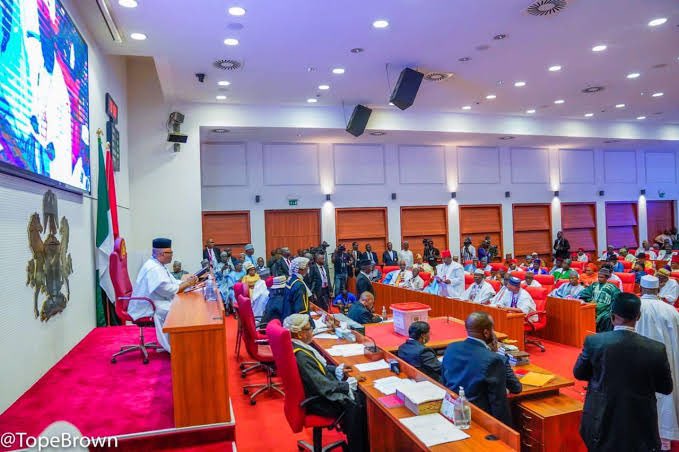
The Nigerian Senate has endorsed a resolution urging the federal government to continue with the electricity subsidy in light of the prevailing challenges confronting the nation.

This decision comes in response to the pressing concerns raised regarding the ongoing hardships experienced by citizens across the country. 

During a comprehensive deliberation at the plenary session, Senator Aminu Iya Abbas of the People’s Democratic Party (PDP), representing the Adamawa Central Zone, tabled a motion advocating for the continuation of the electricity subsidy.

The proposal garnered widespread support from fellow lawmakers, leading to its unanimous approval. 

Addressing the Senate, Senator Abbas reiterated the significance of prioritising the welfare of the populace amidst economic uncertainties and social challenges. 

The decision reflects a concerted effort by the Senate to address the concerns voiced by constituents and stakeholders regarding the affordability and accessibility of electricity, particularly during these turbulent times. 

By advocating for the continuation of the subsidy, lawmakers aim to alleviate the financial burden on households and mitigate the adverse impact of rising utility costs. 

In approving the resolution, the Senate reaffirmed its commitment to championing policies and initiatives aimed at safeguarding the interests and well-being of the Nigerian populace.

The collective endorsement of Senator Abbas’s motion underscores the bipartisan consensus on the imperative of sustaining vital support mechanisms to alleviate socioeconomic strains and promote inclusive development.

Blackout for Nigerians as electricity workers join NLC indefinite strike

By Sabiu Abdullahi 

The National Union of Electricity Employees (NUEE) has joined the Nigeria Labour Congress (NLC) indefinite strike that began today, October 1, 2023. 

The NLC is protesting the high price of petroleum resulting from the removal of the fuel subsidy as well as other anti-labour policies by the government. 

NUEE has directed its members to totally withdraw their services and participate in street protests and rallies until the government responds to the union’s demands. 

The union’s demands include the reversal of the removal of the fuel subsidy, an increase in the minimum wage, improved working conditions for electricity workers, and the payment of all outstanding salaries and allowances. 

The NUEE strike is expected to have a significant impact on the power sector, as it will lead to blackouts nationwide.

The union has apologised to the public for the inconvenience the strike will cause, but it has said that it is necessary to protect the interests of its members and the Nigerian people. 

The government has appealed to the NLC and NUEE to call off the strike, but the unions have refused to back down.

The strike is expected to continue until the government meets the unions’ demands.

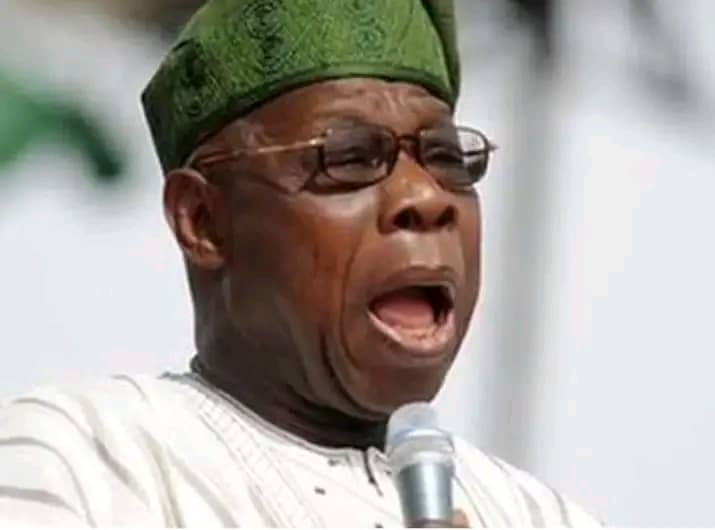
Obasanjo denies involvement in $6bn hydropower project

By Ahmad Deedat Zakari

Nigeria’s former president, Olusegun Obasanjo, has denied any involvement in the $6bn hydropower contract awarded to Sunrise Power and Transmission Ltd in 2003.

Obasanjo challenged Olu Agunloye, the former minister of power and steel, to tell Nigerians where he derived the authority to award a $6 billion contract to Sunrise Power and Transmission Ltd in respect of the Mambila Hydropower Project in 2003.

Sunrise Power is currently in arbitration with Nigeria at the International Chamber of Commerce (ICC), Paris, France, over an alleged breach of contract by the federal government.

In the first arbitration, Sunrise is asking for a compensation of $2.3 billion, claiming it had spent millions of dollars on financial and legal consultants before the contract was jettisoned.

In the second one, the company is asking for a $400 million settlement being the terms of the agreement it entered with the federal government in 2020 to end the arbitration.

Nigeria is fighting the claims on the grounds that Agunloye, who suspiciously awarded the contract one week to the end of his tenure as power minister in 2003, acted illegally.

In an interview with The Cable during the weekend, Obasanjo denied authorising Agunloye to commit Nigeria to the $6 billion “build, operate and transfer” contract.

“When I was president, no minister had the power to approve more than N25 million without express presidential consent. It was impossible for Agunloye to commit my government to a $6 billion project without my permission and I did not give him any permission,” Obasanjo disclosed in the interview with The Cable.

Obasanjo challenged Agunloye to explain where he got the power and authority.

“If a commission of inquiry is set up today to investigate the matter, I am ready to testify. I do not even need to testify because all the records are there. I never approved it,” Obasanjo said.

“When he presented his memo to the federal executive council (on May 21, 2003), I was surprised because he had previously discussed it with me and I had told him to jettison the idea, that I had other ideas on how the power sector would be restructured and funded.

“I told him as much at the council meeting and directed him to step down the memo. I find it surprising that Agunloye is now claiming he acted on behalf of Nigeria. If I knew he issued such a letter to Sunrise, I would have sacked him as minister during my second term. He would not have spent a day longer in office.”

The former president also said Leno Adesanya, the promoter of Sunrise Power, ran away from Nigeria when he was president.

“I would have jailed him if he was in the country because of the things I knew about him. After I left office, he returned and I saw him. I told him that he was lucky I was no longer president. Otherwise, I would have jailed him,” He told The Cable.

National electricity grid collapse puts Nigeria in darkness

By Muhammad Sabiu

National electricity grid collapse puts Nigeria in darkness Nigeria’s shaky national energy grid has crashed once more, leaving numerous towns in the dark, including the federal capital Abuja.

Late Sunday, power companies stated that the outage began shortly before 7 p.m.It’s the sixth reported collapse in 2022, while some speculate that the number could be higher.

The administration attributes the recurring breakdowns to inadequate management and a lack of gas supplies.

On Sunday, Jos Electricity Distribution Plc sent out a Facebook message to its clients informing them of the power outage.

The head of corporate communication, Friday Elijah, stated that “The Management of Jos Electricity Distribution Company Plc wishes to inform the general public that the current outage being witnessed is a result of system collapse.

“We hope to restore supply as soon as supply is restored,” he added.

Minister Abubakar, epileptic power supply: the solution

By Zayyad I. Muhammad 

When ordinary Nigerians are faced with epileptic power supply, their first grumble is on Discos and the Minister of Power. They don’t bother where the problem is coming from because Discos and the Minister of Power are the two ‘entities’ who the common-man rely on electricity matters. Discos charge them for electricity bills, while they view the Minister as the overall head of the power sector in Nigeria, which is true. This is the dilemma every Nigerian minister of power and Disco faces.

Discos often blame poor supply from the transmission end. The Transmission Company of Nigeria (TCN) says the insufficient power supply experienced nationwide is due to low power generation by the generation companies (GenCos).- some of the problems are- Technical hitch in Egbin plant and poor gas supply etc

We must admit that the transmission sector has witnessed tremendous progress – Nigeria witnessed only four grid collapses in 2020 as against the 42 in 2010.

A total system collapse means a total blackout throughout the country, and this is one of the biggest challenges Minister for Power, Engr. Abubakar D. Aliyu has to get an alternative to- because once the country witnesses a total grid collapse, Nigerians will quickly forget the progress made in many years- thus, for example, a 24-hour failure will erase a one-year success.

What should the Minister and his team do to bring a shorter-term solution once the country witnesses a total system collapse? The answer – we need a reductionist approach. Our electricity sector operates on a holistic system  – for example, once the Egbin Thermal Power Station in Ijede / Egbin, in Ikorodu, Lagos witnessed a technical problem, a consumer in Jimeta, Adamawa state will feel the impact, thus blaming his Disco and the Minister of power

The best solution to tackle this issue is Neighborhood Solar Power and Wind-power model. Each neighbourhood in Nigeria that is connected to the national grid has an electricity-transformer site. Technicians and experts in the Ministry of Power, the Rural Electrification Agency (REA), and Discos, in collaboration with other private firms, should look into a model to build solar panel farms and mini wind turbines at these transformers sites or near it at each community. This will help connect the neighbourhoods with alternative power –this will allow members of a community to share the benefits of solar energy when the national grid collapses, even if they lack solar panels on their properties. This system is being operated globally; Nigeria should benchmark it.

Lightweight, flexible wind turbines and small solar panel farms within the neighbourhood can be used to power communities when the national grid collapse without the people feeling any impact- thus, the Minister of Power and Disco will be free from public criticisms. At the same time, Gencos will have ample time to rectify any technical glitch. 

Though Community solar panel farms and Community wind turbines are basically for the population in rural areas without access to the national grid, Nigeria’s electricity system should be a combination of a  ‘hybrid power system’- national grid, mini solar, and mini wind turbine at communities. A  decentralized electricity supply system that alternates between the national grid and renewable energy can be one of the best technical options available for Nigeria. 

We must admit that these two alternatives- neighbourhood solar and wind turbine are not new to the government – some reports say there are ten large-scale Solar Power Plants in Mega Watt in some locations in Nigeria. Nigeria has not put much interest in such a project because of the country’s capacity to generate enough power from its plants. However, transmission and distribution bottlenecks should be a big reason for the government to seriously look into utility-scale solar and mini wind turbine power generation in neighbourhoods to serve as an option when the country is faced it total or partial national grid failure, as the country is witnessing now 

Zayyad I. Muhammad writes from Abuja via zaymohd@yahoo.com.

Electricity: Nigeria still in darkness in the 21st century

As FG is set to reverse the sale of DISCOs and GENCOs, it shows the highest form of corruption and mismanagement that continue to pester in their management. Go to their offices and see mismanagement and corruption personified, poor customer services and daylight bribery, before a meter is issued to a customer and so on.

There are 11 electricity distribution companies in Nigeria. Majority of them violated the agreement they entered with FG. There are over 20 electricity generating companies in Nigeria today but the top six GenCos providing the country with electricity are Egbin Power Limited, Transcorp Power, Shiroro, Kainji/Jebba, Sapele and Geregu. They have also failed to inject money into power generation and are begging government for funds.

Don’t get me wrong. I am not against privatisation of NEPA, but I am certainly not happy with the hurried way the government sold the utility corporation without putting it in good shape so that the private hands that will buy it will have a smooth and easy take up.

I was against selling the power corporation to former leaders, cronies and incompetent men by the Jonathan administration.

The past government didn’t rehabilitate the power plants before selling them. All money set aside were stolen by officials. The government refused to listen. We said they should take a cue from global trend. Almost all countries around the world began their power reforms from different starting points with a long history of handing over relatively well managed power corporations.

In contrast, Nigeria is privatising inherited pieces of the old NEPA systems, a derelict corporation where power generation was allowed to dip below 3500mw .

Nigeria will be the only nation in the world that sold its utility corporation at such an abysmal low power generation level, 3500MW to be precise.

Privatization of the Power and Natural Gas Industries around the world has a starting point which include: industry structure, wholesale market, labour and management relations, regulatory framework, privatization objectives and privatization methods.

Nigeria was so much in a hurry to sell out the entire system without taking a holistic appraisal of the likely consequences of the exercise to the nation.

And this explains why the country will remain in darkness for a very long time!

Aliyu Nuhu write from Abuja, Nigeria.

FG approves DISCOS’ electricity tariff increase

By Aliyu Nuhu

The federal government of Nigeria has approved DISCOS to increase the price of electricity in September. It could be as early as Monday. Already Lagos DISCOS had issued notices to that effect. It will interest you also to know that NNPC will increase the price of petroleum anytime. It could be in a matter of weeks.

The implications are so many. Inflation that is hovering around 100% will be on the rooftop. About 90% of Nigerians are already finding it difficult to feed. Salary earners will turn to beggars as inflation without a commensurate salary increase will see them working for peanuts. Life will be worse off for those that earn nothing. Businesses will be running at a loss. Even before the electricity price increase, most companies said they were working for DISCOS. This is because electricity prices by far outstrip their net profit.

The government said it wants to reduce poverty, but the major component of poverty is hunger. No man with an empty stomach can claim to be rich. The government wants to revive the economy and restore the strength of the Naira. There is no faster way to kill the Naira than allowing inflation to run unchecked.

Prices of cooking gas, kerosene and diesel have long been increased. Poor Nigerians will surely be in a sorry state by the time the government completes its increments in energy prices.

With his harsh economic policies, President Buhari is becoming the undertaker of the poor Nigerians that helped put him in power. Some of them used their last savings to buy his campaign cards that gave him the money to spend on his election, and this is how he is paying them. It is so bad.