Eid-ul-Fitr

SSG Adubiaro urges Muslims to continue charitable acts beyond Ramadan

By Muhammad Abubakar

The Secretary to  Ekiti State Government, Prof. Habibat Adubiaro, has called on Muslim faithful to sustain the spirit of giving and compassion beyond the holy month of Ramadan.

Speaking on Sunday during the Sallah prayer at the Central Mosque Eid Praying Ground in Odo Ado, Ado-Ekiti, Prof. Adubiaro emphasized that acts of kindness and generosity should not be limited to the fasting period alone.

She urged Muslims to make charity a continuous practice, extending support to the less privileged throughout the year. 

According to her, the essence of Ramadan encompasses self-discipline, piety, generosity, and values that should be upheld even after the fasting season concludes.

“Our obligations to humanity do not stop after Ramadan. Giving to the needy should not be seasonal but a lifelong commitment. Let us continue to support one another and uplift the less privileged in our communities,” she stated.

Prof. Adubiaro also commended the Muslim community for their dedication to prayers, fasting, and charitable acts during Ramadan. She urged them to uphold the principles of peace, love, and unity, which are essential to Islam.

The annual fasting prayers at the Central Mosque Eid Ground attracted a large gathering of Muslim faithful, clerics, and community leaders who came together to seek divine blessings and guidance. The event featured fervent prayers for the state and the nation as a whole.

Sustain Ramadan virtues, support less privileged – Governor Yusuf

By Uzair Adam 

The Governor of Kano State, Alhaji Abba Kabir Yusuf, has extended warm Eid-el-Fitr greetings to Muslims in Kano and beyond, urging them to uphold the virtues of patience, compassion, and unity cultivated during Ramadan.  

In a statement issued by his spokesperson, Sunusi Bature Dawakin Tofa, on Sunday, the governor emphasized the need to sustain the spirit of sacrifice and selflessness, encouraging citizens to support the less privileged and promote harmony in their communities.  

Governor Yusuf reaffirmed his administration’s commitment to improving living conditions by ensuring economic growth, social welfare, and infrastructural development. 

He also stressed the importance of peaceful coexistence among different ethnic and religious groups, describing unity as Kano’s greatest strength.  

Addressing the recent killing of Kano indigenes in Edo State, the governor expressed deep sorrow over the tragedy and vowed that his government would not rest until the perpetrators were identified and brought to justice.  

He urged citizens to use the festive period to strengthen family bonds, promote reconciliation, and foster peace. 

He also called on them to emulate the exemplary character of Prophet Muhammad (Peace Be Upon Him) by upholding justice, honesty, and compassion in all dealings.

Sanusi cautions Kano youths against retaliatory attacks over Edo killings 

By Uzair Adam 

The 16th Emir of Kano, Muhammadu Sanusi II, has urged youths in the state to refrain from retaliatory attacks following the killing of 16 northern travelers in Edo State.  

Speaking after leading the two-rakat Eid-el-Fitr prayer at the Kofar Mata Eid ground, the former Governor of the Central Bank of Nigeria (CBN) warned against taking the law into their own hands, emphasizing the need for peace and order.  

“We received reports that some youths in certain areas are planning to carry out reprisal attacks after the Eid prayers. We strongly urge them not to do so,” Sanusi stated.  

He called on authorities to act swiftly in ensuring justice for the victims, stressing that an investigation should be conducted to bring the perpetrators to justice.  

Similarly, the 15th Emir of Kano, Aminu Ado Bayero, also appealed for prompt action, urging relevant authorities to ensure that those responsible for the killings are held accountable.  

Meanwhile, Kano State Governor Abba Yusuf, alongside his deputy, Comrade Aminu Abdussalam Gwarzo, and other government officials, joined worshippers in observing the Eid prayers.  

Sanusi further reminded the Muslim faithful to uphold the lessons of Ramadan and avoid returning to acts of wrongdoing.

Local chicken farmers express worries about low sales ahead of Sallah festival

By Anas Abbas

As the joyful Sallah festival approaches, local chicken, broiler chicken, and a unique breed known as “merger” producers are expressing concerns over a significant drop in patronage, which raises worries about the future of their businesses.

Traditionally, this festive season witnesses a surge in demand for chicken as families prepare to celebrate with delicious meals. However, this year, many farmers are facing an unprecedented challenge, including the high cost of chicken feed, losses of the chickens due to hot weather conditions, and low patronage.

In an interview with The Daily Reality, Mallam Shuaibu Ismail, a seasoned chicken seller and rearer, expressed his disappointment. “In previous years, we would have sold out most of our stock by now,” he said. “This time, however, the orders have been minimal, and it’s worrying. We rely on this season to sustain our families and businesses throughout the year.”

“Due to economic hardship, people are not supporting the local chicken businesses, and the chickens have been affected by an unexpected disease,” he added.

Jamila Sulaiman, a broiler rearer, expressed, “Sallah is usually a time of joy for us. We prepare for months in advance, but this year, many customers seem hesitant to buy. We hope that as the festival gets closer, people will start to purchase more, as the chickens are dying because of the sunny weather. Yesterday morning, I found three dead,” she stated.

“If people don’t buy, we will be at great risk as the price of broiler feed approaches 26000, compared to last year N8000,” she added.

The reasons for the low patronage are varied. Some producers attribute it to the rising cost of living and inflation, which have made it difficult for families to budget for festive meals. Others believe that changing consumer preferences and increased competition from larger poultry suppliers may also be contributing factors.

Despite these challenges, local rearers remain hopeful that demand will increase as Sallah approaches. “We are optimistic that people will remember the significance of Sallah meat for their families,” said Isuhu Wada.

“Purchasing the chicken benefits us and also boosts our economy, as we will spend the money on something else.”

As the festival approaches, local chicken farmers are urging consumers to support their businesses and keep the spirit of Sallah alive through communal meals and community support.

Eid al-Fitr: President Tinubu urges national unity, dedication

By Uzair Adam Imam

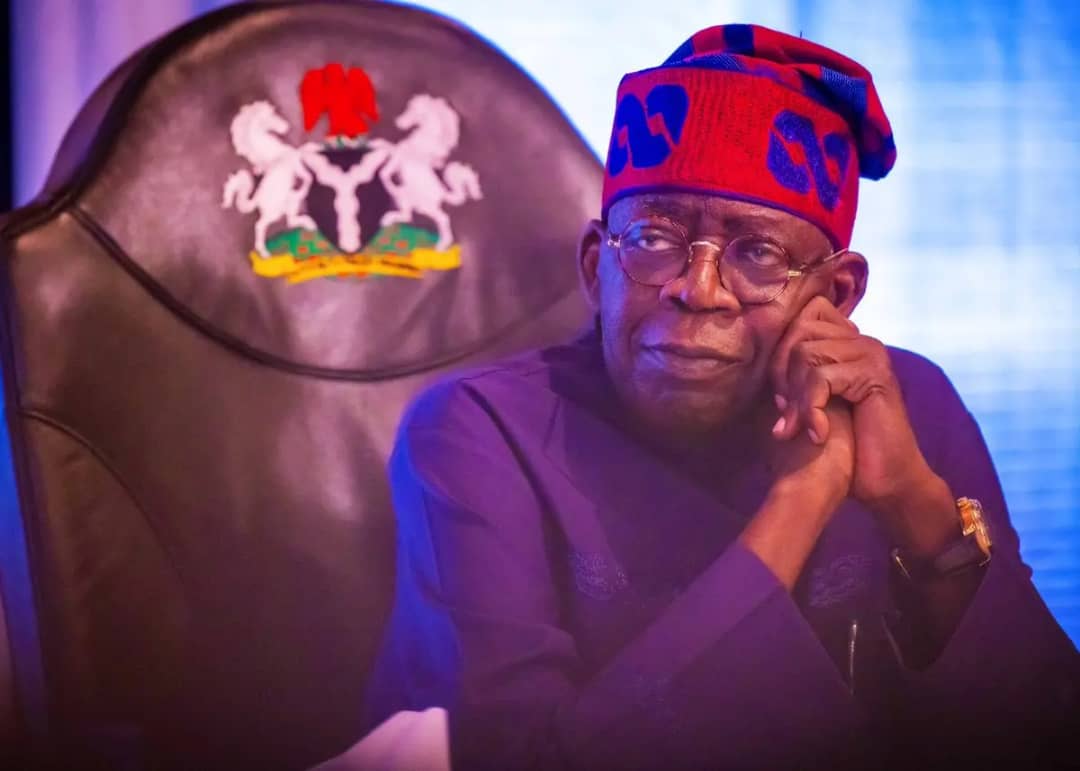
In a heartfelt address marking the conclusion of Ramadan, President Bola Ahmed Tinubu called upon all citizens to unite and recommit themselves to the profound task of nation-building.

Emphasizing the collective responsibility of shaping Nigeria’s future, President Tinubu likened the nation to clay, sculpted by the hands of its people.

“We are the sculptor, and Nigeria is the clay; we build it the way we desire,” he affirmed.

Speaking specifically to the Muslim community on the occasion of Eid al-Fitr, President Tinubu stressed the importance of unity in action. He described the holy season as a time of “total submission to God Almighty and to His command of sacrifice and service to humankind.”

Extending his greetings to Muslims both within Nigeria and across the globe, President Tinubu offered prayers for the acceptance of their supplications and sacrifices by Almighty Allah.

Through a statement issued by his spokesperson, Chief Ajuri Ngelale, the president expressed his hope that the lessons, blessings, and joys of Eid al-Fitr would endure beyond the festivities, shaping the nation’s path forward.

As the nation celebrated Eid al-Fitr, President Tinubu concluded his message by extending warm wishes to all Nigerians, invoking a spirit of unity and prosperity for the nation.

How Kano workers spend Sallah festivities without salaries

By Uzair Adam Imam

Amidst Sallah (Eid-el-Fitr) celebration, when people jubilate the end of Ramadan in new clothes and different sorts of delicious dishes, civil servants in Kano have seen their 4th day of a new month without salaries, the development they said has thrown them and their families into dilemma.

Reacting with dismay, the workers said the government has failed to keep to its promise of paying the salaries on the 25th of every month.

The Daily Reality learnt that some workers had to hide because they could not make any provision to welcome and host their friends and relatives as usual.

The workers who bitterly complained about the government’s carelessness towards their wellbeing said they remained indoors on the Sallah days because they were economically depressed.

Eid-el-Fitr is the period when the Muslim faithful happily celebrate the end of Ramadan. The days are usually welcomed with beautifully sewed clothes, different sorts of delicious foods, and meats of all kinds provided they are Islamically lawful, and relatives from all walks will call on their family and friends to celebrate the day.

Salary delay leaves a big hole in our minds

One of the civil servants who spoke to our reporter said that he went ahead to embrace his old craft of sewing for a living. The civil servant, who our reporter found busy sewing in a tailoring shop, said this delay has left in their minds a very big hole.

He added, “I can not do what I used to do on Sallah days. I couldn’t afford to buy a single chicken for my family. We did not cook anything nor did we have any new clothes to wear.”I used to sit with friends after Eid to exchange greetings and share pleasantries. But this time around, as I was depressed, I remained indoors until 4 pm when I came out to pray,” he added.

Another source, Ibrahim Shu’aibu, decried the experience as horrendous as they largely depend on their monthly income for a living.

Shu’aibu said, “The experience is horrendous. The effect is deep. It has affected almost all aspects of our lives as civil servants. More than half of the civil servants rely on salaries to cater for themselves, their families as well as some members of their relatives.”

In the same vein, this incident has deeply affected many businesses in many states in this country, Kano in particular.”

Personally speaking, this Eid-el-Fitr has passed like an ordinary day. I had to hide because I didn’t make any provision to welcome and host my friends and relatives as usual,” he stated.

Also, another source who pleaded for anonymity confided in our reporter that this Sallah is one of the worse situations he ever found himself in. He said, “We didn’t cook anything for this Sallah because I was broke. And I couldn’t afford to buy Sallah attire for my small kids. Here we are living like baggers.”

The worst part of it is that the government keep mute about the issue. I think the government should have addressed us. But sadly enough, what we only hear or see from the government officials is their beautifully snapped pictures at Umara.”

Another worker, Sulaiman Abdullahi, not his real name, said they found it difficult to handle the situation as they mostly live from paycheck to paycheck.

He said, “that’s why most of the workers are indebted beyond settlement. As we receive our salaries, we go ahead to pay the debt. I know you can imagine how hard we civil servants live our lives.”

Kano economy in a chain – Economist

An economist teaching in one of the Kano institutions lamented that the state economy is in a chain, leaving a lot many sectors affected. The economist said the delay in this month’s salary has affected many businesses, leading to the stop in the facilitation of goods and services in the state.

He further stated that “generally, the state economy is the dependent economy. It is dependent because it depends on workers’ salaries. When workers get paid at the end of every month, they will take their income into circulation by purchasing goods and services.

“At the end of this month, workers have not been paid. The facilitation of goods and services from various markets in the state will stop.

“The welfare of workers and their families will be affected. The state economic facilitation and activities are also stopped. And in long run, it will give a gap in which businesses will be dropped. And if it dropped it will create losses,” he said.

Could Kano State Government respond?

In line with balancing this report, our reporter contacted the Kano State Chief Press Secretary, Malam Abba Anwar, to know the cause of the delay in this month’s salary payment. However, all attempts were proved abortive despite huge complaints by the workers about the government’s silence on the issue.

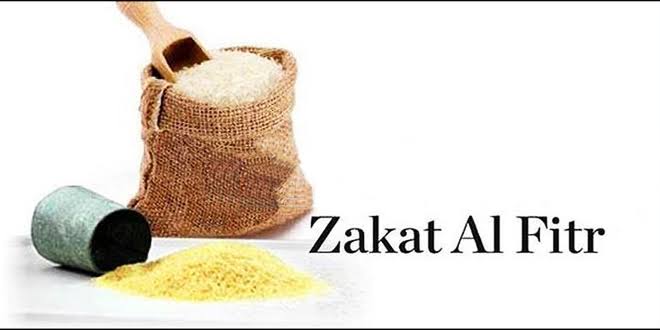
Zakat-ul-Fitr: when, how it should be given

By Uzair Adam Imam

Zakat-ul-Fitr, referred to as Zakkar Fidda Kai in Hausa, as reported in Bukhari and Muslim, is a means of forgiveness to a Muslim for his minor sins during Ramadan, Sheikh Abubakar Ayuba Tangimi said.

Zakat-ul-Fitr, also Zakatur Riqab or Zakatul Abdan, is an obligatory charity for the break of the fast at the end of the month of Ramadan.

Sheikh Tangimi, who explained this to our reporter in an interview, said that woe awaits anyone who deliberately refuses to give this alms.

He said, “Zakat-ul-Fitr is an obligatory alms to any Muslim, man, woman, boy or girl. However, in the case of small kids and slaves, the responsibility of giving the alms is on their parents or masters. 

Zakatul Fitr, when and how to be given 

“Many traditional hadiths, as reported by Abdullahi Bin Umar, Abu Sa’idul Khudri and many of the Prophet’s companions in Bukhari and Muslim, disclosed that the alms is given in the morning before the Eid.

“Some Islamic scholars posited that it could also be given two days before the Eid day. The wisdom behind this is for the poor to have what to eat before going for the Eid prayer, the act that believes to put a smile on the face of the person who lacks.

“Abdullahi Bin Umar said the Prophet (peace be upon him) taught them to give one mud of date, wheat, cikwi, a food made with milk, as their alms. 

The Sheikh also called on the general public to give the alms from the kind of food they consume, adding that “it is entirely wrong to give maize whereas you cook rice.”

Woe betide anyone who deliberately refused to give the arm

Tangimi reiterated that the alms are meant to seek forgiveness for our shortcoming deeds during Ramadan. 

He said, “those people will be punished on the day of judgement for their refusal to give the alms.”

MURIC’s Sallah Message: Get your voters’ cards

News Desk

Nigerian Muslims have been advised to get their voters’ cards in readiness for the 2023 general elections. The advice was given by an Islamic human rights organization, the Muslim Rights Concern (MURIC), in a Salah message issued on Sunday, 1st May 2022 by the chairman of the group in Sokoto State, Barrister Muhammad Mansur Aliyu.

The statement reads:

“Nigerian Muslims will join billions of their brethren in celebrating the end of the 1443 (2022) Ramadan season on Monday, 2nd May 2022. We felicitate with President Muhammadu Buhari, Senate President Ahmed Lawan and the Speaker of the House of Representatives, Femi Gbajabiamila.

Barrister Muhammad Mansur Aliyu also paid homage to the leader of all Nigerian Muslims, the Sultan of Sokoto.

He said, “We also congratulate the leader of all Nigerian Muslims, the Sultan of Sokoto and President-General, Nigerian Supreme Council for Islamic Affairs (NSCIA), Alhaji (Dr.) Muhammad Sa’ad Abubakar, on the occasion of this year’s Id al-Fitr.

“MURIC reminds Nigerian Muslims of their civic responsibility of participating in all aspects of political activities in the country particularly as we prepare for the 2023 general elections. We lay emphasis on the need for every Muslim to collect his or her voter’s card in order to be eligible for voting. No amount of sacrifice is too much for this important civic duty.

“Muslims must not shun politics if they want to be liberated from the current spate of stigmatization, marginalization and impoverishment. We warn that Muslims who fail to obtain their voters’ cards have voted for bad rulers and Muslim haters whose main preoccupation is to persecute and oppress Muslims.

“Apart from obtaining their voters’ cards, Muslims must ensure that they participate in all political activities which will take place between now and the election period, including waiting patiently to cast their votes on election day.

Barrister Muhammad Mansur Aliyu had a word for South West Muslims: “Our brothers in the South who are facing persecution on a daily basis must allow their number to count by ensuring that they obtain their voters’ cards. Muslims constitute the majority in a place like the South West but unfortunately, they are still facing oppression today because they have not been leveraging on their majority status.

“The opportunity has now come. Go all out and get your voter’s card. Your voters’ card is your weapon of liberation. A majority population that fails to vote is, technically speaking, a minority. We, therefore, urge you to spare no efforts in getting your voters’ cards in readiness for the 2023 general election.

“We are looking forward to an election that will reveal the true picture in the region. A majority of people that has been turned into a minority due to their apathy for politics must wake up from their deep slumber. We must stop the stereotyping, the segregation, the religious apartheid and the hijab paranoia.

“We must stop the practice of denying jobs to qualified Muslims and their political marginalization. The time to do it is now. Political power will change the narrative and the popular vote is the only legitimate tool for obtaining political power in a true democracy. Your vote shall make you free.”