Economic Reform

Nigeria’s predicament: Why the gods are not to blame 

By Zekeri Idakwo Laruba

Many years ago, though I can’t quite recall what class I was in at the time, I read with deep suspense the secondary school play The Gods Are Not to Blame, a gripping adaptation of Sophocles’ Oedipus Rex by Ola Rotimi. The story left a lasting impression on me.

‎‎The play retells the classical Greek tragedy in a Yoruba setting, replacing Delphi with Ifa, but retains the central tragedy: a prophecy that Odewale would kill his father and marry his mother. The oracle had spoken. His parents, terrified and confused by the fate foretold, did everything to avoid it. They gave the boy away, hoping to cheat destiny. But in doing so, they unknowingly set in motion the very events they hoped to prevent.

‎Like a mirror held up to society, the play reminds us that fate, while powerful, is often enabled by human choices. And as I reflect on Nigeria’s present economic and political situation, I am compelled to draw a parallel. The gods, be they ancestral spirits, destiny, or structural circumstances, are not to blame for our predicament. The fault lies within us, among the citizens, and in our daily conduct. Nigeria’s crisis is not rooted in some divine curse, leadership, or preordained calamity. The tragedy is man-made, self-reinforced, and perpetuated by generations of unchecked habits.

‎The go-to culprit for our country’s dysfunction is always leadership; yes, he must be voted out. And in fact, we have had our share of weak, corrupt, selfish or visionless leaders. But to lay the entire burden of national failure on leaders alone is to ignore the broader ecosystem that produces and enables them. Leadership, in many ways, reflects the society from which it emerges.

As the former national secretary of the Congress for Progressive Change (CPC), Buba Galadima, recently argued on Arise TV, the problem isn’t merely the constitution or even the political structure. The constitution may have its flaws, yes, but no document, no matter how perfectly worded, can save a people who refuse to uphold its spirit. The rot goes deeper, into the very fibre of society.

‎The average Nigerian seeks change, including better roads, reliable electricity, transparent governance, and reduced costs for transportation and foodstuffs, but is reluctant to make the personal sacrifices necessary for this transformation. We want leaders who won’t embezzle funds, but we are ready to bribe our way out of traffic offences, rig student union elections, or inflate business invoices for profit. We demand accountability from the top while practising impunity at the grassroots.

‎‎What we face is not a constitutional crisis, but a moral and cultural one. An attitudinal crisis. A society where dishonesty is normalised and rewarded cannot produce integrity at scale. A nation where people cheat customers, underpay staff, evade taxes, and applaud fraudsters as “smart” will always find itself circling the drain of underdevelopment.

‎‎You see it in business, in education, in religious institutions, even in our homes. The trader who mixes sand/stones in beans to increase weight; the employer who withholds salaries while funding a lavish lifestyle; the pastor or imam, even herbalist, who uses fear to manipulate followers; the teacher who extorts students for grades; the parent who teaches a child to lie to visitors, these are not the acts of the gods. They are human choices.

‎‎Much is said about fighting corruption in public office. But who will fight it in the private lives of citizens? In that small business of yours, are you sincere? Do you treat your staff the way you demand to be treated by your political leaders? Do you keep your promises? Are your scales balanced? Do you honour contracts? These questions are not rhetorical; they are foundational.

‎Corruption does not begin at the national budget office; it begins in the market stall, the classroom, and the family dinner table. Before it becomes institutionalised, it is psychological. We must cleanse the mindset that normalises dishonesty, excuses shortcuts, and praises the rich regardless of how their wealth was acquired.

‎What Nigeria urgently needs is a complete national reorientation campaign, not the kind that involves empty slogans or jingles on the radio, but a sustained, grassroots movement to rebuild ethical standards. We need to teach honesty not just as a virtue, but as a power. We must reintroduce shame where wrong is done and rekindle collective pride in doing things right.

‎This means rethinking our educational curricula to emphasise civic duty and moral reasoning. It means reforming religious institutions to prioritise substance over spectacle. It means applying social pressure on influencers, celebrities, and community leaders to model ethical behaviour. It also means supporting the rare public officials who dare to lead by example.

‎‎If the gods are not to blame teaches us anything, it is that destiny is not an external enemy; it is a consequence of our own decisions. Nigeria is not doomed. It is not a failed state by fate. But we must be honest: we are dangerously close to reaping the full harvest of our collective neglect.

‎To change our national direction, we must start with the mirror, not the ballot box. Reforms must begin in the marketplace and the family unit before they can translate to public office. Only then will the constitution come alive. Only then will good leadership be sustained. Only then will Nigeria’s story turn from tragedy to triumph.

‎The gods are watching, yes. But they are not to BLAME. WE ARE!

Zekeri Idakwo Laruba is the Assistant Editor of PRNigeria and Economic Confidential. He can be reached via idakwozekeri93@gmail.com.

Green numbers, red realities

By Oladoja M.O

The Bola Ahmed Tinubu administration has unarguably embarked on a bold and unapologetic mission to retool Nigeria’s economy. From the abrupt removal of petrol subsidies to the floating of the naira, the unification of multiple FX windows, and most recently, the signing of the landmark Tax Reform and Fiscal Policy Bill, there is no denying that the government has chosen a macro-to-micro economic approach. That is, fix the big picture first, then let the gains gradually filter to the people.

And indeed, the “green lights” are beginning to blink. Global credit rating agencies such as Fitch and Moody’s have upgraded Nigeria’s outlook. Foreign investors are expressing renewed interest. Oil production is improving, FX liquidity is easing, and fiscal buffers are being rebuilt. From a purely macroeconomic standpoint, Nigeria appears to be reclaiming its place as a serious economy with a reform-minded leadership.

But there’s a contradiction that cannot be ignored: on the streets of Agege, Aba, Makurdi, and beyond, the economy is still red; red markets, red household budgets, red transport fares, and red faces of frustration. Prices have tripled in some cases. Wages have barely moved. Many can no longer afford their children’s school fees. Traders are losing capital to inflation. Food is fast becoming a luxury. Amid this hardship, Nigerians are asking the most honest, piercing question of the moment:

“If the economy is growing, why am I still shrinking?” “If the economy is growing, where is the growth in my pocket?”

This is not a question born out of ignorance. It is a legitimate cry that speaks to the disconnect between macroeconomic progress and microeconomic relief. Yes, the big numbers are looking better, but the lived realities of the majority are deteriorating. To understand this discrepancy, we must first understand the difference between macroeconomics and microeconomics. 

Macroeconomics concerns itself with the national economy, including factors such as GDP growth, inflation rates, budget deficits, and foreign exchange reserves. These are the indicators investors, multilateral organisations, and economic analysts watch. Microeconomics, on the other hand, deals with everyday realities: how much you earn, what you can buy with that income, whether your small business can survive, and whether prices of food, fuel, and medicine are manageable. In theory, macroeconomic stability should, over time, trickle down and improve microeconomic conditions. But in practice, especially in a country like Nigeria, that process is rarely smooth or automatic.

The truth is that reforms, especially big, structural reforms create what economists call a “lag effect.” That is, the pain comes first; the relief comes much later. Floating the naira made the exchange rate more transparent and investor-friendly, but it also instantly raised the price of imported goods. Removing fuel subsidy fixed a long-standing fiscal leak, but it also sent transport and food prices soaring. And because Nigeria imports a significant share of its consumption, inflation spiked, with devastating effects on the poor. Salaries have not caught up. Social safety nets are thin. Informal workers who make up over 60% of Nigeria’s labour force are primarily left to fend for themselves.

Yet, this is the path the government has chosen. And it is important to say this clearly: choosing a macro-first approach is not inherently wrong. In fact, for a country like Nigeria, plagued by decades of financial mismanagement, it is even necessary. Fixing subsidies, unifying the exchange rate, and rebuilding fiscal credibility are long overdue. Every administration must work with the strategy it believes in, and this government has opted to “stabilise the roof before fixing the foundation.” That, in itself, is a policy choice one with clear upsides.

However, macroeconomic success without a visible microeconomic impact is a hard sell to a hungry population. People don’t live in GDP. They live on garri, transport fares, and electricity bills. While international investors applaud the courage of reforms, local citizens are asking: Where is the evidence that my own life is getting better?

The administration is not blind to this concern. The recently signed Tax Reform and Fiscal Policy Bill is part of a broader effort to expand the tax net and capture the informal sector, both to raise revenue and bring more economic players into visibility. But again, for the everyday Nigerian, these reforms are abstract. What matters is how they translate into food on the table, money in the pocket, and hope in the future.

So, how do we build a bridge between this macro-level retooling and the micro-level reality of the people?

First, we must move beyond tokenistic interventions like cash transfers and instead design innovative relief tools that tie micro-support to long-term productivity. For example, introducing community-based digital vouchers that support food or fuel purchases but are redeemable only when tied to school attendance, digital payments, or participation in a training program would ease the current pressure while also boosting the country’s long-term human capital.

Second, the government must decentralise economic adaptation. Nigeria is too diverse for a one-size-fits-all economic playbook. Establishing “Local Reform Chambers” committees made up of state governments, market leaders, and community associations can help interpret macro policies at a local level and propose area-specific interventions. If subsidy removal causes a shock in Zaria or Owerri, let those communities co-design their response, be it cooperative transport schemes or communal food banks, funded partially by the government and partially by local actors.

Thirdly, data must become a feedback tool, not just a planning tool. The government should publish a monthly Macro-to-Micro Progress Report that clearly shows how reforms are improving incomes, lowering costs, or reaching underserved communities. Let people see the path of change, even if it’s still under construction.

Finally, the government must actively invest in skills, tools, and local infrastructure. Don’t just train youths to code; train them to fix machines, install solar panels, manage cooperatives, and build homes. Make markets more productive with solar lighting, shared storage, and access to water. These are the enablers that convert national growth into grassroots empowerment.

Conclusively, it is fair to acknowledge that the current administration is taking steps that previous governments only danced around. The reforms are not without merit and frankly, not without courage. But reforms are not complete until they reach the people.

The Nigerian people are not impatient; they are simply in pain. And when they ask, “If the economy is growing, why is my pocket not?” they are not being unreasonable. They are asking for what every citizen deserves: a place in the progress. Now is the time to move beyond balancing spreadsheets and begin balancing lives because growth is only real when it is felt.

And no reform is complete until the people rise with the numbers.

Oladoja M.O writes from Abuja and can be reached at: mayokunmark@gmail.com

Appraising President Tinubu’s transformational strides in two years

By Jamilu M Magaji

On May 29, 2025, President Bola Ahmed Tinubu, GCFR, marked his second anniversary as the President and Commander-in-Chief of the Armed Forces of the Federal Republic of Nigeria. This milestone represents not just the passage of time, but a turning point in Nigeria’s modern political and economic history—a testament to bold reforms, strategic governance, and a relentless pursuit of national development. 

In just 24 months, President Tinubu’s administration has laid a firm foundation for economic revitalisation, security stabilisation, and human capital investment. The following is my attempt to appraise the two years of transformational strides of the presidency driven by purpose, progress, and the promise of a new Nigeria:

1. Empowering Nigerians through Strategic Financial Interventions

One of the hallmark initiatives of the Tinubu administration is the Presidential Loan and Grant Scheme, which has supported over 900,000 entrepreneurs and small business owners. This lifeline of financial empowerment is revitalising the informal sector and unlocking grassroots innovation. Complementing this effort, the Students’ Loan Scheme has already benefitted over 300,000 young Nigerians, giving them access to quality higher education without the financial burden that has held back generations. These programs signal a long-overdue democratisation of access to capital and education.

2. Restoring Fiscal Stability and Investor Confidence 

In a remarkable feat, Nigeria has cleared over $10 billion in FX debt, a move that has stabilised the naira and restored international confidence. This bold financial reengineering is matched by a surge in Foreign Direct Investment (FDI), with over $50 billion in new commitments, indicating trust in Nigeria’s economic direction. In addition, Nigeria’s net foreign exchange reserves have seen an unprecedented jump — from $3.99 billion in 2023 to $23.11 billion in 2024 — a result of stringent reforms, strategic investment policies, and renewed international engagement.

The oil and gas sector, once plagued by underinvestment, is also experiencing a renaissance. Over $8 billion in new investments have been unlocked, laying the groundwork for energy security and industrial expansion. Meanwhile, the solid minerals sector attracted over $800 million in processing investments in 2024 alone, positioning Nigeria for a post-oil economy.

3. Infrastructure and Economic Growth on the Fast Lane

President Tinubu has significantly accelerated infrastructure development, with over 440 road projects currently underway, including more than 2,700 kilometres of new superhighways. These projects are not just roads — they are economic corridors, connecting communities, facilitating trade, and enhancing logistics nationwide. This infrastructure push has underpinned Nigeria’s 3.84% GDP growth in Q4 2024, the highest in three years, signalling a recovering and resilient economy under proactive leadership.

4. People-Centric Reforms and Regional Inclusion

The federal government approved and commenced payment of a N70,000 minimum wage, reinforcing its commitment to the welfare of Nigerian workers. This is a bold move by the government to address rising living costs and boost workers’morale. Moreover, the administration has introduced four new landmark Tax Bills, ensuring a more equitable, transparent, and growth-oriented tax system. These legislative milestones are simplifying compliance and boosting non-oil revenue streams.

Furthermore, new Regional Development Commissions have been established, decentralising development and giving states a stronger voice in the national growth agenda. This was a nod to Nigeria’s long-standing diverse regional aspirations.

5. Securing the Nation, Securing the Future

Perhaps one of the most critical achievements is in the area of national security. Under President Tinubu’s leadership, over 13,500 terrorists have been eliminated, significantly degrading insurgent capabilities and restoring relative peace to previously volatile regions. These gains are the result of strategic military coordination, improved equipment, and the unwavering resolve to secure every inch of Nigerian territory.

In conclusion, let me say that two years into his presidency, President Bola Ahmed Tinubu has demonstrated that transformative leadership is possible when courage meets vision. As the nation looks ahead, Nigerians are increasingly hopeful that these gains will be deepened, institutionalised, and scaled for future generations.

Magaji, a Public Affairs Analyst based in Birnin Kebbi, Kebbi State, can be reached via: mjmagaji@gmail.com.

Atiku blasts Tinubu over unpaid wages, demands release of labour activist

By Muhammad Abubakar

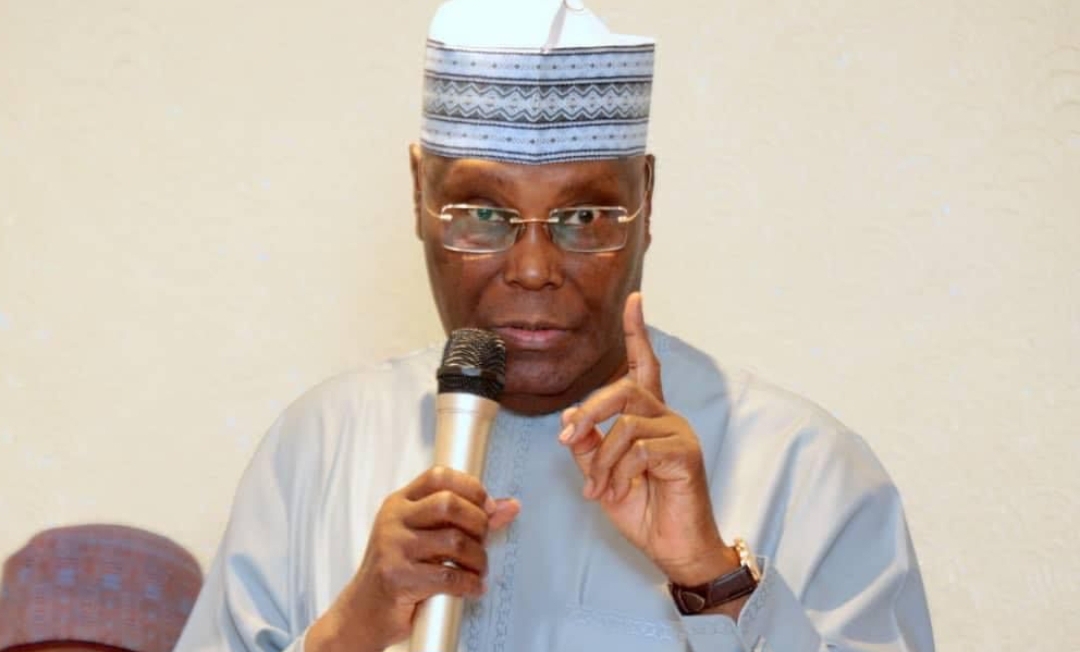
Former Nigerian Vice President and presidential candidate Atiku Abubakar has criticised the Bola Ahmed Tinubu administration over unpaid wage awards and the detention of labour activist Comrade Andrew Uche Emelieze.

In a statement shared on his social media accounts, Atiku accused President Tinubu of worsening economic hardship through the “hasty and thoughtless” removal of fuel subsidy on his inauguration day, which he said plunged Nigerians into inflation, hunger, and despair.

Atiku said the government promised a ₦35,000 monthly wage award to federal civil servants pending the conclusion of a new minimum wage deal. Ten months later, only six months have been paid, leaving ₦140,000 owed per worker.

He condemned the arrest of Comrade Emelieze, who was detained for attempting to organise a peaceful protest over the unpaid wages, calling it “an affront to democracy.”

“We demand the immediate and unconditional release of Comrade Emelieze,” Atiku said. “Nigerian workers will not be silenced, intimidated, or forgotten.”

The Federal Government has yet to respond to the statement.

Tinubu: Reforms are working, Nigeria is on path to stability and growth

By Hadiza Abdulkadir

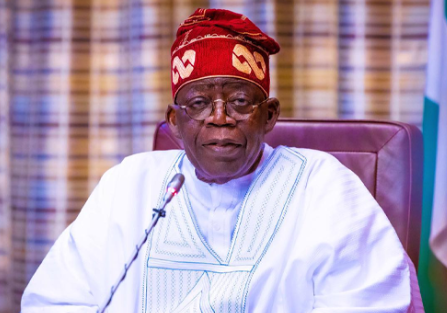
President Bola Ahmed Tinubu marked the second anniversary of his administration on Wednesday with an optimistic national address highlighting the government’s achievements and reaffirming commitment to economic reform, national security, and human capital development.

Speaking from the Aso Rock Presidential Villa, President Tinubu declared that his administration had made “undeniable progress” despite the sacrifices demanded of citizens, especially following the removal of fuel subsidies and the unification of foreign exchange rates.

“We are halfway through the journey that began 24 months ago. Today, I proudly affirm that our economic reforms are working,” he said, citing improvements such as easing inflation, increased foreign reserves, and higher state revenues.

According to the President, the federal government recorded over ₦6 trillion in revenue in Q1 2025 and successfully reduced the fiscal deficit from 5.4% of GDP in 2023 to 3.0% in 2024. Additionally, the country’s net external reserves rose sharply to over $23 billion by the end of 2024, a fivefold increase from the previous year.

In the energy sector, Tinubu noted a 400% increase in oil rig activity since 2021 and over $8 billion in new investments. “We have stabilised our economy and are now better positioned for growth and global shocks,” he added.

The President also highlighted reforms in taxation, infrastructure development, and the health sector. He announced the expansion of primary healthcare centres, the establishment of new cancer treatment centres, and a tax policy overhaul aimed at supporting low-income households and small businesses.

“Together, we are creating a system where prosperity is shared, and no one is left behind,” he said.

Tinubu celebrates economic resilience, sets sights on inclusive growth

By Muhammad Sulaiman

President Bola Ahmed Tinubu has reiterated his administration’s commitment to inclusive economic growth, declaring that the country’s economic resilience is beginning to yield tangible benefits for citizens across sectors.

Addressing the nation on the second anniversary of his government, President Tinubu described 2025 as a year of fiscal turnaround and recovery, driven by bold reforms under the Renewed Hope Agenda.

“Despite the bump in the cost of living, we have made undeniable progress,” he stated, noting improvements in inflation, food prices, and investor confidence.

A key highlight of the President’s remarks was the government’s aggressive tax reform agenda, which pushed the tax-to-GDP ratio from 10% to over 13.5% within a year. Tinubu explained that this success was made possible by simplifying tax policies and offering relief for low-income households and small businesses.

“We are eliminating the burden of multiple taxation and introducing a fairer tax system. Essential services like food, healthcare, and education will attract 0% VAT,” he announced.

President Tinubu also underscored the importance of sustainable national finances, stating that wasteful and opaque tax waivers had been abolished in favour of targeted incentives supporting high-impact sectors such as manufacturing, agriculture, and technology.

The administration is establishing an independent Tax Ombudsman to ensure accountability. The President says this move will protect small businesses and vulnerable taxpayers.

“We are creating an economy where investment is welcome, businesses can thrive, and every Nigerian can benefit from shared prosperity,” he added.

The President noted that subnational governments had also reaped the benefits of the reforms, with an increase of over ₦6 trillion in state revenues in 2024. This has enabled them to meet debt obligations and invest more in critical infrastructure.

“Our reforms are not just fiscal adjustments. They are about restoring confidence, strengthening institutions, and building a foundation for future generations,” Tinubu concluded.

Student leaders reject Tinubu’s rice palliatives, demand focus on educational reform

By Abdullahi Mukhtar Algasgaini

Student union leaders from Obafemi Awolowo University (OAU) in Ile-Ife and Ahmadu Bello University (ABU) in Zaria strongly disapprove of President Bola Tinubu’s distribution of rice palliatives to student leaders across Nigerian tertiary institutions. They call for more substantive reforms in the education sector.

In separate statements, the Student Union Government (SUG) Presidents of both universities criticised the gesture, highlighting that the rice distribution fails to address the deeper challenges Nigerian students face, particularly tuition costs and poor university infrastructure.

Damilola Isaac, the SUG President at OAU, emphasised that he had not received any rice palliatives and made it clear that he would not accept them, even if offered. Isaac stressed that his administration focuses on advocating for systemic change in the education sector rather than accepting temporary handouts that do not address the root causes of student hardship. He called on the government to prioritise measures that would reduce tuition burdens, improve university infrastructure, and generally enhance the quality of education across the country.

“While the government may have good intentions, it is crucial that efforts are directed toward addressing the real issues in education,” Isaac said. “We are committed to fighting for the interests of students and ensuring accountability in the education sector.”

Similarly, Ibrahim Nazeer, the President of the Students’ Representative Council at ABU, voiced his rejection of the rice palliatives. Nazeer, through his media advisor Abdulrazak Shuaibu, said he would not accept the rice unless it were ensured that all students at ABU received their fair share. He urged the government to focus on creating an environment where students can afford necessities like food without relying on sporadic palliative distributions.

Instead of periodic rice handouts, Nazeer suggested that the government focus on long-term solutions that ensure students have access to basic necessities year-round.

While some student leaders, including Fahad Abdullahi, the SUG President of Abubakar Tafawa Balewa University (ATBU), confirmed receiving the palliatives, several other institutions, including Usmanu Danfodiyo University, Sokoto (UDUS), and Moshood Abiola Polytechnic (MAPOLY), reported being unaware of the distribution.

The rice palliative, which allocated two 25kg bags of rice to each SUG President, has been criticized for being limited to student leaders rather than the entire student body. Many students expressed concerns over the perceived unfairness of the selective distribution, noting that all students, not just those in leadership positions, are affected by the country’s economic challenges.

Anas Abdulrahman, a student from UDUS, questioned why only student leaders received the palliative. He stressed that all students should benefit from government initiatives, as they are all citizens of Nigeria. “We all voted for this government, and we should all be considered for such palliatives,” he remarked.

The rice distribution is part of the government’s repeated efforts to alleviate the economic hardship exacerbated by the removal of the petrol subsidy and the floating of the naira, leading to high inflation and food price increases. Despite these measures, inflation has reached 34.8%, with food inflation soaring to 38.94%, according to the National Bureau of Statistics (NBS).

Many students and citizens are questioning the effectiveness of distributing rice as a response to the economic crisis, with some suggesting that more meaningful policy changes are needed to address the underlying economic issues facing Nigerians.

As Nigeria grapples with economic instability, student leaders are calling for a shift in focus toward lasting educational reforms, improved infrastructure, and sustainable solutions to the challenges faced by students.

Tinubu responds to Atiku: “Your proposals lacking in details, rejected by Nigerians”

By Uzair Adam

President Bola Ahmed Tinubu has responded sharply to former Vice President Alhaji Atiku Abubakar’s recent criticism of his economic reform agenda.

The Daily Reality reports that the response was conveyed in a statement issued Tuesday by Bayo Onanuga, Special Adviser to President Tinubu on Information and Strategy.

Onanuga noted that Atiku’s proposals, which he described as lacking in detail, were already rejected by Nigerians in the 2023 election.

“If he had won the election, we believe he would have plunged Nigeria into a worse situation or run a regime of cronyism,” Onanuga stated.

The statement began, “We have just read a statement credited to former Vice President Alhaji Atiku Abubakar, in which he tried to discredit President Bola Tinubu’s economic reform programmes while pushing his untested agenda as a better alternative.”

It added that Atiku’s defeat in the election was partly due to his commitment to privatizing the NNPC and other national assets, a move perceived as favoring close allies.

“Nigerians have not forgotten this, nor would they be comforted by Atiku’s track record when he managed the economy during President Olusegun Obasanjo’s first term from 1999 to 2003.

“As Vice President, Atiku supervised a questionable privatization program. He and his boss displayed a lack of confidence in our educational system, establishing their own universities while public institutions struggled.”

Onanuga criticized Atiku’s statement as “cheap talk,” suggesting it is easy to criticize without acknowledging the positive outcomes already emerging from Tinubu’s reforms, even amidst temporary challenges.

“Despite his futile attempt to sway Nigerians, it is clear that the former Vice President could not refute the soundness of the reforms pursued by the Tinubu administration.”

He added that Atiku’s call for a gradualist approach reveals a misunderstanding of the severe challenges faced by the Tinubu administration.

“President Tinubu met a country facing several grave challenges. Fuel subsidies were siphoning away enormous resources we could ill afford, and there was criminal manipulation in the forex market. No responsible leader would allow these economic disorders to persist.”

While advocating for gradual reforms may sound appealing, Onanuga asserted that Tinubu has taken decisive actions that should have been implemented years ago, during the administration when Atiku served as Vice President.

In response to Atiku’s call for empathy in governance, Onanuga highlighted that this aligns with Tinubu’s commitment to protecting the most vulnerable.

“President Tinubu has consistently emphasized the need for compassion in his reforms, prioritizing social safety nets and targeted support for those affected by economic transitions,” he added.