Drugs

NDLEA arrests 49 suspects in Kano during two-day drug raids

By Uzair Adam

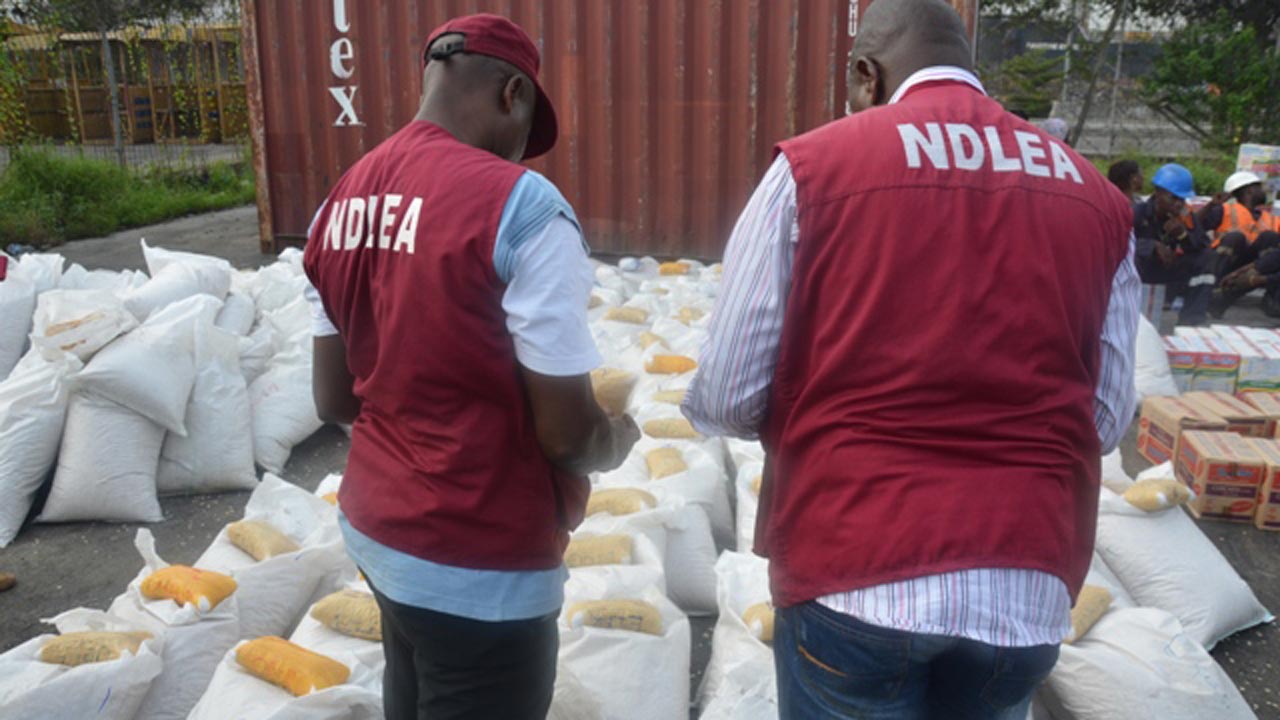
The National Drug Law Enforcement Agency (NDLEA), Kano Strategic Command, says it has arrested 49 suspects for various drug-related offences involving different quantities of illicit substances in the state.

Sadiq Muhammad-Maigatari, the Command’s Public Relations Officer, disclosed this in a statement on Wednesday in Kano.

He said the suspects were apprehended during coordinated raids on August 7 and August 8, as part of intensified efforts to curb drug crimes.

“On August 7 and 8, the agency dislodged several key locations known for drug-related activities, arresting 34 suspects at Massallacin Idi, Fagge Plaza, Kofar Mata, Kofar Wambai, Kofar Dan’agundi, Makabartar Dan’agundi, Ladanai, Zage, and Tashar Rimi at Rimi Market,” he said.

He added that NDLEA operatives also raided Kano Line Motor Park and Tashar Rami Motor Park in Na’ibawa, where 15 additional suspects were arrested.Items recovered from the suspects included cannabis sativa, Pregabalin, diazepam, codeine syrup, Rohypnol, “suck and die,” rubber solution, and locally made weapons.

The NDLEA State Commander, Abubakar Idris-Ahmad, said the operation was part of ongoing measures to dismantle drug joints and disrupt dealers’ networks in the state.

“Since the elevation of the NDLEA’s operations to a strategic command level, there has been a notable increase in the effectiveness and scope of our work,” Idris-Ahmad stated.

He commended the agency’s Chairman and Chief Executive Officer, Retired Brig.-Gen. Mohamed Buba-Marwa, for his unwavering support and leadership, noting that his commitment to a drug-free society had strengthened the resolve of the Kano Command.

Idris-Ahmad urged those involved in drug trafficking to desist, warning that the NDLEA would not relent in its mission to protect the public from the dangers of drug abuse and trafficking.

He said investigations were ongoing, and the suspects would be charged in court upon completion.

Crushing Drugs: NDLEA’s success stories under WADA

By As-sayyidul Arafat Abdulrazaq 

The War Against Drug Abuse (WADA) in Nigeria, led by the National Drug Law Enforcement Agency (NDLEA), is a vigorous effort to combat a problem that has been undermining the country’s social fabric. Launched on June 26, 2021, under the Buhari administration, it focuses not only on apprehending drug dealers—although there is a significant emphasis on that—but also on a comprehensive strategy to reduce both the supply and demand for illicit drugs through enforcement, education, and community action.

Nigeria’s drug problem is severe. Cannabis, codeine, tramadol, and methamphetamine (locally known as “ice” or “mkpuru mmiri”) are widespread, particularly among young people. According to the United Nations Office on Drugs and Crime (UNODC), cannabis leads the list, followed by opioids and cough syrups containing codeine. This is not merely a health crisis; it also fuels crime, cultism, and insurgency, as groups like Boko Haram are reportedly financing their operations through drug trafficking.

WADA’s strategy divides into two lanes. On the supply side, the NDLEA’s Offensive Action, which began in January 2021, has been relentless. Under Brig. Gen. Buba Marwa’s leadership, the agency has achieved significant victories: over 57,792 arrests, 10,572 convictions, and more than 10 million kilograms of drugs seized since he took charge. 

The demand side is where WADA’s heart is on the demand side: prevention through awareness. They’ve rolled out sensitization campaigns in schools, mosques, churches, markets, and workplaces nationwide and given lectures at places like Maku Grammar School in Oyo or Jama’atu Islamiyya in Kogi State.

How did they do it? Through grassroots hustle and smart partnerships. NDLEA’s 36 state commands collaborated with local leaders, traditional rulers, youth groups, and the Association of Local Governments of Nigeria (ALGON) to host talks and rallies. The “Save Our Families” campaign in 2024 distributed drug test kits to parents to prevent the drug abuse crisis from affecting homes.

The results are clear. By mid-2024, over 13,000 people will have received counseling or rehab, a significant increase from just 599 in 2020, with 8,129 individuals receiving assistance last year alone, according to LEADERSHIP on February 25. This reflects individuals choosing change because they’ve heard the message. In Imo State, after a talk in 2024 at Owerri-Aba Primary, teachers began to look for warning signs. 

In Kaduna State, a February 24 event prompted residents to pledge for drug-free neighborhoods, resulting in a significant increase in calls to NDLEA’s helpline by early 2025. In Kano, where Brig. Gen. Buba Marwa highlighted 1.07 millionusers during the launch of a sensitization campaign against drug abuse, domestic violence, and the illicit drug trade organized by the National Orientation Agency (NOA) in Kaduna, Marwa discussed Almajiri children, aiming to reduce the number of young people that dealers can target, which could decrease crimes such as gang fights and theft.

This year, WADA’s sensitization efforts are making a significant impact in schools and communities. Lectures were held at the Federal Cooperative College in Ibadan on February 20, warning students about the dangers of drugs. Additionally, there is an ongoing initiative in the FCT with new area commands in Kwali and Kuje aimed at spreading the message further. They are maintaining the momentum from 2024, during which they reached over 1.8 million people alone.

But it is not all solved. Drugs still flow, and poverty keeps some trapped. However, with over 10 million kilos seized,including 25 tons destroyed in Kogi this week, the NDLEA combines this effort with outreach to make a difference. WADA’s success lies not only in the drugs they intercept; it’s also in the minds they influence. This fight demonstrates that Nigeria can push back step by step, with a plan that is working.

Looking ahead, the NDLEA could strengthen its capabilities by adopting modern technology. Currently, the NDLEA relies significantly on human intelligence and physical operations. Their officers, including the elite Strike Force established in 2021, carry out raids, patrols, and manual inspections at airports, seaports, borders, and highways. However, these efforts, while effective, are basic compared to what will be available in 2025. 

Traffickers are adapting by hiding drugs in compressors, duvets, and even soap bars, as seen in recent busts. Drones, for instance, are not widely mentioned in their operations, yet they could scour remote cannabis farms or stash points along the border. Digital tracking, AI, and data analytics to map online drug deals or shipping patterns seem to be underutilized.

As-Sayyidul Arafat Abdulrazaq is Corp member at the Center for Crisis Communication and can be reached at as.sayyid21@gmail.com.

Nigerian customs seize illicit drugs worth N117.6 million in Ogun State

By Sabiu Abdullahi 

The Ogun Area 1 Command of the Nigerian Customs Service has made a significant seizure of illicit drugs, including cannabis sativa and Tramaking tablets valued at N117,587,405. 

Comptroller James Ojo, Controller of the Ogun Area 1 Command, revealed the seizure during a media briefing on Friday while handing over the contraband to the National Drug Law Enforcement Agency (NDLEA). 

Ojo expressed concern about the alarming rise in drug smuggling, describing it as “worrisome and a significant threat to national security.”

He noted that the seizures, made across various strategic locations in Ogun State, highlight the severity of drug trafficking within Nigeria’s borders. 

The seized items include 403 sacks and 6,504 parcels of cannabis sativa, weighing 7,217.7 kg, and 362 packs of Tramaking tablets (225mg each).

These were intercepted at hotspots such as the Agbawo/Iganokoto area in Yewa North and Imeko Afon Local Government Areas. 

Ojo commended his officers for their vigilance and bravery and issued a stern warning to those involved in drug trafficking and smuggling, urging them to desist or face the full force of the law. 

The Commander of the NDLEA Idiroko Special Command, Olusegun Adeyeye, praised the Customs Command for its relentless efforts in the fight against drug trafficking.

“This seizure is a testament to the synergy between the NDLEA and Customs in combating the menace of drug abuse and smuggling,” Adeyeye stated.

Does internet help in medical treatment?

By Aliyu Nuhu

I saw a post by a friend advising people not to check their symptoms on internet and should go to hospitals for all their complaints. He was partially correct, but wrong in underestimating the power and importance of internet-based knowledge.

Medicine recognizes home treatment for non emergency medical conditions. But there is a caveat that you should consult a doctor if symptoms persist or get worse.

Always remember that doctors themselves know a lot about their speciality, but they also know little in a vast ocean of knowledge in other fields of medicine. You can know better than them if you choose to read.

My son was given about fifteen medications to take after heart surgery. But because I have knowledge of the disease and drug options,I was able to engage the doctor and at the end the drugs were reduced to four. Take note that I did not reduce the medication on my own. I only used my knowledge of pharmacy to engage the doctor and get him to reduce them himself. Some of the drugs were to be taken for few weeks and to be discontinued. Some were doing the same job and one of them has to go. Some were to alleviate symptoms, and if the child didn’t have the symptoms what was the need for them? Some were for pains from surgery and if the wound was healed there was no need for them. I once educated a doctor for asking a child to take calcium for bone strength, but he obviously didn’t know that the body would need vitamin D to successfully process calcium. Medicine is so vast that doctors must also read the internet to keep abreast.

There are treat-at-home symptoms you can learn from internet. I successfully treated myself for common illnesses through internet and over the counter medications. Why should I for instance go to hospital to treat nail fungus? You are your own best doctor. Arm yourself with knowledge before approaching your doctor.

There are symptoms that you know you need professional help. You know the red flags for potentially life threatening symptoms. When you can’t breathe you don’t need anyone to tell you to rush to get medical help at the hospital. When you have severe headache and other symptoms you never had before you should know that you need an immediate medical emergency.

I know when to see a doctor. The important thing for you is to also know when to see your own doctor. Even when meeting with my doctor, my vast knowledge of medicine prepares me for drug options and procedural choices. Internet makes you even choose the right doctor. If you have blood in your urine check for the possible causes. The regular GP may not detect if your condition is postate cancer. Oncologist knows what other tests to do and confirm if you have the condition. If you have shortness of breath, painful arm, etc, the cardiologist is the person that will know that you need angiogram to know if there is blockage in the circulatory system.

We have good doctors no doubt but always know that we have imposters, some that did not even read medicine in the university. Our hospitals are populated with half-baked professionals that only knowledge could save you from their deadly mistakes.

A whole teaching hospital treated a relative of mine for cerebral malaria when she actually had tuberculosis of the spine. My son was diagnosed with truncus ateriosis when in actual fact he had tetralogy of fallot. Without internet I would have been lost. However, a careful check gave me better understanding of the symptoms and led me to the right laboratory that identified the right disease. Internet led me to the right doctors abroad.

It will be suicidal just to rely on doctors without having elementary knowledge of your symptoms and treatment options. Drugs have side effects and also, interaction issues with other drugs or foods. If you don’t read you won’t know. Your doctor is human and has many patients and will not have time to educate you. Educate yourself. Knowledge is not only power, but in medicine it can be a life-saver.

Aliyu Nuhu writes from Abuja, Nigeria.

Antibiotics Abuse Outside Hospitals (III)

Dr. Ismail Muhammad Bello

Beyond hospital settings, harmful practices persist, particularly in developing countries where obtaining drugs over the counter is prevalent, and drug vendors may lack comprehensive knowledge of medications and diseases. From Penicillin to Ceftriaxone, these precious drugs, which require protection, can be obtained without prescriptions, posing a significant threat.

The ease of access to drugs has paved the way for self-treatment or “chemist” consultations, fostering malpractices. Again, a frequent occurrence is the prescription of antibiotics for the common cold. Research indicates that the common cold is predominantly caused by viruses, which are not responsive to antibiotics. It is a self-limiting condition that can be managed with measures such as steam inhalation, antihistamines like loratadine, and decongestants.

Similar to the common cold, most cases of sudden onset of watery stool, not stained with blood or mucus, with or without vomiting, are often of viral origin. This is typically a self-limiting condition that usually does not require antibiotics. In the management of diarrhoea, especially in children, the primary focus is on fluid therapy using Oral Rehydration Solution (ORS). Drug treatment is seldom beneficial, and antidiarrheal (antimotility) drugs can be harmful. Unfortunately, many individuals quickly resort to taking Flagyl, Loperamide, or Lomotil at the onset of diarrhoea.

However, bloody or mucoid stool, high fever, severe abdominal pain and prolonged diarrhoea are pointers to more serious conditions that may warrant antimicrobial use and should be quickly evaluated by a qualified doctor. In such instances, the use of antimotility agents is highly discouraged as it could lead to catastrophic outcomes like bowel perforation.

Another problem that continues to fuel this issue is the widespread and perplexing “Malaria-Typhoid diagnosis.” The lack of clinical skills needed to appropriately discern acute febrile illnesses coupled with excessive reliance on the outdated Widal test is driving an alarming prevalence of this peculiar diagnosis. 

Most cases exhibit a sudden onset of high-grade intermittent fever with chills and rigours, particularly worsening in the evening. This is usually associated with generalized body weakness and pain, with no symptoms attributable to the gastrointestinal system (abdomen). In a region and time where malaria is quite prevalent, this most likely suggests a simple case of Uncomplicated Malaria that should be managed as such. Strangely in our setting such cases are quickly subjected to not only Malaria but also Widal (Typhoid) tests at the request of a healthcare worker or even on self-referral.

Numerous studies have consistently demonstrated that the Widal test lacks high specificity, particularly in endemic zones such as ours, where repeated exposure to the bacteria is prevalent. Cross-reactivity with various diseases, including Malaria—a frequent cause of fever in Nigeria—and challenges in interpretation further restrict its reliability as a diagnostic indicator. 

It is therefore evident that the indiscriminate demand for the Widal test is causing the over-diagnosis of Typhoid fever, leading to the inappropriate use of antibiotics. 

This practice has also led to the wrong notion of “chronic symptomatic typhoid” among gullible persons. Typhoid fever is not in the league of HIV & Hepatitis B. Infection in typhoid does not endure indefinitely but could recur, especially when the underlying risk factors like unsafe water and poor hygiene persist. 

Chronic carriers do exist but are typically asymptomatic, holding more significance for public health due to their ongoing shedding of bacteria in their stool, a phenomenon reminiscent of the famous story of Typhoid Mary. Hence, statements like “Typhoid dina ne ya tashi” (I have a flare of a longstanding typhoid infection) and “Typhoid dina ne ya zama chronic” (I have a chronic typhoid infection) are grossly inaccurate.

While not antibiotics, antimalarials, unfortunately, face their fair share of misuse. A prevalent mispractice involves the irrational use of injectable antimalarial drugs such as IM Arthemeter and even the almighty Artesunate. Nowadays, individuals often opt for injections, citing reasons like “I prefer not to swallow pills” or the perception of faster and more effective results. The most concerning scenario occurs when the condition is misdiagnosed as Malaria, especially in many “chemist” settings. This not only entails misuse but also results in economic waste, unnecessary stress, and the potential risks associated with injections.

Regrettably, injectable antimalarials are meant for treating severe forms of malaria, which someone walking into a chemist likely does not have. This is akin to deploying elite special forces for a minor crime. These forces should be mobilized only for significantly heightened threats or when the situation surpasses the capacity of initial responders.

Recommendations: The government plays a crucial role in this battle. Policies and regulations must be established to ensure the optimal utilization of these drugs. To address our persistent issue, these policies should not remain mere documents in offices but must be strictly enforced, with penalties imposed on those who violate them. These regulations should encompass various aspects, including the use of antibiotics in veterinary practice and food production, as well as proper oversight of the opening and operation of patent medicine stores.

Prevention is certainly better than cure. Tackling infectious diseases at the primary level is more impactful and cost-effective. The COVID-19 pandemic has underscored the significance of Water, Sanitation and Hygiene (WASH) in disease transmission & control. Hand hygiene, a practice widely adopted in 2020, stands out as the most crucial measure to prevent the spread of infections. Therefore it is crucial to provide communities with access to potable water and sufficient sanitary infrastructure to forestall the spread of these diseases in our society.

In managing most infections, a standardized treatment guideline outlines the specific drugs, their timing, and proper usage. You might be intrigued to discover that many practitioners may not even be aware of a specific Nigeria Standard Treatment Guideline document or other guidelines for various medical conditions.

In the absence of a local protocol, variations in management may arise among colleagues due to diverse backgrounds and training. Nowadays, particularly in secondary healthcare, many learn primarily through apprenticeship without referring to standards or understanding the rationale behind certain “innovative” practices. Unfortunately, what one is accustomed to may be incorrect and potentially harmful, or at best suitable only within the constraints commonly found at lower levels of healthcare.

Therefore, despite the challenges in our setting, doctors must prioritize continuous medical education to stay updated on global trends and standards while navigating the complexities of our setting. These innovations should not only be embraced as centre-specific practices or based on individual preferences like “this is how we do it in our centre” or “this is how Prof XYZ does it,” but they should also serve as opportunities for research and scientific validation.

Also, hospitals should formulate treatment protocols tailored to their unique circumstances, disseminate them widely, offer them as job aids at points of care, and ensure strict adherence by practitioners.

Furthermore, healthcare practitioners should dedicate time to counsel patients about the significance and potential risks associated with adhering to the prescribed dosage and duration of treatment. In well-established hospitals, it is imperative to institutionalize antimicrobial stewardship to ensure effective utilisation and surveillance of resistance patterns. 

Ultimately, this is a battle declared by the microbial world on humanity, and everyone has a crucial role to play. Individuals should actively seek sound medical advice regarding diseases and treatments, avoiding the inclination to resort to self-help or patronize quacks. So when you take antibiotics for a simple common cold, know that you may be endangering humanity. When you fail to complete your antibiotics for the duration prescribed, you are surely endangering humanity. When you continue to treat typhoid when it is not the culprit, you are harming the patient and the world at large. Even you the medical practitioner, if you prescribe inappropriately, you are hurting the system.

Lastly, I encourage everyone to be advocates for responsible antibiotic use. Let’s utilize these valuable and endangered assets judiciously to avert a future where no drugs can cure pneumonia, syphilis, or meningitis – a potential regression to the 19th century. Remember, this is natural selection in action – it is not a lost battle but a fight for survival, one that we must undoubtedly triumph in. Dr. Ismail Muhammad Bello is a proud graduate of ABU Zaria. He is a Malnutrition Inpatient Care trainer and currently serves as a Medical Officer at both Khalifa Sheikh Isyaka Rabiu Paediatric Hospital in Kano and Yobe State Specialists Hospital in Damaturu. He can be reached at ismobello@gmail.com

Is Potiskum turning into a drug jungle?

By Kasim Isa Muhammad

It is socially impertinent how the vulnerable youths in the Potiskum LGA, Yobe State, have succumbed to excessive drug abuse and addiction without realizing how dangerous it could be for their lives, mental health, and what they uphold shortly.

The increase in drug abuse has become a subject that needs actual consideration and drastic action to combat its rapid growth among youths. Potiskum is the epicentre of carrying out various business and educational matters. It has been the giant pillar of Yobe State regarding population and contributions to con-constant revenue generation and youth engagement towards persuading education for the future. 

But on the other hand, the locality is enveloped with thousands of dumped youths who have chosen drug abuse and are helplessly living around some areas of the town. They hardly work for themselves, and even if they did, the credit is artfully exhausted on hard drugs, thereby keeping them unconscious and capable of being involved in any act of immorality.

However, I noticed that some of them have unintentionally become addicted to sedative drugs due to unemployment. I’ve been seeing them in a place where they hide out and observe this deadly menace. I had an informative interview with one of them, who told me about the main ingredient that drove him to such activity.

Nonetheless, the most significant point here is to draw the attention of the government and public agencies with the responsibility of fighting against any felonious acts that can socially affect society. Both parties should immediately intervene to curb the growth of drug consumption and find a lasting solution.

The government should provide job opportunities for the youths, support them with funds to raise a small business scale, and educate them. Providing efficient job opportunities can securely remove the most vulnerable youths from illegal acts. It will also keep them from sabotaging government and public properties, thereby decreasing the crime rates in the town or the state at large. 

Nevertheless, those drug abuse victims urgently need government or private agencies’ support with funds or facilities to grow a local business or enrol them in schools. The majority of them dropped out of school due to insufficient funding and parental support. 

Furthermore, the Federal Agencies in charge of controlling drug abuse and illegal consumption should stand firm in their determination to conduct secret general patrols, seize any hard drugs, and send any guilty person to a correctional facility.

Regardless, it is very harmful to society and the government to spare those victims without any necessary security intervention. If such illegal drug consumption continues to grow among the population, the children will believe that nothing is wrong with dealing with hard drugs. Moreover, the government may find controlling the kids’ law-breaking mentality challenging.

Kasim Isa Muhammad wrote from Potiskum, Yobe state via kasimimuhd1999@gmail.com.

Chances of imprisoning Kyari are high, says legal expert

By Muhammad Sabiu

Abba Kyari, the former chief of the Police Intelligence Response Team, is in a new quagmire after officials from the Nigerian Drug Law Enforcement Agency (NDLEA) indicted him in a sting operation.

Mr Kyari, who is awaiting extradition to the United States on charges of cyber fraud, faces life in jail if convicted of distributing cocaine by a competent court.

After the NDLEA declared Kyari wanted and posted a video of him peddling cocaine, the police apprehended him on Monday.

Kyari was charged with official corruption, tampering with narcotic exhibits, and other unprofessional behaviour, according to the police statement.

As a result, Kyari has been handed over to the cops for further investigation and prosecution under the NDLEA.

Henry Kelechukwu, a legal expert, claimed that Kyari’s prospects of receiving a prison sentence were high.

He added that every case contains gaps to be exploited, but this one is particularly close-knit. The reason for this is that the offences for which he is being charged have an appearance of strict liability, which means that you don’t even have to establish intent; of course, this relies on the charge that the prosecuting agency wishes to bring against him.

In relation to this, an NDLEA act has it that “(a) Any person, who without lawful authority imports, manufactures, plants, or grows the drugs popularly known as cocaine, LSD, heroin, and other similar drugs shall be guilty of an offence and is liable on conviction to imprisonment for life.

“(b)export, transport, or otherwise traffic in the drug popularly known as cocaine, LSD heroine or any other similar drugs shall be guilty of an offence and liable upon conviction to be sentenced to life imprisonment.

“(c) sells, buys, exposes or offers for sales or otherwise deals in or with the drug popularly known as cocaine, LSD heroine or any other similar drugs shall be guilty of an offence and liable on conviction to be sentenced to imprisonment for life.”

Kano Drug Agency trains 80 students on quality control

Aishatu Aliyu

The Kano state Drugs and Medical Consumable Supply Agency has trained 80 students on mandatory industrial practical training at its office.

Presenting certificates at the graduation ceremony of the training, the Director-General of the Agency, Pharmacist Husham Imamiddeen, tasked the students to utilise their skills.

He said, “Amongst the responsibilities of the Drugs Medical Consumable Supply Agency is the production of qualitative and Affordable Drugs to the people of Kano State.”

The DG also stated that the Agency has a quality control unit, whereby tests were conducted before the release of drugs.

Pharmacist Imamudeen added that the students conducted their mandatory six months training on quality control, after which they were certified.

The trainees then commended the Agency for equipping them with the acquired skills and support during the training period.