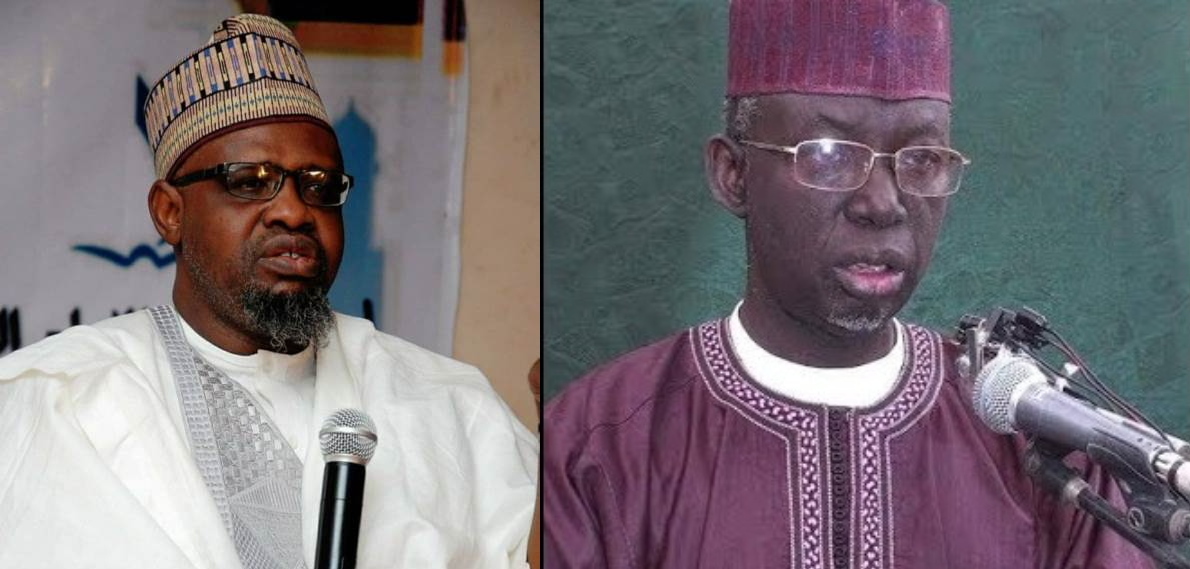
Dr Sani Rijiyar Lemo

A reflection on dimensions, death, and the eternal four: Ramadan 2025

By Ibraheem A. Waziri

MashaAllah. As the crescent moon rose to herald Ramadan this year, on this twentieth day of March 2025, a profound stillness has settled over me. The fast silences my body’s clamor, the long nights of prayer elevate my spirit toward the heavens, and my thoughts drift into the boundless expanse of the unseen. This Ramadan, I find myself wrestling with the nature of dimensions—what they signify, how they shape our fleeting lives, and how death might unlock realms beyond our earthly reach. 

The Qur’an unveils glimpses of this mystery: seven heavens layered in divine order, Jannah’s gardens of eternal serenity, Jahannam’s depths watched by stern guardians, and Allah’s timeless, infinite dominion. The number four—etched into our 4D reality and echoed in a hadith debate I explored last week—anchors my reflection, while the nineteen of Surah Al-Muddathir, mirrored in the nineteen letters of *Bismillahir Rahmanir Rahim*, stirs my soul. Could death guide us through a cosmic graveyard of stars into these dimensions, as some now ponder in awe?

Let us begin with dimensions as we experience them in this Duniya, this transient abode. We dwell within three spatial dimensions—length, width, and height. A minaret pierces the twilight sky; its shadow stretches wide across the sun-warmed earth, and its foundations sink deep into the soil. Time, the fourth dimension, flows relentlessly forward, a current bearing us from the first whispered adhan of Fajr to the tranquil hush of Isha. 

These four—three of space and one of time—form our 4D reality, a spacetime framework we navigate with every breath and every step we take. Yet science, with its insatiable curiosity, gazes beyond this familiar quartet, proposing extra dimensions—ten, eleven, or perhaps far more—coiled tightly at scales too tiny for our eyes to discern or sprawling across unseen planes our hands cannot grasp. These are not mere directions to wander but subtle layers, bending the forces of gravity, energy, or the very essence of creation in ways that stretch our comprehension.

In 2018, a Northern Nigerian Hausa broadcasting Television Station, Arewa24, in a documentary about space named black hole mutuwaren taurari (Mortuary of Stars), but I preferred mak’abartar taurari—the Graveyard of Stars—as a more evocative term. Here, death is a profound key, a passage to what lies beyond. In this 4D shell, we are tethered—our physical forms bound to the limits of space, our lives measured by the steady march of time. 

The Qur’an, however, assures us that the soul, the ruh, endures beyond this fragile vessel. When we die, might that soul break free, slipping into a fifth dimension, a sixth, or even further—realms where Jannah’s rivers ripple with mercy and Jahannam’s fires blaze with justice, domains veiled from us until Malak al-Mawt, the Angel of Death, carries us across the threshold? 

Physics offers a faint echo of this possibility: higher dimensions might surround us, omnipresent yet inaccessible, hidden behind a veil that only death can part. Some astronomers link each soul to a star wandering the cosmos; when a person dies, their star might collapse into this graveyard, bearing their ruh along. Could this black hole be a portal, a barzakh, where dimensions unfold beyond our sight?

The Qur’an sketches this vastness with strokes of majesty. “He who created seven heavens in layers,” proclaims Surah Al-Mulk (67:3), urging us to reflect on the nature of these layers. Are they celestial skies arching above our world, glowing in the twilight? Or could they be universes, dimensional planes, each distinct yet interconnected, ascending beyond our perception into a hierarchy only Allah fully comprehends? 

Our 4D reality, with its glittering stars and sprawling earth, might be the “lowest heaven,” as Surah As-Saffat (37:6) suggests, with its adorned lights, while six more heavens rise above, reachable only when death turns the lock. Time, too, bends in Allah’s presence—Surah Al-Ma’arij (70:4) likens a day with Him to fifty thousand years of our earthly counting. In these higher dimensions, time might not flow as we know it; it could stretch into an endless horizon, loop upon itself, or fold into an eternal now—a reality death alone might usher us into.

Yet it is the number four that steadies my wandering mind, a pattern I cannot unsee. Just last week, in *The Eternal Quartet: Understanding the Hadith Debate in Northern Nigeria*, I wrote of a debate stirring Northern Nigeria’s Muslim online space—Shaykh Prof. Ibrahim Saeed Ahmad Maqari and Shaykh Prof. Sani Rijiyar Lemo clashing over the degree of certainty in different categories of Hadith rather than dismissing their essence outright. 

I framed the scholars’ dispute through four lenses: reason, belief, doubt, and rejection, a quartet mirrored in Islam’s four legal schools—Hanafi, Maliki, Shafi’i, Hanbali—and four theological paths—Mu’tazila, Ash’ari, Maturidi, Athari. Maqari, with his Ash’ari and Maliki roots, demands the unshakable certainty of Mutawatir hadiths, those narrated by many, while Rijiyar Lemo, grounded in Athari and Salafi trust, upholds authentic Ahad narrations with strong chains, even if from fewer sources. Four emerged as a complete, balanced square: Maqari’s logic seeking widespread proof, Rijiyar Lemo’s faith in vetted tradition, the doubters’ hesitant questions, the rejectors’ outright dismissal. As I dwell in our 4D spacetime, I see it again—four as our foundation, the root from which higher dimensions might grow, a motif threading through faith, nature, and the human heart.

Then comes a piercing verse—Surah Al-Muddathir (74:30): “Alaiha tis‘ata ‘ashar”—“Over it are nineteen.” Nineteen angels guard Jahannam, their number stark and resonant, a mystery that stirs my soul to its core. Are these guardians confined to our 4D frame, or do they stride across dimensions, overseeing a hell that burns beyond our spacetime? This deepens when I count the letters in Bismillahir Rahmanir Rahim—ب س م ا ل ل ه ا ل ر ح م ن ا ل ر ح ي م—nineteen in all, the sacred invocation that opens every surah but one. Could this parallel—nineteen angels, nineteen letters—hint at more, perhaps 19 dimensions woven within or alongside the seven heavens? Science freely posits dimensions; string theory suggests ten or eleven, but the Qur’an’s seven and nineteen numbers carry a divine weight. From our 4D base, the seven heavens might rise as broad realms, each enfolding finer layers, totaling 19—a cosmic framework death unveils, where the nineteen serve as eternal watchmen.

Consider the black hole, this mak’abartar taurari. Could it be barzakh, a liminal space bridging dimensions? Does it cradle Jannah’s tranquility or Jahannam’s torment? Some wonder: might the Day of Judgment spring from this starry graveyard, an event science cannot yet name, where fallen stars—and souls—rise into new dimensions? We perceive only four in this Duniya, but black holes might harbor twelve, as some speculate. Add seven for Jahannam’s planes, and we reach 19—four we know, eight in Barzakh’s depths, seven in Saqar’s fire, guarded by nineteen, as Allah declares, “Alaiha tis‘ata ‘ashar”. Last century, scholars like Khalifa Rashad stirred debate with new readings of this verse—could it point to such a cosmic order?

Envision it: our 4D reality as the first heaven, rooted in four—length, width, height, and time. Six more heavens ascend, each a dimensional cluster, totaling 19 with Barzakh and Jahannam’s layers. Surah Fussilat (41:12) says each heaven has its command—unique laws across these planes, from fifth to nineteenth. His Kursi (Surah Al-Baqarah 2:255) spans them, the nineteen as sentinels in its scope. The Qur’an says the soul’s end wanders in the space between the dimensions of fire (dread) or peace (natsuwa). Death might thrust us through mak’abartar taurari into these 19, where nineteen angels stand guard.

As Taraweeh’s verses wash over me this Ramadan, I feel four and nineteen entwined. If 19 dimensions veil Jannah, Jahannam, or more, might they host others—angels, jinn, beings unseen? Science puzzles at silence; death might unveil a chorus. In sujood, fasting’s clarity sharpens this: the Qur’an bids us marvel. Whether seven heavens hold 19 dimensions via a starry graveyard, death is our key—a mercy cloaked as an end.

Breaking my fast, dates sweet with Jannah’s echo, I feel tethered to this vastness. Our 4D world—fourfold in dimensions and thought—is a breath, a shadow of Allah’s infinite craft. Ramadan 2025 is my pilgrimage—through hunger, hope, and “Alaiha tis‘ata ‘ashar”, mirrored in Bismillahir Rahmanir Rahim—toward a reality where death, from our fourfold root, opens the door to seven heavens, nineteen dimensions, and Allah’s eternal truth. Allah Shine masani.

The eternal quartet: Understanding the hadith debate in northern Nigeria

By Ibraheem A. Waziri

Last week, the Muslim online community in Northern Nigeria was abuzz with a debate between two prominent scholars: Shaykh Prof. Ibrahim Saeed Ahmad Maqari, Imam of the National Mosque, and Shaykh Prof. Sani Rijiyar Lemo, a well-known teacher and writer. They are discussing hadiths—sayings of the Prophet Muhammad—and their reliability. 

Maqari insists that only Mutawatir hadiths, which are passed down by many narrators, are certain. In contrast, Ahad hadiths, coming from fewer narrators, lack certainty; Da’if hadiths are doubtful; and Maudu’ hadiths are fabricated. Rijiyar Lemo argues that Ahad hadiths with strong chains—like those found in Bukhari or Muslim—are as trustworthy as Mutawatir hadiths, also rejecting both Da’if and Maudu’ hadiths.

This may appear to be a new split in Islam, but it isn’t. It’s an old debate reemerging, reflecting four fundamental ways we think: reason, belief, doubt, and rejection. Maqari and Rijiyar Lemo each adhere to one of four classic Muslim paths. Let’s simplify it to demonstrate that this isn’t a crisis—it’s just part of our nature.

The Scholars’ Stances: Old Roots, Modern Voices

Maqari aligns with the Ash’ari and Maliki approach. He’s cautious: only Mutawatir hadiths, widely shared and undeniable, confirm the Prophet’s words, especially for core beliefs. Ahad might be true but aren’t certain, Da’if are shaky, and Maudu’ are fabrications. His stance is logical, demanding solid proof.

Rijiyar Lemo takes the Athari and Salafi route. He’s straightforward: Ahad hadiths with strong chains are as good as Mutawatir—no need for a crowd if the narrators are reliable. He discards Da’if and Maudu’, trusting the vetting process.

This echoes a thousand years of Muslim thought, split into four theological groups—Mu’tazila, Ash’ari, Maturidi, Athari—and four legal schools—Hanafi, Maliki, Shafi’i, Hanbali. Maqari’s Ash’ari/Maliki; Rijiyar Lemo’s Athari/Salafi. The others linger in the background, forming four ways to see faith.

 The Fourfold Lens: A Universal Impulse

This isn’t just about hadiths—it’s how we view everything, through four lenses:

– Reason: “Prove it—how many narrators? Are they solid?” Maqari’s fans value his logic, insisting on Mutawatir’s wide agreement for certainty over Ahad’s limited sources.

– Belief: “My scholar says it’s true.” Rijiyar Lemo’s supporters trust a single Sahabi’s word if the chain is sound, no extra proof needed—just faith in the process.

– Doubt: “Are we sure? What if it’s wrong?” Questions linger for those unsure about either side.

– Rejection: “This is outdated nonsense.” Some walk away entirely.

Northern Nigeria’s Muslim online space shows all four: some cite Mutawatir facts for Maqari, others trust Rijiyar Lemo’s Salafi roots, a few question both, and some dismiss it outright. These align with the four schools, too. Picture a grid—reason on one side, revelation on the other—yielding four pairs:

– Reason + Reason: Hanafi and Mu’tazila  

  Hanafis use analogy and judgment for rules; Mu’tazila apply logic to beliefs like free will. They’re strict: theology needs Mutawatir or Ahad with three-plus narrators; rules use authenticated Azizi (strong Ahad). Reason leads.

– Reason + Revelation: Maliki and Ash’ari

  Malikis mix reason with Medina’s practices; Ash’aris back faith—like God’s traits—with logic. Maqari fits here: Mutawatir for beliefs, authenticated Ahad for rules like prayer times. Revelation guides reason.

– Revelation + Reason: Shafi’i and Maturidi

 Shafi’is prioritize hadiths and Qur’an, sorted logically; Maturidis use reason within scripture’s bounds. Mutawatir for theology, authenticated Ahad for rules like fasting. Revelation’s first, reason aids.

– Revelation + Revelation: Hanbali and Athari

Hanbalis stick to texts; Atharis take the Qur’an and hadiths as is. Rijiyar Lemo’s here: authentic Mutawatir or Ahad work for both beliefs and rules. Revelation rules.

Maqari’s Ash’ari/Maliki stance demands Mutawatir for certainty; Rijiyar Lemo’s Athari/Salafi view accepts authentic Ahad.

Four Across the Ages

Four isn’t just in this debate—it’s a pattern across time and cultures. In the West, psychologist Carl Jung saw four as a symbol of wholeness, like in mandalas or personality types—thinking, feeling, sensing, and intuiting. Stephen R. Covey’s four quadrants divide tasks by urgency and importance, offering a complete way to manage life. Game theory maps four outcomes—win/win, win/lose, lose/win, lose/lose—covering all possibilities in decisions, much like Karl Popper’s fourfold reasoning tests ideas through trial, error, doubt, and rejection. Four directions—north, south, east, west—guide us; four elements—fire, earth, air, water—once explained the world; four schools shape Islam. Even a Sudanese Sufi song by Abdurrahim Albur’iy, Misr al-Mu’mina, celebrates four in nature and Islamic history:

“We call upon You with the four and the four books,  

And the 114 surahs [Qur’an],  

With the six angels and the four noble ones,  

With our Prophet Muhammad and the four caliphs,  

And the six after them and the four imams,  

And the seven jurists and our four poles,  

The pegs of the earth in the four directions,  

The substitutes and the ten chiefs in four,  

Preserve my three and four limbs,  

And keep our four sides from the resting place,  

Remove the body’s illness in its four temperaments,  

Bless our week until Wednesday (fourth day),  

The ninety days of the year in four,  

And our seven seas and our four rivers,  

We are saved from four and gathered with four.”

Fours—caliphs, books, rivers—tie faith and life together across time.

Philosophy Meets Faith: Why Four?

Why four? It’s simple and complete. Two (yes/no) is too basic, three (yes/maybe/no) lacks balance, and five’s cluttered. Four’s just right: two ways to agree (reason, belief), one to question (doubt), one to reject. Like a square, it’s steady, covering all sides—seen in nature, history, and our debates.

Nothing New Under the Sun

Don’t let Northern Nigeria’s Muslim online space hype fool you—this is old news. Ash’ari scholars like al-Ghazali sought proof, like Maqari; Athari ones like Ibn Taymiyya trusted texts, like Rijiyar Lemo. Mu’tazila favored reason; Maturidi blended it with faith. Four schools, four views—same as today.

It’s loud now because Maqari’s at the National Mosque, and Rijiyar Lemo’s books reach many. People care about the Prophet’s words. But it’s not a new split—just two notes in an old four-part tune.

Takeaway: Embrace the Quartet

Don’t worry about this debate. It’s not Islam breaking—it’s alive, with views fitting four natural slots: Maqari’s logic, Rijiyar Lemo’s trust, plus doubt and rejection. Next time Northern Nigeria’s Muslim online space heats up—over hadiths or anything—spot these four: thinkers, believers, questioners, and naysayers, blending into many combinations. It’s how we work. Maqari and Rijiyar Lemo pick two corners of a square we’ve all been drawing forever. It’s not chaos—it’s our pattern.

Celebrating Excellence: Prof. Muhammad Sani Umar Rijiyar Lemo’s well-deserved promotion

By Muhammad Ibrahim

Muhammad Sani Umar Rijiyar Lemo’s recent promotion to professor at Bayero University, Kano (BUK), is a moment of pride not only for the institution but also for the broader academic and Islamic scholarly communities in Nigeria. This achievement is a testament to his unwavering dedication, intellectual rigour, and remarkable contributions to education, scholarship, and the Muslim community.

Prof. Rijiyar Lemo is a scholar of exceptional depth and influence, particularly in the fields of Islamic studies, particularly Hadith and the Qur’an. Over the years, he has distinguished himself through insightful research and community engagement. His ability to bridge the gap between traditional Islamic knowledge and contemporary educational practices has earned him admiration from colleagues and students.

His excellence extends way beyond academia. In recognition of his contributions to education, religious scholarship, and national development, Prof. Rijiyar Lemo was conferred with a prestigious national honour, the Officer of the Order of the Niger (OON), by former Nigerian President Muhammadu Buhari. This honour highlights his role as an academic and as a figure of influence and positive change in the wider Nigerian society.

Prof. Rijiyar Lemo’s contributions to the Muslim community are equally remarkable. He has been a prominent voice in promoting peaceful coexistence, understanding, and moral reawakening among Muslims.

As a preacher, he has delivered lectures across Nigeria and beyond, addressing contemporary issues facing the Muslim ummah. His emphasis on theology, education and ethical leadership has left a lasting impact on communities outside the university.

This promotion is also significant because it underscores BUK’s commitment to recognising and rewarding academic excellence. In an era where other pursuits sometimes overshadow the value of the scholarship, such acknowledgement serves as a beacon of hope for aspiring academics and students, reminding them that hard work and integrity do not go unnoticed.

Moreover, Prof. Rijiyar Lemo’s rise to this esteemed position inspires younger generations, particularly those from his home state of Kano. It demonstrates that one can attain great heights while making meaningful contributions to society with perseverance, dedication, and a genuine passion for learning.

Professor Muhammad Sani Umar Rijiyar Lemo is set to impact his field, mentor future scholars, and advance knowledge at Bayero University. His promotion symbolises personal achievement and a celebration of academic excellence for all.

May Allah continue to guide and protect Malam for us, amin.

Muhammad Ibrahim wrote from Kano, Nigeria.

Prominent clerics who made my days during 1445 A.H Ramadan (I)

By Isma’il Hashim Abubakar 

No doubt, the holy month of Ramadan is a special season that always reactivates our religious consciousness and hikes the level of our spirituality. As Nigerians are passing through unprecedented inflation and increase in prices of commodities, this year’s Ramadan came with a hope that it offered an opportunity for Muslims to use the medium for deep reflections, improvement and promotion of piety and righteousness, but also to devote their time for supplications so that Allah would take them out of the woods and mess they have been grappling with over the years.

One interesting feature of Ramadan season is the commitment of Muslim scholars to deliver religious lessons and to, in a more concentrated fashion, bring the Muslim public closer to Islamic teachings in such a way that they would graduate from Ramadan school with paperless certificates that attest to their participation in one month course for reform of faith and creed, learning and relearning of worship and liturgical formulas and practice, refreshing minds with Islamic history and so on.

Although a few scholars teach books apart from the Qur’anic text, including works on some themes such as traditions and biography of Prophet Muhammad (SAW), interpretation and exegesis (tafsir) of the Glorious Qur’an, the queen of heavenly scriptures and the apex Islamic text, is the dominant exercise that makes the month unique and the best of all other months. Returning to the Qur’an during Ramadan is a universal custom for Muslims, but Nigeria’s religious sphere annually unveils a scintillating atmosphere that other Muslim climes would hardly rival. Pairing a male chief Mufassir and a female recitation assistant (mai jan baƙi) seems to be a strange feature of this year’s tafsir, which elicits so many brouhahas.

As an age-old exercise, tafsir in Hausaland has seen several transformations and shifts both during pre-colonial and contemporary eras, which saw the emergence of hundreds of mufassirun (interpreters of the Qur’an) of varying calibres and credentials. However, the post-independence era has never seen an eloquent, erudite and versatile interpreter of the Islamic scripture like the prominent cleric, the late Shaykh Ja’far Mahmud Adam, who was assassinated in 2007 while leading dawn prayer in his mosque in Kano. Even by accounts and confessions of his critics, opponents and detractors, Shaykh Ja’far was proven and credited to have excelled all his peers and contemporaries in analyzing and expounding the verses of the Glorious Qur’an. His annual Ramadan tafsir at Ndimi Mosque in Maiduguri was a matchless and extraordinary religious conference that reawakened Muslims and renewed and revived Muslims’ interest in the Qur’an and the process of making meaning out of it. 

When Shaykh Ja’far exited the scene in a historic and memorable manner, having been assassinated by unknown gunmen, which enhanced his posthumous popularity and brought millions of Muslims to his camps, many young and upcoming scholars adopted his method of tafsir and not only sought to replicate his path but also rose to earn his popularity, prominence and influence. 

However, God destined that Shaykh Ja’far’s friend and longtime colleague, Dr Muhammad Sani Rijiyar Lemo, would be unanimously accepted to succeed the former in especially the Ndimi Mosque tafsir conference, which later relocated to Bauchi due to persistent insecurity in Maiduguri. Rijiyar Lemo’s erudition was vouched for by no other person more than Shaykh Ja’far himself, who during his lifetime repeatedly mentioned Rijiyar Lemo as a colleague on whom he relied in many respects, particularly in matters pertaining to Hadith authentication, the area in which Rijiyar Lemo specialized.

Interestingly, as sources informed me, when Rijiyar Lemo finished his PhD in Madina in 2005, he intended to stay in Saudi Arabia to work with a research and publication centre. Still, Ja’far prevailed upon him to return to Nigeria to engage in the Da’awah arena, insisting that he would be more useful at home than in Saudi Arabia. It must be a form of karama that Ja’far would successfully persuade a friend to come back to Nigeria, not knowing that he would be his successor within two years in many of his religious engagements.

Rijiyar Lemo’s relocation to Masallacin Gwallaga in Bauchi provided a fertile ground for him to effectively continue with the tafsir exercise and his method, which radically differs from his predecessor’s and makes his rendition more favourable to advanced students of Islamic knowledge. Perhaps one does not have to conduct further research when invited to present tafsir elsewhere and could just have to listen to and summarize the exhaustive tafsir rendered by Rijiyar Lemo. I have made it one of the few lessons I rarely miss within and outside Ramadan. 

Besides the main task of interpreting the verses of the Qur’an, answering questions at the beginning of the conference and leading the session of conversion to Islam by giving the testimony to new converts by the scholar, one of the top themes which Rijiyar Lemo’s tafsir focused on this year was stressing and underscoring the position of Sunnah as an essential component of Islamic legislation. Rijiyar Lemo’s defence for Sunnah came at a time when the year witnessed simmering misunderstandings and social media exchanges about the position of prophetic reports in some popular Hadith collections and the degree of their authenticity. This debate was ignited earlier by Abduljabbar Nasiru Kabara, who was imprisoned after he failed in the historic debate, which then silenced his impasse and briefly paused discussions on the matter. The matter returned, it seems when after he visited Iran to deliberate the plight of Palestinians, Dr. Ahmad Gumi prodded and stirred the discussions through his utterances, which were interpreted by many as a continuation of the task of condemnation of Sunnah which Abduljabbar Kabara started.

Rijiyar Lemo’s response was complemented by a mention of several references for readers, such as Mustapha al-Sibā’ī’s masterpiece and grand defence for Sunnah titled “al-Sunnah wa Makānatuha fī al-Tashrī’ al-Islāmi’ī“. Needless to say, hearing the names of new books is among the countless benefits of listening to Rijiyar Lemo’s tafsir in particular and other Islamic lessons in general. From all indications, Rijiyar Lemo has the ambition to publish an excellent tafsir of the Qur’an before or immediately after interpreting the whole Qur’an in Bauchi or Kano, where he also replaced Shaykh Ja’far at Usman Bin Affan Mosque, Gadon Kaya.

Ismail Hashim Abubakar, PhD, wrote from Morocco. He can be reached via abuarqam89@gmail.com.

Buhari honours Dr Sani Rijiyar Lemo with OON

By Uzair Adam Imam

President Muhammadu Buhari has approved the conferment of the national honour on Ass. Prof. Sheikh Sani Umar Rijiyar Lemo in the rank of OON (Officer of the Order of the Niger).

However, the conferment of honour was disclosed in a letter to the sheikh dated October 7th, 2022, by Sen. George Akume, fnim.

Rigiyar Lemo is a Senior Lecturer at Bayero University, Kano (BUK), and also a prominent Islamic scholar in Nigeria with expertise in Hadith and Tafsir. His numerous authored books are being read in many mosques and circles of learning in Nigeria and beyond.

Popularly known As Dr Sani Umar R/Lemo, he was born in Saudi Arabia in 1970. He bagged 1st, 2nd and 3rd degree in Hadith in the reknowned Jami’atul Islam of Madina. He established name as the successor of Sheikh Ja’afar’s tafsir in Kano, Maiduguri and Bauchi State respectively. His popular weekly radio program “Fatawowin Rahama” endears him the love of millions of people who see him as peace ambassador.

The honor was in recognition of his tremendous contributions towards developing Nigeria through his teachings and enlightenment to ensure peace in the country.

The letter read in part: “I have the honour to formally inform you that the President of Republic of Nigeria, His Excellency Muhamadu Buhari, GCFR, has approved the conferment of the National Honour on you, in the rank of OON (Officer of the Order of the Niger).

The investiture ceremony is scheduled to take place at the International Conference Center (ICC), Abuna on Tuesday, 11th October, 2022, at 9:00 am.”

BUK: VC lauds Dr Sani’s new book lesson, invites Dr Bashir to begin another

By Uzair Adam Imam

The Vice-Chancellor of Bayero University, Kano (BUK), Prof. Sagir Adamu Abbas, has commended the new book lesson started by the quintessential West African Islamic scholar, Dr Sani Umar R/Lemo at the university’s new Friday Mosque in the new campus on Wednesday, February 9, 2022.

Prof. Abbas made this remark during the first lesson of the book “Alfawa’id” By Ibnul Qayyim Aljauziyya, which will be taking place on Wednesdays, saying that the plan had been in the pipeline over the years.

He stated that the intent was to shape the thought of the youth through the provision of knowledge for peaceful coexistence.

He said, “Going by the general belief that youth are the hope of the future for any given society, we don’t have a future if our youth go astray. It is also part of our plan to provide an Islamic Centre that will be providing members of the public with a fatwa concerning the issue of a time.”

The VC added that “[In our effort to achieve] all this, I had to contact our great teacher, Prof. Sani Zahraddeen, who was a former Vice-Chancellor of this university, for advice.”

However, Prof. Abbas also promised that efforts to provide a similar lesson at the Old Campus of the University are on top gear.

Dr Bashir Aliyu Umar, the chief Imam of Al-Furqan Mosque, is tipped to commence a new book lesson.

Commenting, Sheikh Umar Sani Rijiyar Lemo commended the effort of the Vice-Chancellor, saying the university is blessed with such a leader.

Head of Information and Media Studies Department, Dr Nura Ibrahim, who is also the secretary of the Mosque Committee, has urged people to cooperate.

BUK promotes Dr Sani Rijiyar Lemo, Dr Umar Sani Fagge, others to professorial chairs

By Muhammad Sulaiman

In recognition of their significant contribution to scholarship, research and development at the Faculty of Arts and Islamic Studies (FAIS), the governing council of Bayero University, Kano (BUK) has approved the promotion of Dr Sani Umar R/Lemo, Dr Umar Sani Fagge, others, to the coveted professorial positions.

The following faculty members have been promoted to full professor status: Shehu Ahmad (Arabic), Aminu Lawal Auta (Nigerian Languages), Usman Sani Abbas (Islamic Studies), Sani Ayagi ( Islamic Studies) and Umar Abdulkadir (Islamic Studies).

Furthermore, the following have been promoted to associate professor status: Umar Sani Rijyar Lemo (Islamic Studies), Aliyu Harun (Islamic Studies), Nura Sani (Islamic Studies), Isa Yusuf Chamo (Linguistics), Aishatu Umar (English), Tijjani M. Naniya (History), Muhammad Wada (History), Umma Aminu Inuwa (Nigerian Languages), Maryam Mansur Yola (Nigerian Languages), Halima Abdulkadir Dangambo (Nigerian Languages), Ahmad Salisu (Arabic), Matabuli Shehu Kabara (Arabic) and Umar Sani Fagge (Arabic).

More members from other faculties have been equally promoted based on their value of excellence in teaching and scholarship, and service to BUK. However, as of during filing this report, the lists were still incomplete.