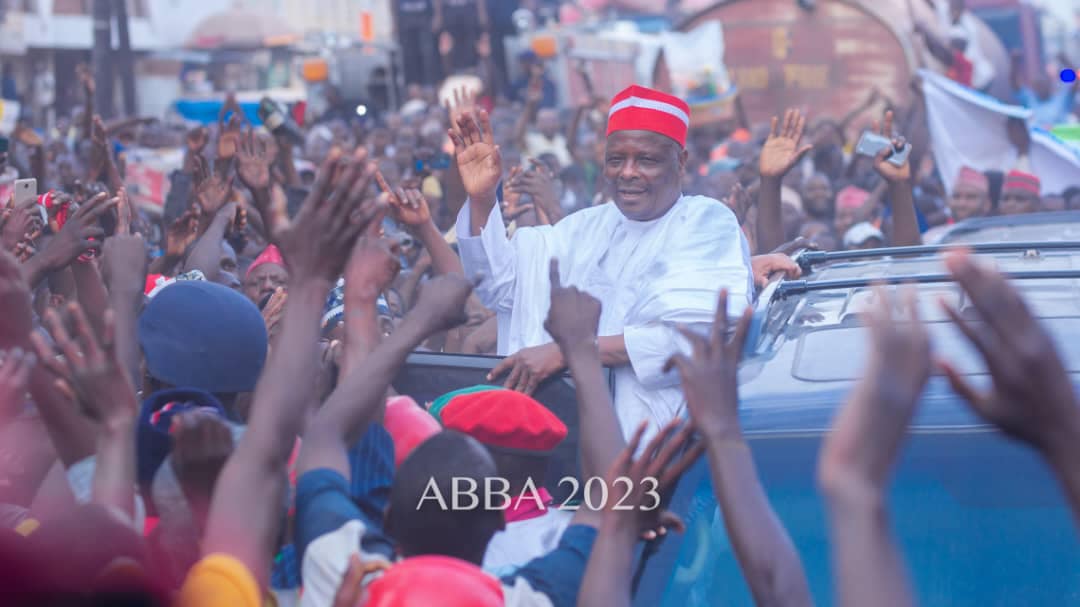
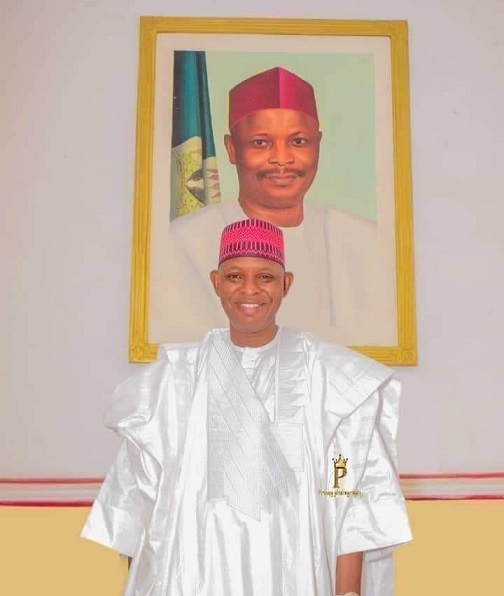
Dr. Rabi’u Musa Kwankwaso

The return of Sanusi

By Aliyu Nuhu

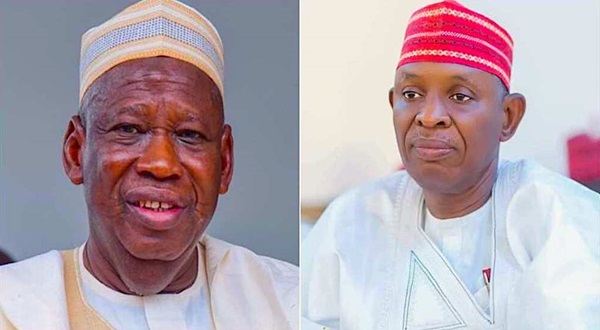
I have read the amended Kano Emirates law, which was brief, concise and straight to the point, to achieve certain ends. It is a promise fulfilled by the new NNPP government. Engr. Rabiu Musa Kwankwaso had said time without number that if elected, the government would repeal the Dr Abdullahi Umar Ganduje-led Emirates laws.

If Governor Abba Kabir Yusuf signs the amendment into law (which is a certainty), it will remove the present emirs from their offices and return all the Ganduje creation of first-class emirs back to district heads (hakimai). The affected emirs are those of Gaya, Rano, Karaye and Bichi.

The new law gives the governor the power to either re-appoint them hakimai or remove them and search for new ones.

Until the coming of this new law, I thought that Muhammadu Sanusi II’s return was impossible, as it had no precedence in the history of the Kano emirate. But after talking to officials and people who know the workings of the government, it appears certain that Sanusi will return to his throne, in fact, soon enough to preside over the coming Eid-Kabir prayer. 

Nothing is certain yet, but nothing is impossible, thanks to political intrigues and the need for the new government to reverse Ganduje’s legacies. There is no love lost between Kwankwaso, Abba, and Ganduje.

For my own views, I support the amendment of the Emirates laws and the return of a strong Kano emirate, but I don’t support Sanusi’s return as emir of Kano. The current Emir of Kano, Aminu Ado Bayero, is doing well and is loved by the people. 

I don’t support Sanusi’s return. I know he has not learned a lesson and will still come back and meddle with Kano politics, attack Abba and his government, and continue shooting his mouth as if he is an ordinary person. People who sit on the Kano throne don’t talk too much. He must also not try, like his grandfather did to Sardauna, to outshine the Kano state governor.

In history, there was an incident where the then-Emir Muhammadu Sanusi shamed Sardauna in the Kano race course parade ground by attracting a standing ovation with the Sardauna seated. The premier of Northern Nigeria considered it an affront to himself as the Emir stole the spotlight by arriving in full splendour and pageantry, and the whole assemblage had to stand up for the Emir in traditional homage and honour. It was a percussion to the dethronement of Emir Sanusi of Kano.

The grandson Sanusi Lamido Sanusi has inherited those tendencies from his grandfather, and I daresay when it comes to attacking and criticizing the government, Kwankwaso/Abba don’t have the patience, and if you like to call it table manners of Ganduje. They will throw out Sanusi in a blink of an eye.

They said a leopard never changes its colours. But time will tell.

Until then.

Debating the legality of institutional marketing in private schools

By Isma’il Hashim Abubakar

Schools established, owned and run by non-state actors and private institutions have, no one doubts, been providing a veritable substitute to the dilapidated public schools which have been suffering from wanton neglect by governments at various levels in Nigeria. Private schools have successfully, though not completely, reduced the burdens on governments to supply basic education for children in their public schools, which have been perpetually operating under the shadows of existential threat.

Although people of all social strata now have more faith in private schools and parents with even the meanest incomes and most fledgling source of earning, who always struggle to make ends meet, prefer to take their children to commercial schools at the behest of other life comforts, public schools, which serve as the last option for the extremely downtrodden, still seem to get congested due to the high number of enrollments of children from low-income families. If this indicates anything at all, it shows that people have now fully embraced modern education, and they can sacrifice the expensive things they have just to secure a quality formal education for their wards and children. 

While, as everyone knows, public schools tend not to have too many demands apart from the meagre or more affordable tuition fees, their private counterparts, in most cases, operate in such a way that many parents inwardly feel that the system is tilting more toward a business direction in an obvious capitalist fashion, despite that the dominant pretension of both parents and school managers is that of purely imparting knowledge and building sound character to the young and upcoming generation.

Many schools are extraordinarily excellent in both transmitting sound knowledge and instilling good morals in pupils, and as such, no material gratification can remunerate their work or compensate the teachers for their hard work, dedication and commitment toward discharging their duties and keeping good custody of what has been entrusted to them. In fact, some well-to-do parents often give gifts to teachers as an expression of gratitude for feeding their children with sound knowledge, which is primarily the responsibility of the parents but perfectly undertaken by the teachers on their behalf. As such, many parents may not bother with and will gently turn blind eyes to some straitjacketed and arbitrary financial demands that most commercial schools are now introducing day in and day out.

Some schools go beyond decorum and do not, in the least, pretend to be shy to depict their operation as a purely extortionate venture, deemphasizing the moral and instructional dimensions which their institutions are set upon. Parents now no longer feel at ease after having settled school fees which are the most basic financial burden that comes to everyone’s minds once private schools are mentioned. Not only do textbooks and instruction materials represent the source of anxiety that parents grapple with, but virtually everything which a school stipulates, largely with a marketing mindset. While most schools impose decrees that make it binding upon parents to buy textbooks, stationeries and all other instructional materials from the schools, some schools turn it into a rule that pupils and students must never be allowed into schools wearing uniforms supplied to them by their parents through all other channels apart from the tailoring unit of the schools.

Schools do complain that external tailors often violate dress codes and principles earmarked by the schools, including non-compliance with size, width and length but above all, the lack of authority to manufacture and issue official badges that are glued to uniforms. Hiding behind this pretext, schools have seized the free will of parents to transact with tailors of their choice, and because they aspire for their children to acquire quality education, they relinquish their right and bow down to the pressure of the schools. 

There is, however, no guarantee that the tailoring units of schools themselves are perfect for designing the most fitting and immaculate school attire for pupils. Having taught at both primary and secondary schools (as well as university), I have personally seen pupils wearing school-supplied uniforms that never matched or fully fitted the bodily structures of the pupils. If this is the case, this particular rule might have been informed more by a business instinct and less by a concern to preserve institutional dress codes. Parents of final year students who could only afford to pay for either WAEC or NECO exams for their children, which by the way, is better than missing both of them at once, are coerced by some schools to move heavens and earth to pay for the two exams or risk having their children removed from the list of graduating students. When they could not settle for the fees of the two exams and require the refunds of their money, they hardly recuperate more than half of what they have paid. 

Perhaps the most brazen example of such pecuniary impositions manifests in the demands of some schools on parents to pay internet charges, which would have been understandable and justified if pupils or students were engaged in regular computer lessons that are punctuated at close intervals by visits to websites. Alas! There are schools which extort this surcharge even from parents of nursery pupils, and the only justification for it is the data consumed by Whatsapp groups of parents initiated by the schools on which an administrator often sends announcements.

Many parents relate with schools while they are inwardly burnt due to how things have become in private schools, but because they envisage a better future for their children, they prefer to remain mute and only murmur their complaints on the rarest occasions or when they meet with fellow parents by the roadsides. The best opportunity for them to communicate or even express their squawks loudly to the schools is during periodic parents-teachers meetings, but the schools have been, paradoxically, hijacking and making platforms to further advocate their fiendish and self-aggrandizing policies. Their covert strategy is to appoint a loyal, docile and exceedingly compliant head of Parent-Teachers’ Association (PTA), and to gag his mouth for fear of being influenced by nonconformist parents, the schools bribe him with some free scholarship slots for his children. As a result, he weakens and sabotages any attempts by the parents to rise and challenge arbitrary extortions they suffer from these schools. 

Other schools have different, perhaps more treacherous strategies of navigating intricacies and tackling eventualities that may come up owing to this venture, such as giving undertaking papers for parents to sign before the children are accepted at the stage of enrollment, and many parents are carried away by the desire for the admission of their children and often don’t pay commensurate attention to these documents or mull over their future implications. The question that, however, is seldom asked, what is the legality of these modes of institutional marketing practices that have become norms in not only purely western-style schools but also model Islamic schools? To what extent do these operations comply with Islamic teachings and principles, and what are the business dimensions of these dealings which should then ideally be done and looked at from the viewpoint of Islamic commercial and financial regulations?

First of all, everyone knows what schools are primarily meant for, which is imparting knowledge and this should be the apex among all the operations that are expected to exist in the schools. Hence, from this prism, school fees are the most obligatory financial demands that parents are, by default, owed to schools and upon which any compromise will be a favour that the schools could grant or deny at will. Any other charge or tax is secondary and gains its legitimacy according to how it complements the primary function of schools, but, above all, it should be done in a transparent atmosphere defined by mutual agreement and understanding. In other words, selling textbooks, stationery and instructional materials at schools should be governed by Islamic commercial laws, without discrimination or thinking that schools could do as they will without referring to Islamic stipulations. If this is the case, then these materials sold to parents must be on the basis of freewill and agreement and not impositions that may result in penalties. 

Of course, many schools publish exercises and textbooks with their names and logos finely inscribed, which then makes it compulsory for parents to obtain the materials in no other places but the schools. Many other schools, meanwhile, retail the materials from markets and sell them to parents at exorbitant prices that at times double or triple the normal market prices. All these are normal and should be considered lawful businesses if only it is done with a mutual agreement such that parents have the liberty to buy either from the schools or at markets, or in the former case, if the materials are not sold arbitrarily at unimaginable prices just because of the inscriptions of logos and names. 

The general Islamic principle that confers legitimacy or otherwise to any business venture is free will and mutual agreement, and interestingly, this is explicitly postulated by the Qur’anic verse and Hadith, the two most fundamental sources of Islamic law. Allah says:

“Yā ayyuha alladhīna āmanū lā ta’kulū amwālakum bainakum bi al-bāṭil illā an takūna tijāratan ‘an tarāḍin minkum. Wa lā taqtulū anfusakum. Inna Allaha kāna bikum Raḥīma”.

“O you who believe! Eat not up your wealth among yourselves unjustly except it be a trade by mutual good-will: Nor kill (or destroy) yourselves: for verily Allah has been to you Most Merciful!” [Sūrat al-Nisā’: 29].

In his groundbreaking exegetical work al-Taḥrīr wa al-Tanwīr, the prolific commentator of the Qur’an, Muḥammad Ṭāhir Ibn ‘Āshūr posits that the prohibition to eat up people’s wealth without mutual agreement is paired with the crime of murder in the verse to draw Muslims’ attention on the gravity and heinousness of such a practice. He argues that it is emphasized because people do not largely consider it something significant and the victim is usually powerless and could hardly resist (as it occurs in private schools).

Moreover, in an authentic Ḥadith narrated by Anas bin Mālik, the Prophet (SAW) says, “lā yaḥillu mālu imri’in Muslimin illā ‘an ṭībi nafsin”. (It is unlawful to take a Muslim’s wealth except with his goodwill). [Dāru Qutnī, 3/26].

As asserted earlier, a lot of transactions in private schools are imposed upon parents, and school authorities often warn parents and even threaten to apply penalties when these marketing ventures are observed in the breach, leaving no room for a bargain and mutual consent that would ordinarily prevail in open transactions. Since this is the case, only a few people will contest the illegality of this practice. Needless to say, some officials and authorities, including ironically, of schools paraded as Islamic models, are, to some extent, oblivious of the legal status of their policies, although this is not a valid, genuine and acceptable reason. A Muslim is, after all, and before anything else, principally required to be fully conversant with the pros and cons of any action he undertakes.

One of the easiest ways to make amends and rectify this wrong tradition, irrespective of how well consolidated it is, how difficult it may be to refrain from or how odd our argument may sound to some, is to be so transparent and open to parents and gear the deal to be dictated by consent and mutual agreement. Freewill and mutual agreement are pivotal in any financial dealing and they determine whether it is done lawfully or unlawfully. 

And since schools, especially the religious ones, enjoy respect from parents, it will hardly be burdensome to mutually arrive at some understanding, and this, as beautifully ratiocinated by Ibn ‘Āshūr, could lead to the implementation of the divine principle that “if they give up willingly to you anything of it, then take it in satisfaction and ease” (fa in ṭibna lakum an shai’in minhu nafsan fakulūhu hanī’an marī’a) [Sūrat al-Nisā’, 4].

Indeed there is a need for governments to intervene and reintroduce guidelines that will neither oppress the schools nor allow them to do as they like, pertaining to their financial dealings with parents. Parents in Kano, for instance, will certainly look back with nostalgia at the era of Governor Rabiu Musa Kwankwaso, who laid down modalities that checkmated arbitrary extortions of parents by commercial schools. He formed a formidable committee that regularly went around schools and observed their operations to ensure they complied with state regulations, most of which were meant to shield masses from further extortions.

Unfortunately, Kwankwaso’s successors did not maintain the tempo, and now things are, to say the least, almost getting out of control. School authorities would increase school fees at will and would rush to mention inflation as a cause and the need to better the condition of their staff, while in essence, it is the proprietor and a few notable among his cliques that would end up enjoying while flowing pittance to and leaving the majority of staff to keep on wallowing in despondency.

Ismail writes from Rabat, the Kingdom of Morocco and can be reached via ismailiiit18@gmail.com.

Military can end Nigeria’s security crisis

By Uzair Adam Imam

Former Minister of Defence and National Leader of the New Nigeria People’s Party (NNPP), Sen. Musa Kwankwaso, has emphasized the capability of the military to effectively address the prevailing security challenges in Nigeria, provided with the requisite support.

Speaking to journalists after the NNPP National Executive Committee meeting in Abuja, Kwankwaso underscored the pivotal role of the Federal Government in addressing the security crisis while urging Nigerians to actively contribute by providing crucial information to security agencies.

Drawing from his extensive experience in security matters as a former Minister of Defence and Chief Security Officer of Kano State, Kwankwaso emphasized that the gravity of the situation necessitates the involvement of the Nigerian military.

He stressed that alternative security measures, such as state-led initiatives, fall short of addressing the magnitude of the crisis.

Highlighting the dire consequences of the security challenges, including disruptions to agricultural activities and rampant abduction of innocent civilians, Kwankwaso urged collective efforts towards restoring peace and security in the country.

Asserting his party’s readiness to tackle the nation’s problems, Kwankwaso positioned the NNPP as a beacon of hope for Nigerians disillusioned by the failures of the All Progressives Congress (APC) and the Peoples Democratic Party (PDP).

Echoing Kwankwaso’s sentiments, Kano State Governor Abba Yusuf urged unwavering dedication among party members, emphasizing the need for wholehearted commitment to the NNPP’s vision for a better Nigeria.

Nepotism in Nigerian politics: A tale of two governors

By Umar Sani

In the intricate tapestry of Nigerian politics, nepotism is often woven deep into the fabric of governance. Recent events surrounding Engr. Abba Kabir Yusuf, popularly known as “Abba Gida Gida,” and Dr Abdullahi Umar Ganduje illuminate a troubling pattern of favouritism and cronyism that continues to plague the nation’s political landscape.

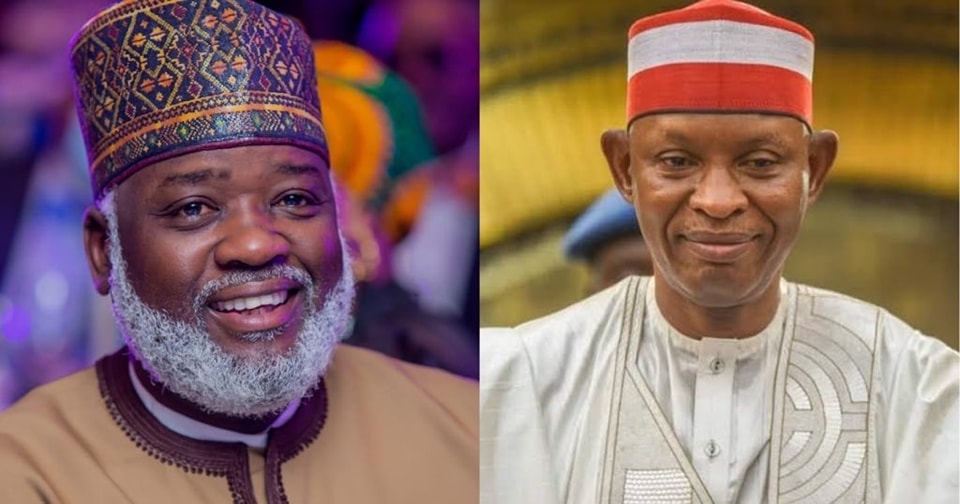
In a move reminiscent of his predecessor, Abba Kabir Yusuf has nominated Mustapha Kwankwaso, the son of his godfather Engr. Rabiu Kwankwaso, for a commissioner position. This decision raises eyebrows, echoing past criticisms of Ganduje’s administration, where appointments seemed to prioritise personal connections over merit.

Such actions underscore a disturbing reality: the entrenched culture of nepotism in Nigerian politics, where loyalty to political dynasties often outweighs competence and merit. While the faces may change, the playbook remains eerily similar, perpetuating a cycle of patronage that undermines the principles of accountability and good governance.

The parallels between Abba Kabir Yusuf and Abdullahi Umar Ganduje serve as a sobering reminder of the challenges facing Nigeria’s democracy. Despite differing affiliations, both governors have succumbed to the temptation of nepotism, prioritising the interests of elites and families over the welfare of the broader populace.

This nepotistic trend erodes public trust in the political system and exacerbates social and economic inequalities. When positions of power are monopolised by a select few, talented individuals from marginalised communities are denied opportunities for advancement, further entrenching the status quo of privilege and exclusion.

As the nation navigates its democratic journey, it is imperative to confront and address the scourge of nepotism head-on. Transparent and merit-based governance systems must be championed, where appointments are made based on qualifications rather than personal relationships.

Moreover, robust mechanisms for accountability and oversight are essential to ensure public officials are held accountable for their actions. Civil society organisations, independent media, and vigilant citizens play a crucial role in exposing and challenging instances of nepotism and corruption, fostering a culture of transparency and accountability in governance.

Ultimately, the fate of Nigerian politics rests in the hands of its citizens. By demanding accountability, transparency, and a commitment to the common good, Nigerians can pave the way for a brighter and more equitable future, free from the shackles of nepotism that have privileged few.

Umar Sani Adamu (Kawun Baba) wrote via umarhashidu1994@gmail.com.

Kano State’s scholarship debacle: Outstanding fees leave bright minds in limbo

By Dr Sagiru Mati

I was one of the beneficiaries of the 501 Scholarship Scheme during the Kwankwaso-Ganduje administration in 2012. Eleven of us were selected to pursue Master’s Degrees in Civil Engineering, Economics, and Software Engineering at Near East University. All expenses for tuition, accommodation, meals, a monthly stipend of four hundred US dollars ($400), flight tickets, and other necessary costs were covered and transferred to the university’s account. Towards the end of our program, an additional one thousand US dollars ($1,000) per person was also provided as a ‘thesis allowance.’ We are grateful to the Kano State government for this, and we hope that all scholarship schemes can be as hitch-free as ours.

Upon completing our master’s programs, approximately 50 students of Kano origin, primarily teenage girls, were transferred from India to Near East University. Additionally, a new group of undergraduates and post-graduates were granted scholarships under a new program initiated by the Ganduje-Hafiz administration. Unlike us, their fees and stipends were to be paid in instalments. Unfortunately, they faced numerous challenges, including delayed monthly stipends, despite their dedication to bringing pride to their parents and Kano State through hard work.

They comprise individuals holding PhDs (11 males and 1 female) and an MSc (1 female), alongside 47 undergraduates in Medicine (29 females and 5 males), Nursing (8 females and 2 males), Pharmacy (2 females), and Dentistry (1 female). In summary, there are 47 undergraduates and 13 postgraduates. These students showcased exceptional brilliance, making significant strides in their respective fields of study. Notable among them is Dr. Sani Isah Abba, the top PhD graduate in 2020, a distinguished researcher, and among the top 2% of world researchers in Artificial Intelligence. Assistant Professor Abdullahi Garba Usman stands out as the first postdoctoral scholar at Near East University, honoured with the Young Scholar Award, boasting over 800 citations.

Moreover, a married couple, Drs Auwalu Saleh Mubarak and Zubaida Said Ameen, received recognition from Near East University for two years in a row for their remarkable contributions to Biomedical Engineering research, accumulating hundreds of citations under their belts. Dr Rabiu Aliyu Abdulkadir is notable for having amassed more than 500 citations. At the same time, Dr. Abdulmalik Ahmad Lawan specialises in utilising technology for assessing autism spectrum disorder, and Dr. Umar Aliyu Shuaibu excels as an expert in assessing economic policy.

Similarly, the top three graduating medical students were Dr Ismail Adnan, securing the first position; Dr. Khadija Yusuf, ranking second; and Dr. Amina Aliyu Sambo, claiming the third spot. Likewise, Aliyu Nuhu Salihu distinguished himself as the top graduate in Nursing.

Despite these achievements, the Kano State government has not settled their tuition fees, stipends, and airfare for their return home. They were compelled to arrange their own means to travel back home. Near East University has withheld their certificates since 2019 due to the outstanding fees, which have escalated from around two hundred million Naira (NGN200,000,000) to approximately eight hundred million (NGN800,000,000) due to the depreciation of the Naira. Any further delay may increase this amount.

I have often pondered the following questions: Could it be because resolving their issues wouldn’t enhance political popularity? Is it because they don’t belong or lack connections to political families? Is it because there’s nothing in it for the government officials? Is it because the government lacks the funds to settle the debt?

I implore the government to act with compassion and understanding to settle this debt and safeguard the future of these bright minds before it becomes irreparable. They have demonstrated unwavering dedication to their education, and they deserve to have their achievements celebrated through the issuance of their certificates. The government should honour its commitment and restore the hope once ignited in these aspiring scholars’ hearts. They deserve the opportunity to reclaim their futures, proudly display their certificates, and embark on the careers they have diligently prepared for. Furthermore, Kano State needs human resources, predominantly female medical doctors in our hospitals and lecturers in our universities.

Sagiru Mati, BSc (BUK, Nigeria), MSc, PhD (NEU, North Cyprus), can be reached via sagirumati@yahoo.com.

The making of a leader: What young politicians can learn from Kwankwaso’s leadership

By Abdulgaffar Tukur Kalgo

As an aspiring young politician in Nigeria, there are several key lessons you can learn from Dr Rabiu Musa Kwankwaso’s exemplary leadership and political career.

As a leader, you most likely admire the political and leadership influence of Kwankwaso. His rise through the ranks of Kano politics demonstrates how one can gain political influence through vision, hard work, and perseverance.

Kwankwaso began his political career with his election as a Nigerian House of Representatives member at just 26 years old. His rise from humble beginnings to governor of Kano State and Nigeria’s presidential candidate is a valuable lesson for young leaders to learn to build a meaningful political career.

Kwankwaso focused on grassroots development and empowering youth and women, which gained him a reputation as someone who could get things done.

Though his presidential bids were unsuccessful, Kwankwaso’s accomplishments showcase how vision, courage, relationships, and mentorship can shape a leader. He illustrated that a leader can emerge from anywhere through hard work and perseverance. For aspiring leaders, Kwankwaso exemplifies the dedication and skills needed to lead in Nigeria’s complex political landscape. By learning from his experiences, young leaders can work to shape a brighter future for their region.

Key Leadership Qualities of Kwankwaso:

You must cultivate certain vital qualities to become an influential leader like Kwankwaso.

Vision and Purpose

Effective leaders have a clear vision and a sense of purpose that motivates and inspires followers. During his governorship, Kwankwaso envisioned a Kano State that invested in education and infrastructure and worked tirelessly to make that vision a reality. Young leaders should develop their vision for positive change and pursue it with passion and perseverance.

Integrity and Ethics

Leaders build trust through integrity, honesty and ethical behaviour. Kwankwaso was praised for his incorruptibility. Aspiring leaders must demonstrate strong moral principles and lead by example.

Confidence and Decisiveness

While seeking input from others, leaders must ultimately be confident and decisive in their judgment. Kwankwaso pursued his agenda boldly and took action when needed based on the information available. Young leaders should trust their abilities while also accepting responsibility for their decisions.

Communication Skills

Effective communication is essential for motivating and guiding followers. Kwankwaso connected with his people and groups through charismatic and persuasive rhetoric.

To build a meaningful career, you must develop a vision for progress, take risks, make alliances, and empower others.

I think that’s Kwankwaso’s Political Philosophy.

Abdulgaffar Tukur Kalgo wrote via abdulgaffarkalgo@gmail.com.

The election tribunal verdict and the future of Kano politics

By Rukayya Abubakar Othman

In the last few years, Kano State has been plagued by a seemingly endless and unabated fierce political war that has divided the state and truncated its progress. The two principal political empires, the Kwankwasiyya and the Gandujiyya have polarised the people of Kano along two opposing camps, each calling for the head of the other.

It is difficult for any state or country to develop under an unstable and tumultuous political climate. Kano’s experience over the past years is a case in point. The incessant strife between the Kwankwasiyya adherents and the Ganduje’s followers has created a hostile environment for economic growth and social progress.

The recent election tribunal court verdict in Kano has further opened another dimension to the whole gamut of issues. The Kwankwasiyya adherents are questioning the true meaning and concept of independence of the Judiciary.

Will those who massively voted for NNPP accept the verdict of our courts in good faith? Will it further deepen confrontational politics in Kano? The answers to these questions can only be found in the upcoming Court of Appeal and the Supreme Court judgments.

More tellingly, the recent trend will no doubt tragically change the course of Kano politics. If the governorship polls in Kano are taken out of the general election, it will become like Imo, Edo, and Ondo states, where the governorship elections are held on different dates from the general election. This will have a multiplier effect on the political landscape of Kano, considering the central role that the state plays in the region.

The political leaders in Kano must put the state’s interests first and work together to resolve their differences. The people of Kano have suffered enough from the political instability in the state. It is time for politicians to put their differences aside and work for the good of the people.

Lastly, the recent court verdict in Kano has opened up a new dimension to the already turbulent political landscape of the state. It is difficult to predict the long-term impact of the ruling, but it will significantly impact the future of Kano politics.

The political leaders in Kano must put the state’s interests first and work together to resolve their differences. The people of Kano have suffered enough from the political instability in the state. It is time for politicians to put their differences aside and work for the good of the people.

Rukayya Abubakar Othman wrote via othmanrukayya0@gmail.com.

A Rejoinder to Binta Spikin’s article “Protest Votes.”

By Auwal Umar

One of the most onerous tasks before anyone though seems so easy is to see things as they are. That squarely sums up the essential job of criticism with the actual sense of the term. We are all subjects therefore, we are all predisposed to certain inclinations that tempt us to be subjective. Truth, no matter how opinionated one seems to be, can be separated from falsity. Against this background, I write this to the rejoinder written by one Binta Spikin titled: “Protest Votes” as a rejoinder to my article “Protest Votes: Abban Kanawa and the Sins of the Kano APC” published on 6th March 2023 by The Daily Reality.

Having had the conviction that even the points are raised cannot be easily refuted without wreaking havoc on the feeble reputation of the Kano APC led government. I really feel sense of pity seeing how Miss Spikin tried to defend her boss at all cost. I cannot reproach her for doing her job but when that shall deter the truth to prevail.

The meaning of criticism has nothing to do with condemnation but to simply point out both the strengths and weaknesses of the situation. The writer went ahead to rate Ganduje as one of the best performing governors especially on security which I equitably agree with no question. However, many questions still left unanswered on whether he is the best in handling the affairs of the state being comfortably positioned as statistically one of the worst performing in transparency which has nothing to do with the writer’s poor attempt as you described it to predict the possible scenarios that might unfold at the gubernatorial election as you called it, you really understood my piece but you skilfully evaded going squarely to disprove the points I raised but unfortunately you keep dangling between the facts and your newly self-appointed job of being a generous spokesperson instead of addressing them directly.

For the record, in the tail end of 2013 as reported by The Vanguard,  Nigerian Union of Journalists (NUJ) decorated Governor Musa Kwankwaso of Kano State as the best Nigerian Governor in the area of Fiscal Responsibility – a concept which refers to openness, discipline and accountability in governance unlike your self rating to please the power. On the other hand, Kano state under the stewardship of His Excellency Dr Abdullahi Umar Ganduje and Malam Nasiru Gawuna have performed woefully that is substantial enough to raise questions rather than answers. This means a lot to any one that is conversant with the art of governance, because lack of transparency signifies absence of financial accountability which culminated into unspeakable corruption allegations and embezzlement of public fund.

It is quite unfortunate to hear the writer chanting a sonorous songs that the governor has done his best with regard to education and health. This kind of “best” is enough to tell you that they have nothing to offer as one cannot give what he does not have. It was the best thing Ganduje could have done to education to close down schools established by his former boss as if they were meant for the children of Kwankwaso not for Kano citizens. He did his best by not constructing new one and recruit competent and qualified teachers in primary and secondary schools across the state. He did a commendable job to the health sector by his lackadaisical attitude to let the medical doctors of Kano extraction to get employed in Katsina and Jigawa with many of them securing juicy jobs abroad while the generous governor’s last attempt was to employ them as volunteers during Covid-19 pandemic.

It is very laughably shameful to describe protest of the frustrated and stranded scholars as indoctrination unlike Rimi’s era. For your information, Dr Abdullahi Umar Ganduje was the main brain behind it, if you even assumed it were. I heard Ganduje’s voice bashing them for even complaining. Those students were rendered like beggars close to importuning for alms to sustain them. Instead for their governor to treat them as his sons, he treated them as his archenemies. When did the heated political atmosphere should transferrable to the innocent people instead of being aimed at your opposite numbers? If you blame this to be indoctrination, you boss is the first culpable. No doubt, we don’t have much problem with Kwankwaso-Rimi political tussle as long as it did not affect the citizens, it was their interest. Had the incumbent governor adopted this style of opposition as that of Shekarau and Kwankwaso, he would not have been so much greeted with blows.

On the rerun, the zig-zag style detected in your writing is very funny. First you did not talk about the perpetrators and the implications of it. But I’m glad you admittedly come to terms with how it has come so much an issue and wonder this bespeaks how deeply it itched and still irking the Kano citizens. It is in order to have a rerun but it is not in tandem with the law of the land to be robbed of your mandate before the whole world by having a recourse to the thuggish force instead of votes. Put up with me! Kanawa will definitely give the right answer on 18th March seeing how the perpetrators are fielded as candidates. How I wish you had denied it but you didn’t.

On sponsoring the Kano state indigenes to attend the Law School the excuse is so frail and obvious. You first associated the failure with the dwindling oil revenue from 2015 to date, it is okay. Even though I cannot blame you for the upward and downward nature of the oil price curve in the world. Despite the dwindling oil revenue of Kano State has the guts to abandon education, health, science and technology, and many other critical sectors in favour of the bridges and underpasses. Wow! The governor is so concerned about these humanitarian projects that he even went further to see for billions of loans to go on with the projects yet the dwindling oil revenue impede the payment of Law school fees for the poor sons and daughters of Kano. One could praise the governor’s audacity to seek for ten billion Naira loan for the installation of CCTV cameras for the security of the state but not meagre amount can be sacrificed for our law graduates. It is very difficult to be one spokesperson but I cannot blame this honourable writer for her job.

In your last point, I respectfully take the different route which maintains that Ganduje is unmatched as he instituted continuity in governance partly true but not that true. Kwankwaso’s laid foundations for many projects  that are left in deplorable condition. Many schools are still close, not to talk of improving them and establishing new ones. Northwest University renamed as Maitama Sule University left in the mercy TETFUND. The training Institutes Kwankwaso established to bridge the wide gap in the rural areas are still part of the unanswered questions.

In conclusion, with much sense of respect, I admire your effort for doing your job as SA Research and Documentation but unfortunately you here got some of your records wrong and fail to do serious research about the points I expressed in my article.

Thank you.

Auwal Umar writes from Kano and can be reached via auwaluumar9@gmail.com

Protest Votes: Abban Kanawa and the sins of the Kano APC Government (I)

By Auwal Umar

One thing that is exciting about democracy is its being internally endowed with an inbuilt system that avails citizens with an automatic power to punish or reward their benefactors or tormentors every four years. Politically, many causative factors bring down elected officials or traditional leaders from their seats or rob away their sceptres.

In a democratic setting, nothing so precarious leads to the downfall, even more, dangerous than powerful political opposition than the collective power of protest votes. Protest votes are votes cast by various aggrieved members among frustrated citizens dissatisfied with the incumbent government and determined to cast their votes to penalise the leaders they perceive as incompetent or self-serving. In the last US election, former president Donald Trump and his fanatics were made to understand the power of protest votes. Here in Nigeria, ex-president Goodluck Ebele Jonathan had his taste in 2015.

With less than a week left for the gubernatorial election, the Kano political thunderstorms have gathered. Kano has various groups of people that have grown dissatisfied and overly tired of the APC government under Dr Abdullahi Umar Ganduje and his deputy, Malam Nasiru Gawuna. These aggrieved groups include students, Adaidaita-Sahu (tricyclists) riders, Kwari and Kofar Wambai markets traders, civil servants, and many others. These people consider voting for the current APC gubernatorial candidate and his deputy as a celebration and incentivisation of their unwanted act that led to the worst rerun election in the history of Kano polity.

That infamous rerun election has become a memory that still haunts us and deprives the Kano people of peace, especially with the daily sight of thugs taking over localities and the government seemingly unflustered. Therefore, the people seem to bear an implacable feeling of revenge towards the APC with their most potent weapon at the moment— PVC. This might be glad tidings for the NNPP and its boss, Dr Rabi’u Musa Kwankwaso, who fields the same gubernatorial candidate, Engr. Abba Kabir Yusuf, alias Abba Gida-Gida.

Abba Gida-Gida won the previous election with an unbeatable lead before it was dramatically declared inconclusive, which eventually changed the course of his victory. The kinds of people who still feel shortchanged by the results of the rerun election have come from diverse social statuses among the good people of Kano.

First, the collective electorate versus the indelible scar of “Inconclusive”: Looking at his wide popularity and acceptance across the teeming population of the state, especially among the youth, nothing was surprising in Abba’s victory in the 2019 gubernatorial election. The electorate toiled and moiled hard all day from dawn to dusk to ensure their favourite candidate emerged victorious. But inadvertently, some unscrupulous thugs led by the current deputy governor, the APC gubernatorial candidate of the ruling party, Malam Nasiru Gawuna and his deputy gubernatorial candidate, Murtala Sule Garo, disrupted the whole scene, which led to the worst rerun in our living memories.

The drama leading to the rerun is an ignominious act that still haunts our psyche and traumatises our brains. That utter embarrassment has planted an undying seed of revenge in the hearts of the Kano people for the upcoming election, irrespective of who is fielded as the APC candidate. The rerun had exposed the deeply insatiable lust for power at all costs. What else can explain the action of someone who hired the services of vampiric thugs that were so thirty of the blood of innocent voters just to ensure the will of the majority was ruthlessly robbed with not an atom of compassion?

Today, such social, psychological and physical casualties of the sham called election are still alive, hale and hearty and fully ready for revenge. People living at Gama ward, in particular, and places affected by the consequences of the terrible rerun need no more explanation of the horrors they saw with their own eyes.

Second, the Kano APC government versus scholars: Kwankwaso’s government had sponsored some brilliant Kano indigenes who went abroad to study different courses for the good of the state and the nation to add more value and human resources for the good of the general public. Some of these students who could not finish their studies during Kwankwaso’s reign needed registration and upkeep allowance to continue their studies during the outgoing Ganduje’s reign. But for the sake of bitter politics, these students were wholly ostracised despite being Kano indigenes who were abroad to study and not for tourism. These people are now ready for the 11th March in the eleventh hour to take their revenge.

Third, the Kano APC-led government versus the Kano state Students at Higher Institutions: Kano state students studying at various institutions of learning across the country have already come to terms with the deafening silence of the Kano state government that no longer gives them their meagre annual scholarship which amounts to nothing but a token of concern and appreciation of their struggle to study and liberate themselves from the darkness of ignorance. From the onset, it began with a wicked issuance of useless award letters; then, it metamorphosed to sample payment before gradually morphing into total non-payment of the scholarship. Therefore, these students are neither blind nor deaf. However, their anger is reserved and will be vented on election day.

Fourth, during Kwankwaso’s and Shekarau’s eras, Kano indigenes who successfully studied bachelor’s of Law were sponsored to attend Law School. That gesture helped many Law graduates from poor economic backgrounds realise their dreams of being called to the bar. But for this humanitarian service rendered by these two governors, many of them I know of would not have been officially addressed as barristers or learned colleagues.

The exorbitant fee for Law School has already risen, leaving many Law graduates roaming the streets with their hope dashed. But based on what I see from the lawyer-cum-activist, Abba Hikima, popularly known as ‘Champion of the Downtrodden”, he pledges to lend his voice to the cause to take those people whose hopes were dashed by this APC-led government. Of course, it is not incumbent upon the government to do that, but it’s something very laudable that might help bridge the wide gap between the haves and the have-nots in the state.

In addition, this act places Kano students in an advantageous position ahead of many students who might not benefit from the same gesture in their states. For the war to save the potential barristers and the stranded Law graduates left in limbo due to their financial status, they will express their anger through their PVCs.

Auwal Umar wrote from Kano. He can be contacted via auwaluumar9@gmail.com.

Just In: APC’s Bola Tinubu wins 2023 Presidential Election

By Muhammadu Sabiu  

Asiwaju Bola Ahmed Tinubu, the candidate for the All Progressives Congress, has been declared the winner of the 2023 presidential election by the Independent National Electoral Commission. 

After gaining 8,805,420 votes to win the election, Tinubu, a former governor of Lagos State, was named president-elect. In the wee hours of Wednesday, INEC Chairman Professor Mahmood Yakubu made the declaration at the International Collation Centre in Abuja. 

Tinubu triumphed against rival candidates Atiku Abubakar of the Peoples Democratic Party, Peter Obi of the Labour Party, and Rabiu Kwankwaso of the New Nigeria Peoples Party. 

The three front-runners for president each won 12 states, although Kwankwaso only won Kano State. Atiku, a former vice president and his closest rival, lost to Tinubu by a margin of no less than 1.8 million votes. 

Other candidates vying for the presidency of the country, in addition to Tinubu, Obi, Atiku, and Kwankwaso, are Dumebi Kachikwu of the African Democratic Congress, Kola Abiola of the People’s Redemption Party, Omoyele Sowore of the Africa Action Congress, Adewole Adebayo of the Social Democratic Party, Malik Ado-Ibrahim of the Young Progressive Party, and Prof.

Christopher Imumulen of the Hamza Al-Mustapha of the Action Alliance, Sani Yusuf of the Action Democratic Party, Nnnadi Osita of the Action Peoples Party, Oluwafemi Adenuga of the Boot Party, Osakwe Felix Johnson of the National Rescue Movement, and Nwanyanwu Daniel Daberechukwu of the Zenith Labour Party are also on the list. 

Ogun, Oyo, Ondo, Kwara, Ekiti, Kogi, Benue, Zamfara, Borno, Rivers, and Jigawa are among the states that Tinubu has won, while Atiku has triumphed in Bauchi, Yobe, Gombe, Kaduna, Kebbi, Bayelsa, Adamawa, Akwa Ibom, and others.