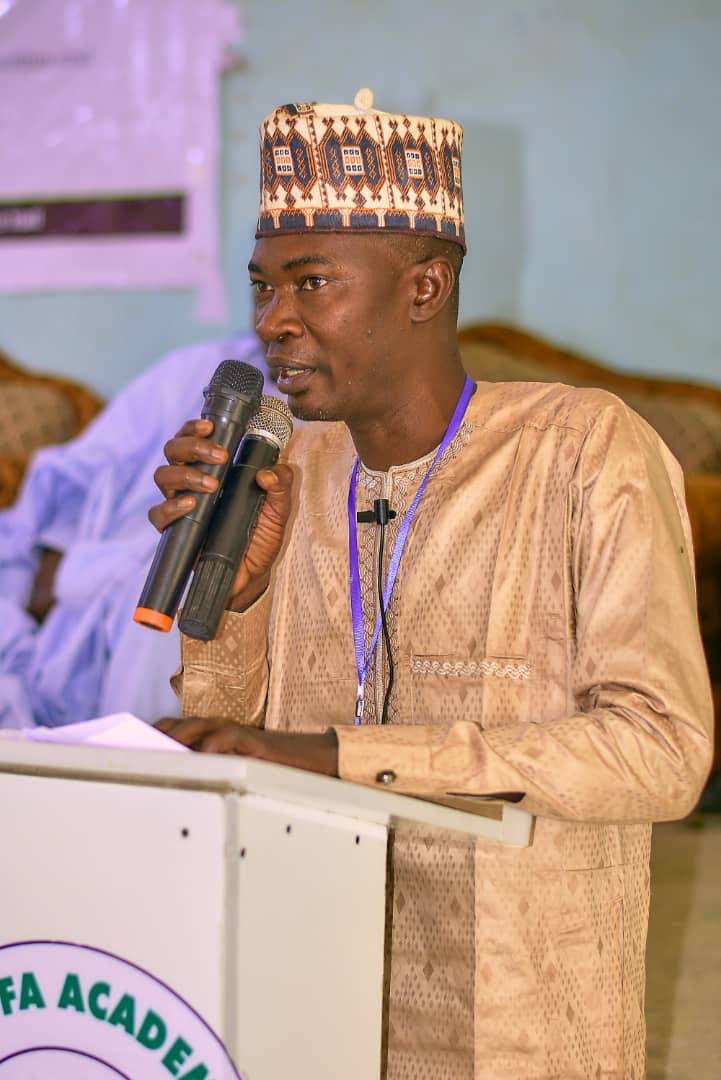
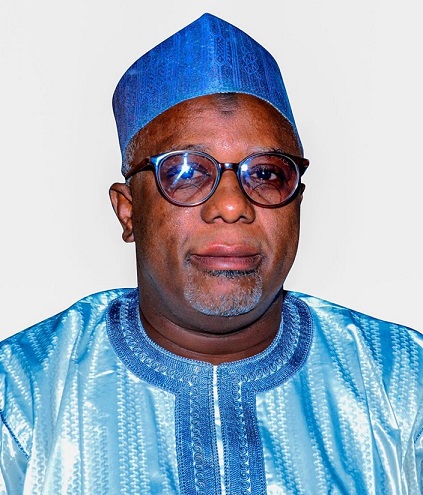
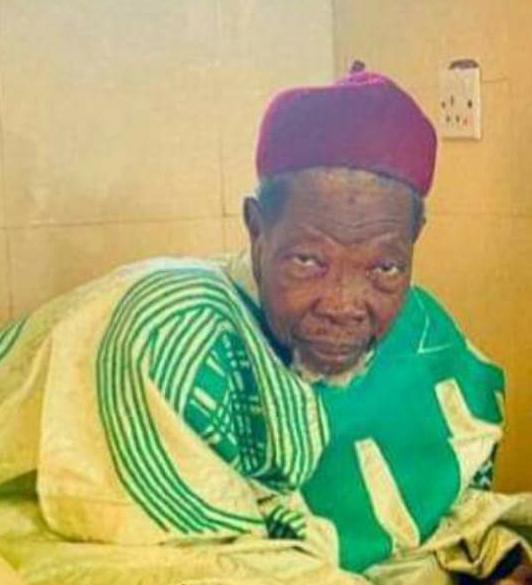
Dr Muhsin Ibrahim

New book explores faith, language and identity in Kannywood

By Hadiza Abdulkadir

A new book examining the cultural and religious forces shaping the Hausa-language film industry, Kannywood, will be released on 5 December 2025 by Springer Nature.

Titled Kannywood: Film, Faith and Identity in Northern Nigeria, the work critically explores how filmmakers navigate religious expectations, cultural norms and language ideologies while appealing to a diverse audience.

The author, Dr Muhammad Muhsin Ibrahim, teaches Hausa Studies at the University of Cologne and is an expert in Hausa media and cultural production.

The study employs audience reception theory and a close analysis of selected films to reveal tensions within the industry, including the dominance of the Kano dialect, the marginalisation of others, such as Sokoto’s, and the commercialisation of “broken” Hausa.

The book also highlights the pressures of global influences and conservative religious forces, presenting Kannywood as a contested space of identity and representation in northern Nigeria.

A brief tribute to Malam Maikudi Cashman

By Muhsin Ibrahim

Talk about Kannywood and, often, some people who are scarcely literate or have little knowledge of film will dismiss the entire industry as a sanctuary for good-for-nothing folks. But that is not always true.

I first met the late Malam Umar Maikudi (also known as Cashman) at the 2019 Kano Indigenous Languages of Africa Film Market and Festival (KILAF) conference. We connected immediately, discussed various issues, and ultimately exchanged phone numbers.

Although Malam was old enough to be my father, we maintained a relatively cordial relationship. He would send me some of his writings, and I would send him mine in return. We also met a few more times during subsequent editions of the KILAF conference. I am sure Alhaji Abdulkarim, the CEO of Moving Image and the organiser of KILAF, will dearly miss Cashman.


He was among the few brilliant individuals blessed with the talent to blend theory and practice seamlessly, and he excelled in both. 

Malam was a lecturer at Nuhu Bamalli Polytechnic, Zaria, and President of the Motion Picture Practitioners Association of Nigeria (MOPPAN). 

Malam was a bridge between Kannywood and Nollywood, as he featured in films from both industries. Many Kannywood viewers may not be very familiar with him, though.

Cashman only recently started featuring in more mainstream Kannywood productions, such as Gidan Badamasi and Labarina. As a lawyer in the latter (Labarina), who is expected to code-switch and code-mix, you can tell this actor is definitely educated. He was.

His death is a significant loss to his family, of course, and to the Nigerian entertainment industry. May Allah forgive his shortcomings and grant his loved ones the fortitude to bear the loss, amin.

Muhsin Ibrahim, PhD, is an academic and writes about Nigerian films. He can be contacted via muhsin2008@gmail.com.

Former BUK staff raises concerns about transcript delays

By Muhammad Sabiu

Dr. Muhsin Ibrahim, a former Bayero University, Kano (BUK) staff member, has expressed deep concern over the challenges students and alums face in obtaining academic transcripts from BUK.

In a recent commentary on Facebook, Dr Ibrahim highlighted the plight of many former students who have missed out on opportunities due to delays in processing transcripts. “This is sad and embarrassing, especially as the problem is completely avoidable in this day and age,” he wrote, noting that the issue is prevalent in many public universities across Nigeria.

Dr. Ibrahim shared a personal experience, revealing his inability to assist a former student in obtaining her transcript despite his connections within the university. He described the situation as unfortunate and urged those responsible for transcript processing to act with empathy and diligence.

He also called on the university’s management to address the problem decisively, suggesting that any staff found guilty of causing unnecessary delays should face appropriate disciplinary actions. “Think about what a delay means to these people. Don’t ruin their chances at a scholarship or a job. Be empathetic. Fear God,” he appealed.

Dr. Ibrahim’s remarks resonate with affected students and alumni, who have long sought reforms to streamline administrative processes. This underscores the need for transparency and efficiency in accessing critical academic documents.

The menace of job racketeering in Nigeria

By Usman Muhammad Salihu,

Recently, while scrolling through Facebook, I came across a post by Dr. Muhsin Ibrahim, a lecturer and editor of The Daily Reality. He wrote, “We need to address the issue of buying and selling job offers in Nigeria. It’s disheartening that we no longer condemn this corrupt practice; it’s becoming normalised.” His words hit home, reminding me of my own experience.

A day after graduating from Abubakar Tatari Ali Polytechnic, Bauchi, a familiar acquaintance, approached me and asked, “Now that you’ve graduated, what’s next?” I replied, “NYSC and then maybe looking for a job.” He chuckled and said, “Nigeria is now about who you know or what you have in your pocket. I can help you get a job, but it’ll cost you.” Shocked, I asked, “Where would I get that kind of money?” and walked away, disturbed.

This encounter and Dr. Muhsin’s post made me recall Jibrin, a man I knew in Gombe State. He fell prey to one of these “pay-for-a-job” schemes. Desperate, he sold his house for far below its value to pay the fee, only to end up with neither the job nor the house. Jibrin’s case is sadly not unique. Countless others have been conned by job scammers who vanish, leaving their victims penniless.

The growing prevalence of job trading in Nigeria is alarming. It undermines merit, creating a system where people secure jobs based on connections and bribes rather than qualifications. Deserving candidates are sidelined, while unqualified individuals fill critical roles. This feeds a cycle of corruption, further deepening economic inequality and breeding frustration among the youth.

What is even more troubling is the normalisation of this practice. Instead of condemning the outright sale of jobs, society seems to have accepted it as a new reality. Many young people now believe that they stand no chance in Nigeria’s job market without money or connections. This erodes confidence in a fair system, where hard work and qualifications should decide securing employment.

To tackle this issue, the media needs to lead the charge by highlighting the perils of job trading. The negative impact of this corrupt practice should be exposed through investigative journalism, public debates, and social media campaigns. However, raising awareness alone is not enough. Nigeria needs stronger recruitment regulations, where organisations are held accountable for corrupt hiring practices.

Whistleblowing must be encouraged, and safe and anonymous channels must be provided for reporting job scammers. If potential whistleblowers fear retribution or harassment, they will unlikely come forward, leaving corruption unchecked. The government must establish legal protections and incentives for those who help expose corrupt recruitment activities.

Government agencies and private firms must also ensure transparency in their hiring processes. Job openings should be advertised on official websites with detailed selection criteria. Recruitment processes should be publicised, and there should be clear communication with candidates regarding the status of their applications. This would make it more difficult for corrupt individuals to infiltrate the system and sell job offers.

Civil society organisations and advocacy groups also have a crucial role to play. They can organise awareness campaigns, engage with policymakers, and help victims of job scams seek justice. These groups can push for necessary reforms and create public forums where citizens can voice their concerns.

As individuals, we have a responsibility to reject this corrupt system. We must resist the temptation to pay for jobs, recognising that such actions perpetuate inequality and injustice. By speaking out against job trading and advocating for merit-based recruitment, we contribute to building a more just society. If job seekers refuse to participate in corrupt practices, it will weaken the power of those profiting from them.

In conclusion, job trading is a serious issue in Nigeria, eroding the values of merit and fairness. It is a dangerous practice that widens the gap between the haves and have-nots, promoting a culture of entitlement and greed. This trend needs urgent attention from all sectors of society. Nigeria can combat this corrosive practice through collective action, transparency, and strong legal frameworks and build a future where merit truly matters. It’s time for a change, and the fight starts with each of us.

Usman Muhammad Salihu is a fellow of PRNigeria Young Communication Fellowship 2024. He can be reached via muhammadu5363@gmail.com.

If they won’t read, let them watch

By Ado Magaji Mansur

As the saying goes, “We are the books we read.” Therefore, we should all thank our writers, past and present, for depriving themselves just to share their ideas and experiences with us through books. 

Although I am not a writer, I believe that writing books is both painful and rewarding. Without these books, our world would’ve been a totally different place. 

However, as the world is moving from script to screen, coupled with the gradual death of the reading culture and rise in the “watching” culture, especially among our people. I hereby ask the question: Can’t our intellectuals use film to transmit their great ideas to the people?

We have already made the mistake of entrusting our films to the people we all know who can’t be relied upon as the sole custodians of our culture and the psyche of our younger generation. Therefore, instead of observing and criticising the films, their makers and producers from a distance, why can’t some of the great minds among us think up some appropriate ways of putting their ideas to improve the powerful Kannywood, especially now that it’s been confirmed that they can’t live up to our didactic and moralistic expectations? And since no one can moderate (read: censor) their movies before they reach our homes, we must help them improve.

Very soon, we will start alleging or complaining that foreign countries and organisations are sponsoring and producing films like “Dadin Kowa” to intentionally misrepresent us or to sustain the stereotypical image of us that has already been created. 

Like books, films have the capacity to convey a wide range of ideas, making them a versatile tool for people from all disciplines. If handled with care, films can have a profound impact on the audience, much like books do for readers. 

Finally, I must confess that, some years back, when our friend Muhsin Ibrahim defected from Literary Studies to Theater/Film/Television studies, I secretly doubted the sagacity of his choice because I then wrongly thought that, as a promising writer and critic, he would contribute to his society better as a literary guru than a film scholar. But now we can all see his great job for Kannywood. We can all take some cues from our friend and see how we can contribute.

The hidden reality of life in Europe

By Aminu Mohammed

This article was inspired by a recent post by Dr Muhsin Ibrahim on Facebook regarding money belonging to someone named “Hassan Idris” sent through his PayPal account. Muhsin made the post asking the person to identify himself by sending him a message. However, soon after, he was inundated with messages from people seeking help in various forms. Some even asked him for money, assuming he had won a lottery or had ample cash stocked somewhere.

This issue not only worried me but also made me sad about the attitude of our youths. So that you know, I also live in Germany. I am yet to fathom the reason for the sudden influx of requests based on a Facebook post. Is it desperation, greed, ignorance, or the belief that money grows on trees in Europe?

I have thought about this issue and wondered why this behaviour occurred. Is it that the economic situation in the country has impoverished a large segment of society, making people desperate and in dire need of free money? What could be the reason behind this attitude?

I want to make it clear that I am aware of the difficult economic situation in Nigeria due to inflation and other factors. I also understand that there are genuine people who are in dire need of help and who reach out to Muhsin for support. However, I want people to know that just because Muhsin lives and works in Germany, it does not mean he is rich.

The Untold Story About Europe

Europe is often seen as a paradise with streets paved with gold and abundant wealth. However, the reality is different. Life in Europe is not as easy as it seems. Homelessness and begging are common in countries such as France, Italy, the Netherlands and the United Kingdom. In London alone, at least 167,000 people are homeless due to the high cost of living. Comparably, a great number of immigrants, among them Africans, are stuck in Europe and unable to return home because they are afraid of what is ahead.

 Although the standard of living is high in Germany and the government provides stipends for jobless citizens, there are still poor people, beggars and homeless people in the country. In my former city, Kiel, I have seen people sleeping in public buildings and bank corridors, even during the harsh winter months. I recently saw a naked woman amongst the homeless folks at the Hamburg Central Station, probably suffering from mental illness. It was heartbreaking.

Despite these challenges, there are still opportunities for people with relevant skills to excel and succeed in Europe. Even without a university education, one can live a good life in Germany by being disciplined and hardworking.

Rising Living Expenses

The ongoing war between Russia and Ukraine has brought about significant economic changes in Europe, particularly in Germany. As a result of Germany’s reliance on Russia for affordable energy, particularly gas, to power its numerous industries, the country has been severely impacted. Germany had to look for alternative gas sources, mainly from Norway and the Middle East. This has led to an increment in energy costs and subsequently affected the cost of living and production.

The high cost of living has affected many families, with numerous individuals struggling to pay their bills monthly. The rat race has worsened, and many people live paycheck to paycheck. Groceries and the prices of other goods have doubled or, in some cases, even more. This is in addition to an increase in rent, energy, water bills, etc.

2024 Goals

It is an incredible experience to step out of your comfort zone and explore new places in life. However, before travelling to any country, please conduct thorough research and set reasonable expectations. Life is not always easy, but you can succeed with diligence, perseverance, and hard work.

Set your goals for this year, and take concrete steps to achieve them. Additionally, aim to acquire new digital skills to increase your earning potential. I wish you the best as you enter the New Year with renewed energy and determination.

Aminu Mohammed wrote this article from Ingolstadt, Germany. He can be reached at gravity23n@gmail.com.

University don questions Nigerian governors for donating millions to pilgrims

By Muhammadu Sabiu

A German-based Nigerian lecturer at the University of Cologne, Germany, Dr Muhsin Ibrahim, has taken to his social media handles to question some Nigerian governors for donating a huge amount of money to Nigerian pilgrims in Makkah, Saudi Arabia.

The Daily Reality understands that some of the governors who made the donations include Abba Kabir Yusuf of Kano State, Dikko Radda of Katsina State and Bala Abdulkadir Mohammed of Bauchi State.

According to reports, Governor Kabir gave 6,166 Kano pilgrims N65 million; Governor Radda gifted N278 million to Katsina pilgrims, while Governor Bala gave over 300 pilgrims 300 Saudi riyals each.

Questioning the governors’ actions, the lecturer asked what the essence of this is, looking at Nigerians’ critical situation.

His words, in Hausa, and translated into English: “For God’s sake, what is the essence of donating millions of naira to pilgrims by some governors?

“Giving out is good, but is this gift a “priority”, especially at this critical moment people are in? Hmm.”

Nigerians are in a critical situation characterised by the inflation of almost every consumable product nationwide.

Recall that an announcement of fuel subsidy removal by President Bola Tinubu during his inauguration triggered an increase in the prices of petrol by over 100%, leading to a significant increase in transportation fares and the prices of commodities.

Malam Jamilu Salim: A Short Tribute to a Fatherly Administrator

By Muhsin Ibrahim

Part One

It was 2005 when I applied for admission into Bayero University, Kano (BUK). In Nigeria, getting admission without knowing someone at the university is pretty hard. My late father was working there as an accountant, but remembering how my immediate older brother couldn’t secure admission a year before despite our father’s efforts, I did not bother to ask for his help. Our eldest brother (Yaya Babba), now late, was nonetheless a student. Knowing he was not an ‘ordinary’ student due to his age, I approached him for assistance.

I was lucky Yaya Babba knew Malam Jamilu Ahmad Salim. I cannot say what his position at the University was then, but he could help, Yaya Babba assured me. My only fear was my SSCE result, which was neither WAEC nor NECO, the two conventional entry exams. I had NABTEB and was applying to the Faculty of Education. But on the other hand, my UTME/JAMB result was excellent.

Yaya Babba met Malam Jamilu during a Hajj pilgrimage the previous year, and they clicked. To those who knew our brother, he was almost everyone’s friend. Thus, they maintained a cordial relationship after the Hajj. When we met Malam Jamilu, he calmed me down, virtually assuring me of admission. Although I got the admission without his help – or anyone’s but Allah – in the end, how he treated me was fantastic and fatherly.

Part two

After graduating in 2010/2011, Bayero University employed me as a lecturer. Fast forward, I got another lecturing position and admission for my PhD at the University of Cologne, Germany, in 2017. I signed a bond and left BUK on a Study Fellowship in late August. Months later, I thought about the implication of collecting two salaries, something I didn’t plan for. I thought I would only be a Teaching Assistant à la the American university system. I discussed this confusion with selected colleagues, including my contemporaries and seniors. Opinions differed. Confused, I decided to go to the top.

With the intervention of a friend, I met Malam Jamilu, now a Director of the Establishment. He advised me as if I were his child on what I should do when I met the Vice-Chancellor, Prof. Yahuza Bello. So, I did, and it worked like magic. Appreciating my sincerity, Malam Jamilu thought the University could (should?) release me – on a Leave of Absence (LOA) – without paying back the few months’ salary I received. So, he asked me to request that in my application letter. Although it didn’t work, I remain eternally grateful for his rare kindness and generosity.

Part three

Weeks before my four-year-long LOA ended, I received an email from my Head of Department that I should resume or resign. My love for BUK is more than you can imagine. But, of course, I love my new workplace, which offers me abundant opportunities, resources, and much more. Still, I hesitated to divorce my beloved BUK, where my academic journey began just like that. Nevertheless, my close family and friends suggested I bid BUK a final farewell. But how do I do it? Just tender your resignation, and that’s it, a voice told me. Another one said no, contact the ever-helpful Malam Jamilu for guidance – so I did.

Malam Jamilu, now a Registrar – the peak of his career – was much busier. He probably lost my number and couldn’t return calls from unknown callers. The friend who helped me the other time and his underling, Rabia Shour, told him that Muhsin called the other day. He apologised for not answering. Thus, when I called again, he quickly picked up. He was apologetic in his welcoming manner.

Upon hearing my story (again) and my current request, he didn’t mince his words on what he would do in my situation: resign. He added that that was a development we should all celebrate. He briefly lamented the condition of Nigerian universities and congratulated me.

I was about to drop the call when Malam Jamilu advised me to word my letter carefully and diplomatically. For instance, instead of titling it “Letter of Resignation”, it should read “Notice of Withdrawal of Service”, among other excellent tips.

The last part

I am sure Malam Jamilu did more for many more people in his decades-old career, four of which were as the University’s top administrator. He was an incontestably hardworking, dedicated and brilliant manager who rose through the ranks and contributed significantly to the university and its members’ growth and development. Since our father’s death in September last year, no other death shocked me as his. Wallahi, I spoke about him with a friend visiting me from Nigeria yesterday. We didn’t know he would die at the age of 59 later in the night!

May Allah forgive the shortcomings of Yaya Babba, my father (Alhaji Ibrahim Lawal), Malam Jamilu and our other loved ones. The list is getting longer. Everyone and everything will perish (Quran 55:26).

Muhsin Ibrahim, PhD, wrote from Cologne, Germany. He can be contacted via muhsin2008@gmail.com.
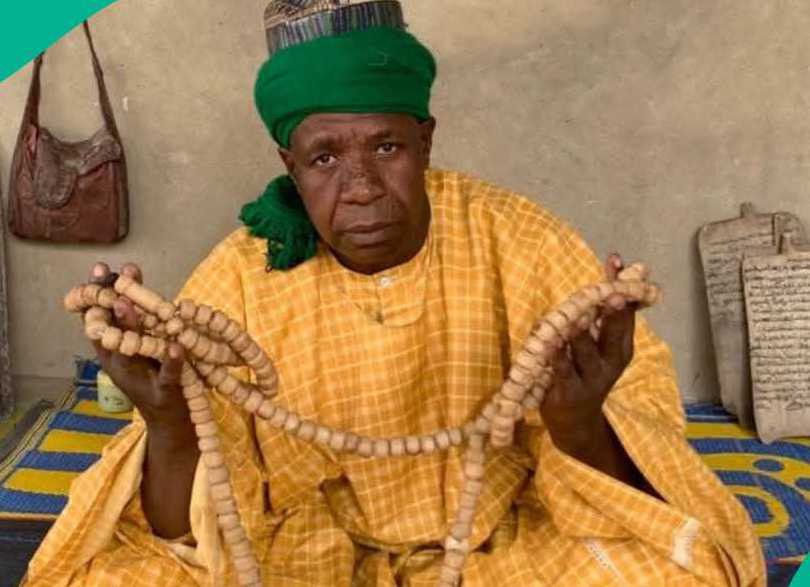
The Daily Reality editor loses father

Uzair Adam Imam

Alhaji Ibrahim Lawal, the father of the Editor of The Daily Reality newspaper, Dr Muhsin Ibrahim, is dead.

An Islamic scholar, Alhaji Lawal, aged 78, died Friday evening in Kano after a brief illness. He was a former non-academic staff of Bayero University, Kano.

The deceased left behind many children and grandchildren. Among his children is Dr Muhammad Muslim Ibrahim, a former Deputy Vice-Chancellor, Al-Qalam University.

According to family sources, the funeral rite is scheduled to take place tomorrow, Saturday, 24th September 2022 at his residence in Gwale LGA, Lokon Makera.

May Allah forgive him and grant his family the fortitude to bear the loss, amin.