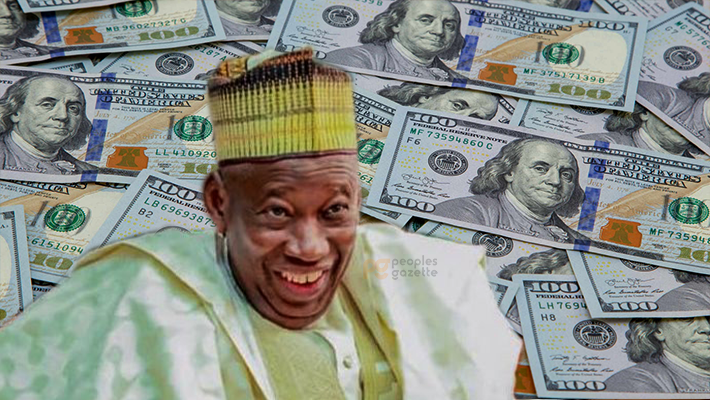
Dr Abdullahi Umar Ganduje

The election tribunal verdict and the future of Kano politics

By Rukayya Abubakar Othman

In the last few years, Kano State has been plagued by a seemingly endless and unabated fierce political war that has divided the state and truncated its progress. The two principal political empires, the Kwankwasiyya and the Gandujiyya have polarised the people of Kano along two opposing camps, each calling for the head of the other.

It is difficult for any state or country to develop under an unstable and tumultuous political climate. Kano’s experience over the past years is a case in point. The incessant strife between the Kwankwasiyya adherents and the Ganduje’s followers has created a hostile environment for economic growth and social progress.

The recent election tribunal court verdict in Kano has further opened another dimension to the whole gamut of issues. The Kwankwasiyya adherents are questioning the true meaning and concept of independence of the Judiciary.

Will those who massively voted for NNPP accept the verdict of our courts in good faith? Will it further deepen confrontational politics in Kano? The answers to these questions can only be found in the upcoming Court of Appeal and the Supreme Court judgments.

More tellingly, the recent trend will no doubt tragically change the course of Kano politics. If the governorship polls in Kano are taken out of the general election, it will become like Imo, Edo, and Ondo states, where the governorship elections are held on different dates from the general election. This will have a multiplier effect on the political landscape of Kano, considering the central role that the state plays in the region.

The political leaders in Kano must put the state’s interests first and work together to resolve their differences. The people of Kano have suffered enough from the political instability in the state. It is time for politicians to put their differences aside and work for the good of the people.

Lastly, the recent court verdict in Kano has opened up a new dimension to the already turbulent political landscape of the state. It is difficult to predict the long-term impact of the ruling, but it will significantly impact the future of Kano politics.

The political leaders in Kano must put the state’s interests first and work together to resolve their differences. The people of Kano have suffered enough from the political instability in the state. It is time for politicians to put their differences aside and work for the good of the people.

Rukayya Abubakar Othman wrote via othmanrukayya0@gmail.com.

Lessons from Ganduje dollar videos

By Muhammad Muhammad Khalil

Since Dr Abdullahi Umar Ganduje’s dollar video surfaced on the internet, I have been keenly pursuing its happenings, from Ganduje’s fierce denial to the latest court order barring his arrest by the Kano Anti-Corruption Agency. I will highlight some critical lessons from this whole saga in this article.

1. Despite the former governor’s persistent efforts to dismiss the clip as bogus and doctored, many people still believe in its authenticity. In many people’s view, and thanks to the video, he is a greedy politician whose craze for money is beyond comparison.

Although Ganduje is ultra-rich, they say, he does not reject a fifty thousand naira kickback. Several stories are widely circulated demonstrating this. This shows us the importance of doing good and avoiding any act that can soil one’s reputation. Ganduje is Khadimul Islam to some people; to many others, he’s a dreadful, unrepentant bribe-taker.

2. The authentic or fabricated videos keep reminding us that what one holds hidden can be brought into the open and even grab the headlines. The fact that we do some terrible and disgusting things in the secrecy of our rooms shouldn’t make us feel we are wise; instead, we should never forget that nothing escapes the sight of Allah. The truth is that we sometimes fear creatures more than we fear the creator.

3. The same Ganduje who defied and has little or no respect for court orders is now desperately struggling to be shielded by the court orders he used to flout in broad daylight. Power is intoxicating.

4. Journalists who have the itch to blow the whistle on people in power should realise the danger of their boldness and prepare for what might trail their decision to speak out against corruption and corrupt politicians. It can cost one his dear life.

I don’t know if President Muhammad Buhari’s administration did anything to protect journalist Jaafar Jaafar from the threat to his life that forced him to seek asylum in the UK. The Buhari Mai Gaskiya claimed to have placed fighting corruption atop his priority. Wonder shall never end.

Muhammad Muhammad Khalil wrote from Kano. He can be reached via muhdmuhdkhalil@gmail.com.

Seeking sustainable solutions in Kano

By Mukhtar Jarmajo

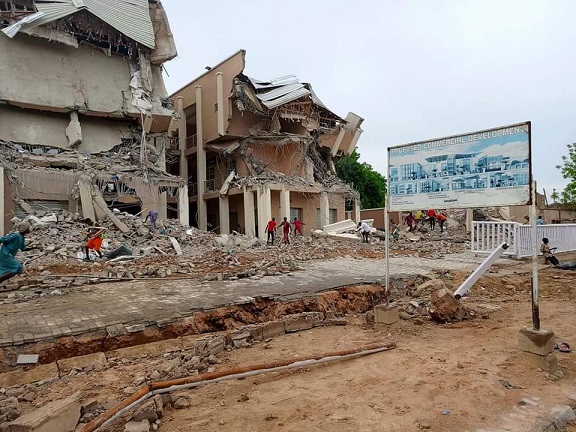
The new administration in Kano has embarked on a commendable mission to reclaim the lands around schools that were allegedly wrongly sold out by the past government. Such action is important for the protection of public resources and the promotion of quality education. However, demolishing the shops built around the schools may not be the best approach to solving the environmental crisis created by the encroachment.

While it is understandable that the new government wants to send a strong message to potential land grabbers and illegal developers, demolishing the shops may cause unintended consequences that could hurt both the affected traders and the government. For example, many shops were legally acquired by small business owners who may have invested their life savings and borrowed money from banks to establish their businesses. Destroying their livelihoods without proper compensation or alternatives could lead to social and economic unrest.

Furthermore, destroying the shops may not solve the problem of encroachment. Once the shops are gone, the empty spaces may attract new forms of illegal settlements or waste dumping, further depleting the environment and posing health hazards to students and residents. Therefore, a more strategic and holistic approach to Kano’s environmental and economic challenges is needed.

One possible solution is to engage architectural and environmental experts to design sustainable solutions that could improve the safety, aesthetics, and functionality of the schools and the commercial spaces around them. For example, the shops could be redesigned to allow more natural ventilation, lighting, and greenery, enhancing the microclimate and reducing the need for air conditioning and artificial lighting. The shops could also be integrated with the schools’ curricula and activities to promote entrepreneurship and civic engagement among students and teachers.

Another solution is for the government to acquire the shops and lease them out to qualified and responsible entrepreneurs who could operate them under certain conditions, such as payment of rent, taxes, and adherence to environmental and safety standards. Such an approach could generate revenue for the government, support small businesses, and foster a culture of responsible commercial activity in Kano.

Preserving our schools and small businesses requires a collaborative and creative effort from all stakeholders, including government officials, planners, architects, investors, traders, and residents. We must resist the temptation to resort to destructive means of solving complex problems and instead seek sustainable and inclusive solutions that benefit our communities and environment.

The demolition of shops around schools in Kano may seem like a quick fix to the encroachment problem, but it is not a wise or ethical solution. Instead, we should explore innovative and sustainable ways to protect our public resources, promote quality education, and support responsible entrepreneurship. Let us preserve our schools, our small businesses, and our dignity.

Jarmajo wrote from Wuse, Zone 2, Abuja. 

The antics of Kano throne: History may repeat itself

By Sadiq Ilyas

In 2017, Governor Abdullahi Ganduje reportedly disagreed with Sarki Muhammadu Sanusi II’s critical comments about the government’s handling of the state’s finances. Sanusi accused the government of mismanagement and corruption, particularly about the state’s debts.

The disagreement between the two escalated in 2019 when the Kano State government created four other emirates, reducing the powers of the Emir of Kano, who was Sanusi then. 

Sanusi challenged the creation of the emirates in court, arguing that it was politically motivated and designed to weaken his position as emir. However, in March 2020, a Kano State High Court ruled that creating the emirates was legal.

In March 2020, Sanusi was removed from his position as Emir of Kano by the Kano State government, citing insubordination and disrespect to the governor and other officials. Sanusi denied the allegations and challenged his removal in court, but his efforts were unsuccessful.

Since the removal of Sanusi as the 14th Emir of Kano, many people have reacted differently, and that generated sympathy around the Emir, who was seen as a victim, while the Governor is seen as the villain. 

The Kano Governorship election result is believed to be won majorly as protest votes against Ganduje’s policies, including creating new emirates and his perceived allegation of corruption. On the other hand, the New Nigeria People’s Party, NNPP, gave a margin of 128,000 votes to the ruling All Progressives Congress, APC. Although the APC plans to challenge the victory in court, the likelihood of overturning the election is slim.

The 14th Emir of Kano is believed to have supported the NNPP with many antics. First was his appearance in a white and red outfit, the Kwankwasiyya insignia, just before the election when he visited his mother. People also rumour that he financed the campaign of the NNPP of the Governor-elect Abba Kabir Yusuf. Though the 14th Emir was out of the country during the election period, he was believed to be in Makkah praying for the victory of the Governor-elect.

Since the announcement of the Governorship results in Kano, social media space was filled with slogans such as “Sabon Gwamna, Sabon Sarki”, meaning “new Governor, new Emir”. The atmosphere in the Emir’s palace becomes tense, and the Emir’s outfit choice for the Hawan Daushe Durbar says it all. He wore golden armour, which some analysts say is a sign of confrontation in times of war. But now that the battle with swords is over, the question is who is playing with the lion’s tail. 

Kwankwaso VS Ganduje

In a recent interview with reporters, Senator Rabiu Musa Kwankwaso, the leader of the NNPP and presidential candidate of the party in the 2023 election, has stated that the incoming government of Abba Yusuf, the Governor-elect of Kano State, will review the dethronement of the 14th Emir of Kano, Muhammadu Sanusi II.

“We tried not to intervene in the issue of bringing or removing any Emir. But now, an opportunity has come. Those given this opportunity will sit down and see the issues. Then, they will look at what they are expected to do. Besides the Emir, even the emirate has been divided into five places. All these need to be studied,” Kwankwaso stated.

He also said that, as elders, they would continue to advise the incoming government to do the right thing.

Meanwhile, Kano State Governor, Dr Abdullahi Umar Ganduje, has reiterated that the four new emirates created by his administration are here to stay.

“The four new emirates are a symbol of unity, progress, and the well-being of the people. They were created to honour the people of these regions and recover the reputation of the traditional institutions,” Ganduje said during the Workers’ Day celebrations held at Sani Abacha Stadium in Kano.

He added that the emirates were created to upgrade and promote their tradition, and they have brought development to these places. “I assure you that these emirates are permanent. They have come to stay. Even if we are not in government, these emirates are untouchable. I promise you this by the grace of God, they have come to stay,” he added.

It remains to be seen how the situation will unfold in Kano State regarding the dethronement of Sanusi II and the creation of new emirates.

History may repeat itself

During the administration of Governor Abubakar Rimi in the late 1970s and early 1980s, there was an attempt to create five emirates in Kano state by splitting the Kano Emirate into five. 

This move was met with opposition by some members of the royal family and other traditional rulers, who saw it as an attempt to weaken the influence of the Kano Emirate.

However, Governor Rimi went ahead with the plan and created the new emirates of Gaya, Karaye, Bichi, Rano, and Kano. 

The Kano Emirate was reduced in size and given a more ceremonial role, while the new emirates were granted more administrative and political powers.

When Governor Sabo Bakin Zuwo took over in 1983, he reversed the decision and restored the Kano Emirate to its original size and status, with the other emirates abolished. 

His decision was seen as an attempt to restore the traditional balance of power and to address the concerns of those who opposed the creation of the new emirates.

In 2019, Governor Abdullahi Ganduje created four new emirates in Kano State, including Gaya, Karaye, Bichi, and Rano, in addition to the Kano Emirate. The move was met with controversy and legal challenges, with some arguing that it was politically motivated and aimed at reducing the influence of the Kano Emirate. This followed the dethronement of the 14th Emir Muhammadu Sanusi II. And from all indications, history may repeat itself, with the NNPP becoming a new government.

Experts opinion 

Following the recent dethronement of Sanusi as Emir of Kano and the creation of new emirates by the Ganduje administration, Nadir Nasidi, a historian at the Ahmadu Bello University Zaria, has spoken out against the move, stating that it is unnecessary and unpalatable.

In an interview, Nasidi stated, “Kano is the only emirate in the whole country with one unifying emir, but the creation of unnecessary emirs isn’t a palatable one. Many people, including myself, told the Ganduje administration that what he was doing wasn’t a good one.”

While acknowledging that Sanusi’s dethronement was final and he could not be brought back, Nasidi suggested that the other emirates be reduced to local chiefs under the overall Emir of Kano, who would be chosen from among the existing kings.

He said, “Nobody will bring back Sanusi. He’s gone already. But the other emirates must be reduced to local chiefs under the overall emir of Kano. They can choose amongst all the kings one person to be the overall king.”

Nasidi’s suggestion comes amid ongoing debates about the wisdom and legality of creating new emirates in Kano State. The creation of four new emirates in the state was met with widespread criticism, with some people accusing the government of trying to weaken the influence of the Emir of Kano.

Critics argue that the move is politically motivated and aimed at reducing the Emir’s power and influence. On the other hand, supporters of the new emirates say that it will promote development and bring the government closer to the people.

As the debate continues, it remains to be seen whether the incoming administration will consider Nasidi’s suggestion or continue with its plans to bring back Sanusi Lamido as the Emir and reverse the creation of the emirates in Kano State.

Sadiq Ilyas wrote via silyas1989@gmail.com.

Bombshell: Allegations on the last-minute looting of public properties in Kano

By Auwal Umar

The transition process, as it is seen today in the Kano political culture, is something that can be squarely described as unprecedented if the nonchalant and lackadaisical attitude exhibited by the Kano state government is looked into properly. The transition chairman appointed by His Excellency, Governor-elect Engr. Abba Kabir Yusuf, Abdullahi Baffa Bichi, had decried the total absence of any cooperation, not even lack of it, from the Kano state government to form its own transition committee with a deliberate view to scuttling the smooth transition process.

Myriad of pictures going viral of one of the best social investments that the state has ever witnessed was initiated by Dr Rabi’u Musa Kwankwaso in his second spell as a governor, on which he spent 2.4 billion to empower the teeming youth in the state with employment opportunities across the 44 local government areas. Unfortunately, despite the suffocation of the process to make it work as planned for the public to benefit, now this invaluable treasure meant for the public good has been reduced to something like booty looted at the last minute to deprive the good people of Kano of the initial goals.

In addition to thousands of sewing machines that have been metaphorically remanded and cut off from the general public good, some reports of many mysterious disappearances of public properties should be thoroughly investigated when Engr. Abba assumes the number one seat in the state.

It is normal for any right-thinking person to believe that a leader should be a father figure so engrossed in compassion, sympathy and empathy. Still, here in Kano, despite all the wanton destruction and disruption they brought to drag Kano down, all they have is total apathy towards the awful loss they brought about to the state. It is unimaginable to expect what we see today from the people who should regard the Kano people as their sons and daughters with every sense of mercy and magnanimity.

It should not go in vain; all the perpetrators have to be brought to book. Impunity is the main motive behind the abuse of any public office in this country. The more it is welcome, the faster public institutions are utterly weakened. The ills and evils meted out by these people should be revisited judicially. I hope they will serve as a deterrent to others.

Anyone that seems to be conversant with the art of governance knows fully well that Engr. Abba Kabir, alias Abba Gida-Gida has a hefty mountain to move. One can say with a sense of certainty that the outgoing government has braced for the moment to meet out their concealed evil intent against the incoming administration. May he take off his Babba Riga and roll up his sleeves to make Kano breathe again. I hope people should learn to forbear some certain inconveniences. Most importantly, Abban Kanawa needs sincere prayers from the teeming Kano populace for success.

Auwal Umar writes from Kano and can be reached via: auwaluumar9@gmail.com.

Dear Excellency Abba, it’s time to bring him back!

By Sadeeq Sheshe

I am writing to express my firm belief in the need to consider re-installing Sarkin Kano Muhammad Sanusi II as Emir of Kano. As you are fully aware, Emir Sanusi II was illegally dethroned in 2019, allegedly for supporting your governorship ambitions, despite the absence of credible and substantiated evidence to support that claim. However, reinstating him will set your tune of kicking out all illegalities perpetuated by the Ganduje administration over the years. Additionally, I believe that his installation is one crucial point for you towards your effort to bring back Kano on the route of development previously set by the administration before Ganduje’s.

During his previous reign as Emir, he brought about innovative changes that standardised the ethics and customs of the institution. He organised massive seminars, workshops, and symposia for title holders to share ideas and strengthen the Kano traditional/sarauta institution. He also ensured that any member found violating standard ethics or even involved in immoral activity was thoroughly punished.

Additionally, he was reported to have improved the welfare package of junior workers of the emirates. He provided career opportunities for many of them, something that anyone could not have imagined many years ago. Therefore, it was safe to say Emir Sanusi II laid the foundation for the institution’s changes to strengthen its course as a principal legacy of the Kano people and “Kasar Kano’.

Considering the unity of the system, Emir Sanusi made sure that all other members of the ruling houses and other renowned houses of royals and clerics who felt neglected were brought back and given a sense of belonging. For example, he brought back the house of the late Emir of Kano Muhammad Inuwa Abbas (1963-1963) by turbaning his son Yahya Inuwa Abbas as Dokaji and later Dan Maje. In addition, he settled the dispute surrounding the Wazirin Kano title by giving the title back to the Waziri Gidado family. He also revived the houses of Sarkin Kano Alu (1894-1903), Danlawan Ayuba, Sarkin Shanu Hamza, Danburam Abubakar, Magajin Gari Inuwa Wada, Sarkin Fada Sule Gaya, Marafan Kano Sule, Danmasanin Kano Yusuf Maitama, Ma’ajin Kano Umaru, and many other aristocratic houses in Kano.

Furthermore, as part of his bicentenary celebration to mark 200 years of establishing the Dabo dynasty, preparations were in the final stages to bring back other houses, including your own house/family (descendants of Galadiman Kano Yusufu Maje Garko), Danburan Haruna, Galadima Khadir, Dan Isa Sanda, Sarkin Shanu Hassan, and surprisingly even the descendants of Sarkin Kano Tukur (1893-1894). The importance of bringing back these houses cannot be overemphasised, particularly in establishing unity and stability of the traditional institution in Kano.

According to many people, the neglect of many of these houses over the years has contributed to the continuous down-spiralling route the emirate had faced, something anarchists like Ganduje took full advantage of to bring destruction to family and the Kano traditional institution.

Emir Muhammad Sanusi is the only capable, noticeable figure within the “Bani Dabo” (apart from you) who has the resources, power, and connection to shoulder the burden and drive the institution to further development and greatness. He commands respect among government officials, fellow traditional leaders, clerics, and politicians from different backgrounds and sections of this country. In this aspect, your government can take full advantage of that. As an Emir, he can lead the Kano contingent on any assignment to boost Kano’s image and prestige. You have nothing to worry about with Emir Sanusi going anywhere because, as the famous Hausa praise saying goes, “Ranar fita kunya sai da Muhammadu.”

Emir Sanusi could also foster religious unity in Kano and, by extension, the country. With his position as the Khalifa of the Tijjaniya Sufi sect, he commands complete allegiance and fellowship of the sect. Additionally, his cordial relation with Izala scholars in the state and beyond, such as Dr Bashir Aliyu Umar, Sheikh Aminu Daurawa, Dr Nazifi Inuwa, Prof Mansur Sokoto, etc., as well as the Qadriyya, particularly its leader Sheikh Kariballah Kabara is vital to foster the religious unity and harmony thereby ensuring peace and stability in the state.

In terms of government policy development, Emir Sanusi is the perfect ally. You could wisely tap into his vast connection around the globe alone. He can lead an economic revolution in the state, provide advice on economic policies and be at the forefront of wooing investors. His connections to international firms like black rhino, African development bank, Islamic development bank etc., is the perfect avenue for you to exploit to bring about the much-needed changes Kano state needs. As I read, some of your campaign promises can be achieved swiftly with his insight and possibly heading.

For example, the policy of sending students (Kano indigene) abroad to postgraduate training. With his connection to educational centres and institutes worldwide, he can link with many universities and your government to achieve understanding and agreement. Knowing him, he may even convince some institutions to set up campuses and centres in Kano to facilitate educational growth further, as it is on your agenda for the state.

Like your proposed health policy, his connections with United Nations as a Sustainable Development Goals advocate, and health NGOs worldwide suit your government’s exploit. Through these bodies, grants and funding could be accessed by your government to improve health infrastructure, particularly in our rural areas suffering from difficulties in health care infrastructure.

Finally, it is important to note that bringing back Emir Sanusi II will benefit Kano State and the entire country. He is known to be a vocal advocate for good governance, accountability, and transparency, which are much needed in our country today. He has also participated actively in national discourse and contributed immensely to shaping public opinion on critical issues such as poverty, education, and healthcare. His return to the emirate will undoubtedly enhance his capacity to contribute to national development, a benefit that cannot be overstated.

In conclusion, I hope you will consider reinstating Emir Muhammad Sanusi II as the Emir of Kano. His reinstatement will bring stability and development to the Kano traditional institution and provide a platform for the state government to tap into his vast wealth of knowledge, experience, and connection for the overall state development. Thank you for taking the time to read this piece.

Best Regards

Sadeeq Sheshe can be contacted via sadeeqsheshe@yahoo.com.

Why Gawuna will not win Kano Governorship: A reply to Adnan Tudunwada

By Abdussamad Ahmad Yusuf

While political support entirely is a choice, governed by emotion and often guided by personal aggrandisement, it is surprising if putting it written dismisses intellectual-based assessments and analyses coming from a scholar, even though a public relations consultant. So let me be clear here. I expect, yes, from a political PR consultant to sweet mouth his principal.

However, an assignment of this colour requires an honest appraisal of factors and challenges that might impede the principal’s success and how to mitigate them. Anyway, I rise to the task of unravelling the concoction of emotion and politics wrapped in the last article of Mallam Adnan Mukhtar Tudunwada titled Why Gawuna will win Kano Governorship.

The people of Kano are, at the moment, out at the polling unit to choose the next state governor between the quartet: Ibrahim Khalil; the charismatic Kano Malam, Abba Kabir Yusuf; Kwankwaso-backed candidates, the ‘born-again’ Nasiru Yusuf Gawuna, and the carrier of the old school PRP; Salihu Tanko Yakasai!

Unlike Adnan, I do not have a personal relationship with any of the four. Therefore, my response is purely based on the analysis of his candidate, Hon. Nasiru Yusuf Gawuna. Readers will believe me that an analysis of Gawuna should never be unconnected with the un-ceremonial Ganduje administration, especially since he is the number two.

The bane that will eventually cost Gawuna the Kano gubernatorial seat is, to list very few of the significant;

First. The Gawuna’s involvement in the Kano black history of ‘inconclusive’. It was exactly one year when the citizens of Kano, tired of the reckless and unthoughtful administration of Dr Abdullahi Umar Ganduje, after parting way with his old political ally Rabiu Kwankwaso, came out en masse to vote out the administration.

However, Gawuna disrupted the final collation of Nasarawa LG results and eventual cancellations effected by INEC, leading to the declaration of the election as inconclusive. Then, as though this is not enough, Gawuna and cohort mobilised for the re-run, thugs that banned legitimate voters from exercising their enfranchise. One!

Two. After assuming office, Gawuna was party to the crimes committed by the Administration of his principal, Ganduje. The vendetta set out by their reign cost the revered emir of Kano, Muhammad Sanusi II, his throne. It didn’t stop at the elite; the vendetta did not spare even the proletariats. The story of ‘Yan Adaidaita Sahu is permanently fresh with traps to whittle their business network. It became a gist that ‘yau baba wa kuma zai sosa’ people expressed their fear.

Salaries were slashed. Pension became uncertain. KAROTA unleashed to markets where they apprehend business allies as they set out to leave Kano in vehicles after transactions at Kwari, Singa, Wambai, Galadima, etc. Of all these shams, Gawuna has proven himself to be with the Talakawa. Neither him expressing disappointment on how Ganduje massacres the future of the state. We have known of the ‘Yan tebura mall and the corruption there. The butchery of Kwari and Kofar Wambai markets, the persecution of Farm Centre phone marketers, and the Kano Cancer Centre corruption charges led to the lay-off of Engr Muaz Magaji.

Third. It is even wiser not to talk of education, health and the civil service. The statistics and data by both Governmental and Non-governmental tracking bodies are something to give you tears.

Fourth. Respect and dignification for elder statesmen Gawuna pretend to have. Where was he when his principal, in his front, called the Kano elders ‘Dattawan wukari’? Where was he when he shunned the Alhaji Aminu Dantata, Gen. Abdulsalami Abubakar, et al., mediation to dethrone Emir Muhammadu Sanusi? Where was he when Adaidita Sahu riders were called Yan Iska, rascals by the MD KAROTA – Baffa Babba?

Where was he when a grand allegation of corruption was being unearthed left, right and centre in the government? He’s a second. Where was he when pensioners and civil servants were denied their full salaries, wages and pension? Where was he when businesses and traders in the state are being pauperised deliberately? These are some of what will cost Gawuna the seat of Governor and why he will fail.

Fifth. The ‘youth constituency’ became the major ‘enemy’ of Gawuna politically, not by coincidence, because their administration has shown indifference to the plight of the youth. They first fizzled out the foreign scholarship program they inherited neither continue to age-long domestic scholarships to tertiary institution students. There was no ‘Youth empowerment’ program such as the Tukwui’s Fish and Poultry, nor Gabasawa’s school for security studies or Kura’s Sport.

No ‘Gawuna or Gandujiyya’ taxis or the Garman Shanu rural-farming boost programs exist—zero youth-centred human capital development. So what was/is the future of youth under the Ganduje-Gawuna and Gawuna-Garo administrations? This is a one-billion-dollar question! Answer with reference to his past antecedence.

The Kano citizens under Ganduje were subjected to hardship and stern corruption. They no longer trusted the government and its officials. This prompted them to have launched a search for alternatives in 2019. Shaaban Sharada emerged, who soon garnered reception, Mallam Khalil made a deep inroad, and Dawisu in the race, among others.

If these third forces could become something to reckon with in the Kano polity at the moment, how about the Kwankwasiyya ‘bloc’ that had given Ganduje-Gawuna a hard knock in 2019 and 2023 they re-strategizes and already won two senators out of three, and more than 18 seats for REPs out 24 in the state? These are factors that won’t allow Gawuna to emerge victorious today.

Abdussamad wrote via abdussamadahmad69@gmail.com from Abuja, monitoring the election.

Digital Bridge Institute: 5 years after, Kano-sponsored students can’t collect certificates

By Uzair Adam Imam

About a hundred students sponsored by the Kano State Government at Digital Bridge Institute have expressed their worries over the state government’s failure to pay for their certificates five years after graduation.

The students decried that the state government has not paid the designated fees to the institute to enable them to collect their results since 2019.

They complained that the development is delaying their education as they are left stranded for over five years.

The students said they need the certificate to further their education and apply for various job opportunities, saying their future would remain bleak if the government refused to intervene.

The Daily Reality gathered that the Kano State Governor, Dr Abdullahi Umar Ganduje, had sponsored 100 students, 40 males and 60 females, to study at the institute in 2017.

The students were sponsored to study various ICT programs such as Software Engineering, Multimedia Technology, Networking and System Security, Hardware Engineering and Telecommunications.

Our future is bleak students

The graduates said their educational careers were at risk, saying the years they spent at the institute would be wasted if the government refused to intervene.

One of the graduates, who pleaded anonymity, said he missed many opportunities, including admissions to study abroad because he has not collected his certificate.

He said, “I was offered three admissions to study in India, but I could not go because my certificate was not given to me.

“Some of my colleagues told me that they even got job offers. However, they could not go for an interview since they didn’t have the certificate.

“I would have scored admission and graduated had I the certificate. Probably got employed in an organisation.”

Muktar Ibrahim (not a real name) said he wanted to further his education but could not lay his hand on his diploma certificate after graduation in 2019.

He said, “I wanted to further my education. However, I have no certificate to seek direct entry into the university.”

Aisha Hussain (not a real name) said it was painful that she was yet to acquire a degree certificate while some of her sisters and friends were serving their one-year mandatory NYSC.

She said, “We have long been expecting the payment by the government for the release of our certificates. It is sad that some of my sisters and friends have completed their degrees even though I started schooling before them.

“I also got so many opportunities. However, I hopelessly saw them pass as I could not go for any of them,” she stated.

Government ignores our appeals

Since graduation, the students said they have been pleading with the government to settle the outstanding debt to enable them to collect their certificates.

The students went to various media stations pleading with the government to come to their aid and settle the debt.

They said they also wrote letters to the Kano State Governor, Dr Abdullahi Umar Ganduje, through the Ministry of Higher Education and the Ministry of Education of the state.

However, all their efforts were in vain, as their plea did not yield any positive result from the government.

Some of these letters.

We are still not tired – students

The students who spoke to The Daily Reality said they are still not tired of sending their passionate appeals to the government to consider them.

They said they are still hopeful and pleading with Governor Ganduje to settle the debt before he leaves office this 2023.

Halima Ibrahim (not a real name) pleaded, “I urge his Excellency, Governor Abdullahi Umar Ganduje, to help us and pay for our certificates.

The lady said her parents are poor and therefore placed all their hopes on her certificate.

Another student who asked not to be named said, “Your Excellency, we know you are good and kind to the poor. We are your children. We are pleading with you to consider us.”

Maimuna Sunusi said, “Our parents cannot afford to settle this debt. Therefore, we are pleading with His Excellency to pay for our certificates and not to waste the years we spent at the institute.”

Kano State Government response

Our reporter has made several attempts to hear from the government, but all his efforts were in vain.

While the Public Relation Officer of the Kano State Ministry of Higher Education, Sunusi Abdullahi Kofar Na’isa, denied knowledge of the development, the Ministry’s Commissioner, Mariya Bunkure, could not be reached for comment.

Protest Votes: Abban Kanawa and the sins of the Kano APC Government (I)

By Auwal Umar

One thing that is exciting about democracy is its being internally endowed with an inbuilt system that avails citizens with an automatic power to punish or reward their benefactors or tormentors every four years. Politically, many causative factors bring down elected officials or traditional leaders from their seats or rob away their sceptres.

In a democratic setting, nothing so precarious leads to the downfall, even more, dangerous than powerful political opposition than the collective power of protest votes. Protest votes are votes cast by various aggrieved members among frustrated citizens dissatisfied with the incumbent government and determined to cast their votes to penalise the leaders they perceive as incompetent or self-serving. In the last US election, former president Donald Trump and his fanatics were made to understand the power of protest votes. Here in Nigeria, ex-president Goodluck Ebele Jonathan had his taste in 2015.

With less than a week left for the gubernatorial election, the Kano political thunderstorms have gathered. Kano has various groups of people that have grown dissatisfied and overly tired of the APC government under Dr Abdullahi Umar Ganduje and his deputy, Malam Nasiru Gawuna. These aggrieved groups include students, Adaidaita-Sahu (tricyclists) riders, Kwari and Kofar Wambai markets traders, civil servants, and many others. These people consider voting for the current APC gubernatorial candidate and his deputy as a celebration and incentivisation of their unwanted act that led to the worst rerun election in the history of Kano polity.

That infamous rerun election has become a memory that still haunts us and deprives the Kano people of peace, especially with the daily sight of thugs taking over localities and the government seemingly unflustered. Therefore, the people seem to bear an implacable feeling of revenge towards the APC with their most potent weapon at the moment— PVC. This might be glad tidings for the NNPP and its boss, Dr Rabi’u Musa Kwankwaso, who fields the same gubernatorial candidate, Engr. Abba Kabir Yusuf, alias Abba Gida-Gida.

Abba Gida-Gida won the previous election with an unbeatable lead before it was dramatically declared inconclusive, which eventually changed the course of his victory. The kinds of people who still feel shortchanged by the results of the rerun election have come from diverse social statuses among the good people of Kano.

First, the collective electorate versus the indelible scar of “Inconclusive”: Looking at his wide popularity and acceptance across the teeming population of the state, especially among the youth, nothing was surprising in Abba’s victory in the 2019 gubernatorial election. The electorate toiled and moiled hard all day from dawn to dusk to ensure their favourite candidate emerged victorious. But inadvertently, some unscrupulous thugs led by the current deputy governor, the APC gubernatorial candidate of the ruling party, Malam Nasiru Gawuna and his deputy gubernatorial candidate, Murtala Sule Garo, disrupted the whole scene, which led to the worst rerun in our living memories.

The drama leading to the rerun is an ignominious act that still haunts our psyche and traumatises our brains. That utter embarrassment has planted an undying seed of revenge in the hearts of the Kano people for the upcoming election, irrespective of who is fielded as the APC candidate. The rerun had exposed the deeply insatiable lust for power at all costs. What else can explain the action of someone who hired the services of vampiric thugs that were so thirty of the blood of innocent voters just to ensure the will of the majority was ruthlessly robbed with not an atom of compassion?

Today, such social, psychological and physical casualties of the sham called election are still alive, hale and hearty and fully ready for revenge. People living at Gama ward, in particular, and places affected by the consequences of the terrible rerun need no more explanation of the horrors they saw with their own eyes.

Second, the Kano APC government versus scholars: Kwankwaso’s government had sponsored some brilliant Kano indigenes who went abroad to study different courses for the good of the state and the nation to add more value and human resources for the good of the general public. Some of these students who could not finish their studies during Kwankwaso’s reign needed registration and upkeep allowance to continue their studies during the outgoing Ganduje’s reign. But for the sake of bitter politics, these students were wholly ostracised despite being Kano indigenes who were abroad to study and not for tourism. These people are now ready for the 11th March in the eleventh hour to take their revenge.

Third, the Kano APC-led government versus the Kano state Students at Higher Institutions: Kano state students studying at various institutions of learning across the country have already come to terms with the deafening silence of the Kano state government that no longer gives them their meagre annual scholarship which amounts to nothing but a token of concern and appreciation of their struggle to study and liberate themselves from the darkness of ignorance. From the onset, it began with a wicked issuance of useless award letters; then, it metamorphosed to sample payment before gradually morphing into total non-payment of the scholarship. Therefore, these students are neither blind nor deaf. However, their anger is reserved and will be vented on election day.

Fourth, during Kwankwaso’s and Shekarau’s eras, Kano indigenes who successfully studied bachelor’s of Law were sponsored to attend Law School. That gesture helped many Law graduates from poor economic backgrounds realise their dreams of being called to the bar. But for this humanitarian service rendered by these two governors, many of them I know of would not have been officially addressed as barristers or learned colleagues.

The exorbitant fee for Law School has already risen, leaving many Law graduates roaming the streets with their hope dashed. But based on what I see from the lawyer-cum-activist, Abba Hikima, popularly known as ‘Champion of the Downtrodden”, he pledges to lend his voice to the cause to take those people whose hopes were dashed by this APC-led government. Of course, it is not incumbent upon the government to do that, but it’s something very laudable that might help bridge the wide gap between the haves and the have-nots in the state.

In addition, this act places Kano students in an advantageous position ahead of many students who might not benefit from the same gesture in their states. For the war to save the potential barristers and the stranded Law graduates left in limbo due to their financial status, they will express their anger through their PVCs.

Auwal Umar wrote from Kano. He can be contacted via auwaluumar9@gmail.com.

2023: Drama as Ganduje, Kwankwaso trade words over Kano votes

By Uzair Adam Imam  

Governor Abdullahi Umar Ganduje of Kano State and his former boss, Dr Rabi`u Musa Kwankwaso, the Presidential Candidate of the New Nigerian Peoples Party (NNPP), have continued to trade words over Kano votes in the forthcoming general elections of 2023.

Ganduje, while addressing his party`s supporters, said Kano people would vote for Asiwaju Bola Ahmed Tinubu, the Presidential Candidate of All Progressive Congress (APC), against Kwankwaso, who is a citizen of the state.

He added that Kano would repeat what happened in the 1993 presidential election when the state supported a Southern candidate, the late MKO Abiola, against its citizen, the late Bashir Tofa.

However, responding to what Ganduje had said in a statement, Kwankwaso stated that whoever works against him in Kano in the forthcoming election would regret it.

Kwankwaso said, “I had a rally not long ago, which was one of the best rallies. I had one in Wudil, the southern senatorial district. I had one in Bichi, northern senatorial district. I opened my office in Kano Central, and one of the best rallies because you can’t compare it with the ones by some of the candidates who had crowds that came to Kano from neighbouring states and so on.

“Now, you see, I don’t want to talk about that man. I don’t know whether he said it or not. But the reality is that anybody who works against NNPP or Kwankwaso in 2023 one day will regret it, that he made a mistake.

“Anybody who knows me, who knows my antecedents, believes that, if I win this presidential election, Kano will have maximum benefit. Of course, northern Nigeria will benefit and, of course, the country.

“So, I am surprised if you go and say I should hold a rally. I have done many rallies in Kano. In just recent months, January and December in Kano, in all three senatorial districts. So, what is the problem with holding a rally in Kano?”