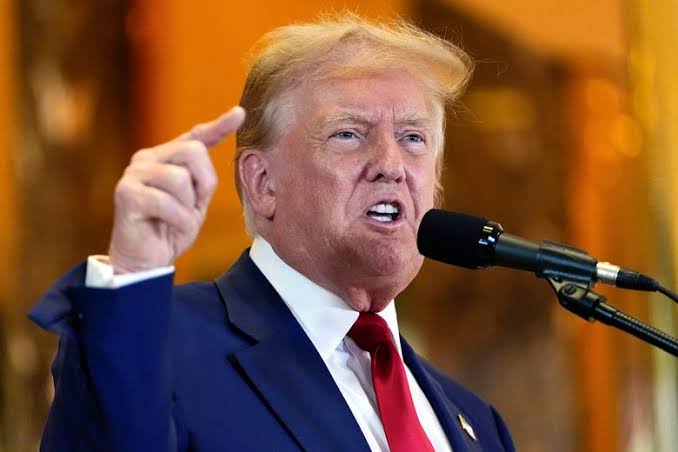
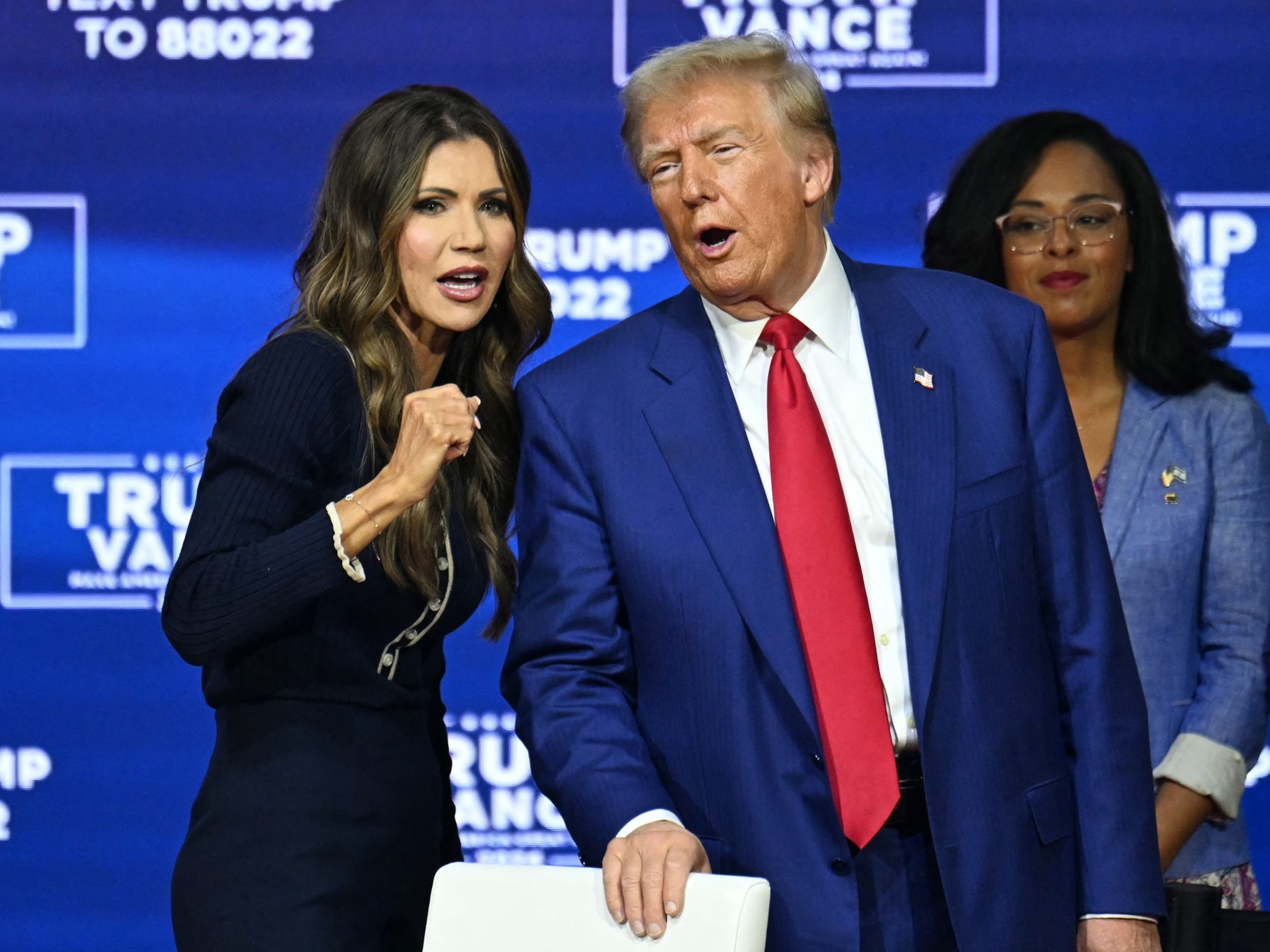
Donald Trump

TikTok star Khaby Lame departs US after visa overstay detention

By Hadiza Abdulkadir

Khaby Lame, the Senegal-born TikTok sensation who rose to global fame for his silent comedic videos, has voluntarily left the United States after being detained by U.S. Immigration and Customs Enforcement (ICE) for overstaying his visa.

The 25-year-old, who officially became an Italian citizen in 2022, was held at Harry Reid International Airport in Las Vegas for immigration violations. Lame had been in the U.S. on a temporary visa, which reportedly expired before his detention.

Lame, known by his handle @khaby.lame, boasts over 162 million followers on TikTok, making him one of the most followed creators on the platform. His signature style—wordless, expressive reactions to overly complicated life hacks—catapulted him to viral fame during the COVID-19 pandemic.

His detention comes amid intensified immigration enforcement under President Donald Trump’s administration, which has renewed crackdowns on visa overstays and undocumented immigrants.

Sources close to Lame say he has returned to Italy and cooperates fully with authorities. Neither Lame nor his representatives have made a public statement regarding the incident.

AU Commission reacts to US travel ban, urges dialogue and cooperation

By Muhammad Abubakar

The African Union Commission has expressed concern over the recent travel restrictions imposed by the United States, which affect nationals from several countries, including some within the African continent.

In a statement released this week, the Commission acknowledged the right of sovereign nations to protect their borders and ensure the safety of their citizens. However, it urged the US government to exercise this right in a manner that is “balanced, evidence-based, and reflective of the long-standing partnership between the United States and Africa.”

The Commission warned that the new travel restrictions could negatively impact people-to-people connections, educational exchanges, business relations, and the diplomatic ties cultivated over decades between Africa and the US.

“Africa and the United States share mutual interests in promoting peace, prosperity, and global cooperation,” the statement noted, emphasizing the importance of maintaining and strengthening those bonds.

The Commission also called on the US administration to consider a more consultative and inclusive approach in such policy decisions, advocating for constructive dialogue with the countries affected.

Highlighting the value of transparency and collaboration, the AU Commission reiterated its readiness to support any initiatives to foster mutual understanding, address the underlying concerns, and enhance cooperation between the two sides.

The statement comes amid increasing scrutiny of the broader implications of the US travel policy on international relations and multilateral engagement.

Trump administration offers $1,000 incentive for migrants to “self-deport”

By Muhammad Abubakar

In a controversial move, the Trump administration has announced a new policy offering $1,000 to undocumented migrants who voluntarily leave the United States. The initiative, branded as a “self-deportation incentive,” is part of broader efforts by the administration to reduce the number of migrants residing illegally in the country.

According to Department of Homeland Security officials, the program aims to ease pressure on immigration detention centres and reduce deportation costs. Eligible migrants must meet certain criteria, including passing background checks and agreeing to leave the country within a set timeframe.

Critics have called the policy coercive and dehumanising, arguing that it targets vulnerable populations who may feel forced to leave under economic pressure. Supporters, however, defend the measure as a cost-effective and voluntary alternative to formal deportation proceedings.

The offer has sparked fresh debate on immigration policy as the administration continues to advocate for tighter border controls and enforcement.

It remains unclear how many migrants will take up the offer or how the program will be monitored in practice.

Trump posts portrait of himself as Pope on social media 

By Muhammad Abubakar 

President Donald Trump has stirred controversy once again after publishing a digitally altered portrait of himself dressed as the Pope on his social media platform, Truth Social. The image, which depicts Trump in papal robes and regalia, quickly drew widespread attention and sparked debate online.

This unusual post follows Trump’s previous tongue-in-cheek remark in which he joked about becoming the next head of the Roman Catholic Church after Pope Francis. While many of his supporters saw the post as humorous and bold, critics accused the former president of disrespecting religious traditions.

The Vatican has not officially commented on the image or Trump’s earlier remarks.

Trump, known for his provocative and unconventional use of social media, continues to dominate headlines since his return to the White House for the second time.

State Department memo reveals lack of evidence against detained student

By Hadiza Abdulkadir

Rumeysa Öztürk, a 30-year-old Turkish doctoral student at Tufts University, was detained by U.S. Immigration and Customs Enforcement (ICE) agents on March 25 near her home in Somerville, Massachusetts. The arrest, captured on security footage, showed masked agents taking her into an unmarked vehicle without identifying themselves, leaving her screaming for help.

Öztürk, a Fulbright scholar pursuing a Ph.D. in Child Study and Human Development, had co-authored a 2024 op-ed in The Tufts Daily criticizing the university’s response to the Gaza conflict and calling for divestment from companies linked to Israel. Following the publication, her name and photo appeared on Canary Mission, a controversial website that profiles individuals accused of anti-Israel activism.

The Department of Homeland Security (DHS) accused Öztürk of supporting Hamas, though no public evidence has been provided. Her student visa was revoked, and she was transferred to a detention center in Louisiana, despite a court order requiring 48 hours’ notice before moving her out of Massachusetts.

Öztürk’s detention has sparked widespread protests and condemnation. More than 2,000 students rallied at Tufts University, and demonstrations have taken place in Boston and Washington, D.C. A coalition of 27 Jewish organizations filed a legal brief in her support, arguing that her arrest threatens free speech and academic freedom.

Tufts University President Sunil Kumar stated that the university has no information supporting the allegations against Öztürk and emphasized the importance of due process. Öztürk’s legal team, including the ACLU, is seeking her immediate release, citing violations of her constitutional rights.

A federal court hearing is scheduled to determine the jurisdiction of her case. Öztürk remains in ICE custody, facing possible deportation to Turkey.

Trump launches $5 million “Gold Card” visa for wealthy investors

By Muhammad Ibrahim

U.S. President Donald Trump has unveiled a new immigration initiative dubbed the “Gold Card” — a $5 million visa program designed to grant wealthy foreign investors permanent residency in the United States.

The gold-coloured card, which Trump called the “Trump Card,” offers a fast-tracked route to U.S. citizenship in exchange for a $5 million investment. 

The new program is set to replace the existing EB-5 visa, streamlining the process and reducing the waiting period to less than two weeks.

Announcing the launch, Trump declared himself the first official buyer of the Gold Card and expressed optimism that the initiative would attract “wonderful, world-class global citizens” to the United States.

Details regarding eligibility criteria, investment channels, and oversight mechanisms are expected to be released in the coming weeks.

United States’ withdrawal from WHO and Africa’s looming health crisis

By Lawal Dahiru Mamman

Some Nigerians with the wrong intention to mock believe that sick individuals, particularly those living with Human Immunodeficiency Virus (HIV) in Africa, especially Nigeria, are now an “endangered species” due to the United States’ withdrawal from the World Health Organization (WHO).

On January 20, 2025, Donald Trump was sworn in as the 47th President of the United States, marking his return to the White House after defeating the Democratic candidate in a fierce election battle. As the world looked on to see how he would start fulfilling his promise to make “America great again,” he wasted no time signing executive orders that sent shockwaves around the globe.

One of his most controversial directives came just days into his presidency: the announcement of the U.S. withdrawal from the WHO, an organization of which it had been a founding member since 1948. This move was not entirely unexpected, as Trump had previously attempted to exit the WHO in 2020 before his decision was overturned by President Joe Biden in 2021.

To the delight of his supporters and the disappointment of his critics, Trump successfully achieved the withdrawal in early 2025. In February, he made further decisions, including cutting funding to certain organizations such as the United States Agency for International Development (USAID).

WHO leadership bemoaned the decision for obvious reasons. According to financing data, the U.S. contributed an estimated $988 million between January and November 2024, marking approximately 14% of WHO’s $6.9 billion budget. The organization further noted that U.S. funding provides the backbone for many large-scale emergency operations to combat diseases globally.

Citing an example, the WHO stated, “U.S. funding covers 95% of the WHO’s tuberculosis program in Europe, along with 60% of the agency’s TB efforts in Africa, the Western Pacific, and headquarters in Geneva.”

The African Union (AU) also expressed deep concern over the development as events continued to unfold. In a statement, AU Commission Chairperson Moussa Faki Mahamat emphasized the crucial role the U.S. has played in shaping global health standards over the past seven decades. He noted that the U.S. was a key supporter in establishing the Africa Centers for Disease Control and Prevention (Africa CDC), which works closely with WHO to tackle global health challenges, including those on the African continent.

This concern, coupled with comments such as those in the opening paragraph of this piece, should not be taken at face value or dismissed as mere press statements. It warrants careful consideration. Although the latter’s comment may be seen as a reaction to unfolding events or an attempt to mock Nigeria and Africa jokingly, more is at stake if the lives of millions of Africans solely depend on that funding.

Dead Aid: Why Aid Is Not Working and How There Is a Better Way for Africa, a 2009 book written by Zambian economist Dambisa Moyo, comes to mind. It earnestly challenged the traditional approach to foreign aid in Africa.

Moyo argues that foreign aid has failed to lift Africa out of poverty and has instead fostered a culture of dependency, corruption, and stagnation. She claims that aid has weakened Africa’s incentive to develop its own economic and political systems. Consequently, it has hindered the growth of Africa’s health sector.

It is a universal truth that no nation can survive in isolation; however, countries should be able to provide for their basic survival needs. The concern raised by the AU may validate Moyo’s hypothesis, as Africa remains dependent on aid from foreign entities like the WHO, despite having a continent-wide centre for disease control.

In 2001, African leaders signed the Abuja Declaration, promising to increase budgetary allocation for health, eradicate HIV/AIDS, and strengthen the health sector through improved infrastructure, human resources, and access to essential medicines.

Two decades later, we are lamenting a single nation’s withdrawal from the WHO because we have failed to uphold the promises we made to ourselves. What will happen if other “powerful” countries choose to leave? Will our already poor health metrics deteriorate? This should serve as a wake-up call.

All hope is not lost, as some progress has been made. In Nigeria, there was a breakthrough in November 2024. Doctors at Lagos University Teaching Hospital (LUTH), in collaboration with the Sickle Cell Foundation, successfully carried out a bone marrow transplant on two patients. This procedure once thought impossible in Nigeria, was described as “a significant step forward in the treatment of sickle cell disease—the first of its kind in West Africa.”

Also, in February 2025, Usmanu Danfodiyo University Teaching Hospital (UDUTH) joined the ranks of medical facilities that have successfully performed kidney transplants.

Nigeria can build upon and enhance these developments, attracting patients from other regions for treatment. This influx will generate revenue and may elevate us to a point where we no longer depend on funding from external organizations.

Nigeria and other African nations can leverage their existing resources to generate revenue while investing further in research to discover cures or treatments for diseases for which we have traditionally relied on palliatives.

Lawal Dahiru Mamman writes from Abuja and can be reached at dahirulawal90@gmail.com.

Zelenskyy calls for peace talks, expresses readiness to work with Trump

By Hadiza Abdulkadir

Ukrainian President Volodymyr Zelenskyy has reiterated his country’s commitment to achieving peace and stated that his country is prepared to negotiate as soon as possible. 

In a statement posted on social media, Zelenskyy emphasised that “nobody desires peace more than Ukrainians” and expressed his readiness to collaborate with U.S. President Donald Trump’s leadership to secure a lasting resolution. 

He proposed initial measures, including a prisoner exchange and an immediate ceasefire on aerial and naval assaults, contingent on Russia’s reciprocity.

Zelenskyy also acknowledged the critical role the U.S. has played in supporting Ukraine’s sovereignty, particularly highlighting Trump’s past decision to provide Javelin missiles. He stressed the importance of continued cooperation with Washington and expressed disappointment over a recent White House meeting that did not go as expected. 

Calling for constructive dialogue, Zelenskyy urged U.S. officials to work together to make things right and advance peace efforts.

The Ukrainian leader reiterated his country’s readiness to sign a security and mineral resources agreement at any moment. He described the deal as a step toward stronger security guarantees and expressed hope for effective implementation.

Trump signs executive order designating English as official language of the U.S.

By Hadiza Abdulkadir

President Donald Trump has signed an executive order designating English as the official language of the United States. The order, announced at a press briefing at the White House, aims to standardise government communications and promote the use of English in official capacities.

“This is a step towards unity and efficiency,” President Trump stated. “English has always been the common language of our nation, and this order reinforces that tradition.”

The executive order directs federal agencies to conduct all official business in English and encourages state and local governments to adopt similar measures. It also outlines provisions for English-language education programs to support immigrants in learning the language.

Before this order, the U.S. had no official language at the federal level, and multiple languages were widely used, including Spanish, Chinese, French, German, Tagalog, Vietnamese, and Native American languages such as Navajo and Cherokee. Spanish, in particular, has been a dominant language in several states, especially in the Southwest and large urban centers.

Critics argue that the move may marginalise non-English speakers and undermine the country’s linguistic diversity. Advocacy groups have vowed to challenge the order, citing concerns over accessibility and inclusivity.

Supporters, however, praise the decision as a necessary step in strengthening national identity and simplifying government operations.

It remains to be seen how the order will be implemented and whether it will face legal challenges in the coming weeks.

US congressman proposes $250 bill featuring Trump’s face

By Muhsin Ibrahim 

Republican Congressman Joe Wilson has proposed introducing a $250 bill featuring President Donald Trump’s face, citing economic struggles under former President Joe Biden.

In a post on the social media platform X, Wilson wrote, “Bidenflation has destroyed the economy, forcing American families to carry more cash. The most valuable bill for the most valuable president!”

The proposal has sparked debate, with supporters praising Trump’s economic policies and critics dismissing the move as political grandstanding. 

The US Treasury has not commented on whether such a bill is under consideration.