Dollar

CBN, diaspora dollars and Nigeria’s economic lifeline

By Abdulrasheed Musa Kofa,

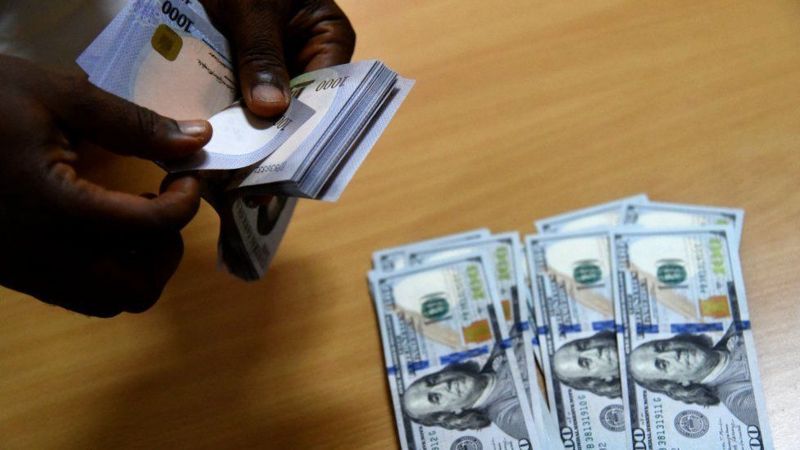
For years, Nigeria has leaned on its diaspora as a hidden anchor of survival. Beyond emotional ties and cultural nostalgia, Nigerians abroad have sent home billions of dollars, cushioning households and helping many weather difficult times. 

Yet the story of remittances has largely been one of consumption, not sustainable growth. Much of the money vanished into daily survival, often through informal routes, while the vast potential of structured diaspora capital for national development remained untapped.

The Central Bank of Nigeria (CBN) now seems determined to rewrite that story. In recent months, it has introduced policies aimed not only at boosting inflows but at transforming remittances into a formal, investment-driven engine of stability. 

With tools such as the Non-Resident Nigerian Ordinary and Investment Accounts (NRNOA/NRNIA), the Non-Resident Bank Verification Number (NRBVN), and tighter International Money Transfer Operator (IMTO) guidelines, the apex bank is signaling a bold shift—from remittances as household lifelines to remittances as capital for growth. 

Its ambition of attracting $1 billion in monthly diaspora remittances is more than a target; it is an audacious declaration that Nigeria seeks to become a global hub for diaspora investment.

At the heart of this strategy are the NRNOA and NRNIA. The former provides a regulated, convenient channel for everyday remittances in naira and foreign currencies, cutting out the costly informal networks that once dominated. 

The latter, the NRNIA, goes even further by creating structured pathways for diaspora investments in mortgages, pensions, insurance, and Nigeria’s financial markets. By guaranteeing full repatriation of proceeds under existing rules, the CBN is deliberately courting trust. 

And in a global financial system where trust is the ultimate currency, such assurances matter greatly. The challenge of access has also been tackled. For years, the requirement of physical presence made securing a BVN impossible for many Nigerians abroad. 

The new digital Non-Resident BVN finally removes that barrier, even though it comes at a cost of about $50. While some may balk at the fee, the opportunity far outweighs the price of exclusion. For a diaspora community long fenced out, this is a long-awaited doorway in.

The IMTO reforms reflect similar pragmatism. By restricting services to inbound transfers and ensuring payouts in naira, the CBN is protecting liquidity while keeping inflows within the formal economy. 

Allowing operators to quote exchange rates on a willing seller–willing buyer basis introduces transparency and competitiveness, drawing more Nigerians away from shadowy parallel markets. The exclusion of fintechs from IMTO licensing has sparked debate, but the regulator may be betting on stability over experimentation in a sector that demands strict oversight.

Early signs suggest the measures are bearing fruit. Official reports showed a $553 million inflow in July 2024—the highest on record—representing a 130 percent year-on-year surge. Confidence is shifting gradually towards formal systems. 

Sustained, such inflows could strengthen Nigeria’s fragile foreign exchange reserves, deepen liquidity in capital markets, and lower the high cost of remittances that continues to exceed the global average. Yet the most profound shift is not numerical but philosophical. 

These reforms are about more than chasing dollars; they are about redefining the relationship between Nigeria and its diaspora. Rather than treating remittances as acts of charity or family duty, the CBN is positioning them as instruments of nation-building. 

Nigerians abroad are being asked to see themselves not merely as senders of money, but as strategic investors in the country’s future. The stakes could not be higher. With more than 15 million citizens abroad, Nigeria sits at the heart of Sub-Saharan Africa’s remittance economy. 

In some years, diaspora inflows have even surpassed oil revenues. If only a fraction of this wealth is converted into productive, long-term capital, Nigeria’s financial landscape could be reshaped. But success will depend on more than policy design. 

It will require political stability, investor protection, and unwavering consistency in government signals. The diaspora will not risk hard-earned savings in a system that shifts with every gust of political wind.

CBN’s reforms are bold and timely. But their success now rests on trust and execution. If they work, the narrative of remittances will shift—from consumption to capital, from emergency relief to structural development. 

The target of $1 billion monthly may well be achieved, but more importantly, it represents a shared vision where remittances become investments in Nigeria’s prosperity. The choice before the diaspora is stark: to keep sending money informally and watch it disappear into short-term survival, or to embrace formal channels and help lay the foundations of a stronger, more resilient Nigeria. 

The government has laid down the rails. It is now for Nigerians abroad to decide whether their remittances will remain fleeting lifelines or become the enduring engine of a nation’s growth.

Abdulrasheed Musa Kofa is a PRNigeria Fellow. He can be reached via: musaabdulrasheed83@gmail.com.

US congressman proposes $250 bill featuring Trump’s face

By Muhsin Ibrahim 

Republican Congressman Joe Wilson has proposed introducing a $250 bill featuring President Donald Trump’s face, citing economic struggles under former President Joe Biden.

In a post on the social media platform X, Wilson wrote, “Bidenflation has destroyed the economy, forcing American families to carry more cash. The most valuable bill for the most valuable president!”

The proposal has sparked debate, with supporters praising Trump’s economic policies and critics dismissing the move as political grandstanding. 

The US Treasury has not commented on whether such a bill is under consideration.

Atiku calls out Tinubu over hardships in Nigeria

By Muhammad Abdurrahman

Former Vice President, Alhaji Atiku Abubakar, tackles President Bola Ahmed Tinubu over the hardships caused by the latter’s policies since assuming office as President in May 2023.

In a post on his verified social media handles, Atiku calls out Tinubu, calling the steps taken by his administration to contain the crises of currency fluctuation and poverty many people face in Nigeria “failures.”

The statement reads:

At a meeting called at his instance on Thursday to address the Foreign Exchange crisis and the problem of economic downturn, among others, Bola Tinubu failed, yet again, to showcase any concrete policy steps that his administration is taking to contain the crises of currency fluctuation and poverty that face the country.

Rather, he told the country and experts who have been offering ideas on how to resolve the crisis that he and his team should not be distracted and allowed time to continue cooking their cocktail that has brought untold hardship to the people of Nigeria.

I don’t agree with that.

The wrong policies of the Tinubu administration continue to cause untold pain and distress on the economy and the rest of us cannot keep quiet when, clearly, the government has demonstrated sufficient poverty of ideas to redeem the situation.

If the government will not hold on to their usual hubris, there are ways that the country can walk out of the current crisis.

After a careful assessment of the state of our economy at the twilights of the last administration, I knew full well that the economy of the country was heading for the ditch and came up with a number of policy prescriptions that would rescue the country from getting into the mess that we are currently in.

Those ideas, encapsulated in my policy document titled: My Covenant With Nigerians made the following prescriptions:

1. I had signed on to a commitment to reform the operation of the foreign exchange market. Specifically, there was a commitment to eliminate multiple exchange rate windows. The system only served to enrich opportunists, rent-seekers, middlemen, arbitrageurs, and fraudsters.

2. A fixed exchange rate system would be out of the question. First, it would not be in line with our philosophy of running an open, private sector friendly economy. Secondly, operating a successful fixed-exchange rate system would require sufficient FX reserves to defend the domestic currency at all times. But as is well known, Nigeria’s major challenge is the persistent FX illiquidity occasioned by limited foreign exchange inflows to the country. Without sufficient FX reserves, confidence in the Nigerian economy will remain low, and Naira will remain under pressure. The economy will have no firepower to support its currency. Besides, a fixed-exchange rate system is akin to running a subsidy regime!

3. On the other hand, given Nigeria’s underlying economic conditions, adopting a floating exchange rate system would be an overkill. We would have encouraged the Central Bank of Nigeria to adopt a gradualist approach to FX management. A managed-floating system would have been a preferred option. In simple terms, in such a system, the Naira may fluctuate daily, but the CBN will step in to control and stabilize its value. Such control will be exercised judiciously and responsibly, especially to curve speculative activities.

4. Why control, you may ask.

(i). Nigeria has insufficient, unstable, and precarious foreign reserves to support a free-floating rate regime. Nigeria’s reserves did not have enough foreign exchange that can be sold freely at fair market prices during crises.

(ii). Nigeria is not earning enough US$ from its sales of crude oil because its production of oil has been declining. And,

(iii). Nigeria is not attracting foreign investment in appreciable quantities.

These are enough reasons for Nigeria to seek to have a greater control of the market, at least in the short to medium term when convergence is expected to be achieved.

Tinubu’s new policy FX management policy was hurriedly put together without proper plans and consultations with stakeholders. The government failed to anticipate or downplayed the potential and real negative consequences of its actions.

The Government did not allow the CBN the independence to design and implement a sound FX Management Policy that would have dealt with such issues as increasing liquidity, curtailing/regulating demand, dealing with FX backlogs and rate convergence.

I firmly believe that if and when the Government is ready to open itself to sound counsels, as well as control internal bleedings occasioned by corruption and poorly negotiated foreign loans, the Nigerian economy would begin to find a footing again. – AA

Dollar-Naira exchange rate and the life of Nigerian civil servants 

By Ismail Namadi 

In 2014, $1 was equivalent to ₦200. At that time, one bag of 50kg rice was around ₦8,000 ($40), and the minimum wage was N18,000 ($90). 

Comparably, in January 2024 (10 years apart), $1 is around ₦1,500. The Minimum wage is ₦30,000. A simple calculation is 18000/200 = $90; 30,000/1,500 = $20.

What does this simple calculation mean? In real terms, over the past ten years, despite the increase in the minimum wage from ₦18,000 to ₦30,000 per month, purchasing power has decreased by over 75%.

However, in 2014, the PMS pump price per litre was 87 Naira, while the current price in 2024 is ₦700 per litre. 

The Nigerian budget in 2014 was ₦4.962 trillion, while in 2024, the budget is ₦28.77 trillion. These variables are paramount when considering minimum wage simply because they directly affect the lives of people in the country. 

For example, the federal government removed the subsidy on petroleum products, which led to a skyrocketing price of general goods and services, making the lives of citizens, especially low-income earners, difficult to manage.

In addition, the dollar plays a significant role in our economy because we depend on foreign importation for consumable goods. The dollar is the only legal tender that we use to patronize foreign goods.

My advice to the federal government is that when it decides to review the minimum wage, it should consider the purchasing power of the naira so that the standard of living of Nigerian workers is improved.

Ismail Namadi wrote from Paderborn, Germany, via Ismailnamadi2006@gmail.com. 

Naira-Dollar crisis: Some takeaways

By Baffa Kabiru Gwadabe

Over the past few months, Nigeria has been suffering from continuous depreciation of its currency, the naira. The naira has depreciated from barely ₦600/$ in the last three months to ₦1,300/$ today, the 27th of October 2023. This is enormous, considering the loss of value by more than 120%. Many are worried, including my little self, about this development. But the recent propositions of solutions by many provoke such a write-up.

It is good to start with some questions concerning the crisis. What is happening? What went wrong? Who is to blame? What are the ways out? What will be the lasting solutions?

The above questions may not be provided with answers, as many out there know the answers already. The focus should remain on some best practices or exchange rate regimes to hinge on. Let me start with some highlights on the developments in Nigeria’s foreign exchange market.

In 1971, when the Gold Standard was abolished under the Bretton Woods System, several foreign exchange rate management regimes were pursued in Nigeria and other parts of the world. These include the independently adjustable peg, crawling peg, independent peg, collective exchange arrangement, dual exchange and floating regimes. IMF member countries practice six (6) other exchange rate regimes, which were later compressed into three (3) regimes to include pegs, limited flexibility, and great flexibility. These were later decomposed into fifteen (15) regimes, mainly from 1975 to 1998 (see Mishkin, 2007).

All those regimes were adopted unevenly by the IMF countries. This means they practice one or more of the regimes based on their choices and persuasions. By 1999, the IMF proposed eight (8) different exchange rate regimes. They include separate legal tender, currency boards, conventional fixed (pegged against a single currency or basket of currencies or other commodities like gold), pegged within horizontal bands, crawling pegs, crawling bands, managed floating and independent floating (see Mishkin, 2007).

Still, these interchanging regimes continued in Nigeria depending on the available foreign reserves, capital inflows and current account balances. Nigeria’s forex crisis worsened in the 1980s when the US economy pursued Nigeria to devalue its currency by 10% and other scenarios. However, some attention will be given to the last ten years or so, particularly the administration of President Muhammadu Buhari or the reign of Godwin Emefiele as the CBN Governor (2014 – 2023). Some reflections would also be made on earlier antecedents before the Buhari’s and current administrations.

Nigeria has pursued two dominant exchange rate regimes: the Retail Dutch Auction System (RDAS) and the Wholesale Dutch Auction System (WDAS). The RDAS is an exchange rate regime introduced in Nigeria in 1987. It focuses on buyers (end-users or customers) of Forex (USD) to bid for the prices, and the marginal bidder is supplied with the quantities by the CBN through authorized dealers. Under the RDAS, the inept dealers are supplied less, while the highest bidders are penalized for rent-seeking and invitation for depreciation. 

The WDAS, on the other hand, is an exchange rate regime targeted at maintaining the gains of the RDAS and the continued liberalization of the forex market. The WDAS came into operation in Nigeria in February 2006 and allows authorized dealers to buy forex on their accounts rather than on behalf of end-users. Also, the authorized dealers are carefully watched by the CBN, and the dealers are also allowed to trade in the interbank forex market. During that time, the CBN pursued other special interventions of forex sales to Deposit Money Banks (DMBs) and direct sales to licensed Bureau de Change (BDCs). The CBN further mandated that DMBs increase Business Travel Allowance (BTA) and Personal Travel Allowance (PTA) from $2,500 and $2,000 to $5,000 and $4,000 per quarter, respectively. All these policies were sustained in positive directions as the naira continued to appreciate by 2.6%, 8.7% and 5.8% for 2006, 2007 and 2008, respectively.

However, at the beginning of 2009, there was an observed forex policy reversal and the reintroduction of RDAS to reduce capital outflows and depletion of foreign reserves. The interbank trading segment was suspended. This was followed by sales restriction of forex to oil companies and government agencies and sales of forex to BDCs. But towards the end of 2009, the CBN called for recapitalization of BDCs in what they call ‘Class A’, while those that did not recapitalize are called ‘Class B’ BDCs. Both ‘Class A’ and ‘Class B’ BDCs can bid a maximum of $1 million and $250,000 respectively.

Similarly, by 2016, Nigeria’s forex market was further liberalized. During the period, the average naira-dollar exchange rate was N197/$ at the interbank window, representing a depreciation of 18.7% (as the exchange rate was N160/$ before 2016). However, one worrying thing remains: the premium between the interbank and BDC sections was about 41.5%. After this, some other forex regimes were still embraced under the administration of President Buhari and Godwin Emefiele. For instance, forex primary dealers (FXPDS) and non-FXPDS were introduced into the forex market in 2017.

In addition, longer-term derivatives like forwards trading from 1 to 3 months tenor and up to 2 years were introduced. The exchange rate was relatively stabilized at averages of N231.76/$ and N351.82/$ at interbank and BDCs, respectively. This has created many arbitrage opportunities for those with access to the interbank rates to continue to worsen the forex market. Such a trend continued for 2020, 2021, 2022 and until 2023. For instance, as of March 2023, the official rate was N462/$, while in the black market, it was an average of N750/$. 

The sacking of Emefiele as the CBN Governor and the appointment of the acting CBN Governor, Mr Shunobi, in June 2023, where the latter tried to close the gap and arbitrage opportunities, moved the official rate from N474/$ to N664/$. With the appointment of substantive CBN Governor in September 2023, Mr Cardoso, the apex Bank, moved on with complete deregulation of the forex market, and this has led to incessant depreciation of the naira to a historic level of N1,300/$. However, it now appreciates an average rate of N1,000/$ and other rates depending on information and locations.

The next thing to talk about is the proposed solutions to the lingering naira-dollar crisis. However, it is important to note that the CBN’s recent and previous exchange rate policies are floating in nature or simply deregulating the forex market, and this is counterproductive as it has not provided the desired results, especially recently. This is because floating regimes are usually for export-dominant countries such as China, the United States, Japan, Germany, India, Russia and Saudi Arabia, among others, as argued by the Mundell-Fleming model. Nigeria is a predominantly import-dependent economy. As such, depreciations affect inflationary levels in the first round (exchange rate pass-through to inflation) and at the ‘second-round’, popularly known in the current literature as the ‘second-round effect’.

To end this submission, the CBN needs to do one or two things to exit from the naira-dollar crisis, and these include:

(1) Invite a small but huge ‘Conference of the Parties’ (COP) to deliberate and take appropriate decisions for implementation immediately;

(2) Under the COP, dollarization with its components; official dollarization, unofficial dollarization, partial dollarization, etc should be reviewed;

(3) Hard-peg exchange rate regime should be deliberated;

(4) Managed-floating regime should be discussed;   

(5) Most importantly, sources of the forex demand pressures must be exposed.

Baffa Kabiru Gwadabe wrote from Bayero University, Kano, via bkabirugwadabe@gmail.com.

Who will rescue the Naira?

By Aliyu Nuhu

No easy way for a country with bizarre economic behaviour. The economic laws are there for easy implementation in a normal society. But Nigeria is not normal. Everyone, from the leases to the ordinary citizens, is looking for ways to damage the country for personal gain. NIGERIA operates its economy with laws made from hell.

We all know our huge appetite for the dollar is driven by our need for foreign goods which we are unable to produce. If we don’t need foreign goods, there will be no demand for dollars since we only need the currency for imports. But who is not guilty among us here?

Naira supply affects inflation since too much money is chasing a few goods but is not the direct cause of the fall of the Naira in the forex market. Laws of demand and supply drive the forex market. More Dollars available will lower its value and vice versa with Naira. But these laws don’t work in Nigeria because of distortion in all economic policies created by the government, mostly by greedy Nigerians and the officials themselves.

The forex window allows funding of critical sectors with dollars by the Central Bank of Nigeria (CBN). But the distortion here is that those given dollars to import goods will take the money to the money market for round-tripping. The CBN officials will also take the dollar and exchange it for quick gain. Each governor that gets FACC allocation in Naira will take it to market chasing the dollar.

With such behaviour, the Naira can never get a breather. It is this distortion that makes it difficult to explain the reasons why Naira is not only weak but unstable. Currency instability is the worst thing that can happen to a country. At any point in time, investors can never know their profits and losses. It is the reason why companies like Emirates, ShopRite and Game are closing shop.

After looking at some of our promising macro trends, Nigeria is still unable to keep Naira strong because of the depletion of the country’s foreign exchange reserves. The major function of foreign reserves is to keep the Naira strong. But regime after regime keeps spending the reserve account to a point that no one can precisely say the balance of NIGERIA’s foreign reserve.

World Bank said irrespective of all other macroeconomic shortcomings, the Naira can still be exchanged for a dollar one-on-one if we can have $900bn in our foreign reserve. But what do we have today? Less than $30bn!

Kuwait is a consumer country like Nigeria, but because it has a foreign reserve of $137bn and a gold reserve of 78.97 tonnes, it has the strongest currency in the world. But Nigeria has 21.37 tonnes of gold in its reserve and a $34bn reserve for an economy with a GDP of $489bn. Kuwait is able to save with a GDP of $106bn! There is evidence that shows that GDP growth and employment growth increase in response to positive shocks to foreign currency reserves (forex reserves) accumulation, whereas unemployment declines.

Read the reports on the new government report on CBN, and you will understand that the Naira is only competitive by sheer luck, if not a miracle. Everyone, including people in charge of Naira’s health, is out to destroy the Naira.

Cordoso to clear dollar debts, enhance transparency as CBN governor

By Ahmad Deedat Zakari 

The new Governor of the Central Bank of Nigeria, Olayemi Cardoso, has disclosed some of his plans for the apex bank. 

He disclosed his plans on Tuesday at the Red Chamber of the National Assembly during his confirmation screening. 

Mr. Cordoso promised to prioritise clearing the apex bank’s backlog of unsettled foreign exchange obligations in the near term. 

Cardoso also promised to enhance transparency, fix corporate governance, and ensure confidence in the autonomy and integrity of the bank. 

“We need to promptly find a way to take care of that. It would be naive for us to expect that we’ll be making too much progress if we’re not able to handle that side of the foreign exchange market,” he said. 

The new CBN governor said he would maintain price stability, revert to evidence-based monetary policies, and discontinue his predecessor’s unorthodox monetary policies to bolster the country’s naira currency. 

Cardoso takes over the leadership of the apex bank as the nation battles several economic challenges and falling economic indices, with the naira nearing 1,000/$ at the parallel market.

Pi mining – the way I see it

By Bilyamin Abdulmumin

314,159 dollars a Pi

One of the grand sagas that have been taking public attention is the issue of the Pi network. This project is said to be launched early in 2019. All potential subscribers need to come on board is a smartphone and data.

It depends on when one starts and how often they mine. But some pioneers (those who register for the crypto) have mined as much as 10000 Pis. However, the contentious saga that has been drawing attention was the Pi (cryptocurrency) relative value.

The value floating across as said to be the Global Consensus Value agreed by the world pioneers was a staggering 314,159 dollars. And already, many pioneers have as many as 10000 Pis. So, at this consensus, an average pioneer with 1000 Pis, the equivalent of 314,159,000 dollars, will need the services of similar camels that transported Alhaji Alhassan Dantata’s coins as the first person in 1929 to open an account with the First Bank. While a regular pioneer with as much as 10000 Pis, the equivalent of 3,141,590,000 dollars, will need the services of the Mansa Musa’s entourage like that accompanied him in 1324 for his first mecca pilgrimage.

The pioneers are determined and looking forward to this gargantuan windfall. Whether jokingly or not, some have already begun to imagine how to spend such jackpots. Many have embarked on the dream of climbing up the top social ladder by building exotic houses, expensive cars, or circumnavigating the globe for those who fancy the adventure.

Like many jackpot winners, these potential overnight billionaires continue to promise family and friends some bounties, including marrying them off, buying them houses in Asokoro, the latest iPhone, or sponsoring their pilgrimages.

While these pioneers continue to sail in their realm, their critics consider their aspirations at best as a mirage and, at worst, question their mental well being

When the President of the Association of Psychiatrists in Nigeria (APN), Taiwo Obindo, says that more than 60 million Nigerians are suffering from mental illnesses, the Pi critics say no wonder.

But one posing point the Pi critics raised is that instead of the pioneers assuming mining, it is actually them who are being mined. In other words, they are the cash cows, referring to the advert pool fee that the Pi initiators are generating from about 40 million users. Very plausible because in this era of social media, subscribers are gold.

On the other hand, the pioneers’ reason, too, is not a pushover. Instead, they point to the traction the Pi is getting, the global state of transition from the fiat currency, and the success of some previous cryptocurrencies such as Bitcoin. According to them, history is repeating itself. When Bitcoin started in 2008, everything was against its subscribers. They were seen as shadow chasers and laughed at. But when success stories began to come in, the doubting Thomas was nowhere to be found.

For those who don’t know how the current Pi value of 314159 came about, Pi is a useful mathematical constant with infinite values ranging from 3.14, 3.14, 3.141, 3.1415, 3.14159… to infinity. But, disregarding the point behind the decimal and in the ascending order, the pioneers arrived at 314159. In addition, to commemorate this mathematical constant, the official Pi lunch was on March 14, which is 3.14, the Pi first value mentioned.

In my opinion (everything considered), the expectations of the pioneers on the Pi network have reached a fever pitch, but the cryptocurrency hitting the market is on the horizon.

Bilyamin Abdulmumin is a PhD candidate in Chemical Engineering at ABU Zaria. He is also an activist for a better, informed society. He can be reached via bilal4riid13@gmail.com.

Beyond the lines of “Devaluation”

By Mohammed Baba Goro

The issue of foreign exchange has been on the front burner in Nigeria’s media space for a while now. Unfortunately, the debate has been so over-flogged that one could hardly know who to cue behind for economic sense and/or who to blame about the helpless fall of Nigerian naira.  Recently, the vice president of Nigeria, Professor Yemi  Osibanjo, who by every sense could be categorised amongst personalities with intellectual power, also frankly spoke that the Central Bank should devalue the country’s currency, naira. But, that is not the only strongest weapon that could kill the werewolf.

As an economic policy, Devaluation is simply referred to as the official reduction in the value of a country’s currency in relation to another or other countries’ currencies: say, Nigeria’s “Naira” with the United States “dollar”. Assuming the current exchange rate is thus:  N410 against  $1 and the CBN decides to devalue the naira by, say, 25 per cent, the naira value will decline, and the new rate will be around N512 to 513 against $1 and against the initial rate of N410. This would make the export of goods and services cheaper and importation dearer. As easy as it sounds, it is easy, but CBN will have high inflation to grapple with.

Ordinarily, that should be a path to take, but the question on the lips of every rational Nigerian is that what massive goods do Nigeria produce? This is a million-dollar question on the lips of every Nigerian for a country that, 60 years after her political independence, still struggles for her economic Independence – Nigeria still imports everything it needs, including essential food items like maise, rice beans and unfortunately, recently, even egg.

Nigeria had to lift a ban last year to import maize for poultry farmers. According to a statistic, the national average for Nigeria’s maize need is about 15million metric tonnes but can only produce 10million, going about with a huge deficit that could have been an opportunity for a source of forex. Even though rice production has increased, the country can still not satisfy its teeming and growing population of over 200 million. This is on the one hand. On the other hand, about 30 per cent of the country’s foreign exchange earnings go to the importation of petroleum products.

The National Bureau of Statistics (NBS) released another mind-boggling stats that the importation of agricultural products has increased by over 140 per cent year-on-year. Devaluation is primarily an “Expenditure-switching policy” that basically switches spending from imported goods to domestically produced goods and for exports.

But judging from the above facts and figures, one would deduce that local production that should drive export and reduce pressure on meagre forex is practically not there. So, “Beyond the lines of Devaluation” is productivity! Productivity!! And productivity!!!

Significantly, production of not only primary products but adding value to raw products so as to create more jobs, generate more revenues, build the needed infrastructures and consequently transform the economy. Brazil in 2011 devalued its currency to spur export without tackling the underlined structural problems and ended up worse off.

So let’s go back to the theory, and the economic argument should be, what determines the exchange rate?

Gustav Cassel, in the ’20s, propounded the purchasing power parity theory, which explains that the determination of two inconvertible paper currencies is determined by the equality of their purchasing power. What this means is that the exchange rate between two countries is determined by the level of their relative prices of goods and services.

A look at Nigeria’s inflation rate, coming from above 18 per cent, would tell you why we are at an exchange rate crisis and why we need to look inwardly and produce more locally. Though the Mint-gold parity theory is no longer in tune with the modern economic practices, but even the Balance of payment parity theory has its link with a country’s productivity level. Therefore, the government should deal with the fundamental and structural rigidities in productivity, trade, security, and infrastructure. Watch naira take her good position and fair value and stop forcing the monetary authority to over-stretch its instruments.

Mohammed Baba Goro can be contacted via babs9770@gmail.com.