Democracy

Democracy uses the rule of law to violate the same law: Nigeria and Uganda

By Salihi Adamu Takai 

Democracy is the system of government that allows room for participation by all people, and it’s the “government of the people for the people and by the people”. This means a thriving democracy always considers the interest of the masses, not the governors. In a democratic society, the governors become the subjects while the masses become the superior. This is proved in the definition of politics given by the late Aminu Kano ( the former Kano State Governor), Nigeria: “Politics is man management.”

The rule of law is one of the characteristics of a successful democracy. So, does it mean there is no existence of democracy if the rule of law is not fully implemented in applying democracy? Yes, it’s not a successful democracy. Professor A. V. Diecy defines the rule of law as the “absolute supremacy or predominance of the regular law as opposed to the influence of arbitrary power and excludes the existence of arbitrariness or even of wide discretionary”.

Based on the definition given by Professor A. V. Diecy, the rule of law is all about “equality before the law”, and fundamental human rights also ensure this. Therefore, all the characteristics of the democracy are connected. When there is no one, it would be disconnected. 

The rule of law propagates “equality before the law” and makes it mandatory for all the affairs of the democratic government. In Nigeria, the 1999 Constitution of the Federal Republic of Nigeria ensures fundamental human rights under Chapter 4. Section 42 (1) ensures the “right to freedom from discrimination”, and this includes “equality before the law”. In accordance with Nigeria’s question, all the citizens of Nigeria are equal before the law. But, in the same Constitution by section 6, the power of the Judiciary to hear any matter is limited. Section 6 (6)(c)(d) limits Judicial power for hearing or questioning any matters related to Chapter 2 of the Constitution ( Fundamental Objectives). Also, the same Constitution immunise some authorities from legal proceedings (criminal) by section 308 (1) ( 3).

Nigeria and all other democratic States apply almost the same principles. In Uganda, the 1995 Constitution of the Republic of Uganda also ensures “equality before the law” under Chapter 4 by Article 21 (1). Clause (3) defines ” discrimination” as “to give different treatment to different persons attributable only or mainly to their respective descriptions by sex, race, colour, ethnic origin, tribe, birth, creed or religion, social or economic standing, political opinion or disability”. Thus, the above definition of the word used, ” discrimination” applies to all. However, the same Constitution by Article 98 (4) excludes the President of Uganda from legal proceedings in any court.

Therefore, considering the conflicting laws of the Constitutions applied in the democratic governments of all the democratic states, I can still say that with the discrimination, there shouldn’t be a successful democracy today.

Salihi Adamu Takai wrote via salihiadamu5555@gmail.com.

Shehu Sani condemns military coup in Niger Republic

By Uzair Adam Imam

Shehu Sani, the former Kaduna State lawmaker, has condemned the military coup in the Niger Republic.

Sani stated this Thursday on Twitter, adding that “military rule can not be the solution.”

The coup took place on Wednesday when members of the Presidential Guard detained President Mohamed Bazoum.

He added that although he understood the disappointment and the political clash, the military coup could not be the alternative.

Sani stated, “Military rule must be totally rejected and resisted in West Africa. Our democracy is not perfect, and there is no perfect democracy anywhere. Military rule is not the solution.

“I’m surprised to read comments on social media, it appears that many young people are now in support of it. 

“I understand the disappointment and the frustration with the political class. It’s still better we continue to struggle to make our democracy better until we get it right,” Sani added.

Nigeria: The search for good governance and prudent policy

By Umar Yahaya Dan-Inu

Governance, in simple terms, means ‘quality decision’ that affects the citizenry’s life. It encompasses accountability, openness and responsiveness in our institution. When Nigeria utilizes its resources, it can achieve progress and development in every aspect, especially when its men and women come together, respect their differences and views, and work together for the nation’s development.

Any society that lacks leaders who can stand up and look at the challenges and solve them is bound to fail. One of the finest Historians in the world, Francis Fukuyama, opined that Nigeria’s problem is a “lack of quality governance”. Since the beginning of the fourth republic, Nigerians have elected four successive presidents with an optimism that the country’s governance would be changed. Moreover, they hope that prudent accountability and transparency would be established in the polity; corruption would be minimal; the difference would be set from the military rule we experienced in the 80s and 90s; every sector of the economy would thrive.

We also expected that there would be equity, fairness and inclusion in governance and leadership where every region of the country and everyone would be carried along to change the nation’s narrative for good. But instead, the nation’s stories remained the same after 23 years of democracy.

Democracy is all about giving people the opportunity to participate in the leadership and decision-making of their country, to decide on their future, to have their voices on who should lead them and the type of policy choices government made, and how national resources should be channelled for the development of the country.

In our polity, the stories are not the same. The flaws in our democracy are very glaring. There is no prudent accountability. Even the civil society organizations (CSOs) and media houses who are to help in grilling government and demand accountability are part of the problem. Corruption has become deep in our system. We institutionalize it. Mathew Hassan Kukah’s opined that “it is part of the human system”.

Ahmed Idris, a former Accountant General of the Federation,  and his accomplices, fraudulently siphoned 109 billion naira. They took advantage of the system, betrayed the people’s trust and put the nation and its people in more miserable poverty.

There are thousands of his types and stories in this poverty. The measures put by the government to checkmate corrupt practices are not adequate. There is a need for more because corruption is in every sector and aspect of the country. Insecurity, banditry and kidnapping have taken menacing proportion. People are killed unjustifiably regularly, while the government doesn’t seem to care.

On the other hand, the academic staff union of universities (ASUU) has been on strike for several months. Students are doing nothing at home. As the government is showing a nonchalant and lackadaisical attitude toward the striking lecturers, there is no sign of ending it. This justifies the position that Nigeria needs prudent leadership and governance.

Good policy is key to achieving national development. Though public policy can be seen as an act of government carried out through the identification of societal needs and demands and acted upon by the executive and legitimized through the legislative process, it should be pro-people, participatory and devoid of elitism. When we look at the challenges posed by the lack of good policy design and implementation, one will realize Nigeria is in the wrong direction. Every past administration came into power with a vague plan that could not be achieved.

This has been the norm since Nigeria got Independence in the early 60s. The trends have always been to tell people what to do, even if it’s not feasible and realistic. When policymakers disregard the poor segment of their society, they are bound to fail. I genuinely believe that “change will not come to us easily”; it is the responsibility of scholars and experts in our country to stand up and demand change.

We need a change in the area of policy design. People should be carried along in the process of design and implementation. All their problems should be captured, and attention should be given to the solutions stated. The CSOs should track all the government expenditures to speak on the pros and cons of every policy initiated by the government and engage the government on development issues.

Nigeria needs strong leadership. It is a known fact that global leaders showed resilience and exhibited what leadership means during the worldwide pandemic. Covid-19 posed a bigger challenge to people around the world. It killed millions of people, destroyed families and hit the global economy like never before.

In Nigeria and around the world, schools were shut down. The leaders imposed a lockdown; there was no movement of people from state to state. It affects everyone. People are afraid to interact with their families and friends because they fear contaminating the virus.

We need leaders that can inspire hope in times of crisis, especially in the forthcoming 2023 election. Nigeria doesn’t deserve bad people and leaders. We need efficiency in our governance and focused leaders. A courageous and bold one. A leader who can galvanize support from the global community and command respect. A leader with capacity, empathy, foresight and deep knowledge that can translate policy goals into reality.

We must prioritize security, education, health, and employment opportunities. Our failure in effective identification, design and implementation has been the major setback of our public policy. We need expert intervention and input to get it right. We must establish good governance and uplift our people from the artificial poverty created by elite manipulation. Until and unless we stand and get it right, we will continue to suffer at the hand of bad leaders.

Umar Yahaya Dan-Inu wrote from Nguru, Yobe State via umarnguru2015@gmail.com.

Democracy or “delegatocracy”?

By Simbo Olorunfemi

It might yet turn out that, by some accident or slip on the part of members of the National Assembly, Nigeria might have stumbled upon a system that might yet become useful in retooling the mechanics of the Presidential system as we currently practise it.

Of course, the idea that the template that had been forced upon the political parties for the election of Candidates in this election will outlive this season is unlikely, as letting the Buhari ‘veto’ stay would amount to class suicide, with power of election/selection slipping out of the hands of those who had assumed the status of ‘statutory’ or ‘super’ delegates. The Legislators are unlikely to ever let that happen.

But I wouldn’t let that stop my interrogation of what is accidental, but I see as potentially beneficial intervention in the electoral system.

Whereas the idea of electing candidates through a collegiate system, made up of delegates is not new, what has played out this time around is one in which all the delegates who participated in the election of candidates were elected. Whereas these ones were supposedly ‘ad-hoc’, who were to be add-ons to the supermen and women who are automatic delegates by virtue of the offices they hold/held.

So, as the malfunction in the legislative process led to the omission of super delegates who had been the dominant players in the space, the task of producing candidates was solely left to the adhoc delegates, who suddenly became beautiful brides desperately sought by aspirants.

Whereas there has been a lot of talk about what has become a highly monetised delegates procurement process, my observation does, in fact, suggest that it is the statutory or super delegates who have constituted themselves into ‘cabals’ and pressure groups, taking advantage of their positions to put pressure on aspirants, leading to the monetisation of the process.

First, we have former members of the National Assembly, having formed themselves into groups, waiting for the period of elections to milk aspirants. Then, we have a situation in which the list of delegates tilts heavily in favour of these groups, making the system more susceptible to manipulation.

So, what is wrong with tweaking with this accidental system that we now have and explore the possibility of institutionalising it as a model for electing Candidates?

As we have it now, members of the party go through a process of election which see them emerging as ward, local government and State delegates, to be able to vote for candidates in the different elections.

Whereas the contest within the parties to qualify as a ‘Delegate’ was not one that had the big players contending, having already qualified to participate in the process as statutory delegates, I will argue for the idea of statutory delegates to be scrapped entirely.

I will argue for a system in which all delegates are elected by members of the party. This primary election had 5 delegates per ward (APC) and 3 delegates per ward (PDP) for the State House of Assembly Elections.

I will make a case for the primary election for the office of the President to be one delegate per ward, which would be the total number of delegates eligible to vote to 8, 813, just about what we had with statutory delegates participating in the process. But under this proposed arrangement, anyone who wants to be a delegate, either already elected into office or a political appointee will return to his ward to stand for election, and if qualified will serve as delegate at the Presidential primaries. Local government and states delegates will also emerge through the same process.

This system strengthens the party and returns power to the base, having within it some elements of the parliamentary system which I prefer and advocate a return to.

Simbo can be reached via; simboor@yahoo.com

The Preface of Nigeria

By Abdullahi D. Hassan

Nigeria is a nation with Hydra lineament. For a long time, its narratives became a phenomenon in scholarship and startle those that are not abreast of Nigeria’s convoluted history, ethnic chauvinism, election rigging, religious intolerance, cankerworm corruption and heartless politicians with megalomaniac habits, driving pleasure in shady governance to submerge their citizens into gross poverty.

The sarcastic ‘Giant of Africa’ falls into a harrowing moment. Nearly all of the architecture of Nigeria is profoundly rotten, and its stench is sprinkled with endemic corruption, lack of patriotism, decay in moral values, transparent nepotism, and killing is crossbones across the regions. From the fanatic massacres, notably by Boko Haram and bandits.

After three decades of military tyrants and juntas, 1999 turned new dawn for Nigeria. The nation shifted from military dictatorship to civilian government. Policymakers, political pundits, and intelligentsia ascertain Nigeria’s prospect is on the trajectory of advancement. Albeit, the ultra development in multifaceted sectors. Within a decade of pseudo-civilian government, the country’s destiny is trapped in quicksand. Due to ingrained corruption by the three arms of government: executive, legislature and judiciary.

Nonetheless, the dominant ethnic groups, Hausa from the North, a Muslim enclave and fraction of Christian, Igbo from the South, a rife of Christian and Yoruba from the West, shared hybridity of Islam and Christianity. Those ethnic cleavages race for Tour de France in tribal wars, hegemonic politics, religious politics and domineering politics according to the dictum of language, faith and region. Amid the wanton rascality done by the “Zombie”, like Fela, the Afrobeat legend branded soldiers.

Thus, the failure of the so-called democratic government unbridled the ‘darkest History of Nigeria’. A typical Hausa accuses Igbo of the putsch and eliminating Northern leaders, Sir Abubakar Tafawa Balewa, Prime Minister and Sir Ahmadu Bello, a remarkable figure to Northerners. In 1966 a bloody coup was orchestrated by Igbo officers. Igbo talk of persecution and pogrom against their race in the North. Among the factors that emanate the unfortunate Nigerian-Biafran war spanned between July 6, 1967, to January 15, 1970.

Furthermore, from the 1999 political dispensation to the current predicament, the country challenges twig onto gloom-ridden forms; politicians turned into confidence tricksters, parliament became the ‘House of Deception’, religious institutions metamorphosed into a commercial enterprise, journalists supplanted into puppets controlled by the connected few and higher learning academic reposition to woman’s assault domain. The former American ambassador, John Campbell, from 2004 to 2007, described politicians in his book Nigeria Dancing On The Brink “the civilian political class behaved as badly and in much the same way as its military predecessor”.

The most populous black nation on earth is about to be a Banana Republic. In the Northern part of the country, hardly a day passes, from sunrise to sunset, without disheartening news breaking in mainstream media. Boko Haram, ISWAP insurgents or bandits kidnap and maim innocent people. The terrorist marauders hold certain villages in the North-West. Similarly, hundreds of public schools are shut down for fear of abduction.

The most recurring questions preoccupying my faculty: Who will lead Nigeria to the Promised Land? When will Nigeria be exempt from being a nepotistic state to an excellent land, with leaders handling the nation based on the principles of democracy? What are the required features to alter the awful chronicles of Nigeria? Why are we divided in a discourse of religious sentiment, ethnic oblique and regional dominance rather than championing the furtherance of Nigeria?

Surreally, Nigeria is the most religious nation on earth! But in reality, it is the most irreligious in the world. The proliferation of mosques and churches crisscross the length and breadth of Nigeria. The anointed citizens were sponsored to Mecca and Jerusalem for pilgrimage from the government treasury. Despite public schools turning into rubble, pupils sat on ruined floors. Pregnant women wallowed in a dearth of medical personnel and drugs to survive early death in rural areas. Another outstanding hypocrisy of the Abrahamic faith’s leadership in Nigeria, the schools were built with the alms of followers. Such schools are barricades for the common man to enrol his children. Their subtle aim was to propagate adulterate gospel and split the masses based on emblems of Christianity and Islam.

As Chinua Achebe says in one of his pieces of literature, The Trouble with Nigeria, “There is nothing basically wrong with the Nigerian land or climate or water or air or anything else. The Nigerian problem is the unwillingness or inability of its leader to the rise to the responsibility, to challenge of personal example which is the hallmark of true leadership”. The book was written 38 years ago. The quote portrayed the decay of systematic dwindling in leadership style patterns. Although there was relative peace in the country at the time, we could travel thousands of miles from Lagos to Borno with confidence. In the absence of the highwaymen and any other obstruction.

Nevertheless, the dethroned Emir of Kano, erstwhile Governor of Nigeria’s Central Bank, Khalifah Mahammed Sanusi II. He mentioned in his impressive Tedx speech entitled Overcoming The Fear of Vested Interest, “the world’s largest producers of crude oil that do not refine its own petroleum products”. In addition, the reverend Economist, Ngozi Okonjo-Iweala, former minister of Finance and Director General of World Trade Organization. As stated in her book Fighting Corruption is Dangerous. She recounts how billions of dollars were siphoned in a fraud called oil subsidy intervention. Mrs Iweala’s doggedness toward deceitful oil cartels and markets led to the kidnapping of her aged mother. Those two paradigm exegeses gave a sinister view of modern-day Nigeria from the spectrum of the clandestine elite.

The absurdities mentioned above triggered the Igbo to quest for a breakaway from Nigeria and rekindle the Republic of Biafra under the tutelage of Nnamdi Kanu, the ringleader of the proscribed Indigenous Peoples of Biafra (IPOB). The Yoruba seek Oduduwa nation, as some Northerners dream of an Islamic state to govern their affairs based on Shari’a. Those juxtapositions defined the nationhood of Nigeria as a conduit of dissolution.
Suspension of Vision FM’s “Idon Mikiya” programme: A threat to democratic governance

By Aminu Rabiu Kano

Historically, the mass media, both print and electronic, has presented threats and opportunities to different socio-economic and political classes. Thus, it has always been a target for control, influence and manipulation by aristocrats, religious authorities and politicians. This pinpoints the preponderance of the mass media in human societies worldwide. Nevertheless, the role the mass media plays, the importance it assumes, and the influence it exercises are determined mainly by the prevailing political arrangement in a particular country.

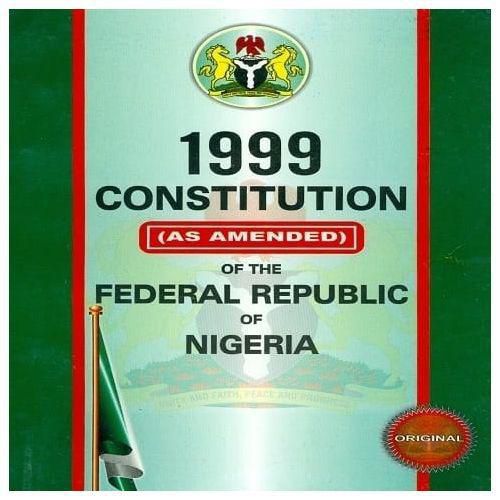
Characteristically, democratic governments globally have a good relationship with the media houses in their home countries. In these countries, mass media plays a vital role in informing citizens on issues of national interest. Most importantly, the mass media serves as a watchdog of society by holding the government accountable in all aspects of governance. In Nigeria, the mass media has enjoyed some constitutional protections since the return to civil democratic rule in 1999. To buttress this point, section 22 of the 1999 Constitution (as amended) states that “the press, radio, television and other agencies of the mass media shall at all times be free to uphold the fundamental objectives contained…..and uphold the responsibility and accountability of the Government to the people.”

Despite the constitutional provisions enjoining the mass media to, at all times, be free to hold the government accountable for its actions and inactions as the case may be, the mass media has never been free in Nigeria. Several instances of crackdowns on media outlets have been reported in the past. Recently, the Federal government of Nigeria, through its regulatory agency, the National Broadcasting Commission (NBC), shut down a discussion program segment of the Vision Radio FM in Abuja. The government regulatory body cited national security as the reason behind the shutdown. Additionally, the government fined the radio station a sum of five million naira.

But in reality, the discussion program titled “Idon Mikiya” convenes reputable journalists and experts who, thrice a week, meet to discuss and critically evaluate the government’s policies and programs. The program is prominent for its constant and sharp critique of government actions perceived to be against the public interest. Remarkably, its presenters were recently heard exposing the incompetency and corruption of the National Intelligence Agency (NIA) director-general, Rufa’I Ahmad.

Naturally, the government may not be happy, especially since elections are fast approaching. Thus, with its anti-democratic posture, the tendency to severely deal with any person or group of persons exposing its inadequacies or loopholes is high. But this poses a severe threat to the nation’s efforts at consolidating democratic governance.

First, as explained above, the mass media is a building block of any democratic society. Thus, any attempt to weaken them is tantamount to jeopardizing democratic governance. Second, as nefarious as it appears, this action of government will make the international community lose confidence in the Nigerian state and its political institutions, especially if this continues. Third, the government’s decision will inevitably send some bad signal to other media outlets, especially those brutal in telling the truth to powers that be.

Finally, in a situation whereby a media outlet is censured for exposing the incompetence and corruption of those in power, one may ask what is happening to the same government’s commitment to fighting corruption and getting rid of all parasites in the government.

Aminu Rabiu Kano is a political analyst and public affairs commentator. He can be reached at arabiukano@gmail.com.