Curriculum

The Urgent Need for Curriculum Reform in Nigeria’s Education System

By Muhammad Umar Shehu

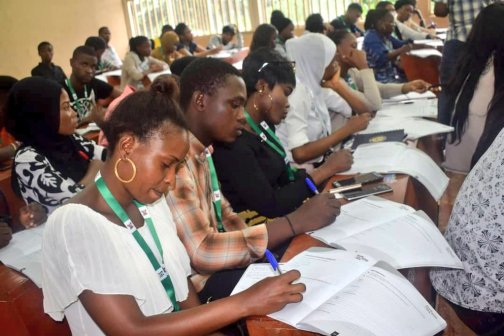
Education has long been seen as the backbone of national progress. Any country that hopes to compete in the modern world must invest in an education system that prepares its young people with relevant knowledge and practical skills. Yet the situation in Nigeria today shows a worrying gap between what students learn in school and what the realities of the 21st century require.

For many years, the country’s curriculum has remained largely theoretical and disconnected from real life. Students spend long hours memorising information for examinations, but many graduate without the ability to apply what they have learned to real-world problems. Certificates are awarded, but practical competence often remains weak. This situation raises serious questions about the direction of the education system.

One major issue is the outdated nature of many academic programs. While the global economy is rapidly shifting toward technology, innovation, and knowledge-based industries, a large portion of Nigeria’s curriculum still reflects ideas and priorities from decades ago. Digital literacy, modern research methods, and emerging technologies are not sufficiently integrated into many learning programs. As a result, Nigerian graduates often struggle to compete in an increasingly digital world.

Another concern is the weak connection between education and the labour market. Universities and other higher institutions frequently design courses without strong collaboration with industries that will eventually employ their graduates. Employers complain about a lack of practical skills, while graduates face rising unemployment despite years of schooling. This mismatch highlights the urgent need to align academic learning with real economic needs.

Infrastructure problems further complicate the situation. Across many parts of the country, schools operate with overcrowded classrooms, outdated laboratories, and limited learning materials. Teachers often do their best under difficult circumstances, but without adequate support, their efforts cannot produce the level of transformation the country needs. When the learning environment itself is weak, even the most dedicated educators struggle to deliver quality outcomes.

Reforming the curriculum is therefore not simply an academic debate. It is a national necessity. Education must move beyond rote memorisation and focus more on critical thinking, creativity, and problem-solving. Students should be encouraged to explore ideas, question assumptions, and develop solutions to real challenges within their communities.

Technical and vocational education must also receive greater attention. For too long, society has treated vocational training as a lesser option compared to traditional academic degrees. Yet many developed economies thrive because they place a strong value on technical skills and practical training. If Nigeria hopes to reduce unemployment and stimulate economic growth, it must elevate the status of vocational education.

Entrepreneurship education is another area that deserves serious attention. Rather than preparing students only to search for jobs, schools should equip them with the knowledge and confidence to create their own opportunities. Basic business education, financial literacy, and innovation training can help young people develop the mindset needed to build sustainable ventures.

Teachers must also be central to any reform effort. No education system can rise above the quality of its teachers. Continuous training, improved working conditions, and access to modern teaching resources will empower educators to guide students more effectively. When teachers are supported, the entire learning process improves.

Ultimately, meaningful reform requires collaboration. Policymakers, educators, researchers, industry leaders, and communities must work together to rethink the priorities of the education system. A curriculum designed with broad consultation will be better equipped to respond to national development goals and global realities.

Nigeria has one of the largest youth populations in the world. This demographic strength could become a powerful driver of development if the right investments are made in education. However, if the system continues to produce graduates who are not adequately prepared for the future, the country risks missing a critical opportunity.

Reforming the curriculum will not solve every challenge overnight, but it represents an important step toward building a more dynamic and productive society. Preparing young Nigerians for the demands of the modern world is not just an educational responsibility. It is a national imperative.

Muhammad Umar Shehu wrote from Gombe and can be reached via umarmuhammadshehu2@gmail.com.

NERDC dismisses false claims, clarifies new basic, secondary curricula

By Uzair Adam

The Nigerian Educational Research and Development Council (NERDC) has clarified details of the newly revised Basic Education Curriculum (BEC) and Senior Secondary Education Curriculum (SSEC), dismissing claims circulating on social media as “false, distorted, and misleading.”

In a statement signed by its Executive Secretary, Prof. Salisu Shehu, and made available to The Daily Reality, the Council explained that the reforms were approved by the Federal Ministry of Education (FME) and provide a clear framework for subject offerings and strategies for effective implementation.

Prof. Shehu noted that the revision was part of the National Education Sector Renewal Initiatives (NESRI) and in line with global best practices.

He stressed that the reforms were designed to meet Nigeria’s peculiar educational needs while reflecting evidence-based approaches.

“Curriculum is fundamental to the delivery of learning, acquisition of knowledge and competencies, and the attainment of national development,” he said.

He added that the new curricula were the outcome of extensive consultations with critical stakeholders and underwent rigorous technical processes.

According to him, the revised content incorporates 21st-century skills such as digital literacy, robotics, and artificial intelligence, alongside citizenship and sports education.

He explained that these additions were aimed at preparing students for future challenges while ensuring the production of a competent and productive workforce.

On concerns raised about religion and civic education, NERDC clarified that there was no derogatory or divisive content in the new curricula.

Prof. Shehu explained that learners at the senior secondary level would continue to study either Christian Religious Studies (CRS) or Islamic Studies (IS) in line with their faith.

He stated, “There is no composite subject called Religion and National Values (RNV). That curriculum was disarticulated over a decade ago.”

He further pointed out that subject offerings at all levels had been streamlined to avoid curriculum overload and to ensure learner-centred teaching.

For instance, pupils in Primary 1–3 will take between nine and ten subjects, while senior secondary students will be required to study five compulsory core subjects along with electives in science, humanities, or business.

The Council also introduced trade subjects such as solar photovoltaic installation, livestock farming, fashion design, and computer hardware repairs to improve employability and strengthen the link between education and industry.

In addition, Prof. Shehu revealed that provisions were made for inclusivity, particularly for learners with special needs.

He said subjects such as Braille reading and writing, independent living skills, and orientation and mobility had been developed for visually impaired learners to complement adapted mainstream subjects.

The Executive Secretary confirmed that implementation of the new curricula had already commenced at the beginning of each three-year learning cycle, including Primary 1, Primary 4, JSS 1 and SSS 1.

He added that the full curriculum could be accessed on the Council’s website, http://www.nerdc.gov.ng, while further nationwide sensitisation, teacher training, and engagements with publishers were underway.

Prof. Shehu concluded by appealing to Nigerians to disregard unverified lists of subjects or purported schemes of work being circulated online.

“We profoundly appreciate stakeholders for their responsiveness and positive disposition toward correct information,” he said.

He also urged Nigerians to “ignore any sensational or unauthentic claims regarding the revised curricula” and instead rely on official sources for accurate details.