CRAG Trains Kano Health Workers on Managing Climate-Related Diseases
By Uzair Adam
The Climate Resilience Action Group (CRAG), with support from the Kano Independent Research Centre Trust (KIRCT), has trained frontline health workers in Dawakin Kudu Local Government Area of Kano State on the prevention, detection and management of climate-related diseases.
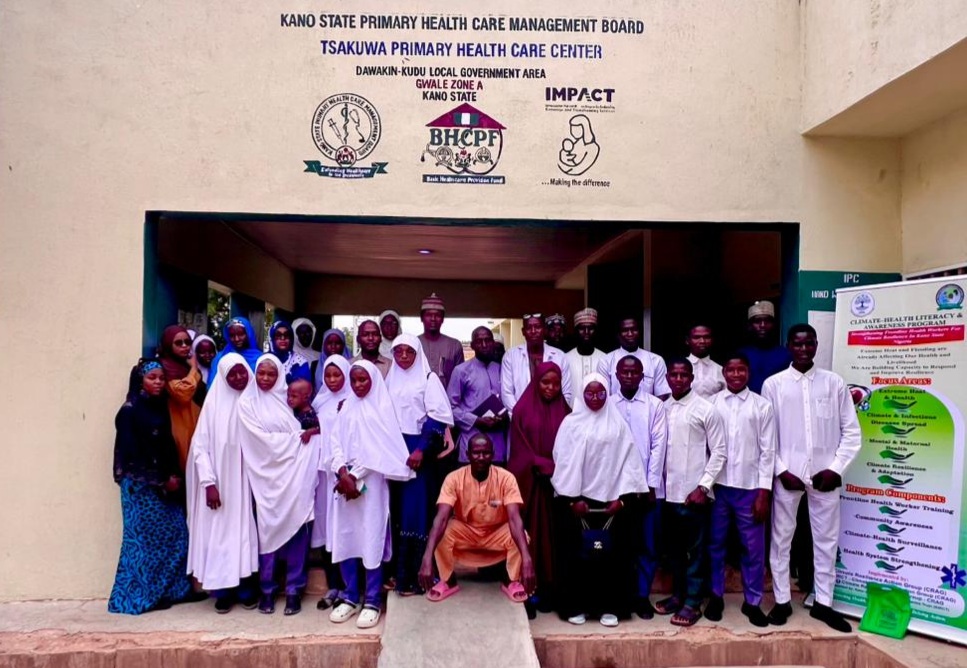
The Daily Reality reports that the training, held at Tsakuwa Primary Health Care Centre on Tuesday, formed part of the group’s ongoing climate and health pilot project aimed at strengthening the capacity of health workers and communities to respond to the growing health impacts of climate change.
Speaking during the programme, the team lead of CRAG, Dr. Bashir Isa Waziri, said the initiative was designed to sensitise primary healthcare workers on climate-health risks, particularly climate-sensitive diseases associated with extreme heat and flooding.
He explained that the training focused on conditions such as heat stress, heat exhaustion and heat stroke, as well as infectious diseases including cholera and malaria, which are often linked to climate-related events.
“Today we conducted climate and health awareness and training for frontline health workers. The aim is to sensitise primary healthcare workers on climate-health risks, especially climate-sensitive diseases that are common during extreme heat exposure and the rainy season,” he said.
Dr. Waziri noted that climate change continues to pose significant threats to public health and stressed the need for healthcare workers to educate communities on preventive measures and effective responses when such illnesses occur.
As part of the programme, CRAG also conducted a climate and health awareness session for students of Yusuf Bayero Government Secondary School, where participants were educated on the effects of climate change on human health, particularly the dangers associated with extreme heat and flooding.
The organisation further launched a tree-planting campaign at the school, planting 20 trees and appointing student climate-health ambassadors who will be responsible for nurturing them.
According to Dr. Waziri, the ambassadors will be monitored and rewarded based on their commitment to maintaining the trees as part of efforts to promote environmental sustainability and climate resilience.
A specialist physician with KIRCT and member of CRAG, Dr. Maryam Ahmad Sa’id, said flooding remains a major public health concern because of its potential to trigger outbreaks of infectious diseases.
She explained that floodwaters often contaminate water sources through the mixing of sewage and waste materials, increasing the risk of diseases such as cholera, typhoid fever and malaria.
“Flooding is associated with many health risks, especially the spread of infectious diseases. When sewage and refuse contaminate water sources, diseases such as cholera and typhoid fever can spread rapidly within communities,” she said.
Dr. Sa’id urged residents to pay greater attention to water hygiene, advising them to ensure drinking water comes from safe sources, keep water storage containers clean and covered, and practise regular handwashing with soap and water.
She also identified pregnant women, children, elderly persons and individuals living with chronic illnesses such as hypertension, diabetes, chronic kidney disease and sickle cell disease as among those most vulnerable to the effects of extreme heat.
The physician called for sustained public awareness and early detection of climate-related illnesses to reduce complications and improve health outcomes.
The officer in charge of Tsakuwa Primary Health Care Centre, Ibrahim Yusuf Kura, described the training as enlightening, saying it exposed health workers to important information that would improve healthcare delivery in the community.
“There are many things we did not know before this training. The knowledge we gained will help us provide better healthcare services to members of our community,” he said.
Kura urged participants to make effective use of the knowledge acquired and apply it in their daily duties.
Similarly, the second officer in charge of the facility, Amina Hamisu Abdullahi, said the programme broadened her understanding of climate-related health challenges and would help her perform her responsibilities more effectively.
She added that the lessons learned would be shared with colleagues who were unable to attend the training.