Corruption

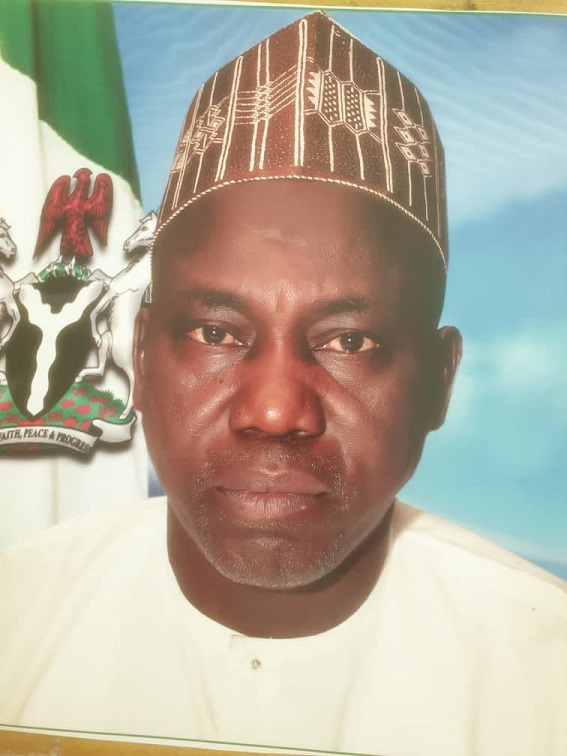
Gov’t is too weak to fight corruption – Prof. Ismaila M. Zango

By Aisar Fagge and Uzair Adam Imam

The fight against corruption should not be left in the hands of the government and their agencies alone because of their apparent weaknesses. A lot of corrupt practices are taking place undetected by public anti-corruption agencies.

Prof. Ismail M. Zango, the Director of Aminu Kano Centre for Democratic Studies, Bayero University, Kano (Mambayya House), made the above statement while speaking to The Daily Reality at a “One-Day Review Workshop of Civil Society Anti-Corruption Networks in the North-West Zone” organized by the centre.

Speaking about the time the centre started organizing workshops on the fight against corruption, Prof. Zango said:

“In 2018, the centre received a grant from MacArthur Foundation to engage faith-based organizations to actively participate in the crusade against corruption. And since then, we have worked with a number of CSOs and NGOs from different parts of Nigeria. So that was the first phase.”

Commenting about the achievement recorded by the campaign so far, the director said:

“The major success was that we were able to work with religious organizations. We invite Muslim and Christian clerics to enlighten them about the role they can play in fighting corruption using their pulpits through their sermons. We have also established anti-corruption clubs in secondary schools as well as tertiary institutions.”

“Government alone cannot fight corruption. But if you have civil society; if you have faith organizations; if you have community-based organizations all of them working together, the only thing that remains is to inculcate in them the culture of transparency and accountability,” he added.

There was a round-table discussion and Q & A session where leaders of selected CSOs from the North-West zone were given 10 minutes to report their activities and some of the challenges they faced.

Some of the “citizens” [members of CSO] blame donors for forcing them to do their bidding while others disagreed, stating that the problem was from the CSOs for selfishness, lack of transparency, accountability and being unethical in some deals.

Zahra’u Ahmad from Kebbi objected, pointing out that “Donors are not the problem, CSOs are. So if a donor comes to you with a project that goes contrary to your religious and traditional norms and values, just say no to his money. Another problem is we see these organizations like ours, which is wrong. These organizations belong to the community.”

While giving the vote of thanks, the Deputy Director, Research and Documentation, Dr Samaila Suleiman Yandaki, tasked the CSOs to be innovative in their fight against corruption by not solely relying on budget monitoring as indicated in their reports.

Some leaders of the CSOs presented papers that attracted questions, observations and commendations.

EFCC denies taking selfie with Cubana

By Ishaka Mohammed

The Economic and Financial Crimes Commission, EFCC, has denied claims that its staff took a selfie with a billionaire socialite and businessman,  Obinna Iyiegbu, aka Obi Cubana.


This is in reaction to a picture trending online with the caption, “EFCC Crew poses for quick photograph with billionaire socialite and businessman Obi Cubana”.


In a statement released on Friday, November 5, 2021, by the commission’s head of media and publicity, Wilson Uwujaren, the anti-corruption agency considered the news of the photograph as fake.


“…at no time during his ongoing investigation, period in custody or release did Obi Cubana pose for photographs with EFCC staff,” part of the statement reads.


Proving the fakery of the alleged selfie, the agency quoted a popular security analyst, Uncle Deji, who traced the picture to October 2021, as against the claim that it was taken in the first week of November of the same year.


“This post is deliberately misleading, this picture was taken 7th October 2021 during a book launch of Colonel Chukwu Obasi at Nigerian Army Resource Centre in Abuja in which Obi Cubana attended as a guest,” the post reads.


The commission held and interrogated Obi Cubana between Monday 1st of November, 2021 and Thursday of the same week.

Nigeria’s Development: The Daunting Doom

By Lawi Auwal Yusuf

Leaders are preoccupied with self-centred political hustles, party meetings, extravagant banquets and flying their private or chartered jets over the country attending various lavish occasions. On the contrary, Nigerians turned wistful and sad about the terrible fate of the country and the gloomy future. As they get more concerned, their hope becomes less.

The country is endowed with efficacious potentials for its development to become a global power. It has a strategic location, sizable landmass, enormous young population, highly educated elites and abundant natural resources. In addition, favourable climate, fertile farmlands, and the shores that give it access to the Atlantic Ocean in the South are all added advantages.

In the last sixty-one years, Nigeria has reaped hundreds of billions of petrodollars in total revenues as one of the major producers and exporters of oil to the global market. It is the 12th largest producer of oil in the global ranking, 8th largest exporter and the 10th largest proven reserves. According to the Department of Petroleum Resources, it has about 159 oil fields and 1481 wells in production.

Apart from petroleum resources, Nigeria has multiple precious mineral resources in massive deposits. Moreover, cocoa is the largest foreign exchange earner to Nigeria besides oil and rubber, the second largest.

Similarly, as the most populous state in Africa and the 7th in the world with over 211 million people, Nigeria is a vast market. Its mixed economy is the largest on the continent. It is the 27th largest economy in the world by nominal GDP as of 2021 estimate. By GDP per capita, it is the 137th in the global ranking and the 25th largest by PPP.

However, these unique and extraordinary endowments are rare for a country to possess. These are the best opportunities and possibilities for its advancement. Unfortunately, poor leadership, endemic corruption and mismanagement have been the greatest obstacles in realising the potential. These precious endowments were not genuinely and diligently used. Hence, it has not made appreciable progress in those years. Had they been utilised at the best and maximum capacity, the sky would have been the limit.

More than 40% of Nigerians are living below the poverty benchmark in May 2020 estimates. They are destitute and cannot afford the three daily meals. Today, pervasive poverty depicts the lives of most Nigerians. The life expectancy is as low as 54.7 years on average. Infant mortality reached 74.2 deaths per 1,000 live births in 2019, and maternal mortality was 814 per 100,000 live births in 2015.

Moreover, the stagnant economy, inflation and the perpetual falling value of the naira have aggravated the plight of the masses, making life worse, more challenging and more miserable for ordinary Nigerians. There has been a swift rise in the cost of living and a concurrent decline in the living standard. Therefore, poverty, inequality, mass idleness, underemployment and wretchedness are at the highest pinnacle. This made Nigeria always emerge winner of the global rankings of the poorest nations.

It is appalling that the masses are becoming poorer while the nobles are getting more affluent. There has been a persistent widening inequality between the rich and the poor. Transparency International ranked Nigeria 136th out of 182 in the 2014 Corruption Perceptions Index. It was estimated that more than $400 billion were embezzled by corrupt leaders from independence to 1999. Nonetheless, President Muhammadu Buhari in 2015 said that corrupt officials had squandered more than $150 billion in the last decade. As a result, the country is synonymous with corruption. And the most astonishing is that it is among the wealthiest countries and also the poorest simultaneously. This is because the state wealth is enjoyed only by the aristocrats while the commoners are destitute.

Rule by theft known as ‘kleptocracy’ has deteriorated into kleptomania. They are strongly obsessed with stealing to the level that they don’t even have a material need for it. It degenerated into highly competitive accumulation syndrome. The monies that are ideal for the development of Nigeria are stashed at its detriment in Western countries and therefore become beneficial to their contented economies.

On the other hand, in the early 1960s, Nigeria was self-sufficient in food. But after the Civil War in 1970, the government failed to reinvigorate agriculture, resulting in failure to meet the acute population growth. It had to depend primarily on importation to fill up the supply gap. Sadly, in the 21st-century world, farmers are still tilling the ground with simple implements like hoes and cutlasses to feed a population of over 200 million. As of 2010, almost 30% of Nigerians are employed in agriculture and still have not met up the national demand.

The leaders had failed to provide the basic necessities of life to the citizens. As a result, after more than six decades of self-governance, there is no stable electricity supply, safe drinking water, standard healthcare, adequate and affordable food, qualitative education, social housing estates, infrastructures and social amenities. Nonetheless, the problems of the country in the1960s are yet to be resolved. Poverty, corruption, rule by theft, secessionism, tribal and religious antagonisms are lingering today. Regrettably, terrorism, kidnappings, cattle rustling, banditry and other current collective problems have deepened the crises.

Not being able to diversify the monocultural economy that largely depends on oil plays a significant role in the economy, accounting for 40% of GDP and 80% of the government earnings. Moreover, Nigeria does not adequately exploit the vast array of mineral resources in colossal deposits while the mining industry is still in its early stage of development. Moreover, other sectors of the economy that will help tremendously grow the economy and raise revenues are also underdeveloped. Contrarily, it has remained a perennial borrower of funds in the global capital market. Recently it emerged as the 5th most debt-ridden country in the world. The World Bank in August 2021 said that it had accumulated $11.7 billion in debt.

There has been deficient human development, especially the youths folk. In 2019, it ranked 161st in the world in the Human Development Index with a 0.539 score, which was very low. Millions of school-age children are out of school while some wander the streets freely with torn-out clothes and scavenging through rubbish looking for food. These miserable children are left on their own to live their entire unwholesome lives on the streets in search of a living. They have no qualifications or skills to make them employable in the labour market. Similarly, graduates searching for employment happened also to be idle many years after they had left school. Therefore, almost half of Nigerians are unemployed.

Furthermore, the emigration by professional Nigerian doctors to the diaspora known as the “brain drain” due to adverse working conditions in the country led to shortages of doctors in the healthcare system. It was estimated in 1995 that roughly 21,000 indigenous doctors were working in America alone, which was almost equal to those in the public health service then.

When you make a comparative analysis between Nigeria and its peers to assess its performance, you will realise that it had performed poorly. For example, look at the High Performing East Asian Economies (HPEAEs) that include Malaysia, Taiwan, Thailand, Singapore, Indonesia, South Korea and Japan. They are the fastest-growing economies in the world after the first world countries. Some had launched rockets into space. They manufacture aircraft, ships, automobiles, computers and smartphones while Nigeria still imports razor blades, pencils, toothpicks, including its most abundant petroleum products. Singapore and Japan developed from the less developed countries and joined the first world nations.

Look at other countries like UAE, India, Brazil and South Africa that recently established a consociational democracy in 1994. Nigeria played a significant role in fighting the apartheid regime and helped in establishing the multiracial democracy in the country. South Africa is now regarded as a highly developed state and has become a better haven for Nigerian youths who emigrated there in search of greener pasture.

Finally, Nigeria still has the chance to do better and start developing once more to realise its long-lost potential.

Lawi Auwal Yusuf wrote from Kano. He can be reached via laymaikanawa@gmail.com.

Insecurity is corruption-in-motion

By AF Sessay

The data you don’t talk about comes back to haunt you!  And when it does come, it comes violently. Many years of corruption, nepotism and neglect of the basic rights of citizens quickly metamorphose into all forms of crime. While government inaction is not and cannot always be the cause of citizen-on-citizen crime, yet research suggesting the correlation between corruption in public places and crimes on the streets should not be taken with a pinch of salt.  

This is also true for the failings in high places and the ugly effect this has on battlefields. Because beyond artillery and manpower, there is a great need for strategy, intelligence, consistent supply of food, effective and top-notch communication and above all, sincerity of purpose. Unfortunately, in the situation where the cankerworms of embezzlement latch and sucks blood out of any of these in the security value, the figurative blood usually becomes pools of real blood. So, when it lingers, question the data. Who does what, and where are the numbers to say they are really doing it? 

Nigeria currently stands on a tripod of corruption, injustice and hope (no matter the percentage of that hope). 

Corruption keeps the corrupt healthy and well-nourished to perpetrate more acts of corruption with hands, heads, tongues and minds.

Injustice keeps the people blind to the truth. It is an essential spear in the hands of many African leaders and former leaders to strike and blind the advocates for truth, make deaf the masses, and cripple the nation.

As for Hope, it is always a ‘good’ magic wand, or opium, or weapon (depending on who is defining it) to mobilize the people for elections, discourage them from revolting and contain them till the next election.

On top of this tripod rotates the head of change. In every season, every decade, every century, there is always one head dressed with a different colour to match the epoch and circumstance. The change of this era is the change from a corruption-ridden nation to a corruption-free state.

Now, how many people are not corrupt so that they can serve as models of integrity for the corrupt? It seems this is a difficult question; let’s turn it the other way round. How many people are corrupt and ready to serve as models of corruption to others? The statistics here are too terrifying to betray the calculus of any optimist on the future of Nigeria and the African continent.

While the masses shy away from their responsibility to come out and spearhead this journey to a reformed Nigeria, the corrupt are on the other side of the divide, ever determined to embolden their fingerprint on the face of civilization! No wonder they get most of the honours, most of the honorary degrees, most of the titles, most of the praises, most youths ready to die for the “good cause”, most of the best universities for their children…

Are you surprised? Why should they not be determined and willing to sacrifice their wealth and might to fight for the continuation of corruption? See! Listen! They were born in it, bred and nourished in it, educated in it, employed in it, voted in it and possibly wish to die in it.

They are not scared of sitting on the corpses of millions of their brothers if that is the only throne they can find to sustain their Kingdom of Corruption. They are very okay with the fact that the millions awaiting their grave permit languish and die in scarcity, adversity, poverty, obscurity – you name it. This is nothing compared to losing a single day in their lives to integrity and probity.

They will fight, hire the best lawyers, get the cruellest thugs, sponsor many false reports to raise public ire and angst against the people who seek to “unjustly” drive them from their ‘paradise.’ They will make many human sacrifices. They will even invent new smart devices of iniquity. Don’t underestimate their ingenuity when it comes to protecting corruption. Never underestimate them.

Alas, how long will they fight before they run out of vim? How long will they endure against the harsh winds of change? How long will they live to eat the billions they have amassed over seasons and seasons of rot, corruption and cruelty in this farmland of the world. How long will they procure mass graves for hundreds of citizens so as to exercise their will to power? They call our youths to their graves while their duplexes and children and girlfriends enjoy the loots of Nigeria in Dubai and London.

They will fight, but the people will also fight back. And as far as I know, no Empire or force or fight is powerful enough to stop the might of the people when they are determined for reform.

Do you want to join this fight? In which army will you prefer to fight? If you must join the side of those who want reform in the polity, then you must do so while you are well armed with patience and firm belief in God then the leader’s ability to bring change. Don’t be carried away by the plots and ploys of the corrupt. Correct when mistakes are made, tell the truth where and when needed, be just and bold in your assessment but never be a recruit (though subconsciously) in the army of the corrupt!

AF Sessay writes from Lagos. He can be reached via amarasesay.amir@gmail.com.