Colonialism

Colonial minds in Nigeria: The case of Igbos and Christians

By Sa’adatu Aliyu

“I was Igbo before the white man came” is a saying by Chimamanda Adichie through her character Odenigbo in her infamous book Half of a Yellow Sun, reinforcing pride in her African heritage before the white man’s incursion, which destabilised the otherwise peaceful coexistence of African communal states.

However, it seems to me that she has been afflicted by the Igbo superiority complex over other tribes in Nigeria, especially the Hausa-Fulani in the North. This pride in being traditionally Igbo and human doesn’t extend to her acknowledgement of the Hausa-Fulani Muslim humanity and identity—held with equal pride—just as the Hausa-Fulani were before the Whiteman.

Ethnic Pride and Selective Humanity

Moreover, the likes of Adichie and her Igbo fanatics would rather make baseless and false claims about the Igbos being suppressed and ethnically cleansed in letters to Washington than sit to resolve their differences internally with their brothers in the North, solely because they are Muslims whom the Igbos do not perceive as human equals.

Generally speaking, the problem with the Igbos is that they believe all the lands in Nigeria belong to them. Their illusion of grandiosity makes them feel entitled to all locations in Nigeria beyond their region as places they have the right to live, seek better economic opportunities, and build a stable, secure life. In contrast, the same right is not extended to other tribes in Nigeria, especially the Hausa man, who, until today, faces all sorts of harassment whenever he is in the Southeast, sometimes stopped and asked by unscrupulous elements to pay “matching ground” money.

This is a form of tax collected from non-indigenous individuals seeking better economic opportunities over there—a thing that doesn’t occur in the North. Unlike the South, even though Muslims predominantly inhabit the North, it has a significant presence of churches, whereas the presence of mosques is not tolerated in the Southeast except in a few exceptional cases. Moreover, if the North was so brutal towards the Christians as they depict, why do Southerners/Eastern Nigerians seek greener pastures in the North more than the North moves towards their region? If it was so unfriendly to the Igbos and Christians, why not the Igbos remain in their regions, and the North remain in theirs?

Power, Entitlement, and the North–East Tension

While all Nigerian citizens have the right to live and build a life devoid of fear in any part of Nigeria, the Igbos particularly think they should be the ones solely steering the affairs of Nigeria and should be the sole tribe entitled to managing the juiciest positions in government, merely for being Igbo, not necessarily based on superior qualification.

Understanding the mentality of the Igbos has led to what I’d like to refer to as a “personality clash” with the Hausa-Fulanis. Despite being perceived as backwards in an educated population, they are like poor men who would never sacrifice their dignity for money, nor bow to any force that may seek to demean them based on possessing more Western education.

This has led to the long-standing tension between the two ethnic groups. The case of the North and the East is akin to a couple in their early years of marriage experiencing a clash of personality—not necessarily due to lack of love or to cause deliberate harm, but because one happens to blow issues out of proportion by arguing that the other insists on hurting them deliberately.

Instead of checking in with their ego, they engage in score keeping, accusing, and incessantly crying out for help, even if it means seeking a third party in the cloak of a certified therapist—who may hiddenly be a psychopath and has no genuine interest in the wellbeing of the couple, but instead has its greedy eyes on the money to be extorted from them, further destroying their home.

The West as “Therapist”: Foreign Meddling and Naivety

This is precisely what the Christians in Nigeria are doing by seeking the intervention of so-called America, peering underneath African countries’ beds looking for genocide, when the very foundation of the U.S. was built on the vile killings of Indigenous Native Americans.

This scenario has been fueling some of the false accusations circulating in the media about genocide against Christians in the North. It is no doubt Nigeria has been plagued by indiscriminate killings and kidnappings in the past few years, but this has involved the loss of lives and livelihoods of citizens across all ethno-religious groups—mainly by Boko Haram militias and banditry—and not killings affecting Christian communities alone, as the naive Christians of Nigeria, who still put the U.S. on a saintly pedestal, have been framing it.

This is mere fabrication born out of a myopic desire to destabilise the fragile peace still holding the nation together, forgetting that foreign powers have never and will never look out genuinely for the Black race, but have repeatedly set their eyes on how to invade and plunder the resources of our dear land.

Be it the U.S., Russia, China, or other subordinate world powers, they couldn’t care less if Africa burned. All they would do is not find a way of quenching the fire but find a means to steal our resources, all the while supplying the weapons we’ll use to maim our brothers with whom we share the same African Black DNA.

It is sad that, in the eyes of Nigerian Christians, America remains a demigod they rush to whenever facing a “problem.” in this manner. But this doesn’t paint the image of a race free from the shackles of colonialism—it looks to me like a remix of the same song to which we can’t dance, should any foreign power invade as is being threatened by the U.S currently. 

Nigerians should never forget Libya, Iraq, Afghanistan, Sudan, and every other country the U.S. has invaded. It was never for goodwill or for the sake of the masses to have a better life; it was never about democracy but about the kleptomaniac instinct of foreign powers to pillage, to use the stolen resources of Africa to build their countries.

Colonial Mind enslavement and the Illusion of Freedom

When Chimamanda Adichie said she’s Igbo before the invention of the white man, I presume she was refuting the attempt of the white colonialist to redefine her ancestral root. She was rejecting the image of the indigenous people of Africa that the white man struggled to create to wipe out her identity.

I also want to believe the white man here is seen as foreign, intrusive, with no right to rewrite the history of the African people, nor to decide our destiny. But how come the same Nigerians, especially Igbos who pride themselves on being a fraction of the Black race, are quick to call for the intervention of the same white man to salvage them—to resolve a conflict with their African brothers on religious division, (the religions) on the basis which they’re stirring foment being a product nothing but a product of colonialism?

Yet they pick up their pens and still write saintly yet furiously about pride in Africa, Pan-Africanism, Negritude, and pride in the Black race they claim to represent. And one wonders with the level of hate projected towards Northern Muslims, whether they are not part of the black Africans. To me, this is nothing short of colonial mind slavery that still bedevils even our so-called intellectuals, blinded by religious fundamentalism and succumbing to it so effortlessly. Hence, one begins to question their education.

As Chuba Okadigbo once said:

 “If you are emotionally attached to your tribe, religion or political leaning to the point that truth and justice become secondary considerations, your education is useless.

If you cannot reason beyond petty sentiments, you are a liability to mankind.”

Mirroring a similar view, if the educated one cannot look beyond ethno-religious sentiment and live objectively, he has no business being called educated. However, this is a hat donned by several of Nigeria’s think tanks, sadly.

Similarly, Nelson Mandela reminds us:

 “It is not our diversity which divides us; it is not our ethnicity, or religion or culture that divides us…”

Can the African mind ever be decolonised? I doubt so. It might all look like we are free, but there’s no freedom without the freedom of the mind.

So, the quest of Ngũgĩ wa Thiong’o for Africans to free themselves from mental colonial slavery—which led to his abandonment of the English language and adoption of Kikuyu—doesn’t extend to this area for many Christian fanatics who happen to be influential writers from the Eastern part of Nigeria. And this is utterly disheartening.

In Conclusion

In the wake of all this commotion, I perceive the naivety of those spreading these lies to draw foreign intervention in Nigeria as an act of somnambolic foolishness—for which I am sure they will regret when they come face to face with the hypocrisy that lies in the heart of world powers, should they get what they are calling for.

I pray for peace, unity, religious understanding, and togetherness in Nigeria and the world at large. Let us always remember: a shred of peace is better than no peace at all.

Saadatu Aliyu is a writer and poet based in Zaria. Email @: saadatualiyu36@gmail.com 

Equal Earth map wins African Union endorsement

By Muhammad Abubakar

The African Union (AU) has officially endorsed the Equal Earth map projection this month, marking a shift away from traditional world maps that many critics say distort the size of Africa and other regions in the Global South.

Developed in 2018 by cartographers Tom Patterson, Bernhard Jenny, and Bojan Šavrič, the Equal Earth projection aims to present landmasses in their true proportions while maintaining a visually appealing shape. Unlike the widely used Mercator projection, which significantly shrinks Africa relative to Europe and North America, the Equal Earth map shows the continent’s actual scale.

“The Equal Earth map restores dignity to Africa’s representation,” said an AU spokesperson. “It reflects the continent’s real size and importance in the world.”

Supporters argue that adopting the Equal Earth projection will help challenge Eurocentric biases in education, media, and policy discussions. The AU plans to encourage member states to introduce the map in schools and official publications.

Cartographers say the Equal Earth map strikes a balance between scientific accuracy and accessibility, offering a fairer perspective of the world’s geography.

Africa, France and the New World 

By Zayyad I. Muhammad

Millions of Africans have emigrated to Europe, America, and other parts of the world. This emigration is driven by both push and pull factors — economic challenges, political instability, conflicts, and the pursuit of better job opportunities and more accessible social services.

Despite often being stringent in their immigration policies, receiving countries have found ways to benefit from this influx. They tap into the labour, expertise, and talent of these immigrants. Rather than solely viewing immigration as a burden, many of these nations recognize the potential gains from incorporating skilled and unskilled labour into their economies.

Several West African countries have reassessed and severed their military ties with France in recent years. Notable examples include Mali in 2022, Burkina Faso in January 2023, Niger Republic in 2024, Chad in November 2024, Senegal in December 2024, and Ivory Coast in December 2024. These moves signal a significant shift in regional dynamics as these nations seek to assert greater sovereignty and explore alternative partnerships. Some have terminated defence agreements outright, while others are exploring new international collaborations.

International relations experts see these developments as pivotal. However, they caution that these countries might merely replace one foreign power with another without concrete plans for mutual benefits. For instance, in Niger Republic, the Russian presence, along with the mercenary group Wagner, has not brought substantial change. Wagner’s operations in several African nations, such as Mali, have drawn criticism, with human rights groups accusing its forces of severe abuses.

Reuters reported that: “French President Emmanuel Macron recently expressed frustration over the perceived lack of acknowledgement from certain African nations regarding France’s military interventions in the Sahel region. Speaking at a foreign policy conference with French ambassadors, Macron claimed that some African leaders had “rewritten history” concerning France’s role in combating Islamist militants since 2013. He argued that these states might have lost their sovereignty without French military support.

However, officials from countries like Chad and Senegal have pushed back, asserting that their decisions to expel French troops were made independently and in the best interest of their nations. Chadian Foreign Minister Abderaman Koulamallah criticized Macron’s remarks as disrespectful, while Senegalese Prime Minister Ousmane Sonko emphasized that Senegal’s decision was made without any negotiation with France.”

For Africa to progress, its leaders must define the continent’s needs, recognize its current position, and set a clear direction for the future. Africa must move beyond the outdated narrative that external forces are the primary obstacles to its development. The global landscape has evolved, and Africa must engage with international partners based on mutual respect and benefit.

For example, France and Nigeria have an excellent trade relationship, with Nigeria serving as France’s leading trading partner in sub-Saharan Africa. So, if country A sees the French as a bottleneck, you don’t expect Nigeria to do so. 

If countries like France, China, Russia, or the United States want to invest in Africa, they must do so with clear, mutually beneficial agreements. African resources should be processed on African soil, ensuring the continent gains more than raw material exports. Africa needs technology transfer, expertise, and infrastructure development to foster sustainable growth.

Africa must adopt a global perspective and interact with nations based on their strengths in areas like United Nations status, military power, industrial capacity, African diasporas, trade volumes, and financial influence. Only through strategic, well-negotiated partnerships can Africa harness its full potential and assert its rightful place in the global arena.

Zayyad I. Muhammad writes from Abuja via zaymohd@yahoo.com.

Neocolonized Nigeria

By Sunusi Abubakar

With a growing prime working-age population, considerable natural resources endowment, good economic potentials, large labour forces, highly motivated entrepreneurs, vast domestic market, strategic coastal locations, large and fragile agricultural land, and developing ICT sector, Nigeria has favourable economic potential which could lead her to be among the top 20 economies in the world. 

But problems like corruption, nepotism, political instability, inadequate infrastructures and poor economic management are failing its journey to greatness. Unfortunately, all the aforementioned regressive factors are not natural but a breed of artificial additive called colonialism.

Colonialism was first practised by empires such as Ancient Greece, Ancient Rome, Ancient Egypt, and Phoenicia. From about 1550 B.C. onward, these civilisations all extended their borders into surrounding and non-contiguous areas and established colonies that used the physical and population resources of the people they conquered to increase their own power. This resulted in capitalism and imperialism and metamorphosed into neo-colonialism. 

Ancient colonialism is seen worldwide as the origin of capitalism, which is said to be the source of the power and accumulation of Western countries. 

Capitalism is said to emanate from the Cambridge School, a group of economic philosophers. The group was led by the neoclassical economist Alfred Marshall, with Walras, Merger, and British economist John Maynard Keynes on the board. The system always accepts the market system as the best way to organise economic activities in society. They believed in allocating resources through the market forces of demand and supply. 

For them, the commodity is said to be a thing when it is produced to make money. They maintained that the source of their capital accumulation is through profit gained and plough back for future profit, but many people are against this idea. They were cautioned by German economist and human rights lawyer Karl Marx, who described the process as primitive. 

Marx argued that their capital is wherever in the world, made initially through the enclosure movement, dislocation of feudal agrarian productions, huge price inflation, monopolies of trade, acquisition of colonies, extortion enslavement, entombment in the mines of the aboriginal population, looting of indie and Africa as well as hunting of black skins. 

However, capitalism is seen worldwide as the maceration of the proletariat, a low class in society. Capitalism always favoured the bourgeoisie, the owners of the means of production. Moreover, the history of capitalism can only be completed by mentioning the name of the Italian philosopher Machiavelli. 

Machiavelli was the founder of the theory of Mercantilism and a major contributor to the development of capitalism. Mercantilism is an economic system which supports the development of capitalism and the exploitation of the proletariat through the accumulation of monetary reserves by positive balance using the import and export of finished goods. 

Shortly after some economic revolutions that emancipated some countries in Europe, Africa, and Asia, the colonial masters, who were the champions of capitalism, veered to continue their colonial agenda through imperialism. They came up with an idea that saw the integration of world financial institutions like the IMF and World Bank to recolonise former colonies through debt conditionalities. Many African countries fall into their trap. Some managed to escape while others were still bedevilled by it.  

As imperialism seemed ineffective, those colonial masters changed their sinister agenda to neocolonialism. Neocolonialism is also a system that is aimed at giving developed economies indirect control over their former colonies and access to their system of economy, politics, militarism, idealism and other policies to achieve two objectives:

1. Keeping those colonies within the world capitalism system.

2. Preserving the condition of exploitation and unequal exchange between developed and developing economies. 

Like other developing economies, Nigeria is also suffering from the problems of neo-colonialisation.

Neocolonialism paved the way for the developed economies to wage a silent war on Nigeria’s industrial sector indirectly through the development of manufacturing industries and technological advancement. They electrified, mechanised, and chemicalised our agricultural sector. Their dominance mandated our farmers to use pesticides, insecticides, and other agrochemicals mainly produced in their countries. 

Moreover, education is also a victim of neo-colonialisation in Nigeria. The educational sector in Nigeria is neocolonialized through privatization. The government has intentionally neglected our educational sector, leading citizens to enrol their children in private schools at home and abroad. 

Neocolonialisation has also victimised Nigeria’s political landscape. It also affects our system of administration, military,and foreign policy. Western countries have an indirect involvement in Nigeria’s electoral processes through this. They use observation to interfere cunningly in the choice of our leadership. 

However, the ongoing insecurity problems affecting Nigeria are another form of neocolonialism. It is through which Western countries exploit our economy and enjoy the remaining in the name of peacekeeping, intelligence assistance and arms procurement.

With these problems on trend, this is a healing time. It is a time for reflection on what can be done to help Nigeria cunningly harness its economic potential. It is a time to preach against government policies that align with a neocolonialist agenda through dialogue and moral suasion. 

If we fail to reflect as a nation, Nigeria is bound to go back into the decades of direct subjugation, economic exploitation and brutality.

Sunusi Abubakar wrote via muhammadsunusi29@gmail.com.

Fall of the Sokoto Caliphate: Some thoughts

By Huzaifa Dokaji

When people reflect on the fall of the Sokoto Caliphate in 1903, they often conjure up images of British soldiers armed with the formidable Maxim gun on the left, juxtaposed with local inhabitants wielding swords, bows, and arrows on the right, fervently chanting “Allahu akbar.” Unfortunately, this portrayal does not align with historical reality. The foot soldiers were mainly Africans, while Europeans primarily served as commanders and strategists rather than frontline combatants. The bulk of the invading forces were drawn from previously subjugated regions, frequently comprising individuals from the target community itself.

As demonstrated by Philip Afaedie’s PhD thesis, The Hidden Hand of Overrule: Political Agents and the Establishment of British Colonial Rule in Northern Nigeria, 1886–1914, individuals such as Adamu Jakada established their reputations and livelihoods by providing valuable intelligence to European forces. In the case of Kano, for instance, Ciroman Kano Abdu Lele, the son of Emir Kano Tukur (reigned 1893–1895), supported the British invasion in exchange for their promise to restore him to the Kano throne, which his family had lost after the Kano Civil War (1893–1895), known as the Basasa (of course they didn’t honour the agreement after the war!). Others, driven by diverse motivations, also aligned themselves with the British cause.

As recounted by Baba of Karo to Mary Smith (see Baba of Karo: A Woman of the Hausa Muslim), people in rural areas, fed up with pervasive political and social corruption, celebrated colonial conquest with a popular song, “Nasara kun dade ba ku zo ba”. The Resident of Kano also noted in an intelligence report to the British acting High Commissioner on July 9th, 1903, that the peasantry embraced British conquest due to their deep-seated resentment towards their rulers. “Nasara kun dade ba ku zo ba” carries more profound implications than its composers may have intended. Scholars like Murray Last (1967), Rudolph Ware (2014) and Paul Lovejoy (2016), along with others, have shown us how and why the Sokoto Jihad was one of the most important political and social revolutions of the 19th century, thanks to the egalitarian nature of its goals. However, Nasara kun dade ba ku zo ba demonstrates how such ideals were lost by the closing decade of the century, prompting common people to seek refuge in the hands of Christians. Nevertheless, the intellectual class remained committed to their quest for an egalitarian society through the Islamic ideological vehicle.

M.S. Umar’s seminal work, Islam and Colonialism: Intellectual Responses of Muslims of Northern Nigeria to British Colonial Rule, has powerfully shown us how such intellectuals reacted to British colonial conquest and the various strategies they adopted to challenge it. They saw it as temporary—God’s wrath upon an erring community. Defining the conquest as a temporary setback, the grand vizier of the Sokoto Caliphate equated it to the shaving of a beard.

In his poems titled Nuzhah and Intisaf, Sheikh Yahya an-Naffakh (b. 1898 and known as Malam) described the British conquest as the ‘triumph of absurdity’ caused by scholars who have replaced ‘the humility of Knowledge with the stupidity of ignorance’ and rulers who have exchanged ‘the wisdom of governance with the arrogance of past glory’. Malam himself came from a family that was a victim of such crass anarchy. The winning side of the Kano Civil War imprisoned his father, who was a legitimist. A young Malam secured his release by writing a petition to the Resident of Kano, Mr. Palmer, advocating against the unjust imprisonment.

Although oral traditions suggest that Dan Fodio prophesied the fall of the Caliphate to European Christians, it is more plausible that news of their encroachment reached Sokoto through traders and pilgrims travelling the trans-Saharan trade routes, ultimately reaching Mecca. For instance, in the early 19th century, the influential Lagos trader Madam Tinubu sent a letter to the Caliph of Sokoto, Bello dan Fodio, informing him of European activities along the coast. Furthermore, Paul Lovejoy’s research on Umar el-Fellati reveals that Fellati witnessed the British occupation of Egypt in 1882 and even acted as a double agent, providing the British with information about the Caliphate while simultaneously reporting on British activities in Northern Africa.

Huzaifa Dokaji is a PhD student and teaching assistant at the Department of History, State University of New York at Sony Brook. He can be reached via huzaifa.dokaji@stonybrook.edu.

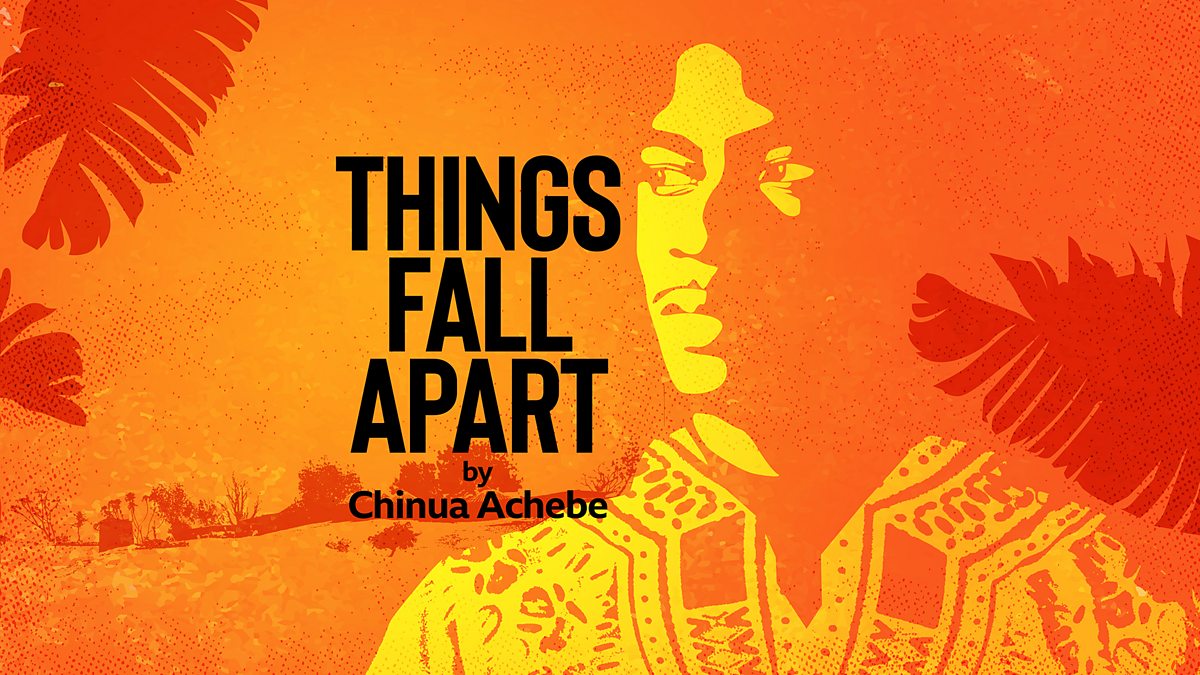
On Things Fall Apart

By Abba Musa Ibrahim

When Europeans came to Africa and said, You have no culture, no religion, no civilization, no history; Africa was bound sooner or later to reply by displaying her own accomplishments. To do this, her writers and intellectuals- stepped back into what you may call the purity before the coming of Europe. What they uncovered there they put into their books and poems, and this became known as their culture, their answer to Europe’s arrogance.   – Chinua Achebe

Things Fall Apart (1958) is a text on colonialism by Achebe. As Ngugi asserts, “There is no writing in a vacuum”. Equally, Stanley Fish, Raymond William, Edward Said, and Homi K. Bhaba, among others, strongly believe that writing consciously or unconsciously reflects political, historical or social issues at the time of its birth.

In response to Joseph Conrad’s Heart of Darkness and Joyce Carry’s Mister Johnson, Achebe came up with Things Fall Apart to rectify the distorted image of Africa popularised by the Europeans. As he was quoted, “My role as a writer is to help my society regain belief in itself and put away the complexities of years of denigration and self-abasement”.

Things Fall Apart is recognized as one of the 100 novels ever written in history. It has also been translated into more than 50 different languages. Achebe gets the title of the text from W.B Yeats, an Irish poet, in his poem, “The Second Coming.”

“Turning and turning in the widening gyre

The Falcon cannot hear the falconer

Things Fall Apart; the centre cannot hold

Mere anarchy is loosed upon the world.”

The text has 165 pages, twenty-five chapters, and three phases, each discussing a distinct matter. The first part talks about the culture, tradition, norms and values and political system of Igbo society. Meanwhile, the second part talks about the major character, Okonkwo’s exile to his mother’s kinsmen in Mbanta when he kills a boy during a funeral festival. Then, lastly, is the happenings that lead him to hang himself.

The first part of the text opens with Okonkwo, who gets renown by wiping the floor with Amalinze; his celebrity circulates far and wide. He’s also a man of action, industrious and works tirelessly to go contrary to his bone idle and workshy father. Ikemefuna is brought to Okonkwo’s household before his future is decided. Pronto, the boy, owns the love of Okonkwo.

We also glance at Okonkwo, who has four wives and children and run them with heavy hands because he wants them to shun being inactive. His strictness makes him break a week of peace by beating his wife in black and blue. He also cuts Ikemefuna down, which Ezeadu forewarns him, “That boy calls you father, do not bear a hand in his death” (P.45). He does this and takes the life of sixteen years inadvertently, which in their custom is exile for seven years.

Secondly, the second part opens in Mbaino, Okonkwo’s mother’s town, where he serves for seven years. He receives a helping hand from his boon companion, Obiereka, by looking after his remnants of farm and letting him know about the arrival of white men who wiped out Abame altogether, and oracles apprise them that;

“The strange man would break their

Clan spread destruction among them” (p.111)

He also accepts the worsened situation:

“… Now he has won our brothers and our clan

Can no longer act like one; he has put a knife

On the things that held us together and we have fallen apart” (p.141)

Thirdly, the last part of the text is on Okonkwo’s return from Mbaino, where he loses his celebrity and social prestige. He finds out that white missionaries take everything up. They erect churches, courts, government and schools. He stands up against missionaries, fighting back his fame, social prestige and customs. But, drearily, he fails by not getting any co-operation from his clan, and this frustrates him to the core, and he takes his own life.

Abba Musa Ibrahim can be reached via abbamusa6888@gmail.com.