CNG

Tinubu Announces Deal for 300 CNG Buses, Assembly Plant in Oyo

By Sabiu Abdullahi

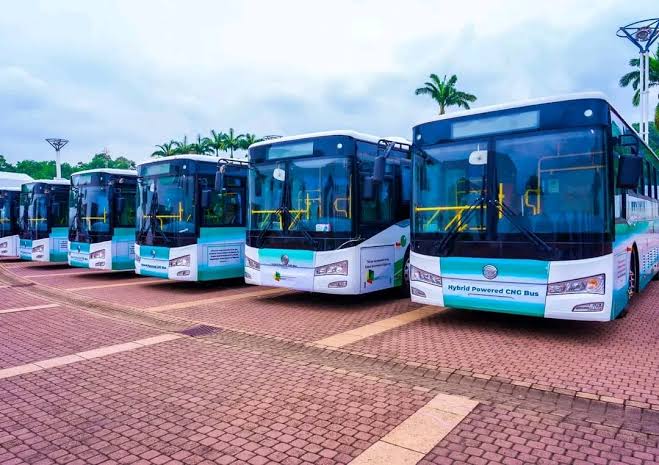
President Bola Tinubu has announced an agreement with Chinese bus manufacturer Yutong to supply 300 compressed natural gas (CNG) buses for Nigeria’s National Affordable CNG Transit Programme.

The president disclosed this in a statement on Thursday, November 19, 2026, adding that the first batch of 100 buses is expected to arrive in December.

“Under an agreement with our Presidential Initiative on CNG and Electric Vehicles (Pi-CNG & EV), Yutong will supply an initial 300 buses for our National Affordable CNG Transit Programme,” he said.

“The first 100 are expected as early as next month. Subsequent buses will be assembled in Ibadan through YP Automobiles, creating jobs for our engineers, technicians and other workers.”

Tinubu also revealed that Yutong would establish a CNG bus assembly plant at the former Leyland automotive facility in Ibadan, Oyo State.

According to him, the initiative forms part of the Federal Government’s efforts to lower transportation costs across the country.

He said the programme had already contributed to reduced transport fares in at least 10 states and the Federal Capital Territory (FCT).

The president cited the Enugu-Nsukka route as an example, where passengers who previously paid as much as N4,000 now pay N1,600 on participating CNG buses.

He also mentioned N50 bus fares in Borno State and free CNG bus services in Kaduna State as other benefits of the initiative.

Tinubu said state governments had recently increased their procurement of CNG buses, while private investors were expanding the country’s refuelling infrastructure.

He added that his earlier directive for the provision of 1,000 additional CNG refuelling infrastructure units nationwide would support the programme’s expansion.

Under his 2027–2031 reform agenda, the president said the administration was targeting a reduction of approximately 40 per cent in transport fares on participating routes.

He said preparations were already underway to achieve the target.

“Nigeria is blessed with abundant natural gas. We must put it to work for the woman going to the market, the young man going to work and the parent struggling with the cost of sending children to school,” Tinubu said.

“We cannot afford to return to the days when fraudulent subsidy claims enriched middlemen while ordinary Nigerians struggled.

“I know the sacrifices you have made since we began reforming our economy. I know that what matters to you now is how much better your life becomes.”

The president said his administration wanted Nigerians to spend less on daily transportation, earn decent incomes and have enough resources to improve the welfare of their families.
Tinubu: Cheaper Energy, Cheaper Fares From Oct 1


By Abdullahi Mukhtar Algasgaini

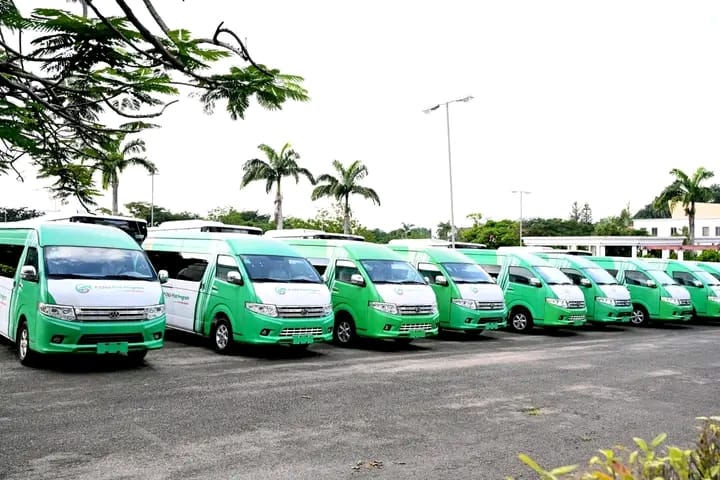
President Bola Ahmed Tinubu has said Nigerians should begin to see measurable reductions in transportation costs from October 1 under the National Affordable CNG Transit Programme, pointing to existing compressed natural gas and electric transport schemes that have already cut fares in several states.

In a State House press statement on September 19, 2026, Tinubu said the objective was agreed with the 36 state governors on August 27, after which an implementation committee was established under the Nigeria Governors’ Forum, chaired by Governor AbdulRahman AbdulRazaq.

He said the committee, PI-CNG & EV, the states and other stakeholders were already working to identify priority transport corridors, determine appropriate interventions and put necessary arrangements in place.

“From October 1, more Nigerians should begin to see measurable reductions in transportation costs,” the President said, adding that the work had become more urgent amid the current global energy crisis.

Tinubu said there was already evidence across Nigeria that cheaper energy could translate into cheaper transportation.

In Borno, he said CNG-powered and electric public transport services were moving commuters for between ₦50 and ₦100 on routes where commercial operators charge between ₦300 and ₦600.

In Kaduna, 100 CNG-powered buses are providing free transportation on major routes. In their first year, the buses carried about 3.2 million passengers and saved commuters more than ₦3.5 billion, according to the President.

In Oyo, CNG buses deployed to Pacesetter Transport brought the Lagos–Ibadan fare down from about ₦8,000 to ₦3,200 during initial deployment, while Adamawa’s alternative-energy transit services cut fares by as much as 50 per cent, from ₦8,000 to ₦4,000.

In Enugu, where 100 CNG buses have been deployed, the Enugu–Nsukka fare has fallen from ₦2,500 to ₦1,500. In Plateau, government-supported buses carry about 13,000 commuters daily at ₦200, compared with more than ₦500 commercially.

Tinubu also said the partnership with the NURTW had given passengers on CNG-converted commercial vehicles on several Abuja routes a 40 per cent fare reduction. Area 1 to Gwagwalada dropped from ₦1,500 to ₦900; Nyanya from ₦700 to ₦420; and Wuse from ₦400 to ₦240.

In Niger State, passengers on the Suleja–Abuja service pay ₦550 compared with about ₦800, while Abia has deployed 40 electric buses with fares subsidised by 50 per cent.

“These are not projections. Nigerians are already experiencing these savings,” Tinubu said.

He commended governors and state governments that had moved quickly, but said more still needed to be done, pledging Federal Government support for further scaling.

The President said disruptions to global energy supplies were again pressuring petrol and diesel prices and increasing transportation costs worldwide. Nigeria, he said, cannot control global energy markets, but as a gas-rich nation it can reduce its exposure.

He said his administration had spent the last three years deliberately investing in a CNG transportation ecosystem. More than 120,000 vehicles have been converted, with over 400 certified conversion centres and more than 90 CNG refuelling stations nationwide, and the figures are increasing daily.

Tinubu rejected suggestions that Nigeria should return to the petrol subsidy regime, describing it as ruinous and saying it consumed trillions of naira and left the economy exposed to international oil price movements.

“We must accelerate the cheaper alternatives we have been building at home,” he said.

He noted that Edo already has 50 CNG buses in active service; Kano has converted more than 1,000 commercial vehicles while expanding its conversion and refuelling network; Delta, Kwara and Lagos are expanding CNG-supported transport services; and Akwa Ibom has taken delivery of 50 CNG buses ahead of commercial operations.

The President urged every state to maintain momentum towards October 1, work with transport unions and commercial operators, support conversion and fleet deployment, facilitate required infrastructure, and ensure savings from cheaper energy reach citizens through lower fares.

“The Federal Government will continue to support the scaling of CNG infrastructure and access, expand conversion capacity, and create the enabling environment for states, transport operators, manufacturers and private investors to participate,” he said.

“Nigeria has the gas. We are building the infrastructure. We are already seeing the savings. Now we must move faster and scale this so more Nigerians feel those savings in the fares they pay every day.”