China

Chinese-based company, Hikvision, certifies 14 Engausa apprentices

Hangzhou Hikvision Digital Technology Co., Ltd., often shortened to Hikvision, is a Chinese state-owned manufacturer and supplier of video surveillance equipment for civilian and military purposes, headquartered in Hangzhou, Zhejiang. The Chinese government owns its controlling shares. 

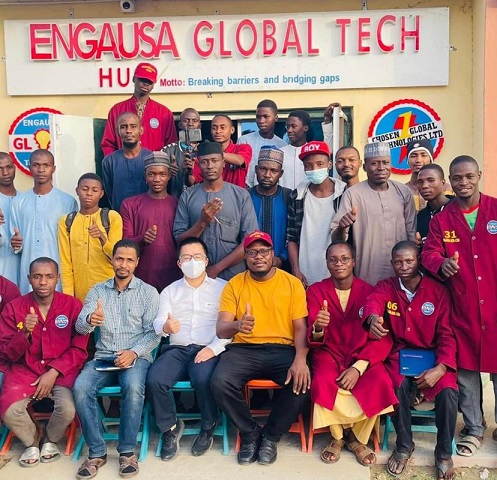
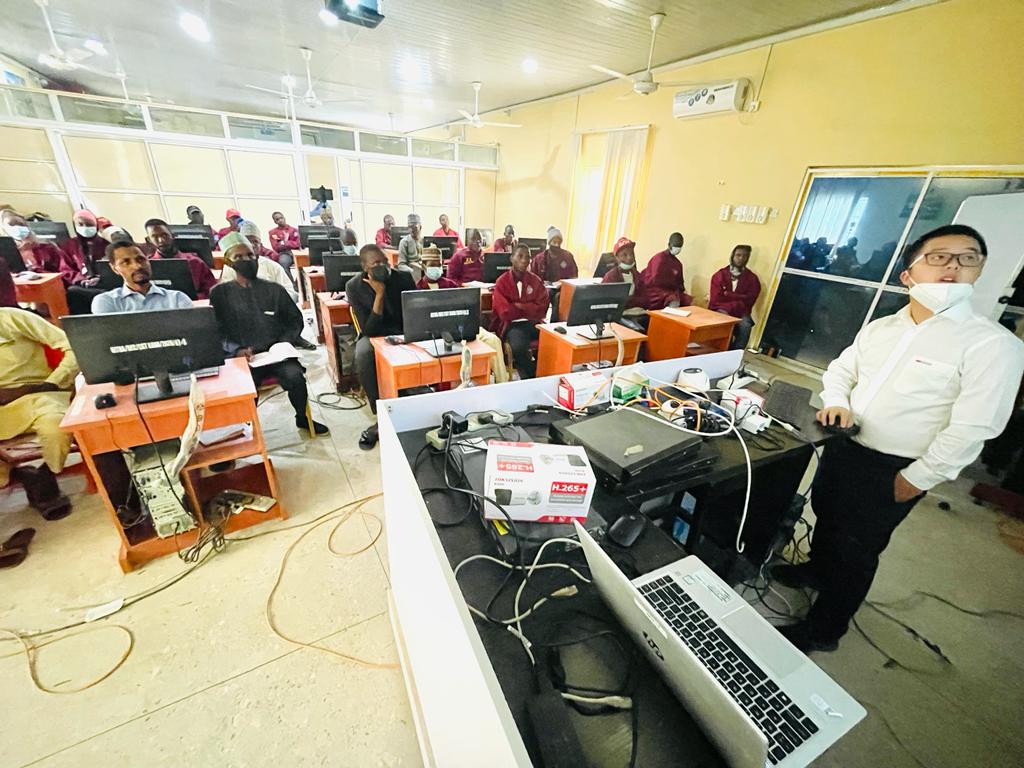
As part of the company’s mission to expand operations in northern Nigeria and Sub-Saharan Africa, Hikvision trained and rigorously assessed the theoretical and practical capabilities of 14 apprentices at the Engausa Global Tech Hub in Kano, Nigeria.

Impressed by the individual performance of the apprentice after the certification exams, the company has agreed to register Engausa Global Tech Hub as a Hikvision Training Academy, the very first training ever in northern Nigeria. 

We are joining the general public to congratulate these 14 Engausa apprentices that bagged Hikvision International Certification on CCTV tagged Hikvision Certificate Security Associate (HCSA-CCTV).

Recall that the founder/CEO of Engausa Global Tech Hub, Engr Mustapha Habu Ringim, has bagged a similar certification from Hikvision two years ago. And this makes a total number of 15 certified professionals in HCSA-CCTV. 

Nigeria’s education system: An incubator of job seekers or providers?

By Salisu Uba Kofar-Wambai  

Functional education is the key to solving most of the joblessness and unemployment predicament Nigerians face today. Therefore, the philosophy of education matters a lot. Moreover, the kind of philosophy under which a particular curriculum operates determines the quality of graduates a particular system of education breeds.  

The idealism philosophy, which Nigeria’s education system subscribes to, contributes grossly to the condition of our graduates. They frequently end up chasing shadows, seeking jobs when in reality, there’s none. This is because the idealism philosophy emphasizes and dwells so much on book knowledge. The students are made to jampack and cram all the knowledge and ideas in their heads, but practising the knowledge is ultimately zero.

In other words, the idealism philosophy thrives in theoretical aspects. And this British model has since been abandoned by many countries of the world, as it has no successful ends and doesn’t suit 21st-century challenges.  

However, more innovative countries like China, Germany, and Japan that adopt a pragmatic philosophy of education in their curriculum are getting it right regarding employment issues. Most of their graduates are fully equipped with the specific skills required to handle jobs effectively and efficiently. Moreover, even before graduation, their students are already into temporary employment. 

The functional education practised in such countries has made their graduates vibrant job-providers instead of perpetual job-seekers we see here in Nigeria.  

It is a mammoth challenge for our education policy formulators to do the needful. They should help us migrate from idealism to pragmatism as a system. Students will then have practical skills or functional education that will enable them to establish their businesses based on their acquired skills, not just memorizing books and blowing grammar all over.

When a mechanical engineering professor could not repair a simple technical fault on his car until he refers it to a local technician, you know there’s a massive challenge with such a system of education.

I think these entrepreneurial studies and industrial training introduced by our institutions of learning are equally astute and sagacious towards achieving the desired goal. But they’re not close to where we’re aiming at. So, we must change the philosophy in its entirety first to have enough roadmap on the ground.   

The sooner we migrate, the better for us.

Salisu Kofar-Wambai wrote from Kano. He can be reached via salisunews@gmail.com.

Who will save the Nigerian donkeys?

By Aliyu Nuhu

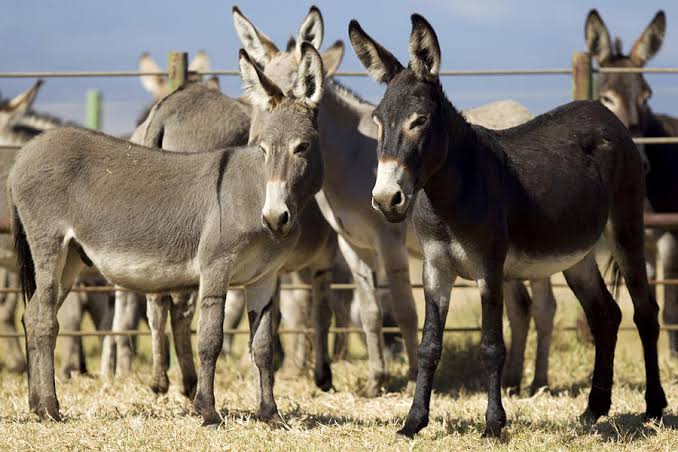
It is indeed a horrible time for the Nigerian donkeys. Each day about 5000 donkeys leave the Maigatari market in Jigawa State to the East, where they are consumed as meat by many households.

That is just one statistics from Jigawa State alone. Some 15000 donkeys also passed from North East and the Niger Republic to the South East, mostly Agbor, Anambra, Onitsha, Enugu and Abakalaki, to meet a similar fate.

Now it seems the donkeys are in for bigger trouble as the Chinese have also developed an appetite, particularly for their meat and skin. As a result, demand for donkeys has tripled over a short period. Meanwhile, the donkey is not bred in Nigeria on an industrial scale, and it is an animal that does not multiply with its very slow birth rate.

It is terrible enough to consume the gentle beast locally but worse to see it exported to China. Then who will save the donkey?

States in the North should legislate against the trading of donkeys for export to other parts of the federation. Already the price of a donkey that used to be between 8000-10000 naira has hit 35000 naira, making it well above the means of the local farmers who use it as rural means of transport.

The Federal Government must urgently place a ban on the exportation of donkeys and their by-products to the outside world, for now, China.

Aliyu Nuhu is a popular social commentator. He lives in Abuja, Nigeria.

Afghanistan: Superpowers’ invasion and history of resistance

By Aminu Rabiu Kano


The history of Afghanistan is one characterized by epic tragedy. The narrative of the “Afghan problem” has been diverse, with each actor telling their side of the story in a bid to justify their action or inaction as the case may be. A poor, landlocked Afghanistan is one of the few countries in the world which events happening in and around it have been dominating the headlines for decades. Both the mainstream and social media are obsessed with happenings in the country. Indeed, even the layman on the street is more or less interested in the Afghan problem to the extent that virtually everyone can say one or two things about it. The question that follows, therefore, is, why is the world interested in happenings in Afghanistan? In other words, why are developments in Afghanistan capable of generating reactions around the world? Also, why have the superpowers in history found it necessary to invade Afghanistan?


To answer the above questions, we must begin by establishing the geopolitical relevance of Afghanistan on the world map. Afghanistan is doubtlessly strategically located. It is at the crossroads of Central and South Asia. It borders Pakistan, China, Iran, Turkmenistan, Tajikistan and Uzbekistan. It is predominantly mountainous and inhabited by approximately 32 million people – nearly 45% of whom speak the Pashtun language. Moreover, the Afghan population is primarily Muslim. This reason, coupled with the fact that it borders Iran, Afghanistan is sometimes seen as a part of the “Wider Middle East.”


From the list of the countries bordering Afghanistan, one will realize the geographical importance of Afghanistan in the international political environment. Of the five countries that bordered it, Iran and China stand out. However, Uzbekistan, Tajikistan and Turkmenistan had been part of the former Soviet Union that fell apart in the 1990s. This implies that Afghanistan has been a neighbour to glorious powers both in the past and present.


Therefore, it was invaded severally by several empires across ages due to its essential, strategic location. For example, Alexander The Great of the Macedonian empire invaded Afghanistan in 330 BC as part of the war against Persia. Alexander saw that he could only get the Persian empire subdued by invading Afghanistan. Similarly, foreign powers such as the Persian Empires, the Mongol Empire led by Khan Ghengis, the Mughal Empire, the Timurid Empire, the Rashidun Caliphate, and the Sikh Empire conquered Afghanistan.


Little wonder, Afghanistan, even in the modern era, grappled with yet other rounds of invasions, but this time around by the “superpowers”. The superpowers being the USA and the USSR. During the cold war, these superpowers used Afghanistan, among other countries, to test their military, economic and political powers. It all started when, in April 1978, the People Democratic Party of Afghanistan overthrew the Afghanistan government. Nur Muhammad Taraki, secretary of the PDPA, became president of Afghanistan. But Taraki’s government was communist in orientation and enacted some policies that were not well received by the masses. Thus, the masses hated government, and, as a result, Taraki was overthrown by Hafizullah Amin in September 1979. Despite the change of government from Taraki to Amin, opposition to communist rule continued even under Amin. In December 1979, Amin was shot and replaced by Babrak Kamal, who was in exile in Moscow. Kamal’s government heavily relied on the Soviet military for support and protection against his vast opponents.


Opposition to the communist government continued, which prompted the USSR to invade Afghanistan, deploying more than 50,000 soldiers. This occupation was even met by fierce resistance by Afghans, who have joined the Mujahedeen – a guerilla movement that proclaimed to be fighting anti-Islamic forces in Muslim lands. The Mujahedeen would later be referred to as the “Taliban”. The Taliban was formed by Mullah Muhammad Umar, who recruited young Muslim students from Afghanistan and neighbouring Pakistan to fight the Soviet Military. Over the next ten years, hundreds of thousands of lives were lost. In the end, the Soviet military was forced to withdraw from Afghanistan.


However, the mujahedeen (or the Taliban, if you like) did not fight the war alone: they were heavily supported, armed and financed by the USA, Saudi Arabia and Pakistan. USA was mainly instrumental in its support to the Taliban because it feared that if the USSR succeeded in occupying Afghanistan, its national interests would be threatened. In fact, the US’s intervention was informed by the need to resist the advance of what former President Reagan called the “evil vampire”. Then, the two superpowers – the USA and USSR – were in the heat of the cold war. Therefore, the US saw that if the Soviet Union succeeded in implanting communist rule in Afghanistan, the domino theory would materialize. This means that the USSR would also succeed in spreading communist ideology into those countries neighbouring Afghanistan. Most Fundamentally, by gaining the control of the Middle East, the USSR would determine oil and gas supply to the US and its allies in the West. This meant that the Soviets could do great harm to the US economy and those of its allies by cutting off the oil supply since oil was a vital product so crucial that military and industrial operations heavily depended on it.


After the withdrawal of the Soviet military from Afghanistan, the Taliban formed an Islamic government. Osama Bin Laden – a Saudi citizen – was instrumental in fighting the Soviet army. As the son of a rich and influential citizen in Saudi Arabia, Osama contributed substantial financial resources to the Afghanistan war that lasted for ten years. He later formed Al-Qaeda, which was said to be a terrorist movement determined to liberate the Muslim land from Western influence. On 11 September 2001, 4 aeroplanes were hijacked by, allegedly, the Al-Qaeda. Two were flown to the Twin Towers housing the World Trade Centre, one flown to the Pentagon and the other to Pennsylvania. As a result, more than 5000 people lost their lives, and critical government infrastructures were destroyed.


The US was quick to blame Osama’s Al-Qaeda for the tragic 9/11 event. The US President George Bush soon declared war on terror. The war was first on Afghanistan, which led to the overthrow of the Taliban government. After that, the American forces established a democratic government with its foundation in and allegiance to American imperialism. However, after 20 years of occupation, the Taliban expediently returned to power when the US forces willingly decided to withdraw from Afghanistan.


From the foregoing, three lessons can be learned. One, Afghans have a genetic history of resistance to foreign domination. Second, Afghanistan is a strategic country that played an important part in the Great Game power struggles for centuries. Finally, it is evident from the above that Afghanistan’s series of invasions was no end in itself, but a means to an end. Put it more succinctly, Afghanistan is a gateway for foreign powers. Its invasion would allow the superpowers to dominate the Asian continent, including the oil-rich Arab world. Overall, Afghanistan, despite its myriad of aggression by foreign superpowers, is still in existence. It survives!


Aminu Rabiu Kano is a political and public affairs analyst. He can be reached via 08062669232.

China’s Reward of Enlightenment: A lesson for Nigeria

By Najib Ahmad, PhD.

Beyond doubt, you may have by now discerned that nearly everything you are using in your households, offices, and places of worship were made-in-China. A few weeks ago, I had a conversion with my friend and confidant, who told me that this China-made domination is manifested worldwide, even in Europe, where he lives. Hence, he no longer blames Nigeria for clinging to China-made products.

On another occasion, some German professors visited our research group (in China) two years ago. During lunch, one humorously told my former program supervisor that he thought even his shirt was made-in-China. We all laughed and continued eating. Unless you don’t know Germany, the European economic powerhouse, and the history of its industrialisation, this will startle you. Indeed, Germany is still technically capable and well industrialised, but Chinese products are ubiquitous there.

The question you may ask is: How did China achieve all this? I guess you are curious to have an insight into their progress. And how they catch up – sometimes even overtake or compete – with the most industrially advanced countries whose supremacy in this area was matchless within a short time? Their quest for financial power started ages ago, after the country’s opening-up in the 1970s by the then leader, Deng Xiaoping, otherwise known as the principal architect of China’s reform and significant foreign policy changes.

A former Emeritus Professor of Social Sciences at Harvard, Ezra F. Vogel, described the leader in his book, Deng Xiaoping and the Transformation of China, as the “man who most influenced China’s modern trajectory.” The central idea of his reform plans was nothing extraterrestrial. He only ensured that the ordinary Chinese population was enlightened (or educated) to the level they could create their path in a lifetime. He also superbly promoted China from “an agrarian society to the industrial powerhouse” (or manufacturing hub of the world). Beyond the shadow of a doubt, his projections have prospered in making China where it is today. The most important resolution was massive enlightenment. These resolutions have markedly shaped the trajectory of his policies to where they are today.

Provision of adequate and essential reading, writing, and good numeracy skills was the quintessence of the primary phase in their development journey. Thus, presently, you hardly encounter an older person who can neither read nor write or consider using a calculator for basic arithmetic summation (remarkable, right?). Although some reports show a few others are illiterates, especially in villages, it is a small percentage compared to the over a billion people who can. Moreover, there are all-women-operated shopping centres as the reform structure targeted women to prepare them for exceptional jobs. Many women work in hospitals now, especially in women-related matters.

The government of China sponsored children of low-income farmers and city workers to study in elite American and European universities. Some of these students specialised in sciences, applied sciences, technology, and other critical areas for China’s development. This scheme shaped the education development in China. At the same time, some of them remained in their newfound home. Today, five out of ten research papers from the European and American universities will have Chinese-sounding names. They are also in many places working on state-of-the-art science and technology. This was part of the product of the policies made on education about a century ago.

Many others joined various newly founded public universities and colleges all over China to teach and train young students. According to Statista, as of 2019, China has the largest education system globally, with 2688 public universities and colleges, a mixture of central (or federal), provincial (or state), and local government-owned institutions. Out of these institutions, 1,423 are higher vocational colleges. According to reports from the Chinese Ministry of Education, privately owned vocational colleges reached about 300 in 2021. Yet, they looked for more to provide jobs and ultimately boost the country’s economy.

In retrospect, you can see that China’s quest for economic supremacy started with excellent policies favouring education. It continues to this day. New policies were implemented and sustained in educating the society, for example, policies like a free nine-year compulsory quality education for primary and junior secondary schools.

Again, one of China’s leading, perhaps secret, ingredients for unprecedented technological developments is its total commitment to vocational education training at all levels. Vocational colleges (higher institutions) and vocational schools (secondary schools) have undoubtedly contributed to the record economic growth in China. They are the fundamental and out of sight driver and catalyst of their economy. They have produced craftspersons with skills that supported the country in job specialisations such as electrician, mechanic, computer technician, carpenter, tailor, beautician, chef, welder, fabricator, product designer, bus driver, and electric train driver, among others.

The government’s commitment to funding and sustaining vocational training schools have vastly invigorated the manufacturing capacity you see in China today. Subsequently, most foreign brands like Apple, Unilever, Nike, Zara, Mercedes-Benz, General Motors, and many more produce China-made products. The availability of highly-skilled workforce is another reason those brands go to China, among other benefits. Unfortunately, time and space will not permit me to mention them here. However, the reward of sound policies on enlightenment to a society and its propensity is ostensibly enormous. And above all, the government has significantly reduced poverty among its people and improved their livelihoods.

We can learn from the above that enlightening everyone, at least, to the level that they can read and write and get numeracy skills, even if it is in their native language. So doing is vital for the prosperity of society and the country at large. Sometimes, not everyone could have profound education. Suppose everyone you meet in the market, other places in Nigeria could read and write in their native languages. Undoubtedly, our growth and development as a society would be in a better direction than our current condition. Lack of these skills for everybody contributes to our lack of progress, absence of skilled workers, failure of industries, among other ills bedevilling our societies in Nigeria.

As the government is founding new universities year-round, they should consider establishing vocational colleges. As I see these days, the National University Commission (NUC) issue license to many private universities nationwide. Individuals can similarly step in to establish private vocational training colleges. It is not always that everything rests on the shoulder of the government. We need to take these few but critical steps to reset the collective societal future of Nigeria. Implementing them could set a new stage for self-directed youths equipped with the required skills to assist Nigeria’s economic growth, particularly at one of the worst phases of the country’s financial crisis, thanks to the coronavirus pandemic and poor governance.

Dr Najib Ahmad is a Postdoctoral Researcher at Shandong University, China. He can be contacted via namuhammad03@gmail.com.