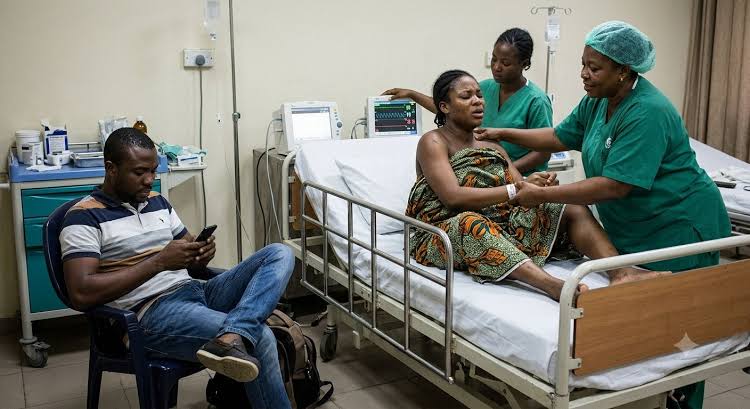
Gynaecologists Explain Why Husbands Should Support Wives During Childbirth
By Sabiu Abdullahi
Gynaecologists have encouraged hospitals to allow husbands, partners or trusted relatives to accompany women during labour and childbirth, saying their presence can reduce anxiety, provide comfort and improve the overall delivery experience.
The experts said companionship during labour offers emotional and practical support, while helping women cope with pain and feel more confident throughout the process.
Professor Chris Aimakhu, a Professor of Obstetrics and Gynaecology at the University of Ibadan, Oyo State, said allowing birth companions had become part of modern maternity care worldwide.
He explained that the World Health Organisation’s Labour Care Guide encourages companionship during labour as part of efforts to improve care for women.
“The companion can provide emotional support, often by offering reassurance, reducing fears and anxiety, and helping the mother feel in control.
“The person can also provide physical comfort by assisting with massage, rubbing the woman’s back, helping her change positions, encouraging her, and telling her how to breathe,” he said.
Aimakhu added that companions could help bridge communication gaps between women in labour and healthcare workers, provide practical assistance and help ensure that patients received respectful treatment.
He clarified, however, that the primary purpose of having a companion present was to support the woman rather than monitor medical procedures or investigate suspected criminal activities.
“The companion is not there to monitor your organ transplant or all that; the person is there to help the woman go through the experience of pregnancy and childbirth,” he said.
According to the professor, support from husbands or relatives may help women cope with contractions, follow medical instructions and feel more comfortable during delivery.
He also said companionship could reduce the need for pain-relieving medication, improve satisfaction with childbirth and encourage bonding between parents and their newborn.
Aimakhu noted that some hospitals also permit a husband or another chosen companion to remain with a woman during a caesarean section, depending on the facility’s procedures and circumstances.
A Consultant Obstetrician and Gynaecologist at the Federal Medical Centre, Abeokuta, Ogun State, Dr Olanrewaju Jimoh, also highlighted the emotional benefits of having a familiar person present during labour.
He said women who enter labour wards surrounded by unfamiliar people may experience fear and anxiety, particularly when they are separated from their personal belongings and loved ones.
Jimoh argued that allowing a trusted companion could ease such fears and help women feel more secure during childbirth.
He said, “Evidence has shown that companionship during labour reduces fear and gives women more confidence because they see a familiar face.”
The consultant added that emotional support could help reduce stress and improve a woman’s perception of pain, even though it would not eliminate the pain itself.
“It also helps the progress of labour. The perception of pain is reduced considerably. The woman still feels the pain, but when she looks at her husband or relatives, the pain may not feel as severe as it would if she had nobody with her,” he said.
Jimoh further explained that companionship could contribute to shorter labour and reduce the need for some medical interventions, including assisted delivery, although the outcome would depend on individual circumstances.
He acknowledged that the practice had both advantages and disadvantages but maintained that its benefits outweighed its drawbacks.
However, he stressed that a companion’s role should not be confused with that of a witness to possible wrongdoing.
“The presence of husbands, partners, or relatives is more of psychological and emotional support rather than as a crime witness,” he said.
The experts’ recommendations place emphasis on compassionate maternity care, with trusted companionship serving as a potential source of reassurance for women during labour and delivery.