Charity

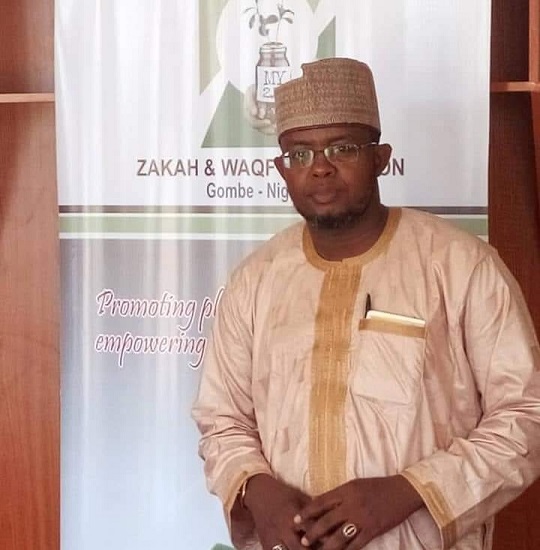
The gentle power of giving: The life story of Dr Bala Maijama’a Wunti

By Usman Abdullahi Koli, ANIPR

Some lives are measured in years, others in titles, and some in possessions. The rarest and most enduring lives are measured in the hearts they touch and the hope they restore. Dr Bala Maijama’a Wunti belongs firmly in that rare place. His journey has been one of resilience and quiet strength, of rising from hardship to become a fountain of generosity whose waters reach far beyond the place where they spring.

Born on 8th August 1966, his earliest years were marked by a loss that would shape the rest of his life. Losing both parents as a child meant entering the world with an emptiness most could never imagine. Those days were not kind; survival was his only option. There were no easy comforts, no safety nets, only the will to push forward and the dream that tomorrow could be better.

Instead of allowing hardship to harden him, it softened him in extraordinary ways. The hunger he knew became a hunger to feed others. The loneliness he endured became a desire to stand by those who had no one to stand by. The obstacles he faced became a determination to clear the paths for others. He did not allow pain to turn into bitterness; he transformed it into kindness.

Over the years, giving has become so deeply ingrained in his life that it no longer feels like charity; it feels like breathing. He has lifted burdens that would have crushed families, stepped in quietly where hope was fading, and turned despair into relief for people who may never know his face but will always remember his help. For him, giving is not a grand event; it is the natural rhythm of his days.

Only yesterday, on the eve of his birthday, he paid the full registration fees for Bauchi State indigenous Law students across Law Schools in Nigeria and added incentives to support their journey. For those young men and women, it was more than a payment. It was a belief in their dreams and a reminder that someone cares enough to invest in their future. Acts like this are not exceptions in his life; they are the pattern.

His foundation, Wunti Alkhair, is an extension of his own values. It reaches into communities, lifts the sick from their sickbeds by clearing medical bills, opens doors of opportunity for young people to acquire skills, and creates moments of dignity where they seemed lost. It strengthens faith by building and restoring places of worship, not as monuments of wealth but as sanctuaries of hope.

What makes him remarkable is not just the scale of what he gives but the sincerity with which he provides it. There is no fanfare, no calculation, no search for applause. Many of those who have felt his kindness will never meet him, yet they carry a piece of him in their stories, in their survival, and in their renewed strength to face life again.

As we celebrate his birthday, we celebrate far more than a date. We honour a man whose life is proof that greatness is not in what we take but in what we give. A man who rose through the storms of his own childhood to become a shelter for others. A man who, in a world too often cold and self-serving, has chosen to be warm and selfless.

May Allah grant him long life, good health, and the strength to keep shaping lives for the better. May his journey remind us all that no matter where we start, we can choose to live in a way that makes the world a little softer, a little fairer, and a little kinder.

Your life is not only a blessing to those who know you but to many who never will, and that is the highest form of legacy.

Usman Abdullahi Koli wrote via mernoukoli@gmail.com.
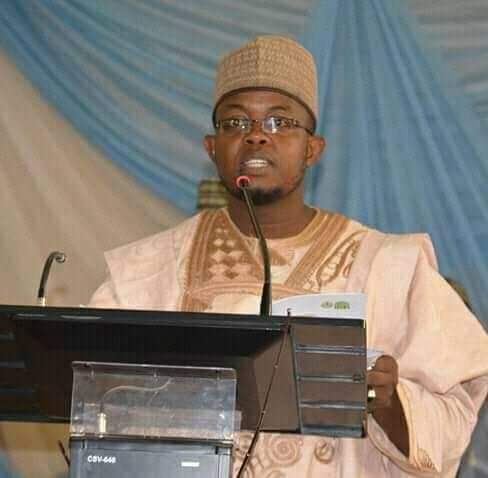
Waqf and orphans: Building a future for the forgotten

By Abdullahi Abubakar Lamido, PhD 

It was after a wet Thursday Asr prayer in a quiet neighbourhood of Gombe that Mallam Isa stood up to speak. The small mosque was dimly lit, the air heavy with humidity and the scent of earth. His voice trembled slightly—not from fear, but from the weight of the message he bore.

“Brothers and sisters,” he began, “let me ask you: what would happen if today, right now, your heart stopped, and your children became orphans?”

A hush fell. Even the children at the back stopped playing. That question pierced through the hearts like an arrow.

“You pray five times a day, you give Zakah and fast Ramadan, but have you made any plan for the ones you might leave behind?” he continued.

It was not just a rhetorical question. It was a wake-up call.

The Crisis of Orphans in Our Midst

In every corner of Nigeria—especially in the north—there are orphans. They are in the streets, in distant relatives’ homes, in understaffed orphanages, and in classrooms with torn uniforms and hungry eyes. Every funeral of a husband, a father, a provider, often produces not one or two, but sometimes 10, 15 or even 20 orphans. In a society with polygamy and a high birth rate, the multiplication may be frightening.

The silent cries of orphans echo through our communities, a poignant reminder of our collective responsibility. In societies like northern Nigeria, where large families are common and the spectre of loss ever-present, the number of children left without a guiding hand is staggering. 

Losing a parent can mean losing everything: food, shelter, education, and the loving embrace of family. While various efforts exist to care for these vulnerable souls – from individual families to community and religious organisations, and a few dedicated orphanages – a critical challenge remains: the lack of sustainable, reliable funding. This is where the profound and enduring institution of Waqf emerges as a beacon of hope, offering a pathway to a robust and self-sustaining future for orphans.

What do we do with this growing population?

Islam doesn’t leave this to chance. The Prophet Muhammad (peace be upon him) said:

“I and the one who looks after an orphan will be like this in Paradise,” and he held his two fingers together. (Bukhari)

This Hadith should not be a mere quote for charity posters—it is a divine incentive for action.

The Legacy of Layth b. Sa‘d: A Model for Us

Let us take a lesson from the noble jurist and philanthropist Layth b. Sa‘d, a contemporary of the great Imam Malik. He was not only a scholar of high standing (who was often described as more grounded in fiqh than Malik -Afqah min Malik), but also a man of immense wealth. One of his investment —earning over 70,000 dinars annually (The current Naira equivalent of 70,000 Dinars, based on the pure gold content of those Dinars and today’s market price of gold, is approximately ₦51,188,742,500, ie Fifty-one billion, one hundred and eighty-eight million, seven hundred and forty-two thousand, five hundred Naira). Yet he gave away so much that he didn’t even have zakātable savings. One day, he bought a house, only to discover it had been used as a shelter for orphans. Without hesitation, he declared:

“This house is now a waqf for them. Let it remain a refuge. And I shall endow another waqf whose profits will feed and clothe them.”

Today, we admire his foresight. But more importantly, we must emulate it.

The Missing Link: Waqf as Sustainable Support

Most of our current models for orphan care, although well-meaning, are unsustainable. We rely on inconsistent donations or goodwill that may not last.

But waqf is not a charity of the moment. It is a charity of the generations.

“When a person dies, all their deeds end except three: a continuing charity (Sadaqah Jariyah), beneficial knowledge, or a righteous child who prays for them.” (Muslim)

Waqf is Sadaqah Jariyah. And every orphan fed, educated, healed, or empowered through it continues your reward in the grave.

How Do We Build a Waqf for Orphans?

1. Family-Level Waqf

Families should dedicate one house, piece of farmland, or business as a waqf for orphans. It could be residential housing, a school, or a rental property whose income supports orphan welfare.

Imagine if, in every city block, one family donated one apartment to serve as orphan housing or as an investment asset to support orphans.

2. Community-Level Waqf

Mosques, Islamic centres, and community associations should establish orphan waqf portfolios. These can include:

Schools with waqf-run canteens and hostels

Hospitals or clinics with orphan wards funded through waqf

Skills acquisition centres that train orphans for real livelihoods

3. Organisational Waqf

Existing orphanages should stop relying solely on donations. Let them build waqf farms, shops, or event halls. The Prophet (peace be upon him) said:

“The best of people are those who are most beneficial to others.” 

Let’s be beneficial in a lasting way.

You Could Be Next

One chilling truth binds us all: no one knows who will become an orphan next. We plan our lives, but we often forget how fragile life is.

A car crash, a silent heart attack, a violent raid—your child could be orphaned tomorrow. So, build the system you would want them to find.

Would you want your child to sleep under a bridge?

Would you want them to beg for school fees?

Would you want them to eat once every two days?

“None of you truly believes until he loves for his brother what he loves for himself.” (Bukhari and Muslim)

Then love orphans as you would love your child.

Every Little Bit Counts: What YOU Can Do

Contribute to a waqf share initiative. You don’t have to give millions. Start with ₦1,000. Drops make oceans.

Educate others about the orphan waqf. Deliver a Friday khutbah, launch a WhatsApp and Facebook campaign, and distribute flyers.

Talk to local Imams, community leaders, and philanthropists. Propose orphan waqf projects.

Use your wasiyyah (will) to declare a portion of your estate as waqf for orphans.

Empower your children to understand this legacy so they can continue the chain.

Let us build an ummah where no orphan is neglected, where no child grows up feeling discarded, where our waqf institutions become sanctuaries of dignity.

Let Gombe, Kano, Lagos, Borno, Zamfara, Sokoto, Osun and every Nigerian state become shining examples of Waqf-Orphan Integration. Let Nigeria offer the world a new orphan care model—rooted in Islam, powered by community, and sustained by waqf.

And let each of us rise, in our small way, to be counted among those who build for the forgotten, the voiceless, the orphaned.

For on the Day of Judgment, it might just be that orphan’s dua that grants you the mercy you seek.

“They ask you what they should spend. Say: Whatever of good you spend must be for parents and kindred and orphans…”

— Qur’an 2:215

Amir Lamido wrote from Gombe via lamidomabudi@gmail.com.

SSG Adubiaro urges Muslims to continue charitable acts beyond Ramadan

By Muhammad Abubakar

The Secretary to  Ekiti State Government, Prof. Habibat Adubiaro, has called on Muslim faithful to sustain the spirit of giving and compassion beyond the holy month of Ramadan.

Speaking on Sunday during the Sallah prayer at the Central Mosque Eid Praying Ground in Odo Ado, Ado-Ekiti, Prof. Adubiaro emphasized that acts of kindness and generosity should not be limited to the fasting period alone.

She urged Muslims to make charity a continuous practice, extending support to the less privileged throughout the year. 

According to her, the essence of Ramadan encompasses self-discipline, piety, generosity, and values that should be upheld even after the fasting season concludes.

“Our obligations to humanity do not stop after Ramadan. Giving to the needy should not be seasonal but a lifelong commitment. Let us continue to support one another and uplift the less privileged in our communities,” she stated.

Prof. Adubiaro also commended the Muslim community for their dedication to prayers, fasting, and charitable acts during Ramadan. She urged them to uphold the principles of peace, love, and unity, which are essential to Islam.

The annual fasting prayers at the Central Mosque Eid Ground attracted a large gathering of Muslim faithful, clerics, and community leaders who came together to seek divine blessings and guidance. The event featured fervent prayers for the state and the nation as a whole.

Blessings of Sharing: How our acts of giving little can transform lives

By Usman Muhammad Salihu

In our busy lives, we often overlook a fundamental truth: sharing what little we have can bring blessings to others and ourselves. It doesn’t require grand gestures or lavish gifts; sometimes, small acts of sharing can profoundly impact lives and illuminate the world.

Sharing fosters connections between people, whether it’s with a friend, a family member, or even a stranger. These bonds can be significant, reminding us of our shared humanity. Sharing brings joy, whether you’re offering your time, food, or old clothes. Giving, even in modest amounts, can bring immense happiness and contentment. Knowing you’ve made someone else’s day better is a joy.

What might seem insignificant to you could mean the world to someone in need. Your extra meal or a warm blanket could mean the difference between hunger and comfort for someone less fortunate. Sharing eases the burden of those in hardship and can inspire others to do the same, creating a cycle of kindness that brightens the world one act at a time. Moreover, it cultivates gratitude for the small blessings in your life, fostering a more positive outlook.

Across various cultures and beliefs, there’s a common understanding that what you give is what you receive or even more than that (givers never lack). The universe has a way of rewarding those who share, although not always in the same form. Sharing also minimises waste, putting resources to good use and contributing to a more efficient use of our planet’s resources.

Your act of sharing has a ripple effect, touching the lives of many. These blessings extend far beyond you, positively impacting the world. It’s not about the quantity you give but the quality of your heart when you give. A warm smile, a meal, or a helping hand – each act of sharing can change lives and enhance the world, one kindness at a time. Therefore, never underestimate the profound impact of sharing. It’s only in giving we receive the true blessings of life.

Usman Muhammad Salihu writes from Jos, Nigeria and can be reached via muhammadu5363@gmail.com.

Jeff Bezos plans to give away his $124 bn fortune to charity

By Ahmad Deedat Zakari

Amazon founder and second world’s richest man, Jeff Bezos, has hinted on plans to give away most of his massive fortune.

Bezos, in a response to CNN’s journalist question on whether he planned to give most of his wealth away, said: “Yeah, I do.”

He told CNN that he and his girlfriend, Lauren Sanchez, were building the capacity to be able to give away his money .

“We are building the capacity to be able to give away this money,” he said.

According to him, the money will go to causes that are dear to his heart. These include tackling climate change and supporting people who can unify humanity.

Jeff Bezos is the latest billionaire to make promises of giving away his massive fortune. While Warren Buffett and Bill Gates lead the world in support for philanthropic causes, Bezos has only given $2.4bn to philanthropic causes in his lifetime.

According to Forbes, his donations to charity is dwarfed by that of his ex-wife, Ms Scott, who has given away $12.8 bn of her money.

Bill Gates plans to donate all his fortune to charity

By Ahmad Deedat Zakari

Bill Gates, the Microsoft co-founder and billionaire, has suggested donating virtually all his wealth to charity.

Gates made this significant promise on Twitter on Wednesday, July 13, 2022. 

“As I look to the future, I plan to give virtually all of my wealth to the foundation. I will move down and eventually off of the list of the world’s richest people.” Gates tweeted. 

In a series of tweets, Gates stated his reasons for the decision. According to him, the world is regressing on several issues, and he needs to lend a helping hand. 

“Several huge global setbacks over the past few years have left many people discouraged and wondering whether the world is destined to get worse,”  

“The pandemic is one of the biggest setbacks in history. The war on Ukraine is a gigantic tragedy for the entire world. The damage from climate change is already worse than most models predicted. The U.S. has taken a huge step backwards for gender equality and women’s health.” The philanthropist posted on his account.  

Mr Gates also appreciated the mentorship and friendship of the principal benefactor of their foundation, Warren Buffett. He stated that half of their resources came from him. 

“Although the foundation bears our names, basically half our resources have come from Warren Buffett. His incredible generosity is a huge reason why the foundation has been able to be so ambitious. I can never adequately express how much I appreciate his friendship and guidance.”

How to plan the prosperity of your family through Waqf  (II)

By Abdullahi Abubakar Lamido

Bleak Economic Future on Losing bread Winner

Think of it; the moment you die, the socioeconomic status of your children and wives changes. Your children (those young among them especially) become orphans, and your wives are called widows. While alive, you worked hard and earned for their feeding, clothing, shelter, education, healthcare and general wellbeing. The moment you die, they lose a breadwinner. If in your lifetime you have searched from the Islamic Sharī’ah, you would have learned the art and science of planning beyond your lifetime for these prospective widows and orphans. After relying on Allah, you would have built for them a prospect such that they would live a life of meaning, success, prosperity and contribution, insha Allah. And here comes the relevance of family waqf; waqf, in general, being the Islamic instrument for institutionalising philanthropy and ensuring perpetuity in giving!

Family Waqf as a superb socioeconomic institution enables one posthumously to maintain his parenthood and breadwinner status for his family, generates him reward permanently and preserves the dignity of his progeny everlastingly. In family waqf, you find one of the essential instruments for planning the future prosperity of your progeny.

Family Waqf as Solution

Family waqf, also called posterity waqf, is a kind of endowment created as a futuristic investment for the sustainable prosperity of the endower’s relatives or friends. It is often called a restricted waqf, distinct from a public waqf whose benefits go to an open class of beneficiaries. It can be for the immediate family; wives and children. It may also include parents. It can be made for the extended family, depending upon the financial capacity of the endower. One can make a family waqf for a child with a special need, say one with sickle-cell disease. The beneficiaries of a family waqf, in short, are those defined by the endower.    

Significantly, although the primary beneficiaries of this form of waqf are those pinpointed from the endower’s family, time may expand the scope of the recipients of its fruits. When, for example, the revenues generated from the waqf grow so large beyond the family’s need, or when the family gradually goes extinct after some long time, the waqf could be converted to a public waqf, expanding the coverage of those who enjoy its benefits. Therefore, what distinguishes a family waqf from a general public waqf is its scope of defined beneficiaries. Virtually all other rules of its governance are the same with public waqf. It can be made a direct waqf, one that creates direct benefits, on an investment waqf whose revenues are distributed to the designated recipients.   

Family waqf can be made for the provision of all forms of welfare and empowerment services for the family. It can be made for education, healthcare, feeding, clothing and other needs. It can also be made, specifically for the sponsorship of Hajj to family members. In this regard, instead of spending five million naira for two or three members of the family to perform Hajj this year, the same amount can be invested as a waqf, such that after its maturity, the proceeds from the investment waqf can be used to sponsor Hajj for a certain number of family members every year. With proper management and Allah’s barakah, instead of three family members, dozens of them can enjoy Hajj from the same seed money even long after the demise of the original donor. Waqf multiplies benefits and rewards manifold.

More often than not, you hear people complain over the demands of their family members overwhelming them even as they want to contribute. But little do they know they have a satisfactory answer in family waqf. For example, suppose you know you spend two million naira for the education of your children and extended family annually. Why not make an investment waqf so that the proceeds of the waqf relieve you of any spending in that direction in some years to come?

Form and Functioning of the Family Waqf

A person can build a rentable shopping complex, subscribe to Islamic bonds (Sukuk), buy shares of a halal company, and dedicate the same and profits thereof as a waqf for the education of his children and grandchildren. Likewise, one can build an orchard full of date trees, mango trees and other fruit-bearing trees, dedicating them as a waqf for the future specific or general financing of the needs of their children.

When the endower specifies in the waqf deed that it is only for the education of his children, then, as a rule, no part of the rentals shall be spent on other needs, just as the resources cannot be used to fund the education of children other than his, except when the yields grow far beyond the education of the designated siblings. If the endower dedicates it to education and healthcare, its proceeds cannot be diverted to feeding the family or other things except under absolute necessity. All this is to safeguard the sanctity of the waqf, ensure its sustainability, and guarantee the continuous flow of its yields in line with the overall goals and objectives for which it is created.

 The good thing is that, like all other waqfs, making it a family waqf makes the investment/asset inalienable. It prevents it from being counted among the inheritable wealth of the endower, as it will remain a separate entity that creates benefits perpetually to the entire qualified beneficiaries. The asset can neither be sold nor given as collateral. It remains a waqf asset. This way, even when the children need other things, they source them outside the waqf, allowing the waqf to maintain its defined purpose perpetually.  

The idea behind family waqf stems from Islam’s emphasis on ensuring the wellbeing of a person’s family and biological relations and the need to spend continuously on all aspects of their needs; spiritual, intellectual, biological, physiological, socio-cultural, and so on. Talking about spending, the Qur’an draws attention to prioritising spending on the family. When, for instance, the companions continued to ask the Prophet (SAW) how best to organise their spending, Allah intervened with a divine spending formula: that whatever you plan to spend for good or charity, direct it to your “parents, relatives, orphans, the needy and the traveller” (Qur’an 2: 215).

Your family, in short, occupies the first three spaces on your scale of spending preference. They are the primary beneficiaries of your giving, be it obligatory or voluntary. Now, if, as the Prophet declares, the most pleasing act in the sight of Allah is one that is perpetual and sustainable; then it becomes apparent that the most rewarding spending on the family is the “gift that keeps on giving”, that is a waqf that keeps bearing fruits to the family.

Start Early, Start Now!

It is important you begin the waqf plan early. Many people start their marital lives with moderate incomes, which, with little adjustments, a futuristic mindset and financial discipline, are sufficient to be divided into consumption, saving and little investments. However, financial shortsightedness often prevents them from allocating some portion of that “meagre income” to what would ease their financial burdens and create a sustainable flow of income – and reward- for themselves and their family in the future. Little do they realise that as their family grows, so do their financial burdens. If these are added to inflation and other economic unpredictables, the complexity of the situation worsens.

Many people do not also realise that the best immunisation from the negative socioeconomic consequences of shrinking disposable income is to begin early implementation of an effective financial plan. Many begin to regret when the regret cannot change anything; they would want to start to cry when the head is already cut off!  

So, plan for the future of your beloved wives, children and relatives. That is a Sunnah, a well-established one, for that matter. A viable and well-managed revenue-generating waqf can do that for you. You get double rewards; you safeguard your family’s future Islamically and earn rewards perpetually. Make an effective plan for their feeding, sheltering, education, medicine, and socioeconomic prosperity. Make a waqf for their Hajj, ‘umrah and general spiritual wellbeing. That is sunnatic. Do not miss the opportunity to practice this multidimensional Sunnah, the Sunnah of family waqf. Our dear mother and wife of the Noblest Prophet, Aisha, reports to us that the Prophet (peace be upon him) dedicated his seven gardens as waqf to benefit the clans of Banū Abd Muttalib and Banū Hāshim as recorded by Bayhaqi.

We also see emphasising family waqf in the guidance of the Prophet to his companions. After the revelation of the verse “By no means shall you attain righteousness/piety unless you spend of that which you love; and whatever good you spend, Allah knows it well” (3:92), Abu Talha met the Prophet and said, “This is what Allah has revealed, and the most treasured of all my wealth is this garden, Bayruhā’. I have set it aside as a adaqah to attract reward from Allah. Therefore, you should administer it the way you wish”. The Prophet was amazed by this gesture. And so he said, “Certainly your wealth is blessed. Having heard what you have said, I recommend that you dedicate it as a perpetual charity to your relatives”. Based on this Prophetic advice Abu Talhah made it a waqf for his close relatives and cousins (Bukhari and Muslim).

It is interesting also that most companions of the Prophet are reported to have implemented this Sunnah. For example, Caliph Abubakar dedicated a house as a waqf for his son, and Umar dedicated a waqf near Marwa to his son. Also, Zubayr endowed a house in Makkah, another in Egypt, and yet another in Medina as waqfs for his children. Amr b. ‘Āss endowed a house and another huge property in Mecca for his children, just as Hakīm b. Hizām also dedicated a house as a waqf in Mecca and another in Medina for his son. After reporting all of these, Ibn Qudamah says in al-Mughniy, “All this are intact till date”.

Family waqf is a Sunnah of the Prophet, his companions and generations of Muslims in the last fourteen centuries. It is a well-developed institution that grew as a robust instrument for family empowerment and societal development until it faced the orchestrated wrath of the colonial monsters. The colonialists saw it as an institution that gave families and societies independence against their mercilessness and hence officially abolished it in Muslim nations like Egypt, Morocco, and so on.

Sadly, there is hardly any evidence of its practice as enshrined in Islamic law and civilisation here in Nigeria. With the growing waqf awakening in Nigeria, one hopes that a new page would be opened for entrenching this all-important Islamic civilisational institution. The good news is that with each family doing it, we gradually build a new waqf generation. Through that, we give a big blow to poverty at family levels before we finally eject it out of our communities. The early we sow, the earlier we reap. The more we sow, the more we reap. May we begin this journey NOW.

Abdullahi Abubakar Lamido, Chairman, Zakah and Waqf Foundation, Gombe . He can be reached via lamidomabudi@gmail.com.

Zakat-ul-Fitr: when, how it should be given

By Uzair Adam Imam

Zakat-ul-Fitr, referred to as Zakkar Fidda Kai in Hausa, as reported in Bukhari and Muslim, is a means of forgiveness to a Muslim for his minor sins during Ramadan, Sheikh Abubakar Ayuba Tangimi said.

Zakat-ul-Fitr, also Zakatur Riqab or Zakatul Abdan, is an obligatory charity for the break of the fast at the end of the month of Ramadan.

Sheikh Tangimi, who explained this to our reporter in an interview, said that woe awaits anyone who deliberately refuses to give this alms.

He said, “Zakat-ul-Fitr is an obligatory alms to any Muslim, man, woman, boy or girl. However, in the case of small kids and slaves, the responsibility of giving the alms is on their parents or masters. 

Zakatul Fitr, when and how to be given 

“Many traditional hadiths, as reported by Abdullahi Bin Umar, Abu Sa’idul Khudri and many of the Prophet’s companions in Bukhari and Muslim, disclosed that the alms is given in the morning before the Eid.

“Some Islamic scholars posited that it could also be given two days before the Eid day. The wisdom behind this is for the poor to have what to eat before going for the Eid prayer, the act that believes to put a smile on the face of the person who lacks.

“Abdullahi Bin Umar said the Prophet (peace be upon him) taught them to give one mud of date, wheat, cikwi, a food made with milk, as their alms. 

The Sheikh also called on the general public to give the alms from the kind of food they consume, adding that “it is entirely wrong to give maize whereas you cook rice.”

Woe betide anyone who deliberately refused to give the arm

Tangimi reiterated that the alms are meant to seek forgiveness for our shortcoming deeds during Ramadan. 

He said, “those people will be punished on the day of judgement for their refusal to give the alms.”

Zainul Abideen: An examplary charity giver

By Ibrahim A. El-Caleel

Zainul Abideen was the nickname of Imām Aliyyu bnul Husain (Rahimahullah). He was son to Sayyidna Al-Husain (R.A), and a grandson to the 4th Rightly Guided Caliph, Aliyyu bn Abi Talib (Radiyallahu Anhu) and the daughter of the Prophet ﷺ, Sayyidah Fatimah (R.A). Therefore, he was a great-grandson of Prophet Muhammad ﷺ. Thus, Zainul Abideen is a member of the Ahlul Bayt (Household of the Prophetﷺ). Twelver Shi’ites count him as their 4th Imam, even though he neither believed in nor endorsed their Rafidhi creed and methods, just as indicated by Abu Nu’aim in his ‘Hilyatul Awliya’ (3/136).

The above is a quick biography of this exemplary personality whose history we all deserve to read. He has a rich biography, owing to his religious devotion and Islamic scholarship.

In this brief note, I intend to highlight his mode of giving charity, hoping that we use it as a template or we benchmark it versus how some of us give charity today.

Al-Imamul Dhahabi narrated in his book, ‘Siyaru A’alamin Nubala’ that, Zainul Abideen used to take bread during the dark part of the night, and he would drop it at the doors of the poor and needy while people were asleep.

Nobody knew who was doing this generous act. But after his death, the generous act stopped immediately. This was how it was discovered that Zainul Abideen was indeed the person who used to give out charity at night. He hid his face from people because his ultimate goal was to be rewarded by Allah. He was neither interested in the gratitude of the beneficiaries, nor the validation of the public, nor was he expecting anything in return from this material world.

Meanwhile, during his lifetime, he was known with a famous saying that:

إن الصدقة في سواد الليل تطفئ غضب الرب

“Verily, the charity given out in the darkness of the night extinguishes the anger of the Lord (with his servant)”.

For his rich biography, read Al-Imamul Dhahabi in ‘Siyaru A’alamin Nubala‘, 4/387

What Zainul Abideen was doing was in congruence with what Islam recommends about concealing charity. Allah says in Qur’an 2, Verse 271:

إِن تُبْدُواْ الصَّدَقَاتِ فَنِعِمَّا هِيَ وَإِن تُخْفُوهَا وَتُؤْتُوهَا الْفُقَرَاء فَهُوَ خَيْرٌ لُّكُمْ وَيُكَفِّرُ عَنكُم مِّن سَيِّئَاتِكُمْ وَاللّه
بِمَا تَعْمَلُونَ خَبِير

“If you give charity openly, it is well. But if you hide it and give it to the poor, that is better for you. (Allah) will forgive you some of your sins. And Allah is Well-Acquainted with what you do.”

This explains that there is no problem with you making your charity publicly known, especially if you hope to encourage people to imitate you in righteousness. However, the verse is admonishing you that concealing the charity, hiding it from the public glare is better for you. This is because it helps protect you from riya (show-off) which can make you lose your reward in the sight of Allah. Whatever the case, beware that Allah is well-acquainted with what you are doing. He knows both your intentions and your actions.

Today, some people are fond of exposing their charities which takes them close to riya, if not already it is. After giving the charity in public, you will see them snapping and uploading pictures of the charity session they had on social media platforms. Only Allah knows which charity is submitted for His sake and which isn’t. However, you should be careful because Iblees (Satan) is crafty. He can easily spoil your acts of good deeds by leveraging certain loopholes. Your intention could be pure from the onset, but upon uploading the pictures on social media, Satan would put in whispers to you to corrupt your initial intention and now look forward to trend; to gather ‘likes’, ‘retweets’ and ‘shares’ on Facebook, Twitter and Instagram. This is where riya might set in and destroy a noble cause.

For Allah and His Messenger (Peace Be Upon Him) to recommend concealment of charity, then there is a deep wisdom in such. Perhaps this is why predecessors like Zainul Abideen, for example, resorted to completely hide their faces from their charity. They sought to protect themselves from the whispers of Satan who has sworn to lead the humankind astray.

If you are coordinating a charity program on-behalf of an organization, or a group of people, and there are trust concerns, then it is better you create a small medium through email or social media messengers to send them proof of execution of the project. They are the people whom you might owe a proof of execution of the project. Secondly, in the course of mobilizing for funds through adverts, you may want to hide the faces of the beneficiaries because it appears improper to use someone’s predicament to publicize your financial aid program.

May Allah protect our good deeds from the corruption of riya, ameen

May Allah accept our good deeds and forgive our shortcomings, ameen.

El-Caleel writes from Zaria, Kaduna State.