CBN

Naira-Dollar crisis: Some takeaways

By Baffa Kabiru Gwadabe

Over the past few months, Nigeria has been suffering from continuous depreciation of its currency, the naira. The naira has depreciated from barely ₦600/$ in the last three months to ₦1,300/$ today, the 27th of October 2023. This is enormous, considering the loss of value by more than 120%. Many are worried, including my little self, about this development. But the recent propositions of solutions by many provoke such a write-up.

It is good to start with some questions concerning the crisis. What is happening? What went wrong? Who is to blame? What are the ways out? What will be the lasting solutions?

The above questions may not be provided with answers, as many out there know the answers already. The focus should remain on some best practices or exchange rate regimes to hinge on. Let me start with some highlights on the developments in Nigeria’s foreign exchange market.

In 1971, when the Gold Standard was abolished under the Bretton Woods System, several foreign exchange rate management regimes were pursued in Nigeria and other parts of the world. These include the independently adjustable peg, crawling peg, independent peg, collective exchange arrangement, dual exchange and floating regimes. IMF member countries practice six (6) other exchange rate regimes, which were later compressed into three (3) regimes to include pegs, limited flexibility, and great flexibility. These were later decomposed into fifteen (15) regimes, mainly from 1975 to 1998 (see Mishkin, 2007).

All those regimes were adopted unevenly by the IMF countries. This means they practice one or more of the regimes based on their choices and persuasions. By 1999, the IMF proposed eight (8) different exchange rate regimes. They include separate legal tender, currency boards, conventional fixed (pegged against a single currency or basket of currencies or other commodities like gold), pegged within horizontal bands, crawling pegs, crawling bands, managed floating and independent floating (see Mishkin, 2007).

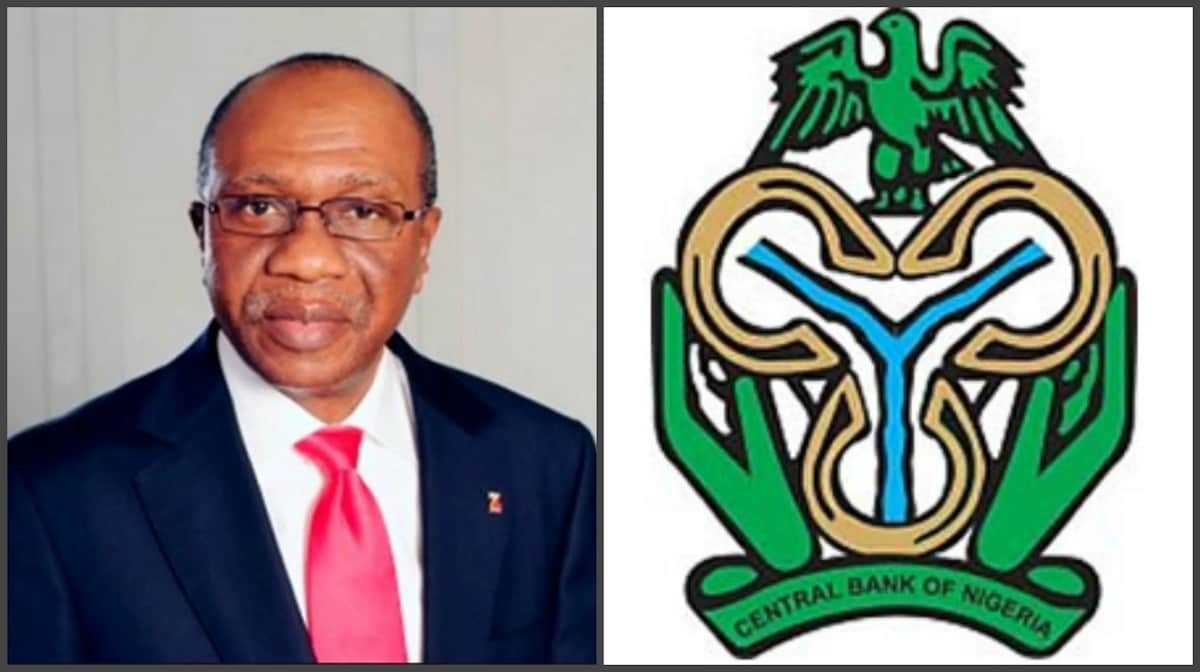
Still, these interchanging regimes continued in Nigeria depending on the available foreign reserves, capital inflows and current account balances. Nigeria’s forex crisis worsened in the 1980s when the US economy pursued Nigeria to devalue its currency by 10% and other scenarios. However, some attention will be given to the last ten years or so, particularly the administration of President Muhammadu Buhari or the reign of Godwin Emefiele as the CBN Governor (2014 – 2023). Some reflections would also be made on earlier antecedents before the Buhari’s and current administrations.

Nigeria has pursued two dominant exchange rate regimes: the Retail Dutch Auction System (RDAS) and the Wholesale Dutch Auction System (WDAS). The RDAS is an exchange rate regime introduced in Nigeria in 1987. It focuses on buyers (end-users or customers) of Forex (USD) to bid for the prices, and the marginal bidder is supplied with the quantities by the CBN through authorized dealers. Under the RDAS, the inept dealers are supplied less, while the highest bidders are penalized for rent-seeking and invitation for depreciation. 

The WDAS, on the other hand, is an exchange rate regime targeted at maintaining the gains of the RDAS and the continued liberalization of the forex market. The WDAS came into operation in Nigeria in February 2006 and allows authorized dealers to buy forex on their accounts rather than on behalf of end-users. Also, the authorized dealers are carefully watched by the CBN, and the dealers are also allowed to trade in the interbank forex market. During that time, the CBN pursued other special interventions of forex sales to Deposit Money Banks (DMBs) and direct sales to licensed Bureau de Change (BDCs). The CBN further mandated that DMBs increase Business Travel Allowance (BTA) and Personal Travel Allowance (PTA) from $2,500 and $2,000 to $5,000 and $4,000 per quarter, respectively. All these policies were sustained in positive directions as the naira continued to appreciate by 2.6%, 8.7% and 5.8% for 2006, 2007 and 2008, respectively.

However, at the beginning of 2009, there was an observed forex policy reversal and the reintroduction of RDAS to reduce capital outflows and depletion of foreign reserves. The interbank trading segment was suspended. This was followed by sales restriction of forex to oil companies and government agencies and sales of forex to BDCs. But towards the end of 2009, the CBN called for recapitalization of BDCs in what they call ‘Class A’, while those that did not recapitalize are called ‘Class B’ BDCs. Both ‘Class A’ and ‘Class B’ BDCs can bid a maximum of $1 million and $250,000 respectively.

Similarly, by 2016, Nigeria’s forex market was further liberalized. During the period, the average naira-dollar exchange rate was N197/$ at the interbank window, representing a depreciation of 18.7% (as the exchange rate was N160/$ before 2016). However, one worrying thing remains: the premium between the interbank and BDC sections was about 41.5%. After this, some other forex regimes were still embraced under the administration of President Buhari and Godwin Emefiele. For instance, forex primary dealers (FXPDS) and non-FXPDS were introduced into the forex market in 2017.

In addition, longer-term derivatives like forwards trading from 1 to 3 months tenor and up to 2 years were introduced. The exchange rate was relatively stabilized at averages of N231.76/$ and N351.82/$ at interbank and BDCs, respectively. This has created many arbitrage opportunities for those with access to the interbank rates to continue to worsen the forex market. Such a trend continued for 2020, 2021, 2022 and until 2023. For instance, as of March 2023, the official rate was N462/$, while in the black market, it was an average of N750/$. 

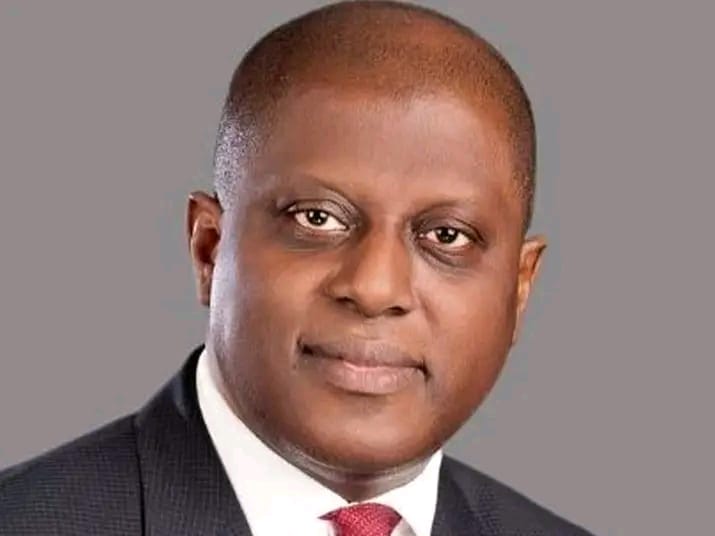
The sacking of Emefiele as the CBN Governor and the appointment of the acting CBN Governor, Mr Shunobi, in June 2023, where the latter tried to close the gap and arbitrage opportunities, moved the official rate from N474/$ to N664/$. With the appointment of substantive CBN Governor in September 2023, Mr Cardoso, the apex Bank, moved on with complete deregulation of the forex market, and this has led to incessant depreciation of the naira to a historic level of N1,300/$. However, it now appreciates an average rate of N1,000/$ and other rates depending on information and locations.

The next thing to talk about is the proposed solutions to the lingering naira-dollar crisis. However, it is important to note that the CBN’s recent and previous exchange rate policies are floating in nature or simply deregulating the forex market, and this is counterproductive as it has not provided the desired results, especially recently. This is because floating regimes are usually for export-dominant countries such as China, the United States, Japan, Germany, India, Russia and Saudi Arabia, among others, as argued by the Mundell-Fleming model. Nigeria is a predominantly import-dependent economy. As such, depreciations affect inflationary levels in the first round (exchange rate pass-through to inflation) and at the ‘second-round’, popularly known in the current literature as the ‘second-round effect’.

To end this submission, the CBN needs to do one or two things to exit from the naira-dollar crisis, and these include:

(1) Invite a small but huge ‘Conference of the Parties’ (COP) to deliberate and take appropriate decisions for implementation immediately;

(2) Under the COP, dollarization with its components; official dollarization, unofficial dollarization, partial dollarization, etc should be reviewed;

(3) Hard-peg exchange rate regime should be deliberated;

(4) Managed-floating regime should be discussed;   

(5) Most importantly, sources of the forex demand pressures must be exposed.

Baffa Kabiru Gwadabe wrote from Bayero University, Kano, via bkabirugwadabe@gmail.com.
CBN debunks rumours of naira redenomination

By Sabiu Abdullahi 

The Central Bank of Nigeria (CBN) has debunked rumors of a naira redenomination in the near future. 

In a statement, which was signed by the bank’s Director of Corporate Communications, Isa AbdulMumin, on October 31, 2023, the apex bank states that the contents of a text message circulating widely suggesting that the CBN plans to redenominate the naira in January 2024 are “misleading.” 

It further states that the authors of the text message “modified text eked from an old policy move by a previous CBN Governor in 2007 to make it appear recent.”  

The CBN advised the public to ignore the rumors, as they are “speculative and calculated to cause panic in the polity.”

The bank also stated that any reforms to the naira would be subject to “laid down procedures in line with the provisions of the CBN Act, 2007.”

Defending the Naira: A political perspective

By Ibrahim Isa Wada

When the current administration was advised by some economic experts to withdraw the subsidy on fuel and allow the Nigerian Naira to find its own value in the international arena, I got so much worried for fears of what would be the outcome. Being a nonexpert on economics, banking or finance, but only a bloody retired broadcast regulator with a fair understanding of day to day current issues, I decided to drop this piece and I hope it will be carefully considered by the experts. All I know is that, life is so hard for all of us since the Naira decided to take a flung and the fuel prices shoot up.

Sadly, some of the experts disappeared while others started to blame the past administration and/or their village people for making our lives so miserable.

Defending the value of the Naira amounts to defending the Tinubu/Kashim administration, and surely the interest of the Nigerian people.

How can any government, businesses or persons successfully plan and execute meaningful projects; how can Nigeria join economic groups, like the BRICS, with such a rickety currency?

I understand that the value of the Nigerian Naira is a function of her balance of trade. That is for the Naira to be strong and stable, the total value of goods and services Nigeria imports must be the same or less than the value of goods and services Nigeria exports over the period of time.

In the present circumstances, we tend to import almost everything including PMS, and even charcoal for smoking Shisha! While we export gold and dollars in cash etc, to safe havens. To be frank, any Nigerian leadership that wants to succeed must have a strong and stable Naira to begin with, which can be achieved by taking the following measures, among others:

1) Bring back the policy of Export Promotion and Import Substitution of the late 70’s.

This should be done with vigour. Any product that could be manufactured in Nigeria shall not be easily imported into the country, while all products that can be exported should receive a boost from the government.

There are means and ways to manuver around international trade politics, like the WTO, to achieve that.

2) Formalise all international transactions, including our transborder trade with ECOWAS and other African countries. Currently the Nigerian Central Bank serves as the unofficial African Central Bank, providing the foreign exchange requirements for many African countries that route their trade through Nigeria.

The trade formalization entails the systemic deployment of adequate personnel and infrastructure that would make international trade between Nigeria and other countries smooth, yet documented.

3) The CBN, Commercial Banks and Bureau De Change operations should have a joint universal forex transactions software that will ease, unify and speed up forex trading.

4) From 3 above, all foreign currency transfers including PTA above $250 must be in digital form.

5) Also from 3 above, the commercial banks and BDC Forex Operator window should capture a basket of about seven major foreign currencies that Nigeria transacts in, i.e Dollar, Yuan, Euro, Pound, CFA, Saudi Riyal and Dirham.

Therefore the BDC operators should have multiple currency accounts with their banks to receive and transfer funds in digital form.

6) The Nigerian government should be bold enough to block all foreign exchange leakages, in form of waivers and favours to individuals and institutions.

7) Develop key institutions targeted towards the elimination of Forex Guzzlers thus:

a) Establish more private universities to reduce students high foreign exchange remittances.

b) Establish more world class hospitals to save foreign exchange from medical tourism.

c) Establish companies for the local fabrication of low technology agricultural and industrial machinery to reduce foreign exchange outflow.

d) Fuel imports should stop at the shortest possible time, by developing more modular refineries, privatising existing ones and ensuring the early take up of the Dangote refinery.

8) In line with the Export Promotion and Import Substitution Strategy, invest heavily in agriculture to reduce food and dairy products import, as well as encourage the exports of cocoa, cashew nuts, sesame seeds, beef, etc.

This is my political perspective of the basic economic issue, because if the politicians fail to defend the value of the Naira and the poor, they will fail utterly in politics.

Ibrahim Isa Wada, writes from Kano, Nigeria. He can be reached via; ibrahimisawada@gmail.com

Cordoso to clear dollar debts, enhance transparency as CBN governor

By Ahmad Deedat Zakari 

The new Governor of the Central Bank of Nigeria, Olayemi Cardoso, has disclosed some of his plans for the apex bank. 

He disclosed his plans on Tuesday at the Red Chamber of the National Assembly during his confirmation screening. 

Mr. Cordoso promised to prioritise clearing the apex bank’s backlog of unsettled foreign exchange obligations in the near term. 

Cardoso also promised to enhance transparency, fix corporate governance, and ensure confidence in the autonomy and integrity of the bank. 

“We need to promptly find a way to take care of that. It would be naive for us to expect that we’ll be making too much progress if we’re not able to handle that side of the foreign exchange market,” he said. 

The new CBN governor said he would maintain price stability, revert to evidence-based monetary policies, and discontinue his predecessor’s unorthodox monetary policies to bolster the country’s naira currency. 

Cardoso takes over the leadership of the apex bank as the nation battles several economic challenges and falling economic indices, with the naira nearing 1,000/$ at the parallel market.

Just In: Tinubu suspends CBN governor

By Muhammadu Sabiu

President Bola Tinubu has approved the suspension of Godwin Emefiele, the governor of the Central Bank of Nigeria. 

Willie Bassey, Director, Information Office of the Secretary to the Government of the Federation, said in a succinct statement on Friday night that it is in response to an investigation being conducted by his office and upcoming financial sector reforms. 

According to media sources, Emefiele has been instructed to immediately transfer control of his office’s operations to the deputy governor (Operations Directorate), who would serve in that capacity until the inquiry and changes are complete. 

Recall that there were many controversial policies that were introduced by the apex bank under the leadership of Mr. Emefiele. One of the policies that brought about the change of the Nigerian currency was seen by many people as an effort against the candidature of Bola Tinubu during the last general elections. 

On Naira note redesign: tale of a University student

By Abdulbasit Toriola

I am Abdulbasit – an undergraduate student at the University of Lagos. I first heard about the CBN’s plan to redesign Naira from a hostel mate while returning from the mosque one evening. Soon, the news went all over. The boys of Biobaku Hall, my hostel, quickly picked up on it. It became a good subject for late-night arguments in a few rooms (after Messi-Ronaldo debates). I suppose the arguing parties, like me, were wondering how a change in currency design would help augment Naira’s depleting value against the US’ Dollar and other strong currencies. The Central Bank’s motive, however, was different. According to a CBN handbook I read, the redesigned notes were to help check counterfeiting, straighten the economy, reduce the expenditure on cash management, promote financial inclusion, and enhance the CBN’s visibility of money supply. These – are good benefits, anyone would say.

It was not until January 31st that we started bearing the brunt of a new cash policy. Prior to this, immediately after its launch, we had seen from a viral BBC post what the new notes were like. Some of us said the notes were a bleached version of the old. Others said the CBN only dyed the monies, our monies. Our currency had become more of a joke. Apparently, things were unfolding in the background. CBN had given directives that all old banknotes be deposited on or before January 31, while encouraging Nigerians to explore other payment channels. The CBN, literally, put us on a thin, experimental line.

Soon, banks got filled, stacked up like they were market squares. In order to avoid hiccups, they kept their customers queued outside their premises in very long and rowdy queues that almost never moved. They kept their gates shut, too, till noon or afternoon; especially after some branches reported cases of violent protests. It was hard and perplexing. But as young students, we quickly adapted to the virtual alternatives CBN had left us with.

Still, it was hard. Perplexing. But we knew – judging from what we see or hear – that the pain we feel paled in comparison to that felt by those living beyond the walls of a campus. Sometimes, I lay still on my bed imagining what it would be like for market women, for school children, for drivers, for commuters. I remember, again, our hostel coordinator saying this was Buhari’s final ingenious gift to Nigeria and Nigerians. He says the President’s plan, like in 1984, is to checkmate politicians who have stockpiled Nairas ahead of the 2023 General Elections. I nod.

For us, hostel occupants, the deal breaker was an announcement – coming from the VC – ordering everyone to vacate school hostels for the election break. It was the last straw that broke the camel’s back. In the past few weeks, we witnessed the FG shift the deadline to February 8; various NGOs beseeching them for an even longer extension. We also saw the case brought before the Supreme Court. We saw the Court gives an order; we saw them adjourn the court case.

On February 15, the Supreme Court validated their previous order – that the old Naira notes remain acceptable as legal tender. The following day, we woke up to a nationwide broadcast, by the President, stating that only old N200 notes will remain valid till a due date. It was hard. Some of us left the hostel as early as 6:00am to join queues in front of the Nigerian banks. We had to pay commercial drivers in cash or nothing. Many of us stopped attending lectures, and sat/squat in front of bank ATMs instead. Cash was scarcer than ever. Outside campus, POS outlets had their places shut. Those that opened, literally, sold us the new Naira – they were charging exorbitantly. We looked everywhere for a way. And when we finally found one, we packed our bags, hoping silently that home would be good to us.

CBN hikes interest rates to 18%

By Muhammadu Sabiu 

The benchmark interest rate will rise by 50 basis points to 18% following a vote by the Monetary Policy Committee (MPC) of the Central Bank of Nigeria (CBN).

Godwin Emefiele, the governor of the Central Bank of Nigeria, revealed this while reading the communiqué from the second MPC meeting of the year on Tuesday in Abuja.

In a statement to the media following the two-day meeting, Emefiele stated that the committee had decided to maintain the asymmetrical corridor around the MPR at +100 and -500 basis points.

According to the governor, the small increase is intended to lessen the impact of inflation and other economic problems.

Since April 2022, when it was 11.50%, the MPR has been increasing.

The rate affects lending and inflation rates, which, when raised, have an adverse effect on the rise in the cost of goods and services.

Just In: CBN reacts to Supreme Court’s judgement, says old naira notes remain legal tender

By Muhammadu Sabiu 
 
The Central Bank of Nigeria (CBN) states that the old N200, N500, and N1000 notes are still valid until December 31, 2023.
 
The CBN spokesperson Isa Abdulmumin made the announcement in a statement on Monday.
 
The statement reads, “In compliance with the established tradition of obedience to court orders and sustenance of the Rule of Law Principle that characterized the government of President Muhammadu Buhari, and by extension, the operations of the Central Bank of Nigeria (CBN), as a regulator, Deposit Money Banks operating in Nigeria have been directed to comply with the Supreme Court ruling of March 3, 2023,” the statement reads.
 
“Accordingly, the CBN met with the Bankers’ Committee and has directed that the old N200, N500 and N1000 banknotes remain legal tender alongside the redesigned banknotes till December 31, 2023.
 
“Consequently, all concerned are directed to conform accordingly.”

CBN’s wrong timed cashless policy: my bitter experience

By Abubakar Umar

On Saturday 18/2/2023 being our training day for Civil Society Situation Room Election Observers that took place in Dutse, I left my room at exactly 7am and rushed to Hadejia old Motorpark. Without a delay, I got a car that is traveling to Dutse and got seated. After waiting for other passengers to come before the car took off for some couple of minutes the conductor asked for transport fare. I said I wanted to make a bank transfer. The conductor said they don’t have an account to receive the money. I desperately brought out the last N2,000 new notes from my pocket, gave him and collected my change of N600 unsure of how I can afford to come back in such a situation.

At the end of the training, I immediately left the venue with a desperate face looking for where to get cash. I went to where banks are located in Dutse but to my surprise, all banks were closed and no single person was standing near the Automatic Teller Machines of all the banks, except CBN which is open only to collect old notes.

With a tired body and a desperate mind, I just went straight to Dutse’s modern Motorpark. On arrival, a car traveling to Hadejia is almost full and just waiting for one passenger. On seeing me, they asked me to enter and I told the driver that I didn’t have cash and wanted to make a bank transfer. The driver said he doesn’t accept transfers. I begged him and the conductor to allow me in, but they both seemed not to care, which made me to move aside and wait. 

I was there like a statue, 3 cars left for Hadejia while I was there standing and watching. The NURTW official kept saying they don’t accept transfers and we waited for almost 2 hours.

Luckily, 3 more of my co-trainees arrived at the Motorpark and they too didn’t have any cash with them. Another woman arrived too without cash. Even then, they refused to accept the transfer. 

At last we saw one car was carrying bags of rice. We gathered and begged the driver. The driver, after refusing, finally agreed and gave us someone’s account and asked us to gather the money in the account of one of us and send it to him in one transfer. I was the first to successfully transfer the money because I was using an OPAY account which has a very good network at the moment.

In addition to the time we wasted begging them, we have to wait till they confirm the receipt of the payment before we took off. The person whose account we gathered the money was using UBA Bank trying to make the transfer using USSD code. When he couldn’t, they all begged me to send 5k to the account given to us by the driver if I have it in my account and later the other person would send back to me, when there is network. 

To avoid arriving late during this unsecured time, I agreed and transferred. The driver started the car. While on our way, the driver claimed that they didn’t receive the alert and asked me to check my balance. I showed them the receipt and everyone saw it including the driver. We continued the journey till when we arrived at Kafin Hausa, the driver stopped and insisted that they must receive transaction alert before he can continue. They gave me phone number of the person whom the account belongs to and I sent the receipt via WhatsApp. He read it and claimed that we have to copy the transaction alert (SMS) and send to him. What if someone manipulated the text and sent to him? I said Opay doesn’t send SMS alert, rather only email and Application notification which I showed to all including the driver. He then agreed and continued till we reached Hadejia. He stopped again at Kwanar Jama’are for the same issue. We all insisted that they check their bank balance.

The driver then took us to a bus stop, we alighted thanked him.

The next day (today morning), I received almost 10 missed calls from the person whose account the driver gave us. I texted him and asked what is it he wanted and he replied I have to pay the money so he will stop calling me. I said I already paid, sent him receipt in the presence of the driver who brought us and my fellow passengers all saw it. If there’s any trouble, we may need a ‘bank statement’ to support his claim. Since I sent that message to him, he hasn’t called back again.

How on the earth on the eve of cash scarcity and cashless policy an official Motorpark (State level) doesn’t operate with POS devices? Where is NURTW? Where is the State Ministry of Transport? Where is the State Government itself? Does the President really care about people’s situation? 

Abubakar Umar Gbs

Again, El-Rufa’i orders collection of old Naira notes in Kaduna

By Sumayyah Auwal Ishaq

The Governor of Kaduna State, Malam Nasiru Ahmad El-Rufa’i has ordered ministries, agencies and departments in the state to accept old and new currency.

In a statement signed by the Special Adviser, Media and Communication, Mr. Muyiwa Adekeye said that, “In line with the subsisting order of the Supreme Court, the Kaduna State Government has directed its ministries, departments and agencies to ensure that their collection agents continue to accept payments made in all denominations of the naira, old and new”.

It further stated that “the laws of Kaduna State do not allow personnel of government agencies to be involved in cash collection of revenues. The collection agents authorised by state government agencies do offer citizens a route for cash payment, and are expected to comply with the subsisting court order”.