Borno State

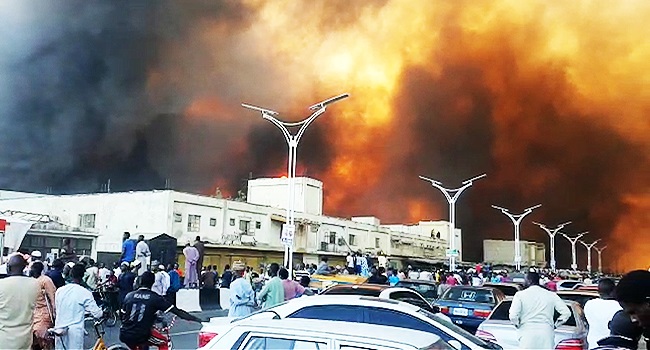
Again, fire razes Borno markets

By By Abdullahi Khairalla

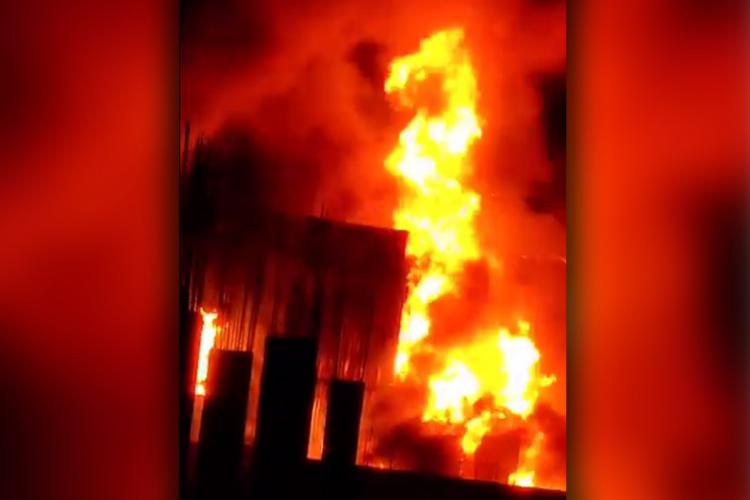
In the early hours of today, the people of Maiduguri, Borno State, woke up with the sad event of an unfortunate mishap of fire incident at Maiduguri Gamboru market, which led to the destruction of properties worth millions of Naira.

This has thrown the people of the metropolis into a frenzy as they are yet to come to terms with the losses incurred by the Monday Market inferno a few weeks before.

Similarly, another fire accident occurred in Biu local government area. The town’s central market was also engulfed by fire, bringing chaos to the people in the area and surrounding.

This is happening days before Ramadan, a period associated with hikes in the prices of goods and services, which may lead to untold hardship.

Authorities have yet to speak about the incidents as during this report. However, this might be due to ongoing gubernatorial and state assembly elections today.

Monday Market Inferno: Measures to prevent a recurrence

By Abubakar Shettima

Maiduguri Monday Market is the main market situated in the heart of Maiduguri, Borno State. It was established in 1979 by the then administration of Mohammed Goni of blessed memory.

Since then, it has accommodated thousands of traders and several patronisers from Niger, Chad and Cameroon, among other countries. 

Within its existence, the market had recorded a series of major and minor fire outbreaks, resulting in the loss of millions of naira.

Notably, the state is steadily recuperating from its economic hardship orchestrated by insurgents–for a decade-plus-long. Then comes the recent fire outbreak that engulfed the entire market. 

While sympathising with all the affected businessmen, the Borno State government and the management of the market, it’s pertinent to devise some stringent measures, if carefully considered, will prevent future occurrences.

THEY ARE AS FOLLOWS:

1. It is exhilarating to learn that the market has an existing plan. That alone simplifies the equation we ought to deploy in tackling future disasters. As a matter of urgency, the management should adhere strictly to the original market plan. Ensure no one trades outside the purview of the plan.

2. Construction of a Firefighters Station within the market. This helps significantly and ensures timely response in order to control and curtail the widespread destruction whenever an inferno occurs. Although we are not praying for that to happen.

3. Redesign and modernise the market. Many of the traders are habitually attached to the market in question. On this basis, the government should construct—if need be— a two-storey building. Allocate the ground and first floors for business, while the second floor serves as a store. This will accommodate a large number of tradesmen.

4. Provision of Fire Hydrate in strategic locations within the market. This has been the practice in marketplaces, residential areas, and corporate organisations.

5. All petty traders occupying pathways and tarred roads within the market—hitherto designed to ease vehicular movement—should be allocated shops in the newly built market along Bama road, or they should be convinced to relocate to Bolori market, Abba Ganaram market, Muna or Kano park. Thus, It depopulates the market and brings about easy access. 

6. To achieve all these, a competent supervisory team must be set up to supervise and punish accordingly if one is found trading at a restricted point. The team will also determine the effectiveness and efficiency of policy and laws governing the operation within the market and its environs.

Abubakar Shettima can be contacted via abubakarshettima57@gmail.com.

Shettima’s legacy: A brief look at home 

By Lawan Bukar Maigana 

“Home is wherever you leave everything you love, and never question that it will be there when you return.” – Leo Christopher

My two-week stay in Borno after being away for a year has exposed me to some of Governor Babagana Umara Zulum’s developmental projects across the Maiduguri Metropolitan Council. I have seen the ongoing reconstruction and construction of quality drainages and roads. The expansion of roads at Monday Market, Bulabulin Alinkotoko and Gwange Areas, among other places in the metropolis, is commendable and timely. It has been long overdue. There would be no traffic jams when the projects are completed, and people will have easy mobility within the metropolis. 

The state capital has however been in total blackout for the past two years since the destruction of utility poles along Damaturu road by the Boko Haram murderers. It is on record that the governor has spent a lot of resources on restoring electricity in the town, but all efforts have been consistently sabotaged by the terrorists. Their defeat and displacement have however supported the restoration of light in parts of the metropolis. 

My neighbour told me that they enjoy a minimum of 4-hour power supply daily. That is far better than being in a total blackout which the people endured for years.  

“They mostly restore electricity after Magrib and interrupt it before midnight. That is how we manage it,” he said. 

However,  I have heard many people bitterly complaining about the high rate of unemployment that is becoming a threat to the fragile peace of the state. The state has limited opportunities for youth. It is said that criminal activities likely thrive in places where a larger population of youths are restive and jobless. Therefore, Governor Zulum should introspect and start focusing on job creation. 

My interaction with some young people has made me realise that opportunities are limited in Maiduguri at the moment. One of them told me that even becoming a labourer is now not an easy task. According to him, the only sustainable and reliable job is tricycling.

The very day I got to Maiduguri, I saw campaign banners and posters everywhere courtesy of young people who were either hungry for power for the sake of it or living off godfathers. That is not bad, but it would have been better to invest their youthful energy and time in more productive ventures like learning a craft, acquiring a skill or doing business, each of which can stand the test of time. 

The state government has invested a lot in infrastructural projects which are spread across the state. However, Borno needs a lot of investments in human capital if the state must recover from the many years of destruction caused by the Boko Haram sect. 

In terms of business, the economy is struggling. Families have accused marketers, especially foodstuff sellers, of overpricing. They accused them of hiding under the exchange rate in the country to unjustly increase the price of goods and services in the state. They want the market authorities and state government to work together to ensure that marketers stick to the prices of goods without any corrupt changes. 

Shettima’s Legacy 

This is another opportunity to recall that the immediate past governor of the state, Senator Kashim Shettima, put about seven production firms in different parts of the state, and they were meant to create jobs, eradicate poverty and generate revenue for the government. 

The plants include Tomato Plant, Garri Plant, Water line Plant, Solar Panel Plant, Onion Dehydration Plant, Corn Chips Plant, Plastic Plant and others. Out of all the plants, only the plastic plant is functional, and it has created jobs for an appreciable number of youths in the state. 

Aside from these plants, the state has other abandoned industrial establishments that can help generate revenues for the state as well as create job opportunities for youths. Why can’t we invest in those firms to overcome joblessness? Borno should learn from Kano, Kaduna, and other states that build firms to boost their revenue and provide jobs for their people. Borno state should not only build these factories but sustain them and take advantage of them, not abandon them. 

It is high time Governor Zulum directed his attention towards the establishment and reformation of institutions that can accommodate jobless youths and give their lives meaning. 

The fact that a lot of these firms are already in place, having been built by Senator Shettima, is a huge advantage for the present administration. Aside from the advantages of having those plants fully operational to the state, Governor Zulum should be more interested in sustaining the legacy of his boss and predecessor. 

Lawan Bukar Maigana writes from Abuja and can be reached via email: Lawanbukarmaigana@gmail.com.

Boko Haram commanders surrender in Borno

By Muhammadu Sabiu 

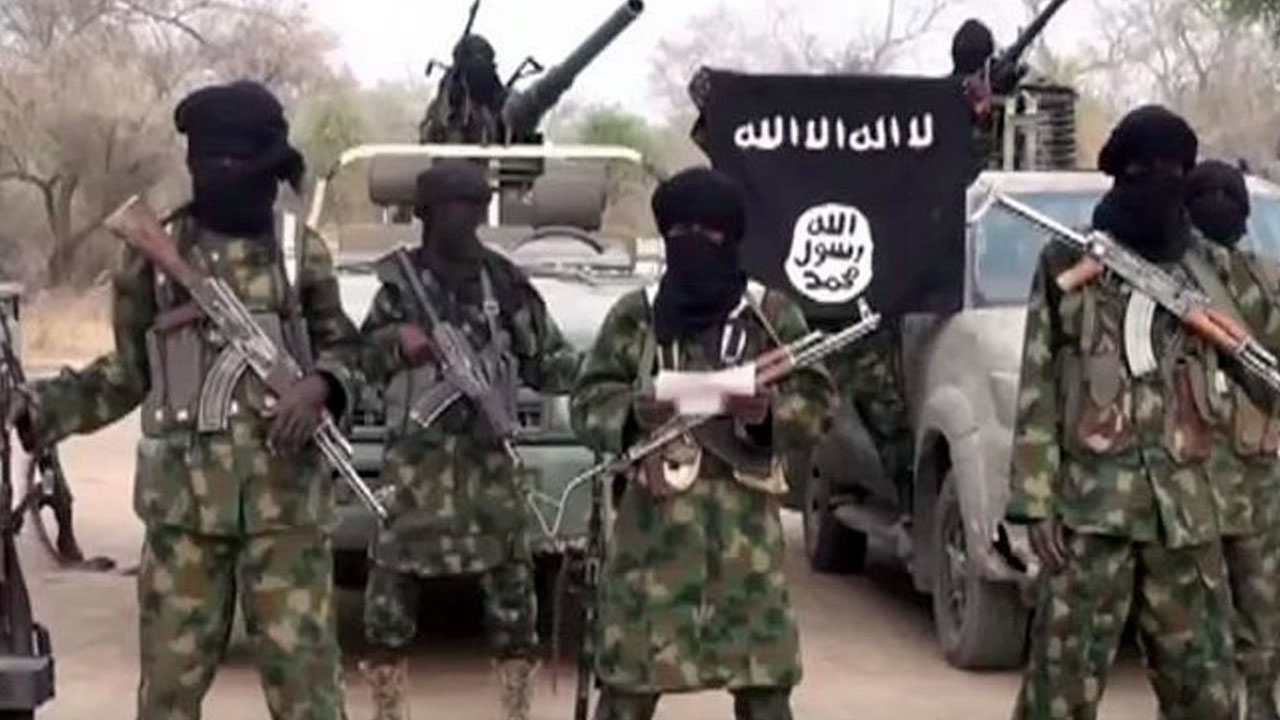
Four prominent members of Jam’at Ahl as-Sunnah lid-Da’wah wa’l-Jihd, popularly known as Boko Haram, have turned themselves into Nigerian forces in Borno State.

Commanders Mala’ana (Khalid), a Governor, Abu Dauda (Munzir), Modu Yalee (Commander), and Bin Diska (Nakif) submitted to Operation Hadin Kai (OPHK) soldiers on December 12, 2022, when they were patrolling the state’s Gwoza local government area.

This fresh intelligence reveals that the insurgents have emerged from the Sambisa forest where they had been hiding and are now waging terror attacks against the state, according to Zagazola Makama, a Counter-Insurgency Expert and Security Analyst in the Lake Chad region.

They once served as leaders at the Njimiya camp under Abubakar Shekau. 

Nevertheless, during the invasion of the Sambisa Forest in May 2021, they disarmed and joined ISWAP at Lake Chad, which finally led to Shekau’s demise.

The four Commanders later abandoned ISWAP and fled to Sambisa, where they established a camp and started acting independently.

They were forced to surrender out of fear of being wiped out on the battlefield by a combination of a protracted, increased bombardment on terrorist hideouts and rivalry strikes.

Meanwhile, 83,000 Boko Haram fighters had been captured and were being treated for rehabilitation in Borno State, according to Major General Christopher Musa, the OPHK Theatre Commander.

Cholera kills 20 surrendered Boko Haram fighters

By Uzair Adam Imam

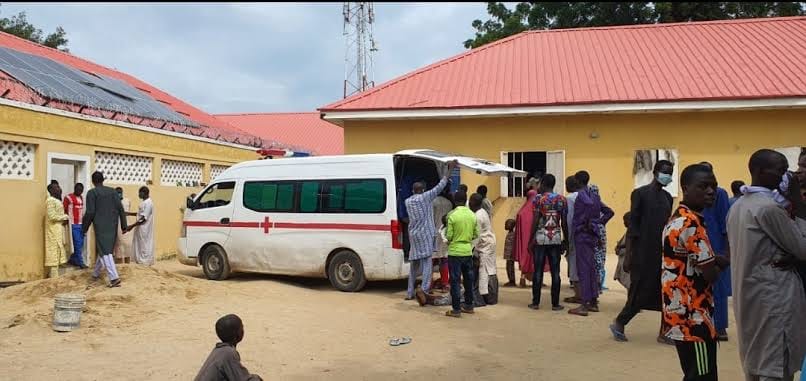
At least 20 surrendered Boko Haram fighters have died as a result of cholera outbreak that stormed Borno State.

A source told journalists in Borno that health workers with the support of Non-Governmental Organisations and the World Health Organisation are trying to control the fatalities.

He said, “At least 20 Boko Haram surrenders have died as a result of cholera outbreak in Hajj and four others died in Bama camp. 

“Also, three reportedly died in the Muna Garage IDP camp. Nearly 1,000 cases have been reported so far, and hundreds are currently receiving treatments in various health centres,” he added.

However, in what appeared to have contradicted the earlier statement, a top ministry of health staff, said the figures were incorrect.

The staff who pleaded for anonymity told journalists that only 11 repentant Boko Haram insurgents and three others in the Muna Garage IDP camp were killed by cholera, not 20 people.

He stated that, “the ministry and its partners are on top of the situation.”

The Daily Reality gathered there are about 12,000 Boko Haram fighters that have laid down their arms and surrendered to the troops of the Nigerian Army in Borno State.

Scores killed in ISWAP, B/Haram rival clash in Borno

By Uzair Adam Imam

A rival battle broke out between the late Abubakar Shekau’s Boko Haram faction and Islamic State West Africa Province (ISWAP) militants.

The Thursday incident also led to the killing of notorious commander Kundu and several other fighters at Dikwa and Bama local government areas of Borno State.

Reports disclosed that Kundu and his team members were on a robbery mission when ISWAP stormed them on six motorcycles, conveying three fighters on each, carrying deadly machine guns.

A security analyst and a counter-insurgency in Lake Chad, Zagazola Makama, confirmed the fight.

He said, “A heavy fight ensued between the terrorists resulting to dozens of casualties on the side of the Boko Haram terrorists, while few ISWAP terrorists were wounded.

“The Boko Haram terrorists took to their heels, leaving their motorcycles to the ISWAP terrorists.”

Boko Haram storm Borno mosque, kill imam, other worshippers

By Uzair Adam Imam

Boko Haram insurgents have stormed a mosque in Borno and killed the Chief Imam of Gima alongside three other worshippers.

The attack occured in the wee hours of Friday where the bandits opened the fire on worshippers who had just finished their fajr prayer.

The terrorists who launched the attack at Ngulde community of Askira-Uba Local Government Area of Borno State where they set ablaze vehicles and looted foodstuffs.

Hon. Bilyaminu Umar, the Councilor representing Ngulde Ward, disclosed the story of the attack in a statement Sunday.

Umar said, “I, Hon Bilyaminu Umar, Councilor representing Ngulde ward in Askira-Uba local government, wish to sincerely extend my heartfelt condolences and sympathy to my entire constituents over the recent heinous attack by Boko Haram insurgents, which occurred on 2nd September 2022.

“Ngulde ward is one of the strongest communities in Askira-Uba local government that gave me the mandate in the last local government election to represent them, since then, I have been enjoying their solidarity and support.

“Hence, I felt deeply shocked in sharing the grief of this latest attack, when most of my people were busy tapping from this year’s farming season.

“The attack, which occurred in the early hours of Friday, September 2, 2022, after fajir prayers, claimed four (4) lives and left many with casualties, while properties and businesses worth millions of naira were also destroyed and carted away by the insurgents.”

“Already, I have informed the Deputy speaker Borno State House of Assembly Rt Hon, Engr Abdullahi Askira, on the unfortunate attack. He promised to convey it to the Executive Governor professor Babagana Umara Zulum for necessary action.”

The Borno State Deputy Speaker, who is also representing Askira-Uba constituency, Abdullahi Askira, confirmed the incident, adding the insurgents numbered to about 20 people.

Zulum and the unveiled dark side of his administration

By ImamMalik Abdullahi Kaga

It’s recently come to the knowledge of most Nigerians (non-residents of Borno State) about the underpayment in the educational sector and a few cases in the health sector, too, in Borno state. This didn’t surprise me as I see bunches of flares trending. If you are sycophant or unpatriotic, you’ll be mum or deny this unfolded truth.

Zulum is indefatigably hardworking and devoted himself to Borno and Bornoans. He has, laboriously, much-needed efforts that deserve accolades, especially in curbing the Boko Haram crisis. A plethora of encomiums were given on his leadership and are still. Compared to the past administration, the status quo of security deserves a ‘must’ commendation. But this, howbeit, will not let us be mum.

As a resident and information hunter, I’ve had numerous encounters with local government teachers, and one common lamentation I got from all is underpayment. Of course, I don’t mean all are underpaid, but most (not underpaid ones) will not deny the grievance of their counterparts, so they tell.

A few months ago, I wrote about the unconstructive criticisms of Alhaji Mohammed Jajari, the PDP’s gubernatorial candidate, towards the incumbent governor. Jajari revealed the flaws bedevilling the state’s educational sector, which captivated the attention of Zulum and Gusau, his spokesman. The indigenes of the southern part of Borno state are on ‘no retreat’ choice to vindictively vote against Zulum cometh 2023 election. (You may denounce this).

Zulum’s administration is blessed with media adepts ready to either publicise the factual account of his efforts or hype his documentary, which will make many Nigerians credulous enough to believe whatever they publish. I think this is not limited to Zulum and his media but every politician.  

I’m calling on those who deny or are discordant with this truth to believe that Zulum is a human. He is not above fallibility as it’s the attribute of all humankind, especially leaders. I also call on the government to intervene urgently on this terrifying and terrible issue because education is the cornerstone in today’s life.

ImamMalik Abdullahi Kaga wrote from Borno State. He can be reached via abdullahiimammalik@gmail.com.

Shettima: The facts and fallacies of Boko Haram linkage

By Lawan Bukar Maigana

The emergence of Senator Kashim Shettima as the running mate to the All Progressives Congress  (APC) presidential aspirant, Ahmed Bola Tinubu, has continued to generate reactions from all corners of Nigeria.  

Most worrisome is the puerile attempt by some ill-intentioned social media influencers to link the former governor of Borno State to Boko Haram terrorism.

What could have influenced the attempt to link Shettima with Boko Haram?

While the paid and unpaid agents behind this vile propaganda have not provided any evidence to link the Senator to terrorism, it is necessary to examine some facts from the apparent fallacies of the opposition and separate the wheat from the chaff.

For instance, while travelling to Gamboru Ngala for a rally ahead of the 2019 presidential and National Assembly elections, Shettima’s convoy was attacked by Islamic State West Africa Province (ISWAP) members and three of his loyalists were killed. Many others sustained various degrees of injuries.

Characteristically, ISWAP claimed responsibility for the attack the following day. However, the then Special Adviser on Communications and Strategy, Malam Isa Gusau, confirmed the identities of the deceased, including a brave soldier and two staunch politicians.

According to Gusau, the attack aimed to attract global media attention to sustain the terrorists’ agenda of instilling fear in citizens and reducing the morale of the gallant troops.

The leader of the Boko Haram terrorists, Abubakar Shekau, who was later killed in an alleged suicide bombing, had threatened Shettima and top government officials in a 56-minute video where he ordered his members and foot-soldiers to kill them wherever and whenever they found them. Could Shettima have a link with Boko Haram, yet he would be the number one on their hit list?

In the video, Shekau boasted as follows: “You, former governor Kashim [Shettima], you present governor [Babagana] Zulum, listen – do not be deceived by your walking without shoes – be careful! If you sing these things we mentioned [Nigeria’s national anthem, national pledge, and the NYSC anthem], you are a disbeliever even if you recite them jokingly.”

It was not surprising that Shettima and Zulum were mentioned in the video because both personalities have consistently spoken against the evil of Boko Haram and worked assiduously with security agents and other stakeholders to decimate them. They have also been supporting Internally  Displaced Persons (IDPs) to recover from the damage the terrorists had done in their lives and relocate them to their respective, original communities.

It should also be noted that Shettima didn’t just stop at appealing to the Federal Government to intensify efforts aimed at eradicating terrorism. He committed enormous resources to support the military with security equipment and dozens of vehicles to ease mobility during operations. Is that a governor that has a link with Boko Haram terrorists?

Born and brought up in Maiduguri, I can authoritatively confirm that Shettima adequately funded the Volunteer Vigilante Youth Groups, popularly known as Civilian Joint Task Force (CJTF) in 2013, who were later trained in counter-terrorism operations, to strengthen the fight against Boko Haram terrorists.

He also provided adequate welfare and logistic support to over 20,000 CJTFs to strengthen the fight against Boko Haram elements. The motivation enhanced the crucial role of CJTF in intelligence gathering, easy identification, and arrest of suspected insurgents, among others. Could Shettima have a link with Boko Haram fighters and yet fund their tormentors?

Before the expiration of Shettima’s tenure as governor of Borno State, he was relentlessly calling for the deployment of military personnel and equipment to curb the threat of the terrorist group in the Northeast.  Considering the cost of the war on terror, Shettima was among the few personalities who persuaded state governors of the necessity of approving the sum of $1 billion from the Excess Crude Account for the counter-insurgency campaigns. He also defended the Federal Government’s plan to ensure the judicious utilization of the fund for the intended purpose.

Could Shettima have a connection with terrorists yet support counter-terrorism financing?

When Boko Haram terrorists destroyed churches in Borno, Shettima provided funds to reconstruct the places of worship and ensured adequate security protection of the areas.

In his testimony to this, the Chairman of the Christian Association of Nigeria (CAN), Borno Chapter, Bishop Mohammed Naga, said: “During Shettima’s visit to these areas, he released N100 million for the rebuilding of some of these churches. A committee was set up for that purpose. I was a member of the committee headed by a permanent secretary, Mr Justus Zare, as Chairman, and I am happy to inform you that presently we have used that money to rebuild 11 key churches which our people are now using. I am surprised to hear some people saying why don’t we rebuild all the churches. We cannot do that because there are many places that are still unsafe.”

Would church leaders praise Shettima if he had a link with Boko Haram fighters!?

In a nutshell, Shettima is neither an ethnocentric leader nor a religious bigot. On the contrary, he is a charismatic personality who believes in equity, justice, and fairness. Moreover, from his engagements and pronouncements, he has consistently advocated peaceful and harmonious relationships among different tribes and religions.

Therefore, it is unfair and unreasonable to link him with Boko Haram terrorism when he, in reality, has been their number one enemy and a prime target for years.

Lawan Bukar Maigana writes from Wuye District, Abuja. He can be reached via Lawanbukarmaigana@gmail.com.
2023 Presidency: CAN hails picking of Kashim as Tinubu’s running mate 

By Muhammad Sabiu

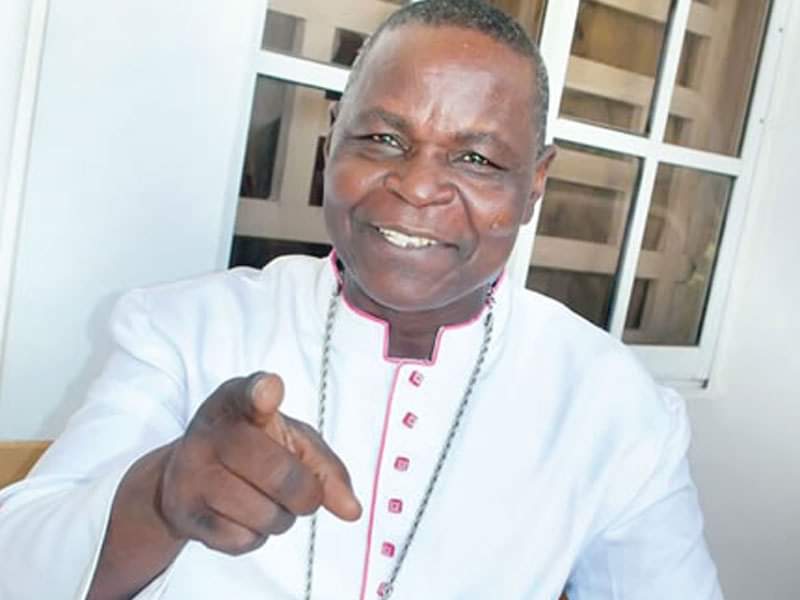
The Borno State chapter of the Christian Association of Nigeria (CAN), under the leadership of Bishop Mohammed Naga, has expressed its joy over the emergence of a former governor of Borno State, Kashim Shettima, as Bola Tinubu’s running mate in the 2023 presidential election.

Recall that Mr Tinubu announced Kashim yesterday as his prospective vice president if the All Progressives Congress (APC) emerges victorious in the next year’s election.

Reacting to the development in a statement, Bishop Naga described Kashim as an unbigoted person, stressing that “those who are not from Borno State may not know, but you and I know better.”

His statement reads, “Gov. Shettima, in the history of Borno State, is the only Governor that has sponsored the highest number of Christian Pilgrims every year since 2011.

“I am speaking boldly without fear or favour because as CAN Chairman, I don’t receive salary or kobo from the Government or any institution, but the facts need to be told.

“For example, when Gwoza people were driven from their ancestral homes, they fled to Maiduguri, and the Governor personally came to CAN Centre in Jerusalem ward two times in June and July 2014. He gave N10 million for their upkeep at first instance, but the victims weren’t many. By the end of October 2014, the IDPs from Gwoza increased to 42,000 in that camp alone. Governor Shettima came again and gave another N10 million.

“He also gave an additional N5 million to Christians from Borno who fled to Cameroon to be returned home.

“Sincerely speaking, as a Christian and a preacher, absolutely, I have nothing to fear about Asiwaju’s picking a Muslim as his running mate because he is not a religious bigot, and I am happy he has made his mind known to the public in the person of his preferred running mate.

“Seeing another presidential candidate applauding him is a plus for him and supporters of Asiwaju. Congratulations to the awaiting president and vice president.”

However, the coming of a Muslim-Muslim ticket from the APC has caused a lot of reactions, with several social media-based activists vigorously kicking against it, citing the sensitive religious atmosphere of the Nigerian society as their reason for resistance.