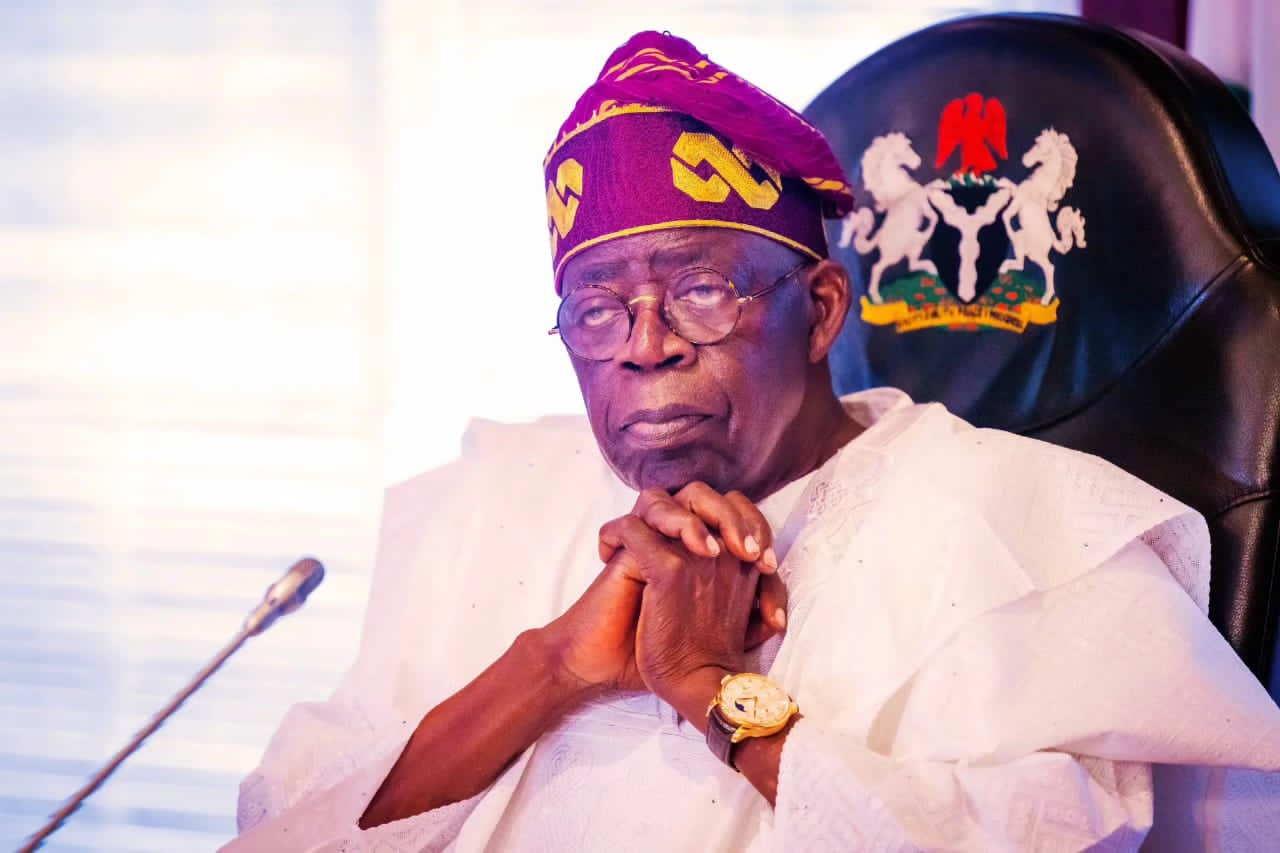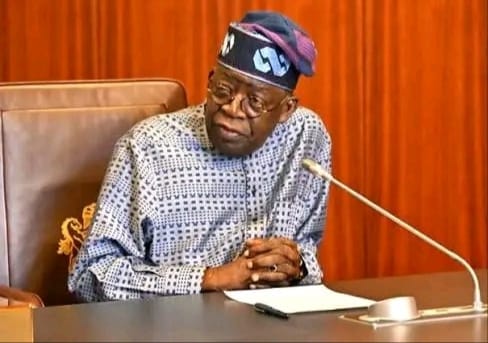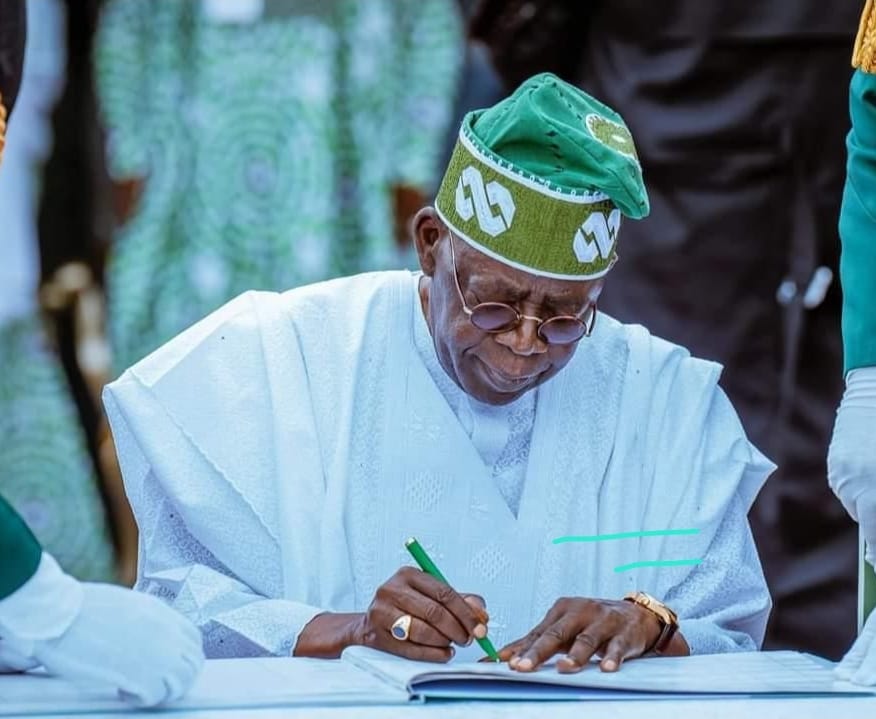
Bola Ahmed Tinubu

Atiku Warns Against Militarising Osun Election, Says Poll Is Test For 2027

By Sabiu Abdullahi

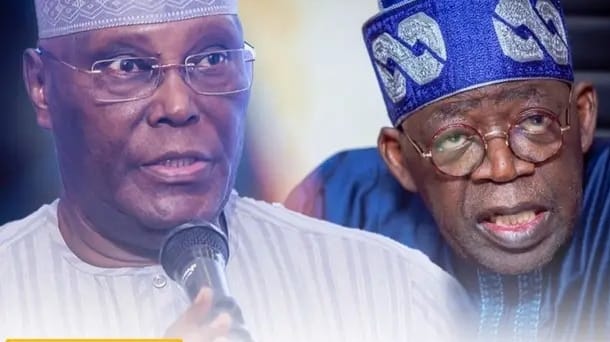
Former Vice-President and African Democratic Congress (ADC) presidential candidate Atiku Abubakar has cautioned against the use of excessive security force or government institutions to gain political advantage in the Osun State governorship election.

Atiku spoke at the ADC National Youth Leadership Summit in Abuja, where he described the August 15 election as an important test of Nigeria’s commitment to credible elections ahead of the 2027 general election.

He questioned the scale of security deployment around the poll, saying the posture appeared closer to a military operation than a democratic exercise.

“Elections are civil engagements, not military operations. Ballot papers are not bullets. Voters are not enemy combatants. Opposition members are not insurgents,” Atiku said.

‘POLICE, MILITARY BELONG TO NIGERIA’

The former vice-president also questioned why similar security resources were not directed towards terrorists, kidnappers and bandits who attack communities and kill Nigerians.

He warned security personnel against intimidating opposition supporters or allowing government institutions to influence the outcome of the election.

“The police belong to Nigeria. The military belongs to Nigeria. INEC belongs to the Nigerian people. None of them belongs to the APC,” he said.

Atiku called on the Independent National Electoral Commission (INEC) to ensure that election materials reach polling locations on time and that eligible voters can cast their ballots without obstruction.

He also urged the commission to prevent what he described as “mysterious glitches, unexplained delays or manipulation” during accreditation, vote counting and the transmission of results.

“The world is watching Osun. Nigerians are watching. History is taking notes. Let the people vote. Let every vote count. And let the will of the people prevail,” he said.

The ADC presidential candidate also spoke about his plans to increase the participation of young people in politics.

He said his political programme would provide that at least 30 per cent of legislative candidates be below 40 years old, with a substantial number below 30.

Atiku urged Nigerian youths to turn their frustration into active political participation instead of limiting their engagement to social media.

“Anger is not an organisation. A hashtag is not an organisation. Your time is not tomorrow. Your time is now,” he added.

I Led Alleged Coup Plot Out Of Patriotism, Not Ambition, Says Army Colonel

By Sabiu Abdullahi


A Nigerian Army colonel, Mohammed Ma’aji, has said his alleged involvement in a plot to overthrow President Bola Tinubu’s administration was motivated by patriotism and concern over the country’s worsening condition, rather than a quest for personal power.

Ma’aji, who has been accused of spearheading the alleged coup plot, cited economic difficulties, poor governance and concerns over the welfare of Nigerians and military personnel as factors that influenced his actions.

“What has happened has a very long history, and it is driven by patriotism and I love the job and country,” Premium Times quoted Ma’aji as saying.

“What has happened has a very long history, and it is driven by patriotism and I love the job and country,” he said.

“As we are all sitting down here, we have our biases and our thoughts and concerns on what was going on in our country from a state of gradual decline up to now, and we are almost at the point of collapse.”

The colonel also pointed to his personal financial difficulties as part of what shaped his concerns about the country.

“Every time I look at how I’m struggling to raise 5 children with my meager salary, I get worried,” he said.

“I attended Army Day Secondary School, but today, how many of us afford to take our children to these schools, and for one reason or the other, which is connected to the bad governance.”

Ma’aji further raised concerns about the treatment of military personnel, particularly soldiers who suffered injuries during combat.

He alleged that some wounded soldiers receiving treatment at the 44 Nigerian Army Reference Hospital in Kaduna were not getting adequate care. He said the situation reflected wider challenges within the armed forces.

According to the colonel, his concerns convinced him that significant changes were necessary to prevent further deterioration in the country.

“The summary of all this is that this action was driven by the desire to have a prosperous nation and country that we all can be proud of. It got to a point that I was worried that if nothing is done, we may not have a country to call our own in the near future,” he said.

Ma’aji said the alleged plan was still at the mobilisation stage when he was arrested. He explained that the intention was to bring together military officers who shared similar concerns about the state of the nation.

“Nigeria was turning into a banana republic right before our eyes. We know that during the era of the military regime, the country was functioning better. I believe that, as it is now, we are on a dangerous trajectory,” he added.

“The plan was to get enough officers of like minds who could participate. We were still at the stage of mobilizing to get more officers involved.

“This team has not been fully formed because there were supposed to be other meetings. There was no D-Day. We were waiting for the availability of resources and more officers and soldiers.”

He claimed that he personally financed a significant portion of the alleged plan, while Timipre Silva was said to have provided about N400 million.

Ma’aji denied any foreign involvement in the alleged plot and said no specific date had been fixed for its execution.

He also denied contacting some senior military officers. However, he said dissatisfaction among members of the armed forces and his unsuccessful promotion attempts were among the factors that contributed to the revival of the movement.

The colonel called for the establishment of a formal avenue through which military officers could present their grievances to the Chief of Army Staff, Waidi Shaibu, without fear of punishment.

He also advocated better salaries, improved welfare packages, stronger pension benefits and better educational opportunities for military personnel. He called for stronger measures against corruption within the country and the armed forces.

Ma’aji also criticised the removal of the fuel subsidy, arguing that the policy should have been phased out gradually.

Following his arrest and subsequent interaction with the panel investigating the matter, the colonel said he had reconsidered his approach and appealed for leniency.

“From the time I have been arrested till now, If I were to be released and these issues in the country persist, I will consider a different approach,” he said.

“We are pleading for leniency and pardon as first offenders. The system should take a deep breath and pardon us. They should give us a chance to mend our ways. We have no other country than Nigeria and no other job.

“This incident has really opened our eyes and has changed our mindset forever. It was not intended to destabilize the country at all.

“Everything we planned was born out of patriotism, love of country, and the desire to have a prosperous Nigeria that we all can be proud of.”

The alleged coup plot, which was uncovered in late September 2025, led to the cancellation of the October 1 Independence Day parade and changes within the military hierarchy.

The development also resulted in the removal of Christopher Musa as Chief of Army Staff at the time.

Residents Hail Tinubu’s Infrastructure Drive as Media Team Inspects Projects

By Abdullahi Mukhtar Algasgaini

Residents of Benue State have expressed strong support for President Bola Ahmed Tinubu’s infrastructure development agenda as a presidential media team concluded an inspection tour of key federal and state projects across the region on Thursday.

The delegation, led by the Special Adviser to the President on Information and Strategy, Mr. Bayo Onanuga, inspected several ongoing and completed infrastructure projects, including the Buruku-Logo Bridge, the Wurukum Overhead Bridge in Makurdi, and the 22-kilometre Makurdi-Gboko Road, which forms part of the Phase II Abuja-Keffi-Akwanga-Lafia-Makurdi Expressway.

The tour, organised by the Renewed Hope Ambassadors with over 40 editors and journalists in attendance, aims to independently assess and document the implementation of key projects under President Tinubu’s administration.

Speaking during the inspection, Onanuga emphasised that the Buruku-Logo Bridge is one of five federal bridges under construction in Benue State, demonstrating the administration’s commitment to utilising borrowed funds for productive infrastructure development.

“This bridge in particular is the fifth bridge the Federal Government is building in Benue State. I think as Nigerians you see that the government has been accused of so many things including taking loans. You can now see where the money is going,” Onanuga stated.

He noted that the 1,754-metre bridge, expected to be completed by December 2027, would reconnect previously isolated communities, reduce travel time, and improve market access for farmers across Benue, Taraba, and Adamawa states.

Residents of the host communities expressed appreciation for the projects, describing the bridge as a “life-saving intervention” that would end years of dangerous river crossings and reduce frequent boat accidents during rainy seasons.

The inspection also covered the 25.6-kilometre Captain Dan Road to the Tor Tiv Palace, the Food Basket Brewery Limited, and the federally-funded rehabilitation of the Buruku-Gboko Water Treatment Plant at Ameladu Headworks.

Benue State Deputy Governor, Dr Samuel Ode, who accompanied the team, commended the Federal Government’s investments and expressed confidence that residents would support President Tinubu’s re-election bid in 2027.

“Actually, this road serves as the gateway between the north of the country and the south. Before now we used to have a heavy gridlock here especially during festivities, so the governor of Benue State approached Mr. President for us to have an overhead bridge here,” Ode said regarding the Wurukum Overhead Bridge project.

“The President in his magnanimity, graciously approved the construction of this overhead bridge. So work has commenced, moving at a very high speed and the people of Benue are happy.”

The tour showcased projects financed through the Renewed Hope Infrastructure Development Fund, with officials assuring that funding remains adequate for timely completion.

ADC Questions EFCC’s Independence After Tinubu Orders Review Of Osun Account Freeze

By Sabiu Abdullahi

The African Democratic Congress has questioned the independence of the Economic and Financial Crimes Commission after President Bola Tinubu directed the agency to return to court and withdraw its order freezing the bank accounts of the Osun State Government.

The opposition party said the President’s directive had raised concerns about the extent of executive influence over the anti-corruption agency.

Tinubu had on Thursday ordered the EFCC to immediately return to court to vacate the order freezing the state government’s accounts.

The President said the commission acted within its legal powers but faulted the timing of the action, which came days before the August 15 governorship election in Osun State.

Tinubu said he felt “deeply embarrassed” by the development because actions taken by federal agencies are often associated with the presidency. He also said no action should create an impression that the Federal Government was attempting to influence the outcome of the election.

The EFCC had earlier defended the freezing of the accounts. The commission said it was investigating alleged mismanagement of ecological and intervention funds by the Osun State Government and had detected suspicious transfers during the investigation.

The commission’s Director of Public Affairs, Wilson Uwujaren, also described the action as a routine measure and rejected claims that it was politically motivated. He cited a similar restriction placed on the accounts of the Edo State Government before its 2024 governorship election.

Reacting to the President’s directive in a statement on Thursday, ADC National Publicity Secretary, Bolaji Abdullahi, welcomed the decision but said Tinubu’s explanation had created additional questions.

“What we find most curious about the statement is the President’s repeated reference to an alleged court order authorising the freezing of the Osun State Government’s accounts,” he said.

“In all of its public statements on this matter, the EFCC never once claimed that it had obtained a court order. The commission consistently defended its actions on the basis of its statutory powers and what it described as its ‘preventive mandate’.

“At no point did it inform Nigerians that a court had authorised its actions. The obvious question, therefore, is: where did the President obtain the information that a court order existed? If such an order exists, why was it never mentioned by the EFCC in its statement while defending one of the most controversial actions it has taken in recent times?

“If no such order exists, why would the president introduce one into the public narrative? It is either the president was misinformed or he had chosen to misrepresent the facts. Either possibility is deeply disturbing.”

The ADC also said the President’s admission that he directed the EFCC to withdraw the matter from court appeared inconsistent with claims that anti-corruption agencies operate independently.

“The President also insists that he does not interfere in the operational activities of anti-corruption agencies, yet in the same statement he publicly announces that he has directed the EFCC to approach the court, vacate the alleged order, and discontinue its case,” Abdullahi said.

“If the President possesses the authority to direct the EFCC to withdraw from court proceedings because the political consequences may affect an election, then it follows that he possesses the authority to direct the commission in other operational matters as well.

“The net implication is that the carefully cultivated argument that these agencies operate entirely independently collapses under the weight of the President’s own statement.”

The dispute comes less than two weeks before the August 15 Osun State governorship election, which has heightened political attention around actions involving the state government and federal institutions.

The ADC said the circumstances surrounding the account freeze and the subsequent presidential directive required further clarification from the Federal Government and the EFCC.

Tinubu Orders EFCC to Vacate Osun State Account Freeze Order


By Abdullahi Mukhtar Algasgaini

President Bola Ahmed Tinubu has directed the Economic and Financial Crimes Commission (EFCC) to immediately vacate a court order freezing the accounts of the Osun State Government, citing concerns over the timing of the action just days before the state’s gubernatorial election.

The President issued the directive on Thursday, August 6, 2026, following the EFCC’s successful application for a court order on August 5, freezing the state government’s accounts.

In a statement from the State House, President Tinubu expressed deep embarrassment over the development, though he clarified that his discomfort was not with the EFCC’s statutory mandate but with the timing of the agency’s action.

“Since assuming office, I have consistently maintained that anti-corruption and law enforcement agencies must be allowed to discharge their statutory responsibilities independently, professionally, without fear or favour, or political interference,” the President stated.

Tinubu emphasized his deliberate policy of non-interference in the operational activities of investigative and prosecutorial agencies, describing strong democratic institutions operating within the confines of the law as indispensable to good governance and the rule of law.

However, the President noted that while he had not been fully briefed on the facts that informed the EFCC’s decision to approach the court, the timing was “inauspicious,” warranting his intervention.

“Osun State is only a few days away from its gubernatorial election. Therefore, nothing ought to be done to give an impression that the EFCC or indeed any other agency of the federal government is being used to interfere with the election,” Tinubu stated.

The President directed the EFCC to “immediately proceed to the court to vacate the order and discontinue whatever action it has instituted against the Osun State Government.”

The intervention comes as political tensions rise in Osun State ahead of the upcoming gubernatorial election, with opposition parties and civil society groups closely monitoring federal agencies’ activities in the state.

BREAKING: Tinubu Approves 30% To 80% Salary Increase for Armed Forces Personnel

By Sabiu Abdullahi

President Bola Tinubu has approved a new salary structure that will increase the earnings of personnel of the Nigerian Armed Forces by between 30 and 80 per cent.

The approval, which will take effect from September 1, 2026, will benefit about 250,000 military personnel, according to a statement issued on Tuesday by the President’s Special Adviser on Information and Strategy, Bayo Onanuga.

The statement explained that the salary adjustment was designed to favour lower-ranking personnel with higher percentage increases.

Under the new arrangement, officers from the rank of Brigadier-General and above, including Major-General, Lieutenant-General and General, as well as officers above the rank of Colonel, will receive a 30 per cent salary increase.

Personnel from the rank of Colonel down to Warrant Officer will enjoy a 50 per cent increase, while soldiers from Private to Staff Sergeant will receive an 80 per cent raise.

The new package will increase the Armed Forces’ annual wage bill from ₦660 billion to ₦924 billion, which represents an additional ₦264 billion.

President Tinubu said the salary review reflects the Federal Government’s appreciation of the sacrifices made by military personnel in tackling banditry, kidnapping and terrorism across the country.

He said, “The men and women who help to keep us safe in our homes must be supported and appreciated in the course of their duties to our nation.”

The President also reaffirmed his administration’s commitment to improving the welfare of troops and strengthening the country’s military capabilities.

“Our administration will continue to prioritise troop welfare and modernise the armed forces by providing the weapons and technological tools needed to discharge their duties,” he said.

Tinubu also stressed the importance of security to national development.

He said, “Our administration believes that no nation can achieve greatness without security. We therefore remain resolute in mobilising all military and law enforcement assets to eliminate security threats and protect the lives and property of all Nigerians.”

The President urged members of the Armed Forces to see the salary increase as a demonstration of the government’s gratitude for their service.

“I urge our servicemen to take our gesture as a sign of our deep appreciation of the services they render to our fatherland.

“Together we shall prevail over the enemies intent on destroying the fabric of our nation,” he said.

Again, Atiku Replies to Presidency, Says Propaganda Cannot Mask Nigerians’ Economic Hardship

By Sabiu Abdullahi

Former Vice President Atiku Abubakar has criticised the Tinubu administration’s defence of its economic policies, insisting that government statements cannot hide the hardship many Nigerians continue to face.

Atiku, the presidential candidate of the African Democratic Congress (ADC), made the remarks in a statement issued on Monday by his Senior Special Assistant on Public Communication, Phrank Shaibu. The statement followed recent exchanges between the Presidency and the former vice president over the government’s economic reforms, borrowing, tax policies and the impact of the removal of petrol subsidy.

The Presidency, through Bayo Onanuga, Special Adviser to the President on Information and Strategy, had defended the administration’s policies. Onanuga argued that one of the major gains of fuel subsidy removal was the significant increase in allocations to states and local governments through the Federation Account Allocation Committee (FAAC).

Responding, Atiku accused the administration of focusing on what he described as public relations and “statistical manipulation” instead of addressing the country’s economic challenges.

He questioned the government’s positive assessment of the economy.

“If the economy is doing so well, why are Nigerians getting poorer?” he asked.

According to him, the government’s emphasis on favourable economic indicators does not reflect the realities facing ordinary citizens.

“The State House celebrates macroeconomic indicators while ordinary Nigerians struggle with microeconomic realities,” he said.

“It speaks glowingly about GDP growth while families skip meals. It boasts of debt ratios while businesses shut their doors. It trumpets reforms while millions of citizens slide deeper into poverty.”

Atiku maintained that the true measure of any government should be the welfare of its people rather than economic figures.

“Governments are not elected to improve spreadsheets. They are elected to improve the lives of their people,” he said.

“Nigerians cannot eat GDP. They cannot cook with debt-to-GDP ratios. They cannot pay school fees with statistical projections.”

The former vice president also rejected the Presidency’s position that critics rely on outdated information. He argued that the effects of the administration’s policies remain evident across the country.

“The Tinubu administration is asking Nigerians to forget the very policies whose consequences they continue to endure every day,” he said.

“Economic policy is not a light switch. The consequences of reckless decisions linger long after the announcements have faded.”

Atiku further questioned why the government continues to borrow despite its claims of improved revenue generation and stronger tax collections.

“If revenue has improved so dramatically, if subsidy has been removed, if tax collection has increased, and if debt servicing has supposedly become more manageable, why does this administration continue to borrow at record levels?” he asked.

He also argued that Nigerians have yet to enjoy the promised benefits of fuel subsidy removal.

“Three years later, Nigerians are entitled to ask: where are those dividends?” he said.

“Instead of relief, they have experienced the highest fuel prices in history, unprecedented transport costs, soaring food inflation, collapsing purchasing power and an economy where millions now struggle to afford even one decent meal a day.”

The ADC presidential candidate criticised the administration’s tax reforms. He said businesses are under pressure because of rising production and operating costs. He added that the government’s performance should be judged by improvements in education, healthcare and living standards.

Citing figures from the Manufacturers Association of Nigeria (MAN), Atiku said 767 manufacturing firms have shut down, while another 335 are operating under distress. He also said manufacturers are holding about ₦2.14 trillion worth of unsold finished goods. He noted that multinational firms such as Procter & Gamble, GlaxoSmithKline, Sanofi and Kimberly-Clark have exited local manufacturing operations.

According to him, those developments provide a clearer picture of the economy than official government claims.

“The true verdict on this administration’s economic policies is not written by government spokespersons,” he said.

“It is written in the silent factories, the abandoned production lines, the shuttered warehouses, the unemployed workers and the empty pockets of millions of Nigerians. No amount of propaganda can erase that reality.”

He urged the Presidency to focus on improving the living conditions of Nigerians instead of defending its economic record through public statements.

“Governments are not judged by the elegance of their press statements or the sophistication of their economic theories,” he said.

“They are judged by whether families can afford food, whether businesses can survive, whether young people can find jobs, whether communities are secure, and whether citizens have hope for tomorrow.”

Shettima Defends Tinubu’s Reforms, Says President Deserves Commendation

By Sabiu Abdullahi

Vice President Kashim Shettima has defended the economic reforms introduced by President Bola Ahmed Tinubu’s administration, saying the president should be applauded rather than criticised for the measures.

Shettima made the remarks on Monday during the Delta State Economic and Investment Summit in Asaba, the state capital.

He also praised Anambra State Governor Chukwuma Soludo for publicly supporting the Federal Government’s economic reforms. According to the vice president, Soludo stood by his convictions during the 2023 presidential election and argued that electoral victory would come through popular support rather than intimidation.

Speaking on the country’s economic outlook, Shettima said Nigeria had moved from a period of limited capital availability to one of growing investment inflows.

“Professor Soludo, you have done a lot of things for the federal government, especially in informing Nigerians where we were coming from — from reserves of $3 billion,” he said.

“When we were experiencing capital plight and scarcity, now we are experiencing capital inflows.

“Our foreign reserves have gone up to over $52 billion and counting in a turbulent world. Even the president deserves commendation and not condemnation.”

The vice president also assured investors that the Federal Government would continue to support genuine investments and work with state governments to remove barriers that hinder business growth.

Official figures show that Nigeria’s foreign exchange reserves stood at $35.09 billion on May 29, 2023, when the Tinubu administration took office. The reserves later rose to $51.03 billion in June 2026, which marked the country’s highest level since January 20, 2009.

World Bank Says 79% of Nigerians Remain Poor or Vulnerable Despite Tinubu’s Claim of Reforms

By Sabiu Abdullahi

The World Bank has stated that about 79% of Nigerians are either living in poverty or remain at risk of falling into poverty despite the economic reforms introduced by President Bola Tinubu’s administration over the past three years.

The assessment appears in the World Bank’s newly approved Country Partnership Framework for Nigeria (2026–2032) and the accompanying Streamlined Country Diagnostic, which examined the country’s economic performance and development challenges.

According to the report, 61% of Nigerians currently live below the poverty line, while 33% are classified as ultra-poor and unable to meet their minimum food needs.

The World Bank acknowledged that the Federal Government’s reforms have improved several macroeconomic indicators. It said economic growth rose from 3.5% in the first half of 2024 to 3.9% during the same period in 2025. It also noted that foreign reserves have exceeded $42 billion, fiscal deficits have declined, and investor confidence has improved.

Despite those gains, the institution said the benefits have not yet translated into better living conditions for many Nigerians because major structural challenges remain.

The report stated: “Thirty-three per cent of its population is ultra-poor (food insecure by age-weighted caloric intake), 61 per cent is below the poverty line, and 79 per cent is near poor (below the poverty line or vulnerable to falling back into poverty).

“Despite recent bold reforms stabilising the economy and laying the groundwork for the Renewed Hope Agenda, significant structural challenges remain,” it said.

House of Representative Shifts Gears on State Police, Backs Tinubu’s Bill


By Abdullahi Mukhtar Algasgaini

The House of Representatives has withdrawn its own constitutional amendment bill seeking to establish state police, opting instead to consider a similar proposal transmitted by President Bola Tinubu’s administration.

The decision came during Tuesday’s plenary session, where lawmakers swiftly gave the Executive-sponsored bill its first and second readings before referring it to the House Committee on Constitutional Review for further legislative action.

The move effectively suspends the House’s earlier initiative as legislators pivot to the Executive-backed amendment, which is expected to undergo detailed scrutiny at the committee stage before returning to the floor for final consideration.

The development marks a significant shift in the ongoing debate over state policing, which has gained renewed momentum amid growing concerns about rising insecurity across the country. While the House had previously pursued its own constitutional amendment on the matter, the adoption of the Executive’s proposal signals a unified approach between both arms of government.

Lawmakers are expected to examine the bill’s key provisions thoroughly, including funding mechanisms, operational frameworks, and safeguards against potential abuse, before the amendment can proceed to the Senate for concurrence.

The passage of the state police bill would require amending the 1999 Constitution to remove policing from the Exclusive Legislative List, allowing states to establish their own law enforcement agencies.