Boko Haram

6 ISWAP insurgents eliminated, arms, other items recovered

By Muhammad Sabiu

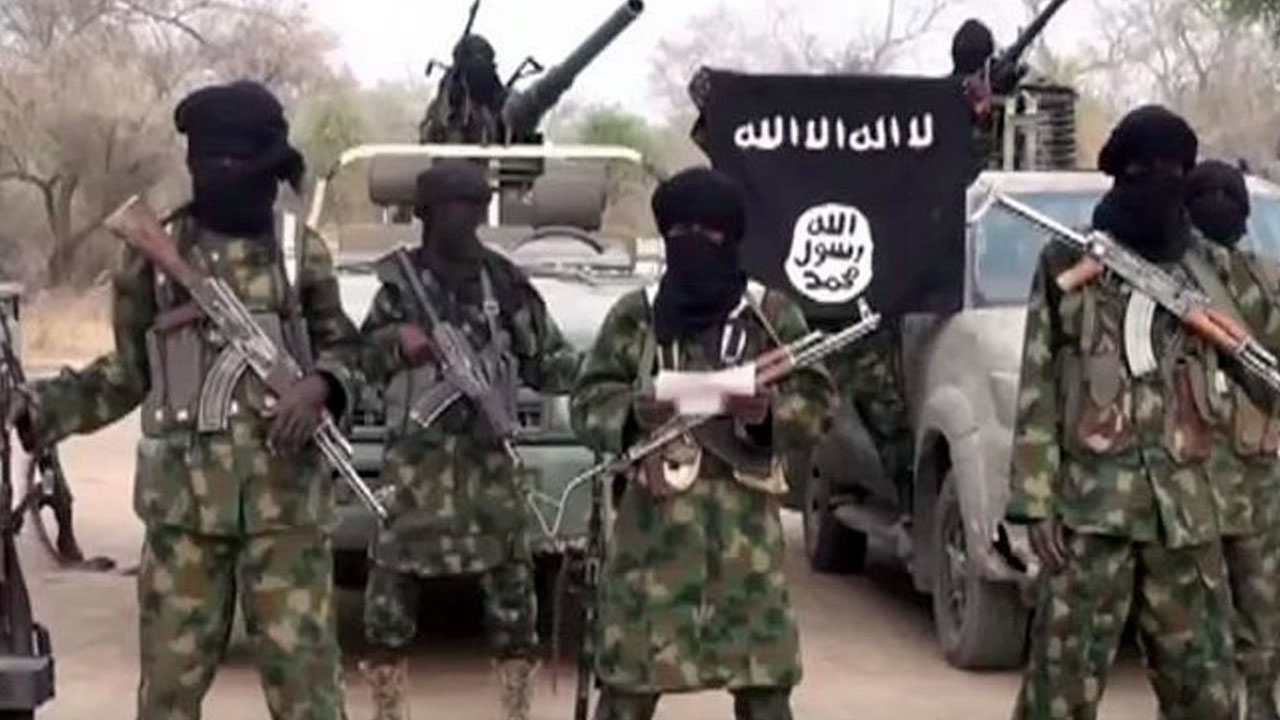
Nigerian soldiers have killed 6 ISWAP terrorists in 2 separate operations, recovered, arms, ammunition and other items in Borno State.

Brigadier-General Onyema Nwachukwu, who is Director Army Public Relations made the disclosure in a statement on Thursday via Nigerian Army’s official Facebook page.

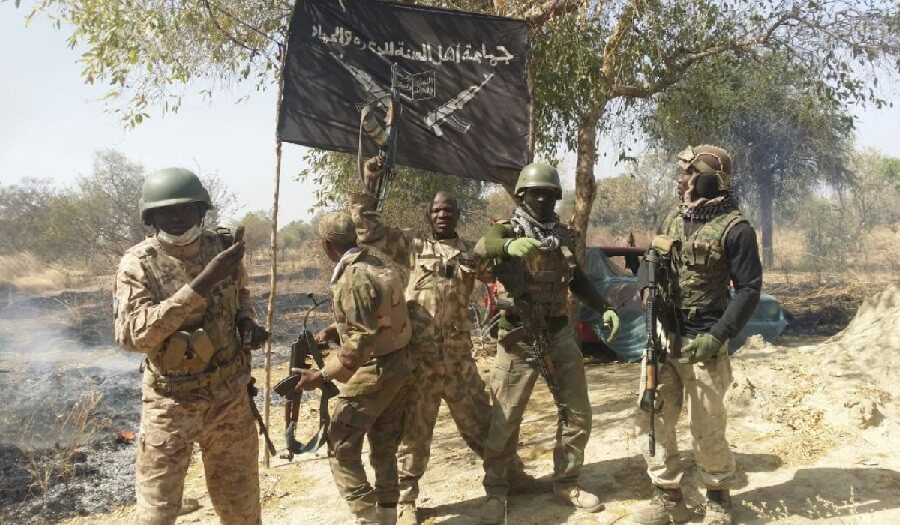
“Troops of 25 Brigade operating under the aegis of Joint Task Force, North East, Operation HADIN KAI (OPHK) have neutralised 4 terrorists of the Islamic State West Africa Province: (ISWAP) on Wednesday 31 August 2021. The terrorists who were on espionage along Damboa -Bulabulin-Maiduguri road ran into a fighting patrol team at Kukawa and were neutralised in the firefight that ensued with the troops. On further exploitation after the encounter, the gallant troops recovered from the terrorists, four AK 47 rifles and four Magazines, each loaded with 30 rounds of 7.62mm (Special) ammunition,” the statement indicated.

The brigadier-general further recounted how troops killed 2 more terrorists and recovered some logistic items.

He said, “In a separate operation, troops of 195 Battalion, Sector 1 OPHK in conjunction with elements of Civilian Joint Task Force (CJTF) at Dusman Muna Garage, Borno state have eliminated two ISWAP terrorists in an ambush operation conducted along an identified ISWAP terrorists crossing point at Musari village. 

“The troops also captured and destroyed an ISWAP logistics vehicle conveying assorted goods and contraband items belonging to members of the terrorist group. Items recovered by troops from the terrorists’ vehicle are two bags of Hemp (Cannabis Sativa), 2 bags of Detergent, 120 packets of mosquito coils, 12 mosquito nets and five textile materials. Other items recovered are two bycicles, two bags of beans, a bag of corn and some quantity of fish.”

Waiting for repentant bandits

By Ibrahim Mustapha

The war against Boko Haram is nearing an end. The news emerging daily that many members of the deadly group are surrendering is cheering. However, mixed reactions have continued to trail their repentance. Since the group appeared to wage war against Nigeria, Boko Haram is reported to have killed over 100,000 Nigerians in addition to displacing millions of others. However, our committed and gallant soldiers deserve a pat on their back for ensuring they sustained the onslaught against the insurgents.

At least, the northeastern states, especially Borno, which is ravaged by the group’s activities, are heaving a sigh of relief after many years of horrible experiences. For the group members believed to have a strong link with ISIS to backtrack, repented and embraced amnesty, this is an indication of victory over them. Also, in a country overwhelmed by many security problems, the news of their repentance is a welcome development.

Ironically, while many Boko Haram members are surrendering and the government is rolling out programs to rehabilitate them, bandits in the northwestern states inflict more harm on the helpless, poor communities. In Kaduna, Katsina, Zamfara and Niger states, bandits have become kings. They impose taxes and only allow local farmers to harvest their crops if certain levies are paid.

In the last three months, there have been increasing cases of students’ abduction for ransom. The continued abduction of students has forced governments to close schools with dire consequences to the education development of the region. Sadly, these daredevil bandits have continued to rake billions of naira from the victims’ low-income families. Disturbed by the continued killings of his people, Governor Aminu Bello Masari of Katsina State recently directed his people to arm and protect themselves against the rapacious bandits. However, Governor Masari’s self-defence statement indicates the government’s failure or inability to protect the lives and property of Nigerians as guaranteed by the constitution.

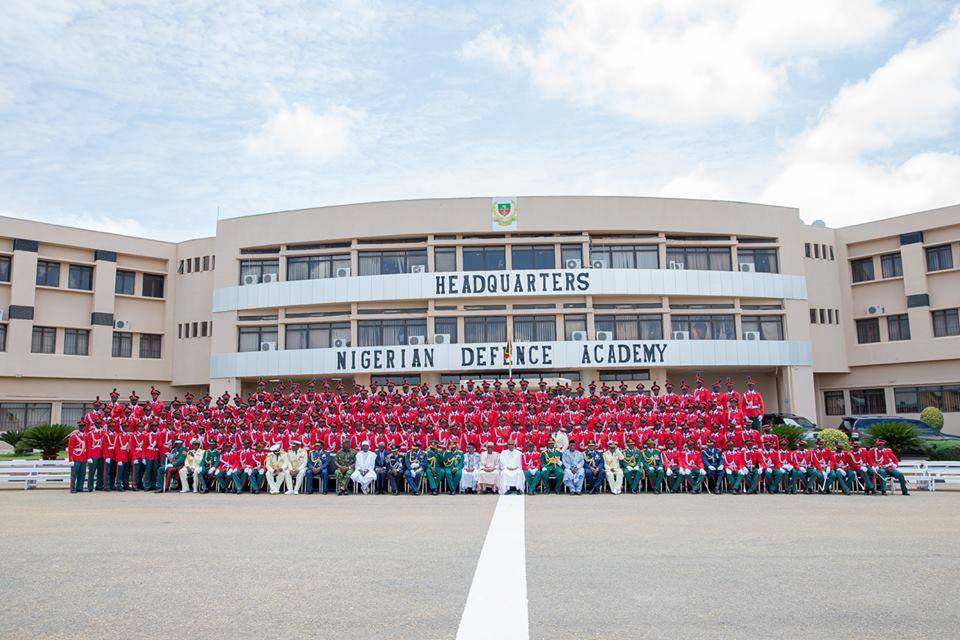
The last straw that broke the camel’s back was the recent shameful invasion of the Nigerian Defence Academy (NDA) by bandits. Whether it was a security breach as alleged by the military or not, the audacity of those bandits proved the poor security network in our military formations. The unfortunate attack should serve as a wake-up call to the government that, like Boko Haram, the bandits are not only attacking soft targets but also highly secured places.

Ibrahim Mustapha writes from Pambegua, Kaduna State. He can be reached via imustapha650@gmail.com.

Who is behind the NDA invasion?

By Abdulhaleem Ishaq Ringim

The invasion of the Nigerian Defence Academy (NDA) is indeed embarrassing and extremely unsettling. But what is more unsettling is the fact that this high-level security breach is said to be orchestrated by “bandits”. While I had never underestimated these bandits’ lethality and offensive capacity, I still find it hard to believe they planned this attack. 

And here is why: 

Although most of us are unaware of the very nuanced categorisation of bandit groups operating in Northwest and Northcentral Nigeria, still, whenever we hear the word “bandit”, our minds go to the Fulani militias that have been meting out mayhem on innocent civilians. 

Channels TV reported that “The bandits who came in a vehicle were said to have passed through the security gate into the academy, disguised in military uniforms, after which they proceeded to the officers’ quarters.”

And this is where the question mark is. 

A Fulani person is the most recognisable of all the ethnic groups in Nigeria by his physique, phenotype and accent. And with the high level of stereotypes and profiling of members of this ethnic group as even innocent Fulanis on the streets get harassed, it makes it hard to believe that a vehicle full of bandits (of Fulani extraction) passed through the gates of NDA without being recognised and raising the suspicion of the guards. The press statement released by the academy also described the invaders as “Unknown Gunmen” instead of “Bandits”. 

However, this is not only the reason that informs my suspicion. 

The Nigerian terrorism network has been very volatile lately owing to the recent escalation of the rift between the two major terrorist organizations in Nigeria —the late Shekau-led Jama’tu Ahlis Sunna Lidda’awati wal-Jihad (JAS) and Al-Barnawi-led Islamic State in West Africa Province (ISWAP) — who were initially a single entity until they split in 2016 due to certain ideological differences and have been fighting each other since then. This rift, escalation of which has been attributed to the Nigerian Armed Forces Operation Hadin Kai spearheaded by the late Chief of Military Defense Brig. Gen Abdulrahman Kuliya was what consumed Abubakar Shekau in May 2021 and rendered his faction rather defenceless. 

Following this incidence, it was reported that more than a thousand JAS fighters have surrendered to the Nigerian Army – a gesture most people believe to be a positive sign and a product of enhanced military offensives against the terror groups. 

However, that is hardly the case, for, after Shekau’s death, ISWAP received some JAS commanders and fighters that pledged allegiance to their leader Al-Barnawi and then issued an ultimatum to those who refused while assuring them of continuous attacks. This is actually what motivates them to surrender to the Nigerian Army to leverage on the Nigerian Government’s amnesty program, the Operation Safe Corridor, and escape ISWAP’s wrath. But even before this incidence, defection from JAS to ISWAP was common among commanders and fighters, as in the case of Adamu Bitri in 2019. 

In December 2020, I explained in an article titled “Insecurity in North-West: Armed Banditry or Boko Haram Expansionism” the operational dynamics of all the three terrorist groups — JAS, ISWAP and Ansaru — in the Northwest and the possibility of them executing expansionist agenda in North-West Nigeria through infiltration, training, assimilation and arms supply. Before the fall of Shekau, reports suggested that the JAS and Ansaru groups had closer ties with bandit gangs in North-West. Adamu Bitri, for example, while he was with JAS, was instrumental in forging an alliance between JAS and bandit groups. He later moved to ISWAP before he died. It is believed that he might have shifted the allegiance of some of the bandit gangs he was in contact with to ISWAP. 

With Shekau’s death and the subsequent carpet-crossing of his commanders (some of whom are the keepers of the link between JAS and the bandit gangs in the North West just as Adamu Bitri) to the ISWAP side, there is a high possibility that bandits who were initially aligned to JAS are now under ISWAP’s control. Also, some JAS fighters who refused to surrender to both ISWAP and the Nigerian Army might consider joining bandit gangs in the northwest, just as it was the case for some fighters who fled ISWAP to join bandit groups before this recent incident. 

With the possible control ISWAP might have gotten over a greater number of bandit groups in the North-West due to recent events, the NDA invasion makes me wonder if it is just ISWAP’s way of signalling their newest expansionist achievement and presence in the North-West by staging such an operation in usual “bandit” territory perhaps with the help of the bandits, for the attack was done in usual ISWAP style of attacking military bases. And whether it is indeed purely a “bandit” affair or ISWAP’s or both, it signals a failure of our government, a serious increase in security vulnerability in the country and calls for renewed strategic action against bandits, the broader terrorism network in Nigeria and their expansionist tendencies. 

Abdulhaleem Ishaq Ringim is a political and public affairs analyst. He writes from Zaria and can be reached through haleemabdul1999@gmail.com.

Media as watchdog: foe to government, friend to masses

By Ishaq Habeeb

The media serves as the fourth estate, or the fourth arm of government, that works to ensure that the rights and privileges of Nigerian citizens; rights such as freedom of expression, freedom of information, among others, are well protected and granted under the provisions of the constitution of the Federal Republic of Nigeria.

The media carry out the daunting task of holding the government accountable for their deeds, misdeeds, actions or inactions, by informing and educating the citizenry about the state of the nation, which motivates people to insist that the government keep its campaign promises and are sticking to the rule of law in ways that wouldn’t tamper with the lives and well-being of the citizenry.

In present-day Nigeria, however, practising balanced journalism is arguably one of the most demanding jobs, as Journalists are torn between two dilemmas. On the one hand, they have to own up to their responsibility of informing the people of daily happenings and state of the nation, being as informative and as accurate as possible while at it.

While on the other hand, they can’t do that now without inadvertently giving criminal elements, e.g., bandits, unmerited media popularity. This subsequently encourages them and their heinous activities, plus undermining government efforts in tackling the state of wanton insecurity, currently bedevilling us in Nigeria.

Take today, for example, virtually every news media platform in the country is carrying a headline detailing reports of bandits’ attack on the Nigerian Defence Academy (NDA) in Afaka, Kaduna state. In the attack, two or so officers were reportedly shot dead and one other allegedly abducted.

Recently, rumours were that the APC government, in its autocratic fashion, attempts to gag Nigeria’s media from reporting successful terror attack stories. It is part of its efforts to demoralise the terrorists, instead of emboldening them with catchy news headlines by the media, especially about such embarrassing attacks on key federal facilities as NDA and/or it’s personnel, whenever there’s any.

The policy, undemocratic as it may seem, may not be entirely misplaced. However, if there’s strong political will, the government can do a lot better in handling the insecurity problem than just gagging the news media for simply doing their job legitimately.

As i penned this, the bandits that attacked, killed and kidnapped Nigerian army personnel today, at their strongest base, are probably out there somewhere right now, reading the trending news headlines, gloating, having a house party and perhaps, promoting their daredevil commandants behind the brazen attack on Nigeria’s strongest military facility, for their dare devilishness.

Now you can see how the media, by simply doing their job, are inadvertently giving the bandits undeserved media popularity, which is what the government was thinking – in their narrow approach – when they moved to regulate the way media reports such news, which is, of course, morale-depleting for the security operatives and morale-boosting for the terrorists.

Ishaq Habeeb is a pubic affairs analyst and a freelance journalist; he writes from Nigeria and can be reached through simplyishaqhabeeb@gmail.com.

ISWAP suffers heavy casualty as 43 members die in gun duel with troops

By Muhammad Sabiu

The ISWAP terror group in the northeastern part of Nigeria has suffered a heavy casualty on Wednesday as at least 43 of its members were killed in a gun duel with troops of the Multinational Joint Task Force (MNJTF).

Unfortunately, a military official said that seven soldiers also lost their lives during the battle.

Sources in the know of the incident stated that the troops came under a heavy attack by members of the terror group in Diffa province of Niger Republic.

A spokesman of the joint task force, Colonel Mohammed Dole, praised the soldiers for preventing the insurgents from attacking them.

The colonel, in a statement, said, “Troops of the Sector deployed in Baroua came under heavy attack by suspected BHT/ISWAP criminals in the small hours of Wednesday 25 Aug. 2021.”

“At the end of the encounter, a total of Forty-Three (43) dead bodies of BHT/ISWAP insurgents were scattered around the engagement areas.”

Colonel Dole also disclosed that an unnamed leader of the terrorists was captured alive. 

He added that a “large cache of arms, ammunitions were recovered, and four enemy gun trucks were destroyed.”

Many insurgents killed as Boko Haram, ISWAP battle each other

By Muhammadu Sabiu

In what would be tagged as “tremendous success” in the fight against insurgency in the northeastern part of Nigeria, members of the two terrorist groups operating in the region, Boko Haram and ISWAP, have engaged in a deadly battle, which left many dead.

The incident occurred in northern Abadam, Borno State, last weekend (Sunday, August 22, 2021), when some members of Boko Haram, who attempted to surrender, came under a heavy attack by irate members of the ISWAP in the Dumbawa community.

Angered by the decision of Boko Haram members to surrender to Nigerian troops, the leadership of the ISWAP “placed a death sentence on any fleeing member in the Lake Chad axis,” an intelligence source in the know of incident disclosed.

PRNigeria quoted the source as saying, “The deadly attack was coordinated by one Abba-Kaka, a self-acclaimed ISWAP Governor of Tumbumma, Commanding Marte, Abadam, Kukawa and Magumeri, leading to a heavy gun battle that lasted for hours which resulted in the killing of over 25 terrorists including three Commanders while many other militants, who ran in different directions with their families were left with bullets wounds.”

According to PRNigeria, the rift between the two groups has deteriorated following the execution of Boko Haram members by ISWAP members and the refusal of the latter to include the former in the appointment of some key positions.

Another source was also quoted as stating, “Some high ranking Commanders bearing the titles of ‘Amir’ and ‘Khaid’ (Chiefs) at under the Shekau’s Caliphate in Sambisa were reduced to ordinary militants fighters after paying allegiance to the ISWAP leadership.

“Some JAS Commanders and their loyalists were already contemplating pitching their tents against the ISWAP by joining forces with the Bakura and Krimima Led-JAS Factions that have been battling the ISWAP around the axes of Lelewa, Duwa, Wallal and Hauwa Bulumwa villages in the Niger Republic.”

Recall that in the past weeks, scores of members of Boko Haram have laid down their arms and surrendered to Nigerian troops.

Pantami and bigoted traducers

By Adnan Mukhtar Tudunwada

In an ironic twist one of the most charismatic Ministers in Buhari’s administration, Dr Isa Ali Pantami has been receiving massive accolades for his outstanding performances from sincere citizens, as well as blind criticisms from blackmailing traducers for ulterior motives.

A few months ago, the traducers mounted aggressive media campaigns against him over a claim of alleged support of ideologies of insurgents over a decade ago. Even though, the Minister had defended himself and explained further that he was one of the Islamic scholars that have consistently attacked the ideologies of Boko Haram.

Meanwhile, videos and audios of Boko Haram leaders threatening the life of Dr Pantami emerged but that too could not persuade the critics from their reckless insinuations and criticism. In fact, some of the videos included those where Pantami challenged slain Boko Haram founder, Mohammed Yusuf, in a hot debate and another was the threat by terrorist leader, Abubakar Shekau to eliminate the Minister.

It is, therefore, not surprising that when Pantami is about to clock his second year in office, the sponsored critics thought they could distract him and teeming Nigerians by reinventing another campaign of calumny.

Though their intention is mischief, they could not stop the Minister from reeling out concrete achievements of his Ministry and its agencies in the last two years when they collectively generated a total of N1.05 trillion.

Dr Pantami disclosed the huge revenue during the 12th batch of virtual commissioning of eight projects by his Ministry and agencies.

He said that “The Ministry and its parastatals have generated over N1 trillion for the Federal Government in less than two years, this translates to an average of about N44 billion every month, or over N1.4 billion every day.

“The IT Projects Clearance Programme also saved over N5billion for the Federal Government.”

“I also urge them to redouble their efforts in ensuring that we keep up the good work of developing Nigeria’s digital economy,” he said.

The Minister also revealed that a total of 1,667 ICT projects have been completed while 455 others are ongoing across the country. In line with the general approach for locating projects, they are situated in all the six geopolitical zones of the country and the Federal Capital Territory.

Some of the projects he commissioned virtually included Emergency Communications Centre (ECC), Makurdi, Benue State (North Central); Virtual Examination Centre, College of Education, Argungu, Kebbi State (North West); E-Accessibility Centre, Alderstown Schools for the Deaf, Warri, Delta State (South-South).

Others are the E-Health/Data Sharing Project, Leko Abdulrahman Hospital, Daura, Katsina state (North West); Digital Economy Centre & E-Learning Facilities, Ogba Grammar School, Lagos state (South West); Digital Economy Centre & E-Learning Facilities, St Paul Secondary School, Eke, Enugu state (South East); Digital Economy Centre & E-Learning Facilities, Federal Character Commission, Abuja (North Central); and E-Accessibility Centre, Bauchi state; Orphans and Vulnerable Children School, Bauchi state (North East) among others.

These were apart from others that were commissioned last year.

My advice to Pantami on the antics of his traducers and blackmailers is to just ignore them.

As an IT guru and scholar of repute, he should realise that their antics expose their dispositions as sectional and religious irredentists and their hatred for his faith and the section of the country he comes from. Just recently some of them have the gut to mock the great prophet of Islam in their attempt to ridicule, Dr Pantami.

Though the bigoted and eccentric traducers seem to be faceless, they are not unknown going by digital footprints and the patrons of their platforms of blackmail and propaganda.

If their media platforms were used to scandalise former Presidents Obasanjo, Yar’adua, Jonathan and even Buhari, why should Pantami feel offended? They are better ignored.

It is obvious that they are over-pampered ethnic jingoists and over-tolerated fake activists who are overtly ignored because of their questionable integrity and dubious pedigrees.

Once again, I appeal to Sheikh Pantami to ignore them and focus on his national assignment which has enormous presidential endorsements and the support of Nigerian citizens who are beneficiaries of the digital economy.

Adnan Mukhtar is a Staff Writer with Politics Digest and writes from Kofar Famfo, Kano City.

Insecurity: Buhari, service chiefs to meet Thursday

By Muhammad Sabiu

President Muhammadu Buhari will on Thursday meet with the security service chiefs.

Femi Adesina, a presidential spokesperson, announced the meeting today in a statement via his Facebook account.

According to Mr Adesina, the meeting, which will be held at the Presidential Villa, Abuja, will focus on the recent security achievements across the country.

He said, “The security forces have in the past few weeks taken the battle more robustly to insurgents, bandits, and all other criminals troubling the country, and they are now surrendering in droves.

“The President will be brought up to speed on developments at the Thursday meeting, while plans to bring a decisive end to the challenges will be formulated.”

Recall that recently Boko Haram/ISWAP fighters in their hundreds have surrendered to the Nigerian troops in the northeastern part of the country, thereby marking a tremendous development in the fight against insecurity in Nigeria.

This is coming a few days after the president returned from the United Kingdom, where he spent 18 days during which he attended an education summit and had some check-ups.

Pantami: Should we worry about the current situation or the Minister’s past?

By Bilyaminu Abdulmumin

Perspective is what makes any matter arising be two way. Hiding behind this aegis, everyone will prefer to go with the view that suits them. This is similar to what I learned from a Nigerian saying, mind the message, not the messenger. Those who the message favours would go with it; otherwise, they would instead focus on the messenger.

Similar to this phenomenon in court proceedings is the aspects of either substance to the case or technicalities. So, all evidence would be presented in a case; you will think that’s the end for the accused, only for him to turn around and rely on technicalities. 

Before the historic 2015 general election, the then ruling party, PDP, sought to cling to General Muhammadu Buhari’s WAEC certificate. The attempt was to take on the person of Buhari instead of what he stood for, but it failed. I doubt he had written the exam, but he possibly rode on the back of official consent to progress. So the allegations could be valid, just like the claims he stood for. It depends on what favours who.

However, the Tsunami of change at the time was too strong to allow taking on the Buhari’s past. This is the kind of force required to douse the rising dust against Dr Ali Isa Pantami, the Communication and Digital Economy minister.

There are emerging signs of commitments from the Minister Pantami to revamp the sector. It is easy to understand how this will go a long way to better the nation’s insecurity.

The abuse of SIM cards in Nigeria has been very rampant, lamented by many. Bandits increasingly go on rampage, kidnapping and negotiating for ransoms undetected. Getting the SIM in Nigeria is as easy as anything effortless. Therefore, heinous activities by the underworld men continue in perpetuity. So the Minister wants to bring sanity to the ministry.

For auditing purposes, a directive was issued to halt the sale, activation, and registration of new SIM cards on December 9, 2020. Without reference to any conspiracy theories, those who are not happy with the development instead chose to descend on the Minister’s previous affiliations and sympathies. The views that the Minister reportedly renounced.

In a desperate attempt to propagate this interest, to say the least, one news media ended up undoing itself by displaying timid journalism prowess in its inability to differentiate truth from myth. 

This media published the famous video of fierce debate between Dr Pantami and Muhammad Yusuf, using it as evidence for the latter’s terrorism tendency. If there is any evidence that could absolve Pantami from what they claim, it is that debate, not what the Pantami distractors want us to understand. However, we can still learn a lesson from the development.

Dr Pantami, a rare gem in the north, an authority on both Islamic and secular education, would display the human sign (weakness) by renouncing the views he held earlier in his life. It is an excellent reason to keep on any idea between iron fist and kid-glove; it is religiously and politically wise. A similar issue is currently hunting Governor Nasir El-Rufa’i.

A video recently shared by 21st-century chronicles El-Rufa’i taking full advantage of insecurity during the Jonathan administration to score points for himself and his party.  El-Rufa’i criticised everything about insecurity in the video that he is not doing today. No regard to the reasons he gave as to why he has changed his decision.

The current standoff between Pantami and his distractors is an attempt to look beyond the effort being made in the country’s communication sector. But as for those calling for secured Nigeria, let the audit for SIM subscribers and vision for the country’s database (linking the NIM and upcoming BVN) continues.

Bilyamin Abdulmumin is a Chemical engineering PhD student at Ahmadu Bello University, Zaria. He can be reached via bilal4riid13@gmail.com.

Boko Haram: hundreds of fighters surrender

By Muhammad Sabiu

Reports have indicated that about 605 repentant Boko Haram members have laid down their arms and surrendered to the Nigerian military in recent weeks.

According to PRNigeria, a top intelligence officer in the know of the issue said that the exercise for the repentant terrorists and their families conforms with the “international laws and best practices, relating to enemies willing to surrender.”

The senior officer said that some of the repentant terrorists were afraid they could be eliminated if they “surrendered but were persuaded by their spouses and parents.”

“Surprisingly, their parents and wives gave them encouragement that they would stand by them if they surrender to troops.

“The intelligence efforts are invisible but manifesting in current outcomes. The Chief of Army Staff, Lt. Gen Faruk Yahaya, encourages a mixed technique of kinetic and non-kinetic operations that are humane in nature as he instructed that while we accept those willing to surrender, we should not spare the stubborn one by sending them to where they belong.

“The sustained and well-coordinated military operation has exerted pressure on the terrorists who have deserted their various hideouts and camps, while their members who felt being misled are surrendering with their families to the Nigerian troops.

“During profiling, some of the Commanders who surrendered to troops admitted that their various enclaves are bedevilled by hunger, disease, and the perpetual fear of military offensives.

“The media are key to shaping the troops’ resolve to continue their aggressive posture, while the citizens maintain their confidence on the military efforts on Counter-Terrorism,” the officer said.

The Boko Haram insurgency has led to the killing of thousands of people and the displacement of many in the northeastern part of Nigeria.