Bello Matawalle

‘Only God Can End Nigeria’s Insecurity’—Defence Minister

By Uzair Adam

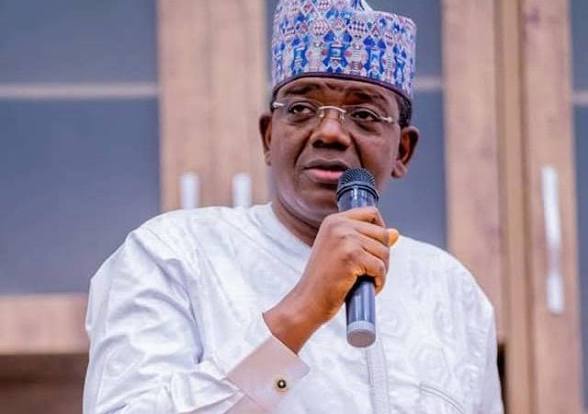
The Minister of State for Defence, Bello Muhammad Matawalle, has called on Nigerians to unite in the fight against insecurity, stressing that the challenge requires collective action, prayers, and sustained support for security agencies.

Speaking during an interview with BBC Hausa, Matawalle described insecurity as a national problem that affects all Nigerians regardless of political affiliation, ethnicity, or religion.

His remarks come amid renewed security concerns across parts of the country, following recent incidents of killings and abductions in some states.

Among the affected areas were communities in Oyo and Borno states, where armed groups reportedly attacked schools and abducted students and teachers.

Matawalle said the government remains committed to tackling insecurity and urged political actors to refrain from using security challenges as a tool for political campaigns.

“It is unfortunate, and all of us must work together to support our security agencies in overcoming this challenge. Insecurity does not target people based on their political party or religion; it affects everyone,” he said.

The minister accused some opposition figures of exploiting security incidents to undermine the administration of President Bola Ahmed Tinubu, noting that such actions could discourage national efforts aimed at restoring peace.

According to him, some individuals have been circulating old and misleading videos on social media to create the impression that insecurity has worsened under the current administration.

“There are videos being shared online that are either outdated or taken from other countries, yet they are presented as recent events in Nigeria. This does not reflect the reality on the ground,” he said.

Matawalle maintained that security personnel are working tirelessly across the country to confront terrorists, bandits, and other criminal elements.

He added that overcoming insecurity is a gradual process and not a challenge that can be resolved overnight.

He called on Nigerians to continue supporting security agencies and praying for peace, expressing confidence that ongoing efforts would eventually yield positive results.

“We must remain united and committed to ending insecurity. Our security operatives are doing their best, and with the support and prayers of Nigerians, we will continue making progress,” he added.

Tinubu Remains Strong in North-West Ahead of 2027, Says Matawalle

By Sabiu Abdullahi

Minister of State for Defence, Dr. Bello Muhammad Matawalle, has expressed confidence that President Bola Ahmed Tinubu retains strong political support across the North-West and remains on course for victory in the 2027 presidential election.

Matawalle made the remarks in a statement released on Thursday through his Personal Assistant on Media, Ahmad Dan-Wudil.

His comments followed recent discussions about the President’s popularity in parts of the North-West amid concerns over economic challenges and security issues. The debate intensified after a NoiPolls Government Approval Survey reported a 30 per cent approval rating for the Tinubu administration after three years in office.

The African Democratic Congress, ADC, reacted to the survey and argued that the findings reflected growing dissatisfaction with the administration over economic hardship, unemployment and insecurity.

In a statement, ADC spokesman Bolaji Abdullahi said, “The tragedy is that after three years in office, the government can no longer claim that these challenges were inherited.”

Responding to the criticism, Matawalle accused opponents of the administration of ignoring security improvements and development efforts, particularly in the North-West. He said some critics were focusing on isolated security incidents in an attempt to create fear among Nigerians.

According to the minister, the Federal Government has achieved notable success in combating insecurity through a coordinated and intelligence-based approach, especially in Sokoto, Zamfara, Katsina, Kaduna and Kebbi states.

He said the strategy had resulted in the neutralisation of several notorious bandit leaders, the dismantling of criminal camps and the return of relative peace to many communities previously affected by violence.

“The opposition is uncomfortable with the visible progress being recorded in the fight against insecurity and the ongoing developmental strides across the country,” Matawalle said.

The minister praised members of the Armed Forces and other security agencies for their commitment to national security, noting that many personnel had lost their lives while serving the country.

He also pointed to progress in the fight against insurgency in the North-East and efforts to address communal and criminal violence in parts of the North-Central region.

On the economy and development, Matawalle said the administration’s Renewed Hope Agenda was producing positive results in sectors such as infrastructure, agriculture, social investment and economic reform.

He highlighted government projects in Northern Nigeria, including road rehabilitation, agricultural support programmes, food security initiatives, rail and energy developments, as well as empowerment schemes for youths and women.

Matawalle said residents of the region were already seeing the impact of these interventions and would reflect that support at the polls in 2027.

“The people of the region understand the efforts being made to improve their security, livelihoods and overall well-being. They are witnessing the results firsthand,” he said.

The minister maintained that political attacks and misinformation would not overshadow the administration’s achievements. He added that President Tinubu remains focused on governance, national development and improving the welfare of citizens.

Matawalle also urged political leaders to prioritise national interest and support initiatives aimed at strengthening peace, security and development across the country.

He expressed confidence that the achievements recorded under the Renewed Hope Agenda would further boost public support for President Tinubu’s re-election bid in 2027.

Bello Matawalle claims Tinubu will win ‘convincingly’ in 2027

By Sabiu Abdullahi

The Minister of State for Defence, Dr. Bello Matawalle, has expressed confidence that President Bola Ahmed Tinubu will secure a decisive victory in the 2027 presidential election.

Matawalle made this statement on Saturday while hosting guests at his residence in Abuja. He urged Nigerians and political leaders across the country to rally behind the Tinubu administration and support its reform agenda.

According to the minister, the President’s leadership approach and policy decisions are already placing Nigeria on the path to economic recovery, institutional strength, and national cohesion. He cautioned politicians against early power struggles and political manoeuvres aimed at weakening the present government, which he said could damage the nation’s democratic process.

He said, “President Tinubu has taken bold steps to stabilise the economy and strengthen national institutions.

“Those plotting to unseat him are motivated by personal interests rather than the public good. If allowed to complete his reform programme, I am confident the President will win convincingly in 2027.”

Matawalle stated that the impact of the administration’s policies is becoming visible across the country. He noted that the northern region has recorded notable improvements, particularly in governance reforms, security measures, and institutional growth.

He also called on political stakeholders to embrace dialogue and cooperation instead of division. The minister stressed that national interest should take precedence over personal ambitions.

Matawalle further appealed to citizens to support government programmes aimed at achieving sustained economic growth, improved security, and stronger unity among Nigerians.

“Rather than engaging in rancour and short-term political calculations, we should focus on solutions that deliver jobs, security, and stronger institutions for Nigerians,” he said.

Gumi backs Matawalle, calls for non-kinetic approach to insecurity

By Hadiza Abdulkadir

Prominent Islamic scholar, Sheikh Ahmad Mahmud Abubakar Gumi, has publicly endorsed the appointment of former Zamfara State governor Bello Muhammad Matawalle as Minister of State for Defence, arguing that his approach to insecurity prioritises dialogue and community engagement over purely military solutions.

In a post shared on his Facebook page, Gumi said security experts have long maintained that communal conflicts cannot be resolved through force alone, noting that military action accounts for “only about 25 per cent” of effective conflict resolution. He described Matawalle as one of the few political leaders who recognised this reality during his tenure as Zamfara governor.

According to Gumi, Matawalle’s outreach to aggrieved groups significantly reduced banditry in the state at the time, reopening major roads and markets that had been shut for years due to insecurity. He cited personal travel experiences along routes such as Gusau–Anka–Gummi and Wurno–Isa–Shinkafi–Gusau, which he said had become safe during that period.

“Cattle markets were opened, and life was returning to normal,” Gumi wrote, adding that the gains were later reversed following what he described as “military non-cooperation,” which led to renewed hostilities.

The cleric argued that Matawalle’s current role at the Ministry of Defence places “round pegs into round holes,” urging Nigerians to set aside “petty local politics” in support of what he called a new federal government paradigm shift in addressing insecurity. He concluded by praying for unity, peace, and progress for the country.

Gumi’s intervention has once again sparked debate, given his controversial role in public discussions on banditry and insecurity in northern Nigeria. While some supporters credit him with advocating dialogue as a pathway to peace, critics have accused him of being sympathetic to armed bandits—allegations he has repeatedly denied.

Security analysts remain divided on the effectiveness of non-kinetic strategies, with many arguing that dialogue must be carefully balanced with law enforcement and accountability. The federal government has yet to officially respond to Gumi’s remarks, but officials have consistently maintained that Nigeria’s security challenges require a mix of military action, intelligence-led policing, and community-based initiatives.

As the administration continues to recalibrate its security strategy, Gumi’s comments contribute to the ongoing national conversation on how best to end violence and restore stability across conflict-affected regions.

Lakurawa as a diversionary tactic

By Prof. Abdussamad Umar Jibia

For nearly a decade, the North West geopolitical zone of Nigeria has been suffering from the menace of banditry. The bandits who live in the vast forest spanning several states in the Northwest and North-central zones started as cattle rustlers before metamorphosing into fully pledged armed robbers. They attack communities, schools, travellers, etc. Wherever they go, it is a story of killing, kidnapping, rape, arson and other unprintable atrocities. 

Bandits lack the civility of the erstwhile armed robbers. In those days, armed robbers only sought money and valuables like jewellery. Once they had them, they were satisfied and would leave without dropping blood. That is not the case with bandits. When they visit a community or block travellers on highways, they usually start by killing some before kidnapping others. 

Payment of ransom is not a guarantee of getting the kidnapped victim freed. They may collect ransom from relatives and still kill the victim. There are many examples. 

Bandits’ locations and leaders are well known to the Government and members of the communities in which they operate. Many of them serve as the de facto government in their domain of operation. This is not a story I am telling from one of those video clips circulating on social media. Some of my blood relatives have been going to work on the farm of the bandits’ kingpin, who is in charge of their area. 

To agree to live under the protection of an “officer”, the de facto rural government of Jibia and Batsari, a village has to send its elders with some money to go and beg for him to accept them. You may wish to go back to my writeup on “Submission to bandits authority”.

However, an “officer” is not the only bandit leader known to the government and the people. There are more deadly and more popular “officers”. One of them is Ado Aleru, who killed dozens of villagers in Katsina State and told the BBC Hausa service that he doesn’t kidnap; he only kills. Asked to give the number of people he killed, he said it is too large to remember.

Another officer is Bello Turji, who, among other crimes, once burned a passenger bus with 30 people in it days after opening fire on a village market that claimed 60 lives in Zamfara state. He is popular because he speaks frequently to the public. That, however, doesn’t make him the deadliest.

Dogo Gide is another “officer” who was notorious for, among other things, the abduction of 90 students and teachers of FGC Yauri, 11 of whom he married off in the process. 

Among the many popular “officers” is Dankarami, who publicly confessed to killing many combined troops of Nigeria and Niger Republic in addition to kidnapping and killing many innocent citizens in Katsina and Zamfara state. 

The above crime leaders and several others in their category are still alive and active.

The Buhari administration made the first blunder in dealing with the menace of banditry. The federal government under Buhari asked governors of the affected states to strike a peace deal with the bandits. Peace agreements were sealed between some state governments and bandits in 2016 and 2019; in both cases, the latter reneged. 

Unlike what some of their sympathisers would want us to believe, the bandits are not freedom fighters but pure criminals and stark illiterates. The only thing that would make them drop their weapons is a continuous flow of cash from the Government, the kind of cash they make from their criminality. That is unrealistic for a Government struggling to pay its civil servants a paltry minimum wage. Hence, the peace deals were failed under Buhari.

Bandits’ sympathisers who gave Buhari the wrong advice have found their way into the Tinubu Government. The first indication of that is what a young Islamic scholar revealed early this year. The scholar alleged that, under the financial influence of unnamed federal defence officials, some Islamic scholars are campaigning for not just amnesty for bandits but their appointments into public offices by the government. He alleged that he was among those invited to participate in the campaign but refused.

As far as we know, the federal government did not deny Sheikh Koza’s claims. If he had lied, he would have been arrested and asked to name the defence officials. Neither of those things happened.

Then came the kidnap and murder of the Emir of Gobir. With the public outcry that followed, the Federal Government had to show its will to fight banditry. Thus, the Minister of State of Defence and service chiefs were asked to move to Sokoto and end banditry. However, despite the budget, since the movement of the minister and service chiefs to Sokoto, the only bandit of note who was killed/arrested by the Government is Halilu Sububu. Banditry business has continued as usual, even with the presence of our nation’s security heavyweights.

For example, as reported by national dailies, the Funtua-Gusau highway was blocked by bandits on several occasions during this period with no consequences. For frontline local Governments in Katsina state, the attacks became worse. The only place considered safe in my local Government area was Jibia town, the local government headquarters. However, since the so-called “Operation Fansan Yamma” started, Jibia town has lost its safety as bandits attacked, killed and kidnapped with impunity.

As Nigerians were waiting anxiously for the expected miracle due to the presence of security chiefs, the Lakurawa issue came up. According to sources, Lakurawa is a group with similar ideologies to Boko Haram. They have a total number of just 250 in Nigeria and no cases of frequent attacks on communities. Lakurawa militants are said to have been in Nigeria for some years at the instance of some Kebbi communities who sought their protection against bandits. 

The question here is, why is the issue of Lakurawa now being brought up when we have a more serious problem to solve? Lakurawa are obviously not as dangerous as the bandits, and their presence in Nigeria has been linked to the failure of the government to protect citizens from bandits.

From day one, the approach of this and immediate past governments has made Nigerians believe they are not ready to end banditry. If they are now talking about some Lakurawa instead of our real problem, why should we not think they are using it to divert our attention?

My advice to President Tinubu is to remember that he was elected by Nigerians. Ribadu, Badaru, Matwalle or Christoper Musa did not contest and win an election. The president is responsible for appointing his aides, continuously monitoring them, and ensuring they are doing the right thing.

That the officials mentioned above are Northerners is immaterial.

Professor Abdussamad Umar Jibia wrote via aujibia@gmail.com.

Matawalle’s controversies and gains in the defence sector

By Haroon Aremu Abiodun

As they say, “Uneasy lies the head that wears the crown,” but Bello Matawalle, appointed by President Bola Ahmed Tinubu as Minister for State Defence in 2023, has risen to the challenge. His tenure in office so far is marked by a blend of persistent controversies and significant achievements, with the latter shining a bright light on his leadership and the impact of his decisions.

As Governor of Zamfara state, Matawalle was reported to have taken stringent measures against banditry and insurgency, which led to some success in the fight against terrorism in the Northwestern region.

As such, it is not surprising that he and Mohammed Badaru Abubakar, another former governor of Jigawa State, were appointed Ministers to supervise the defence sector.

This feat was accomplished through military precision and a strategic, forward-thinking focus on infrastructure revitalisation. Their joint efforts led to the rehabilitation of military barracks nationwide, improving the living conditions for soldiers and their families—a clear demonstration of their commitment to the military’s welfare and the future of Nigeria’s defence sector.

A recent major highlight of Matawalle’s leadership was his role in revitalising Nigeria’s defence infrastructure. He worked closely with the Defence Industries Corporation of Nigeria (DICON) and the National Agency for Science and Engineering Infrastructure (NASENI) to establish a domestic arms and ammunition production facility.

This initiative is projected to save Nigeria $60 million annually by reducing the need to import military hardware, marking a significant step towards self-reliance in defence production.

Matawalle’s focus on defence sector reforms to improve efficiency has also caught attention. His reforms are designed to build a more resilient military by streamlining procedures and holding the system accountable.

One of Matawalle’s standout initiatives was his hands-on approach to addressing the grievances of military personnel. His open engagement with soldiers about delayed allowances and welfare issues demonstrated a rare willingness to tackle the heart of the defence system’s morale, evoking empathy for the soldiers and their struggles.

Despite these accomplishments, Matawalle’s tenure has not been without its controversies. Allegations of corruption and mismanagement, along with disputes over his qualification to run the defence ministry, continue to cloud his leadership. Critics question whether these shadows will define his legacy or if his achievements will ultimately shine through.

Born on February 12, 1969, in Maradun, Zamfara State, Matawalle’s educational background includes studies at Yaba College of Technology and the University of West London. His journey from a teacher to a politician has been marked by resilience and a steadfast commitment to public service.

After a successful stint in the Zamfara State House of Assembly during the Abacha regime, he served as a state commissioner before being elected to the House of Representatives in 2003. His political career reached new heights in 2019 when he became the Governor of Zamfara State following a Supreme Court ruling that disqualified the supposed winner.

During his tenure as governor, Matawalle made efforts to address the rampant insecurity in Zamfara State, a region plagued by banditry and violence. He initiated dialogue with various armed groups and made efforts to implement infrastructural projects across the state, including constructing governor’s lodges in all 14 Local Government Areas (LGAs) of Zamfara.

Matawalle’s career reflects a blend of determined public service and significant scrutiny, particularly regarding his financial decisions as governor.

A fanatical loyalist of President Bola Ahmed Tinubu, Matawalle’s leadership in various capacities during this period laid the groundwork for his current role in national defence, where he continues to confront external threats and internal controversies.

Matawalle must prioritise transparency and communication to secure his legacy, ensuring the public understands his decisions and reforms. His continued focus on the welfare of soldiers and veterans, alongside his strategic defence initiatives, will be crucial in determining whether his story will be one of triumph or a missed opportunity.

The final chapter of Bello Matawalle’s legacy is still being written. The world watches as he walks the fine line between triumph and turmoil. Will he be remembered as a transformative leader, or will the crown’s weight prove too much?

His legacy teeters on the edge, and only time will reveal whether his story is one of greatness or missed opportunity.

Haroon Aremu Abiodun is a Mass Communication graduate and a corps member with PRNigeria Center, Abuja. He can be reached at exponentumera@gmail.com.

Alleged support of bandits: Time to investigate Bello Matawalle

By Prof. Abdussamad Umar Jibia

On the 10th of June 2020 at about 5 pm, armed bandits stormed Kadisau village of Faskari Local Government Area of Katsina State. The bandits, who came on dozens of motorcycles, opened fire on the villagers, killing anyone unable to escape alive. Fifty-seven people, including men, women and children, were killed in the operation that lasted four hours with no intervention from Federal security forces, who were said to be on the highway 5 kilometres away. The criminals later moved to nearby villages, where they killed an additional 30 people.

Ado Aleru, a well-known bandit commander in Zamfara state, led the bandits. Katsina state police command later declared Ado Aleru wanted and put a price of five million Naira on his head.

Two years later, precisely on Saturday, 16th July 2022, Nigerians were shocked to hear that the man responsible for the murder of innocent Nigerian women and children was turbaned with a traditional title in Zamfara state. 

The turbaning of Aleru was a gathering of some of the most deadly criminals responsible for acts of terror in the Northwestern and North central geopolitical zones of Nigeria. On the ground to witness the ceremony were officials of the Zamfara State Government, including the state Commissioner of internal security. In other words, the turbaning was done with the knowledge and approval of the State Government under Governor Bello Matawalle. Surprisingly, some senior police officers graced the occasion without arresting the person they declared wanted two years earlier.

Soon after the ceremony, the Katsina State Government under Aminu Bello Masari indicated its disapproval of the chieftaincy title conferred on the criminal. It maintained that it was still looking for Ado Aleru.

Years later, nothing changed. The centre remained weak, and life continued. However, the people of Zamfara did what was needed by voting Matawalle out of power in the 2023 election.

If the only atrocity the former Governor of Zamfara State committed was facilitating the conferment of a traditional title to such a deadly criminal, he deserves retirement from Nigerian politics and prosecution after office. Alas! He was rewarded with a ministerial position in the ministry that is supposed to rid Nigeria of terrorists like Ado Aleru. Only in Nigeria. Allah Ya sauwake.

Recently, additional allegations have been made about how the then-governor of Zamfara state hobnobbed with bandits and supported them with the lean resources of the Zamfara people. I am referring to a viral video of a Sokoto-based Islamic Scholar, Sheikh Murtala Bello Asada. Asada, who claimed that he had incontrovertible evidence on all his claims against the former Governor, challenged Matawalle to take him to court. 

Among the allegations Sheikh Asada made against Matawalle is his support of one Haruna Dole. According to Asada, Haruna, a famous bandit kingpin with more than 500 rifles under him, was arrested and taken to Police Headquarters Abuja. Sheikh Asada added that Bello Matawalle, as the Governor of Zamfara state, made a phone call and asked for Dole’s release. The criminal was released to one Bashar, who signed and received the bandit on behalf of Governor Matawalle. He said the document carrying Bashar’s signature and picture would still be available at the Force Headquarters.

According to Sheikh Asada, Matawalle is also a friend of the dreaded bandit Bello Turji. Asada mentioned a visit Turji paid to Zamfara State Government House when Matawalle was Governor. Turji had lunch with the governor, who served him personally. Later, the governor gave him an undisclosed amount of cash and allowed him to return to the bush to continue his criminal activities.

Another bandit kingpin who was friends with Matawalle was Chedi. According to Asada, Matawalle bought a house for Chedi in the Gidan Dutse quarters of Gusau. Uncomfortable with it, residents of Gusau protested and made a mob attack on Chedi and ended his life. Matawalle then ordered the arrest of several people. On the day of their arraignment, overwhelming crowds of Gusau people stormed the court, and Matawalle had no choice but to order the release of the people. It ended there.

In addition to all these, Sheikh Asada listed some criminals who allegedly received Hilux operational vehicles from Matawalle when he was Governor. They include Turji, Aleru and Halilu Sububu.

The allegations are weighty and sum up to one thing: the current Minister of State of Defence deployed to the North West by President Bola Ahmed Tinubu to fight banditry, an alleged friend of bandits who supports them financially.

The position of anybody interested in protecting the lives and property of Nigerians would be clear. Mr President should investigate these allegations and, if found true, prosecute the former Governor. Yes, allegations are allegations until they are investigated and found to be true. But if the Nigerian government refuses to conduct a transparent investigation, what would prevent Nigerians from believing them?

But even as investigations are carried out, Mr Matawalle has no business remaining in the Ministry of Defence. Maybe another ministry.

If the executive branch is not ready to take action, where is our National Assembly? Do they believe these allegations against a government official in charge of fighting security are not serious? Go figure!

Professor Abdussamad Umar Jibia wrote from Kano via aujibia@gmail.com.

Alleged looting of N70bn: Matawalle can’t escape probe—EFCC

By Abdullahi Mukhtar Algasgaini

The EFCC has promised to continue its investigation into alleged stealing of N70bn by Nigeria’s state defence minister, Bello Matawalle.

The Minister of State for Defence, Bello Matawalle appears to be in deeper mess as the Economic and Financial Crimes Commission (EFCC) on Friday promised to continue with his investigation over alleged stealing of N70 billion between 2019 and 2023.

The commission said it does not close cases once it opens an investigation.

The Acting Director of Public Affairs in EFCC, Wilson Uwujaren, gave the assurance during a protest by members of the All Progressives Congress (APC) in Zamfara State under the aegis of APC Akida Forum at the commission’s Headquarters in Abuja, demanding the reopening of the pending case against Matawalle.

He told the protesters led by Musa Mahmud that the commission will look into their demands and see to the end of it.

“I want to commend members of the APC Akida Forum for this peaceful protest. It is within your rights to protest. The constitution guarantees the right of free expression and you have done that today.

“I want to assure you all that EFCC does not close cases. Once we open investigation into a case, we.do not close such matter. So I assure you that this petition will be look into. Thank you very much”, he said.

While presenting a copy of their petition to EFCC, Mahmud requested the commission to reopen the investigation into the corruption allegations against Matawalle.

According to him, the demand comes amidst growing concerns about corruption in Nigeria and the bold steps taken by the APC administration in recent decisions regarding government officials suspected of embezzlement, including a former Governor of Kogi State, Yahaya Bello.

He said, “Recall that on the May 18 2023, the Economic and Financial Crime Commission (EFCC), through its then Director, Media and Public Affairs, Osita Nwajah Nwajah, said that the EFCC is investigating Matawalle over allegations of monumental corruption, award of phantom contracts and diversion of over N70 billion.

“According to the EFCC, the money, which was sourced as a loan from an old-generation bank, purportedly for the execution of projects across the local government areas of the state, was allegedly diverted by the governor through proxies and contractors who received payment for contracts that were not executed.

“The commission’s investigations revealed that over 100 companies had received payments from the funds, with no evidence of service rendered to the state. Some of the contractors who had been invited and quizzed by the commission made startling revelations on how the governor allegedly compelled them to return the funds received from the state coffers back to him through his aides after converting the same to United States Dollars (hard currency).

“The companies confirmed that they did not render any service to Zamfara State. Still, they were allegedly directed to convert the monies paid to them into United States Dollars (hard currency) and return them to the state governor through some of his commissioners, notably those in charge of Finance and Local Government Affairs.”

Mahmud also called on the EFCC to investigate the $2.1 billion arms deal, which included Matawalle among the few Nigerians and companies that benefited from the former National Security Adviser’s scandal.

On Zamfara students abandoned in Cyprus

By Muhsin Ibrahim

A few weeks before the 2023 general elections, I came across a campaign video featuring students sponsored by the Zamfara State Government to study in Cyprus. I criticised the video, stating that students should refrain from getting involved in politics.

It was not wise for the students to campaign for the governor. Although they might have felt obligated to do so, I was concerned about the consequences if Bello Matawalle, the governor at the time, lost the election. Unfortunately, that is precisely what happened.

As I feared, Dauda Lawal Dare, the new governor of Zamfara, abandoned those students. Today, they live in destitution, struggling to feed themselves in a foreign land. Some don’t even have a befitting accommodation. While their precarious situation may not be connected to that video, it might have added insult to injury.

Governments in Kano, Zamfara, or any other state must reconsider sending people to foreign universities. Of course, those universities are often better than our local ones. However, we need to wake up to the current realities. Our currency (i.e., Naira) has lost much of its value, and inflation is higher, among other unfavourable realities.

Irrespective of the political landscape, it is incumbent upon the government of Zamfara to provide for those students. They are, without a doubt, the government’s sole responsibility. After all, governance is about continuity and the welfare of its citizens.

If the government is unable to meet its financial obligations, it is only fair that it brings these students home and enrols them in local universities in Nigeria. This is the least they deserve.

It is high time the government started paying attention to its citizens and acted upon their requests.

Muhsin Ibrahim, PhD, wrote from Cologne, Germany. He can be reached via muhsin2008@gmail.com.

Matawalle lambasts Northern Elders Forum over comments on Tinubu’s administration

By Uzair Adam Imam

Minister of State for Defence, Bello Mohammed Matawalle, has strongly condemned the Northern Elders Forum (NEF), labeling the group as a divisive force in Northern politics that fails to represent the region’s true interests.

In response to recent comments by NEF spokesperson Abdul-Azeez Suleiman expressing regret over the North’s alleged support for President Bola Tinubu, Matawalle dismissed the NEF’s stance as shortsighted and detrimental to political harmony.

Matawalle asserted that the NEF’s threats against President Tinubu were “reprehensible and naive,” accusing the group of attempting to wield undue influence for their own political gain.

He criticized the NEF for undermining the democratic process and exacerbating disunity among Nigerians.

Furthermore, Matawalle contended that the NEF’s attempts to delegitimize Tinubu’s electoral victory in 2027 were baseless and lacking in merit.

He emphasized the need for constructive dialogue and cooperation to address the challenges facing Northern Nigeria, rather than engaging in divisive rhetoric.

Matawalle urged the NEF to refrain from actions that undermine the unity and progress of the nation, emphasizing the importance of fostering inclusive political discourse for the benefit of all Nigerians.