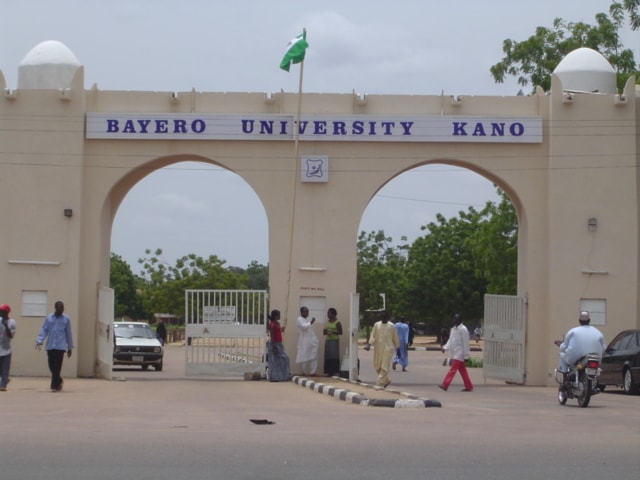
Bayero University Kano

Former BUK staff raises concerns about transcript delays

By Muhammad Sabiu

Dr. Muhsin Ibrahim, a former Bayero University, Kano (BUK) staff member, has expressed deep concern over the challenges students and alums face in obtaining academic transcripts from BUK.

In a recent commentary on Facebook, Dr Ibrahim highlighted the plight of many former students who have missed out on opportunities due to delays in processing transcripts. “This is sad and embarrassing, especially as the problem is completely avoidable in this day and age,” he wrote, noting that the issue is prevalent in many public universities across Nigeria.

Dr. Ibrahim shared a personal experience, revealing his inability to assist a former student in obtaining her transcript despite his connections within the university. He described the situation as unfortunate and urged those responsible for transcript processing to act with empathy and diligence.

He also called on the university’s management to address the problem decisively, suggesting that any staff found guilty of causing unnecessary delays should face appropriate disciplinary actions. “Think about what a delay means to these people. Don’t ruin their chances at a scholarship or a job. Be empathetic. Fear God,” he appealed.

Dr. Ibrahim’s remarks resonate with affected students and alumni, who have long sought reforms to streamline administrative processes. This underscores the need for transparency and efficiency in accessing critical academic documents.

Prof. Mustapha Muhammad retires after nearly 50 years at Bayero University

By Muhsin Ibrahim

Professor Mustapha Muhammad, a long-standing figure in the Department of English and Literary Studies at Bayero University, Kano, officially retired after an impressive 47 years of service. His disengagement marks the end of a significant chapter in the university’s history.

Known for his dedication to teaching, research, and mentoring, Professor Muhammad leaves behind a legacy that has shaped the minds of countless students and educators. His farewell on January 5 was not only a personal milestone but also a moment of reflection for the department that has greatly benefited from his wealth of knowledge and experience.

Colleagues express concerns about the impact of his retirement on the department. Malam Maikudi Zukogi noted that while Professor Muhammad’s departure was anticipated, it highlights the challenges ahead, especially following the recent retirements of two other long-serving faculty members – Profs. Isma’ila Tsiga and Sa’id Babura Ahmad. Zukogi stated, “His absence creates a significant vacuum that will be difficult to fill.”

As Professor Muhammad embarks on this new phase of his life, colleagues and students alike have extended their well wishes, expressing hopes for good health and a smooth transition into retirement. The university community acknowledges his invaluable contributions and looks ahead to sustaining the foundation he helped establish.

The silent struggle: Tackling students’ mental health

By Khadijat Ogido 

Maintaining good health is essential for students every day. Well-being is a holistic journey that integrates physical, mental, and emotional health. Mental health is a cornerstone of well-being, though many students overlook it.

Mental health problems can affect a student’s energy level, concentration, dependability, cognitive ability, and optimism, which hinder their performance. Students consider symptoms like anxiety, depression, eating disorders, psychotics, and mood swings as everyday experiences which often lead to mental illness.

According to mental health research conducted by the National Alliance on Mental Illness (NAMI), one in four students has a diagnosable mental illness. “A lot of pressure from parents, stress from exams, the pressure of getting good grades in university. These aspects destroy the inner peace of students”.

In a world where stress and fast-paced demands are commonplace, prioritising self-care and balanced living can significantly impact health and happiness. However, the case is often different for most students. 

The stress of pursuing academic excellence sometimes leads to neglect of health. To pass their exams, most students stay up late, reading for more than 16 hours a day, and some do not properly care for their diet, which has resulted in mental, physical, and psychological problems.

Mental health is vital at every stage of life, from childhood to adolescence and adulthood. There are several causes of mental health illness in students, such as depression, anxiety disorders, personality disorders, obsessive-compulsive disorder, panic disorder, etc. Most students on campus experience some of these problems but always downplay them as usual.

Amina Abubakar, a 300L architectural student at Bayero University Kano (BUK), narrated her experience of how school activities have challenged and affected her mentally. She said, “Being a student is difficult because I must attend lectures, do tests, assignments, and presentations. Most of the time, I have a serious headache if I return from school. The headache lasts for more than two days, and I won’t be able to eat or sleep.”

Similarly, Maryam Jibrin, a student in the economics department, lamented about the price of being a student. She said, “Being a student, trying to get good grades, maintaining social relationships and trying to cope with the current hardship is on another level because it’s affecting most students in many ways. At times, students feel depressed and stressed out. Some students will even lock themself inside and don’t want to talk to anybody, and when u ask them what is wrong with them, they will say they are fine”.

Consequently, mental health issues among students have a significant effect on their academic performance. Social relationships, behavioural issues, physical health, lack of concentration, insomnia (difficulty sleeping), and other problems might affect students physically, mentally, and psychologically. 

Matt Haig, an English author and journalist, said, “Mental health problems don’t define who you are; they are something we experience. You walk in the rain and feel the rain, but you are not the rain.” Therefore, students who experience any symptoms of mental issues should not panic. They should always seek advice and help or talk to someone, not keep things to themselves.

In conclusion, since students must overcome academic stress to pass, the university authority should help create an environment that will enable students to study by building a counselling hall for students to go to when they feel depressed. Also, family and friends should not leave their loved ones alone without checking up on them, which might make them feel alienated. 

Students should engage in activities that bring them joy and relaxation, eat on time, take a break, give themselves time to rest, exercise, and be healthy. Health is wealth. Don’t hesitate to seek support when you need it. Your mental health matters, and seeking help is a sign of strength, not weakness.

Khadijat Ogido wrote via ogidokhadijat82@gmail.com.

Celebrating Excellence: Prof. Muhammad Sani Umar Rijiyar Lemo’s well-deserved promotion

By Muhammad Ibrahim

Muhammad Sani Umar Rijiyar Lemo’s recent promotion to professor at Bayero University, Kano (BUK), is a moment of pride not only for the institution but also for the broader academic and Islamic scholarly communities in Nigeria. This achievement is a testament to his unwavering dedication, intellectual rigour, and remarkable contributions to education, scholarship, and the Muslim community.

Prof. Rijiyar Lemo is a scholar of exceptional depth and influence, particularly in the fields of Islamic studies, particularly Hadith and the Qur’an. Over the years, he has distinguished himself through insightful research and community engagement. His ability to bridge the gap between traditional Islamic knowledge and contemporary educational practices has earned him admiration from colleagues and students.

His excellence extends way beyond academia. In recognition of his contributions to education, religious scholarship, and national development, Prof. Rijiyar Lemo was conferred with a prestigious national honour, the Officer of the Order of the Niger (OON), by former Nigerian President Muhammadu Buhari. This honour highlights his role as an academic and as a figure of influence and positive change in the wider Nigerian society.

Prof. Rijiyar Lemo’s contributions to the Muslim community are equally remarkable. He has been a prominent voice in promoting peaceful coexistence, understanding, and moral reawakening among Muslims.

As a preacher, he has delivered lectures across Nigeria and beyond, addressing contemporary issues facing the Muslim ummah. His emphasis on theology, education and ethical leadership has left a lasting impact on communities outside the university.

This promotion is also significant because it underscores BUK’s commitment to recognising and rewarding academic excellence. In an era where other pursuits sometimes overshadow the value of the scholarship, such acknowledgement serves as a beacon of hope for aspiring academics and students, reminding them that hard work and integrity do not go unnoticed.

Moreover, Prof. Rijiyar Lemo’s rise to this esteemed position inspires younger generations, particularly those from his home state of Kano. It demonstrates that one can attain great heights while making meaningful contributions to society with perseverance, dedication, and a genuine passion for learning.

Professor Muhammad Sani Umar Rijiyar Lemo is set to impact his field, mentor future scholars, and advance knowledge at Bayero University. His promotion symbolises personal achievement and a celebration of academic excellence for all.

May Allah continue to guide and protect Malam for us, amin.

Muhammad Ibrahim wrote from Kano, Nigeria.

Prof. Suwaiba Sa’id Ahmad: Tribute to the Iron Lady

By Adamu Isah Babura

I want to congratulate Professor Suwaiba Sa’id Ahmad on her promotion to the exalted rank of Professor by the Governing Council of Bayero University, Kano.

Prof. Suwaiba is a pioneer. After 20 years in academia, she became the first female professor from Babura, Jigawa State. She progressed from Graduate Assistant to Professor, holding leadership roles like Head of the Science and Technical Education department and Director of the Gender Studies unit.

Her expertise extends beyond the university. She served as the Provost of Jigawa State College of Education. Currently, she holds the esteemed position of Minister of State for Education, Federal Republic of Nigeria, leveraging her vast experience to shape the country’s education landscape.

Prof. Suwaiba, the current Nigerian Minister of State for Education, is an exemplary academic and a shining star in the field of science education. Her unwavering dedication, unrelenting passion, and uncompromising commitment to excellence have left an indelible mark on the lives of countless students, colleagues, and the academic community at large.

As a renowned scholar, Professor’s contributions to her field of Science Education have been groundbreaking, insightful, and profoundly impactful. Her research has not only advanced our understanding of critical issues in the education sector but has also informed policies, practices, and innovation.

Prof. Suwaiba, a gifted teacher and mentor, inspires generations of students to pursue excellence and cultivate a love for learning. Her rare ability to connect with, listen to, and guide students nurtures their growth and earns her deep admiration and gratitude from all who learn from her.

Throughout her illustrious career at Bayero University, Kano, and outside, Professor Suwaiba has demonstrated remarkable leadership. She collaborates with colleagues, institutions, and communities to advance the cause of education, promote social justice, and foster a culture of inclusivity, equity, and excellence.

As we celebrate Prof. Suwaiba’s achievements at this incredible milestone, we honour her remarkable accomplishments,character, values, and unwavering commitment to making a positive difference in education. She is a true treasure, a beacon of hope, and an inspiration.

Adamu Isah Babura wrote from Bayero University, Kano, via adamubabura@gmail.com.

Leadership and reputation management crucial in challenging times – Expert

By Anwar Usman

Prof. Mustapha Nasir Malam, a senior lecturer in the Department of Mass Communication at Bayero University, Kano, spoke about the importance of leadership and reputation management, especially during challenging periods.

He explained this during a quarterly professional development lecture organised by the Nigerian Institute of Public Relations, Kano State Chapter.

He explained how quality leadership plays a significant role in shaping an organisation and society. He noted that “good leadership enables a leader to build a good reputation and earns the respect of his subordinates”.

Malam described the qualities of a leader as self-confident, innovative, and having any other attributes that may give the leader an added advantage.

He further asserts that reputation management is crucial and takes a long time to build, citing some countries that excel in it. He also used the #EndBadGovernance, the SAMOA deal agreement, and the recent controversy between the Nigerian junta and Nigeria to highlight how these incidents negatively affected Nigeria’s reputation.

Dr Sule Y. Sule, a program discussant and lecturer in the Department of Mass Communication at Bayero University, has explained how improper reputation management strategies have affected the Nigerian government’s reputation and will take a long time to fix.

He called on the government to strengthen its communication capabilities by employing strategic communication strategies to maintain the country’s reputation and image.

Various lecturers from the Department of Mass Communication, the national spokesperson of the Nigeria Customs Service, public relations practitioners, the publisher of PR Nigeria, students, and media personalities attended.

My journey in student politics at Bayero University, Kano

By Bilal Muhammad Bello (BMB)

From a young age, I have been deeply fascinated by politics and dreamed of actively participating in it one day. Growing up in Kano State, I listened to political programs on local FM stations and national media, which nurtured my passion and understanding of the political landscape. This enthusiasm carried over into my academic journey at Bayero University, Kano (BUK), where I discovered opportunities to channel my political ambitions.

Upon gaining admission to BUK, even before lectures commenced, I visited the Students’ Union Government (SUG) Secretariat with a friend in his second year. At that time, the SUG President, fondly known as Third Man, led a vibrant administration. Observing the activities at the Secretariat left a lasting impression on me. I resolved that, despite the challenges ahead, I would one day participate in student politics.

However, during my first and second years, the school management suspended SUG elections and replaced the union with a caretaker committee (CTC). To stay involved, I joined my local government students’ association and other student unions, which allowed me to gain valuable experience and insights.

In 2023, during my third year, the school management reinstated SUG elections, and I seized the opportunity to run for the position of SUG Departmental Senator. Around the same time, my department, the Mass Communication Students Association (MACOSA), was preparing for elections. Since the position of Departmental Senator was part of the SUG elections, MACOSA executives decided to conduct a primary election to streamline the process. The winner of the primary would automatically secure an SUG election form.

I was one of three candidates vying for the position, determined to represent my department in the Students’ Representative Assembly (SRA). Financial challenges posed significant hurdles, but I remained optimistic. My campaign strategy focused on building genuine relationships with students across all levels. From my first year, I had shared resources like past question papers, handouts, and PDFs with my name attached, ensuring I was remembered. Additionally, I provided timely updates about school affairs and assisted newcomers in settling into university life. These efforts resonated with students and garnered their support.

The campaign period was intense. While my opponents distributed campaign materials such as hand fans and handouts, which I couldn’t afford, I relied on the unwavering support of my friends and team members. A close friend, Sa’ad Abubakar, even purchased my election form. My campaign team, including Hajara Abdullahi, Benjamin Jacobson, Umar Farouq, Junaidu Shehu, Abubakar Sadeeq Yahaya, Raheela Usman Buhamas, Sani Labaran and Abdulrauf Abdulrazak Rugu Rugu, worked tirelessly to mobilise voters.

The night before the election, we conducted a face-to-face campaign, visiting hostels such as Sa’adu Zungur (Blocks A, B, and C), Yar’Adua Block, El-Kanemi, Dantata, Dangote, and Ramat. We engaged students directly, explaining our vision and soliciting their support. Influential friends like Al-amin Musa Muhammad, Musa Rabiu and the current MACOSA President, Abbas Ynbs,  played pivotal roles in reaching key student areas with contribution of Fateemah Dabo, Anas Abbas, Alhassan Alhassan Gidan Kara, Khadijah MakkahSanda, Anwar Usman, Abdullahi Mohammed Abubakar, Uzair Adam Imam, Sadi Sada, Yusuf Aminu Yusuf and Adamu Muhammad Dan Hajiya.

The election results were a testament to the power of grassroots engagement and genuine relationships. I emerged victorious, securing the automatic ticket to represent my department in the 24th SRA. I initiated projects that strengthened our department’s presence in the university’s political landscape during my tenure.

Encouraged by this success, I later contested for the position of Faculty Senator and won unopposed, representing the Faculty of Communication in the 25th SRA. This journey was made possible through the unwavering support of friends like Abubakar Ibrahim Shehu, the President of the Department of Information and Media Studies, and the contributions of Distinguished Senator Abdullahi Yunusa Alkah of Law and distinguished Senator Ahmad Mijinyawa of Computing.

Reflecting on my journey, I attribute my success in student politics to a genuine commitment to helping others and fostering meaningful relationships by prioritising the needs of my peers, sharing knowledge, and maintaining mutual respect.

This experience has fulfilled my dream of participating in politics and equipped me with valuable lessons in leadership, collaboration, and perseverance—qualities I intend to carry forward into broader political endeavours.

Bilal Muhammad Bello (BMB) is a Senator Representing the Faculty of Communication 25th Student Representative Assembly SRA-SUG-BUK.

Kano scholar wins prestigious Doctoral Dissertation Award in Chicago

By Muhsin Ibrahim

Kano-born historian Dr Abdullahi Hamisu Shehu has been awarded the 2023 African Studies Review/Cambridge University Press Award for Best Africa-Based Doctoral Dissertation at the 67th ASA Annual Meeting held in Chicago, United States of America, from December 12 to 14, 2024.

The recognition celebrates Dr Shehu’s groundbreaking research, titled “Procession, Pilgrimage, and Protest: A Historical Study of the Qadiriyya-Nasiriyya and Islamic Movement in Nigeria Public Religiosity in Northern Nigeria, 1952-2021.”

Dr Shehu, a faculty member at the Department of History, Bayero University, Kano, earned his PhD from Stellenbosch University in South Africa. His dissertation examines the dynamic interplay between public religiosity and identity formation in northern Nigeria, focusing on two key movements: the Qadiriyya-Nasiriyya, a reformed Sufi order, and the Islamic Movement in Nigeria (IMN), a Shia revivalist group.

His research explores the historical, social, and religious aspects of public demonstrations, such as the Maukibi (Sufi processions) and the Muzahara and Tattaki (Shia protests and symbolic journeys). According to Dr Shehu, these practices represent a unique contest for public space and visibility between competing religious identities in the post-colonial northern Nigerian landscape.

An accomplished scholar, Dr. Shehu is also a Fellow of the Next Generation Social Sciences in Africa (Social Science Research Council, New York) and a Lisa Maskell Fellow (Gerda Henkel Foundation, Germany). Over his career, he has participated in numerous academic conferences and workshops worldwide.

His work sheds new light on the role of public space in shaping religious identity and offers fresh perspectives on the sociopolitical complexities of northern Nigeria. Dr. Shehu’s achievement highlights his academic excellence and underscores the growing impact of African scholarship on global discourse.

Double blessings: A tribute to Prof. Salisu Shehu

By Isma’il Hashim Abubakar, PhD

In one month, our mentor, leader, teacher, and father, Professor Salisu Shehu, the Vice Chancellor of Al-Istiqamah University Sumaila, Kano, and Deputy Secretary-General of the Nigerian Supreme Council of Islamic Affairs, received two distinguished honorary awards in recognition of his years of exemplary leadership, meritorious services, and contributions to the development of Islamic education.

The National Association of Teachers of Arabic and Islamic Studies (NATAIS) conferred one of these awards on Professor Salisu Shehu in a grand ceremony on November 16, 2024, at the Federal College of Education, Yola. The event was part of the Association’s 41st Annual International Conference. 

The note of the Association’s highest Merit Award, inscribed on the crest presented to our beloved mentor, reads, “For your Exemplary Leadership and Contributions Towards the Islamic Propagation and Development in Kano State and Nigeria at Large.” 

Coincidentally, the Bauchi State Qur’anic Recitation Competition in Jama’are presented the second award to the professor on the same day. Like its peer, this award recognises and celebrates the role played by our mentor in the dissemination of Islamic knowledge, societal enlightenment, and mentoring of the upcoming generation. 

Interestingly, however, this second award is both a reward of excellence and a turbaning ceremony of Professor Salisu Shehu as Khadimul Qur’an (Custodian of the Qur’an), the highest title that connotes the peak one attains in promoting the knowledge of Islamic Scripture. The note of the award reads, “Islamic Knowledge Award presented to Prof. Salisu Shehu, V.C, Al-Istiqamah University, Sumaila, Kano State, for his tireless efforts in spreading Islamic knowledge, guiding our community, and inspiring a new generation of Muslims to embrace their faith.Congratulations Khadimul Qur’an”.

For hundreds of mentees and millions of Muslim followers of Professor Salisu Shehu, these esteemed awards clearly testify to the commitment and devotion for which the Professor has been known over the decades. This reputation is justified by his successes in various positions, including his position and duties at Bayero University Kano, where he taught before becoming the founding Vice Chancellor of Al-Istiqamah University Sumaila.

Professor Salisu Shehu displayed an inimitable commitment to modifying the establishment of the Centre of Continuing Education establishment at Bayero University. The centre grew from strength to strength, eventually transforming into the Institute of Continuing Education (ICE) and finally to the School of Continuing Education (SCE). 

Professor Salisu Shehu was appointed as the first head of this centre, which started from scratch. He led a tenacious staff team, some of whom were younger colleagues he mentored or guided, to develop and upgrade this academic centre into a formidable educational unit of Bayero University. The place has already transformed from a diploma-awarding body to a degree-awarding school within one of Nigeria’s leading and most prestigious learning institutions.

Professor Salisu Shehu is a man in whom one can have confidence and a guarantee of success in any project or mission he undertakes or participates in. His years as the National Coordinator of the International Institute of Islamic Thought (IIIT) can, without much ado, testify to and validate this claim. Space will not allow us to marshal the achievements this Institute recorded when Professor Salisu Shehu headed it. 

The same can be said of various other capacities and ranks in which he served and holds, such as being the first  North-west Coordinator of JAMB organised for the visually impaired as the chairman of the Bauchi State Qur’anic Recitation Competition Committee (2007-2011); his role as the Executive Secretary of the Islamic Forum of Nigeria; Deputy Secretary-General, Nigerian Supreme Council of Islamic Affairs (NSCIA) and a host of other duties including imamship and delivery of sermons and Islamic lessons.

Besides all these, our distinguished scholar is also an effective mediator; all Nigerians can proudly vouch for his accomplishments. Northern Nigerian Muslims still remember the Professor’s role in facilitating the remarkable debate between some scholars and Abduljabbar Kabara, who shook the religious polity in Kano with his utterances that were considered highly aberrational. 

Nigerian citizens and their counterparts of the Niger Republic, as well as their posterities, will remain forever indebted to Professor Shehu and his colleagues among religious leaders who intervened and brought about an understanding that averted war between two neighbours.

As our mentor was conferred these honours by both NATAIS and the Bauchi State Qur’anic Recitation Competition Committee, we pray that he will continue to receive more recognition and blessings in his life. More importantly, however, we pray that these recognitions are precursors to Divine recognition and honour by Allah on the Day of Judgement in the Hereafter.

Isma’il writes from the Advancing Education and Research Centre (AERC) in Rabat and can be reached at ismailiiit18@gmail.com.

BUK operations continue smoothly amid non-teaching staff unions’ strike

By Uzair Adam

The strike initiated by the Joint Action Committee (JAC) of university non-teaching staff unions has shown little effect on Bayero University, Kano (BUK), where daily activities continue as usual, and essential facilities remain accessible.

The Daily Reality observed that locations expected to be affected by the strike, such as the university’s main library and hospital, were fully operational.

Students were actively studying in the library, while the hospital staff continued to provide medical care.

The university main library with students preparing to get access

University staff activities were also observed at the Student Affairs Office, suggesting minimal disruption from the strike.

The JAC, which includes the Senior Staff Association of Nigerian Universities (SSANU) and the Non-Academic Staff Union of Educational and Associated Institutions (NASU), had issued a circular on Sunday instructing members to begin an indefinite strike.

The circular, signed by NASU’s General Secretary Mr. Peters Adeyemi and SSANU’s President Mr. Muhammad Ibrahim, cited four months of unpaid salaries as the reason for the action.

The announcement raised concerns that the strike could significantly affect university operations, with some anticipating solidarity actions from the Academic Staff Union of Universities (ASUU).

Students at the Attahiru Jega Twin Theatre writing their exams.

However, campus activities continue, and some students have even been able to sit for exams as scheduled.

Malam Nura Garba, SSANU’s Secretary, explained that the strike impacts only NASU and SSANU members, affecting administrative, hospital, and library operations. Nevertheless, these services remain accessible.

NASU Chairman Abdullahi Nasiru clarified that the delay in shutting down facilities stemmed from a late directive issued on Sunday.

“We are holding a meeting today, and the facilities currently open will soon be shut down,” he said.

The University’s Health Service Department

Nasiru emphasized that while the strike is intended to be “total, comprehensive, and indefinite,” the union needed official clearance from the national headquarters before proceeding.

Students who spoke with our reporter confirmed they encountered no issues accessing the hospital and library facilities, despite the ongoing strike.