Bauchi State

Four illegal miners killed after site collapsed in Bauchi

By Muhammadu Sabiu

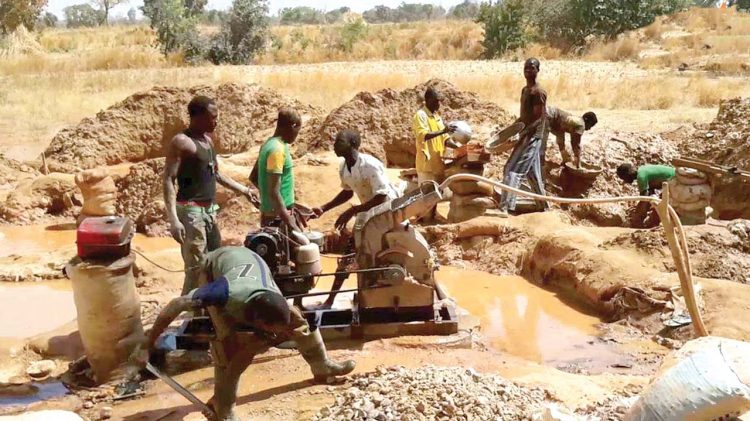
The collapse of a mining site in the hamlet of Kogo Kadage, located in the Yadagungume neighbourhood of the Ningi Local Government Area of Bauchi State, resulted in the deaths of four illegal miners.

The tragedy occurred on Saturday night while the miners dug up lead and attempted to remove it.

According to an anonymous source, they had been mining and excavating lead, one of the local mineral resources, for more than a month when, all of a sudden, one of the holes they had excavated collapsed and buried them beneath.

He noted that as the four miners were taken away from the collapsed site, they passed away instantly.

Ibrahim Zubairu, the chairman of the caretaker committee for the Ningi LGA, described the incident as tragic and sad, stating that three of the four people who were trapped in the pit perished instantly.

According to him, the illegal mining facility is situated seven kilometres from Yadagungume town in the Kogo Kadage forest.

“Yesterday (Saturday), I was informed that four people were trapped in a mining pit, I directed that they should be rescued. Later on, they reported back to me that they recovered three bodies.

“I don’t know about the illegal activities of the locals because we have banned all sorts of illegal mining in the entire local government area, it came to me as a surprise when I got the report of the incidence,” he said.

Is Sheikh Idris Abdulazeez a victim of sacrilege or political vendetta?

By Zaharaddeen Muhammad Azare

Years back, people saw it as taboo to question or criticise what religious scholars said, regardless of how illogical it sounded. However, as people started becoming wiser and more educated, they discovered that religious scholars, as fellow human beings, can understand and misunderstand laws, ministerial statements and concepts. Thus their comments are subject to verification, reconstruction and even falsification.

What happened to Sheikh Abduljabbar Nasiru Kabara that led to his imprisonment in Kano due to his inability to defend his speeches that were considered blasphemous serves as a motivative factor for holding religious scholars accountable for their actions and inaction.

Many people see the case of a known Bauchi-based Islamic scholar Sheikh Idris Abdulazeez as similar to Sheikh Abduljabbar’s, which led to the imprisonment of Sheikh Idris too. But is Sheikh Idris indeed being imprisoned for blasphemy or political reasons?

To answer this question, I take us back to some historical antecedents. Sheikh Idris Abdulazeez is a religious scholar who sees himself as a representative of his people and believes that as a citizen of Nigeria should be politically active to improve efficiency in governance and promote the welfare of the citizenry.

Sheikh Idris supported and criticised political leaders, which seems to be for the public good; the scholar condemned the state government’s actions when Barr. Mohammed Abdullahi Abubakar SAN who believed in the constitution, the application of the rule of law and the whole exercise and grant of human rights, was the state’s governor from 2015-2019.

The  Sheikh saw the then leadership as dust to the people of the state, thus needing elimination. And the then governor allowed him to voice out his opinions as an indigene of the state; the scholar condemned the ruled APC government and endorsed the incumbent state’s governor under the platform of PDP.

After the victory of the incumbent governor of the state Sen. Bala Mohammed Abdulkadir, in the 2019 general election, the government started doing activities contrary to what the scholar believed to be right; for this, he began criticising the government and was tagged as an enemy. In the recent 2023 general elections, the scholar directed his followers to vote for the former Nigerian Chief Of Air Staff Baba Sadiq (Air Marshall) of the All progressive congress (APC), against his counterpart Sen. Bala Mohammed of the People’s Democratic Party (PDP). Bala Mohammed got re-elected.

Some see the case which led to the imprisonment of the religious scholar as revenge for he was not allowed to defend his statements, like what happened to Sheikh Abduljabbar in Kano, where Islamic scholars of different sects were gathered for him to intellectually defend himself in a public which failure to do so bagged his imprisonment.

Most people believe that not allowing Sheikh Idris Abdulazeez to defend himself originated from the fact that he has legal evidence for his statement and how deeply educated religious scholars influx into Bauchi from several states to attest to his statement before the organised debate was cancelled due to these reasons which could set the scholar free. He was later taken to court and got jailed. Not Sheikh Idris alone, who is in jail for nearly a month over the so-called public disturbance. This week, Some traditional rulers have been dethroned by the state governor for what he describes as  “involvement in partisan politics” during the 2023 general election.

Someone who can’t endure opposition shouldn’t go into politics in a democratic state.

Zaharaddeen Muhammad Azare writes from Bauchi state and can be reached via zahmuhaza@gmail.com.

Toro lawmaker builds security outpost in Magama

By Ukasha Rabiu Magama

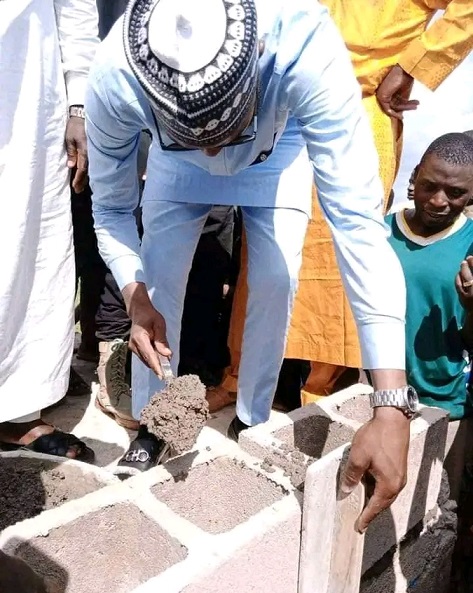
Amidst the persistent insecurity challenge bedevilling Toro, the member representing Toro federal constituency, Hon. Ismail Haruna Dabo, has laid a foundation for building a modern security outpost in Magama.

Flagging off the project in Magama Gumau on Saturday, the lawmaker reiterated his commitment to improving Toro citizens’ life and standard of living by working closely with federal authorities to safeguard the lives and property of Toro citizens and Nigerians.

Similarly, the events mark the closing ceremony of the first phase of the Haske Care Fertilizers program, whereby over 3000 farmers benefited from the scheme. Also, the lawmaker has sworn in 76 aides who will assist in his transformation agenda of moving Toro to a greater political and economic pedestal. 

While administering the oath, the lawmaker tasked the appointees to work harmoniously with him to develop policies and programs to reduce alarming youth restiveness and support women to be self-sufficient. Out of the 76 slots, there are nine legislative aides, ten media aides, 25 Project Monitoring Assistants, six personal Assistants and 25 Special Advisers. 

Speaking, the retired military officer Col. Umar Tilde applauded the gesture and tagged it the best in the history of the Toro federal constituency since the nation’s return to a democratic regime in 1999. 

In their separate remarks, the new appointees promise to work tirelessly and to the best of their ability by positively contributing to formulating policies that would improve the quality of life and standard of living of Toro citizens and Nigeria.

Hon. Ismail Dabo swears in 76 aides

By Ukasha Rabiu Magama

To ensure inclusive administration, the member representing the Toro federal constituency of Bauchi State, Hon. Ismail Haruna Dabo, has sworn in 76 aides across the 17 local government wards.

Delivering their oath at the Musa Salma Event Centre Magama, the lawmaker tasked the appointees to work harmoniously with him to move Toro to a greater height.

Admonishing the appointees, Hon. Dabo challenges them to take their duty with a sense of seriousness, adding that they shouldn’t hesitate to inform the problem facing the grassroots populace as his door will always be open for that. He further stated that his core agenda is to transform the lives of Toro citizens. 

“In line with my core agenda of transforming Toro, I want all of us to work harmoniously and closely with one another without hesitation to move Toro to greater heights by feeding me with the necessary information that can add value to the grassroots populace”, said Hon. Ismail Haruna Dabo.

Out of the 76 aides sworn in by the lawmaker, who are mainly youths, include nine legislative aids, six Personal Assistants, 25 Project Monitoring Assistants, ten media aids and 25 Special Assistants. 

Similarly, the event marks the closing ceremony of the first phase of the Haske Care Fertiliser, which was distributed to over 3000 farmers across the local government. The gesture was done to cushion the hardship experienced by the farmers amidst the fuel subsidy and the soaring cost of living.

In their separate remarks, the new appointees promise to work tirelessly and to the best of their ability by positively contributing to formulating policies that would improve the quality of life and standard of living of Toro citizens and Nigeria.

Married or marred?

By Abubakar Aliyu

I discussed with a friend about the woman that stabbed her husband to death, and this part of her opinion makes me ponder deeply about our society; “Living with the identity, “the woman that stabbed her husband” when she was just a woman who did not want to be in the marriage to start with.”

I can never trust the sanity of a man who forces himself on a woman that made it clear in the first place that she does not want to be with him. I think only delusional and toxic men—purported alpha men—will find it normal to subdue a woman into marriage despite being vivid that she is not into it.

And you wonder why the same woman you forced into a marriage lets loose of her survival instinct, ignoring all rational and objective views, therefore, prepared to perpetrate unbelievable atrocities to “escape”. At this juncture, nobody cares to come to her aid until what could have been averted—by peacefully ending the marriage—has happened, a society that incited it will be pointing fingers at her.

I understand that no amount of pressure can justify the action of a woman who stabbed her husband to death. But the fundamental driving forces of this preventable menace largely boil down to societal pressure. Society coerces women to accept that being in a marriage—no matter how abusive and toxic it gets—is the best thing that could ever happen to her as a woman.

Islamically, marriage affords a man to marry as many women as he is allowed—not beyond four. To a woman, marriage is a world she is allowed to live in for the rest of her life with one man only. So imagine living the rest of your life with someone you do not love or whom you once loved but turned out to be toxic and abusive! To have a simulation of a woman living in a toxic or forced marriage, picture yourself stuck in a pit latrine for the rest of your life.

Marriage is supposed to be a willing union of mutual love, tolerance, and respect between a man and a woman. Whenever any party insists on separating, it suggests that some or all of these three ingredients are short-changed beyond repair. That is why when couples are in crisis, one thing society needs to do is hear the concerns of both parties and intervene with no intention to subdue anyone to the detriment of the other.

Even when they do not reciprocate, chivalry toward women is a virtue of a gentleman. But it is good you know when a woman runs out of love for you and makes it clear that she wants to leave. Acknowledge and respect her feelings and yourself and let her go—unless you are not a gentleman. Humans fall in and out of love for several reasons, and it is normal because many of these reasons do not necessarily have to do with you in the first place—it is not your fault.

As a woman entangled in a forced or toxic marriage, know that you are faced with two evils—resorting to violence which you will live to regret, or leaving the marriage against all odds. Always choose the lesser evil, which is to, by any means, end the marriage. It is always better they describe you as a woman who refused to stay married than as a murderer.

To put it briefly, as long as the willingness to form a marriage union is not mutual, or the couple does not see any reason to stay in the marriage, the society—this includes parents, guardians, and religious and traditional leaders—has to respect their decision and let them go their separate way without trying to judge or bully any one of them into staying for the sake of their children. It is easier for children to live with the trauma of a broken home than with the unsettling fact that their mother killed their father.

Dear gentlemen and others (self-acclaimed alpha men), ask yourselves, do you want to get married or marred? A word is enough for the wise!

Abubakar Aliyu wrote via abubakaraliyu599@gmail.com.

Bauchi husband killer, netizens and the other side of the story 

By Lawan Bukar Maigana 

Maimunatu Suleiman, 21, stabbed her husband, Aliyu Mohammed Gidado, to death on July 5th, 2023, in their residence at Kofar Dumi in Bauchi State, Nigeria. 

Since then, I have read different narratives about the tragic incident. Some said she killed him because it was a forced marriage, while others said she murdered him because of his willingness to remarry. 

As a trained journalist and fact-checker, I needed to investigate the narratives’ source, save the public from being misled by merchants of misinformation and fake news, and feed the crowd with authentic information.  

Using Facebook, I identified his neighbour and demanded that he send me his phone number so we could talk about the incident, and he did. He told me that Aliyu and his wife married in January 2020 and have one child—a boy. 

“Their marriage was out of love. Everybody knows them, and most people in their area have admired them because of their love for each other which culminated in their marriage. 

“And they never had any serious issues until recently when Aliyu realised that Maimuna had been going out without his permission as her husband.

“Aliyu returned home three days ago and expressed sadness about her deviant conduct, which later resulted in a serious misunderstanding between them that nearly broke their marriage, but his father and older brother intervened”, the neighbour explained.

On the day the incident happened, Gidado’s father saw Maimunatu’s friend coming out of their house after they spent hours in her room holding her plasma TV, but he didn’t talk to them. 

It is a tradition in their house that the last person who comes in after 10:00 pm ensures everyone is around before closing the gate. 

Wednesday night after 10 pm, his older brother called his name and asked if he was around so he would lock the gate, but Aliyu didn’t answer. His brother asked thrice but to no avail. 

Worriedly, his brother approached his room and observed that he was gasping for breath. He quickly got back to his room and took a touch and entered the room and saw his brother soaked in blood while his wife, the prime suspect, was facing him. 

That was when he quickly called their father to see what happened and subsequently sought help from their neighbours to rush their brother to the hospital. Unluckily, Gidado died before they got to the hospital. 

Out of patience, concern, and resilience, they rushed his wife to the hospital, thinking she was stabbed. The doctors informed them that she was safe and had only sustained bruises on her stomach. 

After she regained consciousness, Gidado’s father asked what had happened, and she told them that thieves had jumped over the fence and killed her husband when she went to the toilet to pour her child’s urine. 

She even told them that the thieves ran with her plasma TV, unknown to her that the bereaved old man saw her friends going with her plasma TV hours before the unfortunate incident but didn’t argue with her. 

Curiously, the victim’s father told her that there was no way thieves would jump over the fence without being seen by a tea seller beside their gate, whose place is always busy with people. 

After discovering that she was suspicious, they called police on her. 

The cops took her to the station, where she confessed that she stabbed him twice in his chest because of a misunderstanding in the evening. 

It was also reliably confirmed that she has a three-month pregnancy for Gidado. 

Therefore, those who said the murderer was forcefully married to him are just lying to the public. Their marriage was out of enormous love. 

Similarly, an Abuja-based lady Maryam Sanda mercilessly stabbed her husband to death on November 2017. 

Many media outlets, largely online alongside social media influencers, had disseminated unverified chronicle stories about the tragic incident without confirmation from the parties involved. 

Sharing unfiltered and fabricated information is seemingly becoming a norm in Nigeria among media outlets and internet users to manipulate people’s perceptions of facts. 

It is necessary to call on spreaders of information and netizens to please desist from sharing unverified information and cultivate the habit of digging into stories before publishing them. 

Please pray for the repose of Gidado and his mother. She died in early January 2023. 

Lawan Bukar Maigana writes from Borno and can be reached via email:lawanbukarmaigana@gmail.com.

Malam Saidu Jibrin Kwani: A case study of a strong man vs strong institution debate

By Nasiru Manga

Anytime Nigeria’s myriad problems and challenges are raised in a discussion which also involves how to turn around the country’s fortune, it more often than not leads to a fascinating argument among intellectuals as to which is more important between establishing a solid institution which produces successive good leadership or having a leadership of strong men to engender strong institutions. In that instant, I find myself vacillating between the two opinions. I find both of them valid and very difficult to be disputed. It’s a case of a chick and an egg dilemma regarding which must have existed first, the chick which laid the egg or the egg from which the chick was hatched.

Reasoning with either of the points, I reflected on my teenage experience in secondary school more than two decades ago. I then relate the arguments with the leadership of five or six successive principals in my secondary school, Government Arabic College, Gombe. How these principals managed the school was a practical example of the validity of the two arguments depending on the side one takes.

One of the principals, in particular, stood out. He is Malam Saidu Jibrin Kwami. His exemplary leadership during his stint as the school’s principal afforded me the feeling of what good leadership can do, even in a small school environment. Before him, his predecessors couldn’t make any difference. The principal who succeeded him couldn’t equally build on his achievements. It’s also proof that without a vital institution, a strong leader’s efforts come to nought if he leaves the stage and succeeds by a weakling. For my readers to deeply appreciate why Malam Saidu Jibrin Kwami’s exemplary leadership towered above the rest of the principals, let me take you down memory lane of what was obtainable in the school.

The system was, and until we left the boarding secondary school in 2002, the principal, in addition to the daily management of the school, was in charge of students feeding. I didn’t know whether the funds for the feeding were released to the principal directly from the state ministry of education or the ministry provided the school with all foodstuffs. It released some funds to the principal for the daily running of the school and buying groceries. But I did know that the school store was getting restocked regularly.

The three square meals day in and day out consisted of mostly pap with sometimes two pieces of ƙosai served as breakfast. The pap had no sugar, and perhaps, due to how it was prepared, it had a sedative effect on students during school hours. Black tea with rumpled tiny bread was served as breakfast once a week. The lunch and supper were either tuwo made from processed maize, mostly half-done, called gabza by students or eba made from gari, served alternately for lunch and supper. The soup for the gabza or eba, mostly miyar kuka, was prepared with little to no spices and bereft of any accompanying protein in the form of meat. Rice which one couldn’t tell whether it was a jollof rice or simply white rice without soup, was served on Thursdays. The meat was served only once in a blue moon.

It is needless to say that the rations were not enough for students. Worse of it, many students used to end up not having their rations as what was given to the cooks to prepare was barely enough to go around. The service was, therefore, on a first-come-first-served basis, excluding senior students who needed not join queues. If one missed his share, that was all, and he would be told “ka bi Yerima“, an expression meaning “you have missed, there is nothing for you.” It was said that the cliché “ka bi Yerima” has its historical origin in one of the Gombe princes who sought and lost his father’s throne to then Emir of Gombe, Alhaji Shehu Abubakar. So “ka bi Yerima” means one followed in the footsteps of the prince, a loser. Ask me not about its authenticity.

To be fair to the principals of my secondary school, the situation was almost the same in all boarding public secondary schools, at least in Gombe and Bauchi states, around that time and even some years before that, as confirmed by those who attended the boarding schools before us. There were, of course, slight differences here and there occasioned by changes of different school administrators depending on their level of prudence and management of resources.

One incident I can’t forget during my first year was a riot in the school. The then-principal was unbelievably niggardly. Students’ rations which were, to start with, too little, only enough to feed a three-year-old baby, became so frequently inadequate to go around. Kun bi Yerima became the order of the day as more and more students started missing their rations at the dining hall. This was exacerbated by the fact that it was towards the end of a term when the foodstuffs brought from home by students and some money given to them by their parents to complement the school feeding programme had finished, thereby forcing many to rely on the food provided by the school which was not enough. There was also a shortage of water in the school.

So, one morning, some senior students from SS 2 and 3 woke up and said they had had enough. They took to the school’s streets chanting slogans that the principal should go and that he was a thief. After gathering, they headed to the school’s staff houses, where the principal lived. They started pelting stones at his house. He escaped by a whisker, and the school got shut down for a few weeks.

Upon resumption, we met a new principal and were informed that about seven (7) students, leaders of the protest, were expelled from the school. But still, there was no significant improvement in school feeding or academics. We only had three to four subjects maximum, out of the nine subjects we were supposed to have daily. The only exception was when we had teaching practice students from the Federal College of Education. And during that time, permanent teachers virtually abdicated their responsibilities, leaving everything to the student-teachers. Another two principals we had afterwards couldn’t effect any change. Their priorities were neither students’ academic nor their nutritional well-being.

Then came the revolutionary principal, Malam Saidu Jibrin Kwami. We were in SS 3, about five years after that principal against whom students revolted, and the fourth in the succession of principals since we enrolled in JSS 1.

The first thing he undertook was an improvement in our academics. He frowned at some teachers habits of sitting and chit-chatting in staff rooms without attending classes. He declared that he wouldn’t condone their flagrant negligence of duty. He insisted that every teacher must not miss his lesson twice weekly without a genuine reason. We then started having completed nine lessons on an unprecedented day.

How did he achieve that? He gave all class monitors notebooks to use as registers where each teacher would write their name and append their signatures at the end of their period. At the end of the class every day, the class monitors would queue up at his office, where he checked the register of each class to see if there was an absentee teacher. He also told us in the assembly that we should report any teacher we observed wasting away their period of 30 minutes or 45 minutes blabbering instead of teaching.

Malam Jibrin Kwami also introduced extra evening classes (which we called prep) daily, save weekends. Before him, there was not much importance attached to it by his predecessors. Only junior students used to attend it, and it wasn’t daily. But during his time, he supervised the evening classes himself; and he would personally go around hostels to chase out stubborn senior students who would rather stay put in the hostels while the prep was ongoing. If he sighted a student loitering about, he would shout from afar, “Who is that gardi?” He also ensured that all the classrooms and all the streets from students’ dormitories leading to the classes were fully lit so that students wouldn’t complain of darkness. There were no Discos then, and NEPA was genuinely faithful. How he achieved that, beat me.

You may be wondering what happened to our food, right? Suffice it to say that during his short period as the school’s principal, we also saw what our parents enjoyed in public schools in the ‘70s and ‘80s. He told us that he also finished in the same school in 1982, and it was unfortunate that things had deteriorated to that level.

Most days of the week, our breakfast became tea (not just black tea, but with milk) and bread as against pap. And we started feeling the taste of sugar in our pap too. White rice and stew, tuwo and eba started competing as our lunch and supper, with rice winning most times. Pieces of meat suddenly appeared in our daily meals, and the soup started having condiments.

One day, he summoned us as the school’s prefects, informed us that we would notice a change in our meal the next day, and urged us to survey and feed him about the change.  He told us the meat price was high, so he decided to alternate the meat with fish. So he wanted us to sample students’ general opinions on the fish substitute as he knew some people didn’t like fish. Such a thoughtful leader!

Unfortunately, as they say, good things hardly last; his tenure as a principal was short-lived. No sooner had we started enjoying his good leadership than he got elevated and appointed as the secretary of our state’s pilgrim board. The school was literally thrown into mourning upon hearing the news.

The man who succeeded him couldn’t properly step into his shoes. Things started deteriorating very fast. Before you know it, we were back to square one. This is the case of having a strong man without a strong institution. And the strong institution doesn’t exist in a vacuum; it has to be built by strong men.

Nasiru Manga can be reached via nasmang@gmail.com.

Education crisis looms in Bauchi 

By Mukhtar Jarmajo 

The state of education in Bauchi state is in disarray as over 1.4 million children remain out of school, according to recent reports. This crisis manifests itself in the acute shortage of qualified teachers, inadequate infrastructure, and poor funding for education. The Gabchyari community in Darazo local government is a classic example of the sorry state of our education system.

The only primary and junior secondary school in this area, which has approximately 350 students, has just three teachers, as reported by The Nation Newspaper last Monday. This is a gross inadequacy, as it means that each teacher will be responsible for teaching over 100 students. This will invariably lead to overcrowding, poor quality of learning, and the inability of individual students to receive adequate attention and care.

The continual neglect and unwillingness of the government to provide quality education for our children is evident in the rising number of out-of-school children in the state. This growing trend should be of concern to well-meaning citizens of the state, as it poses a threat to our future and that of the nation.

The consequences of the education crisis in Bauchi state are far-reaching and multifaceted. The inability of these children to access quality education could lead to a high rate of poverty, unemployment, and a general lack of development in the state. We cannot continue to ignore the plight of these children, as they represent the future of our society, and their education is a fundamental human right.

It is, therefore, imperative that the government takes urgent steps to address this crisis. The government must invest more in education by providing adequate funding, training and recruiting qualified teachers and building more schools in rural areas where the majority of these children live.

The education crisis in Bauchi state is a ticking time bomb that needs to be diffused as soon as possible. As stakeholders and well-meaning citizens, we must continue to put pressure on the government at all levels to take education seriously as an essential tool for development and nation-building. The time to act is now before it is too late.

Jarmajo can be reached via dattuwamanga@gmail.com.

FERMA: Bauchi-Jos highway needs urgent intervention

By Ukasha Rabiu Magama

The lives of the commuters passing through Jos-Bauchi road to other states in the Northeast and Northcentral regions are in precarious situations due to the gully erosion that washed away the road in Narabi, Toro local government of Bauchi state.

The affected area has already been declared dangerous by the residents. Though the site has been closed-off with stones and a red rope to serve as a warning signal to motorists, they are still managing to pass through at a low speed because there is no alternative.

Nonetheless, the Federal Road Maintenance Agency FERMA should hurriedly aid commuters by repairing the affected area before it is damaged entirely and cause havoc to motorists flying the roads daily.

It’s good for the FERMA to know that the way is the only way linking the entire north-central and northeast. Also, the Agency is aware that the road is among the busiest roads in Nigeria. Meanwhile, if FERMA refuses to fix up the ashed-away area hurriedly, it will affect and endanger the lives of thousands of commuters and stop motorists’ movement entirely. 

Similarly, it’s undoubtedly that the Bauchi-Jos road has become a dead zone for commuters because of the severe potholes along the road. This has been continuously claiming the lives of innocent commuters daily.

Annoyingly, the Bauchi-Jos highway is among the roads recording high rates of accidents in Nigeria. Given this, the federal government approved 348 billion in 2018 for the dualisation of the road from Akwanga-Jos-Bauchi to Gombe. This is to reduce the risk of accidents along the road, but more needs to be done on the ground to actualise the project.

Therefore, since the protection of the lives and property of every citizen is bestowed upon the government’s shoulders, it is significant for the FERMA to urgently intervene by repairing the washed-away area; this is to save innocent lives. Also, since the outgoing president cannot fulfil his promise, we are drawing the attention of the incoming president Ahmad Bola Tinubu to dualise the road; hence the need is to save lives and properties.

Meanwhile, we need FERMA’s urgent intervention before the new administration settles. If not, lives are at stake, and only God knows what will happen if the road is damaged completely.

Ukasha Rabiu Magama writes from Magama Toro, Bauchi state.

Bauchi: Government must promote basic education by rewarding excellence

By Umar Sani Yakubu

“In a few weeks from now, we shall be done with the junior secondary school certificate examination, and from then on, I am done with Western education.”

Above is what my ears brought to me as it was uttered in the Hausa language after I walked past some probably junior secondary school students in the Bauchi metropolis.

This statement by a young lad disturbed me. It proves to me how true it is that Bauchi State is counted as one of the states in the country with a high rate of out-of-school children.

However, proving that Bauchi State forms part of the state in Nigeria with a high rate of out-of-school children, this development has led to much criticism from concerned citizens as to why the state would join such a demeaning but objective reality. First, some critics blame the decade-long insurgency in the Northeast, where the state emerges. While some blame the root cause on parents’ lackadaisical attitude in enrolling the children in school, political opponents of the government accuse it of not providing the needed atmosphere for learning.

 Albeit, whatever it is that led our dear state into such a situation, the state government must be at its feet to make sure things are done well.

Relatively, it was against that backdrop that I was amazed at the government’s inattentiveness to the course in encouraging the students to do better in their studies. I point out the recent remarkable performance of some students who emerged from and represented the state in a national competition and were victorious above all the remaining participating states in the country.

Those students have been celebrated and recognised by many concerned individuals in Bauchi State and beyond; unfortunately, the state government has yet to say a word about the development.

 Is it this way that the government plans to make their youngsters remain on the course of changing the blackmailing narratives?

 I don’t believe all is right. But, of course, something must be wrong somewhere.

Suffice it to say; we are all witnesses to when the government in the state recognised and rewarded mere social media actors, etc. If political and social media actors can be recognised and even rewarded, why not a best-performing student who earned respect not only for themselves and the school but also for the state in the eyes of the world?

These students from Government College (Special School) Toro who participated in the recent National Inter-secondary Schools Quiz competition organised by the Raw Materials Research and Development Council and came out first must be recognised and celebrated by every serious state government where they emerged, especially as they are trained in a government-owned school as opposed to any proud private schools.

As Bauchi State is in a dangerous situation as its youth quit education for other heinous acts like Sara Suka, the state government must be reminded that giving such recognition and even awarding scholarships is vital in encouraging children to see the light in the path of their education.

Consequently, celebrating students of the state with remarkable performance in school and even rewarding them with scholarships stands to draw the attention of the wayward to education and encourage those already in the system to put in more effort.

Finally, with my confidence in the present administration of His Excellency Governor Bala Abdulkadir Muhammed, I hope the best brains from Government College Toro will be identified and rewarded for making the state proud in the competition above.

Gone were the days in Bauchi when international scholarships were given to the best brains, many of whom are now professionals in their respective careers.

 Sani is a concerned citizen from Bauchi State and can be reached at saniumaryakubu@gmail.com.