Bauchi State

Barota: It’s still not too late

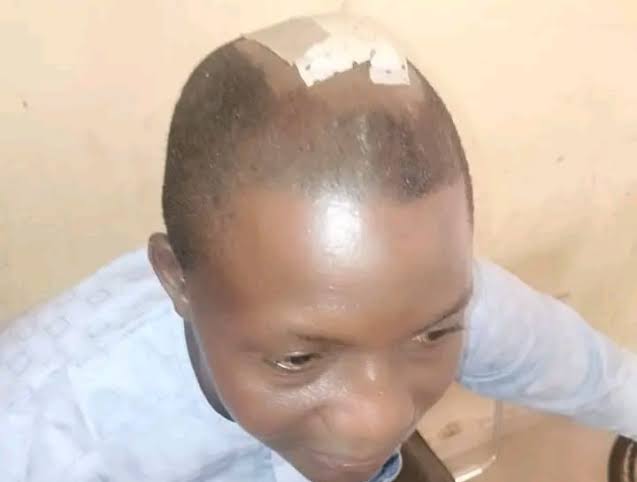
I watched with dismay a video circulating on social media in which an officer in uniform—possibly a cadet working with the Bauchi-Road Traffic-Agency (BAROTA)—was being chased by some youths at the Bakaro/Karofi/Shagari Roundabout. They were stoning him as he unconsciously ran across the road for his dear life.

The scenario is both frightening and disturbing. How can an officer on official duty be chased, possibly by a mob, simply for trying to discharge his responsibility of enforcing safety regulations? Unfortunately, some people now consider this a crime. For this reason, I am appealing to His Excellency Governor Bala Abdulkadir Mohammed to issue a marching order to address this unruly behaviour.

I have often written about BAROTA, particularly its operations and engagement. On many occasions, as a spectator and observer, I have suggested ways they can improve their work to enhance the safety of motorists and other road users. This is a pledge I made with honesty and sincerity of purpose, and I will continue until the desired objectives are achieved. I am glad to see other concerned individuals involved in this advocacy. Let us maintain the tempo, please.

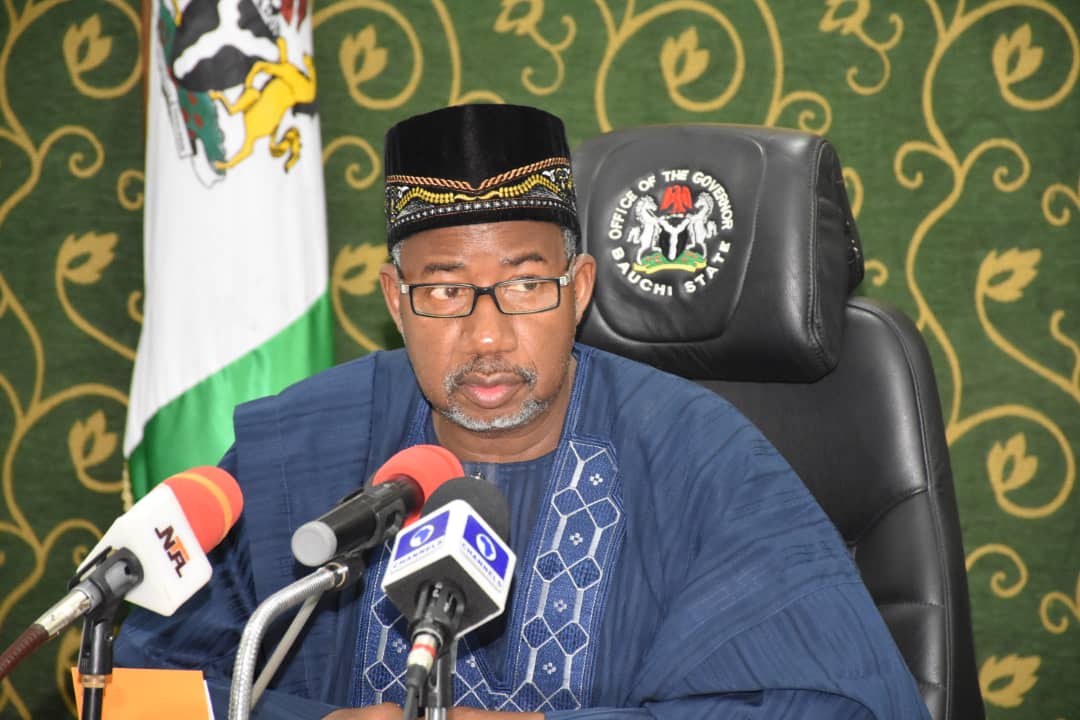
In his speech during the inauguration of the officers, His Excellency Governor Bala Abdulkadir Mohammed (Kauran Bauchi) made it clear that the agency was established, among other things, to address widespread road traffic violations and enhance road safety across the state.

Other responsibilities of the agency include removing and impounding vehicles obstructing highways, arresting road traffic violators, ensuring smooth traffic flow in urban centres and major towns, and promoting road safety awareness among residents. He urged the cadets to work closely with conventional security agencies to maintain order and safety on the roads.

Given the purpose of their work, these officers should be supported in discharging their duties to save lives and property, ensure safer roads, and instil discipline among motorists and other road users.

What went wrong?

Since its inception, the agency’s officers have faced numerous public challenges during official assignments. Passersby who are supposed to support them in carrying out their duties often end up creating hostile and chaotic situations.

This will not be unconnected to the poor perception and limited understanding of the essence of their work in securing people’s lives and property, perhaps resulting from their engagement and operational practices.

Way Forward. 

Therefore, it is incumbent upon the Agency to introduce workshops for its personnel on the rules of engagement in accordance with best practices, and to embark on rigorous awareness and sensitisation campaigns through stakeholder engagements with relevant groups, including NURTW, Achaba, and Keke Napep riders’ unions, as well as other road users.

There is a need for town hall meetings, street rallies, and sustained radio programmes, including phone-in segments, dramas, and jingles, to promote buy-in and public acceptance. The Agency should also involve religious and traditional institutions and encourage them to use their platforms for these campaigns. These and many more initiatives will help in addressing the growing resentment.

The leadership of NURTW and Achaba should educate their members on the importance of complying with all rules and regulations and ensure they possess all necessary documents to operate legally. The general public, on the other hand, should understand that these officers are legally engaged and work in strict adherence to the law establishing the Agency. Any attempt to obstruct or prevent them from performing their lawful duties will be treated as sabotage and will attract the full wrath of the law.

These and other similar initiatives will help bring sanity to road operations while creating an enabling environment for peaceful coexistence and harmonious relationships between the Agency and road users.

Isyaka Laminu Badamasi is at No. 555, Ajiya Adamu Road, Bauchi. He can be reached at makwalla82@gmail.com.

Farewell to Sheikh Dahiru Bauchi: A tribute to a light among us

By Usman Muhammad Salihu

The passing of Sheikh Dahiru Usman Bauchi shook the nation in a way words can barely hold. Bauchi witnessed a scene history will struggle to forget, millions gathered, from ordinary citizens to scholars, traditional rulers, state governors, former Vice President Atiku Abubakar, and even the Vice President of the Federal Republic of Nigeria, Kashim Shettima, leading the State’s delegation. It wasn’t a crowd built by influence. It wasn’t politics. It wasn’t power.

It was a divine honour given only by Allah to His chosen servants.

One elderly man at the funeral said, “What I saw today with my eyes… if Allah does not honour you, you cannot receive the kind of favour Maulana Sheikh received. This matter is beyond politics or chieftaincy. It is purely from Allah.” And truly, the atmosphere testified to that.

For decades, Sheikh Dahiru Bauchi stood as a bridge between generations. The number of people who embraced Islam through him is known only to Allah. The number of students who memorised the Qur’an under his guidance defies calculation. This, more than titles, wealth or recognition, is the legacy of a life well spent.

Yes, we feel the sting of his departure. But even in our grief, gratitude rises. Alhamdulillah for a man whose end came with honour, whose journey was marked by service, and whose impact will continue to shape hearts long after today.

He lived well. He left well.

May Allah widen his resting place.

May his light continue to guide those he left behind.

And may we live in ways that make our own children proud 

Millions were proud to call him their teacher, leader and father.

Usman Muhammad Salihu writes from Jos, Nigeria, via muhammadu5363@gmail.com.

A year called 2025

By Sulaiman Maijama’a 

Writing the end‑of‑year experience or the new‑year resolution, as is the case with many people on social media in recent years, has not been my tradition, for I don’t like making public the ladder I set out to climb in my life, nor do I like sharing my private‑life experience for public consumption. Reflecting on my journey through 2025, however, I saw the need to document the lessons learned, the experiences and knowledge acquired, and the shocks that became a turning point in my life. Perhaps this will shed some light on up‑and‑coming young people.

Of all the things I will recount, three occasions of opposite feelings of happiness and sadness that occurred stand out, and made me redefine my life and the people around me. Two experiences taught me, in practice, the concept of winning and losing in life. Several other experiences have widened my eyes to the realities of age and responsibility that come with it, as I’m rounding out the year as a newly improved version of myself.

On April 12th this year, I reached the pinnacle of my adulthood as I tied the nuptial knot with my beautiful Fulani wife in a momentous ceremony. Two days later, as we set out to enjoy the new life, my father-in-law, the father of my wife, passed on. The mosque we had gone to two days earlier to witness the making of my marriage contract was the same mosque we went back to observe the funeral prayers of my father-in-law. People who, two days earlier, came or called to celebrate with us were the same people who came or called to commiserate now. 

This tribulation obstructed all our plans: our honeymoon and visits from relatives to our newlywed home were suspended.  Weakened or rather paralysed by death, love vanished naturally from our hearts. My wife cried profusely (as she still does), and so my job was to pacify her and give her a sense of solace for her ever-growing pain. We did not have the luxury of the early days of marriage.

One month later, as we began to recover from the ordeal and as the rainy season set in,  thieves broke into my house mysteriously overnight while it was raining and took away my motorcycle. This was yet another moment of nervousness and suspicion about the area we reside in and the people around us, because we did not acclimatize to the environment.

Life continued through June and July, when I decided, for the first time in my life, to give agriculture a try. I planted soya beans with full force and hope to earn multiple profits. When it was almost ripe for cultivation, the farmland was tilted for a massive project, and I ended up having less than 20 per cent of what I invested.

In August, the most flabbergasting of all tribulations befell me: my biological father passed away after two years of illness. This is the greatest change in my life, and the realisation that growth has seriously come.

Looking back on my life, I know the Almighty’s favour and kindness toward me are immeasurable. Throughout my life, I have been successful in everything I have ever put my hands to; my educational journey, from nursery through primary and secondary school to polytechnic and university, has been seamless. Throughout this, I never retook any exam, graduated from polytechnic at the top of my class with a Distinction, and graduated from university with almost a First‑Class Honours. I never lacked resources, had opportunities, and even built a house while in university.

After graduation, I had two job offers before I finished the National Youth Service Corps. As I rounded out my NYSC, I got married immediately. I never missed any of my life’s milestones. With all these favours of God on me, why did God not test me in 2025? I will have to question my life and faith. Though these are tests of life that are hard to contend with, I draw solace whenever I remember Allah’s saying in the verse below in Surah Al‑Baqarah:

“And We will surely test you with something of fear and hunger and a loss of wealth and lives and fruits, but give good tidings to the patient”

Maijama’a is the Manager of Admin and Commercials, Eagle Radio Bauchi. He can be reached via sulaimanmaija@gmail.com.

Bauchi State sets January 4 for full reopening of schools

By Sabiu Abdullahi

The Bauchi State Government has fixed Sunday, January 4, 2026, as the date for the resumption of all Basic, Senior Secondary and Tertiary Institutions across the state after an extended closure.

The announcement was contained in a statement issued by Jalaludeen Usman, ANIPR, Information and Public Relations Officer of the Ministry of Education.

He explained that the decision followed “extensive discussions with key stakeholders including School Principals, Managers of the Education Sector in the State and owners of Private Schools among others,” which led to a collective agreement.

Governor Bala Abdulkadir Mohammed subsequently approved the reopening.

The ministry said examinations that could not hold before the closure “will now be conducted within the first week of resumption,” while normal academic activities will continue afterwards.

The statement also revealed that “approval has been granted for the immediate re-opening of the three (3) Federal Government Unity Colleges as directed by the Federal Ministry of Education.”

Officials noted that the earlier shutdown was based on “advise received from security agencies relying on available information and following a spate of untoward incidences in schools across the country.”

However, the government said the situation has improved, which informed the decision to reopen all institutions.

Parents and guardians have been directed to return their children and wards to school without delay.

The government reassured the public that “additional security measures are being put in place to ensure the safety of students, teaching and non-teaching staff in the various schools and higher institutions in the state.”

Former Bauchi governor, Abu Ali, passes away

By Abdullahi Mukhtar Algasgaini

Brigadier General Abu Ali, a former Military Governor of Bauchi State and a traditional ruler in Kogi State, has passed away.

The late General was the father of the renowned and gallant soldier, Lieutenant Muhammad Abu Ali, who was killed in action during a fierce battle with Boko Haram insurgents in Maiduguri.

The younger Abu Ali was widely celebrated for his bravery and military prowess in the fight against terrorism.

Brigadier General Abu Ali’s legacy is thus deeply intertwined with Nigeria’s military history, marked by both his own service and the ultimate sacrifice of his son.

The announcement of his passing has been met with an outpouring of tributes, with many offering prayers for the repose of his soul and for all the faithful departed.

Bauchi govt shuts all schools over security concerns

By Sabiu Abdullahi

The Bauchi State Government has ordered the immediate closure of all schools across the state due to rising security challenges.

The directive affects primary, secondary and tertiary institutions. It also covers Federal Government-owned schools and private schools operating within the state.

In a public announcement signed by the Information and Public Relations Officer of the Ministry of Education, Jalaludeen Usman, the government said: “The Bauchi State Government wishes to notify the general public that all primary, secondary, and tertiary institutions—including Federal Government-owned schools and private schools—are hereby closed with immediate effect.”

The statement explained that the decision was not taken lightly. It said:“This decision, though difficult, was taken by the Government of Bauchi State after extensive consultations and in response to overwhelming security concerns affecting the safety of students, teachers, and school communities across the state.”

He acknowledged the disruption the closure may cause. It added:“The government is fully aware of the inconvenience this may cause. However, the protection of our children remains our highest moral responsibility. Every student in Bauchi State deserves to learn in an environment that is safe, stable, and free of fear.”

Parents, guardians, school owners and other stakeholders were urged not to panic. The statement said:“We therefore call on parents, guardians, school proprietors, and all concerned stakeholders not to panic, but to remain calm and cooperative. The government is working closely with security agencies to address the concerns swiftly and comprehensively, ensuring that normal academic activities resume as soon as it is safe to do so.”

The government also appealed to residents to stay alert and support security efforts. It stated:“If you see something, say something. Timely information from the public is crucial in safeguarding our communities.”

It assured the public that updates will be provided as the situation develops.

Converting ATBU to a conventional university: A backward step in a forward world

By Aminu Babayo Shehu

The recent move by Senator Shehu Buba Umar, representing Bauchi South, to convert Abubakar Tafawa Balewa University (ATBU), Bauchi, from a University of Technology to a conventional university has stirred deep concern among stakeholders, alumni, and advocates of science and technology education. The bill, which has already passed second reading in the Senate, risks undoing decades of progress that ATBU has made in advancing technology-driven learning and innovation in Nigeria.

In an era when nations are competing through science, technology, and innovation, Nigeria cannot afford to take a step backwards. Around the world, technology is driving development, job creation, and national competitiveness. From Artificial Intelligence to Robotics, Biotechnology, and Cybersecurity, the future of work and industry is being reshaped by technology. It is therefore troubling that, instead of strengthening one of Nigeria’s most respected technology-based universities, the discussion is now about diluting its identity.

ATBU has earned its reputation as one of the country’s leading technological institutions. For decades, it has produced graduates who are not only competent but highly sought after in both the public and private sectors. Alumni of the university are excelling in software engineering, telecommunications, construction, fintech, and data science. Many are leading teams, building products, and contributing to the growth of major organisations across Nigeria and abroad.

In recent years, the university has made even more progressive strides. The Faculty of Computing, for instance, has expanded its curriculum beyond traditional Computer Science to include new, globally relevant courses such as Artificial Intelligence, Data Science, Software Engineering, and Cyber Security. These additions are clear evidence that ATBU is aligning itself with international trends and preparing students for the realities of the modern digital economy.

Instead of seeking to convert ATBU into a conventional university, the Federal Government and relevant stakeholders should focus on strengthening its technological capacity and research base. There are better, more visionary ways to make the institution self-sustaining and impactful. Establishing Artificial Intelligence research laboratories, cybersecurity and digital forensics hubs, robotics and automation labs, and technology incubation centres would attract both local and international partnerships. Such facilities could become national assets for innovation, startups, and industrial research.

Globally, top universities have achieved great success by maintaining and deepening their technological focus. The Massachusetts Institute of Technology (MIT) in the United States, Tsinghua University in China, and the Korea Advanced Institute of Science and Technology (KAIST) are shining examples of institutions that have transformed their nations through technology-driven education and research. Nigeria should be learning from these models, not abandoning its own.

Turning ATBU into a conventional university would water down its focus and weaken the very foundation on which it was established. What Nigeria needs today are more institutions that specialise in applied sciences, engineering, and emerging technologies; not fewer.

This proposal, though perhaps well-intentioned, is ill-timed and misdirected. The challenges of the 21st century demand more innovation, not less. The future will belong to nations that invest in science, technology, and knowledge creation.

ATBU should remain what it was meant to be: a University of Technology dedicated to building Nigeria’s next generation of innovators, engineers, and researchers. To do otherwise would not just be a loss for Bauchi or Northern Nigeria, but for the entire country.

Aminu Babayo Shehu is a Software Engineer and alumnus of Abubakar Tafawa Balewa University, Bauchi. He writes from Kano via absheikhone@gmail.com.

VLF demands release of activists, probe of Bauchi senator

By Sabiu Abdullahi

The Visionary Leaders Foundation (VLF) has called for the immediate release of two Nigerians arrested over online posts about allegations against Senator Shehu Buba Umar of Bauchi South.

In a statement signed by its Executive Director, Abdulbasit Muhammad, the group said the arrests “illustrate a pattern of shrinking civic space, criminalisation of free expression, and intimidation of citizens who dare to engage in public debate online.”

It explained that Mr. Daure David was detained by the Bauchi State CID after translating into Hausa a Sahara Reporters headline on the senator, while TikTok creator Mr. Ishaq Abubakar Major was arrested in Abuja by the FCID for a video commentary.

According to the foundation, “He is currently held without any clear evidence of wrongdoing other than exercising his voice on a public platform.”

The group stressed that freedom of expression is guaranteed by the Nigerian Constitution and international conventions, warning that attempts to silence citizens online amount to a violation of civic rights.

It further demanded an “independent, and impartial investigation” into the allegations against Senator Umar, saying that only transparency can restore public trust.

The foundation listed six demands, including the release of the detainees, protection of digital rights, and passage of the Digital Rights and Freedom Bill.

“The arrests of Mr. Daure and Mr. Ishaq Major send a chilling message that free expression, particularly in digital spaces, is under siege. This trend must be reversed,” the statement concluded.

The gentle power of giving: The life story of Dr Bala Maijama’a Wunti

By Usman Abdullahi Koli, ANIPR

Some lives are measured in years, others in titles, and some in possessions. The rarest and most enduring lives are measured in the hearts they touch and the hope they restore. Dr Bala Maijama’a Wunti belongs firmly in that rare place. His journey has been one of resilience and quiet strength, of rising from hardship to become a fountain of generosity whose waters reach far beyond the place where they spring.

Born on 8th August 1966, his earliest years were marked by a loss that would shape the rest of his life. Losing both parents as a child meant entering the world with an emptiness most could never imagine. Those days were not kind; survival was his only option. There were no easy comforts, no safety nets, only the will to push forward and the dream that tomorrow could be better.

Instead of allowing hardship to harden him, it softened him in extraordinary ways. The hunger he knew became a hunger to feed others. The loneliness he endured became a desire to stand by those who had no one to stand by. The obstacles he faced became a determination to clear the paths for others. He did not allow pain to turn into bitterness; he transformed it into kindness.

Over the years, giving has become so deeply ingrained in his life that it no longer feels like charity; it feels like breathing. He has lifted burdens that would have crushed families, stepped in quietly where hope was fading, and turned despair into relief for people who may never know his face but will always remember his help. For him, giving is not a grand event; it is the natural rhythm of his days.

Only yesterday, on the eve of his birthday, he paid the full registration fees for Bauchi State indigenous Law students across Law Schools in Nigeria and added incentives to support their journey. For those young men and women, it was more than a payment. It was a belief in their dreams and a reminder that someone cares enough to invest in their future. Acts like this are not exceptions in his life; they are the pattern.

His foundation, Wunti Alkhair, is an extension of his own values. It reaches into communities, lifts the sick from their sickbeds by clearing medical bills, opens doors of opportunity for young people to acquire skills, and creates moments of dignity where they seemed lost. It strengthens faith by building and restoring places of worship, not as monuments of wealth but as sanctuaries of hope.

What makes him remarkable is not just the scale of what he gives but the sincerity with which he provides it. There is no fanfare, no calculation, no search for applause. Many of those who have felt his kindness will never meet him, yet they carry a piece of him in their stories, in their survival, and in their renewed strength to face life again.

As we celebrate his birthday, we celebrate far more than a date. We honour a man whose life is proof that greatness is not in what we take but in what we give. A man who rose through the storms of his own childhood to become a shelter for others. A man who, in a world too often cold and self-serving, has chosen to be warm and selfless.

May Allah grant him long life, good health, and the strength to keep shaping lives for the better. May his journey remind us all that no matter where we start, we can choose to live in a way that makes the world a little softer, a little fairer, and a little kinder.

Your life is not only a blessing to those who know you but to many who never will, and that is the highest form of legacy.

Usman Abdullahi Koli wrote via mernoukoli@gmail.com.

BAROTA and the necessity for a special team at crucial junctions

By Isyaka Laminu Badamasi 

A few months ago, I wrote about the popular one-way routes in Bauchi metropolis, where I drew the attention of the relevant authorities to the need to address the unethical behaviours of some motorists and other road users who openly violate traffic regulations on our major roads and streets in the metropolis. To my dismay, the situation is worsening by the day. 

On my way to and from the office every day, I usually encounter frightening experiences at this junction, which has become a theatre for traffic violators, accidents, and altercations. People openly, without considering their safety or that of other road users, cross the road, either through a U-turn or a median. This is not peculiar to Keke Napep and Achaba riders, but also applies to cars, lorries, and trucks.

For months, I never witnessed the traffic warders or staff of the Bauchi Road Traffic Agency (BAROTA) working to avert the routine occurrences of road accidents at the junction. I’m not sure if this is another ‘new normal’ in our way of doing things. 

An Achaba rider once informed me that all these were a result of the ongoing flyover construction at the central market roundabout. He added that, “as soon as the project is completed, the traffic violation will be history”. Others believe that a roundabout should be constructed at the junction, as it is for the Bakaro-Shagari and Karofi junctions behind the Bauchi correctional facility. I’m not sure if this is possible.

Whatever the solution may be, I am appealing to the BAROTA, as a matter of public interest, to deploy a special team at the junction for 24-hour surveillance to ensure the safety of people’s lives and properties. Officers of the agency were always seen at the newly constructed Muda Lawal market road and/or under the Wunti flyover, arresting those who parked their vehicles incorrectly and Achaba riders; why is this junction neglected?

Recently, the Chairman, House Committee of Roads and Transport of the Bauchi State House of Assembly, Hon Engr. Garba Adamu engaged officials of the agency to discuss some important issues. I’m not sure if this particular case is part of their discussion.

The media houses should also embark on rigorous sensitisation, thanks to Albarka Radio for taking the lead in this regard. Religious and traditional institutions, as well as youth groups, should also utilise their respective domains in preaching good morals, which include abiding by traffic rules and regulations. All the other places I mentioned in my earlier write-up are still dangerous. The Tashan Babiye and Bayam Bata communities should form a volunteer team to address this lingering issue.

The picture is from the internet.

Isyaka Laminu Badamasi is the Team Lead, Initiatives for Sustainable Development (I4SD).