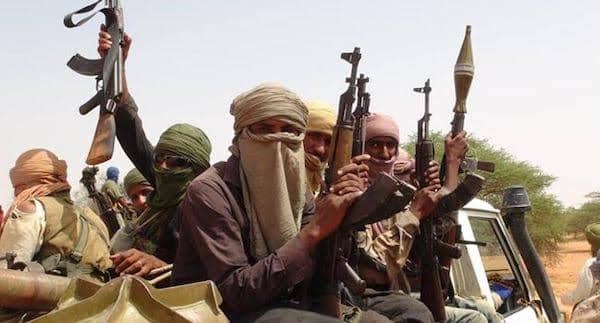
Banditry

Three people killed as gunmen attack Benue community

By Uzair Adam Imam

Three people were reportedly killed as unknown gunmen descended on Tse-Ikem, Ukemberagya/Tswarev Council Ward of Logo Local Government Area of Benue State.

It was gathered that the incident, which happened twice, took place on Friday and involved a young man while the other one that led to the death of two people took place on Sunday.

A community leader, who confirmed the development to the Daily Trust on the condition of anonymity, said the incident which occurred near Arufu rural town caused pandemonium among the residents.

“On Sunday October 23, 2022 at about 6 pm, Mr Aondona Saai and Mr Avalumun Ukerchia Adaa all of Tse-Igbur in Ukemberagya of Ukemberagya/Tswarev Council ward of Logo LGA were murdered at Tse Ikem on the road near Anawah settlement between Chembe and Anyiin road,” the community leader said.

Solome Tor, the Chairman of Logo LGA, Salome Tor, confirmed the development to journalists in the state.

He said, “On Sunday at about 5 pm, two men on a motorcycle with a lady were ambushed by those who butchered them.

“They (gunmen) left the woman and she ran into the bush, so that was how we were able to know what happened.

“There have been selected killings of people and the target is the men not women per se… we have a high patrol of security agencies. Even on Friday, they killed one young man and burnt his motorcycle.”

At the time of filing this report, the police in the state said they were yet to receive any report about the happening.

Zamfara banditry: Police rescued 27 kidnapped victims

By Uzair Adam Imam

Reports from Zamfara indicated that no fewer than 27 people abducted in Bukkuyum and Anka local government areas of the state were reportedly rescued by police.

This is coming after the suspected bandits stormed the named areas and abducted a yet-to-be-identified number of people.

The spokesman of the police command in the state, SP Muhammad Shehu, disclosed this to journalists in the state.

He said the 27 rescued victims were abducted by an armed group in Akawa, Gwashi, Tungar Rogo and some villages in Anka local government.

He also stated that, after their abduction, the victims were taken to camps at Gando/Bagega and Sunke forests in Bukkuyum and Anka local government areas.

She added the rescue of the victims was a sequel to the report received by the Command that a group of bandits had invaded the named villages.

“On receiving the report, the Commissioner of Police, Mr. Kolo Yusuf, deployed additional Police Tactical Operatives to reinforce DPOs in Anka and Bukkuyum local government areas and vigilantes to rescue the abducted victims.

“Luckily enough, a well-coordinated search and rescue operation was carried out with the full support and partnership of the two local governments’ sole administrators.

“At the moment, 17 out of 27 were brought to the Police Command Headquarters while the 10 other victims are in the hospital receiving medical attention following the trauma they passed through while in captivity,” he added.

After N6m ransom, my abductor gave me N2000 transport fare – Victim

By Uzair Adam Imam

A woman who regained freedom from bandits’ captivity said her abductors gave her N2,000 as transportation fare after collecting N6 million ransom from her husband.

The woman, Hajiya Fatima Ibrahim, said this when she appeared before a High Court in Zaria as prosecution witness (PW).

She was testifying as PW two at the resumed hearing of the case at Kaduna State High Court 1, Dogarawa Zaria.

Hajiya Fatima recounted, “On Jan. 2, 2021, in the night, I heard some strange noises in the house. As I woke up and switched on the lights, I saw the four defendants with a gun and machetes.

”They wanted to know where my husband was. I told them he was away. They kidnapped me and took me to Galadimawa Forest in Giwa Local Government Kaduna state after they had taken away money, children’s clothes and other valuables from the house.

”They called my husband and negotiated a ransom of N6 million to be paid in two instalments. The money was paid in my presence and the fourth Defendant (Usman) gave me N2,000 out of the money as transportation fare,” she told the court,” she stated.

She added that the defendants directed her on where to board a vehicle that will take her home and assured her that nothing will happen to her.

The police charged the arrested Dalhatu Shehu, Lawal Aliyu-Bullet, Nuhu Ismaila and Nura Usman with criminal conspiracy, armed robbery, illegal possession of a firearm and kidnapping.

The police said the offence contravenes the provisions of sections 59 (1), 246 (a-b) of the Penal Code and section 6 (b) of the Fire Arms Special Provision Act.

Police arrest eight bandits collaborators in Zamfara 

By Uzair Adam Imam

Reports from Zamfara State indicate that the police in the state have arrested eight bandits’ informants, gun runners, cattle rustlers and suppliers of hard drugs and foodstuff.

The police operatives also repelled the terrorists’ attacks in Bukkuyum, Shinkafi and Tsafe Local Government Areas of the state. 

The state Police Public Relations Officer, Superintendent Mohammed Shehu, disclosed this to journalists in Zamfara. 

Zamfara State is one of the epicentres of banditry and kidnapping in northern Nigeria that suffers from several attacks, leading to the deaths and displacements of a number of its residents. 

 He said the operatives also recovered four sophisticated guns, one cutlass and a bunch of charms after exchanging gunfire with the terrorists, who were forced to retreat into the bush.

Following the distress calls by some community members, this resulted in repelling the terrorists’ planned attacks on some communities. 

The suspects are under the state’s police custody, and a thorough investigation is currently taking place. 

Kidnapped mother, 4 children rescued alongside 3 others in Kaduna

By Uzair Adam Imam

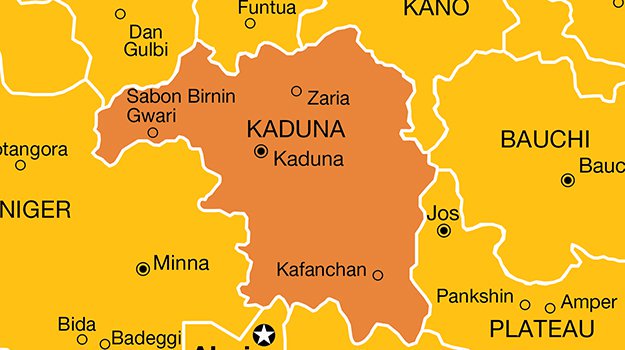
A kidnapped mother and her four children, alongside three other people, were rescued from bandits along Birnin Gwari and Chikun LGAs.

Samuel Aruwan, the Commissioner for the Ministry of Internal Security and Home Affairs, disclosed this in a statement issued on Tuesday.

He said the victims were rescued during a patrol in the areas by the Troops Operation Forest Sanity.

It was reported that the troops came under fire from the bandits while on patrol along the Birnin Gwari-Gayam-Kuriga-Manini axis.

However, after the troops returned the fire, the bandits fled into the forests, leaving behind the captives in their custody.

Aruwan said, “The seven victims have been reunited with their families.”

He identified the victims as Gloria Shedrack and her four children named Jimre Shedrack, Jonathan Shedrack, Angelina Shedrack and Abigail Shedrack. While the adults freed were Joseph Ishaku and John Bulus.

The Government of Kaduna State commended the troops for their brave efforts in rescuing and reuniting the victims with their families.

Bandits storm Abuja community again, block road

By Uzair Adam Imam

Unknown shooters have stormed Abuja Community, Tekpeshe-Gurdi, and abducted five persons on their way back from neighbouring community.

The Daily Reality recalls how bandits roamed the community two weeks ago where they killed one person and kidnapped others.

It was gathered that more than five million naira was paid before the victims were released last Friday.

The bandits were said to have flooded the community wielding sophisticated weapons. They also snatched six motorcycles in the process.

Wozhe Ishaya, the incumbent councillor representing Gurdi ward, confirmed the traumatic development to journalists.

He said, bandits blocked the road at Tekpeshe-Gurdi, where the residents were abducted.

“Actually, the victims went to Tekpeshe community to sympathise with some abducted victims that were set free by bandits, while on their way going back Gurdi, they ran into the bandits,

“In fact, even as I am talking to you right now, some villagers of Dadin Kowa have started leaving their village because of that incident,” he added.

A perspective on the resurgence of interest in Hausa identity on social media

By Aliyu A. Ammani

Those following happenings in social media could not have missed the debates and controversies generated by the rise in tribal identity consciousness among the Hausa in Nigeria. Identity among the Hausa has been suppressed by the mischievous use of the tag “Bamaguje”, masked by “Hausa-Fulani” and “Arewa” labels, and tacitly put into question over the years. Many people see in this increasing consciousness a threat to the coexistence between the Hausa and the Fulani, two tribes living together for centuries in Hausaland.

A series of conspiracy theories are churned to explain the genesis of this resurgence on social media, most of which sound somewhat ridiculous. The conspiracy theorists appeared not to see the wood for the trees. There are two primary reasons behind the resurgence of interest in Hausa identity in Nigeria today.

First, the Bororo Fulani banditry in mainstream Hausaland on populations that are essentially Hausa, and its attendant destruction of lives and properties, maiming, looting, raping of women, kidnapping for ransom etc. Thousands of towns and villages across Hausaland have been sacked. Communities of free law-abiding citizens are forced back to the dark age of slavery; abled-bodied men are attacked and abducted, sometimes right inside mosques on Fridays. The perpetrators of these heinous crimes are always willing to tell the world they are Fulani, fighting for Fulani against the Hausa. The reader can hear from the Horse’s Mouth in the following audio-visual documentaries available on YouTube: (i) BBC Africa Eye Documentary “The Bandit Warlords of Zamfara”, (ii) Trust TV’s “Nigeria’s Banditry ‘The Inside Story” and. (iii) video coverage of Dr Ahmad Gumi’s meeting with Zamfara Bandits at Shinkafi.

Second, and most importantly, the attitude of city-dwelling Fulani, including some notable traditional and religious leaders in Hausaland, in the face of Bororo banditry. Instead of publicly dissociating themselves from the atrocities or publicly declaring that terrorists like Bello Turji, Dogo Gide and Ado Aleru do not represent the Fulani, they seem more comfortable fabricating excuses for the bandits in tongue-in-cheek statements.

The leaders say, “their cattle were rustled”, “traditional cattle routes were blocked by new farmlands and settlements”, “the Fulani are not in it alone, there are other tribes including the Hausa aiding and supporting them”, and “the governments neglect the Fulani, …” etc. Not a single traditional ruler in mainstream Hausaland came out to publicly take an impartial stand, as did the emir of Muri. Even Miyetti Allah, the Fulani association that is always quick to cry blue murder whenever the interest of the Bororo appeared threatened, appeared to lose its voice. Thus, projecting an impression that while Bororo Fulani are busy terrorising and destroying Hausa populations and settlements, city Fulani are busy manufacturing and propagating excuses and justifications for the atrocities.

Can one sincerely justify banditry or rebellion by Fulani in Hausaland, a land that is practically a Fulani territory? The most important traditional rulers in Hausaland are Fulani. The key political figures and public officials in Hausaland are Fulani. The most notable Islamic clerics and religious leaders are Fulani. Even in Hausa settlements outside Hausaland, the heads of the communities, known as “Sarakunan Hausawa” (singl. Sarkin Hausawa) majority are Fulani. Therefore, the Fulani should be the last to rebel in Hausaland!

The Hausa, hitherto feeling that he has ‘his back covered’ by the Fulani, feels betrayed. With the scales falling off his eyes, he began to see the writing on the wall: “You are on your own”. This ignites the process that sparked the chain of reactions that we now see on social media as the resurgence of interest in Hausa identity, what others see as the dissociation of Hausawa from the Fulani.

There is indeed the tendency that a reawakening of identity consciousness among the Hausa is capable of igniting an equal spark in Fulani identity among the almost “hausanised” Fulani in Hausaland. This could lead to an upsurge in identity politics among both groups, leading to extremism where elements from both tribes could begin to see and interpret processes and events on a “we versus them’ basis. Traces of such extremism are already visible. However, the possibility of such a tendency should not be reason enough to deny the Hausa of their rights to tribal identity, association and aspirations for the simple reason that other Nigerian tribes have been enjoying such rights without posing any threat to their coexistence with other tribes in Nigeria.

The upsurge in Hausa identity revival has started and cannot be stifled or halted. The genie is already out of the bottle. The question that begs an answer is, “which way forward”? The way forward is not in the identification and clamping down on the persons or group managing pro-Hausa identity revival social media handles as is being suggested by some Islamic clerics across Northern Nigeria. This is more likely to compound rather than solve the problem.

The solution is for the ‘organised Fulani front’ to confront and respectfully address the fears of the Hausa people (of a conspiracy to annihilate them). They should also give them their assurance and publicly dissociate the Fulani from the activities of terrorists like Bello Turji & Co, and commence the process of rebuilding mutual trust and respect between the Hausa and Fulani.

Aliyu A. Ammani wrote via aaammani@yahoo.co.uk fromU/Shanu, Kaduna, Nigeria.

Bandits kill driver, abduct several passengers in Katsina

By Uzair Adam Imam

Unknown gunmen have attacked travellers along the Funtua-Dandume road, killed a commercial driver and abducted an unspecified number of people.

The attack occurred Sunday around 07:45 and involved travellers from both Funtua and Dandume who were kidnapped to an unknown destination.

A commercial car driver plying axis that spoke to Daily Trust, Bello Halilu, said he passed through the scene immediately after the incident.

He stated that “The incident happened at Kwanar Gamji around Hawan-Fulani. The bandits lay in ambush and opened fire at the moving vehicles, killing one driver and abducting an unspecified number of passengers. Some that escaped spent their night inside farms.

“Like yesterday (Sunday), some drivers manage to ply the route to cash in the booming economic activities in this harvest season,” he added.

Another driver, Malam Habibu, said, “When I ran into the bandits’ ambush, they already grounded one commercial vehicle and abducted its passengers; they shot at my car, a bullet struck me in the leg, but I managed to speed up for about two kilometres before I lost strength and parked. Police from the Dandume division later came and took me to the hospital,” he said.

How Governor Masari is wrongly governing Katsina state

By Muhammad Malumfashi 

As eloquent people often say, “All leaders after they leave the office are judged on their performance and failures.” So Governor Aminu Masari of Katsina State cannot escape this assessment either.

Since the return of democracy to Nigeria in 1999, Katsina has never been so unlucky to have a wicked leader like Masari. People often talk about his incompetence when he was Speaker of the National Assembly. I thought that was the Nigerian’s usual outcry (body language), especially when someone they see as less qualified to govern them succeeds their kinsman. They don’t know that they foresaw the monster unleashed on the national progress and what might happen to our dear Katsina since the man started eyeing our governor’s seat.

The kind of policies exemplified by the Masari administration in Katsina have, perhaps by no small means, helped to cripple both the state’s education and economy. The Masari government has failed to show outstanding commitment to boosting the state’s economy and reviving the lost glory of education.

For example, in the economic sphere, take as a case examples a multi-billion naira project, the “Katsina Dubai International Market Project”, launched by the previous government of Barrister Ibrahim Shehu Shema. Unfortunately, the current Masari government abandoned it due to some political troubles. Likewise, the “Katsina Multi-billion Solar Project”, started by the late former President Yar’adua of blessed memory and a variety of significant projects Masari government inherited, doesn’t bother to complete.

Much less the siphoning off and wasting of local government funds because this government took six years to conduct local government elections, and it is evident to all that they used non-LG polls campaigning tactics against the previous government. Still, they overlooked them once they came to power and exercised their vested interest in government. Also, most of the infrastructures they built are counterfeits. Tell me six out of ten weren’t renovations, and they would claim to be spending more than it could have cost had it been a new project.

Nonetheless, education in Katsina state faces a significant setback without empathy as the relevant authorities cruelly assess the plight. Learning environments are decrepit, making them unfavourable for teachers and students. Go to any local government and see the poor state of learning environments with your naked eyes, despite the huge amount of money that has always been claimed to be spent tackling it. Promotion, recruitment, arrears, gratuity, salary payment in time and other entitlements to improve teachers’/staff welfare are neglected.

I have always wondered what an ungrateful person Masari is, someone who has told the world that he was raised as an orphan and mowed grass to feed himself or funded his education. I thought someone like him who went through these would have known the reality of life and taken public education seriously as his priority. Still, the kind of negligence he shows towards public education, even those born with silver spoons, could not have done that.

Based on the controversy surrounding his school qualifications, I am not surprised by the carefree attitude that a half-literate like him has towards education. After all, even the highly educated people in Nigeria today have not given education the highest priority. Just look at his questionable educational qualifications published by some of his supporters. They said he attended Kafur/Malumfashi Primary School, Government Secondary School, Funtua AWS Training School, Middlesex Polytechnic, London and Administrative Staff College, Badagary. He holds a Postgraduate Diploma in Water Quality Control and Management. He has taken various courses in and out of the country and earned a Post Graduate Diploma in Water Quality Control and Management from Middlesex Polytechnic, the UK, in 1982, etc.

Although someone might say that education is not a gauge of one’s dominance, to be honest, it is. Meanwhile, reading his interview with Eric Osagie (The Sun Reporter), he refuted some of the qualifications attributed to him: “Why should I advocate having anything I don’t possess?” It doesn’t sound that fascinating to me. He knows the kind of politics played in Nigeria.

Not to mention the fate of the state’s public higher education, which is now in decay. While other state governors are striving hard to find lasting solutions for their citizens to avoid excessive stagnation at home due to the ASUU strike, Masari still wanders in his sleep. He daydreams about what to do to fix problems with Katsina’s academic Staff union of the university so that the school can reopen. Students can resume classes and finish their hanging courses on time.

This administration also scores a capital distinction in breach of trust because it is no longer strange news for Katsina’s citizens to see a headline about missing money in the state’s accounts. Only in Katsina would you wake up and hear the shocking news of your life about missing funds. Instead, our government would simply go to the media and inform the public that this and that animal or theft swelled hundreds of millions by the unknown individual. 

Regarding security, Masari can’t even score zero because Katsina faces serious security challenges, so nowhere is safe! As clearly stated in the Nigerian constitution’s provision, any government’s primary responsibility is to protect its citizens’ life and property. Any government that has not done so has nothing to do in office. Yet, four or more villages in Katsina state are attacked daily, indicating a lack of leadership in the state’s security framework.

It is unfortunate that any government requires its people to defend themselves against bandit attacks. However, this clearly defines what kind of leader Masari is. How on earth would a sane leader urge his followers to take up arms and defend themselves against the enemies, and yet he remains in power, refusing to step down to allow anyone with the ability to be in command to take over?

Muhammad Malumfashi is a cynic essayist and can be reached via muhammadisyakumalumfashi@gmail.com.

Bandits negotiator, Mamu arrested in Cairo

By Ahmad Deedat Zakari

The negotiator of the Kaduna train hostage, Tukur Mamu, was arrested by Interpol on Tuesday in Egypt.

According to reports, Mamu was arrested and detained by Interpol at the International Airport in Cairo on his way to the Kingdom of Saudi Arabia. 

Mr Mamu, also the spokesperson of the Kaduna-based cleric, Sheikh Ahmad Gumi, led the negotiation to release some of the abductees of the March 2022 Kaduna train attack. 

Mr Mamu has confirmed his arrest to the press. He disclosed that he was released immediately after a search which found nothing unlawful on him.

Mr Mamu had earlier withdrawn from negotiating with terrorists. He cited threats to his life by the Nigerian government as the reason for his withdrawal.