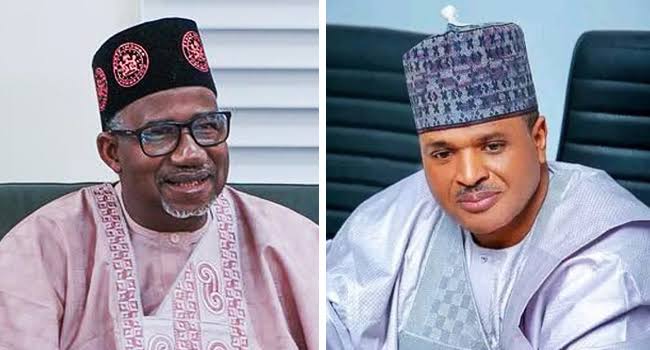
Bala Abdulkadir Mohammed

Barota: It’s still not too late

I watched with dismay a video circulating on social media in which an officer in uniform—possibly a cadet working with the Bauchi-Road Traffic-Agency (BAROTA)—was being chased by some youths at the Bakaro/Karofi/Shagari Roundabout. They were stoning him as he unconsciously ran across the road for his dear life.

The scenario is both frightening and disturbing. How can an officer on official duty be chased, possibly by a mob, simply for trying to discharge his responsibility of enforcing safety regulations? Unfortunately, some people now consider this a crime. For this reason, I am appealing to His Excellency Governor Bala Abdulkadir Mohammed to issue a marching order to address this unruly behaviour.

I have often written about BAROTA, particularly its operations and engagement. On many occasions, as a spectator and observer, I have suggested ways they can improve their work to enhance the safety of motorists and other road users. This is a pledge I made with honesty and sincerity of purpose, and I will continue until the desired objectives are achieved. I am glad to see other concerned individuals involved in this advocacy. Let us maintain the tempo, please.

In his speech during the inauguration of the officers, His Excellency Governor Bala Abdulkadir Mohammed (Kauran Bauchi) made it clear that the agency was established, among other things, to address widespread road traffic violations and enhance road safety across the state.

Other responsibilities of the agency include removing and impounding vehicles obstructing highways, arresting road traffic violators, ensuring smooth traffic flow in urban centres and major towns, and promoting road safety awareness among residents. He urged the cadets to work closely with conventional security agencies to maintain order and safety on the roads.

Given the purpose of their work, these officers should be supported in discharging their duties to save lives and property, ensure safer roads, and instil discipline among motorists and other road users.

What went wrong?

Since its inception, the agency’s officers have faced numerous public challenges during official assignments. Passersby who are supposed to support them in carrying out their duties often end up creating hostile and chaotic situations.

This will not be unconnected to the poor perception and limited understanding of the essence of their work in securing people’s lives and property, perhaps resulting from their engagement and operational practices.

Way Forward. 

Therefore, it is incumbent upon the Agency to introduce workshops for its personnel on the rules of engagement in accordance with best practices, and to embark on rigorous awareness and sensitisation campaigns through stakeholder engagements with relevant groups, including NURTW, Achaba, and Keke Napep riders’ unions, as well as other road users.

There is a need for town hall meetings, street rallies, and sustained radio programmes, including phone-in segments, dramas, and jingles, to promote buy-in and public acceptance. The Agency should also involve religious and traditional institutions and encourage them to use their platforms for these campaigns. These and many more initiatives will help in addressing the growing resentment.

The leadership of NURTW and Achaba should educate their members on the importance of complying with all rules and regulations and ensure they possess all necessary documents to operate legally. The general public, on the other hand, should understand that these officers are legally engaged and work in strict adherence to the law establishing the Agency. Any attempt to obstruct or prevent them from performing their lawful duties will be treated as sabotage and will attract the full wrath of the law.

These and other similar initiatives will help bring sanity to road operations while creating an enabling environment for peaceful coexistence and harmonious relationships between the Agency and road users.

Isyaka Laminu Badamasi is at No. 555, Ajiya Adamu Road, Bauchi. He can be reached at makwalla82@gmail.com.

Celebrating Gov. Bala Mohammed’s achievements and the need to rehabilitate the Bauchi-Ningi Road

By Usman Abdullahi Koli

Leadership is often defined by its tangible impacts on ordinary people’s lives. In Bauchi State, Sen. Bala Abdulkadir Mohammed’s transformative vision has ushered in a new era of development, safety, and economic revitalisation. His dedication to infrastructural development and human-centred governance proves his attentiveness to building a better Bauchi for all.

Governor Bala’s administration has relentlessly addressed the state’s infrastructural challenges. By constructing new roads and repairing bridges damaged by floods, the governor has significantly improved residents’ connectivity and mobility. These efforts have facilitated the smooth movement of goods and services and contributed to Bauchi State’s economic resurgence, making it an attractive destination for investors and visitors alike.

The recent inauguration of 500 officers for the Bauchi Road Traffic Agency (BAROTA) is yet another feather in the Governor’s cap. This initiative aims to safeguard the lives of road users, enforce traffic regulations, and maintain order across the state’s bustling roads. By collaborating with other road safety institutions, these officers will play a crucial role in ensuring that drivers adhere to all protocols, thereby reducing accidents and enhancing the overall safety of both motorists and pedestrians.

While celebrating these commendable achievements, it is imperative to draw the Governor’s attention to the pressing need to rehabilitate the Bauchi-Ningi Road. This vital artery links Bauchi to numerous local government areas and neighbouring Jigawa and Kano States and has been in disrepair for years. Its current condition has deteriorated to alarming levels, with daily reports of ghastly accidents claiming lives and destroying vehicles.

The road’s strategic importance cannot be overstated, especially as it is the main route for two major markets, Gadar Maiwa Monday Market and Durun Sunday Market. During market days, reckless driving and the pothole-ridden terrain lead to frequent accidents. For traders, commuters, and other road users, navigating this stretch has become a perilous ordeal that demands urgent intervention.

Though the Bauchi-Ningi Road falls under federal jurisdiction, Gov. Bala’s track record of prioritising the welfare of his people positions him as a leader capable of championing this cause. By leveraging his influence and proactive governance style, the Governor can initiate discussions and collaborations to expedite the rehabilitation of this critical road.

Gov. Bala’s willingness to address infrastructure challenges demonstrates a rare blend of empathy and pragmatism. By extending his administration’s efforts to the Bauchi-Ningi Road, he can save countless lives, protect properties, and restore confidence among road users. A repaired Bauchi-Ningi Road would enhance safety and stimulate economic activities, further boosting the state’s economic capacity and ensuring seamless connectivity.

In Sen. Bala Mohammed, Bauchi State has a leader who listens, acts, and delivers. His strides in road construction, bridge repairs, and road safety initiatives accent his deep concern for the welfare of his people. As we commend him for these remarkable achievements, we also urge our national representatives—including our Senator, House of Representatives members, and the Speaker of the State Assembly—to collaborate with the Governor and prioritise the rehabilitation of the Bauchi-Ningi Road.

This collective effort will address the urgent needs of this critical infrastructure and strengthen the legacy of progress and safety that Gov. Bala Mohammed’s administration has established. We can look forward to a safer and more prosperous Bauchi State.

Usman Abdullahi Koli wrote via mernoukoli@gmail.com.

Governor Bala: What is the position of education in Bauchi State?

By Ukasha Rabiu Magama

The last time the Bauchi state government recruited teachers in its primary and secondary schools was in 2014-2015 when Dr Malam Isah Yuguda was in power. Since then, no single teacher has been employed again in the sector, though there have been cases of retirement, changes of cadres, and death.

It may not interest readers to hear that with these sad and unwelcome developments, Bauchi state has been enumerated among the states with many out-of-school children in Nigeria. According to UNESCO, in October 2022, Bauchi had the highest figures, amounting to 1,239,759.

These alarming figures are not unconnected to the government’s failure to recruit apt teachers, provide enough instructional materials and non-payment of staff salaries. This weird and mind-boggling development has thrown thousands of Bauchi kids out of school and, sadly, others to street begging and other criminal activities. 

Imagine a primary school having one teacher with a population of about 350 pupils. There are many schools in the Lame district of Toro local government with only one teacher. Also, not just Lame district but almost all primary schools in the state’s rural areas face similar problems. Pupils receive classes under the shed trees with no chairs. Hmm! Primary schools and even our secondary schools are in terrible condition.

Recently, the Daily Trust newspaper reported how the lack of teachers and infrastructure forced the closure of many primary schools and turned pupils into farmers in Alkaleri, the governor’s local government. Still, Daily Trust gathered that multiple public primary schools, especially in the semi-urban and rural areas of the state, are either run by volunteer teachers hired by the community development committee or by public-spirited individuals in their quest to attract parents and children who are shunning school.

Surprisingly, the authorities are aware of the situation. There was a time when Korijo Usman, the SUBEB director of state, told journalists that there were 79 primary schools in Misau’s local government, and each school had one teacher.

The governor had once condemned the system while expressing dissatisfaction with the Dumi school’s bad condition. He stated that he was unhappy with SUBEB and the state’s ministry of education. 

Therefore, if the governor can condemn the system and nothing has been done to fix it, then our kids’ future is at stake. Also, the government has indicated its ineptitude to restore the system.

If the World Bank and other NGOs could donate huge funds, just revamp the system. I accused the state government of embezzling the funds since nothing has been done yet.

However, the dilapidating condition of the schools must be attributed to the activities of vandals and the negligence of the host communities; government negligence contributed to nearly 70% of the problems. It is undeniable that unscrupulous elements are carting away schools’ belongings, having government agents as masterminders.

Therefore, education in Bauchi state is on the verge of collapse as there are many no’s. As such, I’m calling on the present administration of Bala Muhammad Abdulkadir to employ sufficient teachers, build enough classes, and renovate the abandoned ones as a matter of urgent public importance. 

Notwithstanding, paying teachers’ salaries on time and promoting those who are supposed to be promoted would help revitalise the education sector in the state; if not, the whole system will soon collapse, and the position of the state education sector will be nowhere to be found. 

Ukasha Rabiu Magama writes from Magama, Toro, Bauchi State, and can be reached at Ukasharabiu95@gmail.com.

Why the Bauchi State government needs to rescue education

By Muhammad Miftahuddeen Isa

The plight of secondary school students in government schools across Bauchi State is getting worse by the day, and their situation, if left unattended, would do a lot of harm to the future of the State. 

Education is the key to civilisation; it influences growth and frustrates mediocrity in thoughts and aspirations. It, therefore, becomes pertinent to teach the right mindset to students, teachers and those saddled with the responsibility of providing quality education to our brethren. However, while orienting our brothers and sisters in secondary schools on how to succeed in life, we were baffled to learn that our schools lack adequate teachers to teach and guide students towards a prosperous future. 

BALAWSAN Law Week was my way of bidding farewell to the one-year service to the Bauchi State Law Students’ Association of Nigeria—as its President. But contrary to what people had imagined, all my programs centred on secondary school students. At least, that’s what many would say, even though the Members of BALAWSAN were never left behind.

We intended to unveil young men with great potential and build more capable leaders through mindset reorientation and capacity building. We have achieved that— through the direct beneficiaries of the programs— our members and the secondary school students—most especially during the Debate Competition we organised between Secondary Schools, where young, intelligent students were given the platform to display their oratory prowess and consequently, the chance to realise their worth and capabilities. I am happy with how things turned out, for I am confident now that we do not lack talents in Bauchi State; we lack the will to invest in them. I will explain this further in the subsequent paragraphs.

On the 26th of October, 2023, my team and I arrived at Sa’adu Zungur Model Secondary School at about 11 am for a Career Awareness Program, with which we declared open the first BALAWSAN Law Week, 2023. The School is among the most reputed Public Schools in Bauchi State, and naturally, we would expect their standards to fit their public image. The Principal gave us a warm welcome, after which we were ushered into the Hall booked for the event. 

My friend, who coupled as the Master of Ceremony, introduced the purpose for which we were there, after which I was invited to deliver a brief lecture on “what it means to be a Lawyer” and subsequently, Miss. Atika Garba Hassan and Mr. Bilyamin Aliyu Salisu— both fresh graduates of Law— delivered lectures on “The Requirements for Law Admission in Nigerian Institutions” and “The Mindset for Success”, respectively. It was both an exciting and impactful program for everyone until we started dishing out questions, and as expected, the students answered passionately. 

As is the practice, we allowed for questions from the audience. Both students and staff asked many important questions, but the one that occupies my mind even as I write this piece is: “Literature in English, as Miss. Atika has explained it is a requirement for a person who intends to pursue a career in Law, and we have no Literature on English teaching in this school. Not only in this School but in the whole of Bauchi State, we had two of them, one of whom is deceased now. The Government is doing its best. The question now is, how could our students be qualified to study law under this circumstance? Another thing is that we do not have sufficient teachers to teach Government.”

Ordinarily, every good citizen would find it troubling to know that one of the best public secondary schools in Bauchi has no teacher available to teach one of the most important subjects for every Art Class Student— I am a good citizen. To call this a disappointment is the highest I could go in leniency, and to call a spade a spade. It is the zenith of cruelty perpetrated by the government of Bauchi State, every stakeholder in the state’s education sector, parents, and all the people of Bauchi State. How could this be happening without anyone saying anything? This is a time bomb, and unless it is dismantled, an abode is guaranteed in hell for all of us— both the Actors and Spectators. If this is what we found out in less than the Two hours we had been in the School, how much more does the Ministry of Education know? How much more does individual School Management know? And how much more do we need to know before we act?

It is common knowledge that even the Commissioner and Directors of the Ministry of Education and Principals and Teachers of Public Schools do not have their wards enrolled in public schools, which has contributed to the criminal neglect of the schools. How can you be selling to people what you cannot use yourself? How can you ask people to trust the institution you steer when you do not trust such institutions with your children? But it is okay. I know they would rather point fingers than do the right thing, but at least these students— the ones we have neglected— should have qualified teachers capable of helping them (the students) achieve their goals. 

I know many schools face the same or worse challenges, and it is equally public knowledge that the State Government has the means to build roads; why would those funds not be diverted to support the God-given talents of the thousands of students caged in cave-like classrooms, with goals and the willingness to pursue them, but with no teachers to teach important subjects? Why would Parents have the energy to supervise the distribution of palliatives but turn a deaf ear to the intellectual sufferings of their wards? Why would Student Unions continue to waste funds on frivolous events even after knowing the problems bedevilling our brothers and sisters in schools? There are many whys, but the most important is why we call ourselves “human beings” when we peacefully sleep at night ignoring the plight of thousands of young promising students who have no one but us to fight for them?! Why?!

To fight this menace, all hands should be on deck to champion the change required to restore public confidence in public schools. The Government should provide a conducive environment for learning, engage the services of qualified teachers for every subject— in every school— and improve the welfare of both the teaching and non-teaching staff in the Education Sector. Adequate measures should also be implemented to ensure those saddled with responsibilities discharge them effectively. Parents should be willing to inquire about the things being taught in schools through diligent inspection of notes and friendly conversations tailored towards finding out the needs of their wards about their plans and whether the school can cover those efficiently. 

Student Union Leaders should accept the responsibility that comes with their titles; they should prioritise quality education through advocacy, and tangible projects centred towards achieving access to quality education and career guidance. Private Organizations should utilise the resources available for their corporate social responsibility, or a reasonable percentage thereof, to support the Government in realising access to quality education. 

We must do what we can to curtail this menace that feeds on the foundation of our civilisation and progress. Every one of us must do what we can to uphold the integrity and standards of our Educational System. Every Child deserves a fair chance at proving their worth and capabilities, and no child deserves a school that lacks the facilities to support their dreams. Everyone must be able to speak up when they see anything undermining the quality of education received anywhere— in private and public schools.

Muhammad Miftahuddeen Isa writes from Bauchi State and can be contacted via Muftahuddeenisa@gmail.com.

Appeal Court upholds Bala Mohammed’s victory in Bauchi governorship election 

By Sabiu Abdullahi 

The Appeal Court in Abuja has confirmed Governor Bala Mohammed’s win in the March 18 Bauchi State governorship election.

The unanimous decision dismissed the appeal filed by APC candidate Sadique Abubakar, who failed to provide substantial evidence to nullify the election. 

The appellant’s claim of improperly filled forms and booklets lacked specificity on polling units and failed to demonstrate the impact on election results. 

The court questioned the credibility of witnesses, emphasizing their inability to establish a clear understanding of the contested forms.

Court confirms Governor Bala’s 2023 election victory

By Muhammadu Sabiu 

The Bauchi State Governorship Election Petition Tribunal has upheld Governor Bala Mohammed’s victory in the hotly contested March 18th election. 

The tribunal, chaired by Justice P.T. Kwahar, dismissed the petition by the All Progressives Congress (APC) and its candidate, former Chief of Air Staff, Air Marshal Sadique Abubakar, citing no substantial grounds for nullification. 

Justice Kwahar emphasised the importance of upholding the rule of law and democratic processes.

Governor Bala Mohammed expressed gratitude to the people and called for unity, while APC representatives acknowledged the rule of law and hinted at exploring other legal options. 

This verdict solidifies Governor Bala Mohammed’s mandate and keeps Bauchi State under his leadership.