Atiku Abubakar

Atiku accuses Tinubu of abandoning 1,600 Nigerian scholars abroad

By Uzair Adam

Former Vice President Atiku Abubakar has accused President Bola Tinubu’s administration of breaching the Bilateral Education Agreement (BEA) scholarship scheme, alleging that the decision has left about 1,600 Nigerian students studying overseas stranded and without support.

In a statement issued yesterday, Atiku said the BEA scheme was discontinued under the Tinubu administration without prior notice to parents or beneficiaries and without regard for students who were already in the middle of their academic programmes abroad.

He explained that the BEA, introduced in 1993 and revived in 1999, was created to enable Nigerians pursue undergraduate and postgraduate studies through bilateral agreements with partner countries, describing the programme as a vital diplomatic and educational bridge that had now been abandoned.

Atiku said what was initially presented as a temporary five-year suspension of the scholarship eventually turned into total neglect, leaving students without stipends and basic support.

According to him, unpaid allowances have accumulated to thousands of dollars per student.

“Their pleas are simple and desperate: pay the stipends owed, now more than $6,000 per student. Instead, they were told that public funds were scarce and that money meant to keep these students alive abroad should be redirected elsewhere.”

He noted that the situation worsened between September and December 2023 when stipends were not paid, while allowances were reportedly slashed by 56 per cent in 2024, dropping from $500 to $220 per month, before payments were eventually stopped altogether.

He added that no stipends were paid throughout 2025.

According to Atiku, the consequences have been severe, with students facing hunger, rent arrears and growing emotional distress in foreign countries.

He cited the death of a Nigerian student in Morocco in November last year, which he said turned years of quiet suffering into public grief.

The former vice president also referenced protests by affected students and parents in Abuja, where they reportedly visited the Ministries of Education and Finance to demand explanations, but said their concerns were largely ignored.

He criticised comments attributed to the Minister of Education suggesting that students who were “fed up” could be funded to return home, describing the remark as dismissive and insensitive to years of academic sacrifice.

“To anxious parents, it sounded like expulsion by neglect,” Atiku said, adding that Nigerian scholars scattered across foreign universities were waiting not only for their stipends, but also for reassurance that their country had not abandoned them.

Atiku accuses Tinubu government of institutionalising forgery, calls for investigation

By Muhammad Abubakar

Former Vice President Atiku Abubakar has accused President Bola Ahmed Tinubu’s administration of promoting forgery and deceit as instruments of governance, following the resignation of Uche Nnaji, Minister of Innovation, Science and Technology.

In a strongly worded statement on Wednesday, Atiku described Nnaji’s “voluntary resignation” as an attempt to cover up a scandal that exposes the “deep moral crisis” within the Tinubu government. He said Nnaji should have been dismissed and prosecuted for falsifying documents rather than allowed to quietly exit.

Atiku also faulted the Department of State Services (DSS) for clearing Nnaji despite alleged discrepancies in his records, accusing the agency of “failing in due diligence” and embarrassing the nation.

He linked the scandal to what he called a wider pattern of deceit that “begins from the very top,” pointing to longstanding controversies over President Tinubu’s own identity and academic credentials.

“When a man of questionable identity leads a country, deception becomes the standard of governance,” Atiku said, alleging that Tinubu’s personal history has “institutionalized falsehood in public service.”

The former vice president called for an independent and transparent investigation into the academic and professional records of all members of the Federal Executive Council, starting with the president.

Atiku concluded that Nigeria would continue to suffer “moral decay, economic ruin, and global embarrassment” unless integrity was restored to public life.

Atiku slams Tinubu administration on insecurity

By Muhammad Abubakar

Former Vice President Atiku Abubakar has launched a sharp attack on President Bola Tinubu’s administration, accusing it of failing to secure the North-Central region of Nigeria. 

Abubakar’s statement claims that the government has abandoned the area, resulting in a “monumental failure” in protecting its citizens.

Abubakar highlighted a dramatic rise in violence, citing Kwara State’s new status as a hotspot for kidnappings and bandit attacks. He also noted continued bloodshed in Niger, Plateau, and Benue states, where thousands have been killed in just two years.

The former Vice President went on to accuse the ruling APC of using thugs to disrupt opposition meetings, with security forces allegedly failing to act.

He warned that violence “is a vicious circle” that will harm those who use it, and called on the Nigeria Police Force to remain neutral and fair, reminding them that taxpayers, not the APC, fund them.

Falcons, D’Tigress receive millions — Northern world champions snubbed by Tinubu, rescued by Atiku

By Salisu Uba Kofar-Wambai 

There is no doubt that football remains one of the strongest unifying forces for Nigerians, especially during major tournaments when our national teams fly the green-white-green flag at continental or global competitions. The story was no different recently.

The nation erupted in joy when the Super Falcons delivered a stellar performance at the recently concluded African Women’s Championship, coming out victorious in style. For their success, the players were rewarded with ₦160 million, luxury apartments in Abuja, and national honours of Officer of the Order of the Niger (OON).

Before the cheers died down, another shock arrived from the basketball court. Nigeria’s women’s basketball team, D’Tigress, achieved victory in Africa for the fifth time — an unprecedented milestone in the continent’s history. They also received ₦160 million, national honours, and additional perks from the Tinubu administration as recognition for making the country proud.

These are well-deserved accolades, and we congratulate them wholeheartedly. But in the backdrop of Nigeria’s biting economic hardship — worsened by currency devaluation and the removal of fuel subsidy — one cannot ignore that the families of these women are now among the lucky few.

It is also not lost on observers that all these celebrated athletes hail from southern Nigeria, where culture and religion give more room for women to thrive in such sports. For northern women, however, social norms and religious considerations largely shut the door on similar opportunities.

The resentment deepens when we recall another recent achievement — this time not on the field, but in the arena of intellect. A group of Nigerian students from the North travelled to London and conquered the world, emerging champions at the prestigious English-Speaking and Debate Competition. Unlike the Falcons and D’Tigress, these young women did not just defeat African teams; they beat the entire world.

Yet, to the disappointment of many, the president’s response was a mere congratulatory statement issued through his media aides. No grand reception, no cash reward, no national honours. To some in the North, this is another example of what they perceive as a lopsided and selective reward system — a reflection of the same imbalance they accuse the administration of in project allocations. This, despite the North delivering 64.5% of the votes that secured the president’s 2023 electoral victory.

Thankfully, there was a silver lining. Former Vice President Atiku Abubakar stepped in, awarding the victorious students scholarships to pursue their education to any level they desire. This gesture is commendable and serves as a reminder that recognition and reward should not depend on geography or political convenience.

Atiku quits PDP over irreconcilable differences

By Ibrahim Yunusa

Former Vice President of Nigeria, Atiku Abubakar, has officially resigned from the People’s Democratic Party (PDP), marking a significant political shift ahead of the 2027 general elections.

The resignation was contained in a letter dated 14th July, 2025, and addressed to the PDP Chairman in his Jada Ward, Adamawa State.

Atiku, who served two terms as Vice President and contested the presidency under the PDP in both 2019 and 2023, is allegedly left the party due to internal crises and increasing allegations of anti-party activities as key reasons for his departure.

The PDP, once Nigeria’s leading opposition party, has struggled in recent times with internal divisions, weakening its political strength.

Atiku’s exit is viewed as a major blow to the party’s stability.

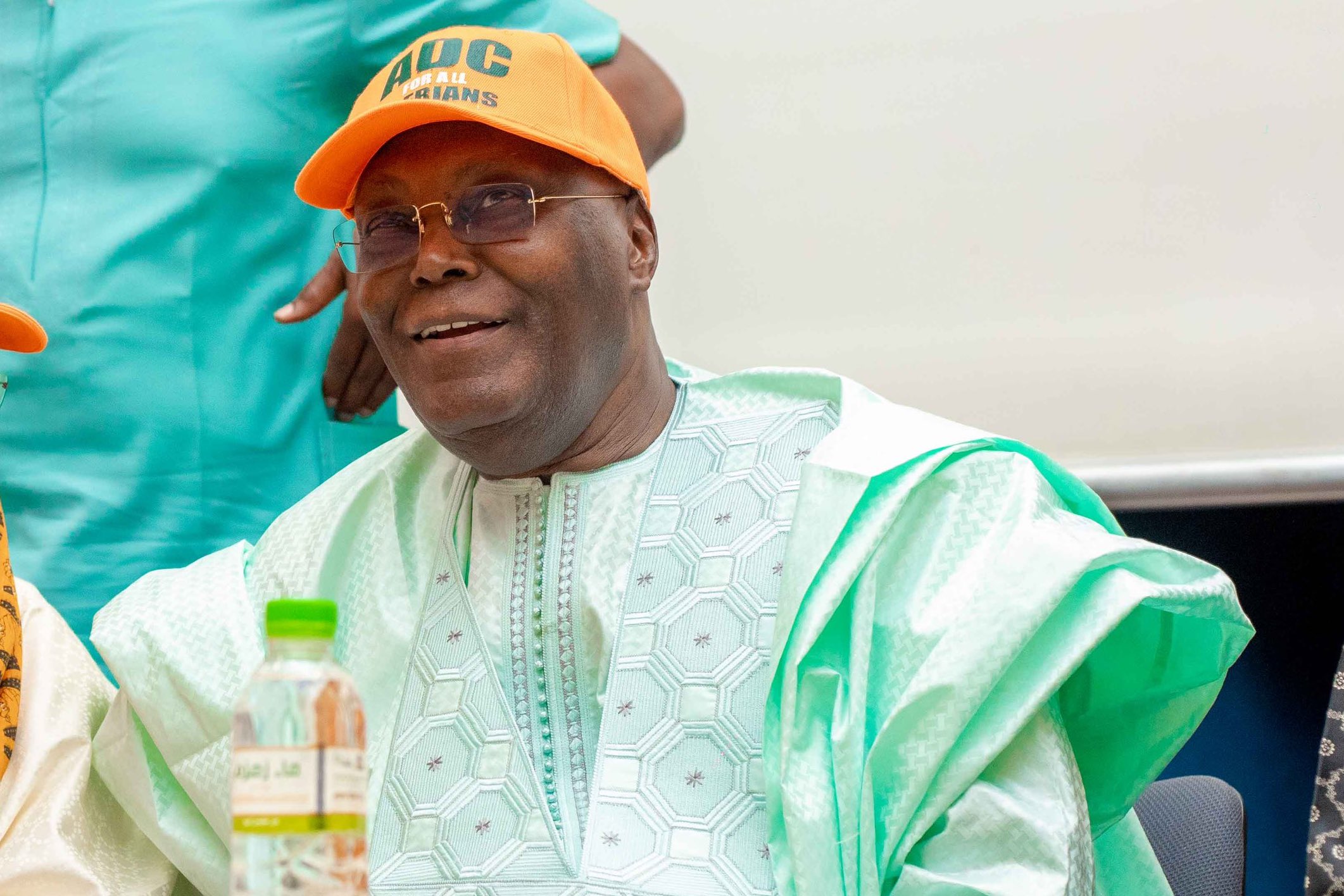
Recently the former Vice President confirmed has aligned with a new political coalition involving aggrieved members of APC and other parties, with a consensus to adopt the African Democratic Congress (ADC) as their new platform moving forward.

Atiku blasts Tinubu over unpaid wages, demands release of labour activist

By Muhammad Abubakar

Former Nigerian Vice President and presidential candidate Atiku Abubakar has criticised the Bola Ahmed Tinubu administration over unpaid wage awards and the detention of labour activist Comrade Andrew Uche Emelieze.

In a statement shared on his social media accounts, Atiku accused President Tinubu of worsening economic hardship through the “hasty and thoughtless” removal of fuel subsidy on his inauguration day, which he said plunged Nigerians into inflation, hunger, and despair.

Atiku said the government promised a ₦35,000 monthly wage award to federal civil servants pending the conclusion of a new minimum wage deal. Ten months later, only six months have been paid, leaving ₦140,000 owed per worker.

He condemned the arrest of Comrade Emelieze, who was detained for attempting to organise a peaceful protest over the unpaid wages, calling it “an affront to democracy.”

“We demand the immediate and unconditional release of Comrade Emelieze,” Atiku said. “Nigerian workers will not be silenced, intimidated, or forgotten.”

The Federal Government has yet to respond to the statement.

Atiku celebrates wife Titi at 75, reflects on 50+ years of marriage

By Muhammad Abubakar

Former Nigerian Vice President and presidential candidate of the People’s Democratic Party (PDP), Atiku Abubakar, has penned a heartfelt tribute to his wife, Titi Abubakar, on the occasion of her 75th birthday.

In a message shared on his social media platform, Atiku reflected on their unconventional journey to marriage. He revealed that the couple tied the knot without their families’ consent, witnessed only by two friends. Despite the odds, their union has endured for over five decades.

“Titi has been a blessing beyond measure to me and our family,” Atiku wrote. “I thank her for being patient with my shortcomings. Patience is a virtue you can never regret.”

He also encouraged couples to embrace patience in their relationships and wished his wife many more years of “bliss and blessings.”

It was a joyous occasion attended by family and friends, including the wife of the former military president, General Sani Abacha, Maryam Abacha.

2027: A gale of defections, eroding opposition and quest for power

By Emeka Blaise Okpara

As the 2027 general elections draw closer, the gale of defections that has rocked the People’s Democratic Party in recent times has thrown those in the current ruling All Progressives Congress (APC) into wild ecstasy. Once the largest political party in Africa, the PDP ran out of luck in 2015 when it lost the presidency to the APC. Before then, the party held power for sixteen years. 

In fact, at the peak of the party’s stronghold in power, the national chairman, Chief Vincent Ogbulafor, boasted in 2008 that the PDP would rule Nigeria for another sixty years. Perhaps lost in the effervescent aplomb of public office, he forgot that the future cannot always be assured. His boisterous vituperation was perceived as the height of braggadocio, a trait synonymous with most Nigerian political elites. 

Many were not surprised when, a few years after this declaration was made, the party started witnessing some implosion within its ranks. The fall of the PDP was masterminded by members of the party who formed an alliance with the opposition, which eventually led to its calamitous loss in the 2015 general elections.

Sadly, the party that once reigned monstrously in Africa’s most populous black nation has become a shadow of itself. Unfortunately for the PDP, since they found themselves out of power, they have not been able to play the role of the opposition because it is not in their DNA to do so, unlike the APC, which was birthed through opposition. 

In fact, it would not be out of place to say that the APC has so mastered the art of opposition that it has even devised means of creating its own opposition within and outside the party to keep any real opposition party at bay through controlled opposition.

With the open declaration of support for Tinubu’s presidency from governors of supposed opposition parties, and the defection of notable figures like the current Governor of Delta State, Mr. Sheriff Oborevwori, and Senator Ifeanyi Okowa, the immediate past governor of Delta State and running mate to Alhaji Atiku Abubakar in the 2023 presidential elections, many in the President’s camp have picked up a trumpet to sound it to whoever cares to listen that President Tinubu is a master political strategist.

As far as those in the President’s camp are concerned, the 2027 presidential election is already in the bag, awaiting to be transported home. In their assessment and assertiveness, nobody can defeat the chief political strategist of our time in the forthcoming elections.

It would be simplistic for anybody to assume that the mere fact that opposition members are trooping into the President’s camp is enough reason to believe that he will have an easy ride into his second term – far from it! If anything, Nigerians should be worried, as such actions only indicate state capture.

Nigerians are well aware of the politics their political office holders play. With the nature of politics played in Nigeria,where stomach infrastructure and personal interest supersede national interest, this junketing shouldn’t be a surprise.  What do you expect from politicians in a land where political parties lack ideologies apart from grabbing power? 

Interestingly, these massive defections should teach Nigerians that there is obviously no difference between the APC and the PDP. These political elites only care about themselves and not the welfare of Nigerians! At a time when Nigerians’ living standards are at an all-time low due to ill-thought-out policies by the Tinubu-led administration, politicians are falling over themselves to dance owambe in the APC. 

To keen observers of the Nigerian political landscape, these mass defections to the APC are nothing short of a defense mechanism employed by the party to give the impression that it is in total control, and for the defectors – whose priority should be governing and serving the people – to have a haven when the chips are down.  Unless on paper, there is no clear evidence that this administration has performed well enough to warrant admiration from the supposed opposition,who now join them in troops.

Moreover, the only reason political elites are decamping is that Nigeria has a flawed electoral process where the votes of the electorate do not count. If the so-called independent electoral umpire, INEC, were living up to its mandate, political office holders would learn to be disciplined and understand that only performance can guarantee their election or re-election.

While those who believe that the President is a political strategist continue to bask in his political mastery, one is compelled to ask why he has not been able to apply his strategy effectively in governance. Politics, according to Plato, should be for the common good. Nigerians would love to see and benefit from President Tinubu’s acclaimed strategy. 

Political strategy should not begin and end with seizing power. Where is his strategy for overhauling the economy since he assumed the presidency? Are Nigerians better off today than they were three years ago? Why hasn’t he employed his renowned strategy to tackle the nation’s insecurity? Or has the security of lives and property ceased to be the government’s primary responsibility? Where is his plan for reliable power, and why must Nigerians pay excessively for unstable electricity? Don’t we need his strategy for quality healthcare facilities? These vital sectors urgently require his strategic attention!

It would be ludicrous for anyone to believe that the future of Nigeria is solely in the hands of the political officeholders. Whether or not anyone wants to believe it, 2027 is still a long time off. Though Nigerian politicians are always thinking of the next elections, and not how to better the lives of their citizens, they must realise that the political dynamics can change anytime. 

General Sani Abacha was almost certain of becoming a civilian president in 1996. He had convinced all the key political actors of the time to endorse his presidency, and everything was working for his good, but fate had other plans. 

The only thing that will guarantee any political office holder a re-election in a constitutional democracy like ours is performance! A second term in office is like a referendum on an individual’s first term. The power to elect still rests with the people and not with politicians, except that we are no longer a democracy. 

If President Bola Ahmed Tinubu is keen on his second term, he should up his game. If he is unaware, someone should inform the President that Nigerians are not having it easy. Instead of focusing on the 2027 reelection in 2025, he should take advantage of the remaining two years of his first term in office to show his work. PR without performance is pure propaganda!  

A working Nigeria benefits all, irrespective of religion or tribe. Nigerians are groaning under his knee-jerk policies, which have plunged a vast majority of citizens into penury. More than ever, this is when Nigerians expect to feel the impact of his much-trumpeted strategy. Nigerians want to see evidence beyond the rhetoric.

Blaise Emeka Okpara, a student at the International Institute of Journalism, writes from Abuja and can be contacted at: emyokparaoo1@gmail.com

Coalition, 2027 power play and the need for unity 

By Isyaka Laminu Badamasi

In the move to ouster Bola Ahmed Tinubu’s administration and the All Progressive Congress (APC) from the mantle of leadership in 2027, the need for unity among our political leaders can not be overemphasised.

The recent visit by Atiku Abubakar and other top politicians to former president Muhammadu Buhari for the post-Sallah, cast serious doubts in the minds of Nigerians who are yet to recover from the shocks of the former president’s betrayal of 2015 – 2023. The Wazirin Adamawa clearly stated that the visit has nothing to do with the proposed merger.

Be that as it may, Atiku as the prominent opposition leader should also be very careful with the crop of politicians is aligning with to achieve this objective, as some of those seen in his entourage during the visit are people with questionable backgrounds, whose their reigns in power left an indelible mark of anger and uncertainty in the minds of their people, they are heartless with no sense of sympathy to the people, they are not different with Tinubu.

As the Hausa saying goes, one need not select water in an attempt to squelch a fire, but in some situations, there is a need for that, as some waters may be more harmful than the fire. The selection of who to join hands with towards emancipating this country from the hands of incessant geezers is of the utmost importance. Sending President Tinubu out of the villa in 2027 is non-negotiable and shouldn’t be handled with kid gloves.

As it stands today, Nigerians yearn for someone who is ready to implement policies and programs that will make their lives very easy and promising, someone who will bring an end to the wanton killings all over the country caused by one insecurity or another, someone who is ready to ensure that Nigeria remains one and united. 

For this, the need for the political leaders to unite and make necessary adjustments to face the heartless APC administration head om is very paramount,  any move that can not guarantee the aspirations of common man in the streets can not move to an inch, and, it will be for the advantage of Bola Tinubu and his APC to remain in power beyond 2027.

To those power drunk, who are making a mockery of the movement, should be reminded that the pre-2015 merger that brought APC to power is still workable. APC and Tinubu should get prepared.

Isyaka Laminu Badamasi,  a public affairs commentator and advocate for sustainable development,  writes from Bauchi. 

Is the PDP dead?

By Kabiru Danladi Lawanti, PhD

By every objective measure, the People’s Democratic Party (PDP) has ceased functioning as a viable political entity in Nigeria. Its carcass continues to move but without pulse, purpose, or coherence. As a ruling party, the PDP had its moments, but its legacy is weighed down by monumental abuses of power, systemic electoral malpractice, and industrial-scale corruption. 

From the open manipulation of election results mid-process to the weaponisation of state institutions for partisan gain, the party leadership helped normalise impunity at the highest level. Two decades on, many of these cases—alleging theft of billions—are still unresolved.

But the party’s death didn’t happen overnight. It began in 2007, when President Olusegun Obasanjo imposed a sick candidate on Nigerians, followed by Goodluck Jonathan’s directionless presidency. In 2014, a mass defection gutted its internal cohesion, when five of its governors established the new PDP to challenge what they called a lack of internal democracy within the party. 

Losing power in 2015 should have been a moment for self-correction. Instead, the PDP lost its ideological compass. It abandoned the one role opposition parties must play in democracies: the duty to provide clarity, contrast, and credible alternatives. 

Even as the All Progressives Congress (APC) drifted into policy incoherence from 2017 onward and the confusion that followed – petroleum prices increase, ASUU and other university union strikes, economic recession, open stealing never seen before in the nation’s history, fuel subsidy removal, minimum wage controversy, etc.- the PDP remained inert—leaderless, rudderless, and largely invisible.

Today, what remains of the PDP is a loosely held patchwork of political actors in retreat. Governors are defecting. Its 2023 vice-presidential candidate has walked away. State-level structures are hollowed out. Internal leadership is fractured, and there is no unifying idea or strategic doctrine to rally around. What does this tell us? The PDP is not in decline. It is defunct.

Nigeria is experiencing a vacuum of governance across federal, state, and local levels. What is needed is a credible alternative with intellectual spine, strategic clarity, and moral authority. The PDP has forfeited that opportunity. Nigerians are now confronted with two bleak options: to stick with a failing ruling party or scavenge among opportunistic startups branded with catchy acronyms and no ideological soul.

The PDP’s collapse is more than a party’s fall—it is a signal of deeper systemic decay in Nigeria’s political architecture. But in every collapse lies an opening: for principled political entrepreneurship, grounded in values, competence, and execution. Who will offer that? The people that landed us in this mess in the first place or new faces? 

We need new faces in the political arena. These people parading themselves as opposition are no different from the PDP or APC; they are the same. Our youth need to return to their senses, and most people we see in leadership positions started showing their ability to lead in their early 20s. We must step forward if we want to see a Nigeria of our dreams. The time for lamentations is over.

The future belongs to those who can build systems, not just win elections.