ASUU

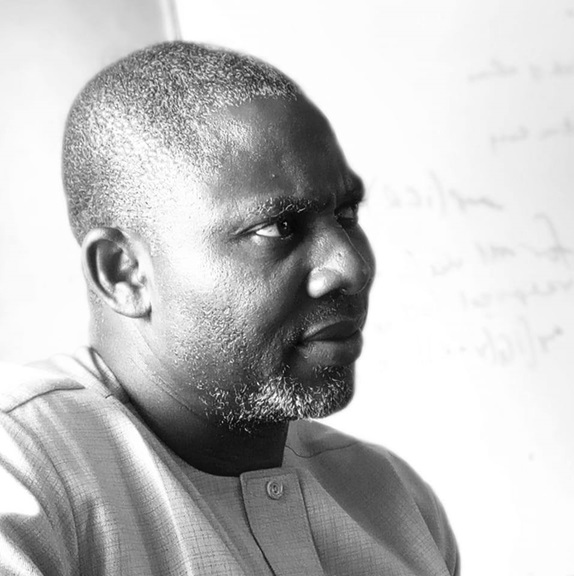
Tribute to Malam Mu’azu Muhammad Yusif

By Ibrahim Lawal Ahmed

On September 9th, 2023, friends, colleagues and students of Malam Mu’azu Muhammad Yusif, more popularly called M.M. Yusif, gathered to honour and celebrate his long academic service at the Centre for Information Technology and Development (CITAD), Kano, by remembering the old days and reflecting on the transformation the academia has been going through in Nigeria. Malam M.M. Yusif recently retired from the Department of Political Science, Bayero University, Kano, and the occasion was a kind of send-off party.

It was indeed a robust discussion that involved personalities such as Mal. Ibrahim Mu’azzam, Dr. Y.Z. Ya’u, Dr. Nasir Fagge, Prof. Ibrahim Bello-Kano (IBK), among others. As expected, the debate spiralled from eulogising the celebrant to discussion on the character of students and teachers in the universities in Nigeria, the current system of running the university, the struggles of and in the Academic Staff Union of Universities (ASUU), and the neoliberal world order and its effects in Nigeria, particularly on the universities. 

In short, the discussion is a dialectical cross-examination of factors within the university and how their interrelationship is influencing the university education in Nigeria; the relationship between the university and the society (town and gown relationship); and the relationship between the university and the state. The relationship between the university and the state is at the centre of the ASUU issue.

University has been the life of Malam, and as one of the longest-serving chairmen of ASUU, BUK Chapter, ASUU is a union very close to Malam. Therefore, I can imagine his feelings as he witnesses and reflects on the last two battles between ASUU and the government (2020 and 2022) that almost destroyed the public universities in Nigeria. The fundamental issue of ASUU-FGN conflict, in my view, is not the non-payment of allowances but the reductionist approach to governance by the government, which entails decreasing concern for the institutions that provide welfare to the people and total neglect of the idea of ‘public good.’ The result is the systematic collapse of the social contract (and compact) and rising political cleavages, a pre-bendel form of primitive accumulation and rentierism (or sycophancy) which results in the concentration of wealth in the hands of a few. 

Consequently, as the rich get richer and the poor get poorer in Nigeria, commodity fetishism becomes the defining feature of the social relations in Nigeria. In other words, money is now the moral compass in Nigeria. The needs and wants of the average Nigerian are reduced to his stomach – you have to eat for you to think, for when you speak to a hungry man, he answers you with his stomach – as such, ASUU is faced with an enormous challenge of mobilising the society to back its course on its battles with the state. 

Moreover, people are tired of the classical tactics of strikes always taken by ASUU, which, in the last two years, have hurt the university education system more than they have salvaged it. Thus, one key takeaway from the gathering is that ASUU needs to reinvent itself. While remaining steadfast to its goals that are of public interest, it has to change tactics.

Similarly, government at all levels has to pay more attention to the educational sector. To improve education, efforts should focus more on qualitative development rather than the current quantitative development, which prioritises establishing tertiary institutions in remote areas primarily due to trivial political reasons. This is not right. Situating schools and tertiary institutions has to take comprehensive cognisance of the environment. The questions such as how the town will support the gown at its embryonic stage and how the gown will support the city at maturity have to be asked. Answering these kinds of questions requires a comprehensive analysis of the infrastructure (both hard and soft), human and physical factors in the environment where the school or tertiary institution is to be situated. The late Sir Ahmadu Bello set a notable example in establishing Ahmadu Bello University in Zaria. He could have stayed in Sokoto or Maiduguri. However, considering several factors, Zaria is strategically better suited to host the university. Such was a good leader who has vision that transcends personal and primordial interest.

Indeed, the issue of education in Nigeria cannot be left to the government alone. It is a social issue; therefore, it requires an All-of-Society-Approach – from parents, to community leaders, traditional rulers, commercial and industrial enterprises, all have to be involved, especially regarding financing the education. The policy of student loans will not work because the socioeconomic condition of Nigeria is not prosperous enough to favour such a policy. In fact, in some advanced countries, the policy is problematic and an obstacle to social mobility, thereby facing harsh criticisms. The students need grants, not loans. And the wealthy Nigerians have to be philanthropic towards our educational institutions, especially the tertiary institutions. There is no more rewarding investment than investment in education,though it takes time to ripen. There is no better way to empower the youth in Nigeria than through education. The proper education enhances the ability of citizens to think. And unless one can think and understand the complexity of the present world, one can not address one’s personal problems, let alone those of society.

The courses taught by Malam M.M. Yusif aim to help students understand this complex world by interrogating the institutions that hold it up. To teach such courses requires a special personality. Therefore, as his recent student, the gathering was an opportunity for me to know more about my teacher. I listened attentively as his friends and colleagues kept mentioning his academic contribution to social issues that include gender studies, labour studies, and military studies, among many. But one standing quality and lasting legacy of Malam is mentorship. Malam put a lot of his energy into guiding his students. 

He utilised his resources to acquire high-quality materials and provide practical work for his students. He is a teacher who loves questioning and never penalises you for your inability to answer a question. For him, the most important thing is for the students to attempt to answer the question brilliantly. He always has time for his students. 

One day, I visited his office to discuss some concepts I didn’t understand. After explaining the concepts to him, I complained, “Sir, I am confused.” He responded, “Do not worry, Ibrahim. This means you are learning.” It was on that day that I learnt that learning is full of confusion. If you are finding learning easy, then you are probably not learning anything new.

It will take time to fill the gap that Malam M.M. Yusif is leaving in the academia, particularly in the Department of Political Science at Bayero University. I am glad and proud that he has had an accomplished academic career. We, his students, cherish the memory and are thankful for the way he has taught and mentored us. May it please Allah that Malam has a peaceful and happy retired life.

Nigerian Professor Salary: The re-ignited debate

By Prof. Abdelghaffar Amoka

A Hausa interview by a professor from ABU, lamenting academics’ poor pay, is trending and has re-ignited the debate on the salaries of Nigerian academics on social media. The discussion is championed by my brothers from the region, which is considered by the country as educationally less developed. I didn’t know what to say that I hadn’t said before. It will be like repeating myself.

Professors in Nigeria are now blamed for their financial status. They are expected to stop lamenting and get a side hustle to augment their salaries. A professor whose salary was ₦450,000 in 2009, when the exchange rate was ₦140 per dollar, is blamed for his economic state in 2025, with a salary of about ₦500,000, when the exchange rate is ₦1,600 per dollar. 

Some people are referring to professors abroad as if some of us have not had the experience. A number of us have studied and worked there, and we know how their university system works. I got two grants in the UK during my PhD. They said a professor earns more abroad from their research grants. The primary beneficiaries of research grants are postgraduate students and postdoctoral researchers. Professors are not paid from their grants.

Grants have a budget, and personnel costs are not included. They are paid to the university account and managed by the university. The university pays professors to encourage them to think critically and attract grants for the institution. A university lecturer around the world is paid enough to give him the comfort to think and do his job as it should. Any extra cash from stuff like consultancy is for additional comfort. 

The Executive Secretary of TETfund, Sunny Echono, in July 2024, said: “On salary to lecturer, I feel ashamed because I have the privilege to represent Nigeria at a global conference where former presidents and prime ministers were in attendance. I was asked if it was true that a professor, after 20 years, still earns less than $1,000 a month. I couldn’t answer that question; I only said that we are doing something about it.” I think we should be proud of the salaries of our professors and boldly tell anyone around the world their actual salaries. 

Before you, in your narrow-minded state, blame professors for their financial status, ask yourself why the Nigerian government will pay the same professors about two thousand dollars per month under the Technical Aid Corp (TAC) to go help teach in universities in some African countries? The same professors who are given approximately $ 2,000 to teach in Ugandan universities under TAC are receiving an equivalent of $ 320 per month at home.

You know what? Everyone is right—those for and against. The argument won’t change anything, and it will likely end within a day or two. The new reality is that younger academics have learned from the impact of senior colleagues’ commitment to the academic job. The commitment you considered as “our stupidity”. The younger academics are planning for themselves.

A colleague, after the 8-month strike and the withholding of our 8-month salaries, said the university does not deserve his full-time commitment. That he is going to give the university the time it deserves and use a large chunk of his time for a side hustle to pay his bills, I thought, was unreasonable. I later realised I was the unreasonable one. And he is not doing badly from the side hustle. 

Around this time last year, I was passing and met some of my students in the class without the lecturer. In my usual chat with the students, I asked whose lecture it was. I decided to call a younger colleague, as students were waiting for his class in case he forgot. He picked up the call and said he had forgotten he had a class, but that he was on his farm planting, and that he would see them next week. He was at the farm during work hours and forgot he had a class because the farming hustle is paying the bills. He is actually doing quite well with his side hustle. 

Farming during work hours becomes more important. I reflected on that for several days. There are several examples of young academics who won’t be seen on campus, except when they have a lecture or are on campus for something they consider essential. 

People sometimes question why a whole professor would accept being an adviser or assistant to a political office holder. A trip with the political officeholder boss could get him his one-year gross salary as a professor. Since it’s his fault that he is poor, why shouldn’t he accept such an offer or even lobby for it?

As a consequence of defeat, we have accepted one awkward thing as a part of us. Because we can’t do anything about our tormentors and needed someone to blame, we blamed ourselves, the victims. It’s our fault that we’ve been on the same salary for 16 years, from 2009 to date. It’s our fault that successive governments refused to renegotiate the 2009 agreed salary with ASUU. It is our fault that the government of President Tinubu has kept Yayale Ahmed’s 2009 Renegotiation Committee report since November 2024 without speaking about it. They are still studying it, possibly till May 2027 or beyond. 

Universities are designed to attract the best minds from around the world. Universities, including those in Africa, such as those in Ethiopia, Uganda, Kenya, and Chad, are attracting the best brains. At the same time, we justify the poor pay for academics and still blame them for their inability to compete with their colleagues in the UK, the US, and Iran. We’ll continue to breed our best brains for these countries. 

Meanwhile, as we take all the blame for our economic status as professors, younger academics are devising ways to survive. They don’t want to he like their senior colleagues who bury themselves in their books thinking they are serving the country. They are given more time for their side hustle to pay the bills, and leave the students hanging. They’ll attend to them when we can. The system will bear the consequences of neglect, and our survival plans will be affected.

From a reality check, you can’t think when you are hungry. So, what are your expectations when your thinkers are hungry and you are unfortunately justifying it? We may be on a journey of illusion if you expect a man to look for food to eat and think for you. The future will tell who gains and who loses.

Best wishes to all of us! 

©Amoka

Nigeria has murdered another professor: The shameful death of Prof. Roko

By Muhammad Lawal Ibrahim, PhD

Another brilliant mind has died. Another Nigerian professor, Prof. Abubakar Roko, has just been murdered by the state,not by bullets, nor by bandits, but by an unforgiving system, deliberate neglect, and a government that treats its academics like disposable rags. He needed ₦13 million for medical treatment abroad. After over 20 years of service to this so-called nation, he could not raise it. He lay bedridden, helpless, abandoned, and now he is dead. We must stop calling this “natural death.” This was murder by government negligence.

In a country that throws billions at political cronies, gives lawmakers millions in wardrobe allowances, and funds endless pilgrimages and jamborees, a professor had to be paraded online like a beggar, with students scrambling to raise funds just so their teacher might survive. Yet even that was insufficient. The system choked him to death slowly, much like it is doing to thousands of others right now.

Where are the salaries? 

As of this writing, tertiary institution workers are celebrating Sallah (Eid-ul-Adha) without salaries. Go and verify. Civil servants in other sectors have been paid weeks ago. But those who teach your children, those who write your policies, those who keep the soul of the country alive—are being starved like prisoners of war. And when it was reported that over 1,000 lecturers have died under this current administration, bootlickers and sycophants ask, “What killed them?” What killed them? What didn’t?

Sickness, hunger, depression, suicide, systemic poverty, lack of medical care, all wrapped in the evil legacy of Buhari’s betrayal and now Tinubu’s reign of economic terrorism, killed them and are still counting.

Tinubu’s “Renewed Hope” is academic genocide

Let’s not sugarcoat it. What’s happening in Nigeria’s higher education system today is academic genocide. The federal government has effectively declared war on the ivory tower. Salaries are frozen. Promotions are denied. Research is dead. Morale is nonexistent. Students are turning to fraud and crime. Lecturers are dying in silence, many too ashamed to beg for help. But yes, the president has just approved ₦90 billion for Hajj. Where is the justice in this madness?

A rotten elite and a silent society

The ruling class in Nigeria treats lecturers like slaves while flying abroad for their checkups, educating their children overseas, and stealing public funds to build mansions in Dubai. Meanwhile, professors die waiting for ₦13 million. We are ruled by demons in agbadas, celebrated by cowards, and enabled by silence.

What’s worse is that many Nigerians have been so brutalised that they now laugh off their own destruction. “Lecturers are always complaining.” Yes, because they are slowly being buried alive.

We will not forgive

To those in power, your days of immunity from truth are over. You will be remembered not as leaders, but as executioners. We will not forgive you for the lives you’ve ruined. Not in death. Not in history. Not in the court of God.

You have destroyed one of the few remaining sectors that held credibility in this country. And for what? Your greed? Your power games? Your bottomless stomachs?

Prof. Roko is dead, and I pray for Allah to accept his good, innocent soul into the highest level in paradise, amin. But this article is not about him alone. It is about every Nigerian academic suffering right now in silence. It is about every student being denied a future. It is about a nation killing its own brain and expecting to survive.

Enough is enough. Let this death be a curse on the conscience of every politician who has contributed to this decay.

Let this be a rallying cry for every Nigerian who still has a soul left.

Muhammad Lawal Ibrahim, PhD, wrote from ABU, Zarialawalabusalma@gmail.com.

Professor Abubakar Roko passes away

By Muhammad Abubakar

The academic community is mourning the passing of Professor Abubakar Roko, a respected lecturer in the Department of Computer Science, Faculty of Physical and Computing. He died after a period of illness, despite efforts made to secure advanced medical treatment abroad.

Professor Roko had been battling a critical health condition that required specialist care, prompting a crowdfunding campaign to support his medical trip to Cairo, Egypt. The campaign received overwhelming support from colleagues, students, friends, and well-wishers.

Notably, the Governor of Kano State, Engineer Abba Kabir Yusuf, contributed ₦5,000,000 to the cause, a gesture that was widely appreciated by the family and academic community.

In a message announcing his passing, the department expressed deep sorrow and extended heartfelt thanks to everyone who supported him during his time of need. “We are saddened to announce the demise of Professor Abubakar Roko… May Allah SWT reward you abundantly,” the statement read.

Prayers are being offered across the campus and beyond for the repose of his soul. “May Allah bestow His grace on him,” the department added.

Professor Roko is remembered not only for his academic excellence but also for his humility and dedication to the advancement of computer science education in Nigeria.

The new ASUU president and the body language of the political class

By Prof. Abdelghaffar Amoka

Breaking news yesterday was that Consultant Psychiatrist Comrade Chris Piwuna has been elected as the new president of the Academic Staff Union of Universities (ASUU) for a two-year term. The fact that he is a psychiatrist is unsettling to the political class, who, rather than injecting the necessary funds to improve our education sector, choose to embezzle money they do not need.

The post on the Facebook page of Mahmud Jega, a media aide to President Bola Ahmed Tinubu during the campaign for the 2023 election, is an indication that the news of the newly elected president is unsettling. He said Chris should examine the heads of ASUU members for choosing a strike as an option to make the government perform its responsibility to the university they willingly established and are still establishing. Earlier today, someone was thanking his Senator on Facebook for his bill to establish the Federal University of Agriculture, Kura in Kano State. 

Whose head needs to be checked by a psychiatrist? The one fighting for the survival of public universities or the one who makes all the promises, then gets to the office, but chooses to steal public funds, an amount they can’t spend for the rest of their life. In the 21st century, we have one of the worst education and health sectors. Our people now travel to Ghana, as well as to Niger and Sudan, to study. Hunger is now a pride. One of them recently acknowledged that they are aware we are hungry and referred to it as “Hunger for Change.”

Who should we take to Prof. Piwuna’s psychiatric clinic for a mental health evaluation? As people wonder about the cause of the massive and mindless corruption in the country, as we watch public institutions collapse, they feel that corruption within the political class may be a mental issue. According to Punch of 16th December 2016, the first person who made this recommendation over 30 years ago was Prof. Adeoye Lambo, a famous psychiatrist and a former Vice-Chairman of the World Health Organisation. He was astounded by the level of corruption at the time. 

Well, the corruption was child’s play then compared with what we have now. Mrs. Farida Waziri, the former EFCC boss, was reported to have also recommended psychiatric examination for politicians, citing the reason that the grand corruption we see in our public life is a hackneyed recommendation. So, the psychiatric test recommendation for politicians is not a new call. 

Despite the justification for the strike over the last two years and the members’ vote in a referendum, the ASUU leadership has attempted to apply diplomacy to avoid the strike. That has produced a strike-free 2 years. They have been lobbying and begging for the last 2 years. But what have academics got? Many people can’t afford to fuel their cars to go to work. So, what’s the alternative to the strike? Maybe instead of striking to force the government to fund tertiary institutions they willingly established, we should just manage what we have like that till they are no longer manageable, like our public primary schools? Please educate us on a practical alternative to strike. 

The Nigerian university system was once a beacon in West Africa. If corruption is the reason why there are not enough funds to make our universities what they used to be, who needs to queue in their Agbada to see a psychiatrist? The people (political class) who have kept the universities in their present state, or the people (ASUU) whose fight over the years gave our universities a semblance of a university? 

Irrespective of our political affiliation, I think we need to set our sentiment and hatred for ASUU aside and sit back to reflect on the state of education. As a former academic, journalist, and associate of the political class, Mahmud Jega should join hands with ASUU to urge the government to take the necessary steps for the education sector. The North is the worst hit, and coincidentally, Mahmoud Jega is from the North. We need public education institutions at all levels that are of high quality for their students. As the immediate past president of ASUU stated during the ASUU NDC in Benin a few days ago, we cannot build a knowledge-based economy without a sound education system.

We can’t continue this way. The status quo is unsustainable. The most powerful weapon against poverty, extremism, and ignorance is not the bullet, but the book. The time to act is now. Nigeria must return to the classroom—rebuild it, empower it, and invest in it—for therein lies the salvation of the nation.

I don’t like strikes, Mahmud Jega doesn’t like strikes, but I was left with no other options aside from a strike. And a strike is the only thing that has kept our universities functional to date. So, can Mahmud propose an alternative that will work even better than a strike? 

The test I think we need to do for ASUU members is to find out why they are fighting very hard to ensure that public universities do not collapse. They could have chosen to be like our refinery workers who watch the collapse of the refineries and earn a fat salary without refining a drop of crude oil. 

In conclusion, no matter the hatred, Mahmud Jega cannot pretend that he does not understand the situation of our educational institutions. I would like to encourage him to utilise his influence and pen to help facilitate an education summit by this government. As Prof Attahiru Jega proposed at ASUU NDC at the University of Benin a few days ago, the stakeholders of the Nigerian project need to meet and discuss the sort of tertiary education system they want and then agree on the funding model. 

Prof. Amoka wrote from Ahmadu Bello University (ABU), Zaria.

ASUU strike paralyses KASU

By Sumayyah A. Usman

Academic activities have been paralysed at the Kaduna State University, KASU, Kaduna, as the strike embarked upon by the institution’s branch of Academic Staff Union of Universities, ASUU, enters its third week.

TDR visits to the two campuses at Kaduna and Kafanchan revealed that both lecturers and students were not in the classes and many students seized the opportunity of the strike to travel home.

However, some few students were found at the institution’s sport complex engaging in sport activities It would be recall that on April 24th, 2025, the union branch declared a “total, comprehensive & indefinite” strike action in response to several unfulfilled promises made by the Kaduna State Government.

FG releases ₦50bn to university unions, reaffirms commitment to education

By Muhammad Abubakar

The Federal Government has released ₦50 billion to academic and non-academic staff unions of federal universities, fulfilling a promise made by President Bola Ahmed Tinubu as part of efforts to enhance the welfare of university personnel and strengthen Nigeria’s education sector.

Announcing the development, the Honourable Minister of Education, Dr. Maruf Olatunji Alausa, described the disbursement as a strategic move to reaffirm the President’s commitment to transitioning Nigeria into a knowledge-driven economy. He emphasised that the release goes beyond a financial transaction, calling it a bold investment in human capital and youth development.

“This intervention is a reaffirmation of our President’s belief in the capacity of Nigerian youth and the invaluable role played by academic and non-academic staff in nurturing them,” Alausa stated.

In a message conveyed through the ministry, President Tinubu reiterated that ensuring uninterrupted academic activity in Nigerian universities is a core priority of his administration. “Keeping our children in school is not negotiable,” he declared, expressing optimism that strikes in higher institutions would soon be permanently resolved.

The Education Minister also acknowledged the cooperation of university unions, noting that Nigeria is currently experiencing one of the longest periods of academic stability in recent years.

The release of the funds is seen as a significant milestone in the President’s Renewed Hope Agenda and a step toward positioning Nigeria’s education system as a benchmark for excellence on the continent.

On TSU’s unending strikes and govt’s ‘responses’: A call for stakeholders’ intervention

By Tordue Simon Targema

Taraba State University (TSU), Jalingo is, yet again, under lock and key as a result of industrial actions embarked upon by the Academic Staff Union of Universities (ASUU) on the 5th of December 2024, and all other labour unions in the University subsequently to press home germane issues that bother on effective running of the institution and welfare of its staff.

Ordinarily, this would not have been a hopeless situation completely, as industrial actions could be resolved as soon as they start if well handled. But with the rather harsh and brutal response of the Taraba State government, a solution to the present strike is not in sight.

What are the issues in contention, by-the-way? ASUU-TSU outlined six key demands upon commencement of the strike as follows: (1) absence of pension scheme for staff of the University, (2) non-payment of four months salary backlog, (3) failure of the state government to constitute a Governing Council for efficient running of the University, (4) non-payment of accumulated Earned Academic Allowances, (5) repeated exclusion of the University from minimum wage implementations, and, (6) inadequate funding as provided by the Law establishing the University.

Simple as these sound, all diplomatic approaches by ASUU to prevail on the state government to address them have failed, leaving the Union with no option but to embark on strike. Sadly, the response of the state government clearly indicates that the strike will linger longer than expected.

A quick rundown on the major responses as highlighted by the Chairperson of ASUU-TSU Branch, Dr Mbave Joshua Garba thus far confirms this hunch: first was a statement from the Office of the Special Assistant (to the State Governor) on Media and Digital Communications, Mr. Emmanuel Bello requesting the Union to call off the strike immediately and return to the negotiation table, to which the Union queried: which negotiation table? The same “table” that government officials abandoned since June 2024, and have consistently evaded the Union’s advances for engagements?

Besides, the struggle at this point has passed the stage of “negotiations” but instead, requires appropriate actions on the part of government: do we need negotiation to enact a Governing Council for the University, implement a pension scheme, pay salary arrears/EAA, or implement the national minimum wage for the University? One thus wonders what exactly the SA wanted to negotiate with the Union again.

The second response as reported by the Chairperson came through the Commissioner of the then Ministry of Education, Dr. Augustina Godwin, who told the Union that the Governor has two options for them: to call off the strike immediately and have his audience once he returned to the state, or remain on strike while government takes ALL the time it requires to compute and work on the demands of the Union. ASUU opted for the latter, for who is in a hurry to return to a classroom that holds no hopes for him, both now and in future anyway?

Then came the last move that clearly portrayed government’s confusion regarding TSU and her intractable issues: the (re)creation of the Ministry of Tertiary Education, which hitherto existed in the state but was scrapped by the current administration, and which was there during the past administration, yet could not resolve the stalemates that befall the University.

Clearly, the state government lacks the sincerity of purpose required to resolve the issues in dispute, and this is most unfortunate for an administration that has made access to education its mantra. For instance, one wonders if ASUU must embark on industrial strike before government is moved to constitute a Governing Council without which the University is handicapped in the discharge of its administrative mandates. Yet, ASUU has consistently engaged the government on this issue since the last Governing Council was dissolved in 2023 to no avail.

What about a pension scheme which has become a dirge that staff of the University chant every day, but which all other tertiary institutions in the state have? Today, many staff of the University have put in about fifteen years of service without a penny as pension. When a staff of the University retires, s/he walks home with nothing after years of enslaving but meritorious service to the state.

The most distressing moment is when a staff dies: his family is entitled to a paltry 50,000 naira as death benefit which is recently increased to N70,000. Yes, that is our worth in death without gratuity. Indeed, many staff of the University have switched from other institutions or agencies with functional pension schemes to TSU. Sadly, once they assume duty in TSU, they as well kiss the final “goodbye” to pension and gratuity.

While ASUU’s engagements with the state government towards amicable resolution of these issues hit a stalemate, the final straw came that completely broke the camel’s back, namely: the blatant and cruel exclusion of the University from the N70,000 new national minimum wage implementation in the state. Yes, as I write, TSU staff are being paid using the grossly outdated 2009 salary template for Nigerian Universities! Last year, the state government implemented the N30,000 minimum wage for workers without effecting the consequential adjustment for staff of the University, even as other tertiary institutions in the state were captured which showed the resentment of the government to staff of the University. Then came the FG/ASUU 25% and 35% salary award which was also ignored by the state government with impunity.

The peak of this cruelty has just manifested with the conspicuous exclusion of the University from the 2024 N70,000 national minimum wage implementation in the state in November. Afterwards, all concerned stakeholders put up evasive postures to ignore all efforts by ASUU to push for inclusion of the University.

ASUU Chairperson reported, shockingly, that at a meeting with government representatives, the Commissioner for Finance, Budget and Economic Planning, Dr. Sarah Enoch maintained that the University is not entitled to the new national minimum wage, even as she admitted, funny enough, that there is need for consequential adjustment. This position betrayed, first, the level of confusion that pervades the corridors of power regarding issues in TSU, and secondly, the cruel disposition of critical state actors to the plights of the University’s staff.

Few questions beg for answers arising from the Commissioner’s disposition: if tertiary institutions in the state are not entitled to the new minimum wage, why implement it for the State Polytechnic, College of Education, College of Agriculture, School of Nursing and Midwifery and the School of Health Technology? Why jettison the submission for the University which was computed by the same minimum wage committee in the state? Again, why question the report of a committee that had all relevant stakeholders on board, including from the Ministry of Finance? Does this mean that the Commissioner’s personal judgement supersedes the position of the committee made up of experts from all relevant ministries?

Unfortunately, government has chosen the vindictive path, and has weaponised hunger to chastise the Union back to the classrooms, a strategy that is counterproductive and had repeatedly failed in the past. For instance, November salary was immediately withheld to cow the Union into submission, then came December salary. It is shocking that not even the commemoration of the birth of Christ could move the state government to bury its vindictiveness and release December salary to staff of the University to celebrate the Yuletide with their families and loved ones.

To TSU staff, this is but a familiar maltreatment, a repeat of what happened in 2020, 2022, and now 2024 when staff had to celebrate Christmas without salaries. The tale is same for the Muslim brethren, who can hardly recall when last they celebrated either Eid-el-fitir or Eid-el-Kabir with their salaries paid. This is a dehumanising act that we are already used to, the more reason why the brutal approach is doomed from inception.

Indeed, this is time for all stakeholders in the state to act. TSU is core to Taraba State’s socio-economic advancement, no wonder its motto: “Harnessing Nature’s Gift”. Within the short period of its existence, every sector in the state is a testimony to its profound impact on human capital development. It is, therefore, time for all those who mean well for the state and its progress to speak out and prevail on the government to stop playing the ostrich and do the needful.

Government must, at this point, put on the toga of sincerity towards frantically addressing the lingering issues that constantly ignite industrial disharmony in the University once and for all without further ado. There is no better time to act than now.

Tordue Simon Targema is a Visiting Postgraduate Student in the School of Social and Political Science, University of Glasgow, United Kingdom and teaches in the Department of Mass Communication, Taraba State University. He can be reached at: torduesimon@tsuniversity.edu.ng

Police arrest lecturer over ASUU chair’s wife’s abduction

By Uzair Adam 

The Benue State Police Command has arrested Dr Ichor Tersagh, a lecturer at the Joseph Sarwuan Tarka University of Agriculture, Makurdi (JOSTUM), for allegedly orchestrating the abduction of Mrs Susan Anyagh, the wife of his colleague, Mr Paul Anyagh, who is the chairman of the Academic Staff Union of Universities (ASUU), JOSTUM chapter.  

Mrs Anyagh was reportedly ambushed and kidnapped along Otukpo Road, Makurdi, last Saturday. 

According to reports, the kidnappers stole N1.3 million from her car, physically assaulted her, and left her unconscious on a bush path.  

The Police Public Relations Officer (PPRO) in Benue, Catherine Anene, confirmed the incident in a statement on Friday. 

She revealed that the victim was later found along Yandev-Ugbema Road and taken to the Primary Healthcare Clinic, Ameladu, for medical treatment.  

Upon regaining consciousness, Mrs Anyagh narrated how she saw Dr Tersagh at the scene of her abduction and pleaded for help, but he allegedly turned away. 

She further claimed that the kidnappers received a phone call from Dr Tersagh instructing them to kill her, causing her extreme distress.  

“She stated that while driving from the NNPC mega fuel station in Kanshio, where she went to collect money from a customer, she stopped to assist some people who flagged her down. 

“However, they jumped into her car at gunpoint, ordering her to drive towards the Wurukum area. Outside the car, she spotted Dr. Ichor Tersagh standing nearby. When she sought his help, he turned his back and walked away,” Anene said in her statement.  

The statement added, “The abductors later parked the car, took N1.35 million from her, and attacked her with a vehicle jack, leaving her unconscious.”  

Dr. Tersagh has been arrested in connection with the case, and investigations are ongoing.  

Meanwhile, Mr. Paul Anyagh confirmed the incident, stating he was at the police headquarters to follow up on the case and would provide additional details later.

ASUU accuses World Bank, IMF of undermining Nigeria’s education

By Anas Abbas

The Academic Staff Union of Universities (ASUU) has accused the World Bank and the International Monetary Fund (IMF) of actively undermining Nigeria’s public education system.

This allegation comes amidst the union’s frustration over the ongoing delays in renegotiating its 2009 agreement with the federal government, despite several Memoranda of Understanding (MoUs) and Memoranda of Action (MoAs), ASUU President.

 Prof. Emmanuel Osodeke expressed disappointment that the agreement has yet to be finalized.

During the ASUU Heroes Day 2024-2025 ceremony held in Abuja, Prof. Osodeke raised concerns about various issues, including the mandatory Integrated Personnel and Payroll Information System (IPPIS) and the suspension of salaries for ASUU members for three and a half months.

In a positive development, ASUU announced that it had awarded selected members PhD grants worth N500,000 each after thoroughly evaluating proposals. 

Prof. Osodeke praised the members for their unwavering commitment to defending Nigeria’s public university system and extended his support to ASUU members facing challenges at Kogi State University, Lagos State University, Ebonyi State University, and Chukwuemeka Odumegwu Ojukwu University.

The Heroes Day event recognizes past and present members for their dedication to enhancing public education. Prof. Osodeke paid tribute to the late Prof. Festus Iyayi, a former ASUU president, and others who have made significant contributions to the union’s objectives.