ASUU strike

Farming: Alternative for Nigerian university students

By Abdulmumini Lawal

The fate of university students in Nigeria undergoes various hiccups and calamities. Among these are the frequent industrial actions by different Academic Unions and Non-Academic Unions, the probability of hike increment in school fees, uncertainty in life itself whether one will even graduate or not,  constant mutable thinking on what tomorrow might bring, and overall, the competitive race awaiting there in the labour market – life after graduation. Economic hardship is another phase of constraint students undergo towards pursuing their academic careers.

However, those above and other threats in academic space have been the main predicaments for Nigerian students and have to serve as a deterrent to one and evolve his perspective approach of who thinks the only way he can excel in life is by obtaining a degree and/or eventually securing a job (white collar one as many say). The limitation of thinking faculty in university students is expected to differ from layman’s, so he has to admit as such.

To my brothers and sisters, preferably those from low-income family backgrounds, I call upon your attention to erase the sense of thinking about when and why you will meet your desired expectations by the government in academia. You have many alternatives to make your life different; the agricultural sector is one of thousands. 

Initially, citing examples from my humble self and being a farmer for ten consecutive years, I decided to embark on farming activities last year. This was a result of the incessant ASUU strike. I vowed to utilise the time I had then positively. During the year, I realised I knew little or nothing among the bounties of opportunities therein. Meanwhile, my ten years of experience in the field is limited. It doesn’t widen the scope of the lucrative opportunities in the farming investment. I strived a lot, putting in the effort I could, most notably money and time, to achieve it.

Alas! So many blessings will never meet you openly but will surely reach you in disguise. To me, the ASUU strike was a blessing in disguise for every university student since this was coming purposely to divert from being affected by the trauma of the ASUU strike.

Subsequently, the outcome was favourable. To sum it up, despite the fertiliser price hike, when I calculated the profit, it multiplied the capital I invested by 4 – 5 times. That’s to say, the profit reached 400 – 500%. I accomplished my dream. I have learnt a lot. There are numerous opportunities there. Many have become what they are today not by the certs they obtained, but by those skills many university students understand. 

Moreover, today’s life is becoming more challenging every day. Today can’t be yesterday, just like tomorrow can’t be today. We see new changes every day, everywhere. It is supposed to be the turn of our parents and guardians to reap from what they have been investing in. Where does our thinking go? Okay, we think they will reap after we graduate and get employed. The uncertainty of securing a job after graduation is a constant gesture. The number of unemployed graduates keeps increasing. Universities keep producing. The white collar jobs are no longer to be found. 

Meanwhile, the incessant government’s negligence in line with education concerns many other threats that have nothing to do with your failure and could never be the reason behind your excellence. Whatever Allah decides for you is a blessing in disguise. It’s either you misuse it or unknowingly leave it untouched.

Let’s wake up! Thousands of opportunities are there waiting for us. Let the cert be the second priority. Strive fervently day and night. For the little chance you have, make use of it appropriately. 

I wish you a better tomorrow in all your endeavours!

Abdulmumini Lawal is a student of Mass Communication at Ahmadu Bello University, Zaria.

Cost of university education in Nigeria: Facing the reality

By Salim Ibrahim Isa

Since late last year, many public universities have released revised fees, primarily reviewed upwards in unprecedented percentages (mostly more than a 100%). Students, parents and other stakeholders have expressed shock, with many blaming the Academic Staff Union of Universities (ASUU) for being behind the increase as a response to the Union’s fallout with the Federal Government last year and members of the Union laying responsibility to the executive councils of respective universities.

Whatever the reason for the increase and whoever is behind it, the rising cost of education is a reality students and other stakeholders have to face, for it is doubtful to be reversed.

It will be useful to consider the following discussion, especially by students who would be directly affected by the fee hike.

Choice of courses

Choosing a course to study has been a longstanding issue. Many students go to university to study courses for years only to realise later that they could have made better choices regarding their aspirations. With education being more expensive, prospective students will save themselves much disappointment later in their studies or after graduating by researching courses before applying for them and making informed decisions. Nobody wants to pay massive amounts of money to study a course only to find out later that it has no job prospects or something like that.

Alternatives to degrees

It is not a divine revelation that everybody must have a degree. Colleges of education, polytechnics and other higher institutions offer various types of training and award multiple certificates, which can be as useful as a degree, depending on how the holder uses acquired knowledge. A student who cannot afford the higher costs of a university education shouldn’t lose all hope. It is still OK to seek other affordable alternatives and acquire training and certification.

Many non-degree holders have had spectacular achievements the world over. The most important thing is the training and how and to what use it is put.

Distance learning

Thanks to the internet, a significant number of universities all over the world now offer many courses online. This eliminates the burden of physical presence and its attendant financial implications, making the courses a lot cheaper while maintaining the quality of the courses. Many of these courses have flexible payment schedules, so students can pay in instalments and flexible classes, allowing students to work while studying. One may explore the availability of courses of choice both within and outside Nigeria and enrol in a good course at a good university. In addition, students may apply for discounts and fee waivers to make their studies even more affordable.

Scholarships and sponsorships

Governments, universities, foundations, companies and even individuals within Nigeria and abroad offer scholarships and financial aid to students under various schemes to subsidise education. Some scholarships involve moving to the supporting country/institution, while others support candidates locally. Sponsorships may also be complete or partial. A good way to be up-to-date on scholarship information is to subscribe to scholarship advertising websites and make a good network, especially in academia. Students need to remember, however, that all scholarships have criteria, and many of these criteria revolve around sound academic performance. Nobody wants to waste money on candidates who are not serious about studying, so all need to buckle up.

Salim Ibrahim Isa wrote via saalimibraheem@gmail.com.

Gbajabiamila, an exemplary leader 

By Samson Kefas Galadima 

Everyone can claim to be a leader, but not everyone is an effective leader. Therefore, it is time to separate the wheat from the chaff. 

People who know me very well can attest that I rarely write for politicians or people who hold public office. This is because of the preconceived notions I have about Nigerian politicians. Before now, I believed Nigerian politicians were corrupt people who share the national cake at the centre and corner while they desert their constituents. My perception has been that way right from my childhood. The reason for that cannot be far-fetched from what I see every dawn of a new day where politicians make empty promises and never keep them. Instead, they fly to Dubai or the UK for recess while the people they govern face social unrest, poverty, and even religious divisions when the nation is facing problems of national concern.

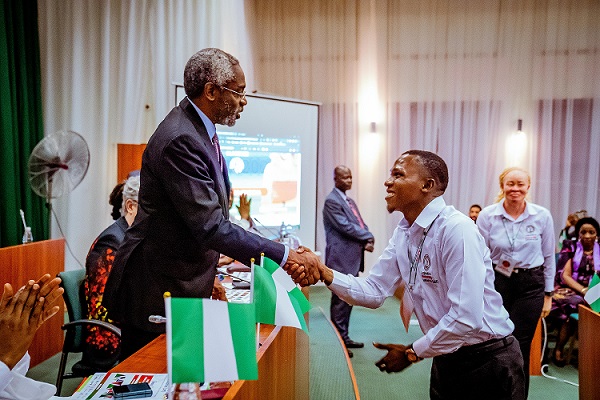
However, in the last five weeks, my generalization about some of the Nigerian politicians began to take a radical paradigm shift when I got selected to participate in the Legislative Mentorship Initiative (LMI), the brainchild of the Speaker of the 9th House of Representatives Rt. Hon. Femi Gbajabiamila. The Legislative Mentorship initiative is a special program that seeks to identify, train, and equip a younger generation of ethical public sector leaders. In addition, the program seeks to deliberately, intentionally, and consistently groom the successor generation of public sector leaders, especially legislators, to possess and demonstrate deep values of character, competence, and capacity, which would later or sooner improve governance efficiency in our country.

During the last five weeks, other 73 fellows from across the 36 States of the federation and the FCT and I had engaging moments with Mr Speaker during what we tagged as “The Mentor-Exchange (MentX)”, where the Speaker shared with us his 20 years of wealth of experience working as a Legislator, the story of his humble beginning, the challenges and how he was elected as the Speaker of the 9th House of Representatives, Federal Republic of Nigeria. It was indeed such a revealing and inspiring moment.

In addition to the awe-inspiring delivery of his speech which was graced with ease, his humility captured my heart, leaving me begging for more of his presence. When asked about effective leadership, he said, “Leadership is about sacrifice and sometimes the kind of sacrifice you would not imagine that you would want to make; it is the kind of sacrifice that hits you to the marrow.’’ Sometimes you would have to bury your interest to consider others, but above all, national interest should be what drives you at the end of the day, he added.

When speaking of humility, Rt. Hon. Femi said, “Being the Speaker of the 9th House of Representatives, I don’t see the 359 Honourable Members as subordinates. Instead, I see them as colleagues and myself as the first among equals. 

Gbajabiamila is a visionary leader who sees beyond his nose. I can attest to this through the aides he is working with and the investments he is making in the lives of young people in his constituency. This is also true for Nigeria, by extension. For instance, the Legislative Mentorship Initiative (LMI), which he founded and I am proud and privileged to be part of the inaugural cohort, is doing a fantastic job of sharpening the minds and visions of young people. He believes nation-building is a joint task that cannot be completed without the youth, and so is the task of building tomorrow’s leaders. No wonder the LMI’s motto is ‘…building the next generation of Nigeria’s public sector leaders.’ 

Another quality I admire in Gbajabiamila’s life is his vulnerability as a leader. For instance, recall sometime in July this year, the Speaker on his verified Twitter page posted pictures of himself in a classroom at Harvard School of Government in the US at a time public universities in Nigeria had been shut down for about six months at that time, Mr Speaker after widespread backlash on social media apologized to Nigerians for the insensitive post.

In his words, he wrote, “Yesterday, I posted a picture of myself at the @Harvard@Kennedy_School undergoing a course. That post was not sensitive to the present feelings of fellow citizens, especially parents and students who are presently bearing the brunt of the ongoing closure of public universities owing to the unresolved issues between the Academic Staff Union of Universities and the Federal Government of Nigeria. I apologize for the post at this time, and I hope you will understand that it was not my intention to cause disaffection.’’ Mr Speaker’s ability to accept that he was wrong when being criticized made him an exceptional leader. Unfortunately, this quality is lacking in many of Nigeria’s politicians and public servants. A significant number of them see vulnerability as a sign of weakness and not strength. 

With the contributions of Mr Speaker and other well-meaning Nigerians, a new Nigeria is possible. As I draw closer to a conclusion, I want to thank you, Mr Speaker, for never saying no to your responsibilities. In this way, Mr Speaker, you have won over another ardent supporter of accountability who will appreciate you where you deserve to be appreciated. I will provide constructive criticism and positive feedback where necessary as I share your core values of accountability, inclusivity, and effective governance. Thank you, Mr Speaker, for being an exemplary leader that makes a difference.

Samson Kefas Galadima is a writer from Gombe State and a Fellow of the Legislative Mentorship Initiative (LMI). He can be reached at kefsammy@gmail.com.

FUL students struggle with accomodation issues

By Ahmad Deedat Zakari

The students of Federal University, Lokoja, FUL, are not finding it easy as they are confronted with the accommodation problem.

Weeks after the university resumed academic activities, following the suspension of the Academic Staff Union of Universities, ASUU strike, many students are stranded. Many are yet to find a place to live.

The tenancies of most students had expired during the ASUU strike. However, the continuous stay of some students whose tenancies expired had led to quarrels between them and their landlords.

The problem of accommodation in Nigerian universities is not peculiar to FUL students. However, the students are devastated as the school has no functional hostel on the two campuses.

The Daily Reality spoke to many students of the institution who were mainly afraid and sought to speak only on the grounds of anonymity.

A student said many of the departments had been moved from the Adankolo Campus of the institution to the main campus at Felele, and students were asked to begin lectures there in January. According to her, the students can not afford accommodation on the two campuses and are still writing examinations on the Adankolo Campus. She also said landlords are unwilling to take part payments for the remaining months in Adankolo Campus.

Other students narrated their ordeals of living with friends and relatives pending when they get accommodation.

It was also gathered that the flood, which ravaged many parts of Lokoja, is another reason accommodation has become more complex and expensive.

‘ASUU’s requests meet deaf ears’ – Atiku Abubakar

By Uzair Adam Imam

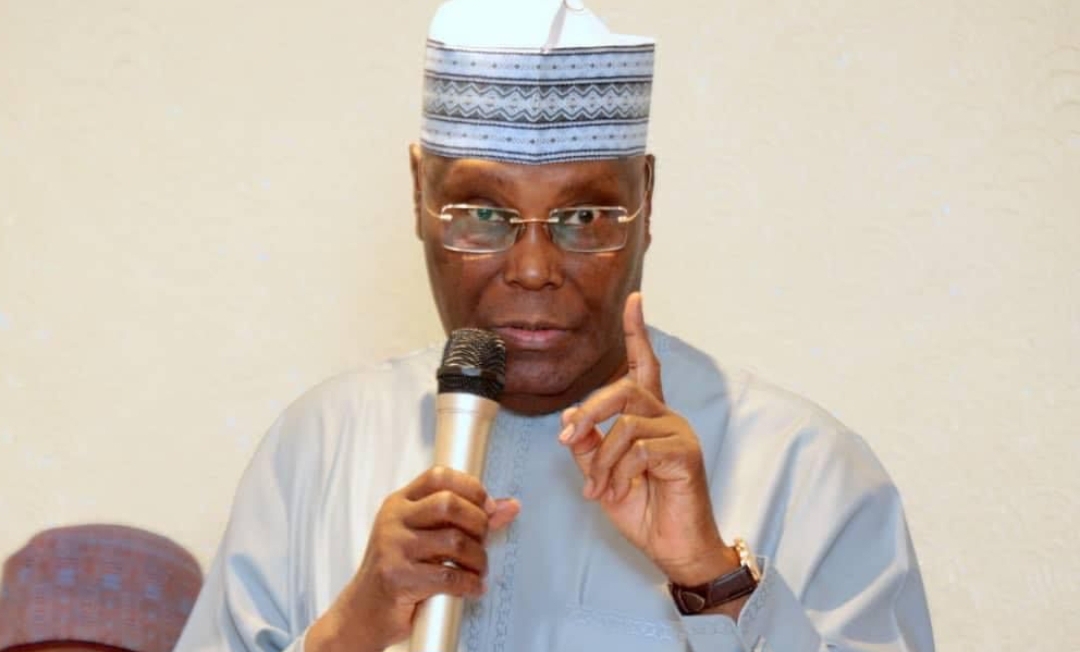
The presidential candidate of the Peoples’ Democratic Party (PDP), Alhaji Atiku Abubakar, consoles with the Academic Staff Union of Universities (ASUU), saying their genuine requests had met with deaf ears in Nigeria.

Atiku Abubakar stated this in a statement he issued and signed on Wednesday in celebration of the United Nations’ World Teacher’s Day.

Abubakar’s impassioned statement decried about the incessant strike which has been eight months now since lecturers shut down public universities to press their demands home.

He stated, “I wish to observe this all-important day by identifying with Nigerian teachers. I wish to identify with them in their moment of grief occasioned by poor working conditions over the years.

“Specifically, I use this medium to console Nigerian university lecturers whose genuine requests have met with deaf ears, and who have now stayed for over seven months without salary.

“Teachers are the backbone of a nation. They are the bedrock on which national development rests. Indeed, many educators have opined that, no nation can rise higher than the quality of its education system, and no education system can rise higher than the quality of its teachers.

“This means that no nation can make any meaningful progress in any sector without having well-trained, experienced, happy and well-remunerated teachers. A situation where some states are owing teachers’ salaries of up to five months, or even more, is unacceptable,” he stated.

ASUU strike and the disorientation at the presidency

Abdelghaffar Amoka Abdelmalik, PhD.

The major newspapers published the speech delivered by the president at the “Fourth National Summit on Diminishing Corruption in the Public Sector” on the 4th of October 2022. In the speech, the president said, “corruption in the education system from basic level to the tertiary level has been undermining our investment in the sector, and those who go on prolonged strikes on flimsy reasons are no less complicit.” The Academic Staff Union of Universities, ASUU, is the union on strike, so the newspapers reported it with headlines that “Buhari accuses ASUU of corruption”.

The president definitely does not have a thorough understanding of the issues that led to the strike else he won’t call the struggle for the proper funding of the universities, better conditions of service for lecturers, the release of the white paper on the visitation panel reports, among other important demands as “flimsy reasons”. It is sad and most unpardonable that the president has got no proper information on the structure and workings of the university. Otherwise, he would have queried that ridiculous and false statement when the speechwriter presented the speech to him for presentation. So unbelievable that our president is not aware that ASUU is not the same as the university management.

To correct this unfortunate misinformation from the president, in the university, there are heads of departments who are academics who receive N50,000 every 3 months for operational expenses. We have the Deans and Directors who are also academics which is the next level of leadership in the university. The Directorates receive N60,000 every 3 months for operational expenses. Is the misappropriation of these N20,000 per month, which comes irregularly that is corruption by ASUU members?

Then, we have the principal officers, which include the Vice-Chancellor (an academic), the Registrar (a non-academic), and the Bursar (a non-academic). There is also the Council chaired by an appointee of the government. You can’t appoint politicians looking for jobs as University Council chairs and blame ASUU for corruption. ASUU is just a union and does not manage the affairs of the university. Then, there is the Presidential visitation panel that is meant to visit the university every 5 years to check the management of the resources of the university.

It’s true that the management of the university could be corrupt. There is no doubt about it. But since the administration of President Buhari took over in 2015, the “corruption fighting” president seems to have found accommodation with corruption in the university that it failed to send a visitation panel to any federal university. ASUU was worried about that, and part of the demands of the 2020 ASUU strike was the constitution of the visitation panel to all federal universities. Paradoxically, it took the strike by the union of supposed “corrupt lecturers” for the anti-corruption FG to send visitation panels to the federal universities in 2021 to check “corruption”.

However, a year after the panels submitted their reports, the same FG that is accusing ASUU of corruption has refused to release the White Paper on the panels’ reports for implementation. Part of the demands of this strike is for FG to release the White Papers. The “corrupt ASUU” is pushing the anti-corrupt government to fight corruption in the university. Isn’t that amazing? It goes without saying by its inaction, indifference, and condemnable refusal to set up visitation panels and release the White Papers after ASUU forced it to set up visitation panels to all federal universities, the FG under President Buhari is aiding corruption in our universities.

Meanwhile, you can’t be complaining of corruption but rewarding alleged corrupt people. The former VC of the Michael Okpara University of Agriculture, that was accused of academic fraud, financial embezzlement, and administrative impunity by the ASUU branch of the university, made the list of the people to be awarded a national honour by the president. Same with the former Council Chairman of the Lagos State University, who, with the VC, deployed the pension of Staff for the purchase of luxurious cars.

Does it make sense to accuse the university managers of corruption and then nominate university managers that were accused of corruption for national honours without taking steps to investigate these allegations? That’s a joke. By the way, what is the correlation between the poverty wages of Nigerian academics with corruption in the universities? Does that explain why Nigerian lecturers are one of the poorest paid in the world?

The president further said that he task our academics to attract endowments, research, and other grants to universities, polytechnics, and colleges of education similar to what obtains in other countries. It has been rightly said that “if wishes are horses, beggars too will ride”. It does not take rocket science to know how those universities referenced achieved that. An endowment is not attracted by academics but by the university council and management. President Buhari should stop his trademark and uninspiring blame game and should be talking to the people he appointed as Council chairmen for our public universities.

The truth is, research grants are not attractive using an empty room as a lab. No international donor will fund empty space. Only the existence of avalanches and modern facilities are used to attract grants. When I got a PhD grant in 2008, I took the grant to a university in the UK because they have the required facilities for the research. For the 3 years, the UK university got thousands of pounds through me. That’s a return on investment. What have we put in place to attract such? That’s what we should be worried about. That’s why ASUU is asking for the required funds to be injected into the system to make our universities attractive for grants, as it’s obtained in other countries.

Despite the horrible condition of service of academics in the country, Nigerian academics are winning research grants. An Associate professor at Bayero University Kano recently received a research grant of £969,680 from Wellcome. A senior lecturer at Ahmadu Bello University Zaria recently won a research grant of about 48,000 USD from Geophysics Without Borders. Other researchers from the Federal University Dutse won a grant of $59,930 from The World Academy of Science (TWAS) and €220,801 from the African Academy of Science on renewable energy. These are just a few of the grants won by academics within the strike period.

The president’s speech was focused on ASUU, and the speechwriter chose his words with the utmost malice and mischief. There are sex scandals in every sector of the country. The rehash and blackmail of sex stories in the universities have become much like an expired drug with no potency. The stories of sex for jobs and contracts and sorting jobs and contracts in Abuja are in public space. Every sector has got the good, the bad, and the ugly. So, academia can’t be immune to the ills in our society.

But then, universities are still much better. They have rules and regulations that guide their operations, and they are enforced. Several lecturers have lost their jobs due to sex scandals or other similar offences. But we have a minister in this government that was accused of sexual harassment in 2020. If a student is a victim of such an act on campus and he or she refuses to report for appropriate actions to be taken, then you can’t blame ASUU for it.

Our Union frowns on sexual harassment in all its ramifications in our universities and is up in arms combating this evil. Hence, this speech which is similar to the words of their filthy-mouthed attack dog and other government agents at the presidency at this time, is an indication that it is either the people around the president are not telling him the truth about the strike or the depth of the poverty of sincerity is underestimated.

It is equally indicative that the administration has run out of ideas and initiatives to resolve a simple issue like the ongoing strike action. The Speaker of the House of Representatives, in an effort to bring an end to the 7-month-old crisis, has met with the president. Let’s hope that those agents of destruction around the president will allow him to think.

What baffled me is the fact that the Visitor to the university is publicly lamenting when he has not taken any action for 7 years to address all his allegations against the University. You are the president, sir. Please use your executive powers to solve problems, not passing bucks. Dear sir, you lament everything from the economy to insecurity to education, but lamentations won’t solve our problems. You need to be proactive, sir. You are the president; time is almost running out. Better late than never.

Finally, despite the way that academics in Nigerian public universities are handled, our research outputs are visible in the global research database. If political office holders should make one-tenth of the efforts and sacrifices made by academics in our public universities, they will be celebrated as heroes in office.

Professor Abdelghaffar Amoka Abdelmalik wrote from Ahmadu Bello University, Zaria.
At 62: Nigeria’s independence and the future we desire

By Babatunde Qodri

It can be argued that ever since Nigeria got her independence in 1960, the country hasn’t gotten worse like it’s today. Every year is filled with insurmountable challenges beyond the control of both leaders and citizens. It appears, sincerely, as if the country has been cursed. Every opportunity to believe in Nigeria’s prosperity is dashed by a litany of crises ranging from insecurity, poor education and health systems and economic downturn. The country seems to have been brought to her knees.

The occasion of independence does not move people from different corners of the country. On the contrary, the convention of this remarkable celebration is a history remembered with joy and happiness. Many other African countries celebrate their independence with scores of impressive feats, despite avoidable crises. Unfortunately, the case isn’t the same here in Nigeria, where leaders expected to make people proud resort to disappointing charades to the country’s detriment.

The ongoing industrial action by university lecturers says a lot about how blighted Nigeria has been. Students have been away from classrooms for months. One would expect that a 62-year-old country should have grown past deleterious distractions capable of creating barricades in the way of her education system. It hurts that a sector as eminently necessary as education can be allowed to suffer while the Government continues to fund frivolities. The question is, which country develops or has developed without serious attention to education? 

In other words, education in Nigeria is now in a comatose state. It’s hard to believe that this is Nigeria where Sir Ahmadu Bello, Obafemi Awolowo, and others once lived and governed. Nigeria’s present predicament, evident in her leaders’ shameless willingness and obsession with greed, has ruined those past years of free education packaged to liberate Nigerians for genuine patriotism. What used to be, in terms of quality, transformative education now constitutes a culture of abandonment, taking a heavy toll on the survival and growth of the country.

Insecurity is another problem. Severalerians have been in captivity for years. We are now the headquarters of banditry and kidnapping for ransom. Non-state actors have taken advantage of the country’s vulnerability to unleash horrors daily. And the complete loss of strength by people constitutionally paid and expected to protect lives and property heightens fears. Because of this unwholesome reality, the country has become a no-go area for foreign investors who should have helped her economically. The fact that people are becoming strangers in their homeland explains the mass migration of Nigerians out of the country in search of averagely better and more peaceful climes. Internal unrest, sadly, continues to drag the country backwards.

This reality is worsened by intractable corruption. Despite being an oil-producing country, it’s still disgusting to hear that Nigeria cannot refine her oil, which makes the country hugely indebted. While other OPEC countries leverage the international market amid restrictions posed by the ongoing Russia-Ukraine crisis, Nigeria is wallowing in a financial crisis resulting from endless oil theft. Isn’t it funny that the country has to borrow to service her debt? This is indicative of the depth of mess in which Nigeria is in.

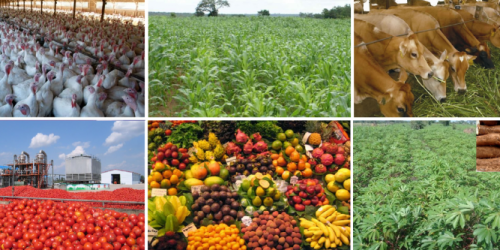
Unarguably, Nigeria needs urgent solutions through the diversification of its economy. We must take advantage of modern agriculture to produce what we consume and vice versa. The country should stop wasting funds meant for critical goods on exotic cars for politicians. Our Government must invest in the education sector, health care system, and others.

Plus, effective legislation is paramount. Nigeria is in dire need of a fresh set of leaders with brand new ideas, leaders who are committed to viable plans and collective change. The issue of climate change must also be given urgent attention. Climate change and poverty have the exact root cause, and their impact contributes to the national underdevelopment the country is witnessing.

As we move into 2023, Nigerians should understand that our country deserves a befitting future. So we must be interested in candidates who will focus on doing the right thing at the right time. We must go for candidates with clear readiness and vision to transform our education system and uphold justice and transparency. We must do away with activities capable of fueling the embers of disunity in the country. 2023 should be about these.

Babatunde Qodri can be reached at babatundelaitan@gmail.com.

ASUU Strike: FG orders VCs to re-open campuses, restore all operations

By Uzair Adam Imam

The Federal Government Monday has ordered the universities’ vice-chencellors to re-open schools to allow students to resume lectures.

The FG gave the order through the National Universities Commission (NUC) on Monday, September 26, 2022.

The directive was contained in a letter singed by the Director, Finance and Accounts of the NUC, Sam Onazi, on behalf of the Executive Secretary of the commission, Professor Abubakar Rasheed.

NUC instructed that all vice-chancellors; Pro-Chancellors and chairmen of governing councils of federal universities should re-open schools.

The instruction reads: “Ensure that ASUU members immediately resume/commence lectures; Restore the daily activities and routines of the various University campuses.’’

It could be recalled that, with the deadlock in negotiation between the FG and ASUU members, the federal government went to court to challenge the action of the association.

In its latest session on the case, the National Industrial Court, through Polycarp Humman, the presiding judge, granted the federal government’s application for an interlocutory injunction to restrain ASUU from continuing with the strike.

Recall that ASUU has been on a strike since February 14, 2022. The university lecturers have down tools to press their demands home on issues that boarder on improved work environment, facilities, and upholding of various agreement entered between the union and federal government.

Gov Yahya Bello cautions students on planned national protest

By Uzair Adam Imam

Governor Yahya Bello of Kogi State has cautioned Nigerian students to desist from their planned national protest for security reasons.

The governor has cautioned the students while speaking on Arise TV on Wednesday, adding that the students should learn from the outcome of the EndSARS protest and not take to the streets.

The Daily Reality reported that the National Association of Nigerian Students (NANS) had protested against the lingering strike at the Murtala Muhammed International Airport, Lagos.

The aggrieved students had threatened to shut down the airport if the conflict between the Federal Government and ASUU has not been resolved.

He said, “Let me admonish the NANS and the younger generation just like I did during #EndSARS when it was just starting then, please don’t take the law into your own hands.

“Our candidate, Bola Ahmed Tinubu, is deeply concerned, and even Mr President. We are all concerned about this lingering crisis. What this administration failed to do is to remove the political aspect of ASUU and other associated problems from the academics and that is why we are facing what we are facing today.

“Now, don’t take the law into your own hands. With EndSARS, we knew exactly what happened. If you take to the streets, there are hoodlums out there who are ready or who have been sponsored to hijack the protest from you.”